

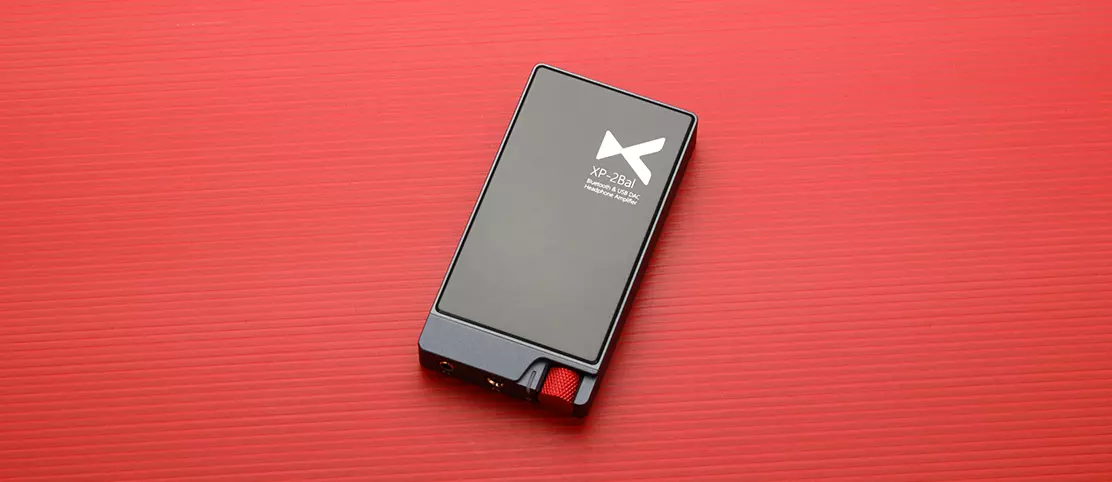
Marcelo reviews the xDuoo XP-2 Bal, an integrated portable DAC/Amp with up to 320mW of balanced output power and Bluetooth capability. It is currently priced at $169.00.
Disclaimer: This sample was sent in exchange for my honest opinion. Headfonics is an independent website with no affiliate links or status. I thank Linsoul and xDuoo for their support.
Click here to read more on xDuoo products that we have previously reviewed on Headfonics
This article follows our current scoring guidelines, which you can read in more detail here.
When it comes to Bluetooth DAC amplifiers, xDuoo is among the top 3 brands that come to my mind. Since I started reviewing, I’ve always been mesmerized by how xDuoo products look in the photos I’ve seen online.
I find xDuoo’s design unique and retro yet somehow futuristic, especially in their recent portable products reviewed here at Headfonics, including the xDuoo XD05 Pro, xDuoo XD05 Bal 2, and the XD05 Basic2, to name a few.
Today, I’m delighted to review the xDuoo XP-2 Bal, a Bluetooth-capable balanced DAC amplifier, which sells for $169.
The xDuoo XP-2 Bal was released in February 2023, and, coincidentally, it’s one of those xDuoo products I dreamt of hearing when I started reviewing audio products but haven’t had the opportunity.
Even though the xDuoo XP-2 Bal is still a current product for xDuoo, it is more than three years old. Can it compete with more recent Bluetooth DAC amplifiers featuring newer chipsets, including the HiBy W4 and the Khadas Tea Pro? Let’s find out.
Features
The xDuoo XP-2 Bal is a battery-powered, portable Bluetooth DAC amplifier featuring ES9018K2M DAC Chipset, with asynchronous USB XMOS XU208 receiver chip that can handle up to 32-Bit/384kHz, DSD256 natively.
The Bluetooth chip is a Qualcomm CSR8675 Bluetooth 5.0 chip that supports all codecs, including SBC, AAC, AptX, AptX LL, AptX HD, and LDAC.
The volume control is coupled to the power switch and is an analog potentiometer, which I prefer over push-button volume controls.
To turn the xDuoo XP-2 Bal off, set the volume control to the left. To turn it on, rotate it slightly to the right. Continuous right rotation of the knob will increase the volume.
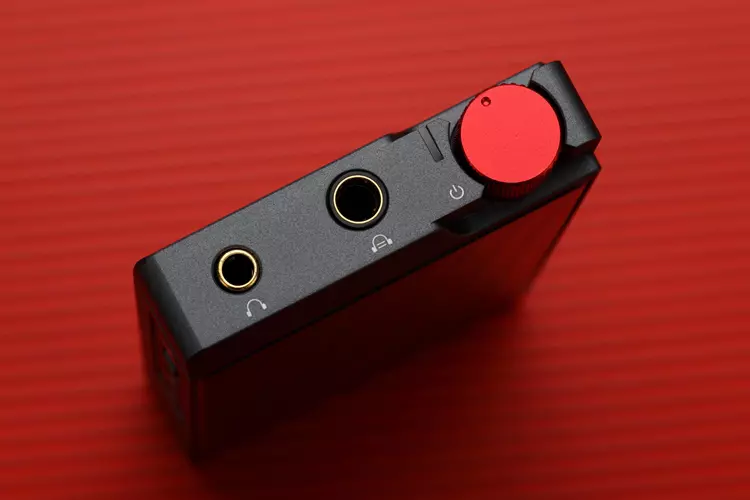
After the volume control, the signal is amplified by the OP+BUF-based amplification chipset. The xDuoo XP-2 Bal has both 3.5 mm and 4.4 mm output jacks with maximum power of 180 mW and 320 mW, respectively.
The xDuoo XP-2 Bal also features a built-in microphone with cVc 8.0 Noise-Reduction Technology to help with phone calls. And an NFC one-touch connection.
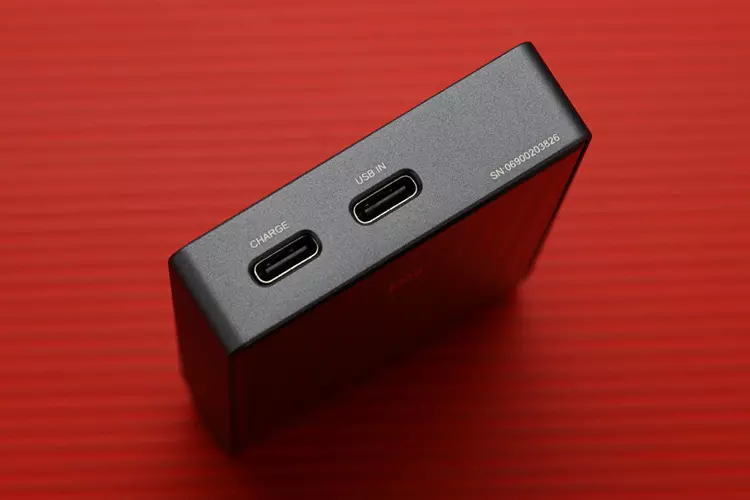
I must add that the xDuoo XP-2 Bal also features two USB ports, enabling it to be used while charging or as a desktop DAC.
Design
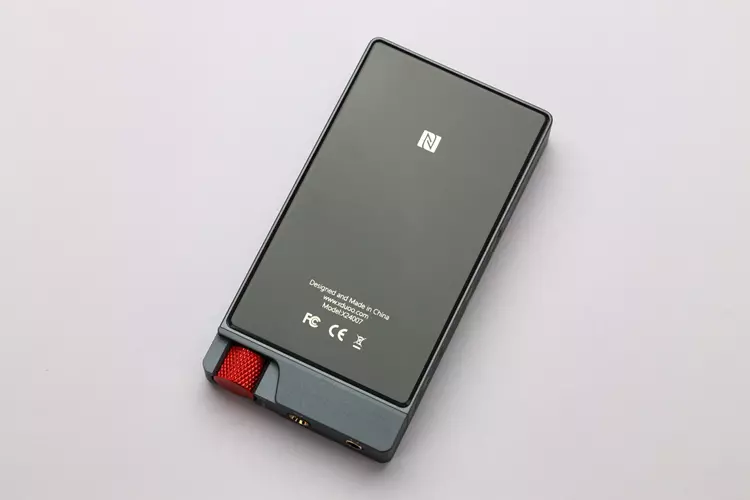
It’s nice that the xDuoo XP-2 Bal is smaller and feels more compact and lighter than it appears in the photos to me. I was surprised when I first saw it during unboxing. I was expecting it to be as big as Android DAPs with a 5-inch screen; thankfully, it’s not.
The chassis is made of a solid piece of CNC-machined aluminum alloy, measuring approximately 10.5 x 5.5 x 1.5 cm and weighing about 150 grams, and is sandwiched between two 2.5D glass panels at the front and back, with radiused edges for a more refined feel.
The overall design looks angular; thankfully, the edges are radiused, preventing a sharp feel when using it. I like the red knurled volume know, which adds an accent to the dark anodized industrial grey color of the chassis.
The multi-color RGB Indicator light near the volume control indicates the operating condition and the sampling rate with colors. There is also a light indicator next to the input button that shows whether the input selection is locked.
I/O
The inclusion of two USB-C ports at the top, one for charging and one for data, is a nice bonus for me. I often do long listening sessions at home, and having the capability to use the XP-2 Bal while charging lets me continue listening to music uninterrupted by a low battery.
The USB Interface is handled by the XMOS XU208 processor asynchronously, which operates only in UAC 2.0 mode to support high-resolution audio, not in UAC 1.0 mode for compatibility with older PCs and gaming consoles.
It is not a breaker, as I don’t have old PCs, and if I ever have a gaming console, there are much easier audio solutions for that. But I still want it to be UAC 1.0-compatible.
The XP-2 Bal has a 3.5 mm single-ended output and a 4.4 mm true balanced output, with significantly higher power than the 3.5 mm single-ended output: 180 mW vs 320 mW.
Connectivity
Bluetooth
The XP-2 Bal’s Bluetooth only functions as a receiver. It uses Bluetooth version 5.0, which is not the latest. However, the initial pairing and the subsequent connection times are fast.
It accepts all the relevant audio codecs, including the SBC, AAC, AptX, AptX LL, AptX HD, and LDAC.
Since my phone and DAPs are a recent release, they are equipped with LDAC, the highest-quality codec. For this review, I exclusively used the LDAC codec over Bluetooth.
The signal strength is good: I can walk around my house with my phone in my room, 33 feet (10 meters) or less away, through some obstructions, including concrete walls and wooden doors, and still experience uninterrupted audio.
USB-DAC
As a USB DAC, the XP-2 Bal works flawlessly with all of my PC, laptops, phones, and most of my DAPs.
On some of my DAPs, I need to uninstall the UAPP music player when using another music player app, as I suspect the UAPP hijacks the USB port when an audio device is connected.
When plugged into my Win 11 PC, there is no need for a driver; the XP-2 Bal works natively and doesn’t require adjustments.
The PC automatically switches its main audio output to the XP-2 Bal, and when it is unplugged, the PC reverts to its previous output setting.
Controls
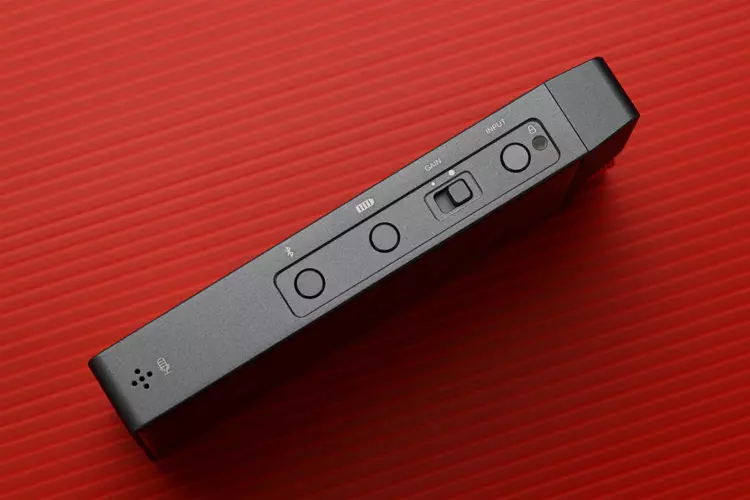
While the red volume knob is located at the bottom or top, depending on how you use the XP-2 Bal, all the push buttons and slide switch are on one side. The red volume knob is coupled to the power switch, so that when you turn the knob slightly clockwise, the XP-2 Bal turns on.
There are only three buttons, and the slide switch selects between the low and the high gain. The input button selects between Bluetooth and USB inputs; it can also be locked by long pressing to prevent accidental input changes.
I find it slightly annoying, though, that XP-2 Bal doesn’t remember the input lock when I turn it off. Every time I turn it on, I have to lock the input again. I wish they made it a slide switch, like the gain-setting switch.
There is a battery indicator button. Press it for about three seconds, and the indicator light near the volume control pulses slowly in green. Five pulses indicate a full charge; 1 pulse indicates a low battery.
The last button is the Bluetooth pairing mode. Once the input selector is set to Bluetooth, long-pressing the pairing button pairs the XP-2 Bal with the source.
Battery Life
During the burn-in period, I also tested the XP-2 Bal’s battery life and charging times. I get about 8 hours of playtime when the XP-2 Bal is playing at a moderate listening volume, using an average-sensitivity IEM with a 4.4 mm balanced connection, from its 3.7V/2200 mAh battery.
I find the charging to be slow. I charge it with a 60 W PD and Quickcharger, and I would estimate that the 3-hour charging times rated by xDuoo are truthful. I wish they would use a more recent battery and charging technology, as the relatively small battery should be fully charged in one hour or less.
I find the battery indicator unreliable, as I took the XP-2 Bal out for a walking exercise with three pulses in the battery indicator, thinking that I still have about 50 percent or more, or about 4 hours of use left. In about an hour of my walking exercise, the XP-2 Bal ran out of power.
On the other hand, the chassis never gets hot on prolonged continuous use or while charging; it just gets warm, comfortably.
Packaging & Accessories
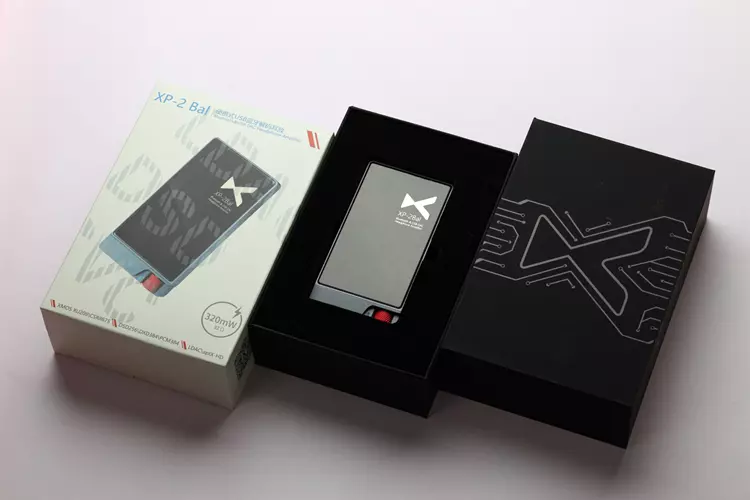
The XP-2 Bal comes in a medium-sized, white, sleeved box measuring 174 x 119 x 56 mm, with the portable amplifier’s photo on the front and texts all around the box.
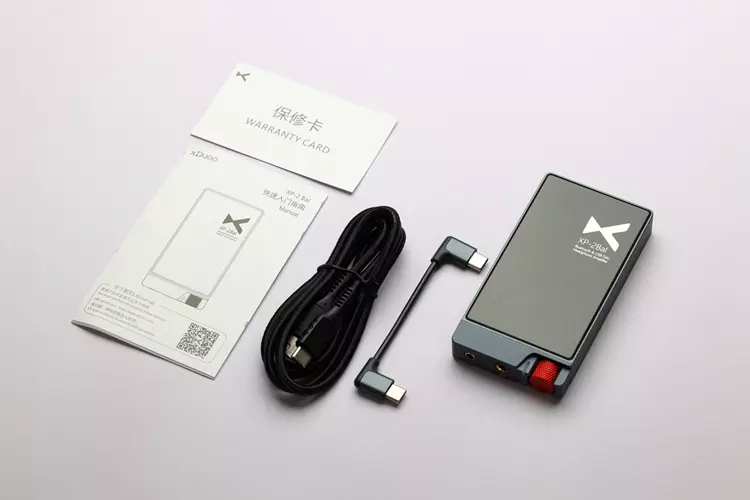
The packaging includes the XP-2 Bal, a user manual, a warranty card, a long Type A-to-C USB cable, and a short Type C-to-C USB cable.
Sound Impressions
Before critical listening, I performed my standard 24-hour burn-in of the XP-2 Bal by letting it play continuously with a DAP and IEMs via a 4.4 balanced connection at a moderate volume. During this time, I also did the battery life and charging test.
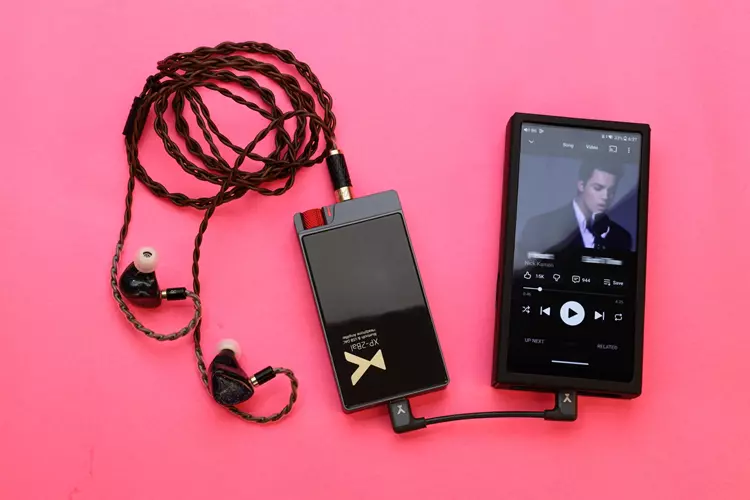
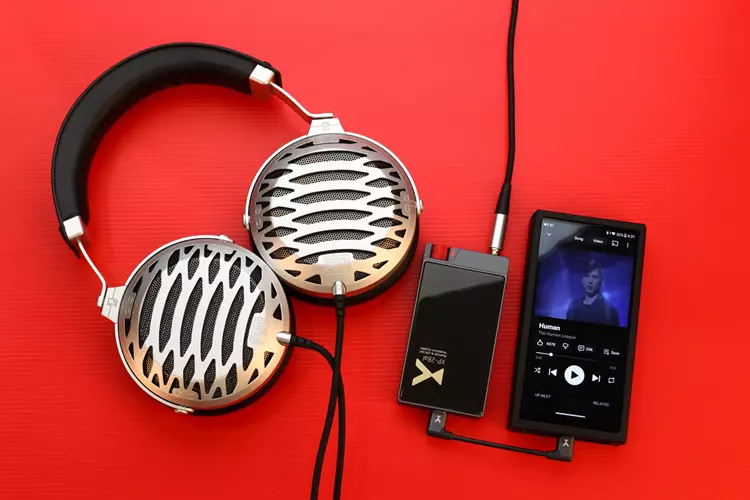
I mainly use my OnePlus 13 and FiiO M33 R2R DAP as sources, along with my IEMs and headphones, including the QoA Martini, Tipsy M5, and DUNU Falcon Ultra Ti IEMs. For headphones, I picked the Sennheiser HD 6XX, FiiO JT7, and TangZu Ox Demon King.
No EQ was used, nor were any other sound enhancements applied. I used UAPP, YouTube Music, and PowerAmp music player on my Phone, and the gain is set to low for IEMs and high for headphones.
Summary
My initial concern about using an older DAC chip is completely gone after listening to the XP-2 Bal. I was pleasantly surprised by the sound’s transparency, clarity, detail, and energy.
I was expecting a slightly harsh, unrefined sound; instead, I was greeted with a refined, smooth yet detailed and delightfully analytical sound with tons of microdetails. The sound signature is neutral, with a flat perceived frequency response and no warmth or brightness.
The presentation is very even from bass to treble. The bass goes very deep with good speed, tighness, and articulation.
On some songs, I hear the bass guitars are cleanly and crisply rendered with a nice rhythm that is easy to follow, while on other songs, the bass has a very powerful, deep presence that moves the air energetically.
The midrange is very flat and neutral, yet lush, with plenty of nuance. There is no distortion, harshness, or nasality.
I am mostly fond of the treble performance with its airy, extended, smooth, and refined yet very detailed sound.
The treble sound is wide open, yet never bright or sharp; the details of the background instruments, the air, and the harmonics are delicately rendered with high perceived resolution.
Coloration
While the overall sound is neutral, with a very good balance among bass, mids, and highs, I can hear a slight forwardness in the upper midrange and lower treble.
This does not color the sound in a bad way, and it is not obvious; instead, it adds more detail and energy to the overall presentation.
Staging & Dynamics
The XP2-Bal soundstage is very spacious; the shape is very wide with good depth perception, and the ceiling is high. It is not as deep as it is wide, but it is never shallow or flat.
Although it depends on the IEMs or headphones I use, generally, it feels like I’m near the front of a concert in a big stadium. The main vocalist is well-defined in the center and separated from other vocalists and background instruments on the sides and in the back.
One of the first few things I noticed about the XP-2 Bal is the awesome dynamics. It sounds very energetic and lively, and I could have sworn the power rating was around 700 mW rather than 320 mW if I hadn’t seen the technical spec first.
The XP-2 Bal sounds more powerful than its power rating would suggest.
Click on page 2 below for my recommended pairings and selected comparisons.
