

Synergy
Noise
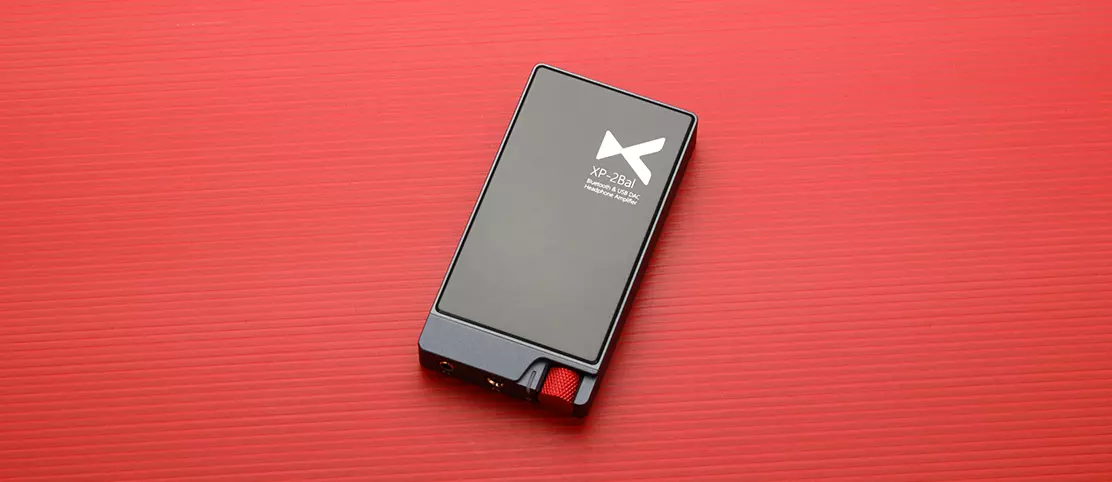
Additionally, I hear a faint white noise or hissing sound when the volume is set between 30 and 70 percent, peaking at 50 percent.
The noise is faint and negligible at the low-gain setting with IEMs, which are generally more sensitive than headphones, but at high gain, it becomes obvious with IEMs.
The noise fades once the volume goes above or below 50 percent and is totally gone at the maximum and minimum settings. With headphones, using high gain, the noise is negligible and very faint.
This necessitates switching to low gain when using IEMs, but overall, I don’t have noise issues as long as I remember to set the XP-2 Bal to low gain.
IEM Pairings
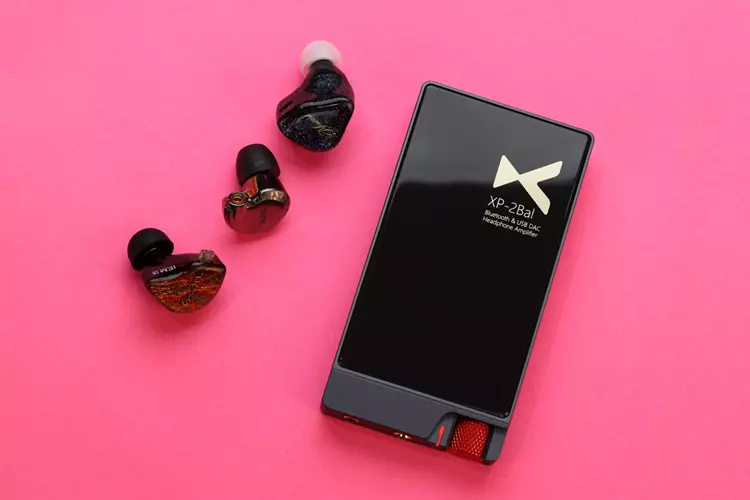
In this section, I set the gain to low to avoid or minimize the audible white noise or hissing sound I mentioned previously when the gain is set to high with IEMs.
Paired with the Tipsy M5, a very neutral IEM, I hear a neutral sound with tight, well-controlled, energetic bass and a flat, detailed midrange and treble.
With the DUNU Falcon Ultra Ti, a neutral-sounding IEM, I hear an extended, tight bass with a slight mid-bass warmth and a neutral midrange and treble.
When paired with the QoA Martini, a moderately V-shaped set, I hear an energetic bass with excellent control from its subwoofer bone-conduction driver. The midrange is slightly recessed, and the treble is very extended, clean, and detailed.
Headphone Pairings
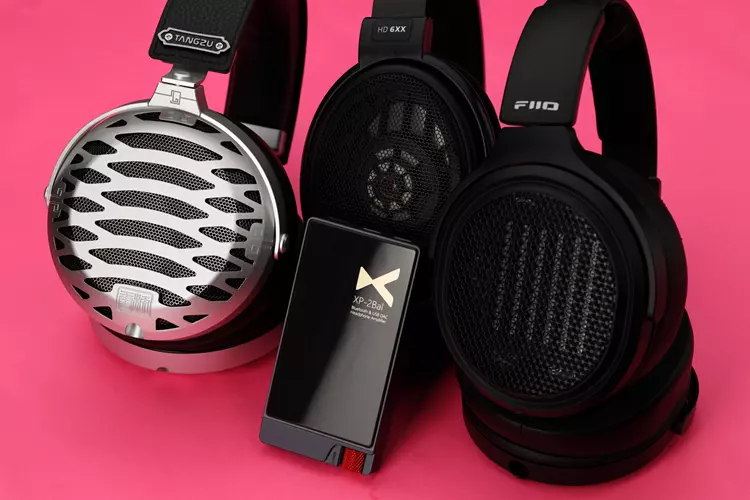
When paired with the FiiO JT7, it is a relatively slightly difficult-to-drive pair of planar headphones. Using a 3.5 mm cable, I achieve a loud sound at 75 percent volume and high gain.
There is a bloominess and warmth from the bass to the lower midrange, with very clear vocals and extended treble.
I could have used a balanced cable to increase the available power, but the 3.5 mm cable is sufficient to make the JT7 overload with some music, and the overall sound pressure is already very loud.
Again, with a 3.5 mm cable supplied with the TangZu Ox Demon King and in high-gain mode, I achieve a loudness similar to the JT7 at only 65 percent volume. I get a very dynamic sound with plenty of headroom.
The tonality is moderately V-shaped, with well-controlled bass, a recessed midrange, and an extended, detailed treble.
Finally, the Sennheiser HD 6XX is a difficult-to-drive headphone with its 300Ω impedance and fussy with source pairing.
I use a third-party 4.4 mm balance cable and high gain to maximize the available power from the XP-2 Bal. I get a very dynamic sound with plenty of headroom with only a 65 percent volume setting.
I was surprised by how easily the XP-2 Bal drives the HD 6XX, making me think that the actual power output rating is much higher than the rated power output.
Not only does the XP-2 Bal drive the HD 6XX to satisfying volumes, but this pairing also sounds very good, so I would have to say they have strong synergy.
I get a near-neutral sound with tight, punchy bass, smooth midrange, and extended treble with good energy.
Selected Comparisons
Khadas Tea Pro
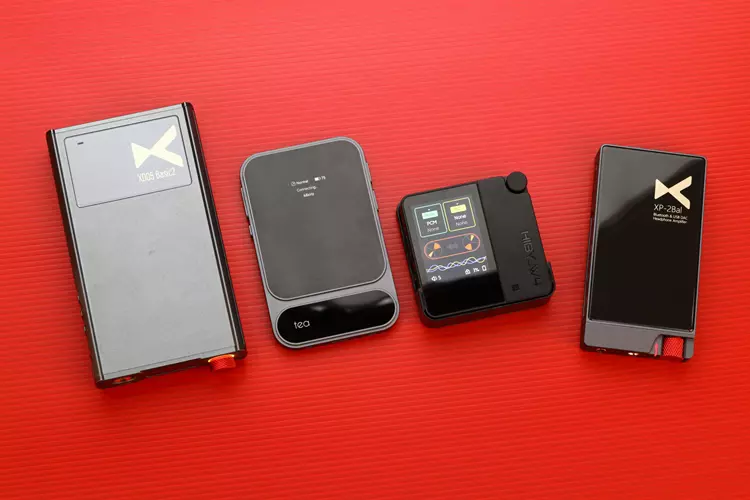
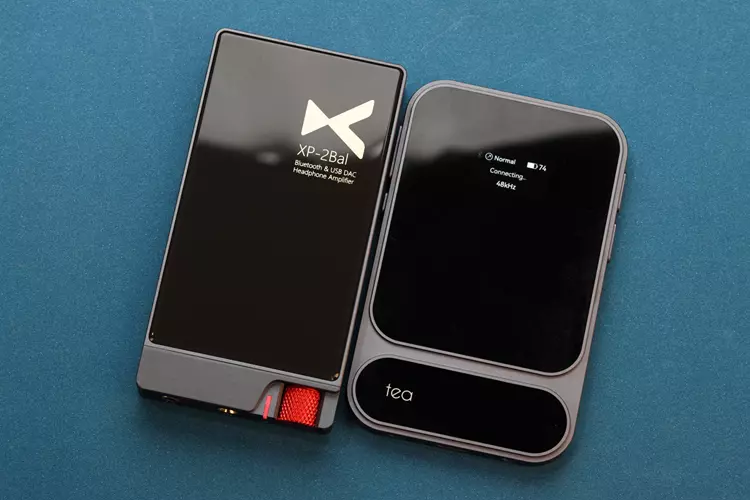
The Khadas Tea Pro is the latest from Khadas, released in August 2025. It is an ultra-thin, compact BT DAC with a built-in magnetic back, which can be magnetically stacked with the phone or a compatible phone case.
Technical & Design
The Tea Pro utilizes an ESS ES9039Q2M DAC chip, 2 x TI OPA1612 opamps for I/V conversion, and another 2 x TI OPA1612 for low pass filtering, and is amplified by 2 x Ricore RT6863 amplifier chips. Two NJU72315 volume control chips sit between the low-pass filtering and amplifier chips.
I like Tea Pros’ flat, space-age, and industrial design, which mixes a CNC-machined aluminum chassis, Corning Gorilla Glass 3, and a Premium wear-resistant leather back panel.
There are two portions of glass at the front, the bigger glass houses the 0.95” AMOLED display, which displays the information and the menus for control.
Performance
It is hard to tell them apart in terms of tonality, as they both have a very neutral sound signature.
Still, after prolonged comparison, it slowly became apparent to me that the Tea Pro is slightly brighter, with more elevated upper treble. I also find that the Tea Pro has an ever-so-slightly thinner note weight and presentation.
I find the XP-2 Bal to have a negligibly larger soundstage. However, there is apparently more stage depth and cleaner, lusher, and longer background decay with the XP-2 Bal, while the Tea Pro has slightly less smooth instrument decay. I also find the XP-2 Bal slightly more transparent-sounding.
Dynamically, both are energetic and lively, but I find the XP-2 Bal slightly more dynamic, especially in the bass delivery, and it can also go louder than the Tea Pro.
When driving the HD 6XX, I find the XP-2 Bal more effortless, louder, and cleaner-sounding.
xDuoo XD05 Basic2
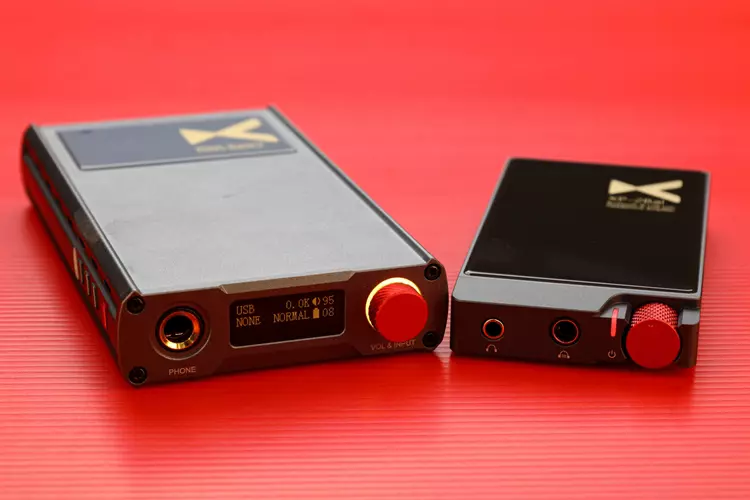
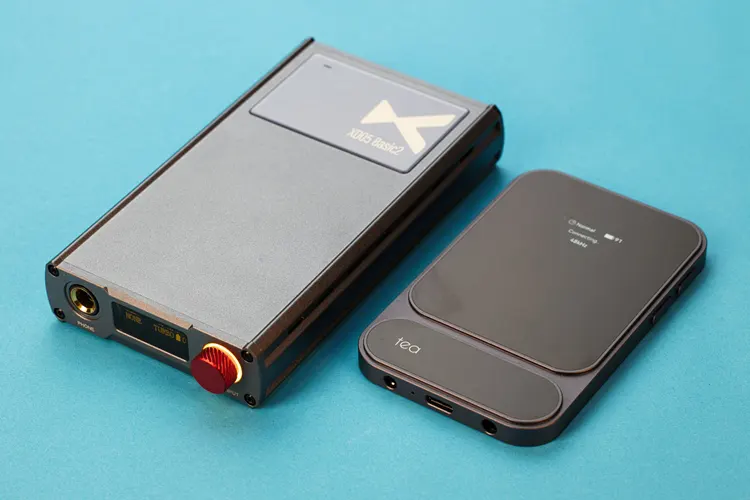
The XD05 Basic2 was released in April 2025. It’s a BT DAC with an all-metal shell and an old-school, retro high-tech design that doesn’t seem to worry about size or compactness.
Technical & Design
The XD05 Basic2 is a large Bluetooth DAC amplifier featuring a CS43131 DAC chip and replaceable op-amps, and it supports Bluetooth 5.4 with SBC, AAC, aptX, and LDAC codecs. It can output up to 700 mW and features a 3000 mAh battery for up to 11 hours of use.
The XD05 Basic2 combines a space-age and retro design aesthetic with a whole-metal body, a red knob, a small screen, and features only a ¼-inch headphone output jack at the front.
There are control buttons on the right side, along with USB-C ports, a slide switch, a pre-out jack, and a barrel power input jack at the back.
Performance
Using the stock op-amp in the XD05 Basic2, which is a Texas Instruments NE5532, I find it sounds warmer, with lower sound resolution. It sounds more analog compared to the very neutral XP-2 Bal.
The XD05 Basic2 has a laid-back presentation that does not push details in your face; instead, it lets you hear the music as a whole, while the XP-2 Bal is more analytical, making it easier to follow a specific instrument or vocals.
Luckily, the XP-2 Bal doesn’t sound cold or clinical in the process. I find the XP-2 Bal more transparent-sounding.
The XP-2 Bal has a bigger soundstage overall, with its wide-open presentation. Replacing the op-amp in the XD05 Basic2 with Muse s02, AD797, OPA627, and Burson VIVID V7 greatly increased the stage size, resolution, dynamics, and transparency.
In terms of dynamics, I find the XP-2 Bal more energetic and livelier-sounding, while the XD05 Basic2 sounds more laid-back due to its warm sound signature. Again, this could be improved by replacing the op-amps with the ones I mentioned above.
When it comes to driving the HD 6XX, I find both can drive it to very satisfying levels; however, due to the XD05 Basic2’s warm op-amp sound signature, I find it makes the HD 6XX treble sound dull. Thus, I find the XP-2 Bal and HD 6XX pairing sounds better.
HiBy W4
The HiBy W4 is a BT DAC released in December 2025. It has a square chassis and an installable backplate, allowing it to be magnetically stacked at the back of a compatible phone or case.
Technical & Design
W4 is a battery-powered, portable Bluetooth DAC amplifier featuring Dual CS43198 DAC chips.
Its headphone amplifier can decode up to DSD512 and PCM768kHz, and a Qualcomm QCC5181 Bluetooth 5.4 chip supporting all codecs, including aptX Adaptive/aptX lossless/aptX-HD/aptX/LDAC/AAC/SBC.
The W4 has both 3.5 mm and 4.4 mm output jacks with maximum power of 125 mW and 475 mW, respectively.
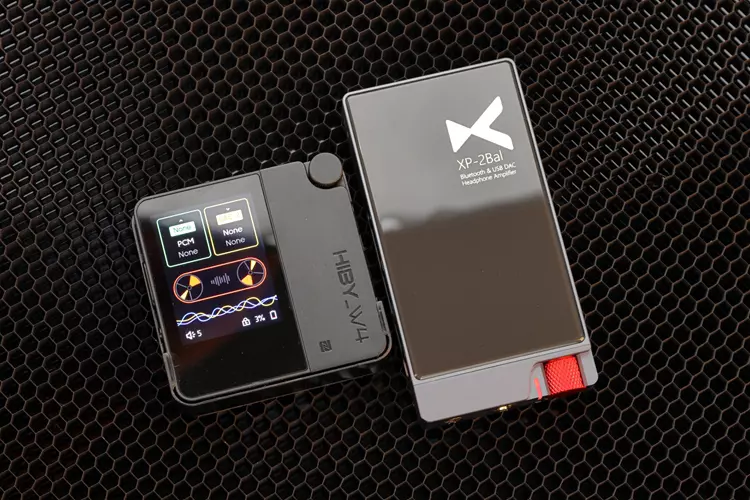
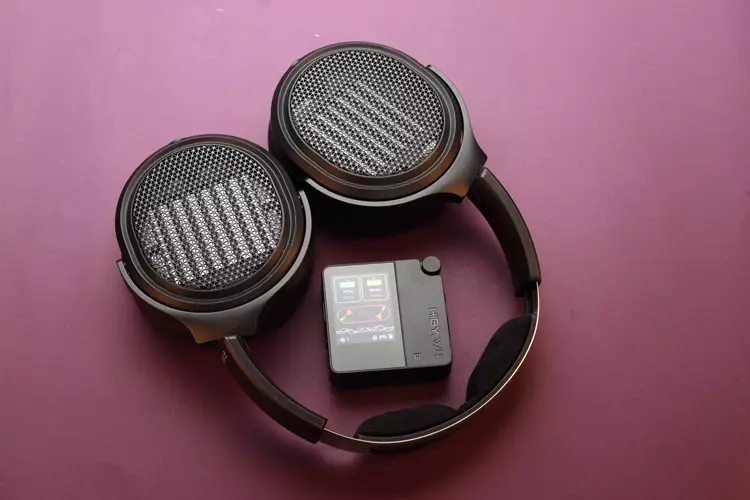
The W4 features an unusual design for a BT DAC with its square (non-rectangular), flat shape. The front is divided into two unequal parts, with the 2-inch screen placed on the larger part, covered by a tempered glass panel.
At the back is a removable belt clip that can be replaced with a MagSafe-compatible case. The bottom is blank.
There is a round, knob-like thing at the top front corner that looks like a volume knob, but it turns out to be a thumb screw that secures the belt clip or the MagSafe magnetic backplate case.
Performance
While the XP-2 Bal has a very neutral sound signature with a flat perceived frequency response, which is well-suited for sound monitoring and dissecting the music without sounding cold or too analytical, the W4 gave me a slightly relaxed, sweeter, and more audiophile-style, slightly U-shaped sound signature.
The W4 has a slightly more elevated and boomier low end, a flat midrange, and a slightly boosted upper treble. In comparison, the XP-2 Bal has tighter, flatter bass and a flatter midrange and treble presentation overall. Both are very transparent-sounding.
I find the W4 has a bigger soundstage; it has similar width, but greater depth. The instrument decay with the W4 is slightly longer, deeper, and lusher than that of the XP-2 Bal. My criticism of the W4 is that its bass is not as controlled or punchy as the XP-2 Bal’s.
Dynamically, both are energetic and lively-sounding, as long as they are driving easy-to-drive IEMs and Headphones. However, when driving difficult-to-drive IEMs or headphones, the W4 seems to struggle with bass tightness and control.
When it comes to driving the HD 6XX, both can reach high volume levels. However, I find the XP-2 Bal more suitable, as it better controls bass, which improves bass detail and punch. I also find the XP-2 Bal sounds better overall when paired with the HD 6XX than with the W4.
My Verdict
My initial worry about xDuoo XP-2 Bal’s use of an older generation DAC chip was totally unfounded.
I was expecting an outdated, unrefined, low-resolution sound; instead, I was surprised by its highly detailed, transparent, neutral, technical, and open sound signature, with a good soundstage and excellent bass tightness.
Another thing I like about the XP-2 Bal is how clean, composed, and energetic it sounds, even at very high volumes, which makes me think it is conservatively rated and that it actually has a higher power output than its spec would suggest.
What I didn’t like was the need to switch to low-gain mode when using IEMs to avoid hearing a faint white noise or hissing. I wish I didn’t need to do that and could leave it in high-gain mode regardless of whether I’m using IEMs or headphones, like with other sources.
I also wish the three-hour charging times were much shorter, as it is slow by today’s standards.
Don’t let the xDuoo XP-2 Bal’s use of an older DAC chip deter you from choosing it, as it rivals or outperforms other recently released Bluetooth DAC Amplifiers in terms of sound quality.
xDuoo XP-2 Bal Technical Specifications
- DAC Chipset: ES9018K2M
- Output Power: 180mW(Single-Ended), 320mW(Balanced).
- Frequency Response: 20Hz-20kHz(USB, BT), 10Hz-100kHz(Amplifier)
- USB Processor: XMOS XU208
- USB in: Windows 7-11, Mac OSX, IOS, Android systems.
- USB Sampling Rate: Up to 32-Bit/384kHz, DSD256 natively.
- Bluetooth Chip: Qualcomm CSR8675
- Bluetooth Version: V5.0
- Bluetooth Codecs: SBC, AAC, AptX, AptX LL, AptX HD, LDAC
- SNR: 110dB(SE), 112dB(Bal)
- Crosstalk: 75dB(SE), 92dB(Bal)
- THD+N: 0.002%@1kHz(SE), 001%@1kHz(Bal)
- Gain: +3 and +9 dB
- Battery: 3.7V/2200 mAh
- Charging Times: 3 hours
- Battery Life: USB in 8 hours, BT in 15 hours
- Size: 10.5 x 5.5 x 1.5 cm
- Weight: 0.15kg
