

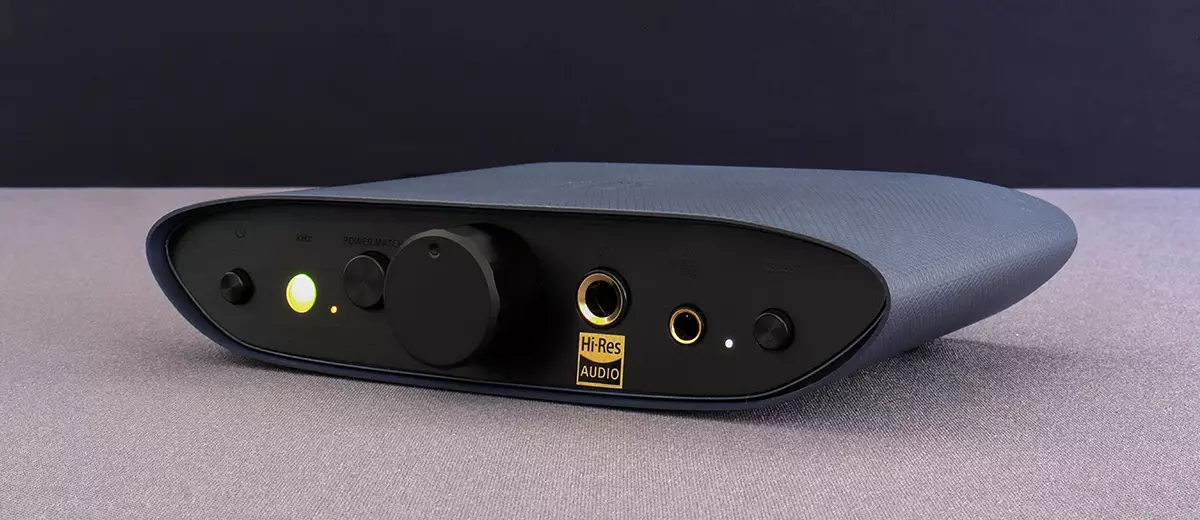
Louis reviews the iFi Audio ZEN Air DAC 2, an affordable 2nd-gen desktop integrated bit-perfect DAC and 484mW-capable headphone amplifier. It is currently priced at $129.00.
Disclaimer: I received this sample in exchange for my honest opinion. Headfonics is an independent website with no affiliate links or services. I thank iFi Audio for their support.
Click here to read up on other iFi Audio products we have previously reviewed on Headfonics.
This post adheres to our current scoring guidelines, which you can find here.
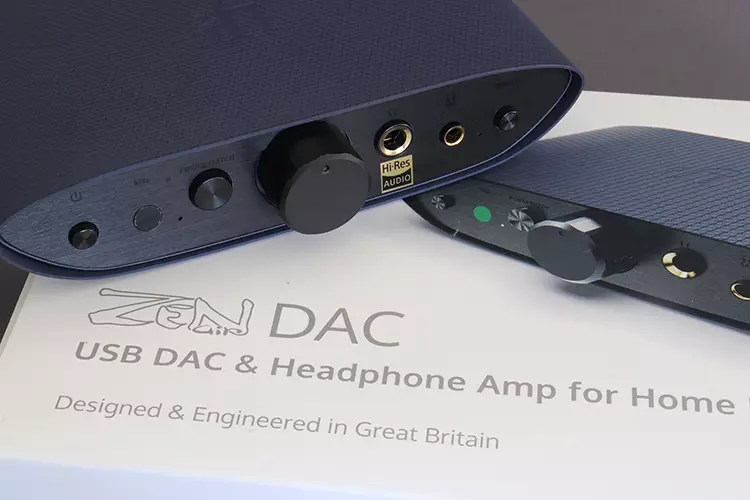
In my last iFi audio product review, we took it outside with the GO link 2. This time, we’ll have a sit-down session at home with the new ZEN Air DAC 2, the sequel to the original ZEN Air DAC, and the baby brother to the ZEN DAC 3.
The ZEN Air DAC 2 is now a more formidable device compared to the original model. It offers more power, better aesthetics, with higher-quality materials, plus some features not found on the original model.
These give the ZEN Air DAC 2 the essence of being a higher-cost component, at least from its outer appearance, but it certainly falls within the budget category, considering its retail price of $129.00 or £129.00.
Features
The ZEN Air DAC 2 is the least expensive way of obtaining iFi audio’s XBass feature, besides owning the original model.
This new version also comes with iFi’s PowerMatch feature. But to me, the most prominent feature is the additional power output that this model is capable of in comparison to the first ZEN Air DAC.
This time around, iFi audio added a 4.4mm Pentaconn connection upfront, alongside the single-ended 6.35mm connection, which allows the user to tap into a beefier port capable of 484mW at 64Ω with a 5.57v output max.
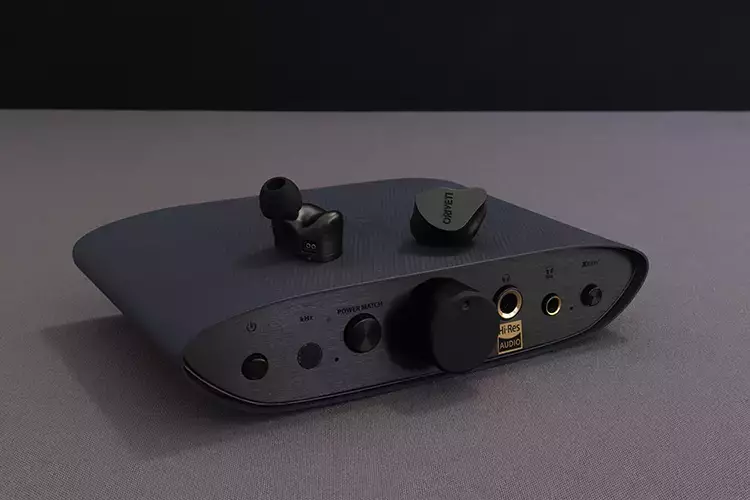
The other major change that took place is that the aesthetics have improved and are more in line with iFi’s other rounded trapezoid-shaped components.
The color scheme and front panel are more in line with the upper-tier ZEN line of components, particularly.
DAC
For some time now, iFi audio has ventured into using other DAC chips, particularly on their budget models.
I’m referring to their commonly used American-made Burr-Brown chips. Since then, their general sonic traits have changed, and I’ve noticed a higher-reaching top end.
The ZEN Air DAC 2 uses a Cirrus Logic chip, but again, iFi doesn’t specify which chip they use.
Hopefully, they’re using the more upscale CS43198 over the CS43131, since the CS43198 is sonically superior and uses less power, a benefit being that the only power source is a single USB-C port.
The DAC section supports up to DSD256 and PCM 32-bit/384kHz. The ZEN Air DAC 2 doesn’t support MQA, contrary to the original, which did.
That format has certainly taken a back seat lately, but there are some people out there holding on to their MQA studio files yet. I think it’s a good time to convert.
Design
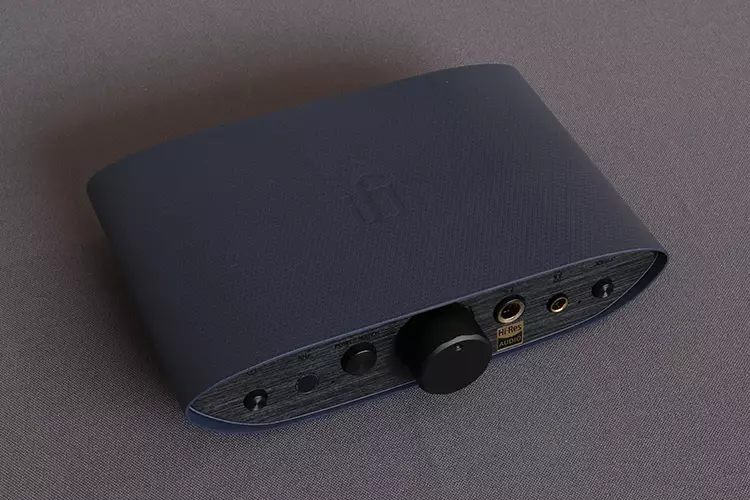
Another improvement, in my opinion, comes in the form of aesthetics, through the use of better materials and a better choice in color palette.
For example, the front panel is now a brushed metal front plate with a dark tint, and the top is also a darker grey with a blue-like tint. The unit has a darker appearance compared to the original.
The shell received a color overhaul, with a new ‘Midnight Blue’ finish. It sure beats that light grey, almost off-white tint they used previously that did not match any of the components in the iFi lineup.
The unit didn’t gain weight or mass, but it feels better to operate, especially when you operate the volume knob. That volume knob is just about as good as the one used on the ZEN DAC 3.
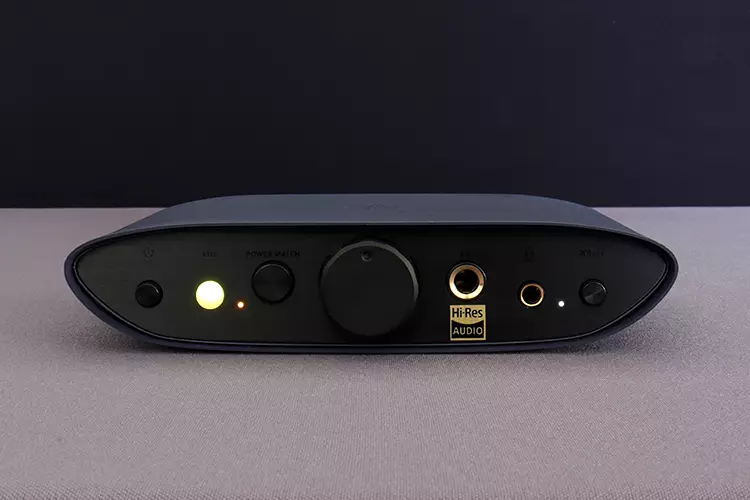
Upfront, there’s an LED window that clues you in on what digital format is being used at the source, marked kHz. The other LEDs show you the XBass and PowerMatch status. It’s quite simple and an easy-to-understand device.
I/O
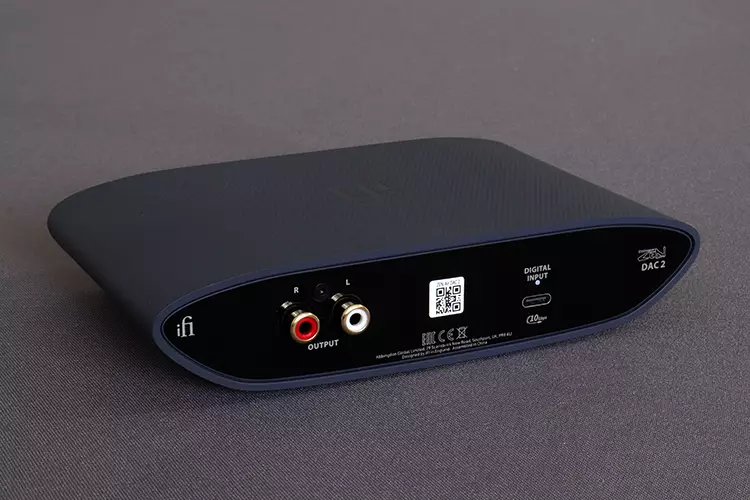
I was surprised at a couple of features I found when I started using the IO port. Particularly, the rear RCA output connections.
The line output levels are controlled by the volume control. That means that the ZEN Air 2 will pair well with a set of amplified speakers.
Another feature I found is that XBass, plus the PowerMatch, works over those RCA connections, so you can add those effects to your amplified speakers or even another, more powerful headphone amplifier, while using the ZEN Air DAC 2 as the source hub.
The front panel 4.4mm Pentaconn headphone output with a more powerful output is a welcome addition, and the other headphone tap is a full-size 6.35mm jack capable of 286mW at 32Ω with a max 3.02V output, a bit more than the conventional single-ended dongle DAC.
The rear USB-C connection is the only power source, which also feeds the DAC simultaneously. The connector itself has been swapped for a USB-C connection.
I would have preferred a secondary power source connection as an option, since the ZEN Air DAC 2 is technically a desktop DAC amplifier combo.
Controls
As far as controls are concerned, the new power button is a welcome feature, since the original remained powered on as long as it stayed connected, with no way of powering down. I also like that the button is upfront where it belongs.
The other two buttons upfront are the XBass and the PowerMatch feature on/off buttons. I don’t know why the three buttons are of different sizes, but visually, the design still works for me.
These press-to-activate buttons feel sturdy and don’t have much play behind them. I remember that one of my gripes with the original ZEN DAC was the button rattle. The ZEN Air DAC 2 has none whatsoever. IFi has certainly refined this aspect on the ZEN Air DAC 2.
The volume control still has a small amount of imbalance at the very bottom of the range, but it’s only noticeable with very sensitive IEMs. This analog volume implementation has improved over the years.
So, my only gripe now is that the indicator is, once again, hard to see. Then again, if I were to put a white dot inside the indicator, it would make it easy for me to see, but the appearance would suffer some. I kind of like the blackout look.
Packaging & Accessories
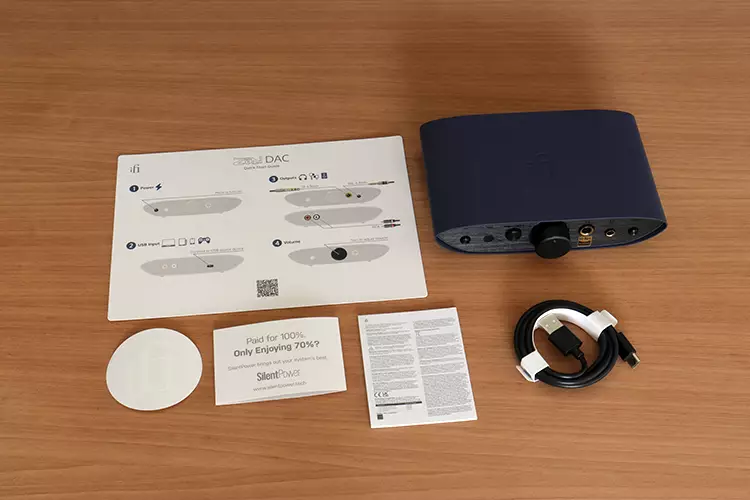
iFi’s packaging hasn’t changed for years, and they’re still using lightweight cardboard packaging material. The boxes are well laminated; I can say that.
Inside, the ZEN Air DAC 2 sits in an eggshell-type container, with a box of accessories on the side. But to be honest, you don’t get much, just a 3-foot USB cable and some paperwork.
Sound Impressions
I used my set of trusty broken-in Sundara open-backheadphones, pulled out the HE1000 Unveiled as well, and ORIVETI’s OD200 IEMs.
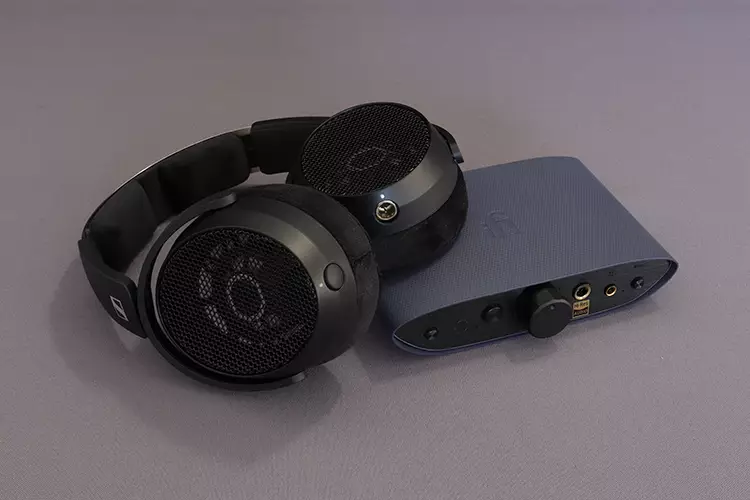
I also used the HIFIMAN Svanar, the Meze Audio 99 Classics Gen 2, and the Sennheiser HD 490 PRO Plus to get a good idea of what worked from this USB-powered device.
Summary
Let’s get one thing straight, and there’s something that I must say upfront. I will not sit here and listen to the ZEN Air DAC 2 for hours at a time without the XBass feature on. It’s just that the stock tuning is too flat for me. Or perhaps I’m spoiled?
The XBass feature fills in the missing low-bass, and it completes the unit’s sonic signature to one that’s fun to listen to.
In a way, it reminds me of the old loudness button found on vintage gear that livened things up and introduced a punchy aspect to the overall sonic signature.
But most prominent is the midrange area that has a keen ability to bring forth micro details with the right headgear, especially for a budget DAC amplifier. The midrange is produced with lots of natural richness and forwardness.
The high frequencies are very well extended, with a dog-whistle-capable top end. Just take a look at the specifications. The frequency response is listed as 20Hz to 90 kHz, which is considerably generous on the top end.
The high frequencies of the ZEN Air DAC 2 are pretty clean and have good restraint, without sounding strained and never crossing over into harshness or into fatiguing levels.
Coloration
I can see why iFi is favoring these new DAC chips since they tend to open up a shimmering aspect that was not there previously, particularly on their Air lineup.
They did retain the iFi house sound to a certain extent. What the ZEN Air DAC 2 sounds like is that it has the old iFi audio signature with a sharper and better-defined top end, and less warmth overall.
But the overall tonality of the ZEN Air DAC 2 is not a reference type. It’s a combination of a glowing midrange, a bright top end, and a full bass response when the XBass is engaged.
Staging
There is an airy aspect about the overall sonic picture that the ZEN Air DAC 2 paints.
It makes me feel that the vocals attempt to present themselves in a broad sense, resulting in a small amount of loss in focus. The heavy focus remains on the outer bands of the frequency response.
The soundstage is just a touch sequestered compared to models of high-end caliber, but that’s to be expected. It’s nominally wide and does better on width compared to an average budget dongle DAC. It’s front-to-back coverage over depth in the soundstage.
You can pick out elements easily, but it’s not a holographic soundstage. There’s space and air, but it’s mostly relaxed and not hyper-staged.
Dynamics
Dynamic range is displayed here by allowing loud passages to be noticeably larger with audible low-volume detail.
But there’s certainly a high amount of dynamic headroom on the ZEN Air DAC 2 to sound satisfyingly husky for a budget model.
The sonic signature does best with Rock, EDM, and music that rely on an impactful, fast attack and decay, and not so much with the delicacy needed for complex tracks.
I personally like the way the ZEN Air DAC 2 attacks transients with decent kick drum impacts that don’t sound anemic.
However, you need to maintain a moderate volume level when using full-sized headphones that are not the easiest to drive, since that can lead to distortion due to limited power reserves.
Click on page 2 below for my recommended pairings and selected comparisons.
