

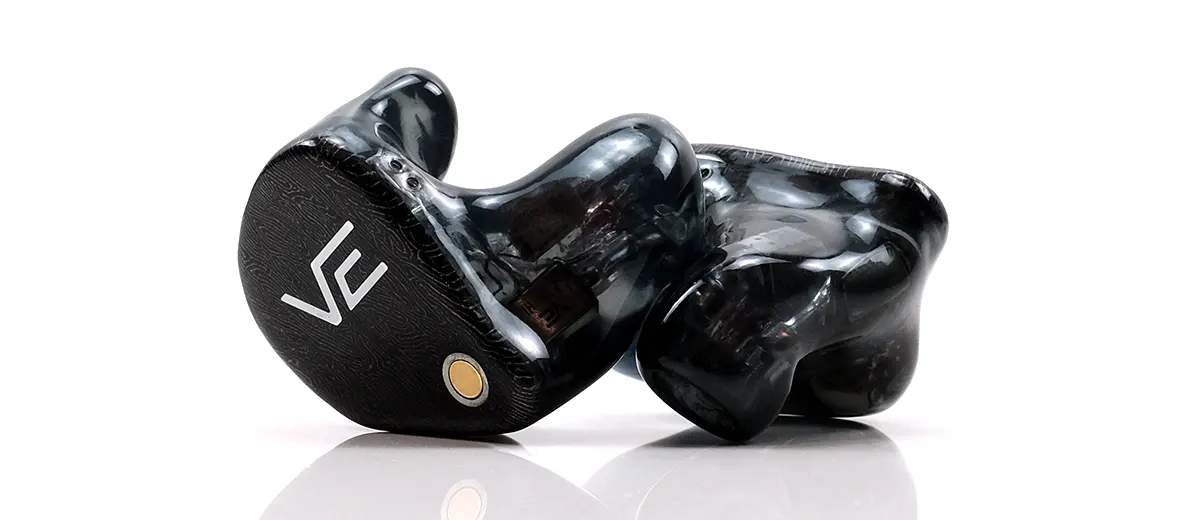
Synergy
The Vision Ears XCON is rated at 21Ω for impedance with an SPL of 115 dB/mW @1Khz. It’s an easy-to-drive CIEM with no issues paired to a dongle or DAP from a balanced output in low-gain mode.
One thing to note for previous VE6 XControl owners: the XCON does seem to be marginally less sensitive. The SPL of the XCON is reduced from 118 dB/mW down to 115 dB/mW, which I presume is down to its updated BA drivers.
Also, the 1kHz is a traditional milestone weighting based on a fixed sound signature, and although the XCON FR amplitude changes with the switch position, the 1kHz region is unaffected.
DAP & Portable Amplifier Pairings
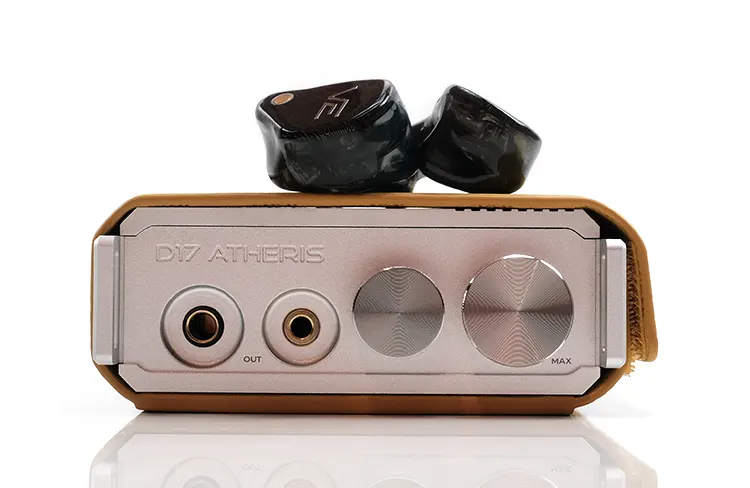
I tested the XCON with 3 DAPs and a portable amplifier, including the iBasso DX340 and DX320 MAX Ti, the Cayin N6iii/R202 combo, and the iBasso D17 Atheris.
My personal preference was for a clean-sounding source/amp, but nothing too clinical, so the core house VE tuning remained smooth and easy on the ear.
My goal was to enhance the mids and highs slightly in X1, while retaining decent punch and sub-bass presence in the X2 position simultaneously.
For example, I actually preferred the DX340/AMP15 performance over the more dynamic but more contrasty sound of the DX3420 MAX Ti.
The MAX pairing delivered excellent low-end dynamics to the XCON X1 setting; however, the vocals had a slightly aggressive quality to their timbre.
Some might prefer this, given that the vocals are slightly relaxed in their delivery on X1, but the DX340 provided a slightly softer quality whilst still retaining the air and width I wanted from this pairing.
I picked the N6iii/R202 and the D17 Atheris to figure out which had the better R2R and 1-bit performance with the XCON, but in reality, they offered different perspectives.
I think if you want to retain airiness to the XCON in either X1 or X2, then the D17 Atheris offers more space but a slightly more linear bass and vocal delivery.
The N6iii/R202 is a denser solid-state analog sound, with its R2R mode great for pushing forward the XCON X1 vocal, but at the cost of some of that space and height from the D17.
The 1-bit is more open-sounding but not as airy as the D17 Atheris alternative, which is where the XCON X2 tuning excels.
Dongle DAC Pairings
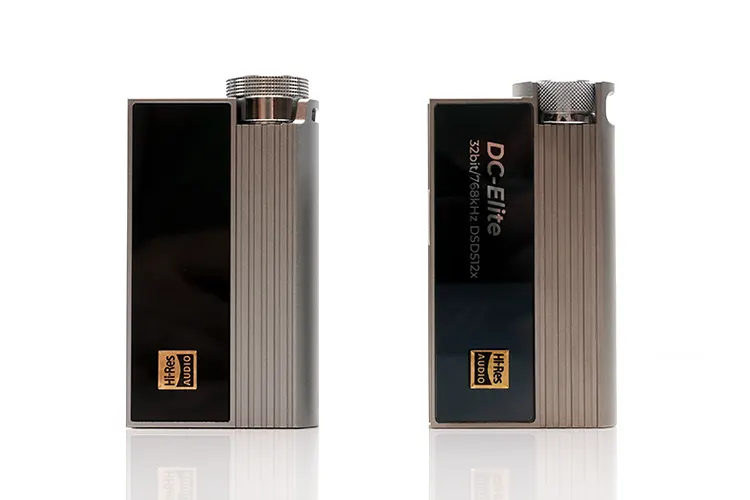
I tested 3 dongles, including the iBasso Nunchaku, the DC-Elite, and the Cayin RU7. To be honest, it’s a straight shoot-out between the DC-Elite and the Ru7.
The Nunchaku tube mode sounded much too soft and bloomy with the XCON X1 position, with a little bit of tube hiss.
Whilst it’s improved in the X2 position, it lacks the density and contrast of the other two dongles. The Solid-State mode doesn’t convey enough sparkle with the XCON compared to the other dongles.
The DC-Elite would be my pick if you need to give the XCON vocals a lift. It sounds a little more intimate than the RU7 pairing but delivers improved contrast and vocal bloom with a very punchy low-end, especially in the X1 position.
The RU7 is more relaxed-sounding through the XCON mids but offers a deeper soundstage and a more analog tone. It does an excellent job with the X2’s more spacious and neutral sound signature.
Select Comparisons
The following select comparisons to the Vision Ears XCON were completed using a mix of the Cayin N6iii/R202 combo and the iBasso DX340 DAP.
Instead of the stock cable (which did not come with the sample), I used the Vision Ears Titan Premium upgrade cable with a 4.4mm termination.
Vision Ears VE6 XControl
The Vision Ears VE6 XControl was one of the earliest CIEMS I reviewed on Headfonics back in 2014, and also a Top Gear Award winner that same year. The XCON would be considered the spiritual successor of the VE6 XControl.
Note, my VE6 XControl sample’s dip-switch died about 3-4 years ago and was repaired without the dip-switch, so it is permanently in the X1 position. Therefore, this review will focus purely on the X1 tuning differences between these two CIEMs.
Technical
Like the XCON, the VE6 XControl uses a 6 BA driver setup with a 4-way crossover with a similar configuration of two for the lows, 2 for the mids, and 2 for the highs. On paper, it might seem the same, but BA driver technology in 2025 has come a long way since 2014.
The 2014 driver picks were likely non-vented single-diaphragm, single-chamber variants, and as such, the performance of the VE6 XControl’s drivers would not be on par with the modern XCON drivers, particularly in the low-end performance.
Second, while they both have switchable X1 and X2 tuning profiles with broadly similar targeted FR regions, the VE6 XControl uses the older dip-switch mechanism, which, I have personally experienced, is prone to failure after a period of time in humid climates.
The new XCON magnet switch system’s longevity remains to be seen, but it feels more durable. You just have to be careful not to lose them or the magnet pole when changing them over.
The VE6 XControl impedance is more or less the same as the XCON at 20Ω as opposed to 21Ω, but slightly higher at 122 dB/mW compared to 115 dB/mW @1kHz.
There isn’t a huge difference, perhaps slightly less sensitivity for the XCON using the N6iii/R202 balanced R2R output in low gain mode, but the gap isn’t that noticeable.
Design
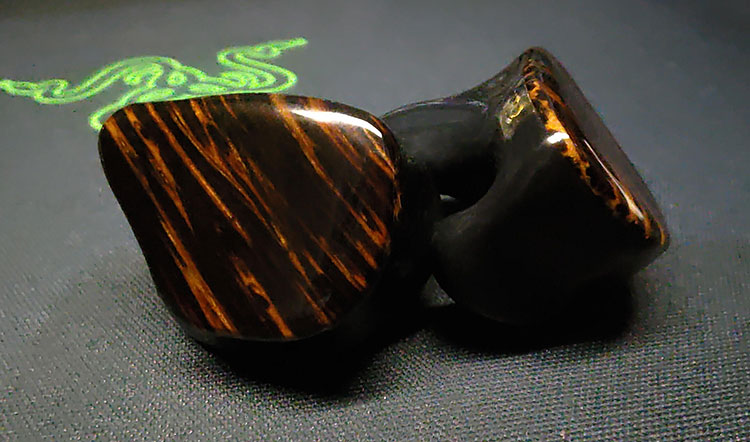
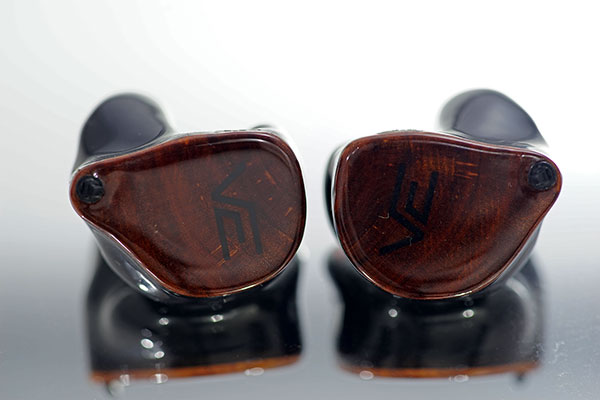
I was fortunate to receive two designs for my VE6 XControl sample. The first was a Cocobolo wood faceplate with a solid black smoked shell.
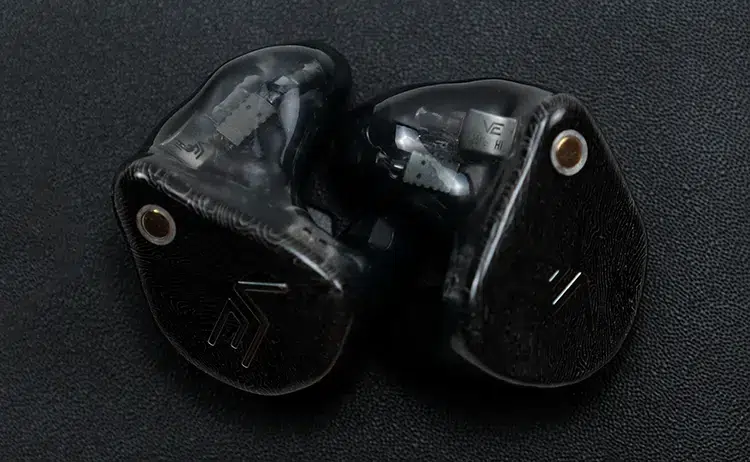
This version is a little darker than the XCON’s ‘Steel Maze Carbon’ faceplates and midnight shell, and has the black dip switch as opposed to the circular gold plate of the new magnetic switch system.
Also, the silver VE logos on the faceplate have a bit more ‘shimmer’ on the 2025 XCON design compared to the more muted VE6 XControl black version.
Cocobolo is no longer available as a design choice; the closest I can see on the VE 2025 faceplate lineup is their Blackwood finish.
The second version was completed during the repair process for the faulty dip switch. I asked for it to be taken out permanently because I listened to the X1 position 99% of the time.
I also took an opportunity to have the design updated to a Zebrano wood plate, but retaining the black shell. It came out a little darker than the configurator picture, so I am not sure if mine is the latest version, as it was done several years ago.
For sure, the new XCON designs have more pop and a nicer shimmer to their polished finish than my older VE6 samples.
The XCON form factor is slightly bigger than the older XControl, but it looks more durable. The newer acrylic finish seems thicker, the nozzle a little fatter, with the bores not as recessed, and the main shell slightly deeper in size.
As a result, there is slightly more pressure in my ear canal than in the older VE6 XControl shells, but they isolate in the same excellent manner.
Performance (X1 only)
Quite a lot of differences here, and a great insight into how far BA drivers have come in the last 10 years.
The XCON X1 sounds far more immersive than the older VE6. Courtesy of those vented dual diaphragm woofer drivers, the XON delivers far more perceived depth and a fuller set of lows compared to the VE6.
The XControl has more emphasis around 100-300Hz with less of a lower-mids dip compared to the XCON, which keeps the bass bleed in check from 300Hz to 1K. It delivers a slightly mid-bass orientated set of lows, with a lighter note fundamental frequency level.
The overall effect is like listening to a set of recordings being laid down in a small studio room via the VE6, then stepping out into the XCON arena and hearing the live version.
Instead of a dry sound with a damped instrumental arrangement sitting slightly behind the main singer, you get a much deeper and spacious presentation with clearer separation and improved ambiance when called upon.
I find the vocal imaging of the XCON a shade more relaxed relative to the VE6 from 2-4k, but that could well be relative to the stronger low-end presence. The XCON vocal timbre is more natural-sounding, slightly wetter in its coloration, and true to the VE house sound, delivering more emotional impact.
Neither of these CIEMs has huge treble sparkle in the X1 position. They are generally quite relaxed and forgiving-sounding, which, for me, is quite consistent with how VE likes to tune a lot of their monitors outside of the older VE7.
Vision Ears ZEN
The Vision Ears ZEN is the flagship CIEM in the company’s refreshed lineup and our most recently reviewed IEM from VE. It is inspired in part by the universal VE10 from 2023/24.
Technical
Unlike the XCON, the ZEN is a hybrid driver design, born out of the VE10 setup with a few refinements courtesy of a custom shell design.
The ZEN driver configuration consists of an 8mm dynamic driver combined with an acoustic low-pass and 9 balanced armature drivers, 8 of which are 4 duals and 1 super tweeter.
It has a 5-way as opposed to the XCON’s 4-way crossover with the 8mm dynamic driver for the lows, two dual BAs for the low/mids, a dual for the mids, another for the mid/highs, and the super tweeter for the ultra-highs.
The ZEN has a fixed sound signature and does not use the XCON’s switchable tuning mechanism. It has a lower impedance rating of 8.4Ω @1kHz and is slightly more sensitive on paper than the XCON at 118.6 dB @100mV @1KHz.

Design
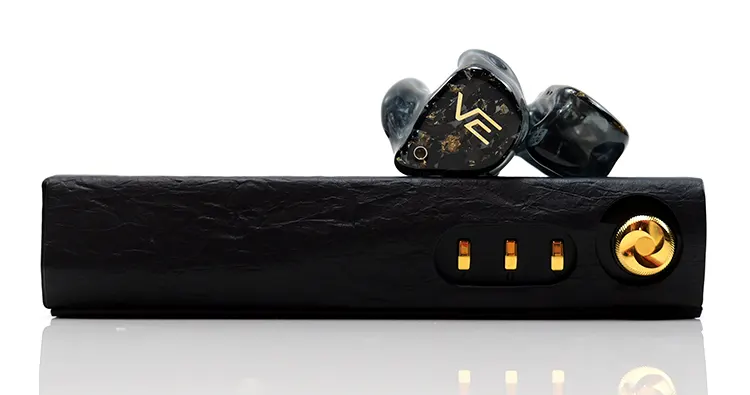
The ZEN sample I have here is finished with the same midnight main shell as the XCON sample, so both have that translucent, smoky finish underneath.
The main difference is the ZEN’s Obsidian Gold faceplate, which is a lot more striking than the Steel Maze Carbon plates on the XCON.
If put on the spot and asked to choose one, I would go with the Obsidian Gold. Its mix of gold and black flakes, and completed with the gold VE Logo, stands out more and would likely look just as good on the XCON.
The Steel Maze Carbon plates are intricate, but you need to be up close to appreciate the complexity of the finish. It is more suitable for those who want something interesting but with a lower visual profile.
The ZEN seems slightly bigger than the XCON shell, more in the depth of the main body than the plates or nozzles. I suspect the additional driver count is a factor here, but given it’s a custom, the fitting will feel the same.
The XCON’s BA driver setup means there is no venting port on the shell, allowing it to offer slightly better levels of passive isolation than the ZEN. Having said that, the ZEN’s comfort and isolation are top-notch for a hybrid.
Since it is a flagship CIEM, the ZEN gets the higher-grade 21AWG Titan stock cable compared to the 26AWG standard cable. The Titan is slightly bigger and heavier but has a more refined build quality and a superior level of dynamic range.
Performance
There is one obvious difference between the XCON X1 position and the ZEN, and the rest are more nuanced by themselves and stark when put together.
The best way I can sum up the latter is via the word “information,” and the former, the ZEN’s dynamic driver.
The XCON X1 position is firm, punchy, and quite full-sounding. It’s not as dense and natural in tone as the ZEN dynamic driver, nor does it quite have the same sub-bass presence.
The ZEN will produce a more authoritative low-end response, albeit a slightly slower one with a more natural, longer decay.
The information aspect relates to imaging, spatial cues, and the texture within each note. I find the ZEN is the more natural and organic performer, especially for female vocals, whereas the XCON X1 is perhaps more clean and precise, though not quite as richly textured for the same vocal performances.
Spatially, the ZEN casts a wider and deeper soundstage, whereas the X1 XCON sounds comparatively more intimate with less width and imaging depth. If you want an intimate vocal performance, they both do very well, though.
I believe the XCON X2 comparison is the more compelling A/B for me. X1 is more like a slightly lower-tier ZEN presentation, whereas X2 is quite different and brings some strengths to the table that ZEN cannot offer.
I find the XCON X2 position to be more neutral, slightly mid-centric with forward vocal imaging, and a stronger emphasis on clarity, air, and perceptibly improved staging width over X1.
It’s a better contrast to the richer, denser sound of the ZEN, and ideal for those looking for a bit more focus on the mids and highs with a tighter low-end.
Soundz Avant
The Soundz Avant was launched in mid-2023, and it is the Greek boutique company’s flagship custom IEM, complete with dip-switch tuning technology.
Technical
Like the XCON, the Avant is an all-BA driver CIEM. However, the Avant uses 10 drivers, as opposed to 6, with four for the bass and low-mids, two for the mids/highs, and four for the super-highs, utilizing Soundz’s ‘Complex’ electrical 4-way crossover.
Similarly, the Avant also has a resistor-based switchable tuning system, which they call ‘Immersive Mode’. However, it utilizes a traditional dip-switch mechanism, as opposed to XCON’s magnet system, and targets only the bass response, as opposed to two unique frequency bands.
The Avant also uses an external filter system called Edge Filters. These are physical inserts positioned on each of the shell’s faceplates below the dip switch.
There are two filters available, the first of which creates an airier sound by opening the isolation levels up to -17 dB, and the other is a total noise blocker, which shifts the focus down to the bass and mids.
The Soundz Avant’s load is a little lighter at 16.2Ω impedance, but it is not as sensitive as the XCON at 105 dB/mW @1kHz for SPL compared to 115 dB/mW @1kHz.
On some setups, you might have to push the volume up a little higher with the Avant, but both are fine on low-gain balanced outputs from dongles and DAPs.

Design
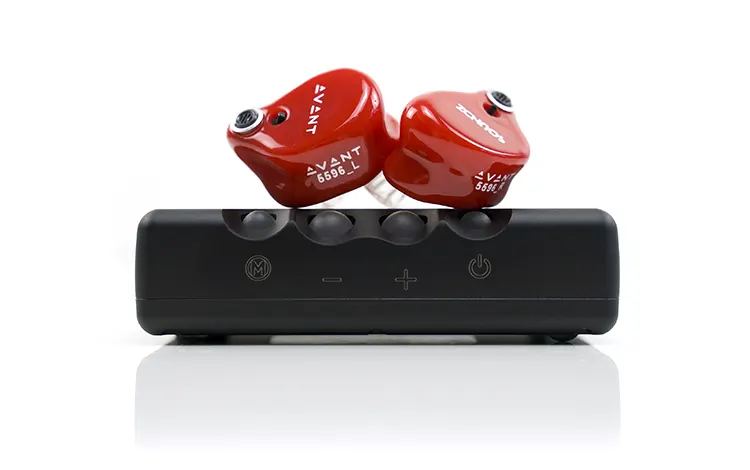
Soundz uses 3D printing for their custom formats, including the Avant, with my sample coming in an all-red format that is much bolder in aesthetics but perhaps a little simpler looking than the XCON’s mix of Steel Maze Carbon plates and Midnight shell.
I think both will appeal to very different types of owners. The Avant has a racy visual, whereas the XCON design is much more organic-looking.
The sizing isn’t hugely different, but the flexible resin tip at the end of the Avant nozzle, called Flex Fit Pro, provides a different tactile feel to the fingertips compared to XCON’s acrylic finish.
Both have a similar type of horned tip on their nozzles, though I find the Avant’s Flex Fit Pro version to be a little narrower with more bulk on the neck of the nozzle.
That changes the fitting experience for me, with a more distinct level of pressure in the ear canal from the firmer neck of the Avant as opposed to the tip of the XCON. Arguably, the Avant feels like it penetrates my ear canal a bit deeper than the XCON fitting.
Because both are BA designs, the seal is excellent, though if you plan on using the -17 dB Edge filter for the Avant as opposed to the total block filter, you might experience a small dip in isolation compared to the XCON.
Performance
In the X1 position, the XCON is the deeper, and darker-sounding monitor compared to the Immersive Mode On (bassy) of the Avant.
The Avant has some nice depth, but it’s a middle path between punch and body, whereas the XCON X1 is substantially more lifted and voluminous from 80Hz down to 20Hz.
You could argue the Avant is tighter, with a degree more separation, and there is some truth to that, but if you need more weight and body in the lows, then the XCON X1 position will provide it.
The flipside is the contrast and presence in the pinna gain with Avant’s stronger amplitude from 1-4k compared to a milder bump from the XCON X1.
Vocal imaging is closer, with more tonal contrast and slightly cleaner attacks compared to the softer, even-harmonic tone of the XCON X1 equivalent. I feel some users might prefer Avant’s stronger vocal impact.
Where the Avant falls behind is the technical side; the Avant imaging is more center-focused, even when turning off its Immersive Mode. It sounds a little 2-dimensional compared to the stronger staging depth and ambiance of the XCON.
Granted, the vocal bloom is not as strong, but the superior width and depth of the XCON X1 are noticeable. Switching to X2 enhances that perception.
With Immersive Mode off, the Avant’s only real noticeable change is the drop in bass weight. Everything else sounds more or less the same until you change the external filters, then it sounds a bit darker.
The XCON X2 is still not quite as forward with vocal imaging as the Avant, but it offers a bit more bass weight, width, and air. I find the XCON X2 presentation more immersive than Avant’s equivalent mode-off performance.
My Verdict
The Vision Ears XCON CIEM retains all the hallmarks of the Vision Ears smooth ‘house’ sound, but splits it beautifully between two distinct sound signatures: unabashed enjoyment or studied and involved listening.
It’s also a more mature and resolving presentation than the older VE6 XControl, and symbolic in just how far we have come in balanced armature technology in the last decade.
I would still consider the flagship ZEN tuning to be the end-game for those who like the X1 sound, but no question, having a choice at your fingertips is as appealing as it was back in 2014.
Combined with some of the best passive isolation shells on the market and a more robust magnet switch system, the XCON is a competitive refresh of one of their most iconic monitors in the company’s long-running customs series.
Vision Ears XCON Technical Specifications
- Driver configuration 4-way system with 6 drivers (BA)
- 2 x Bass drivers
- 2 x Full-range drivers
- 1 x Mids/highs driver
- 1 x Highs driver
- Impedance 21Ω (at 1 kHz)
- Frequency 10 Hz – 22 kHz
- Magnetic Switch X2 position -4 dB from 100 Hz downwards and -3 dB from 1 kHz to 5 kHz.
