

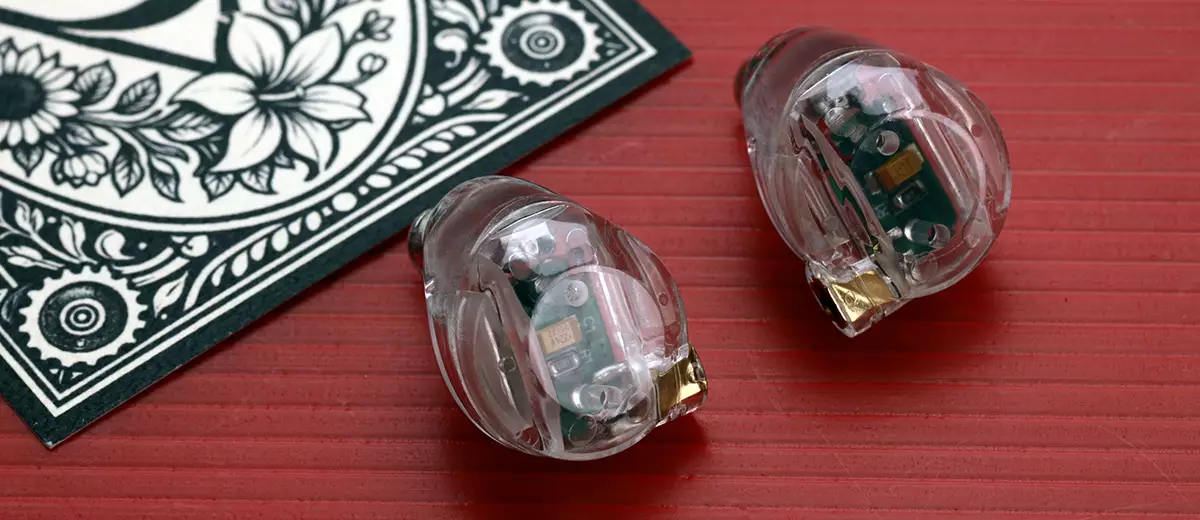
Synergy
I was expecting a reduced sensitivity compared to most of my IEMs due to the use of a smaller driver in the T-100B, but no, it has the same sensitivity as many of my IEMs, and I don’t have to adjust the volume when switching between IEMs.
This makes the T-100B’s sensitivity average, and I also noticed that it is very easy to drive; even my small USB-C-to-3.5 mm headphone adapter dongles have an easy time driving the T-100B with good dynamics.
I never heard noise or radio-frequency interference from the T-100B and its cable when using it with the cable next to my phone, with WiFi and data on.
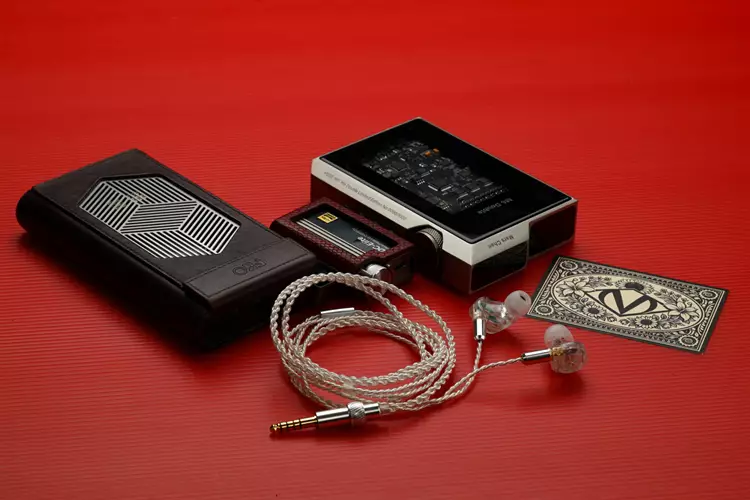
Pairings
Since it is advertised as easy for daily listening, I tested the T-100B with my Apple USB-C-to-3.5 mm adapter. I don’t have an Apple iPhone, and using the adapter with my Android phone will require a specific app and settings to enable 100% volume.
So, I use the Apple USB-C adapter with my MacBook Pro M5 as a source. That said, the sound is effortlessly loud, with a very flat frequency response and dynamic range.
I only need to use the Apple adapter at 60% volume to reach my comfortable maximum volume, and I could go even louder with plenty of headroom to spare.
When paired with the iBasso DC-Elite, a very detailed-sounding DAC amplifier, I noticed that the sound isn’t as nuanced as I expected, which means the T-100 B’s resolving power cannot fully express the iBasso DC-Elite’s resolution.
This is understandable, as very few IEMs can unleash how detailed the DC-Elite is capable of being. The good news is, the resolution is still high, yet I find the T-100B to be forgiving-sounding.
With the MUSE HiFi M6 Double DAC Amplifier in tube mode, it could sound very revealing of the recording’s faults, given its highly resolving sound with other pairings.
I find the overall sound with the T-100B to be smoother and more forgiving, yet the pairing remains neutral-sounding.
Finally, with the powerful FiiO M15S DAP, the increase in bass weight and punch is apparent, and the soundstage depth also increases. The overall sound is very smooth, bassy, and very clean within a reasonable volume level.
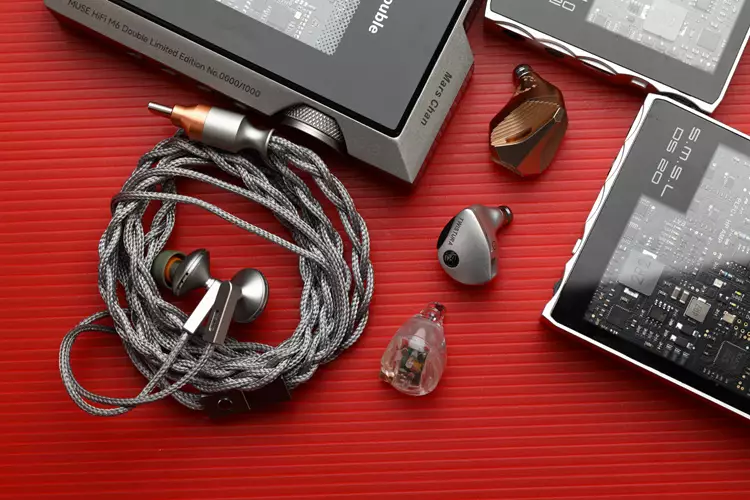
Selected Comparisons
Finding other single BA-configured IEMs is very difficult, as there are very few among the ocean of single dynamic driver IEMs, so I decided to compare the T-100B to its potential competition in the market with different driver configurations.
Since all sets in this comparison are easy to drive, I mostly used the iBasso DC-Elite, as I find its detailed sound helps me notice the differences.
Hidizs MP145 PRO
Technical & Design
The MP145 PRO is a planar IEM featuring a 7 + 7 magnet array and an upgraded 1 Tesla Fully Symmetrical Magnetic Circuit compared to the non-pro model. It has an impedance of 30Ω and a sensitivity of 104 dB.
The planar diaphragm itself is manufactured with very high precision, which increases the copper trace, thereby increasing detail, response speed, and dynamic range.
The design is whale-inspired; the faceplate resembles a whale’s tail fins. The internal design features hidden ventilation ports on the whale-tail fin faceplate. When viewed from the side, two slot-type vents are on the opposing sides.
The aluminum alloy shell is on the big side; fortunately, it is not too heavy. At 10.2 grams each, it falls within the norm for IEM weight.
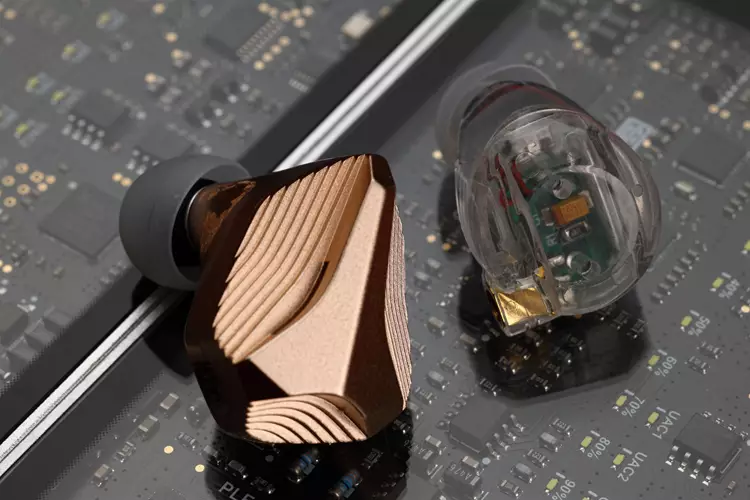
Performance
Although I consider the MP145 PRO to be a near-neutral, mildly V-shaped sounding set, when compared side by side to the T-100B, the mildly boosted mid-bass and the elevated upper treble become very apparent.
The MP145 PRO sounds more contrasty with its boosted bass and upper treble air, while the T-100B sounds very flat and somewhat less exciting. And because of that, it helps the MP145 PRO with staging, as it has a wider stage than the T-100 B does.
I also find the MP145 PRO to have a deeper and higher soundstage. The T-100B isn’t too far behind; it’s just that the MP145 PRO sounds more spacious.
They are about equal in terms of imaging; both are good, with acceptable definition. However, I find the MP145 PRO to be more holographic and surround sound-like, and the T-100B to be more immediate in presentation.
Dynamically, both are very dynamic and have good energy; even at low volumes, the MP145 PRO only takes a slight lead with a cleaner, louder sound.
TWISTURA Woodnote
Technical & Design
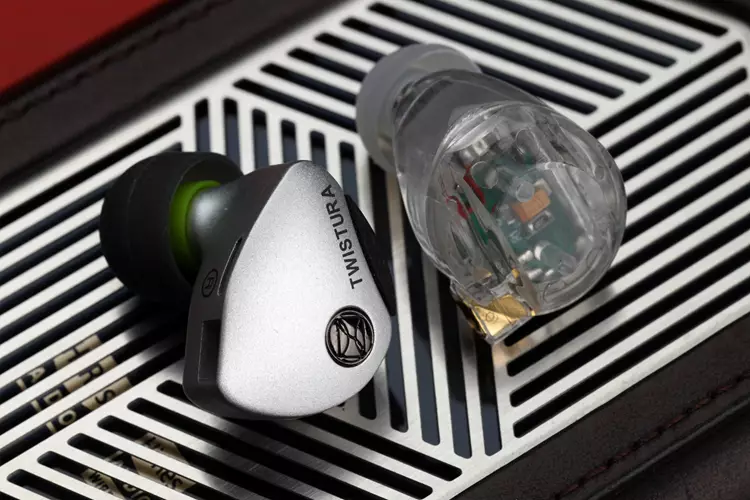
The main feature of the TWISTURA Woodnote is a selected wood-fiber composite pressed into a dome shape and suspended by a flexible suspension of an undisclosed material, presumably silicone, which serves as the diaphragm.
It uses a 10mm dual-magnetic system, which provides a powerful motor for high efficiency and dynamics. It also has a dual-chamber structure that optimizes airflow and minimizes diaphragm resonance.
The Woodnote has an impedance of 18Ω and a sensitivity of 125 dB.
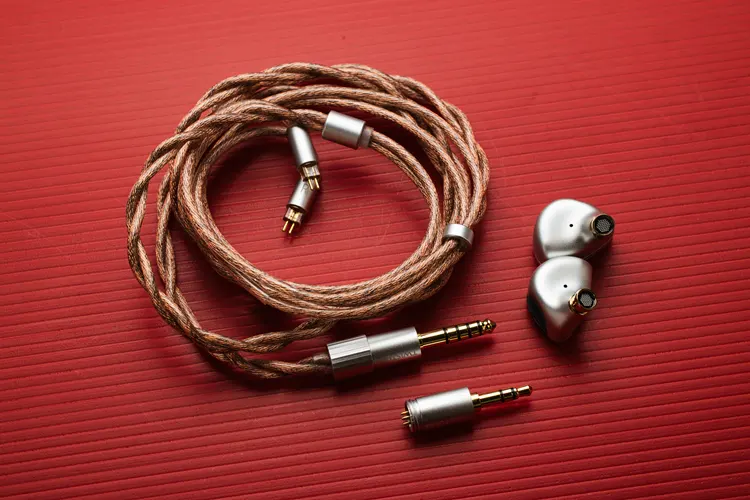
A switchable nozzle system allows changing between the standard, vocals, and instruments. There are noticeable differences in sound between these tuning nozzles. As can be seen in the measured graph, there are differences.
I love the simple design and the comfort of wearing the TWISTURA Woodnote, but I’m wary about the black rubber part on the side of the faceplate, as it might rot over time.
Performance
Compared to the T-100B, the Woodnote sounds much bassier and warmer; there is an apparent tilt of the frequency response to the bass.
However, from the midrange to treble, they have a very similar neutral sound, which makes the Woodnote sound tonally darker than the T-100B.
Due to the Woodnote’s darker tonality, I find its soundstage to be less wide but deeper than that of the T-100 B. I find the soundstage of the T-100B more spacious and natural-feeling than the distant, darker presentation of the Woodnote.
In terms of imaging, I find the distant presentation of the Woodnote less accurate than the more immediate, precise imaging with the T-100B.
The Woodnote isn’t that bad, but its darker tonality influences how I perceived the imaging performance in this side-by-side comparison.
When it comes to dynamics, Woodnote sounds more dynamic in the bass, and the T-100B sounds more dynamic and energetic over its full frequency range.
However, when I turn the volume up to see how loud they can get, the Woodnote can go even louder and cleaner.
ddHiFi Memory E13P
Technical & Design
The ddHiFi Memory features a 13mm ultra-linear planar driver developed by MOONDROP.
The driver is innovatively designed with a unique arrangement of circular magnets sandwiching a flat membrane, with a flat, circular voice coil attached around the center.
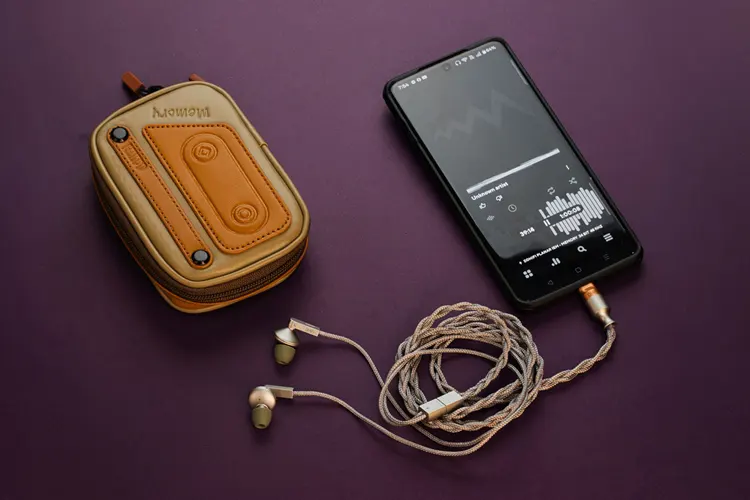
The Memory has a built-in, non-removable cable that uses the CS43198 DAC chip to decode digital audio signals into analog; it accepts PCM and DSD signals.
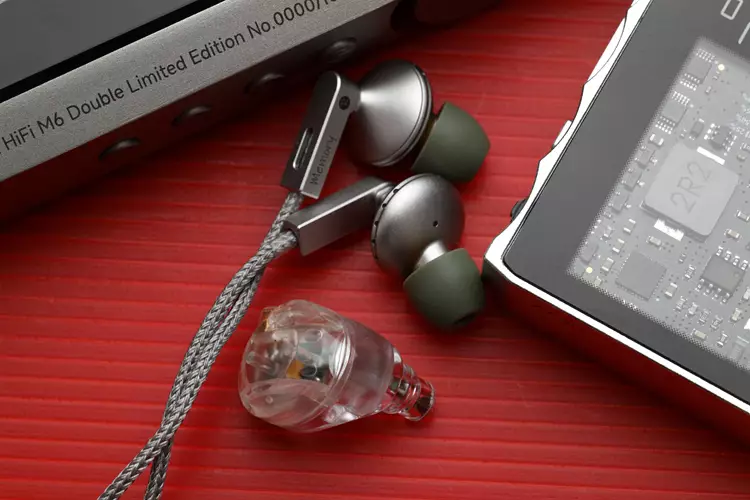
In-line control is built into the cable, with a built-in mic for calls, recording, and music play/pause. This feature has its own wire, so the left and right audio signals are not interrupted with additional solder connections.
It has a semi-in-ear design with a flying-saucer-shaped driver shell and ten vent holes on the side, resembling viewing windows on a flying saucer. A nozzle protrudes from the front end of the shell, and a post-shaped cable port is connected at the rear.
Performance
Though I would call both neutral-sounding with their relatively flat, even frequency response, I find the T-100B to have a more accurate, more monitoring-like tuning with its more forward sound presentation. In contrast, the Memory has a less forward sound.
If I weren’t comparing them side by side, I would easily mistake them for having the same tuning. The biggest difference between them is that the Memory sounds darker with a more rolled-off, smoother treble sound.
The T-100B has a more forward upper midrange and lower treble and is more accurate-sounding overall. However, in terms of bass, they are about the same.
I find the T-100B to have a wider stage, while the Memory has a deeper stage with longer instrument decay.
But when it comes to imaging, they are about equal, with the T-100B slightly better due to its slightly more forward presentation than the laid-back Memory.
Though they have about the same maximum clean loudness, which is very satisfyingly loud, I find the T-100B more energetic and immediate in presentation.
The Memory has a laid-back, relaxed dynamic that generally sounds gentler but less accurate than the T-100B.
My Verdict
The MAKINAaudio T-100B has a neutral, detailed, and monitoring-like sound. There is a slight roll-off in the treble to counter the subbass roll-off, making the T-100B a very balanced-sounding, slightly midrange-centric IEM.
That is what I like about the MAKINAaudio T-100B, as it is a nice departure from most IEMs with a somewhat V-shaped sound.
It will not impress you with huge bass and overtly airy highs but will mostly give you an honest sound presentation.
What I’m not very fond of is the appearance; I’d like it to have a more contemporary, hi-tech style like most of its competition, rather than its boring look.
As a photographer, I value aesthetics and wish MAKINAaudio would make their next IEM look flashier and prettier.
MAKINAaudio’s promise of controlled lows, honest mids, effortless highs, nothing exaggerated, nothing missing, just coherence, is very apparent in the T-100B.
For that, I can recommend the MAKINAaudio T-100B to people looking for this type of sound.
MAKINAaudio T-100B Technical Specifications
- Driver Configuration: Single Balanced Armature
- Frequency Range: 10 Hz – 24 kHz
- Impedance: 23 Ω
- Sensitivity: 110 dB
- Cable: 8-core 6N OCC
- Connector: 5 mm / 4.4 mm
- Nozzle Diameter: 5.8 mm
- Weight Per Earpiece: 3 grams
