

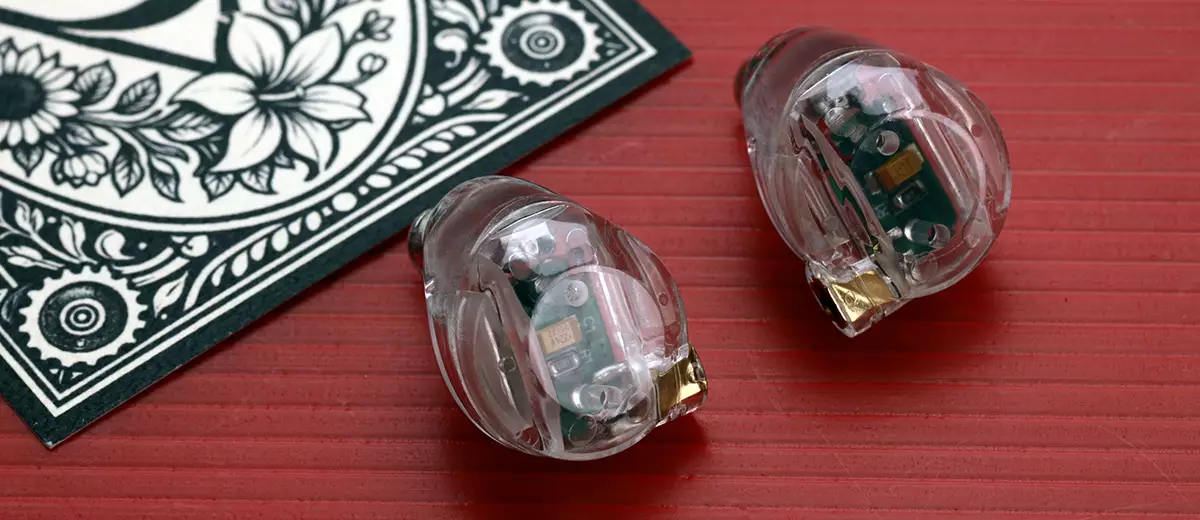
Marcelo reviews the MAKINAaudio T-100B, an affordable new single balanced armature driver universal in-ear monitor currently priced at $149.00.
Disclaimer: This sample was sent to me in exchange for my honest opinion. Headfonics is an independent website with no affiliate links or status. I thank the team at MAKINAaudio for their support.
Click here to read more about the Balanced Armature IEM previously reviewed on Headfonics.
This article follows our current scoring guidelines, which you can read here in more detail.
MAKINAaudio is a new audio company from South Korea, having debuted in December 2025, but some of the company’s people have over 20 years of experience in the audio industry.
The MAKINAaudio T-100B sells for $149 and is a classic single BA (balanced armature) driver IEM.
Single BA IEMs have been reviewed here at Headfonics, such as the Westone UM10 Pro and the Campfire Audio Satsuma. Still, they are becoming rarer with the rise of affordable hybrid and the ever-popular single dynamic-driver models.
Therefore, my assessment of the MAKINAaudio T-100B will be more price-sensitive than driver-sensitive with comparisons to the likes of the Hidizs MP145 PRO and the ddHiFi Memory.
So, let’s see how the MAKINAaudio T-100B performs against these IEMs in the review below.
Features
The T-100B features a custom-designed full-range single BA driver coupled to a network of electronic parts for frequency response shaping and control. It has an impedance of 23Ω and a sensitivity of 110 dB.
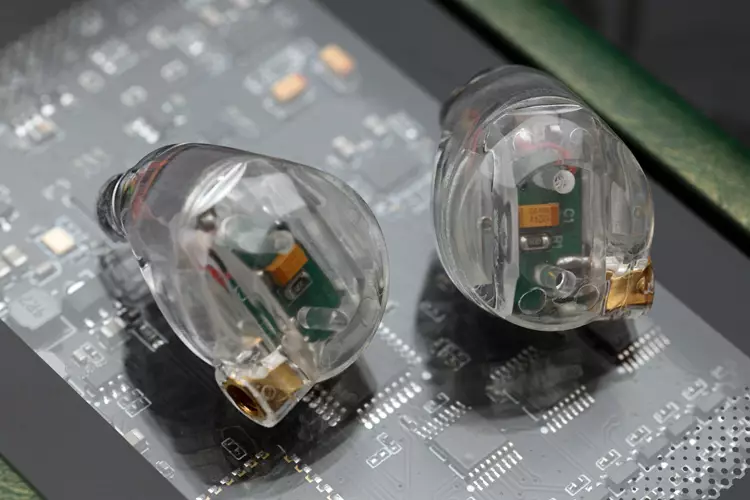
The electronic network can be seen through the transparent shell of the T-100B, which delights me because it could mean that proper response shaping has been done for good sound.
Electronic response-shaping networks are more effective and accurate at shaping the sound than IEMs that rely solely on acoustic chambers and tuning filters. The T-100B also employs a tuning filter placed inside the nozzle.
Design
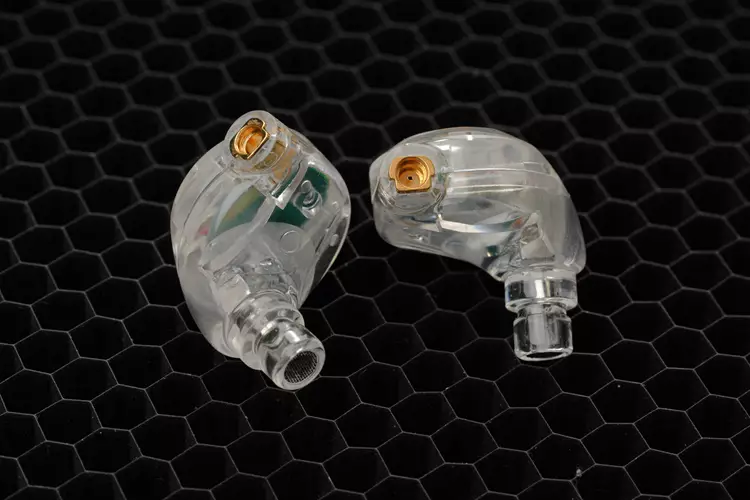
The overall T-100B shell design looks plain, utilitarian, and simple, with no complicated geometry; it has a straightforward IEM design.
It won’t win any awards in my IEM beauty contest, but it looks inoffensive and very suitable for daily use, just as MAKINAaudio intended.
On close inspection using a magnifying glass and a flashlight, I see a screen in the nozzle and a green BA filter inside, following the BA driver.
There is a PCB with one capacitor and one resistor connected between the MMCX input connector and the BA driver.
I don’t hate MMCX connectors, but I would be happier if the T-100B used the more popular 2-pin connectors for practicality and easier cable replacement, since I have plenty of extra 2-pin cables.
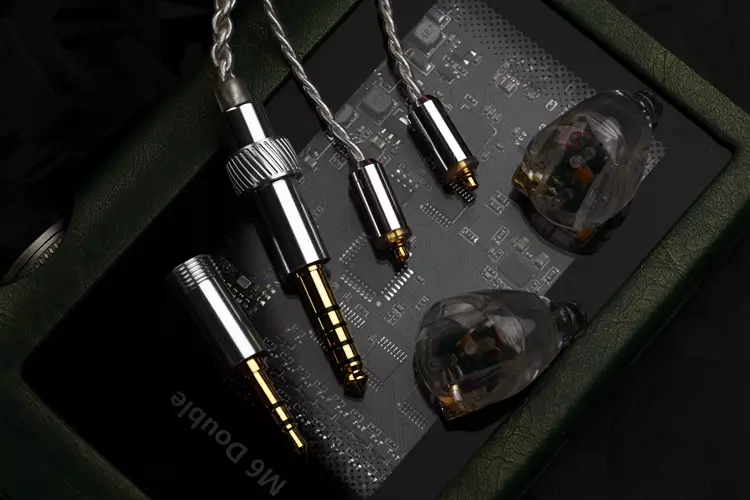
Stock Cable
Except for the cable cinch, which is made of a clear rubber, all the parts look elegantly made of metal with a shiny chrome-like finish.
The 1.2-meter cable itself looks and feels high quality and is made of 6N OCC, which is better than the more common OFC.
The cable is neither too thin nor too thick; it is thick enough to prevent easy tangling and thin enough for easy portability.
It terminates in an MMCX on the IEM side and a modular plug system, with both 3.5 mm single-ended and 4.4 mm balanced connectors on the input side.
My only complaint about the cable is that it has no ear hooks, which makes it fiddlier and more confusing to wear.
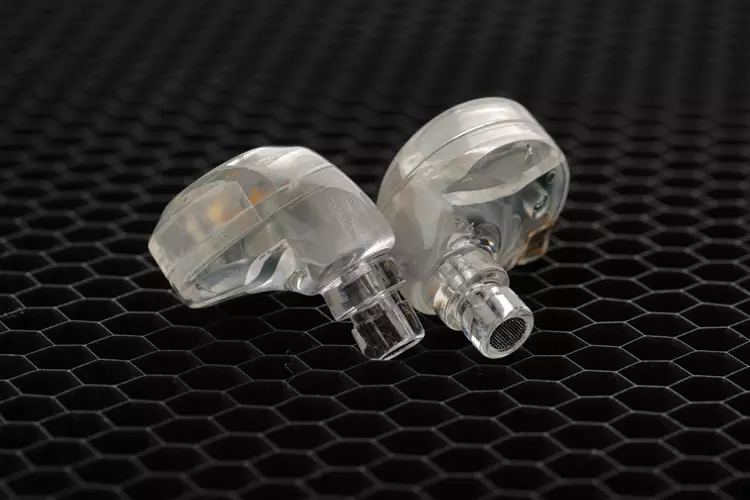
Comfort & Isolation
Even though there are no vent holes in the shell for pressure relief, I was surprised that the T-100B never caused a pressure build-up and changes in the ear canal; I attribute this to its lightness and good fit.
The T-100B is very light, weighing only 3 grams, and comfortable to wear during long listening sessions at home, while walking in a mall for exercise, or just in a coffee shop enjoying the ambiance and the coffee.
Thanks to the vent-free shell design, the noise isolation is above average. There is a good attenuation of the ambient noise, but I can still hear it.
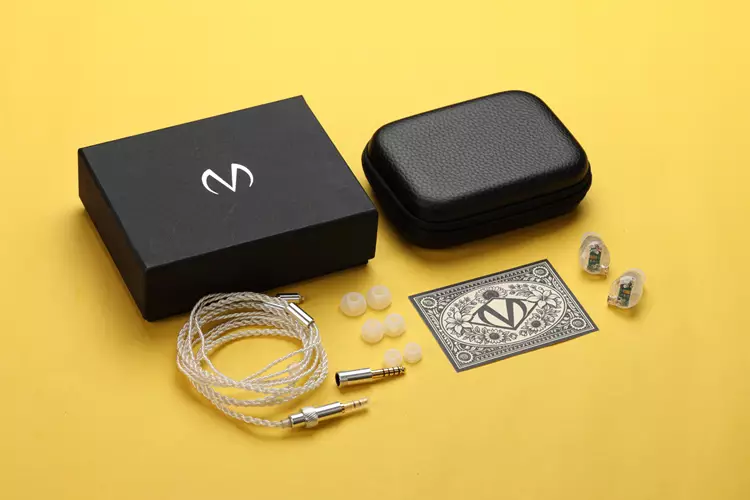
Packaging & Accessories
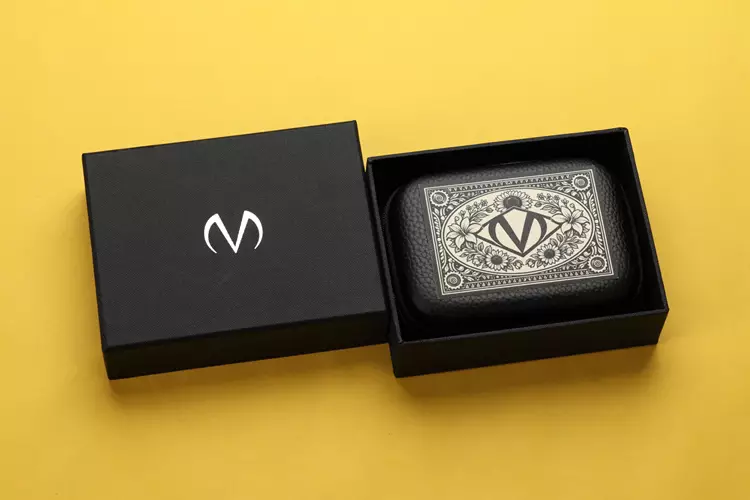
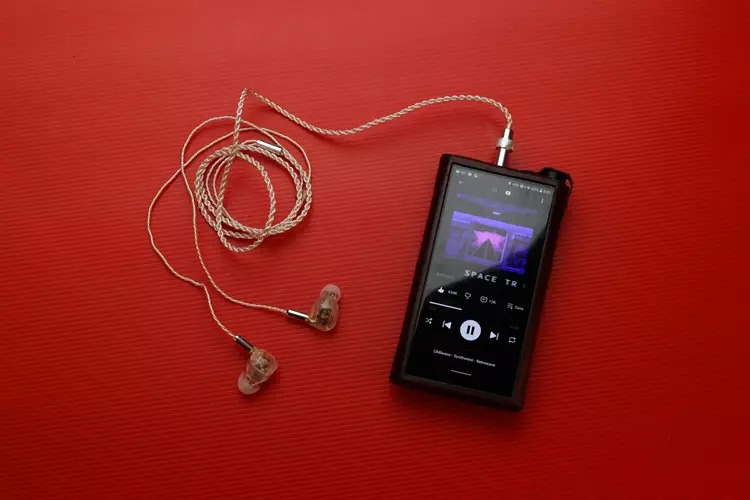
The T-100B packaging style is simple yet elegant. I like that it is ready to use out of the box, with the cable and ear tips already installed.
One notable design point of the box is that the top cover doesn’t go all the way down, so that I can grab the lower part for easier unboxing.
The box measures 134 x 104 x 43 mm and includes a pair of T-100B IEMs, a 1.2 m cable, 3.5 and 4.4 mm plugs, four pairs of ear tips, a leather carrying case, and a warranty card.
Sound Impressions
I have always read that balanced armature drivers don’t need burn-in, and I would agree based on my experience. Still, I did a 24-hour burn-in to make sure.
For the sources, I used my iBasso DC-Elite and MUSE HiFi M6 Double DAC amplifiers, with my Android phone and the FiiO M15S DAP, using either YouTube Music, UAPP, or PowerAmp music player Apps. No EQ or any sound enhancement programs were used.
I used the stock cable and the factory-installed eartips. Additionally, I listen at medium-to-loud volume levels.
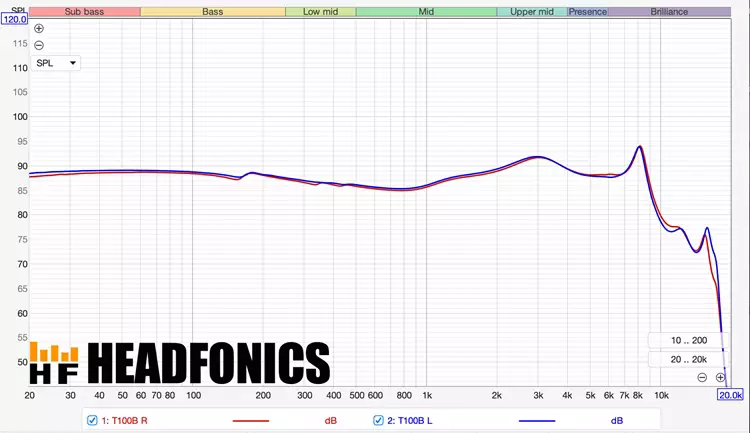
Measurements
My measurement reveals a perfectly channel-balanced pair, practically speaking, indicating very high production quality.
The graph looks very neutral, with a very flat bass, a very gentle pinna gain of only 7 dB at 3 kHz, and very smooth treble.
The peak at 8 kHz is merely a measurement artifact; its frequency varies depending on how deep or shallow I insert the T-100B into my measuring rig, and it is not audible in actual listening.
Summary
MAKINAaudio tuned the T-100B not to impress but to endure daily music listening, with a neutral, natural, and clear sound without overtly boosted bass and treble.
The T-100B has a very neutral bass with a flat frequency response and no perceived boost, which takes a few moments to get used to, especially if you are coming from a contemporary IEM, where there is almost always a bass boost.
I find the bass to have fast attack and decay, with good articulation and detail, and even though there is no bass boost, the bass impact is still good. However, the subbass response is a little subdued.
I must say the midrange is the best part of this IEM; it is very smooth and flat in response, and the upper midrange is smooth and slightly forward but never shouty.
Because of the neutral, flat bass, the overall sound is a little midrange-centric. But despite that, the instrument and vocal note weight is accurate and never thin.
The treble is flat, neutral, and smooth with a slight bump in the lower treble. It has a monitoring-style neutral treble with plenty of detail, but won’t wow you with much air.
Air is not totally absent, but it is not the focus of the sound. The T-100B’s treble is more focused on the instruments rather than their harmonics and air.
Coloration
Aside from the slight midrange-centricity in sound, due to the slightly rolled-off subbass and upper treble, the T-100B’s overall sound signature could sound bass-light, especially with songs that have lean bass, such as some old pop songs.
I would sometimes increase the bass a little using EQ when I’m listening to those types of songs. But for most modern songs, the T-100B sounds normal and neutral with appropriate bass presence.
Another thing I noticed is that when the volume is high, and the song has a deep bass kick or deep organ/synth sound, I can hear a faint hissing noise and distortion coming from the driver.
Though it is not so obnoxious and easily ignorable, and masked by the rest of the music, it only occurs at very loud volumes.
Soundstage & Dynamics
The T-100B soundstage isn’t the biggest, but it is quite spacious; there is slightly more width than depth and height, and the presentation is slightly laid-back and not in-your-face.
There is always a comfortable space between the main vocalist and me, but it isn’t too far away.
I must say that the T-100B neither increases nor decreases the stage size; it is accurate in presenting it, unlike some IEMs that artificially inflate it at the expense of accuracy.
In terms of imaging, the T-100B’s images are easily locatable in the soundstage with good side-to-side and front-to-back separation and layering, and there is some semblance of holography in front of me. However, the images don’t have the most defined edges, but they are never diffused either.
Despite having a single BA driver with a smaller radiating area than most 10 mm single dynamic driver IEMs, I never experience dynamic compression with any of my music at high volumes.
The T-100B would go into a faint distortion, but I never heard it compress the dynamics at my maximum-volume playing bass music.
Click on page 2 below for my recommended pairings and selected comparisons.
