

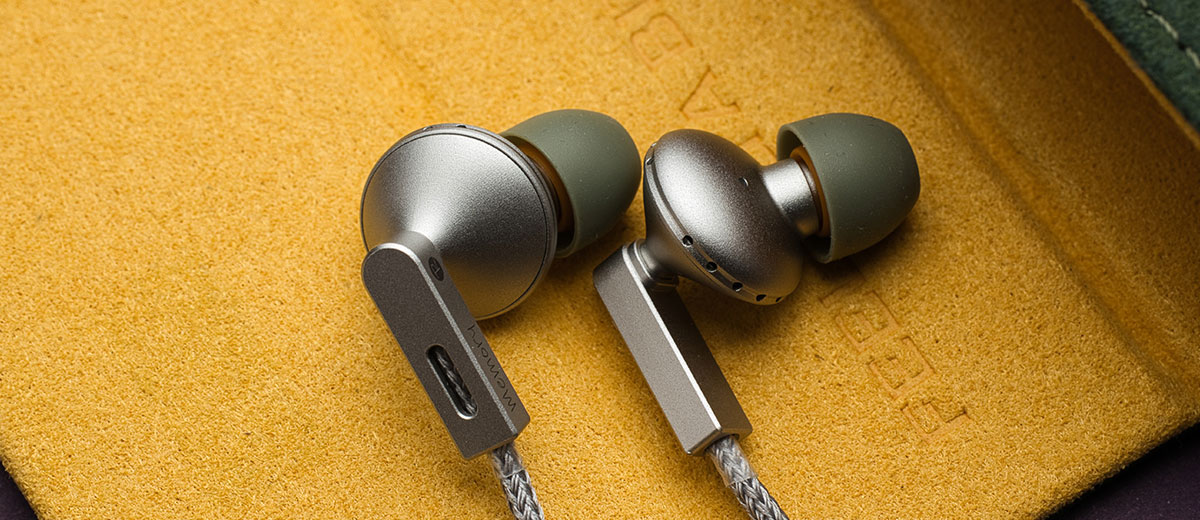
Marcelo reviews the ddHiFi Memory, an affordable set of semi-in-ear 13mm planar driver earphones with built-in USB-C OTG compatibility. They are currently priced at $169.99.
Disclaimer: This sample was sent to me in exchange for my honest opinion. Headfonics is an independent website with no affiliate links. I thank ddHiFi for their support.
You can read about previous ddHiFi products we have previously reviewed on Headfonics here.
This article follows our latest scoring guidelines, which you can read here.
ddHiFi Memory is a collaboration product between ddHiFi and MOONDROP. The cable is similar on the outside to ddHiFi’s M130B Coffee Cable, while the drivers used are MOONDROP’s 13mm planar driver, as seen in the MOONDROP Concerto.
I’m no stranger to IEMs with cables that have built-in DSP and amplification, as I owned a MOONDROP May and a MOONDROP Quarks DSP, among others.
What I’m new to is the newly developed planar driver in a semi-in-ear designed shell, featuring a cable with built-in DSP and amplification.
ddHiFi and MOONDROP have promised that the uniquely designed 13 mm planar driver used combines the strengths of traditional planar and dynamic drivers, with 10x higher electroacoustic efficiency than traditional planar drivers.
Will ddHiFi and MOONDROP deliver on their promise? Or how will the ddHiFi Memory, which sells for $169.99, compare to others, such as the MOONDROP May and competing planar IEMs, such as the Hidizs MP145? Find out in my review below.
Features
Memory features a 13mm ultra-linear planar driver developed by MOONDROP. The driver is innovatively designed with a unique arrangement of circular magnets sandwiching a flat membrane with a flat and circular voice coil attached around the center.
According to MOONDROP, this new 13mm planar driver has the strength of both dynamic and planar drivers, with 10x the electroacoustic efficiency compared to traditional planar drivers.
Memory utilizes the CS43198 DAC chip for decoding digital audio signals into analog; it accepts PCM and DSD signals.
In-line control is included in the cable with a built-in mic for Calls, recording, and music play/pause. This feature has its own wire, so the left and right audio signals are not interrupted with additional solder connections.
An effective pressure relief system is employed to prevent air pressure in the ear canal, which can cause discomfort, nausea, and headache to some people.
Design & Stock Cable
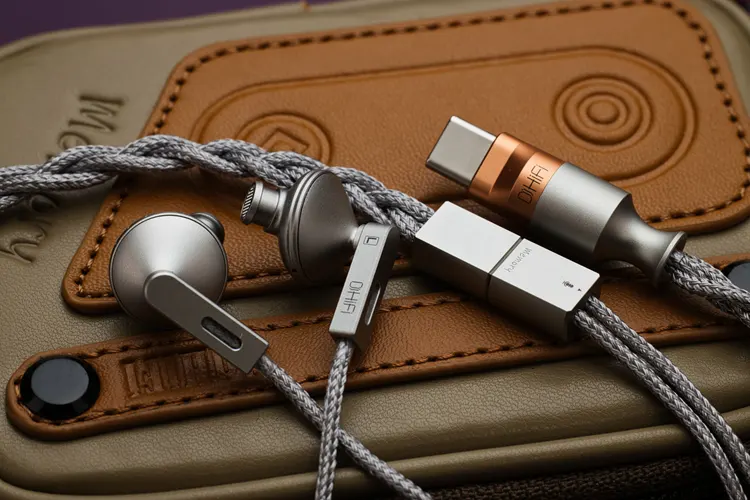
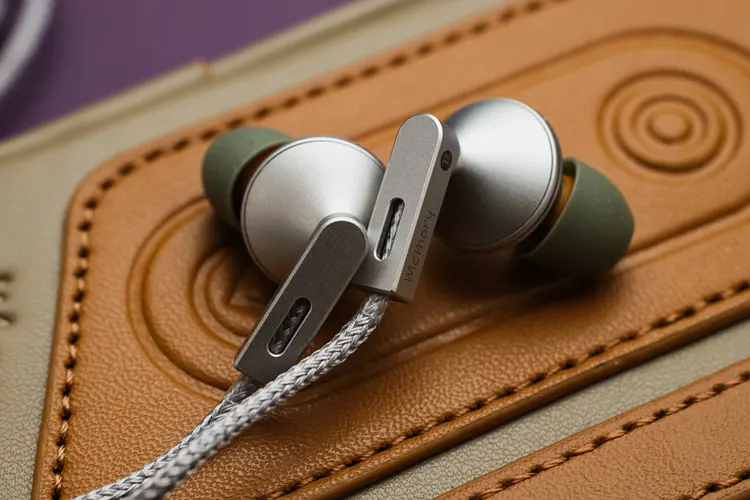
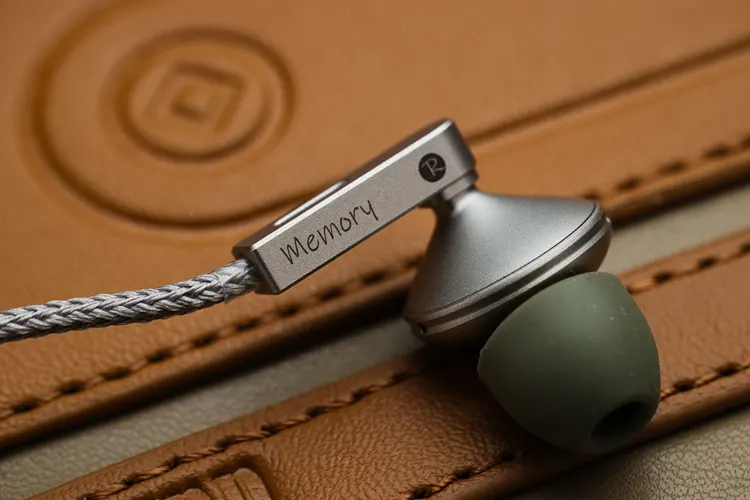
I like the semi-in-ear design, especially the flying saucer-shaped driver shell with the ten vent holes on the side, which also looks like viewing windows for a flying saucer.
A nozzle juts out from the front end of the shell, and a post-shaped cable port is connected at the back.
Memory’s cable shares a very similar design to the ddHiFi M198C and the M130B Coffee Cable; the differences include color, wire composition, electronics, and the 2-pin connectors. Otherwise, the design is very similar. Unfortunately, Memory’s cable isn’t removable.
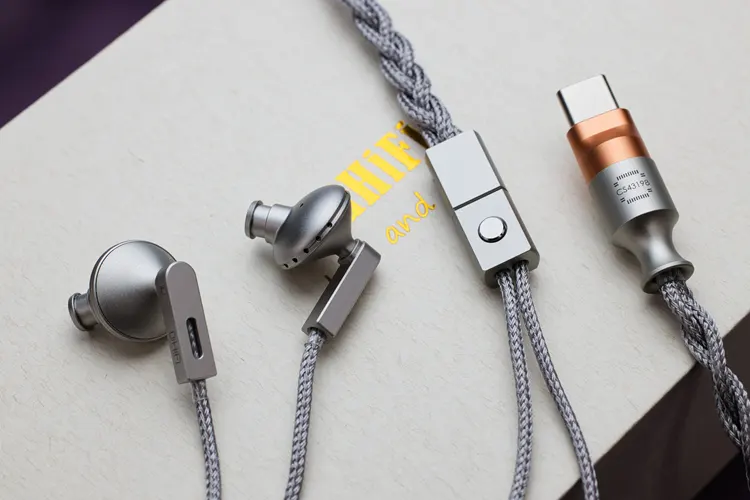
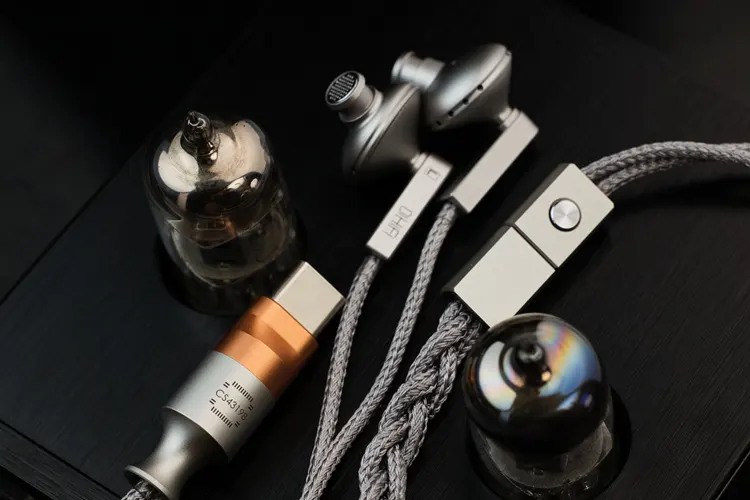
USB-C plug is the same style plug used by ddHiFi in most of their USB-C to USB-C connectors; the USB decoding chip, as well as the CS43198 chip, and other components are housed in the tiny USB-C plug.
The RGB Indicator light can be seen at the back of the plug. It lights up blue during standby, green when decoding the PCM signal, and Red when decoding the DSD signal.
Three wires are coming out of the back of the USB-C plug: two wires are for the left and right signals, and the third wire is for the microphone and controls. The metal cable splitter has a single control button.
Carrying Case
Memory comes with a nice-looking, synthetic leather, and retro-designed carrying case with a YKK zipper that invokes memories.
Although I don’t listen to 70’s, 80’s, and 90’s music anymore, except for some old Japanese pop music, Memory relates a lot to me, as I often listen to chillwave, synthwave, Retrowave, etc, which are new music genres inspired by the old time music with a futuristic twist, just like the ddHiFi Memory is.
That said, I have this feeling that the Memory was especially made for me every time I use the earphones with the carrying case.
I/O
As an earphone with a non-removable built-in DAC amplifier cable, there is only one input, and that’s the USB-C plug of the Memory, which contains the USB, CS43198, DSP chips, among others.
I haven’t tried the Memory with a gaming console, and ddHiFi never said it has UAC 1.0 compatibility, so I highly doubt that Memory can be used with gaming consoles that require UAC 1.0 USB mode.
Controls
Memory has only one multifunction control button, located in the cable splitter.
A single click would pause the music, a double click would skip forward to the next sound, a triple click would skip to the previous sound, and a long press would trigger the ask Gemini prompt in my Android phone during music playback mode.
During calls, a click on the multifunction button would answer the call.
Comfort and Isolation
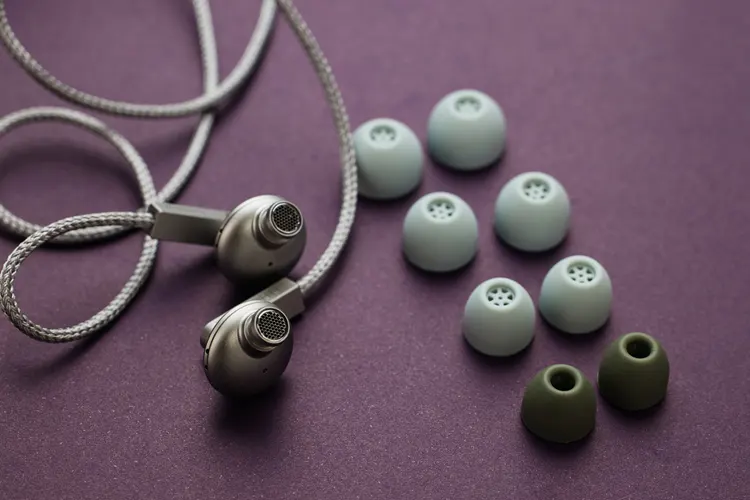
Thanks to its ergonomic shape, lightweight, regular diameter nozzles, and pressure relief system, Memory is comfortable to wear on long listening sessions, during walking exercise, or just about anytime, anywhere.
Isolation is below average, as it allows outside sound to be audible more than average IEMs. In my observation, I suspect this is due to the vents found around the shell of the Memory; however, the outside sound is completely masked when music is playing at moderate volume levels.
With its low sound isolation, lightweight, and comfortable wear, I always forgot that I had earphones mounted on my ears while I was doing my walking exercise, which is a good thing.
Packaging & Accessories
Memory’s packaging is straightforward; it uses a white box with a graphic print at the front that inspires youthfulness and energy, and some specs are printed on the back.
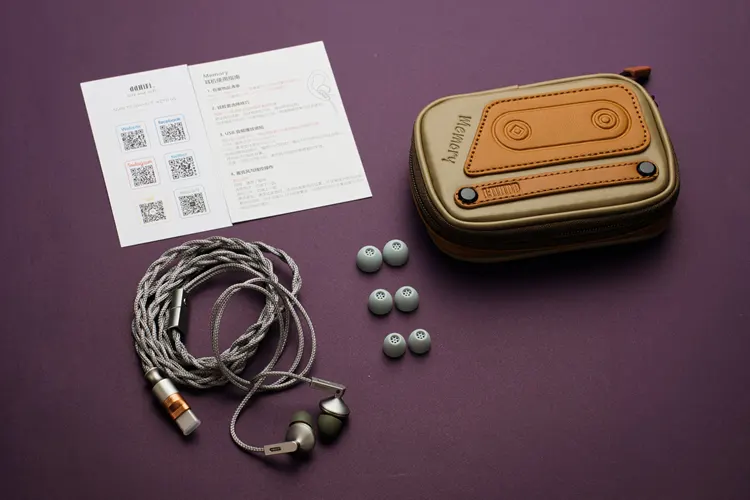
Packaging includes the Memory earphones, one pair of ddHiFi ST35 small ear tips, three pairs of Kiwi Ears Kiwiflex ear tips, CZ120 carrying case, manual, warranty card, and compliance certificate.
Sound Impressions
I performed my standard 24-hour burn-in by letting it play with a spare music player for about 8 hours at a time over a couple of days, followed by some critical listening.
In hindsight, an hour of burn-in should be enough, as I didn’t hear any meaningful improvement after an hour of burn-in.
For the sources, I used my Android phone, OnePlus 13, as the music transport, with either UAPP or PowerAmp music player App. No equalizer was used, nor any sound enhancement programs.
I used the factory-installed ddHiFi ear tips rather than the Kiwi Ears Kiwiflex ear tips, as I find them somewhat diffuse-sounding.
Objective Impressions
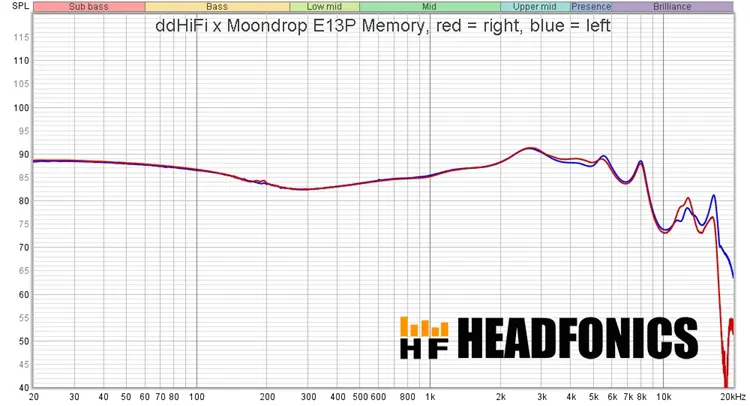
My measurement reveals an excellent left-and-right channel matching, indicating high manufacturing quality—an overall normal-looking graph with no unusual quirks that may color the sound.
The peak at 8kHz is a measurement artifact caused by the cavity resonance of my measuring tool interacting with the IEM nozzle.
Bass is moderately boosted but with a mild tuck in response in the lower midrange. The upper midrange peak or pinna gain is moderate with a 9 dB peak at around 2.7 kHz.
Treble gradually decays in response after the peal, with some minor peaks, and extends well into the upper treble.
Subjective Impressions
With only two types of ear tips included and the non-removable cable with built-in DAC and DSP, the review process is straightforward, as I didn’t have to find a variety of sources for pairing. Once I decided on the ear tips, it was plug-and-play from day one.
Needless to say, Memory is easy to use and easy to enjoy with its warm, bassy, and slightly V-shaped sound signature that is full of energy and musical engagement, without sounding bright, noisy, and fatiguing.
Sub-bass and mid-bass are slightly boosted and have good presence in most songs, preventing most ’80s pop songs from sounding too thin. Yet not too boosted enough to make modern bassy songs sound muddy.
I didn’t know Memory used a planar driver when I first listened to it. I never noticed that the bass sounded like the typical planar bass sound when the textures are dry. The weight is light, though not the most extended bass; Memory’s bass sounds like a typical single DD bass.
Midrange is remarkably even in response and balanced between the lower and upper midrange. There is a slight warmth in the midrange due to the moderately mild upper midrange elevation or pinna gain peak. Giving the vocals their body and the instruments the proper note-weight.
Lower treble is mildly elevated, but not as much as the bass; upper treble sounds laid-back, resulting in an overall warm and somewhat dark sound. But not too dark, as there is an abundance of information coming from the treble.
There is a clarity in the treble that resembles the sound of traditional planar IEMs, but the sound is not quite as airy and detailed as some planar IEMs, and not as harsh-sounding as some planar IEMs either.
Coloration
I don’t find the sound of memory too colored, as no unnatural sounds are coming from it, like metallic sound or sharp upper midrange and treble peaks; the sound is smooth.
However, I couldn’t help but notice that every time I listen to Memory, the overall sound balance is biased towards the bass and lower midrange, despite the measure graph indicating otherwise. Perhaps the dip in 10kHz helped in making it so.
Soundstage
Staging performance is generally good when tested with various songs and music genres.
Though the size is average, it never sounds cramped, and most importantly, the shape is not flat like a two-dimensional wall of sound in front, but rather, Memory’s soundstage has a semi-spherical shape which is deeper than it is wide.
I can’t help but think that if the upper treble were more prominent, the soundstage would sound more spacious and broader, but as it is, it’s not bad at all.
Imaging
There is a good lateral panning of the instrument within the somewhat limited width of Memory’s soundstage, with acceptable definition and localization; however, the images are not the most defined and separated I’ve heard.
There is a good sensation of front-to-back layering, especially when the main vocals are present, as they are presented slightly laid-back, and the accompanying instruments are even further back than the main vocals.
However, it cannot project images behind me well. Images seem to all come from the front.
Dynamics
I’m delighted to say that my initial concern about the Memory not producing adequate loudness due to the use of planar drivers and a small amplifier has been alleviated. Thanks to its unique planar driver design.
Memory sounds remarkably energetic and bubbly in the bass, from low to moderately loud listening volumes. Even at loud volumes, no distortion or amplifier clipping can be heard, and the power limiting and compression aren’t apparent.
Click on page 2 below for my recommended pairings and selected comparisons.
