

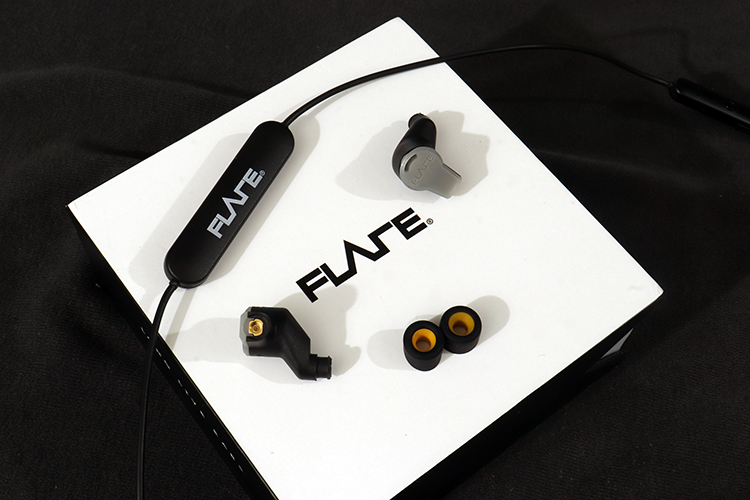
Louis reviews the Flare Audio Flare Studio Master, the company’s flagship 10mm beryllium dynamic driver IEM offering wired and wireless connectivity. It is currently priced at $189.95.
Disclaimer: This sample was sent to me in exchange for my honest opinion. Headfonics is an independent website with no affiliate links or partnerships. I would like to thank the team at Flare Audio for their support.
Click here to read more about the Flare Audio products previously reviewed on Headfonics.
This article follows our current scoring guidelines, which you can read in more detail here.
We have a new IEM from Flare Audio called the Flare Studio Master. This is their enhanced or upscaled model, based on our recently reviewed entry-level Flare Studio monitor.
The three IEMs within the Studio model series comprise the Studio, the Studio Pro, and the flagship Flare Studio Master, which offers both wired and wireless connectivity options.
The Studio Master IEM design was unique enough to receive the King’s awards for Enterprise Innovation this year.
It’s certainly different and a break from tradition in the sense that the overall design started as something else and has now morphed into an IEM.
Features
The major feature of the Flare Studio Master is that you can order the Studio Master with a conventional cable, and you can also order the Studio Master with a Bluetooth necklace-type cable, or both.
It’s easy to add Bluetooth to any IEM nowadays by simply adding something like a FiiO BTR17 or an iFi audio GO blu to your daily routine.
You can go ‘hook style’ with the iFi audio GO pod or the FiiO UTWS5, but if you want to go with an IEM model that comes with both options, there’s not much out there.
Flare Audio employs what they call mirror image technology, which creates an unaltered path for sound to reach the inner ear. This is what the original Definition insert was designed to do.
Driver Configuration
The main attraction here is the 10mm Beryllium driver and Neodymium magnet implementation. Beryllium is a driver material reserved for some upscale IEMs like the FiiO FD7 and Final Audio’s A8000.
Flare Audio did post a limited number of specifications related to the driver. Specifications like a frequency response of 20Hz to 20kHz, an impedance of 16Ω, and a relatively inefficient sensitivity rating of 96 dB.
Design
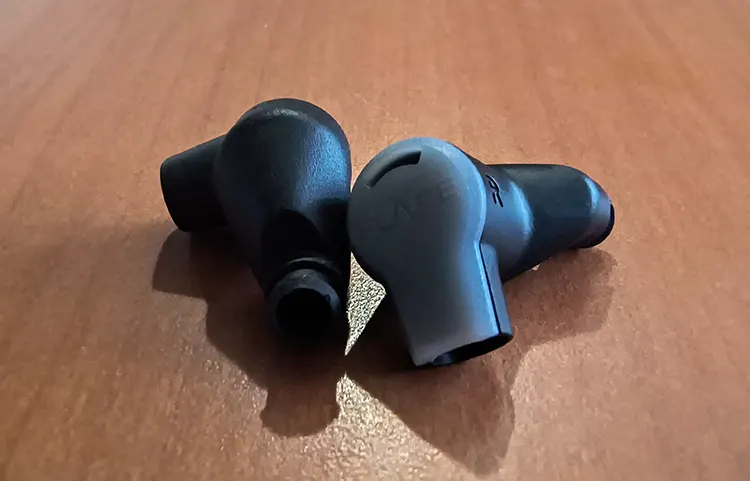
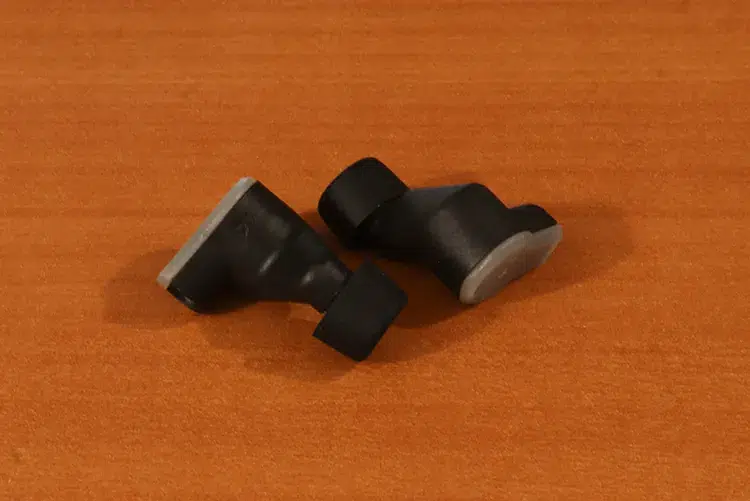
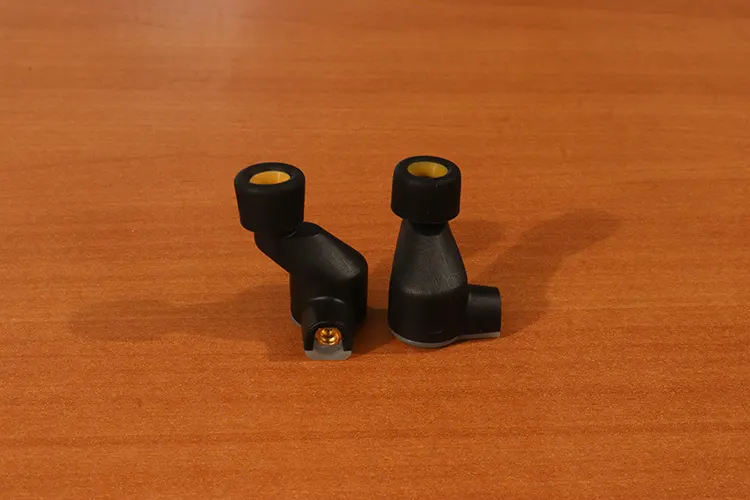
The Flare Studio Master follows the tradition and uses the same body as the Studio Basic. It’s a shell that started life as an ear insert that morphed into an IEM. The only change to the shell is that the backplate was changed to a light grey color to visually distinguish the two models.
The mounting position of the driver is in the same spot as the driver in the Studio model. The design combines human optimization and precision audio engineering in an attempt to bypass human ear imperfections.
I’m not an engineer, but I can assess that the original inserts correct the outer ear’s imperfections, and not the inner ear’s as much.
There is a small bend inside the housing that helps attenuate some frequencies, but since the driver is so close to the ear, I would think this wouldn’t matter much.
Their construction is a bit raw. They’re 3D printed, and you can see some 3d printing evidence. The final assembly is done by a craftsman and is hand-assembled in England.
The material is soft compared to an IEM made with resin, for example, and they do have some rough edges around certain areas, like around the output nozzle. However, the shells are hand-selected, and you can tell craftsmanship was involved.
Comfort & Isolation
I can’t deny that the Flare Studio Master is a comfortable IEM set because they are. The housing barely touches the ear, and they anchor into the ear naturally due to the cable dangling and the slight downward force of the cable.
The 3D printed shells are extremely lightweight and insert at an angle that adds a small amount of pressure inside the ear canal. The tradeoff is that they anchor inside the ear well, and that makes them a good candidate for physically active people.
On top of that, they tend to attenuate outside noise better than the average IEM. They make it easy for the user to find a tip set that creates a good seal, since if not obtained, sonics downgrade considerably.
Ear Tips
The Flare Studio Master comes with the same tips that come with the Flare Studio basic model. I would have assumed that an upscaled model would naturally include more than the basic model. At least they’re easy to clean.
One thing I like about the Flare silicone tips, in particular, that are included with this IEM set is that the inner bore size is the same on all three sizes. If they were made slightly different, you would get different sonic profiles, and this design defeats that issue.
What I dislike is that they’re a bit stiff and don’t conform much inside the ear. That’s where the foam tips come in, which are the audiophile tips.
The bottom line, however, is that the Flare Studio Master lost the sensitivity to ear tips and spin in that you could adjust the entry angle, and they will not display the same sonic variance. A good seal is the objective here and nothing else.
Stock Cable
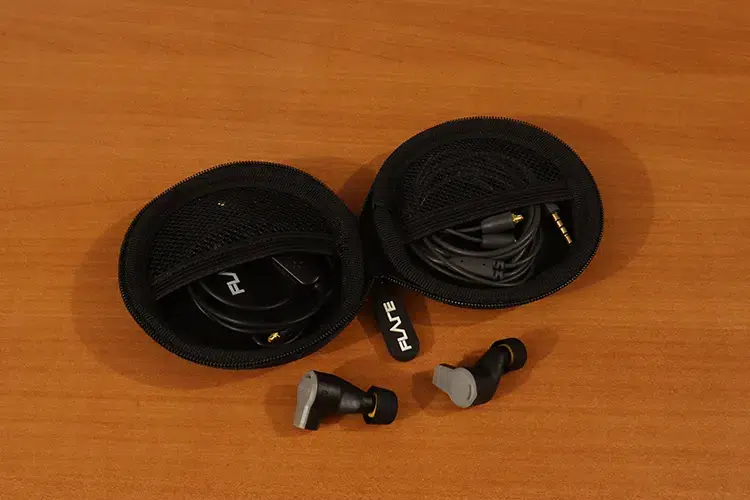
The stock cable is the same cable used on the Flare Studio, except that it has MMCX tips. It’s also the same cable that the Flare Studio Pro comes with, which is similar to the Flare Studio Basic set. To be honest, I’m happy this set has cable rolling capability.
The stock cable does carry some noise when rubbed on, and the cable that’s used is thin but not very flexible. It will get you through the day, but how many days is the big question? They don’t have ear loops either.
I do have another question: why did Flare Audio decide to use a 4-pin TRRS 3.5mm plug when the cable has no mic?
It’s not a 3.5mm S balanced cable either because I measured the cable’s continuity, and the third pin shares the two ground connections. Meanwhile, the fourth connection, the sleeve, goes nowhere electrically.
Bluetooth
I have to be honest here, because I feel Bluetooth headphones are not meant for studio use and are more of a convenience media. It’s a feature that’s good to have, but does nothing for sound quality. Put it this way, we’re not there yet, not even with LDAC and aptX Lossless.
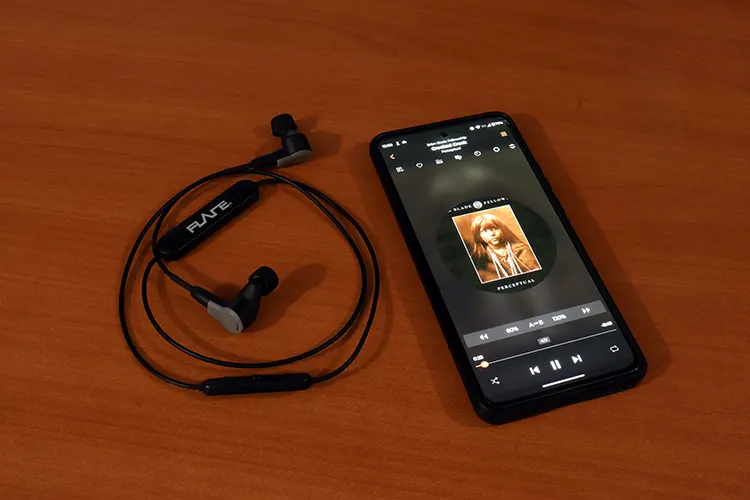
The Flare Studio Master can be ordered with a Bluetooth necklace-type cable assembly that connects to the MMCX connectors, and you can also use the adapter with other IEMs that don’t carry the Flare Audio branding.
The assembly is lightweight and is made with a similar type of cable that is thin and doesn’t inspire confidence as far as durability. It has two bubbles. One houses the battery, and the other a media controller with volume and pause, and play buttons.
I like the format and design of the Bluetooth dongle itself, but a weak spot is the decoding ceiling of aptX HD with no LDAC and aptX Lossless. It runs SBC and AAC if needed.
Packaging & Accessories
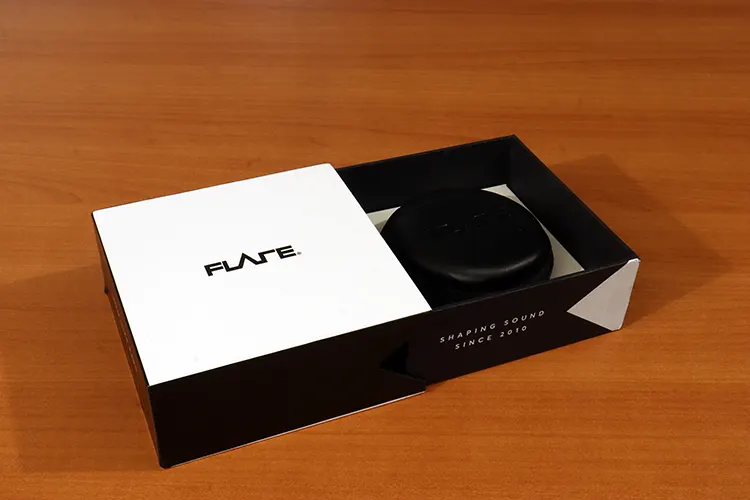
Flare Audio seems to employ a ‘if it works, why change the packaging’ concept. Their trademark black and white color theme and the same type of box are carried over from the Flare Studio model, and are similar to the boxes within their insert lineup are used here.
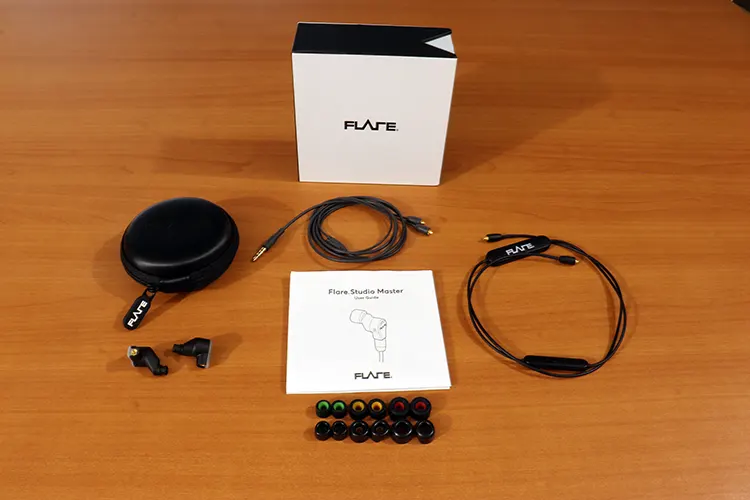
Two sets of tips are included. Three sizes of their Audiophile tips, plus another set of Flare silicone tips, are included. Again, it’s the same inclusion as their basic model, and I would have liked to see some more variations included since it’s the premium model.
The Flare Studio master set comes with a carrying case, and depending on the option you choose, you will find one or the other cable inside.
If you order both options, you will find both connectivity options within the case. It’s a good thing, too, that the carrying case can house all the accessories, including some extra tips.
The user guide is not posted online, and it should be. The one that comes in the box is printed on regular 8.5-inch paper and folded up to feign a manual. This manual could have been given more attention.
Sound Impressions
I primarily tested the Flare Studio Master with the wired option since the Bluetooth option is only capable of aptX HD, and I wanted to obtain the best possible performance from these IEMs.
I used the iFi audio xDSD Gryphon, aside from the Topping E70, L70 combo, the FiiO BTR17, and the KA17 fed by my Motorola Edge.
Initial impressions
The Flare Studio Master earphones offer a distinctive and immersive auditory experience that reflects a clear departure from the traditional tuning of most consumer audio products and the average distilled sonic presentations.
I immediately noticed a sensitivity to recording quality, which gives them a clear path to being properly classified as studio monitors. But there is some coloration, and there is a deviation from flat overall, just not as much as their Flare Studio model.
The bass, for example, is elevated by a couple of decibels but not as intensely elevated as in the Flare Studio basic model. It still tries to portray accuracy, although it is more inclined to produce full bloom bass notes.
Also, in my experience, such headphones that are labeled studio monitors tend to dislike equalization, and the Flare Studio Master doesn’t break that pattern.
You can increase the bass to bring them up to basshead levels, but it will produce some undesirable results, particularly a decrease in accuracy, with too much bloom.
They do portray clarity in the frequencies above the bass frequencies, and they carry a warm and natural character that is forward and lush overall above the bass frequencies.
Bass
The bass response of the Flare Studio Master is bounteous but not as elevated as in their basic Flare Studio model, and is tuned to produce cleaner bass notes.
It still produces a high amount of bass elevation to be considered a studio monitor, even on the airy user config setting on the PEQ within the Topping Tune app, which applies a small bass shelf.
Bass on the Flare Studio Master is well-controlled. Rather than delivering the kind of low-end often found in consumer headphones, these earphones offer bass that is proportionate but elevated a couple of decibels from the center line.
It’s present when it’s needed, but never dominant over the other frequencies. It doesn’t overshadow, but it maintains a balanced foundation that complements the clarity of the upper registers. The Flare Studio Master bass is presented with plenty of omnipresence.
Midrange
The Flare Studio Master produces midrange that is realistic but non-dramatic. The midrange presentation is clean and intimate. Vocals come across with natural warmth and realism, without being pushed forward or recessed.
There’s a certain honesty in how the Studio Master handles midrange content: it doesn’t flatter poor recordings, nor does it add lushness where there is none.
Instead, it respects the integrity of the mix, offering a clear and faithful reproduction that demands high-quality recordings for best results.
The Flare Studio Master delivers a sound that feels designed not to impress in the traditional sense, but to disappear, leaving the music itself. It offers a tool-like transparency that can be unforgiving, depending on the recording.
For those who seek an authentic, unembellished listening experience, these earphones provide a compelling and refined window into the art of sound and layering.
Treble
High frequencies are rendered with a moderate amount of precision and detail. There’s a sense that no part of the treble spectrum is exaggerated or dulled, and cymbals shimmer without harshness.
Subtle high-frequency harmonic overtones are preserved, giving a lifelike presence with some energy behind each note.
This treble transparency reveals micro-details and a high amount for its class. Breath behind a singer’s notes all come through while remaining smooth and non-irritating or strident.
The Flare Studio Master treble is well extended without artificial boosting. There’s a lack of harshness or sibilance, even in tracks that often reveal peakiness in other IEMs.
This suggests effective control of resonance and a tuning that avoids excess energy above 10kHz. More than likely a product of the mirror imaging technology.
Staging & Dynamics
I would consider the Flare Studio Master dynamics to be of medium impactfulness since this IEM tends to sound smooth on the top ranges of the frequency response curve, and tranquil on the bottom end, producing a midpoint amount of impact.
The stage is well defined, however, in a lateral sense, since height is the only aspect that is lacking, which produces a studio production-like stage where the elements of recording sit in front and sides of the listener.
They portray their studio-like presentation and prefer to produce a personal space, and assimilate a small studio with some elbow room, not an ultra-wide soundstage.
That gives way to precise positioning with just a small amount of smear around the aura of each component, sonically produced.
Click on page 2 below for my recommended pairings and selected comparisons.
