

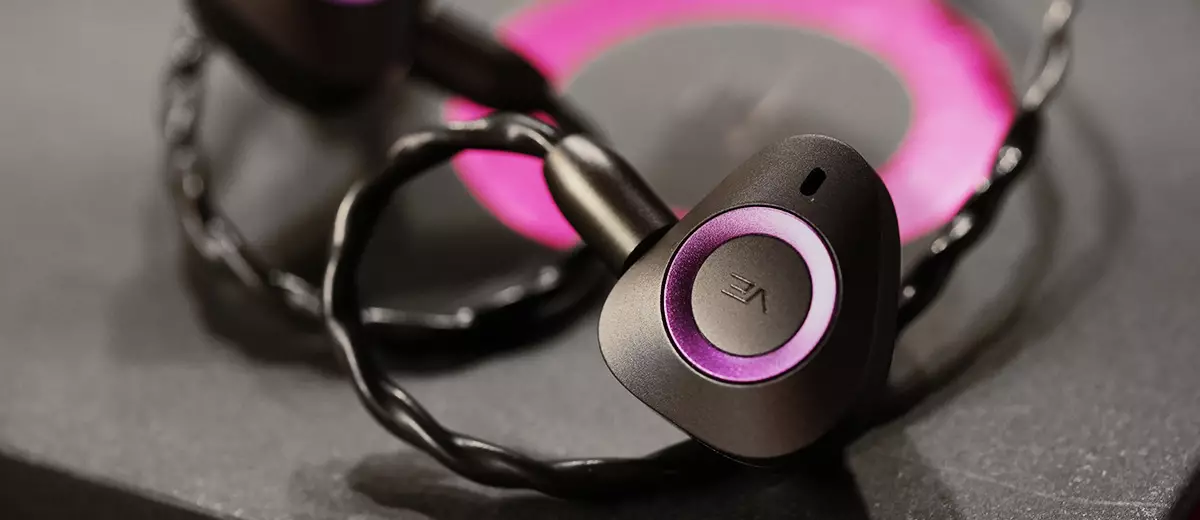
James reviews the Vision Ears GO live!, the company’s most affordable hybrid IEM with a hybrid 8mm dynamic and triple BA driver configuration. It is priced at $499.00.
Disclaimer: This was sent as a sample in return for my honest opinion. Headfonics is an independent website with no affiliate links or services. I thank the team at Vision Ears for their support.
Click here to read more about Vision Ears products previously reviewed on Headfonics
Note that this article follows our latest scoring guidelines, which you can read in more detail here.

Vision Ears has long stood as a premier choice for both stage professionals and audiophile enthusiasts.
Over the years, I have been impressed by some of their designs, including the highly resolving yet engaging VE8, and the more mid-forward, vocal-rich signatures of the Phönix and VE5.
The GO live! features a 1single dynamic and 3 BA driver hybrid configuration but arrives with a surprising strategic twist. It is priced at nearly half that of the VE ONE, which serves as the entry point of their premium, custom line.
The accessibility is largely driven by the decision to shift production of this model to China, while the other offerings remain in Germany. It feels like a move to bring the prestigious “VE DNA” to a much broader audience.
For example, the dynamic driver implementation is more like the EXT, which puts it in the basshead category for more rumble. The VE10 also uses an 8mm dynamic driver for bass and a metallic construction.
Given the affordable price tag of $499, the central question remains. Does it truly deliver the signature Vision Ears performance and tonality?
Let’s take a deeper look at what this model offers and how it holds up against some selected industry peers, such as the Westone AM Pro X30 and the Earsonics Elements.

Features
The GO live! houses a hybrid, closed-back design utilizing an 8mm dynamic driver for the lows, 1 BA across the lows and mids, another BA for the mids and highs, and a dedicated tweeter for the upper registers.
It is easy to drive at 10Ω impedance and with a sensitivity rating of 108 dB/mW. The responsiveness allows it to sound loud and dynamic effortlessly on wireless receivers, small interfaces to portable DAPs.
Positioned for both audiophiles and musicians, the nozzle is designed with a deeper insertion depth for superior passive isolation.
Vision Ears includes SpinFit eartips to ensure a secure, comfortable seal that remains stable during movement.
Furthermore, unlike the thin, utilitarian black cables often found on professional stage monitors, the GO live! comes bundled with an audiophile-grade 7N Copper cable for better signal integrity.
The whole package looks stealthy and rugged, which matches pro-use scenarios.
Design
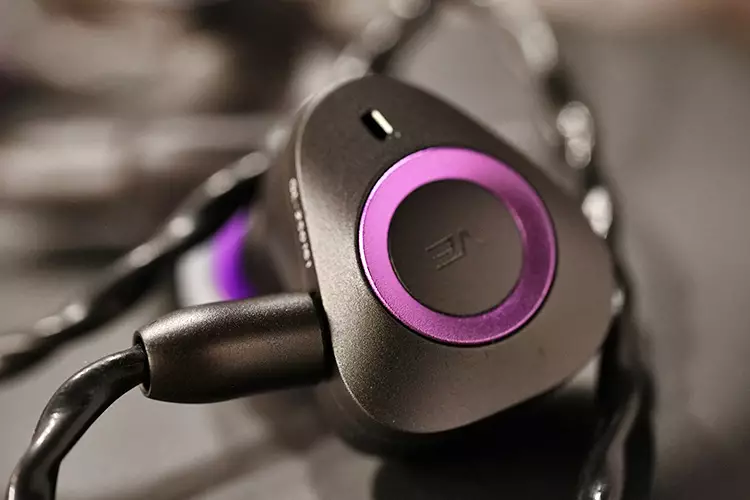
While the full metallic aesthetic departs from the signature resin designs found in the brand’s premium universal models, the dark purple accent ring serves as a subtle nod to its Vision Ears heritage.
The VE branding is subtly imprinted in the center of the faceplate, which can be viewed at a tilted angle. The matte-finished, CNC-machined aluminum housing feels rugged enough to withstand the rigors of stage use.
There is an air vent on top of the faceplate, possibly for controlling airflow at the back of the dynamic driver, though passive noise isolation remains unaffected.
The triangular shape of the housing is somewhat uncommon; the size feels marginally larger than some of the brand’s other universal fit IEMs, possibly due to the use of the drivers.
However, it is quite compact, doesn’t stick out much, and fits the contours of the ear nicely without causing any stress.
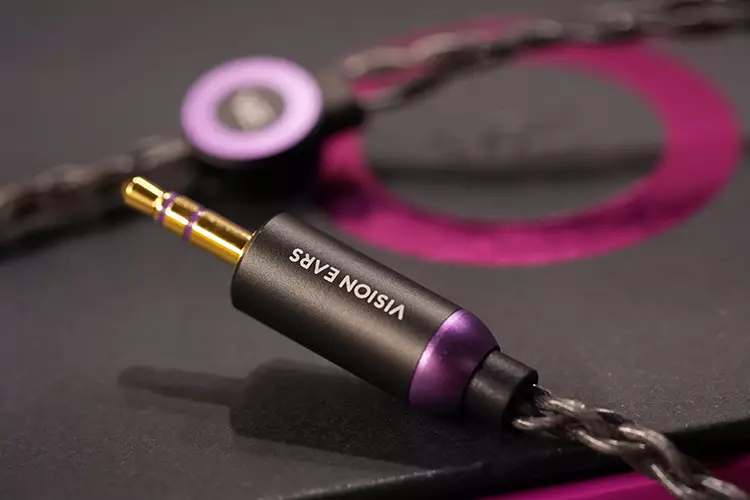
There is also some fun attention to detail; the cable uses a customized 3.5mm plug with purple colored insulating spacers that echo the brand’s theme color.
Overall, the build quality is solid, featuring smooth edges and a seamless fit between parts. All components, including the cable, appear to be well-constructed.
Comfort & Isolation
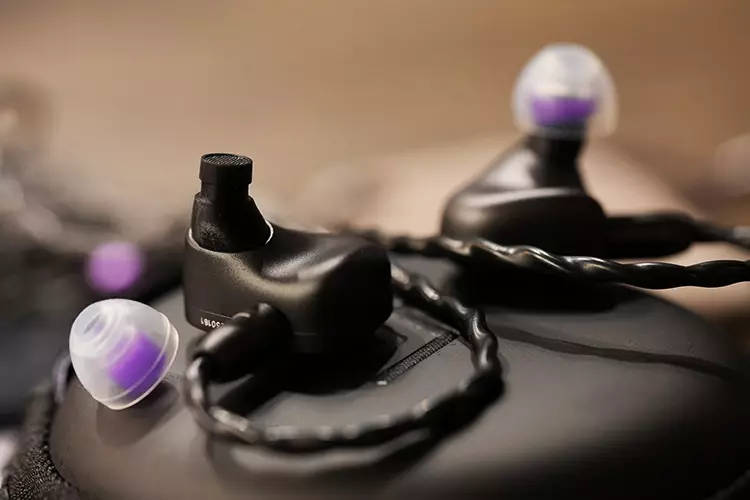
As briefly mentioned above, although the GO live! features an uncommon shape, its size, and nozzle extrusion angle fit my ears and some friends around who got to test it quite well.
When viewed from different angles, the housing appears asymmetrical and somewhat elongated; however, in practice, it conforms nicely to the contours of the concha cavum and does not protrude significantly.
Despite the metallic construction, the weight is not particularly noticeable, as it is well-distributed across the contact areas. This is especially important for those using the monitors for practice or long mixing sessions. Isolation is also satisfactory.
While naturally not as effective as custom-molded counterparts, it still blocks out most ambient noise on public transport without the need for constant readjustment.
Together with the stock SpinFit flanges attached, the isolation is also superior to quite some IEMs, particularly those that use thin, soft, or leaky silicone tips, or with a short nozzle.
Ear Tips
The box includes various sizes of SpinFit ear tips, which allow for a greater degree of movement to better suit different ear canal shapes. I often have a love-hate relationship with SpinFit tips, as they can sometimes make the upper registers sound brittle.
However, in this case, the resulting tuning remains quite balanced. The fit is comfortable and provides an effective seal against ambient noise.
Because the GO live! requires a deeper insertion, the fit is critical. I would recommend experimenting with different ear tips to achieve the best results.
Stock Cable
The GO live! comes with a 120cm, audiophile-grade 7N cable, which is a significant step up from the thin black cables typically bundled with stage-intended monitors.
Despite its premium material choice, the cable remains understated with a dark color and low-profile gauge, making it ideal for musicians who prefer their gear not to stand out too much.
I prefer wearing the cable behind my neck to minimize microphonics or using a clip when wearing it in front.
For stage use, a softer cable would be ideal, which would allow for unobstructed movement without the risk of the IEMs being pulled out of place.
The option to choose between a 3.5mm or 4.4mm termination when purchasing is great for those using high-quality DACs and DAPs, but it would be even nicer if the plugs are modular and allowed switching between different terminations.
As I received the 3.5mm version, I tested it on various single-ended outputs, as well as swapping to aftermarket cables with a 4.4mm balanced configuration to see how the GO live! responds to additional power.
Packaging & Accessories
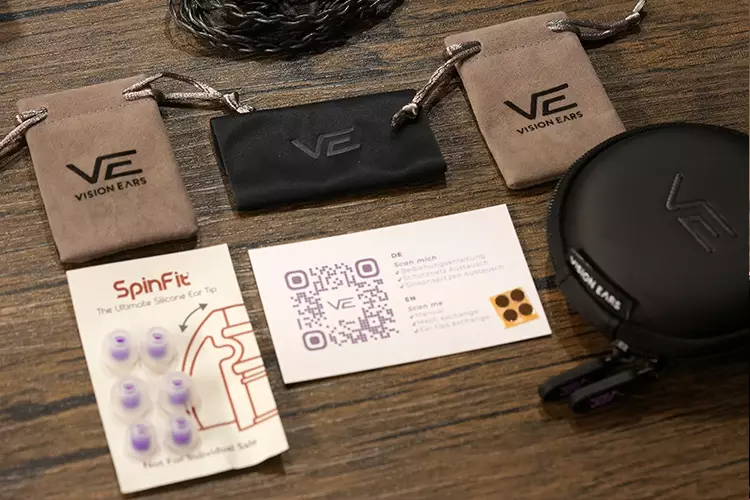
The GO live! arrives in a stage-ready package that, in addition to the CNC-machined earpieces and the previously mentioned 7N cable, includes a set of SpinFit silicone tips in three sizes.
The bundle also features a PU leather carrying case, individual microfiber pouches for each earpiece, a cleaning cloth, and replacement nozzle filter meshes.
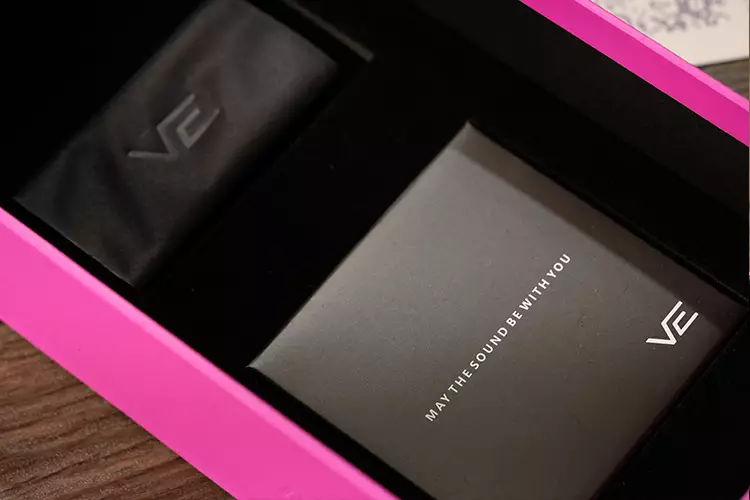
The unboxing experience is streamlined yet remains consistent with the brand’s more premium models, offering both ample accessories and practical protection for the monitors.
Sound Impressions
I did 1 week of run-in time to the GO live!, pairing with various gears, including the RME ADI-2 Pro, the Shanling M7T, the Luxsin X8, and the xDuoo XD05 Pro, to see how it responds to different decoding qualities and amplification styles.
Summary
Out of the box, the GO live! is quite sensitive, making it an excellent choice for performers and audiophiles who prefer to pack light or listen via wireless receivers.
The tuning resembles the brand’s higher-driver-count hybrid flagships in terms of control and coloration; it features a gentle W-shaped profile that emphasizes both ends of the frequency spectrum.
The vocals remain clear, while the energetic lows are balanced by a transparent treble, resulting in a more engaging and smooth character than the brand’s more technically analytical counterparts.
The dynamic driver is remarkably agile and responsive, ensuring a cohesive sound with the balanced armatures, even when powered by small dongles.
This gives the bass definitive power while allowing the sophisticated decay to provide a rich sense of coloration.

Timbre
When paired with the MacBook and the RME ADI-2 Pro, the Vision Ears GO live! delivers a satisfying low-end rumble while preserving its core tonality and strong resolving power.
Bass guitars are quite pronounced, and the drums possess a clear physical presence characterized by sharp transient snaps. The clean decay ensures that high-BPM drumming remains distinct and legible without ever becoming brittle.
Although the signature leans toward the lower end, the midrange avoids sounding overly recessed. The dynamic driver bass integrates smoothly with the BA drivers, providing a controlled sub-bass presence that helps render convincing depth.
Darker voices carry a pleasing weight and body with a smooth texture, while lighter voices benefit from an elevation in the mid-treble for better penetration.
The overall presentation remains rounded and balanced, though it can occasionally sound slightly shouty when paired with very clean sources or lower-bitrate files.
The technicalities are satisfactory with its responsive, punchy bass and natural mids.
There is sufficient air and resolution to maintain clear instrument separation, resulting in a good balance between energetic lows and authoritative, well-defined vocals that avoid sounding unnaturally thickened.
I also tried listening with speakers on, playing bassy rock music in the background. With sufficient isolation power, little ambience leaks through.
Bass instruments cut through cleanly, and vocals sit naturally in front with good separation and are clearly outlined even when powered by small dongles like the BTR15 from FiiO and on a small Yamaha MG06 mixer I tested.
The GO live! scales well from low-powered devices to high-end sources and is responsive to cable rolling. You might consider switching to a thicker gauge SPC or Litz cable to further boost clarity and slim down the bass, which would make it sound more balanced.
Staging & Dynamics
I originally expected the GO live! to be more mid-centric, but the midrange is smoother and less prominent than anticipated.
Instead, the punchy and ample mid-bass takes center stage, delivering substantial yet fast transients that suit rapid drum work, acoustic guitar licks, and synthesizers particularly well.
Bass drums sound meaty yet airy, while cymbals and hi-hats are clearly captured and nicely rounded to avoid any excessive sharpness. The slightly elevated treble adds a pleasing sense of air to the presentation, and the resolution in the upper vocal range is quite decent.
The soundstage feels appropriately spacious with good depth from the extended bass. Vocalists sit a few rows in front of the listener, while backing instruments are separated effectively and positioned distinctly.
Listening to strings panning across the stage reveals a rather controlled and intimate stage, and the midrange intensity helps the vocals or instruments across the mids to sound more out-of-the-head in positioning.
Individual instruments are easy to focus on and pick out within the mix. The layering is also clear, creating distinctive images, especially regarding cleaner vocalists.
The overall image remains coherent even at higher volumes, and it is easier to tell how the power of the source affects the speed of the dynamic driver.
Overall, the tuning offers a strong presence for bass instruments without hampering clarity in the upper frequencies.
The presentation is spacious enough for small ensembles to feel immersive, and it performs well when replaying bass-intensive genres by creating a captivating atmosphere with sufficient air and detail.
While the soundstage avoids pushing elements too close, the low end may become slightly overwhelmed when a significant number of instruments or thicker bass lines come into play simultaneously.
Click on page 2 below for my recommended pairings and selected comparisons.
