

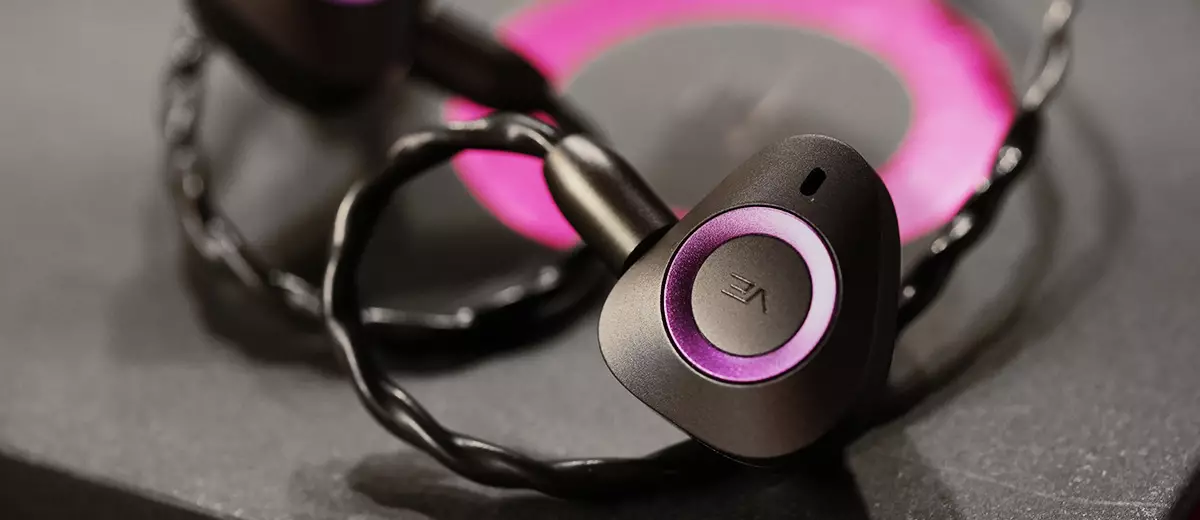
Synergy
Efficiency
At 10Ω impedance and a rather high sensitivity rating, the GO live! is very easy to drive from almost any device.
There is sufficient fullness in the bass even when driven by the MacBook. It picks up minimal floor noise but isn’t noticeable on the go.
I would call it a “plug-and-play” monitor that doesn’t demand exotic amplification to sound its best, making it ideal for performers using wireless bodypacks or mobile users on dongles.
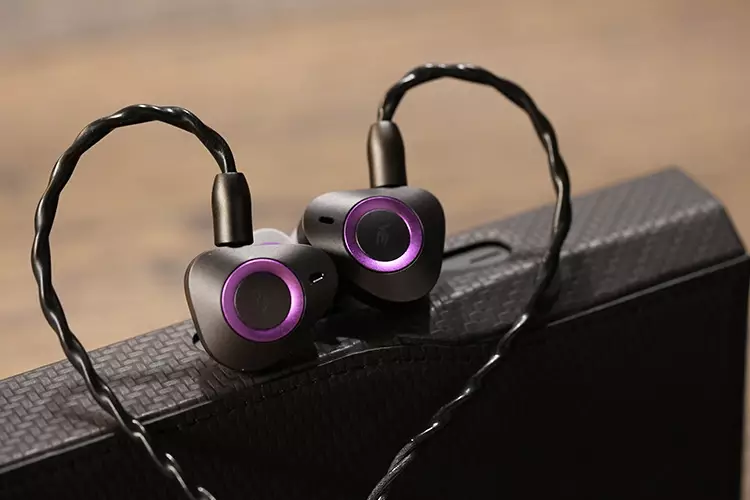
Power
The low-impedance nature of the GO live! benefits from a source with a low output impedance and stronger decoding power to maintain the intended frequency response and to sound more dynamic.
With small dongles such as the FiiO BTR15 or even a stock Apple USB-C-to-3.5mm converter, the GO live! still sounds satisfactorily full and layered in the bass, also defined across the mids with the treble slightly dimmed.
Moving to a dedicated DAP like the Shanling M7T or the HiBy R6Pro MAX helps give better control and makes the bass firmer.
This results in a tighter, more disciplined bass response and better headroom when there are more complex bass lines in the mix. The GO live! is also quite responsive to the player’s signature.
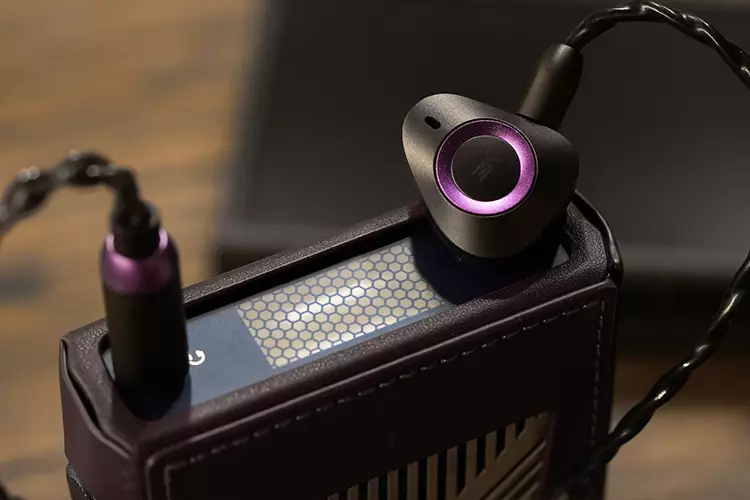
Pairings
The GO live! responds best to clean, high-current sources, allowing the dynamic driver to sound faster and more coherent with the BA drivers.
I have paired it with various desktop and portable gear. The RME ADI-2 Pro and D&A Alpha PRO deliver a dense, textured, and rounded response.
The Shanling M7T provides a vivid boost in midrange presence and coloration.
The ONIX XM10 LTD leans toward the low end, offering an even meatier, lusher, and more mellow presentation that benefits darker voices and bass guitars, working well with jazz, Rock, R&B, live recordings, and energetic synths.
With the XD05 Pro on stock setting, it gets warmer and more expansive as well. The slightly bassy tuning can accommodate power to sound balanced.
In most cases, the GO live! delivers a punchy, meaty timbre with a pleasant touch of warmth, which is well compensated by the energy in the upper vocal range. The mids remain smooth and layered.
Warmer sources add extra meatiness, and the GO live! Maintains good response speed and bite, while more controlled sources tighten the low end, resulting in a clearer, more textured signature with rounder treble.
For myself, I would prefer pairing it with cleaner sources, which would allow more air to be heard and offer better overall balance for fast percussions and vocals.

Selected Comparisons
Westone Audio AM Pro X30
Technical
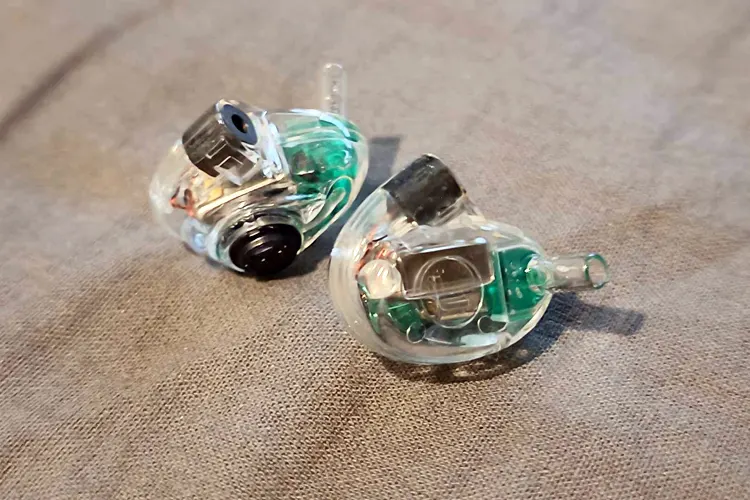
The Westone Audio AM Pro X30 is a triple balanced-armature IEM with a 3-way passive crossover.
It features Westone’s patented StageSense passive ambient filter, an acoustic vent system that provides controlled attenuation of around 10 dB.
This allows a natural amount of external sound from the stage, audience, or surrounding environment to pass through, enabling the performer to interact with their surroundings.
Design
The AM Pro X30 follows the sleek profile typical of Westone Audio’s IEM designs and comes in a transparent housing with the filtering part colored green. The IEM is almost weightless and has a very slim profile.
While the GO live! feels much more well-built and uses 2-pin connectors that are less prone to contact failure issues, especially after sweaty sessions. It is undeniably larger in size. Nevertheless, it remains very light and fits equally deep and comfortably.
Performance
Testing the two on the Shanling M7T in both indoor and outdoor environments, the differences between them are immediately obvious.
The AM Pro X30 exhibits a more pronounced V-shaped signature and is more ruthless in highlighting recording flaws.
Likely due to its full-BA design, it shapes vocals to be drier and thinner than those on the GO live!, while being airier in the treble; the sibilance zone is also more pronounced.
This character is further influenced by the ambient filtering design, which allows external sound to leak through and creates the impression of more sharply outlined treble.
In contrast, the GO live! offers more mid-range layering and body in the lower register, resisting the urge to push the vocalist too far forward.
Its dedicated dynamic driver provides a more engaging low-end coloration, which feels less tight and clinical than the full-BA configuration of the AM Pro X30.
For stage purposes, particularly for vocalists, violinists, woodwind players, or any performers who rely on verbal cues and instructions, the AM Pro X30 is probably the more suitable choice.
Its tuning highlights the treble and upper-midrange frequencies for better clarity, while its ambient filtering allows for natural interaction with the audience and bandmates without needing to remove the monitors.
In contrast, the GO live! provides a far superior seal, allowing the bass and intricate layers of a mix to be heard with much greater clarity.
Its resolving power, especially in the lower frequencies, makes it a better fit for bassists and drummers, as well as for general listeners who want to focus more easily on the bass details in the mix.

Earsonics Elements
Technical
I am comparing the GO live! with the Earsonics Elements from France, as they share a similar background in creating custom in-ear monitors for professionals.
These IEMs occupy a similar price point and feature a comparable configuration, with the Elements utilizing one fewer BA.
The design also includes a built-in impedance corrector within the crossover circuit, and the technical specifications are rated at a sensitivity of 122 dB/mW with an impedance of 17Ω.
On paper, the Elements is quite a bit more sensitive to power, while the GO live! is moderately sensitive, so I am expecting them to respond to amplification differently.
Design
While the Elements was one of the first IEMs to adopt a shifting, fine-glittery paint finish, which looks gorgeous.
The GO live! takes a stealthier approach with its full-metal body. The nozzles of both IEMs are tilted slightly away from the housing, and they feel equally comfortable in my ears.
However, the GO live! offers a slightly more secure fit, which contributes to marginally better isolation.
Beyond its sturdier construction, the cable on the GO live! feels more premium, whereas the overall package of the Elements maintains a lighter profile with a softer cable, making it ideal for those who prefer minimal weight on their ears.

Performance
When testing both 3.5mm terminated IEMs on less powerful dongles, the more sensitive Vision Ears GO live! delivers an energetic, fast response with superior vocal clarity and sharp treble detail.
Transients are snappy, and the bass recovers quickly while maintaining adequate presence. In contrast, the
Elements feels less agile with denser, fatter bass, offering a warmer, fuller punch that is immersive and vocal-forwarded but lacks the separation of the GO live!.
However, this thicker profile is more relaxing for jazz and slow folk. While the Elements sounds marginally brighter on weaker sources, it is less forgiving of flaws in lossy tracks than the more controlled, rounded treble on the GO live!.
When paired with robust outputs like the xDuoo XD-05 Pro or RME ADI-2 Pro, the GO live! sharpens further, surpassing the Elements in definition and transient speed.
While the Elements picks up speed to sound more agile in the bass and more coherently articulated, it remains more colored than the GO live!.
The Elements scales significantly with increased current, becoming cleaner and denser, whereas the GO live! is more consistent in its speed and clarity across different gears.
While the GO live! possesses better overall technicalities, a cleaner response, and superior separation, the Elements shines with powerful, darker vocal tracks that carry heavy bass elements, such as the works of Angèle or Adele, sounding dense, chest-centric, and velvety.
In short, the GO live! is easier to drive and more resolving. It delivers articulated, authoritative vocals with superior extension and control at both ends, making it an excellent tool for mixing and editing without sacrificing portability.
It handles high-BPM tracks and slower tempos with equal ease. The Elements offers a more full-bodied, colored experience, embracing the listener with a powerful low-end and airy treble. However, it is more current-demanding.

My Verdict
The hybrid multi-driver Vision Ears GO live! IEM’s overall execution is well done at this affordable price point.
The finesse in the vocal tuning, the efficiency in design, the smooth articulation, and the meticulous control over sibilance are all nicely polished. Its neutral-warm approach makes it a versatile performer.
The sound signature echoes the brand’s more expensive flagship models. I also like how it prioritizes musicality over clinical precision for this price point.
It is fascinating to see how a manufacturer that primarily serves professionals has designed such a “prosumer” product.
While the aesthetics are understated rather than flashy, everything is housed in a stealthy, sturdy metallic package that offers an exceptional fit and seal, and is ready for heavy-duty and daily abuse.
If price was the primary barrier preventing you from exploring Vision Ears monitors, or if you require an in-ear solution for mixing and editing, this is a great entry point that successfully bridges a mixing/monitoring tool and a refined, high-fidelity, daily listening performer.
Vision Ears GO live! Technical Specifications
- Driver configuration: 4-way,
- 1x Bass driver (8 mm DD)
– 1x Bass/mids driver (BA)
– 1x Mids/highs driver (BA)
– 1x Highs driver (BA)
- 1x Bass driver (8 mm DD)
- Impedance: 10 Ohms
Frequency: 20 Hz – 20 kHz
Jack-connector: 3.5 mm
Cable length: 120 cm
