

Synergy
DAP & Dongle Pairings
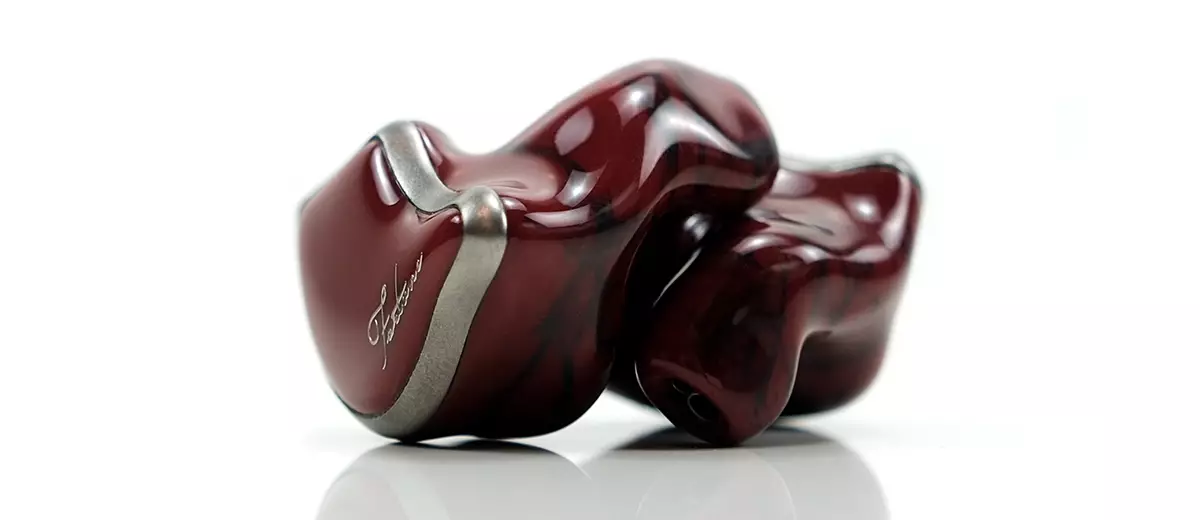
I paired the Unique Melody MEST Fortune with the HiBy RS8 II, the FiiO M27, iBasso’s DX340/AMP18 combo, the N6iii/R202, and the iBasso DC-Elite.
From the perspective of a vocal lover, all of the pairings delivered a very agreeable, even-harmonic vocal timbre with excellent weight. However, I gravitated to those sources that teased out a bit more forwardness in the vocal imaging, combined with slightly more contrast.
For example, the RS8 II is perhaps the most complex presentation in terms of left-right imaging and staging spatial detail.
However, it can come with a slightly diminished vocal presence from the MEST Fortune’s flatter midrange tuning. Adding 3-4 dB around 3-4k with a Q factor of 0.2 in its PEQ profile fixes that perfectly, making it my go-to choice DAP for this pairing.
The M27 with the second harmonic controller turned off creates a very open, evenly-balanced performance, but I find the staging depth a little lacking compared to the DX340/AMP18 and RS8 II. It can sound very precise, with strong vocal delivery, but comparatively blunted for spatial detail.
The N6iii/R202 was a very satisfying pairing. The R2R mode really pushes the vocals forward, giving them additional impact, while the 1-Bit mode creates a more open sound and a more neutral note weight in the MEST Fortune mids.
The DX340/AMP18 fares better than the M27 for staging depth, but the relaxed nature of AMP18 doesn’t produce the pop I would like from the MEST Fortune mids. For this pairing, I would opt for the punchier, cleaner AMP17 pairing.
The DC-Elite did well, teasing out a strong midrange performance, but lacks a little staging depth and width compared to the DAP pairings.
Portable Amplifier Pairings
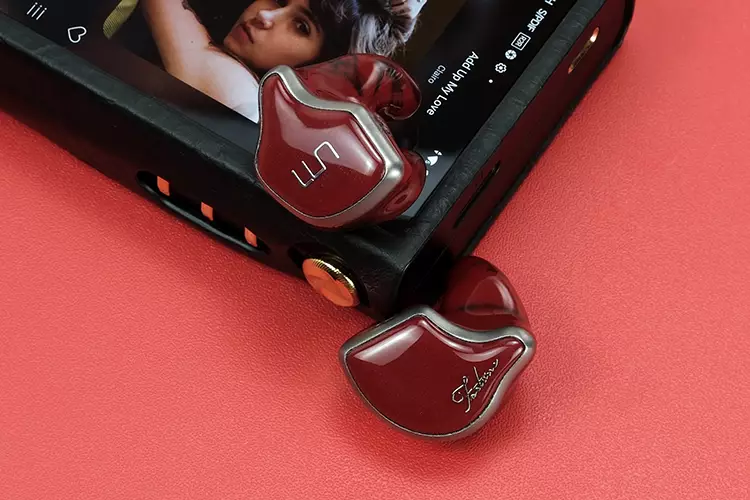
For this phase, I paired the MEST Fortune with the ONIX Mystic XP1, the iBasso D17 Atheris, Cayin’s RU9, and the Chord Electronics Mojo 2.
I was about to declare the Mojo 2 as the sensible choice for midrange lovers until I plugged in the D17 Atheris.
Both of these portable amps give me what I am looking for from the MEST Fortune, and that is midrange clarity and stronger vocal imaging.
However, where the D17 excels is in teasing out a more natural timbre combined with a more spacious soundstage and enhanced height. The Mojo 2 sounds a lot narrower, though to be honest, if you crave a clean, intimate performance, the Mojo 2 is a great pick.
For those who want to maximize the MEST Fortune’s low-end, then the Mystic XP1 is a good choice. Everything is delivered with gravitas, even the vocal note weight sounds laden with power.
However, it’s a dark pairing, not as well-separated as the D17 or even the more neutral Mojo 2, and lacking in the sort of height I think the MEST Fortune really needs to shine.
The RU9 is a nice pairing, and with 3 timbre choices, you can accentuate the staging dimensions in Classic Tube mode, go for an airier vocal performance in Modern Tube mode, or keep it more neutral in solid-state mode.
I opted for Modern Tube as it’s the stronger midrange performer than the other two modes with the MEST Fortune.
Selected Comparisons
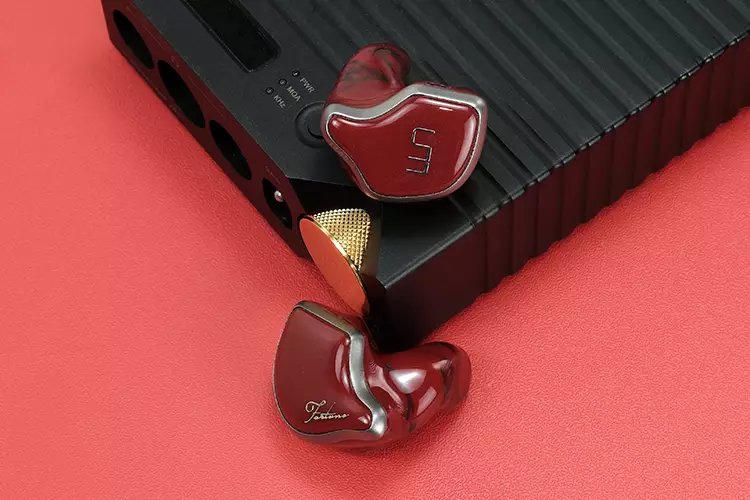
The following selected comparisons to the Unique Melody MEST Fortune were completed using the HiBy RS8 II, FiiO’s M27, and the Cayin N6iii/R202 combo.
Note that my sample of the MEST MKIII CF has a slight issue with the dynamic drivers and needs repair, so, sadly, I cannot make a direct comparison to it.
Unique Melody MEST Jet Black
The Unique Melody MEST Jet Black was launched in 2025, and my review of the custom version was published that same year.
Technical
On paper, these MEST editions have matching driver configurations, including a 10mm dynamic for the lows, dual BA for the mids, dual BA for the highs, and dual electrostatic drivers for the ultra-highs.
Both also have a full-frequency bone conduction system with 3 bone conduction drivers of two different types: composite BA and piezoelectric.
The primary engineering difference lies in the crossover implementation and final tuning. The MEST Fortune uses a unified 6-way crossover to handle its 10 drivers. It treats the 3 bone conduction drivers as “acoustic surface conductors”.
Whereas the MEST Jet Black splits its crossover between a 4-way passive crossover for the air-conduction drivers (1 DD, 4 BA, 2 EST), combined with a separate 2-way crossover exclusively handling its full-frequency bone conduction system.
There is not much to separate these two at 16Ω and an SPL of 106 dB/mW for the MEST Jet Black and a marginally lighter load and more sensitive benchmark of 10Ω and 107 dB/mW for the MEST Fortune.
Design
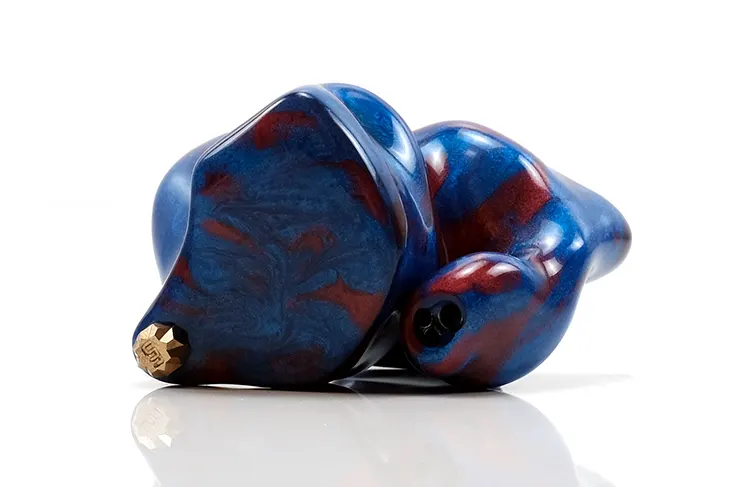
Design-wise, these are custom formats, so you can go anywhere with the aesthetic depending on your preference.
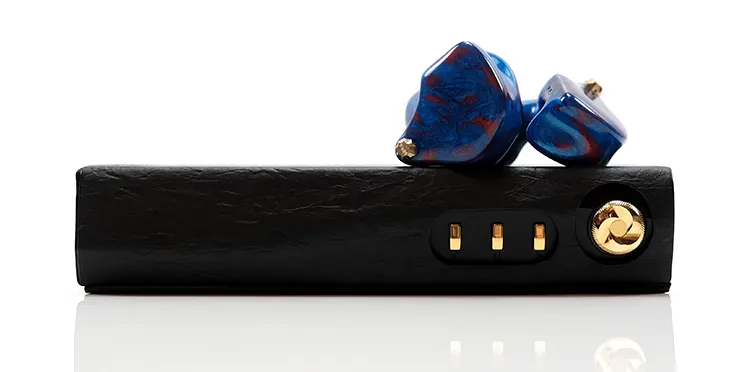
However, for the samples I have here, both are coherent, attractive designs with the main differences being blue versus red and a classic all-over swirl nebula finish versus an almost 50’s automobile-era red styling for the MEST Fortune.
Both have very comfortable, accurate fits, given they are based on accurate molds and digital files, but MEST Fortune has superior passive isolation.
The Jet Black can match it when there is no wind, but when you do get a gust, its petal vent seems to amplify the noise a bit more than I would like.
I do like the choice of cables that came with the Jet Black offering. The UM Dreamy and the Effect Audio collaboration Jet Link presented different results, ranging from warm and natural (Dreamy) to the more dynamic and neutral Jet Link.
Aesthetically, the MEST Fortunes red Joyfort cable has more visual appeal, but the two MEST Jet Black cables are lighter and more discreet, with a larger 24AWG wiring geometry in the case of the Dreamy.
Performance
Of the two, the MEST Fortune has the more flamboyant and colored tuning with a “phatter’ richer timbre, and a far more saturated sound courtesy of what seems to be a longer mid-bass shelf bringing up some warmth in a slightly flatter midrange imaging presentation.
The MEST Jet Black sounds the more neutral and controlled of the two sound signatures with a more pointed vocal presence, albeit a comparatively leaner, drier note quality.
It’s the Jet Black that has the slightly brighter of the two monitor sounds, and, in some ways, the heightened upper-midrange tuning brings everything a bit closer to you, yet still retaining excellent detail.
The MEST Fortune sounds more atmospheric, with a stronger perception of width courtesy of a vocal placement that enhances the sense of space between you and the singer.
Depth is similar to the MEST Jet Black, but it sounds a bit fuller around the 250-500Hz upper-bass/lower-mids region, a factor where the additional warmth comes from.
Some might feel the MEST Fortune midrange imaging is perhaps not as well controlled, and to be honest, there is a rounded quality to the note timbre compared to the more accurate contrast of the Jet Black’s equivalent.
What you get is a far lusher, more liquid-like sound, which, combined with the enhanced mid-bass shelf, creates what I like to call a “phat” sound. It’s not a congested sound, but there is more note decay and less contrast compared to the Jet Black.
Unique Melody Maven II Crescent
The Unique Melody Maven II Crescent was launched as a limited-run model in late 2024, with my review of the custom version published at the start of 2025.
Technical
The Maven II Crescent stands apart from the MEST Fortune configuration with its lack of a bone conduction system and instead uses 2 dynamic drivers for the lows instead of 1.
The dual dynamic is split between a 9.8mm ‘core bass’ dynamic driver and a smaller 6.8mm variant that covers the “ultra-low and bass’ frequencies.
The smaller dynamic driver runs at a lower amplitude but over a narrower, lower frequency response than the main 9.8mm version in what Unique Melody calls a “vertical parallel bass matrix”.
The Maven II Crescent also uses 4 BA for the mids and highs (a mix of Sonion and Knowles), but with 4 Sonion electrostatic drivers for ultra-highs instead of 2, and a 5-way passive crossover instead of a 6-way crossover.
With a rating of 10.7Ω for impedance and an SPL of 106 dB/mW, the Maven II Crescent is almost identical for load and marginally less sensitive than the MEST Fortune. Neither will give you problems with regular portable DAPs and dongles.

Design
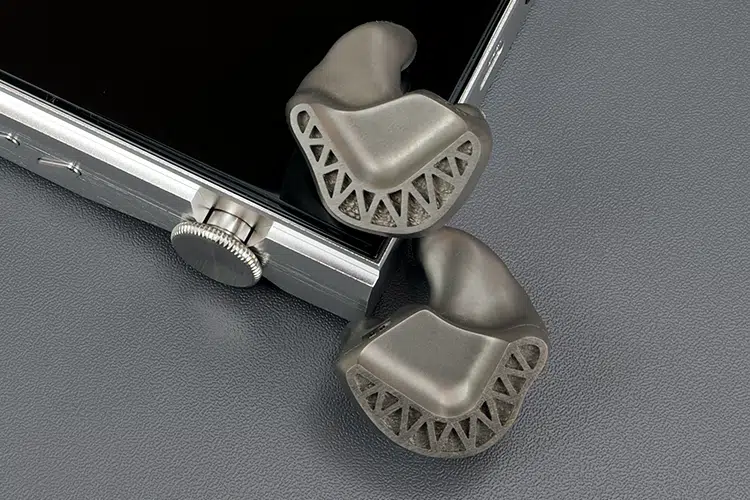
It’s all about the metal, or in the case of the Maven II Crescent, the titanium shells.
Granted, custom designs mean you do not have to strictly pick the default options, but I would say you have to try the titanium because the craftsmanship is stunning.
It is more unique than the MEST Fortune resin shells, but there are some caveats, such as a heavier weight, colder shells in the ear, and perhaps a marginal gap in passive isolation performance, but nothing that would worry me.
The Maven II Crescent shells are also much bigger than the MEST Fortune options and will stick out of the ear a little more. Personally, how far out of the ear they are never bothers me since I cannot see them, but for some, the weight balance might feel more off than the MEST Fortune shells.
The Maven II Crescent comes with the M2 RE cable as stock. This is a 24AWG gauge OCC copper 4-wire geometry, similar to the JoyFort, but with a fiber core, wrapped in a carbon fiber sleeve, and applied with a black PVC coating rather than a red nylon jacket on the external surface.
It’s a lighter cable than the JoyFort, but it does not have the same visual pop. I think this is quite complementary to the titanium shell design, though with its matching titanium barrels and connectors.

Performance
The Maven II Crescent has a more dynamic and ‘exciting’ sound signature with enhanced mids, a bit more treble presence, and superior contrast in its harmonic balance.
The MEST Fortune is the richer, more euphonic tuning, with a lighter treble sheen, creating a somewhat sweeter, more soothing sound backed by a fuller bass performance.
The differences between the two feel like a trade-off between relaxed and pleasing (Fortune) and exciting and demanding (Maven).
In some ways, I am not surprised. The Maven custom line has been more upfront and punchier than recent custom MEST tuning approaches.
From the MEST MKIII onwards, it’s been more about control or relaxation, depending on which model you listen to, whereas the Maven line always pulls ahead in verve and speed.
For my preference, I would gravitate more to the even-harmonic balance and slightly more languid pace of the MEST Fortune for brighter recordings or higher-pitched vocals, given the additional body and more liquid-like approach to percussion and vocal work.
UM seems to have shifted the MEST Fortunes treble peak more towards the upper-treble region than the lower, which gives it some top-end reach but without sounding too spicy.
The Maven II Crescent has a more prominent 1-3k range, which tends to push harder on percussion impact, vocal intimacy, and treble overtones, giving it a drier but more urgent sound suited to fast-paced EDM.
Unique Melody Maven Pro
The Unique Melody Maven Pro was launched in mid-2022, with my review of the custom version coming out in early 2023.
Technical
The Maven Pro is also a 12-driver monitor. However, unlike the MEST Fortune, it does away with dynamic drivers entirely and uses a BA/EST hybrid driver configuration without any bone conduction systems.
The precise grouping inside is 4 larger woofer armature drivers for the lows, two full-range drivers for the mids, a quad pack of BA drivers for the highs up to around 8-10k, and dual EST for the ultra-highs.
The Maven Pro has an impedance rating of 30Ω and 112dB SPL @1KHz, so it has a higher load than the MEST Fortune, but a relatively more sensitive custom IEM to drive.
Design
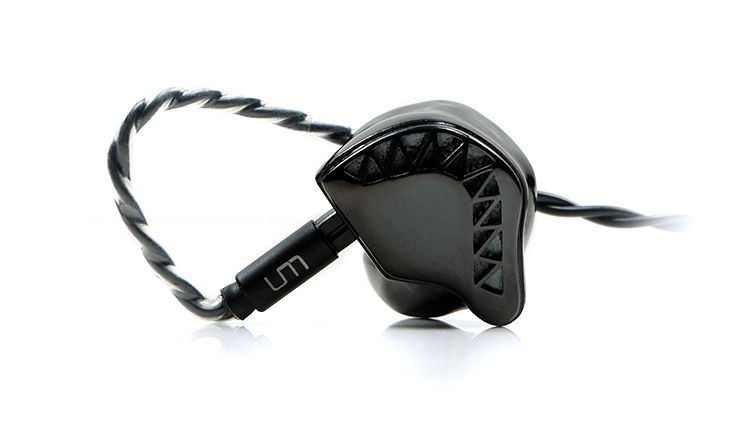
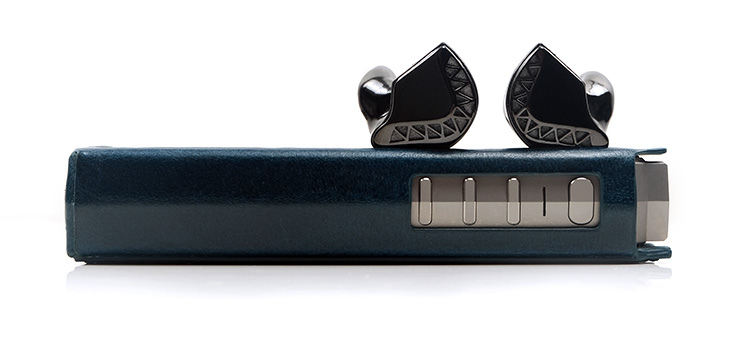
Like the Maven II Crescent, the Maven Pro shell is also designed using a 3D-printed medical-grade titanium metal alloy for both shell and plate materials.
At the time, the color options were blue sapphire, black, and gold, with the latter 2 costing $900 more, so the price can add up pretty quickly.
All of the Maven II Crescent, MEST Fortune comparison notes pretty much apply here as well, though I would say I find the Maven Pro shells a bit smaller and closer in size to the MEST Fortune, and the Maven II Crescent cutting more intricate to the eye.
Nonetheless, it’s a heavier, denser shell than the MEST Fortune’s resin finish, and you will feel that, plus the cooler temperature, when you stick them in your ears.
Because the Maven Pro is a BA/EST driver configuration, it does not require copious venting for optimal performance.
That means it has a slightly superior level of passive isolation compared to the MEST Fortune despite having a more rigid and less forgiving metal shell.
The Maven Pro comes with the UM Copper M2 custom cable, which has been UM’s stock cable for many years, with a similar 24AWG gauge OCC copper 4-wire geometry as the MEST Fortune’s JoyFort cable.
However, it’s a plain Jane compared to the striking red of the Joyfort. It may be lighter and easier to handle, but I found its PVC jacket is now a little bit stiffer after a few years and not quite as comfortable around the ear as the Joyfort’s softer nylon.
Performance
The MEST Fortune performs better in almost every way compared to the Maven Pro. The only real choice will be down to how much more you prefer that BA speed and more upfront vocal imaging.
Where is it an improvement? Well, for a start, the MEST Fortune has more power, a deeper reach with more natural decay, giving low-end hits more character, presenting more detail and texture.
It reduces the Maven Pro to a sizeable mid-bass punch and some upper-bass bloom, but more of a signature BA pitter-patter sound quality beyond, with some instruments lacking the same weight and body.
That is not to say the Maven Pro is shallow-sounding, just shallower since its BA lows are tuned to present more body than most.
Rather, it’s the underlying lack of sub-bass density that substantially reduces note fundamental frequency performance compared to the gravitas of the MEST Fortune equivalent.
Now, the one debatable area is the vocal imaging. The Maven Pro has a stronger 1-3k pinna gain, where soaring vocals can reside, giving them an enhanced perception of separation and impact.
The MEST Fortune leans back a bit with vocals tending to mix more with background instruments in busier passages, so they do not stand out quite as much, though they do offer more weight and body.
Overall, the Maven Pro will win on speed, intimacy, and vocal impact, but just about everywhere else, the MEST Fortune offers a more expansive, natural, and powerful tuning.
My Verdict
The Unique Melody MEST Fortune is a flamboyant soul, with a rich, organic sound signature tuned for easy listening. It’s also strong in staging depth and delivers superior perceived width than the Jet Black and the older Maven II and Pro models.
I can see why UM pitched this to the NA markets. Asian tuning is often considered ‘bright’ by Western counterparts, with the MEST Fortune the perceived antithesis.
Whether these perceptions are still accurate is debatable in 2026, given the wealth of ‘warm-tuning’ IEMs I have heard on recent Asian audio trade show floors. But the MEST Fortune does provide a more forgiving and organic coloration than some of the competition.
What is timeless is the design and passive isolation performance. UM always delivers accurate custom molds and tasteful designs.
They also deliver world-class passive isolation, begging the question as to why you would need ANC when you have properly fitted custom IEMs; it’s that good.
Unique Melody MEST Fortune Technical Specifications
- Total Drivers 10
- 1 Dynamic Driver (Bass) + 2 BA Drivers (Midrange)
- 2 BA Drivers (Treble) + 2 EST Drivers (Ultra-High Frequency)
- 3 Hybrid Bone Conduction Drivers (Low / Mid / High)
- Crossover 6-Way Crossover
- Impedance 10Ω
- Sensitivity 107 dB/mW @1kHz
- Frequency Range 20Hz-35KHz
- Connector 0.78mm 2-pin Socket
- Cable JoyFort Line Custom Cable
