

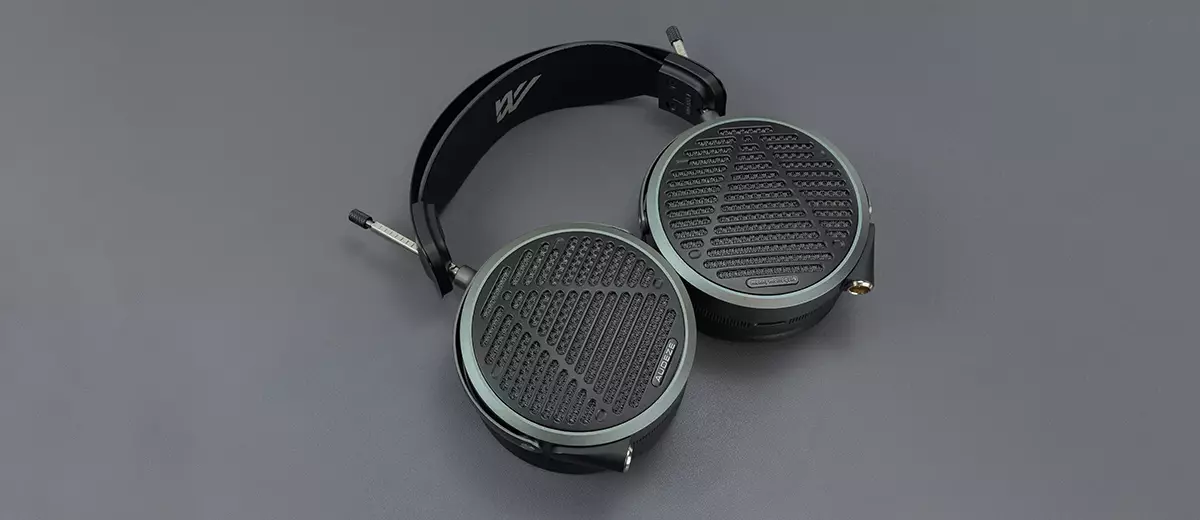
Marcus reviews the Audeze MM-520, a 2nd-gen open-back planar driver headphone tuned by Manny Marroquin and featuring SLAM technology. It is currently priced at $1699.00.
Disclaimer: I received this sample in exchange for my honest opinion. Headfonics is an independent website with no affiliate links or services. I thank the team at Audeze for their support.
Click here to read more about the Audeze products we have previously reviewed on Headfonics.
This article follows our current scoring guidelines, which you can read in more detail here.
I was wondering which Audeze headphone would get the SLAM treatment next. It turns out the new MM-520 replaced the Manny Marroquin-tuned open-back planar MM-500.
The MM-500 was perhaps the sweet spot for me in Audeze’s headphone lineup and also one of my personal favorites. So, I am happy to see that Audeze didn’t mess with the pricing, with the MM-520 staying put at $1699, the same price tag as its predecessor.
Of course, in with the new and out with the old, meaning the MM-520 launch also marks the discontinuation of the MM-500. You will have to hunt around for new-old stock or a used version if you still want the original.
Manny is still deeply involved in the SLAM-equipped MM-520, and it shows in the tuning. This is a compact open-back planar headphone with a smoother, more enveloping, and weightier sound signature than the MM-500.
It is perhaps unsurprising that the bass got a lift courtesy of Audeze’s SLAM system, but after going through some of the measurements, I think the bigger surprise is just how much more natural-sounding the tuning has become.
Is it still the sweet spot in the lineup for me? And how does it compare to the MM-500 and alternative popular Professional line Audeze models, such as the LCD-X and LCD-XC 2021? I found out in my full review below.
Features
The Audeze MM-520 is an open-back planar headphone and, to some extent, retains many of the MM-500’s core features.
This includes Audeze’s latest 90mm driver, a lower-impedance single-sided Fluxor™ magnet array (14 magnets in total), and the Ultra-Thin Uniforce™ diaphragm, similar to the LCD-X and the LCD-XC 2021.
However, the implementation has changed due to SLAM, Audeze’s patented bass enhancement technology. It first saw the light of day in the flagship CRBN2 EST headphones before dropping into the affordable LCD-S20 and, more recently, in the TOTL planar LCD-5s.
In short, SLAM enhances the MM-520’s low-end response below 100Hz with a small but meaningful boost without introducing unwanted distortion and closed-cup bloom.
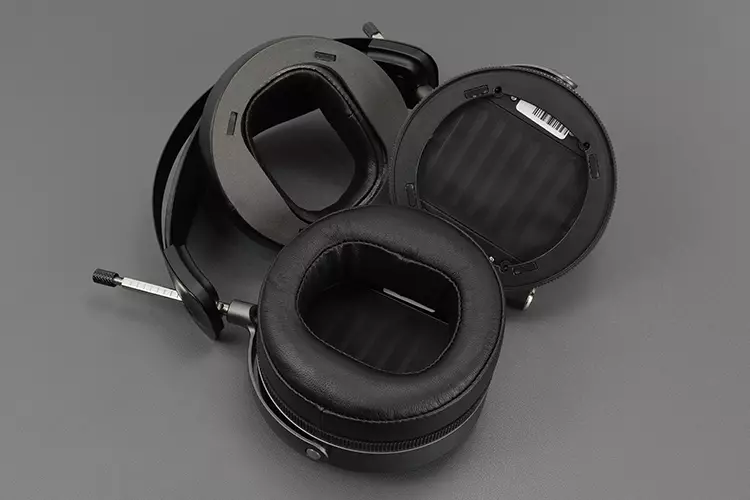
If you pull off the pads, you will see the knurled ring at the front of the driver assembly equipped with 2 large venting ports on either side.
You can also physically see SLAM ‘at work’ from the exterior with the vented knurled ring extension between the base of the cup and the new pads. It creates a slightly elongated physical profile and some additional weight, but nothing too drastic.
And I did say pull off the pads, right? Yup, the MM-520 gets the LCD-S20 treatment with magnetic detachable pads, which delights me to no end.
The MM-520’s load is the same as the MM-500 at 18Ω, with 2 dB more sensitivity at 102 dB/mW, making it a fairly easy-to-drive but still scalable planar headphone with the right amplifier.
Design
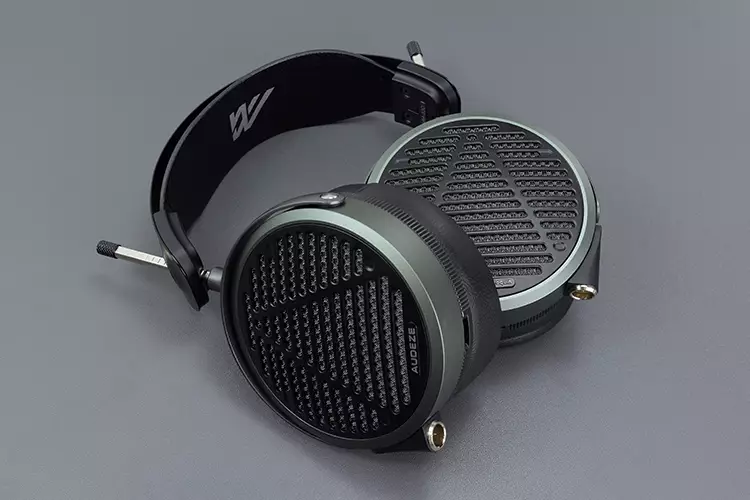
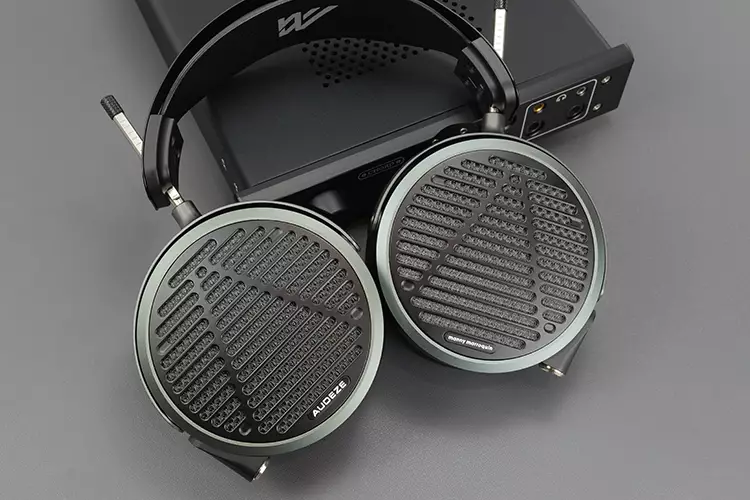
The MM-520 design language is virtually identical to the MM-500. It has this racier, more modernistic visual aesthetic than the classic models, almost like a bridge between the LCD-X and the LCD-5S in terms of looks.
The most tactile change is likely the weight from the additional SLAM tech ring and the new magnet system for the pads. This adds 60g of weight compared to the original. Whilst not a huge difference, the MM-520 does feel a little denser in the hand compared to the MM-500.
The second major visible change is the knurled SLAM ring between the driver enclosure and the new detachable pads. It creates a deeper cup by almost 1cm, with visible venting slots on the base and top of the ring.
A more subtle change is the aluminum chamfering around the ring. On the old MM-500, this was more of a two-stage chamfer and mount with the grill inset by around 2-3mm.
On the MM-520, this staggered finish is now an elongated chamfered finish straight up to the edge of the grills, creating a longer but more streamlined look.
There has been no mention of whether the aluminum rings have been treated differently to prevent the peeling that some owners observed over the years. The aluminum finish does look slightly lighter in tone, so it may have been treated differently. Only time will tell.
In most other areas aside from the pads, the MM-520 material choice and finishing look the same as its predecessor.
This includes a pivot-block-free headband and rod adjustment system, the underlying leather pressure strap, and the giant ‘A’ /Manny Marroquin-monikered black grills on the cups with 3-pin mini-XLR connectors at the base.
Comfort
And now we have magnetic detachable pads on Audeze’s high-end LCD headphones. I praised them for making the move with the LCD-S20 pads during my review, so I will do the same here.
It makes life so much easier for maintenance and storage, allowing you to buy a few in advance and swap around instantly without having to mess with glue, challenging slot fits, or 3M stickers.
The general shape and inner opening of the MM-520 pads do not seem to have changed that much from the MM-500 version. These are plush, thick leather pads with a wider contact surface, which, combined with a decent lateral clamp, create a nicely balanced feel on my head.
The tactile feel of the pads on my head is different due to a switch in the memory foam material inside. You will get a slightly firmer feel when you press down on them compared to the MM-500 version.
One of the major articulation changes from the MM-500 is the new 180-degree swivel capability in the MM-520’s cup. You get a lot more adjustability on your head from this change, as well as being able to lay them flat when not in use, which I know a lot of studio pros prefer.
The pad system is a 4-corner magnet system. It’s an easy on/off with a gentle pull or pinch on either side to detach the pads, then line them up correctly and push to immediately re-attach them to the cups; it’s that simple.
Despite the 555g weight, the MM-520 does not present an unmanageable proposition on my head. You can detect a slight lateral bias in the pressure balance, but the memory foam upgrades seem to dissipate this very well.
Stock Cable
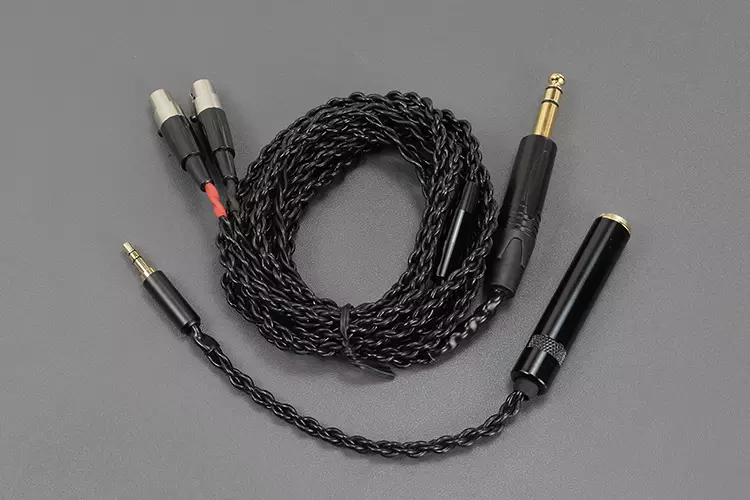
The MM-520 stock cable is similar to the LCD-X and LCD-XC 2021 variants, at 2.5m long with 20AWG high-purity OCC audio-grade copper wiring inside.
The finish is a tight PVC double-braided jacket, divided with a clean, light black aluminum ferrule tube for the splitter.
The cable connectors are the usual mini-XLR 3-pin barrels with channel color-coded strain relief. The connectors are angled so the connector length will not drag on your collar during use.
The jack termination is 6.35mm, but unlike the MM-500 sample I received, the MM-520 stock cable comes with a 6.35mm-to-3.5mm pigtail adaptor which enhances connectivity options. Still, no 4.4mm or 4-pin XLR though, which I might have preferred.
The double-braiding is nice and tight, the flex is supple, and it is not too weighty either. You get next to no memory retention, so it sits or behaves really well around you when using the headphones.
Importantly, you will not hear microphonics traveling up the wire when using the MM-520. This is a very quiet cable for handling both below and above the splitter.
Packaging & Accessories
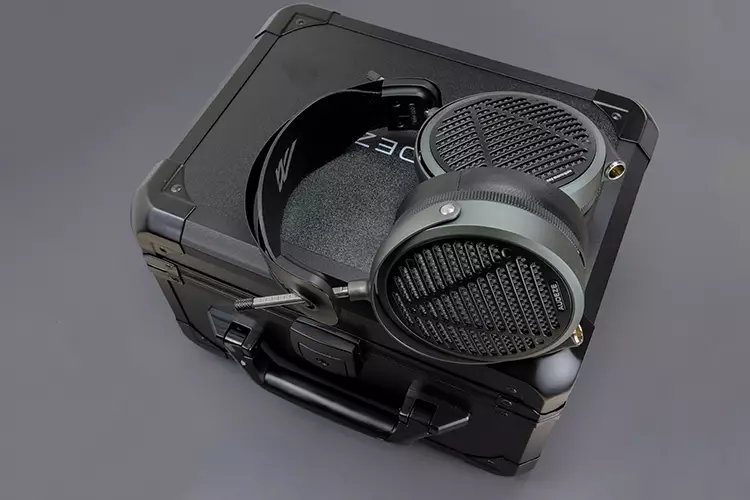
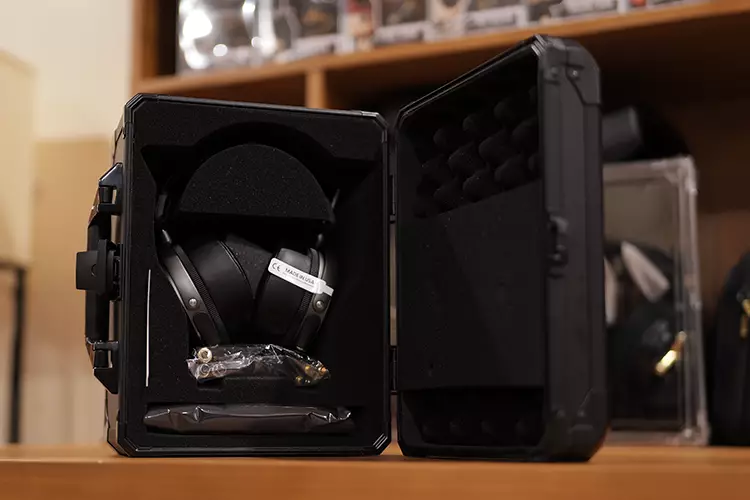
The packaging for the MM-520 is much the same as the MM-500, but that’s a good thing in my book, as it will come well protected for moving around, with a thick inner foam lining and a sturdy handle on the outside.
Accessories that come with the MM-520 include the stock cable and pigtail adaptor, plus a user guide and warranty card, and the same soft, large MM-Series drawstring pouch as the MM-500 version.
It looks quite striking but obviously provides zero protection against bumps and knocks. I would use this primarily as a dust cover when not in use.
Sound Impressions
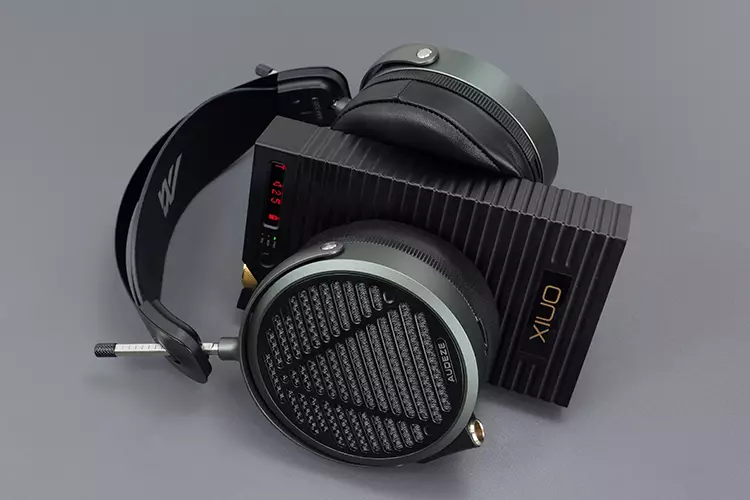
The following sound impressions of the Audeze MM-520 were completed using a mix of the Ferrum OOR/WANDLA GSE, the Topping DX9 Discrete, and the Chord Electronics Alto.
Summary
For a drill-down into the in-depth differences from the MM-500, flick over to page 2 of this review. Suffice to say, the MM-520 sounds quite different.
It has a healthy sub-bass bump that does not feel overcooked, significantly more lower-midrange emphasis up to 1k, combined with a much quieter 2-4k range creating a more rounded, heavier-sounding presentation.
The lower treble is somewhat relaxed, though I do hear a bump around 10k that provides a subtle level of height and air that might be immediately obvious.
The lack of upper-mid boost reduces the ‘in-your-face’ quality of the original, so percussion is weighty but not as spiky, vocals are fulsome but less pointed with lower levels of tonal contrast.
What does all that mean? Well, the MM-520 sounds soothing and relatively natural to my ear with a slight low-to-midrange bias, decent power, and good rather than a shouty vocal presence (if registering around 1k).
With the right amplifier, such as the Alto, it is more suited to ‘driven’ or rhythmic modern pop, EDM, and R’n’B rather than precision-driven metal, where clarity levels can depend on a very clean, dry sound.
Now, I will not describe the MM-520 soundstage as huge; it still has a ‘studio’ or small dance hall feel to its sizing. However, what it does so well, at least compared to the MM-500, is in how it images and produces detail.
It has a surprisingly satisfying level of 3-dimensional depth to its layering, with improved width and spatial intricacy. I can handle small staging headphones when imaging is this impressive.
Frequency Response
The strongest emphasis in the MM-520’s curve is from 20Hz up to 1k, where it either runs neutral or above neutral, particularly around 20Hz to 50Hz and again around 500Hz to 1k.
Beyond that, the tuning runs somewhat south of neutral with subdued 5k and 10k spots, and moderate bumps in between with subtle jumps north in the upper-treble extension 10k upwards.
The resulting tonal profile is what I would describe as bottom-weighted with a stronger fundamental frequency emphasis, creating a fuller, more rounded, smoother, and agreeable sound signature.
The 20-50Hz SLAM-tuned low-end might not look much on paper, but it plays a fundamental role in how the MM-520 puts its front foot forward.
The additional depth and power help stretch the staging more than the original, and factor in its improved imaging and placement. The low-end now has some meat on its bones that the MM-500 lacked.
Also, if you felt the original was perhaps too mid-forward, especially in the 2-4k region or with percussion and vocal delivery, the MM-520’s subdued equivalent region sounds like an antidote with its softer attack.
Vocals that register right around 1k can dominate, but even then, the lack of sharpness or harmonic dissonance keeps fatigue at bay.
I hear some subtle high-end presence beyond 5k, with more of a 10k rise than any lower-treble peaking. If you are wedded to the original LCD-X sound, you will find the MM-520 lacks the dreaded ringing metallic tones that plagued the older models.
Click on page 2 below for my recommended pairings and selected comparisons.
