

Kurt reviews the Shanling MG200, a 16Ω 10mm dynamic driver in-ear monitor with a unique open-back rear chamber, currently priced at $219.00.
Disclaimer: This sample was sent to me in exchange for my honest opinion. Headfonics is an independent website with no affiliate links or status. I thank Shanling and Linsoul for their support.
Click here to learn more about Shanling Audio products previously reviewed on Headfonics.
This article follows our current scoring guidelines, which you can read in more detail here.

Shanling has kept a strong presence in portable audio through its DAPs, dongle DACs, and IEMs such as the MG100, MG600, and MG800.
The MG line has focused on single dynamic driver earphones, giving Shanling a clear path for experimenting with shell materials, acoustic chambers, and diaphragm designs.
Now comes the Shanling MG200, priced at $219.00, featuring a single 10mm dynamic driver with a polymer composite diaphragm and an open-back acoustic structure.
With open-back IEMs still being uncommon, can Shanling turn this unusual system into a real advantage over the likes of the MOONDROP Kadenz and SIMGOT SuperMix 5, or will it remain an experiment?

Features
The Shanling MG200 uses a single dynamic driver configuration built around a polymer composite diaphragm and rated at 16Ω for impedance and 112 dB/mW for SPL.
This driver comes with a low-distortion flexible suspension system, which Shanling claims stabilizes diaphragm movement within the acoustic structure.
The main technical focus is Shanling’s Star-Orbit open-back acoustic rear chamber, a system that allows rear sound waves to disperse rather than stay trapped inside a closed cavity.
This makes the MG200 unusual among single dynamic driver IEMs, since open-back rear chamber designs are still uncommon in this format.
The driver architecture uses a dual magnetic circuit paired with a dual-chamber internal structure. Shanling combines this system with a pure copper voice coil and dual N52 magnets, while listing total harmonic distortion below 0.05%.
This internal layout appears to be Shanling’s way of controlling the tradeoff created by the open-back design.
Since bass can disperse more easily with this structure, the dual magnetic circuit and dual-chamber design seem aimed at keeping the driver controlled without closing off the rear chamber.

Design
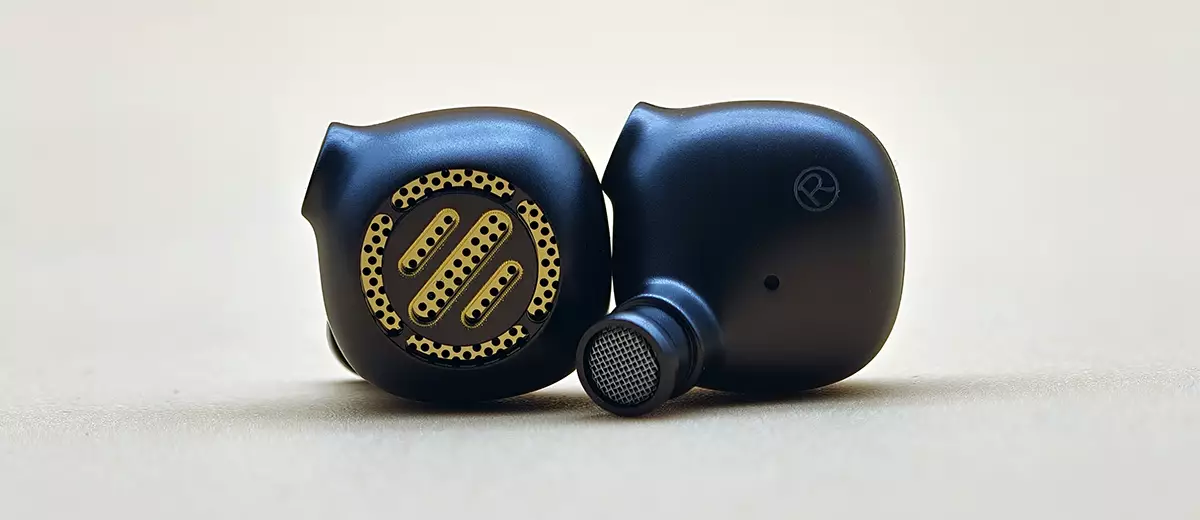
A circular open-back grille is the immediate visual centerpiece of the Shanling MG200, occupying most of the outer faceplate. Its gold and silver pattern resembles a miniature speaker vent, with three long horizontal slots sitting over a vented mesh layer underneath.
Surrounding that grille is a glossy black ring that contrasts sharply against the mostly matte black body. The alternating metal tones make the open-back structure look more mechanical and boring than eye-catching and decorative.
Most of the shell uses a smooth black metal body with a rounded, pebble-like shape and a satin finish. Its surface keeps reflections controlled, giving the earpieces a clean industrial look rather than the resin-heavy styling common on many IEMs.
Markings are kept minimal, with L and R symbols printed near the inner side of each shell. The subtle placement keeps the outer design uncluttered, though the low-contrast printing can be hard to see under dim light.
A small circular vent sits on the inner face of each shell, positioned between the nozzle area and the channel marking. The larger open-back grille on the faceplate also works as the main visual venting element, exposing the rear chamber through its layered metal structure.
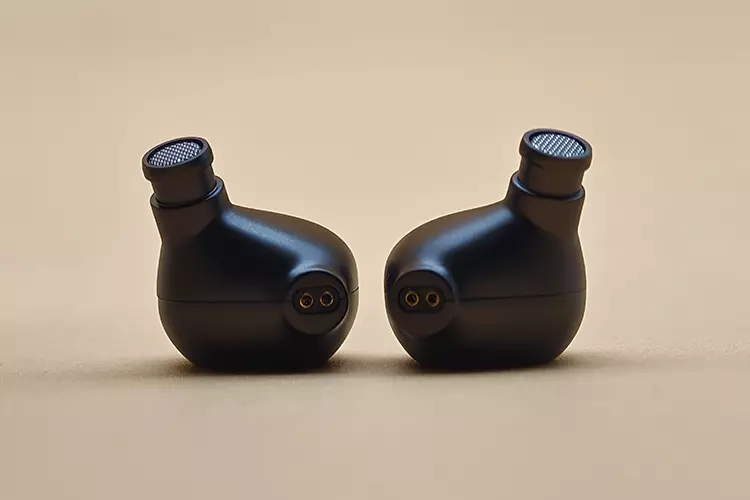
For the cable connection, Shanling uses 0.78mm 2-pin sockets placed inside a rounded raised connector block with gold contacts visible inside the black housing.
The nozzle is metal and moderately long, finished with a raised lip and a silver mesh filter that covers the opening cleanly.
Comfort & Isolation
The Shanling MG200 is genuinely comfortable, and its small shell makes the fit feel almost effortless from the first wear. It should work for nearly any ear size without the usual struggle of angling, twisting, or reseating the shell repeatedly.
Once inserted, the MG200 sits deep in the ear with almost no visible protrusion. That deeper placement makes the shell feel secure and keeps the body from sticking out awkwardly during normal use.
Long sessions are excellent here because the earpieces feel incredibly lightweight in the ear. There is also no pressure buildup at all, which is expected for an IEM with this kind of acoustic design.
The one fit issue comes from the upper part of the shell, which creates an unusual contact point that stops it from sitting as perfectly flush as it could.
Isolation is also not the strongest, as the open-back structure lets outside noise pass through easily enough to become distracting in louder spaces.

Ear Tips
Tip selection labeling is surprisingly accurate for the Shanling MG200, which is not something I usually expect from stock ear tip sets.
All the included options are comfortable and easy to fit, with none feeling overly stiff, rough, or difficult to seal.
The default translucent white tips use a short stem and wide bore, giving the MG200 stronger bass, better detail retrieval, and improved extension.
That added energy also makes sibilance more noticeable and brings audible sharpness to vocals.
The Balanced Ear tips use a large flange, balanced bore, and short stem, reducing bass strength and detail retrieval compared to the default tips. In exchange, they remove the sibilance and vocal sharpness almost entirely, making them the safest option for treble-sensitive use.
The Bass Ear tips use the hardest stem, the most average flange shape, and the only colorful design in the set, pairing a black flange with different stem colors.
Instead of adding much bass, they slightly tighten the subbass and act more like a treble damper, though they are also the easiest tips to physically feel in the ear.
The Vocal Ear tips have the most donut-like flange, the widest bore, and a short stem that spreads the bass out instead of keeping it precise.
They boost vocal clarity and make breaths easier to hear, but they also bring back the vocal sharpness that the Balanced Ear tips avoid.
The Soundstage Ear tips use a more rounded large flange, medium stem, and balanced bore structure, and they are the most surprising set here.
Imaging becomes noticeably more accurate, left-right panning is easier to track, and treble extension improves without becoming as sibilant or sharp as the default tip.
Stock Cable
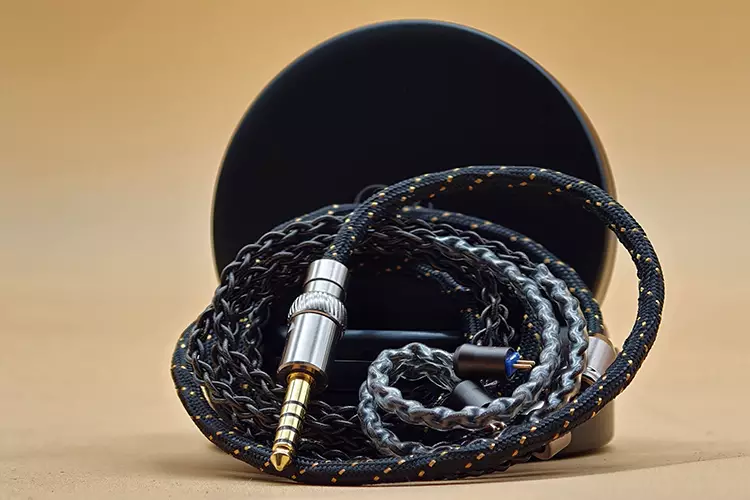
The stock cable of the Shanling MG200 looks and feels excellent, with a mixed construction that gives it a more distinctive identity than a typical braided cable.
Its main lower section uses a cloth-sleeved single line with gold flecks woven through the black fabric, giving it a clean and rugged visual match with the IEMs.
Above the split, the cable changes into clear plastic-sheathed braided wires for the left and right channels. This section feels lighter and more flexible, though the sudden material change makes the cable look like two different designs joined together.
Channel markings are handled through color, with blue indicating the left side and red indicating the right side. The 0.78mm 2-pin connectors use compact metal housings, and the cable sits neatly with the MG200’s black-and-gold design language.
The modular plug system uses a secure screw-in mechanism, which feels better than loose friction-fit alternatives.
The odd issue is that only the 4.4mm plug is included, leaving the 3.5mm plug missing despite the cable clearly being designed around interchangeable terminations.

Packaging & Accessories
The Shanling MG200 arrives in a dark outer sleeve with a space-themed design built around a large silver “DARK SPACE” graphic. A blue planet sits behind the typography, while the front also carries Shanling branding, the MG200 name, and the dynamic driver earphone description.
The back of the sleeve lists the main features and specifications in multiple languages, alongside certification marks and product labels. Removing this sleeve is surprisingly difficult the first time, as the fit is extremely tight and feels almost wedged onto the inner box.
Once the sleeve is removed, the main box underneath is much cleaner, using an all-black finish with the Shanling logo centered on the lid. The lid itself is easy to remove by pulling upward, which makes the second step of the unboxing far smoother than the first.
Opening the box reveals the IEMs seated at the top inside a dense foam cutout, with the faceplates immediately visible through shaped openings. Beneath the IEM tray sits a separate black accessories container, though it only holds the guide cards rather than the cable or ear tips.
Below those upper layers, the round carrying case and four individual ear tip boxes are arranged neatly inside the lower foam section. The tip selection is especially organized, with separate cases for Balanced, Sound Stage, Vocal, and Bass Ear tips.
The carrying case uses a round black shell with Shanling branding on the lid, matching the MG200’s dark visual theme. It opens through a slide-up mechanism, and the stock cable is stored inside rather than being placed in the separate accessories box.

Sound Impressions
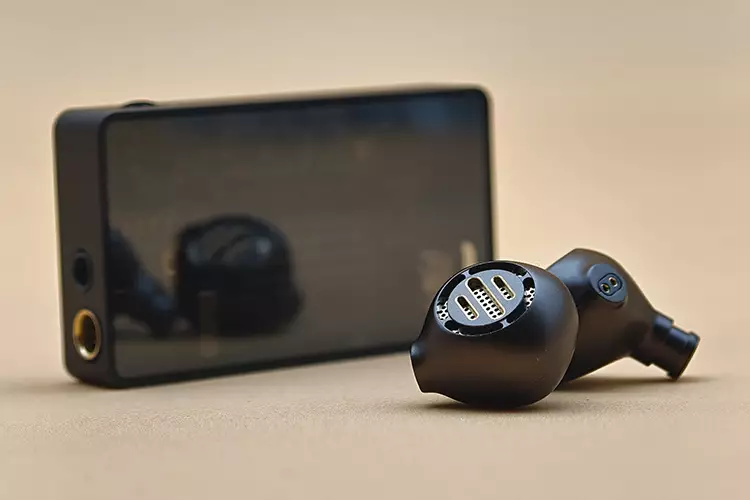
All sound impressions of the Shanling MG200 were completed using the Heartfield R1 and Colorfly CDA-M2 dongles. The Soundstage ear tips were used for this review of the Shanling MG200.
Bass
I expected the Shanling MG200’s open-back structure to weaken the bass and let low-end energy disperse too easily. That assumption was wrong, as the bass carries more weight, control, and presence than its design initially suggests.
Its subbass rumbles with confidence, delivering precise and defined hits instead of shy or hollow. It stays clean and potent, giving tracks an enjoyable feel without any bass bleed muddying the midrange.
A good amount of mid-bass punch is present as well, keeping the MG200 from sounding polite. I usually look for a tactile mid-bass hit, and while this is not the strongest version of it, the physical impact is audible, noticeable, and above average.
That punch has a clean yet ‘boomy’ quality, which sounds strange on paper but fits what the MG200 does well. It adds enough slam to make tracks lively while avoiding the loose and messy behavior that usually comes with excess mid-bass.
Drums carry accurate tone with enough body to sound convincing; each on the drums carry their own weight and power that prevents it from blending. Bass guitars follow the same path, sounding properly defined and natural while also not trying to dominate the mix.
Mids
The midrange is likely where the Shanling MG200 will divide people, as vocals sit very forward in the mix. There is also noticeable brightness here, pushing voices close and giving the whole region a more energetic presence.
That forwardness brings some audible sharpness to vocals, especially when a track already leans bright. The tradeoff is great vocal nuance, with tiny breaths, small inflections, and emotional shifts coming through clearly.
Vocal quality itself is strong, carrying a musical and expressive delivery that makes performances feel emotionally direct. Timbre and tonality are accurate, though a noticeable grain keeps the MG200 from sounding fully refined.
Instruments follow the same direction as the vocals, sounding tonally correct while keeping enough definition to stay convincing. Stringed instruments have the right amount of body, realism, and texture, giving guitars and similar instruments a grounded feel.
Clarity stands out as one of the most surprising parts of the MG200, especially for a single dynamic driver setup. It pulls out detail with ease, keeping vocals and instruments clean even with its forward and bright midrange approach.

Treble
Treble is the weakest part of the Shanling MG200, though that needs context because it still performs well for a single dynamic driver IEM. Its main limitation is extension, which sits above average rather than strong or immediately standout.
What keeps it from falling short is airiness, which becomes the defining strength of the MG200’s treble. This is the airiest single dynamic driver IEM I have tried, and its openness repeatedly made me question whether extra BAs or micro-planar drivers were inside.
Its detail retrieval is not excellent, but it remains good enough to reveal smaller nuances in the mix. Those details come through on the softer side, so you need to look for them at first, but they become easier to follow once your ear locks in.
Sibilance depends heavily on the recording, rather than appearing constantly across every track. Clean mixes avoid the problem, but badly mixed vocals can turn genuinely rough because the MG200 exposes that sibilance clearly and aggressively.
Cymbals carry the metallic tone they need, with enough energy to sound convincing rather than muted. Sharpness can appear through vocals and poor recordings, but the treble’s main achievement is still its open and airy quality.

Staging & Dynamics
Because of that airy top end, the Shanling MG200 creates an impressive soundstage built mainly around width. Height and depth are only slightly present, so it does not become a true out-of-head experience, but the overall spread reaches impressively wide.
Placement accuracy stands out immediately, with left-right panning and directional cues sounding convincing. The open-back system works wonders here, giving the MG200 a more immersive feel than expected.
Different sounds move through the stage with clear shifts in loudness and position, making the mix easy to follow as it doesn’t become cluttered with its great separation control. It can place cues slightly upward, slightly downward, far left, or closer to the middle without making those positions feel vague.
Dynamic control is excellent, giving each element its proper strength instead of flattening everything into the same volume. Drum hits land with noticeable differences in force, while guitar plucks also show clear changes in intensity.
Raising the volume benefits the MG200 most clearly in the bass, where the low end gains more body and impact. That scaling does not smear the rest of the presentation, helping the whole sound feel more controlled and complete.
Click on page 2 below for my recommended pairings and selected comparisons.
