

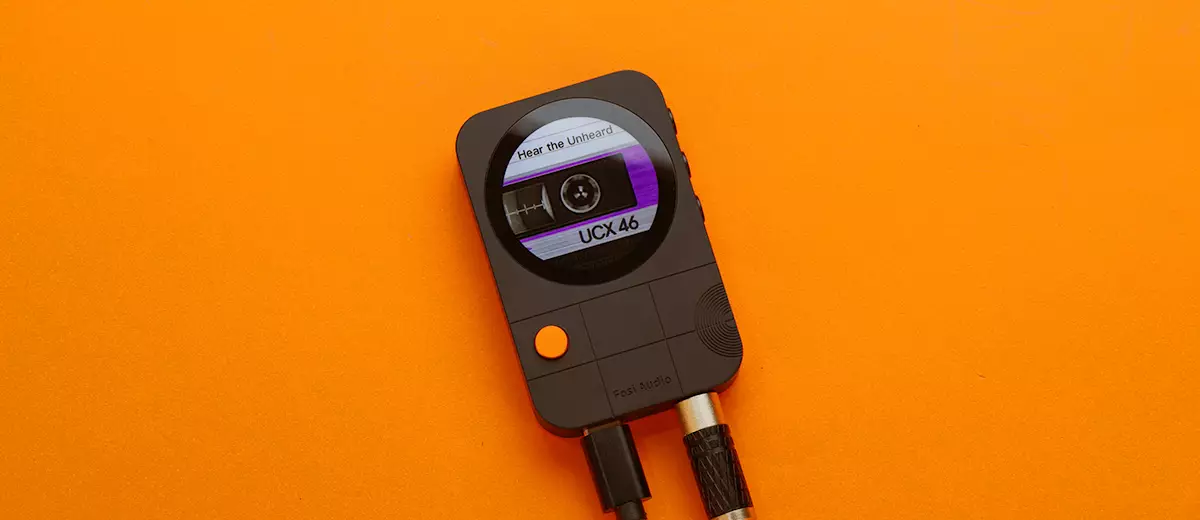
Marcelo reviews the Fosi Audio MD3, a MagSafe-equipped ES9039Q2M DAC and portable headphone amplifier with 180mW of output power. It is priced at $149.99.
Disclaimer: This sample was sent to me for my honest opinion. Headfonics is an independent website with no affiliate links. I thank Fosi Audio for their support.
You can click here to learn more about Fosi Audio products previously reviewed on Headfonics.
This article follows our current scoring guidelines, which you can read here.
Fosi Audio rose to fame in the audio community for its high-quality, affordable class-D speaker amplifiers, some of which have been reviewed here before, including the Fosi Audio BT20A MAX.
Fosi Audio has also recently been releasing desktop DACs, such as the Fosi Audio ZD3, and headphones, such as the Fosi Audio i5.
But despite that, I honestly haven’t heard a Fosi Audio product before. Luckily, I was sent the Fosi Audio MD3, which sells for around $149.99.
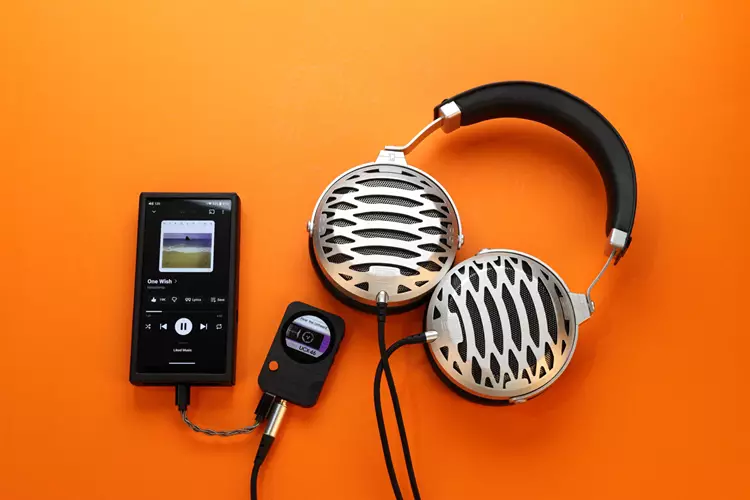
MD3 is Fosi Audio’s first pocketable battery-powered DAC amplifier with a magnetic backplate for attachment to a compatible phone or phone case.
Will Fosi Audio’s good reputation for speaker amplifiers carry over to the MD3? And how does it compare to similar DACs like the HiBy W4 and the Khadas Tea Pro? Find out in the review below.
Features
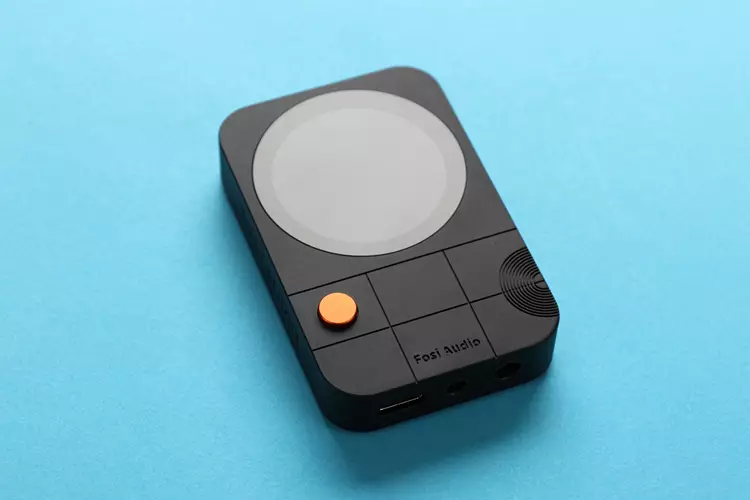
The MD3 features a 1.28-inch round LCD screen. It features three games: rolling dice, wine bottle, and rock, paper, scissors. It displays customizable screensavers, built-in animated ones, and the volume and operating status.
The magnetized back, which is the reason for the MD3’s existence and is compatible with phones or phone cases, allows a neat-looking setup.
The MD3 uses the latest DAC chip from ESS SABRE in the USA, the ES9039Q2M, which is becoming my favorite DAC chip lately. The audio signal is then handed to four ESS ES9603Q amplifier chips.
In normal use, only two ESS ES9603Q are needed for balanced amplification; Fosi Audio must have paralleled two ESS ES9603Q to increase MD3’s low impedance drive capability.
Additionally, MD3 features a 100-step volume control, allowing fine volume adjustment. Its maximum output power ratings are 80 mW at 3.5 mm and 180 mW at 4.4 mm.
What’s missing, which honestly, I don’t miss at all as I don’t use it in a DAC amplifier in this form factor, is the Bluetooth connectivity.
Design
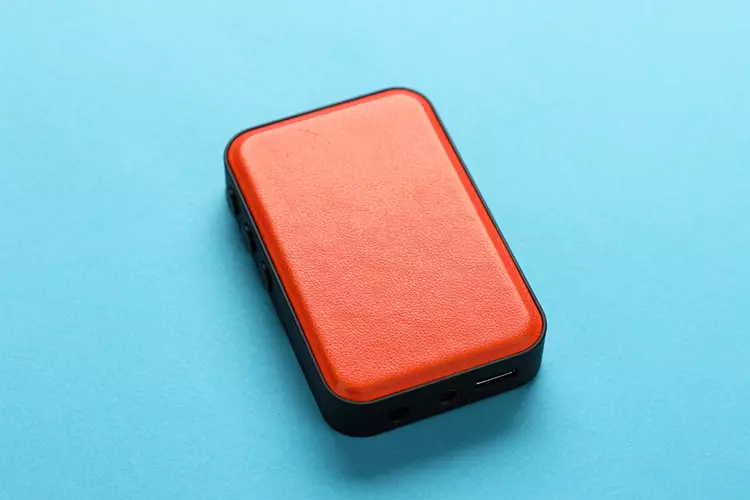
The MD3 is delightfully small and light for its form factor, measuring 70×45×12 mm (2.76×1.77×0.47 in) and weighing only 50 g.
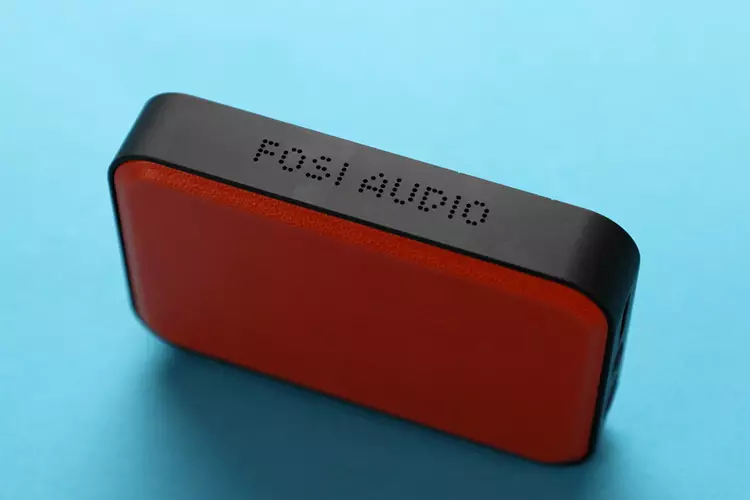
Its aluminum alloy chassis is available in anodized silver or black and is designed to look neat when attached to the back of a phone or a magnetic phone case.
At the front are the 1.28-inch LCD screen and a round orange Fosi Audio control button; on the right side are three control buttons and an orange leather back.
A dotted Fosi Audio is carved on the left side, which is a nice touch.
I/O
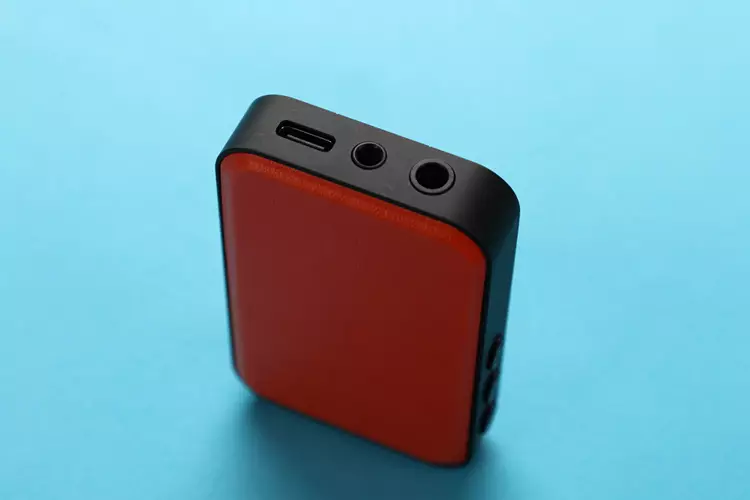
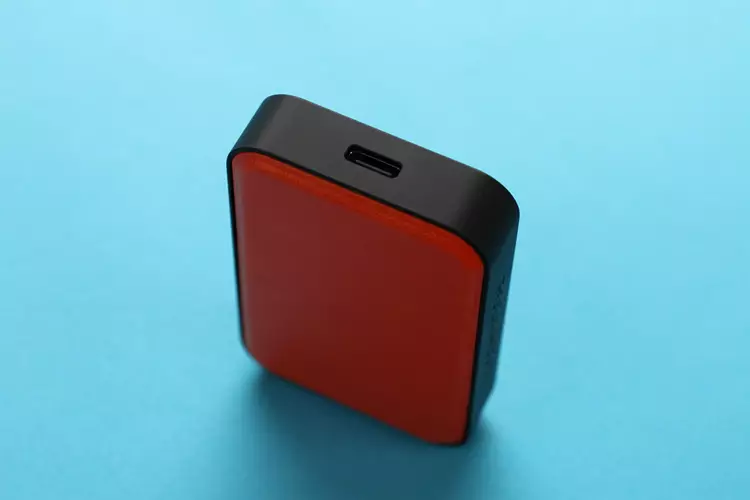
The MD3 features two USB-C ports: the top port functions as Audio Decoding, Image Transfer, and Charging. The bottom port functions as Audio Decoding, Image Transfer, and Firmware Upgrade.
I like having two USB-C ports on DAC amplifiers, as it lets me use them while charging the battery.
Both USB input ports are compatible with UAC 1.0 and UAC 2.0, which means the MD3 is compatible with old PCs, gaming consoles, and the latest PCs, Laptops, phones, and DAPs.
Both the 3.5 and 4.4 mm output jacks are located at the bottom.
I find it very useful that both the top and bottom USB-C ports can be used for audio input, making the MD3 more flexible in setup configuration.
There is no need to turn on the MD3, as it automatically turns on when a source is connected. It is plug-and-play.
When plugged into a PC or Laptop, the sound is automatically routed to the MD3. The sound automatically reverts to the PC or laptop when the MD3 is unplugged.
Controls
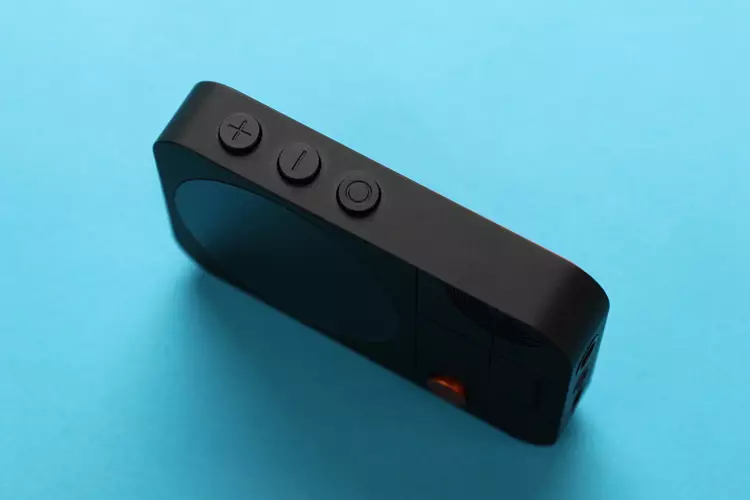
The control button at the front, called the vista button, allows browsing through the uploaded photo album, while the three buttons on the right side serve as volume and menu controls.
I like that they made the front button orange, which is their brand color. I wish that they wouldn’t rattle when the MD3 is shaken, though.
There is no on/off button, as the MD3 automatically powers on when plugged into a digital source or a USB-C charger.
Display
The MD3’s rotatable 1.28-inch display, which shows the volume levels, operating status, and screen savers, is dim out of the box, with an average viewing angle and good color saturation. I have to increase the brightness to 100% to get an acceptable level.
Pressing the Vista button twice, the orange button at the front, would change the display mode from the default tape and vinyl to more anime-style visuals. I especially like the cyberpunk anime-style screen saver.
Pressing the Vista button twice will take you to the game mode, which includes three games. Pressing the Vista button once switches the display style.
The LCD screen is covered with a glass panel; however, it is not a touchscreen display.
Battery Life & Charging Time
Initially, it appears the MD3 lacks an internal battery, as it only turns on when plugged into a USB source, and Fosi Audio has not published the battery capacity or life at this time.
However, the spec sheet says both USB-C ports also act as charging ports, so I assume there is an internal battery.
Unfortunately, there is no battery level indicator or indication that the MD3 is charging when plugged into a USB-C charger. Therefore, I must test the battery life and charging times.
I charged it for 2 hours straight out of the box, then let it play music with an IEM at a normal volume for 6 hours, and the MD3 is still on. Apparently, it’s getting power from the source, which is why it doesn’t run out of power, duh.
During charging, the MD3 is warm, and it is very warm during prolonged use.
Packaging & Accessories
The MD3 came in a simple, small box measuring 115 x 75 x 40 mm, with a photo of the MD3 on the front and text all around the box.
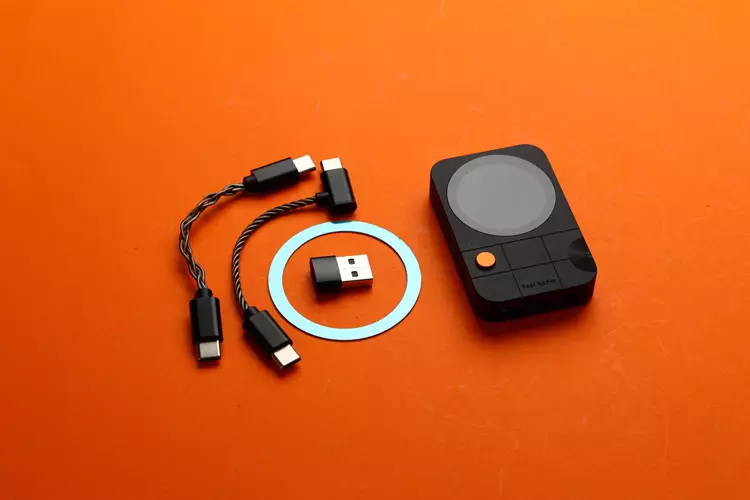
Inside are the manual, one straight and one angled short USB-C-to-C cable, a Type-C-to-A adapter, a magnetic ring sticker, and the MD3 DAC amplifier.
Sound Impressions
For listening and comparisons, I use my DUNU Falcon Ultra, Tipsy M5, QoA’s Martini IEMs, the FiiO JT3, TANGZU Ox Demon King, and Sennheiser HD 6XX headphones.
I did a 12-hour burn-in by letting the MD3 play continuously with an IEM and a DAP at my normal listening volume to test battery life and observe how hot it gets during continuous use.
For this review, I used my Android phone, MacBook Pro M5, and my desktop PC as sources. No EQ was used; the digital filter was at its default setting, and no other sound enhancements were applied using UAPP, PowerAmp, or YouTube Music.
Summary
I’m very pleased with the MD3’s neutral tonality, flat perceived frequency response, and sound transparency. Another thing I noticed immediately was the very extended and airy-sounding treble.
Although the frequency response is flat and the bass is neutral and extended, it is not the tightest around, and when playing loud, bassy music, it is not the hardest hitting. It seems the driver, bass control, or grip is only moderate, which is expected at this point.
Because of the above, the MD3’s midrange has a slight warmth and lushness, but no bloomy coloration. I hear a good level of detail and transparency, yet the delivery sounds very pleasing and slightly rounded.
The MD3’s treble is airy, extended, detailed, transparent, and nuanced, yet never analytical. There seems to be little rounding at the leading edge, making the sound very smooth, yet there is no sign of upper-treble roll-off.
Coloration
Due to the MD3’s neutral tonality and flat perceived frequency response, it is difficult to find any sound coloration. There is no forwardness or excessive energy in any frequency range.
If I must point out one thing I could criticize, it would be the bass, which is not as tight, controlled, or as powerful in its presentation as I like. However, this is very minor and negligible, as there is no boominess in the bass or bloom in the lower-midrange coloration.
I must add that I’m very pleased with the implementation of the ES9039Q2M chipset, because I hear no sound coloration or slight upper midrange and lower treble energy excess that I hear from the past generations of SABRE DAC chips.
Staging
Thanks to the MD3’s transparent, extended, airy treble, the soundstage is spacious, with expansive width, good height, and satisfying depth.
There may be more width than depth, but the MD3’s stage depth is very satisfactory, as I hear a reasonably long and clean decay of the instrument in the background.
Aside from hearing a good lateral expanse of instruments with spaces in between, I also hear the front-to-back separation of the background instruments, and the tambourines positioned slightly behind and to the side of the main center and front vocals.
Dynamics
Using the MD3 with my IEMs, I hear a very dynamic sound full of liveliness and energy despite its modest power output rating by today’s standards. Unfortunately, this does not translate to headphones.
Regardless of which headphones I use, I always feel that the dynamics aren’t as explosive as they should be, which I will discuss further in the headphone pairings below.
Click on page 2 below for my recommended pairings and selected comparisons.
