

Selected Comparisons
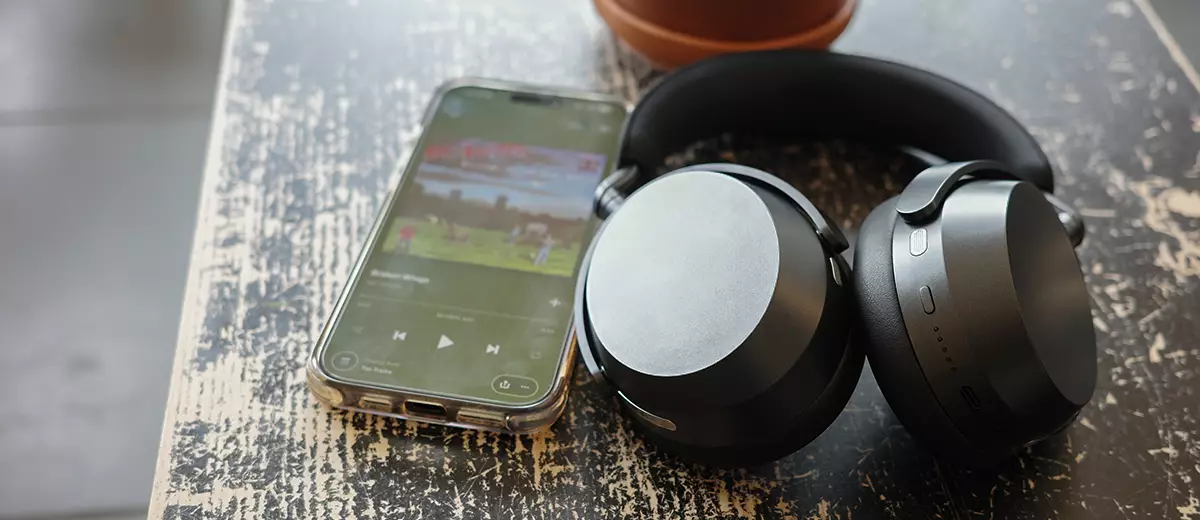
Sennheiser MOMENTUM 4 Wireless
Features
Sennheiser raised the bar of Adaptive Noise Cancellation technology with the MOMENTUM 4 Wireless. The MOMENTUM 5 Wireless benefits from the permutations that have followed.
Some say the ANC here was the best around. While I disagree, it was quite good for the price point. The MOMENTUM 5 Wireless has indeed benefited from that lineage.
The Sennheiser MOMENTUM 4 Wireless has situational awareness, which means that when you lift the right ear cup from your head, your music and audio activity will pause from the connected source.
The MOMENTUM 5 Wireless does the same when you remove both, even a slight bit, mimicking this situational awareness. Plus, you now have the Head Tracking on the MOMENTUM 5 Wireless.
Interestingly, both have a pinch-to-zoom feature on the same right-side cup that allows the owner to reduce or increase the amount of desired ANC.
The MOMENTUM 5 Wireless works more fluidly as expected through the iterations from the MOMENTUM 4 Wireless.
Beyond that, swipes across the right-side cup or a tap will allow you to skip tracks, raise the volume, or mute the experience entirely, on both.
Sennheiser has worked hard to perfect this technology, and it works pretty much flawlessly on the MOMENTUM 5 Wireless.
Design
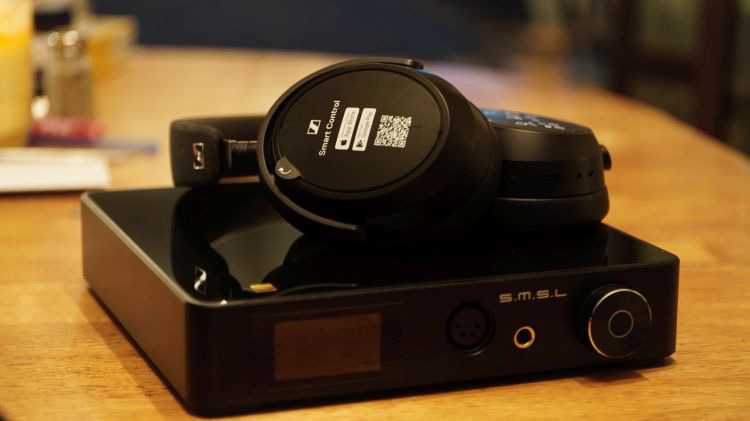
The MOMENTUM 4 Wireless design is extremely well thought out.
The selected angles of the headband end up relieving pressure on the top of your head, despite being plastic in the materials used. The MOMENTUM 5 Wireless feels a bit more upscale in design and build.
The cut is thick and weighty, lacking a creaking or rubbing squeaking sound when rotating the ear cups in your hand or applying pressure to the headband area on both. This is a headphone intended for active users, so I appreciate the quality of plastics used on both.
The headband arc on the MOMENTUM 4 Wireless is aluminum, feeling slightly pliable, while the MOMENTUM 5 Wireless provides more rigidity.
The ear pads are circumaural but on the smaller side of “full size”. Both ear cups rotate and swivel around enough to allow for a perfect fit for me. Both fit similarly.
On the bottom side of the ear cups, you will find the power button, which doubles as a pairing mode button when long pressed, light indicators of pairing modes and battery life left, the 2.5mm input for wired cable mode, as well as a USB-C port. The MOMENTUM 5 Wireless has a standard 3.5mm port and the same USB-C port.
The MOMENTUM 4 Wireless has two microphones per side, while the MOMENTUM 5 Wireless has four per side.
Performance
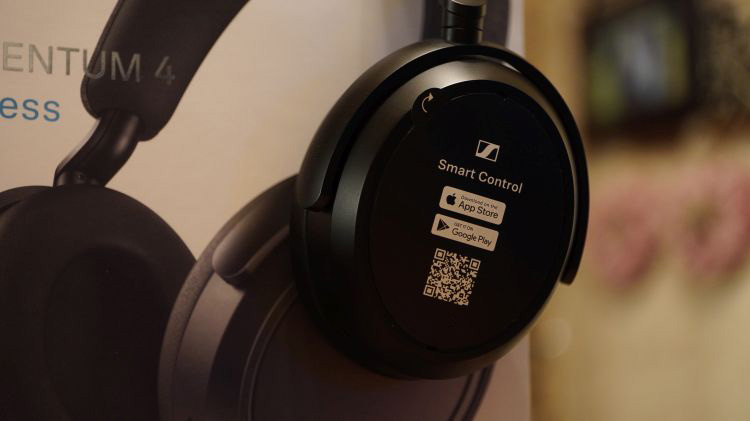
The MOMENTUM 4 Wireless stock experience via the wired mode (using the 3.5mm cable) is on the lower side of moderate bass.
It is not bass light, but it is also what I would consider still lacking depth and balance compared to the midrange and treble quantities. The MOMENTUM 5 Wireless presents more bass in the wired situations.
The wireless mode adds more bass, more boom, and more depth. Wired mode removes that bass depth and replaces it with more clarity and a different texture. Where the MOMENTUM 4 Wireless may sound a bit analytical, the MOMENTUM 5 Wireless sounds more musical and experiential.
The MOMENTUM 4 Wireless mids are relaxed with a wide feeling, but it lacks forwardness. This is the part I appreciate the most on the MOMENTUM 5 Wireless, so I am glad Sennheiser left that section alone.
The MOMENTUM 4 Wireless top side is beautiful while being clean and having a certain verve to it. This gives the upper end the necessary energy to spread out, but not at the note weights’ expense.
The MOMENTUM 5 Wireless comes across as smoother up top, with a bit less energy, but more note weight. It never feels bogged down or muddy, though.
Sennheiser HDB 630
Features
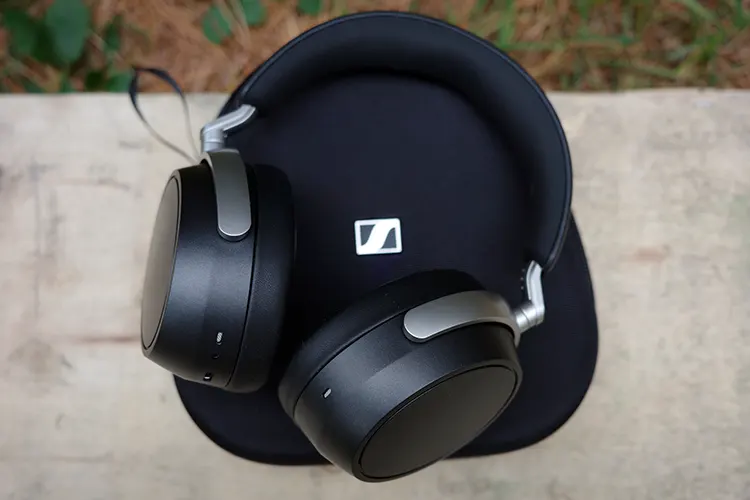
The Sennheiser HDB 630 wireless headphones use a 42mm dynamic driver (produced in the company’s Tullamore facility in Ireland), which is the same size as the MOMENTUM 5 Wireless (and the same driver).
Full support for aptX Adaptive, SBC, AAC, and mSBC is included courtesy of Qualcomm’s Bluetooth 5.2 chip, with up to 24-bit/96kHz resolution. The MOMENTUM 5 Wireless has Bluetooth 5.4 out of the box with 6.0 on the way.
With a 105 dB sensitivity rating, the MOMENTUM 5 Wireless comes across as easy to drive (when wired), reaching quite loud volume levels when the source could provide the energy.
With carefully tuned acoustic treatments, precision of reproduction is emphasized, mimicking wired performance. The MOMENTUM 5 Wireless has a more sensitive 108 dB rating, but uses that to different effects in the signature.
Two microphones per side, “beamforming” for noise reduction, provide top-quality voice technology for use with your phone.
Our son was able to hear me quite well, with minimal wind noise on a blustery Lake Superior day, with the wind cutting right into me. The MOMENTUM 5 Wireless again has four, and our son could hear me quite clearly on a windy Lake Superior day.
Combining the headphones, BTD 700 dongle, and the included cables with the case does make for a heavier package, but not so far out of the norm to cause issues. The MOMENTUM 5 Wireless is all about portability and sound signature.
Plus, the inclusion of the highly rated BTD 700 dongle allows the user to gather Hi-Res audio from many different sources, expanding potential options. Pairing was easy, too. The MOMENTUM 5 Wireless does not have that ability.
Design
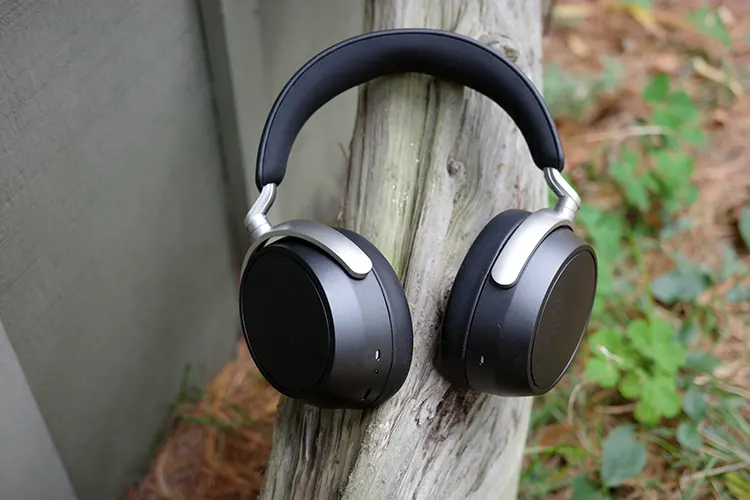
The immediate feeling of quality came to mind when I opened the HDB 630 box. And higher quality than the more plastic MOMENTUM and ACCENTUM variants, which, of course, have a designated price point to hit.
The MOMENTUM 5 Wireless comes close, but you can tell (if you look closely) the slight increase that accounts for the higher price (a bit).
The luxurious feeling is reminiscent of a competitor, but with the Sennheiser flair for efficiency and good looks.
There is a Germanic flavor to the design and efficiency. The same can be said of the MOMENTUM 5 Wireless, and Sennheiser has worked hard for that quality look and feel.
The headband is pleather, while the MOMENTUM 5 Wireless is the same and feels quite nice, even if a bit “gritty” on touch.
A simple single-band approach is still used for the headband, but the additional padding, along with the material change, makes for a thoroughly positive response.
The “memory” feel of that extra padding helps to form fit to the user’s head, if you like. I do wish the padded area on the MOMENTUM 5 Wireless were carried a bit further down the headband to the sides.
Both show the familial resemblance of past models, especially the 600 series and wireless models.
There is still a fair amount of plastic, but the look and feel make for an upscale appearance not unlike the flagship models the HDB competes against. The same holds for the MOMENTUM 5 Wireless.
Performance
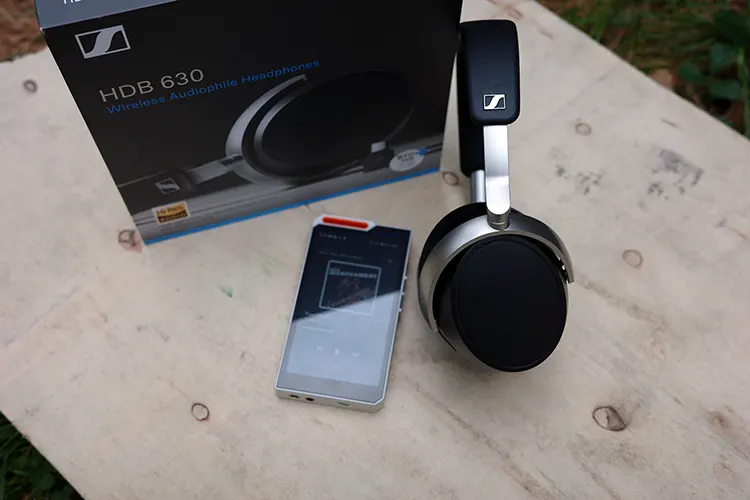
Updating the HDB 630 firmware first, critical listening was made after the requisite time. Bass comes on as controlled, but not reaching overly deep unless the song builds that into the mix.
The midrange sits slightly forward, but not elevated, which is a nice change. Updating the firmware (and app) made a modest effect on sound, but more with the features of the app, instead.
The treble extension is nothing to brag about, but it does not become piercing either, thankfully. I found that extension allowed the music to spread out, adding to the depth of layers, giving a note that benefited in weight. The two are very similar in the upper region.
The HDB 630 soundstage comes across as a smaller venue-oriented, but with good height. That height makes sense, since the top-end extension allows for the spatial capabilities. Again, quite similar is the MOMENTUM 5 Wireless.
Noble FoKus Apollo
Features
The FoKus Apollo is a set of supra-aural wireless hybrid driver headphones. It features a first-of-its-kind dual driver consisting of a 40mm dynamic driver coupled with a 14.5mm planar variant. The single driver in the MOMENTUM 5 Wireless measures 42mm.
The dynamic driver handles the lows with the smaller 14.5mm planar driver mids and highs to bring the known strengths of the dynamic natural decay, weight, and planar speed and clarity into one package.
With QCC3084 BT.3 capability, the Apollo can handle a wide range of wireless codecs, including LDAC, AAC, aptX, aptX HD, and SBC. The MOMENTUM 5 Wireless has BT5.4 and 6.0BT ready (hopefully soon).
The Apollo also has hybrid noise-canceling technology consisting of microphones on both the outside and inside of the headphones.
This setup combines the feedback and feedforward processes for ANC, allowing for more precise and quicker noise pickup. The MOMENTUM 5 Wireless has four mics on each side in a more traditional manner.
Design
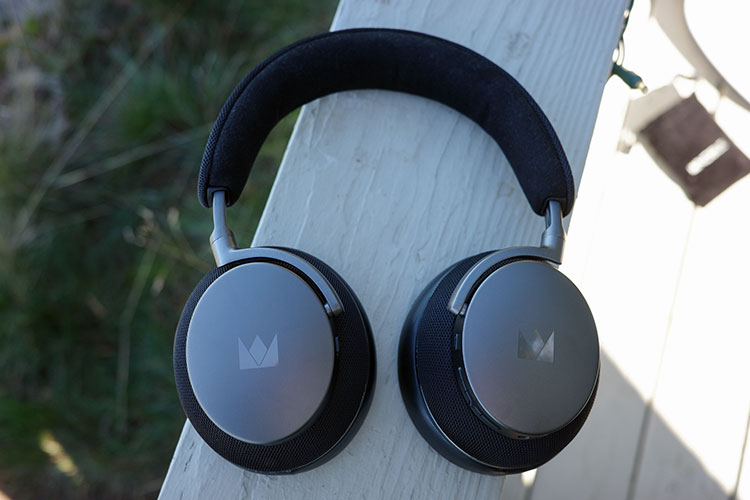
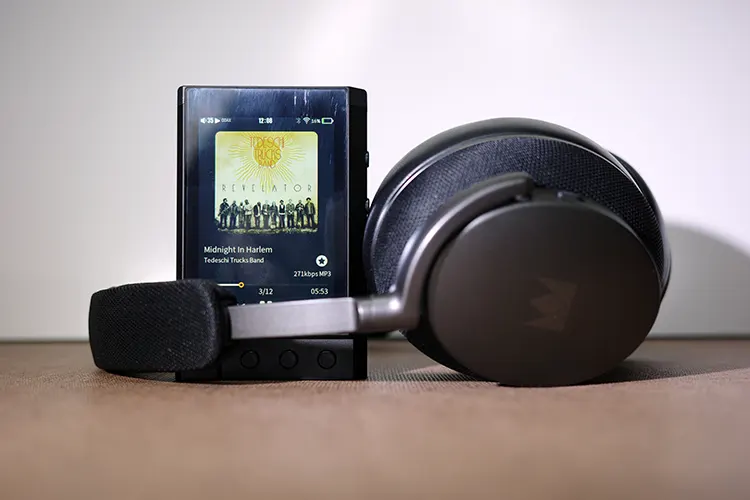
My first impressions were of a premium build similar to the B&W Px8 in look and feel. The Px8 is one of the standard bearers in build quality, look, and feel, so following that model is not a bad thing.
The overall feel and design of the Apollo fit comfortably into that flagship role. The MOMENTUM 5 Wireless cannot match the Noble, but it really is not meant to.
The frame is made of anodized aluminum with a tasteful silvery-gray finish, which combines nicely with the darker grays and black of the cups, pads, and headband. The MOMENTUM 5 Wireless uses mostly plastic in its build.
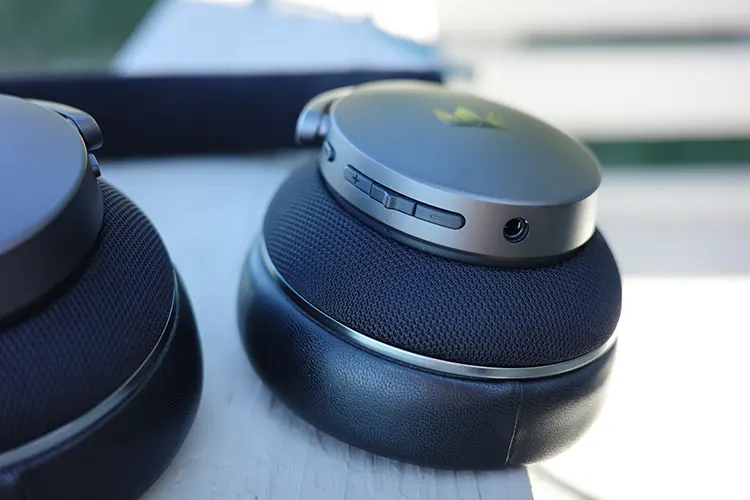
The soft, black, cushy ear pads do seem to be removable, but required enough effort that I did not want to proceed any further. Combined with the black mesh pattern behind the cup, the fit and feel were very good, with excellent tactility.
I never felt like the Apollo was slippery or cheap-looking, either, but the MOMENTUM 5 Wireless tops the Noble here, especially when you consider the replaceable battery.
The silvery-gray stanchions move into a single headband, which is wrapped in Alcantara, and has good tactility.
The play in that headband was such that the Apollo formed easily to my head dimensions without too much or too little pressure. You cannot get around the quality that the noble presents.
Control buttons lie on the right cup, and once acclimated to their proximity, are easily accessible. The ANC button, which moves between open, transparency, and full-on ANC, is separated enough so there isn’t any confusion.
I am quickly becoming a fan of the swipe/touch features of the Sennheiser with the MOMENTUM 5 Wireless.
Performance
A preponderance of bass highlights a rich, full-noted signature from the FoKus Apollo. Only when using USB-C does the MOMENTUM 5 Wireless match that bass.
There is a bit of bleed into the lower midrange, but this can also be construed as a deft ability to add weight to the lower mids, masking what might be considered a bloated upper bass region.
That good heft down low translates into plenty of rumble when called upon. The midrange of the MOMENTUM 5 Wireless covers any bleed, pushing it to the back if it occurs.
The upper midrange and treble notes deliver a distinct level of detail and clarity that is neither too thin in weight nor too elongated in either attack or decay. A succinct character carries the top end, presenting a mostly open sound signature that can add spatiality to the character.
With a more vibrant character to it, the Apollo comes across as one of my favorites, regardless of price. As such, that really is not a fair comparison here.
My Verdict
The MOMENTUM 5 Wireless is roughly four years in development from the MOMENTUM 4 Wireless. You would think that technological improvements abound, and you would be correct. But not without losing its lineage.
There is a reason the MOMENTUM series name still exists, much like Mustang or Camaro does in car culture. No matter how far removed from the OG model, the family resemblance ties it to the past.
There are clues pretty much all over the MOMENTUM 5 Wireless. From the design to the use of materials, the MOMENTUM 5 Wireless does not stray.
Much like the newer iterations of the venerable cars “mature” without losing performance, the MOMENTUM 5 Wireless builds upon the MOMENTUM 4 Wireless’s very good sound qualities while incorporating clues from the big brother HDB 630, too.
Solid bass and a neutral signature are aided by a midrange that, while a bit withdrawn, wants to stay out of the way of the overall sound signature. That can also become the MOMENTUM 5 Wireless’s weakest link.
That lack of vibrancy in the critical midrange can be both good and bad. From a neutrality standpoint, this is good. But if you desire more energy, you would need to rely upon the excellent Smart Control Plus app, and I did.
Using that, I could tweak back into the signature a bit more grunt down low with the Bass Boost, and the Dolby Atmos was used almost exclusively during the test.
Those two alone may alter that “neutrality,” but the changes made the MOMENTUM 5 Wireless go from good to very good in my book.
And Sennheiser may have had that in mind from the start, knowing how many listeners like to tweak their listening to meet their demands.
Sennheiser MOMENTUM 5 Wireless Technical Specifications
- Ear coupling: Around-the-ear, circum-aural
- Connectivity: Bluetooth 5.4 compliant, class 1, 10 mW (max)
- Transmission frequency/modulation: 2,402 MHz to 2,480 MHz; GFSK, π/4 DQPSK / 8 DPSK
- Supported profiles: A2DP, AVRCP, HFP, HSP, GATT
- Supported codecs: SBC, AAC, aptX™, aptX™ HD, aptX lossless™, aptX adaptive™, Snapdragon Sound™
- Speaker principle: Dynamic
- Speaker type/size: 42 mm diameter
- Speaker frequency range: USB & Bluetooth: 6 Hz to 40 kHz, Analog Line-In: 6 Hz to 22 kHz
- Speaker sensitivity: 108 dB SPL (1 kHz / 0 dB FS)
- Speaker THD: <0,2% (1 kHz / 100 dB SPL)
- Speaker impedance: Active 520 ohms
- Active Noise Cancellation: Hybrid Adaptive ANC
- Mic principle: MEMS
- Mic frequency range: 20 Hz to 15 kHz
- Mic pick-up pattern: 4 mics per side, beamforming for noise reduction
- Battery lifespan: Up to 57 hrs music playtime via Bluetooth and with ANC (test condition: iPhone, mid volume level)
- Charging time: Approx. 2 hrs for full charge; 10 min charging for up to 7 hrs playtime; Remark: Ambient temperatures >30°C may lead to extended charging times
- Battery type: Exchangeable Lithium-Ion rechargeable batteries 700 mAh
- Power supply: 5 V⎓, 800 mA max, USB charging via USB-C socket
- Magnetic strength field: 6.3 mT
- Product weight: Ca. 290 g (10 oz)
- Product dimension (folded flat): 180 x 197 x 47 mm (7.08 x 7.75 x 1.85 in)
- App support: Sennheiser Smart Control Plus app for iOS and Android
