

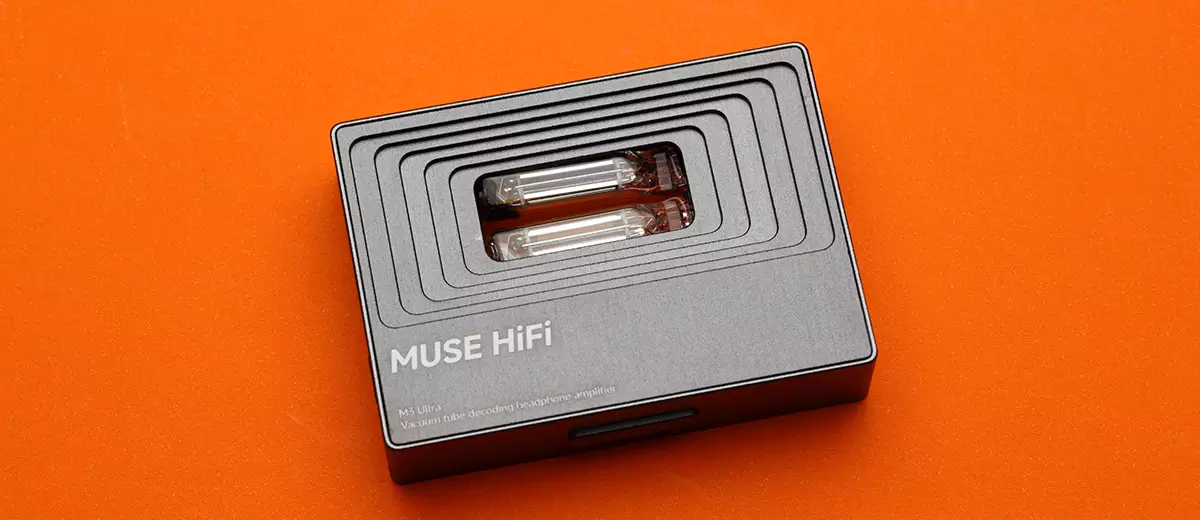
Marcelo reviews the MUSE HiFi M3 Ultra, an integrated ES9028Q2M DAC and dual JAN6418 tube portable amplifier with 480mW of output power. It is currently priced at $109.99.
Disclaimer: This sample was sent to me in return for my honest opinion. Headfonics is an independent website that does not have any affiliate links. I thank HiFiGO and MUSE HiFi for this opportunity.
Click here to read more about other MUSE products previously reviewed on Headfonics.
This article follows our current scoring guidelines, which you can read in more detail here.

Would you like a relatively small, portable DAC amplifier with vacuum tubes? Well, me too. It’s really great to be able to bring along a pocketable DAC tube amplifier, especially when you are addicted to the mellow tube sound.
The problem is that the likes of the Cayin RU9 and the iBasso Nunchaku are priced quite high for the budget audiophile.
However, MUSE HiFi believes it has the answer to that problem with the new M3 Ultra, a compact, light, and more affordable portable tube amplifier, priced at $109.99.
I have reviewed their larger, more expensive portable DAC tube amplifiers before, including the beautiful MUSE HiFi M6 Double and the M5 Ultra, and, based on those experiences, my expectations are heightened for the M3 Ultra.
How will the MUSE HiFi M3 Ultra perform? And how would it compare to other similarly sized DAC amplifiers, including the HiBy W4 and the xDuoo XP-2 Bal? Let’s find out.
Features
The M3 Ultra is a relatively small and simple DAC amplifier featuring a pair of JAN6418 military-grade directly heated miniature pentode tubes produced by Raytheon in the United States.
This is a plug-and-play device that wastes no resources on screens or flashy features, focusing instead on a pure sound-design approach.
It features triple Anti-Vibration technology, which physically absorbs shocks and prevents microphonic effects in the tubes.
For audio decoding, M3 Ultra uses the ES9029Q2M DAC chip from ESS SABRE, from which the analog output is then passed on to the ES9603Q opamp-based headphone driver.
The signal then goes to a pair of JAN6418 military-grade tubes for amplification. The M3 Ultra’s maximum output power ratings are 460 mW at 3.5 mm and 480 mW via 4.4 mm on a 32Ω load.
What might be missing for some is Bluetooth connectivity, though I prefer a purer-sounding wired connection.
Design
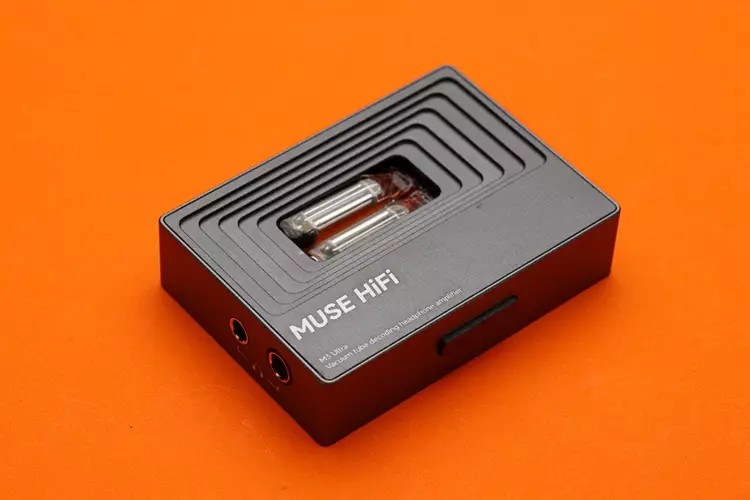
At first glance, the M3 Ultra reminds me of an old favorite dongle DAC, the MOONDROP MoonRiver2, with its stepped design and similarity in finish, black color, and texture.
The M3 Ultra has these six rectangular steps at the front that descend toward the rectangular hole that runs through the back, tastefully exposing the pair of JAN6418. The back side mirrors the design on the front.
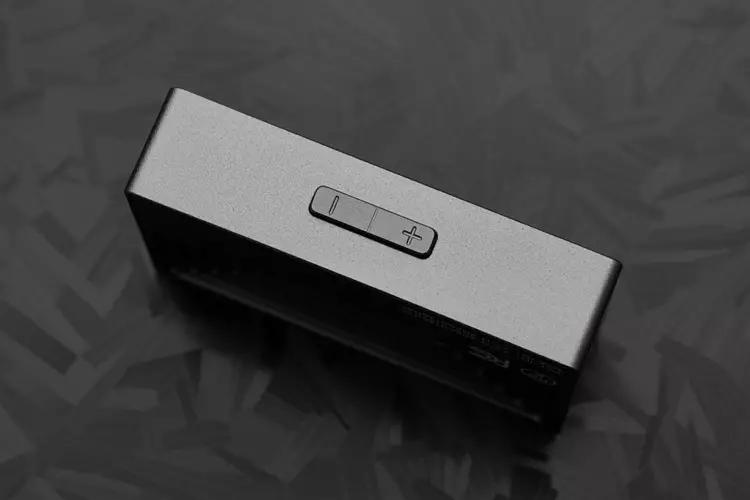
A long and narrow volume rocker is located on the right side of the M3 Ultra. The M3 Ultra is small, measuring only 65mm (L) × 16mm (W) × 46.5mm (H), and weighs only 55 grams.
Given the simplicity of the M3 Ultra’s design intent, it has only a volume control on its right side. Luckily, there are enough volume steps to allow fine adjustments, and the M3 Ultra remembers the volume setting when it is off.
I/O
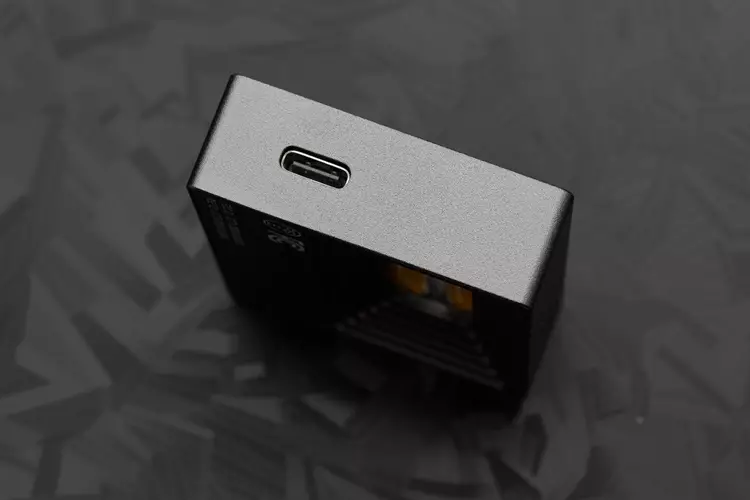
The SA9137L USB chipset handles the top USB port’s signal. The SA9137L is a high-performance USB audio streaming controller chip used in budget-friendly, high-fidelity DACs.
The M3 Ultra decodes up to PCM 32-bit/384kHz and DSD256 digital signals via USB.
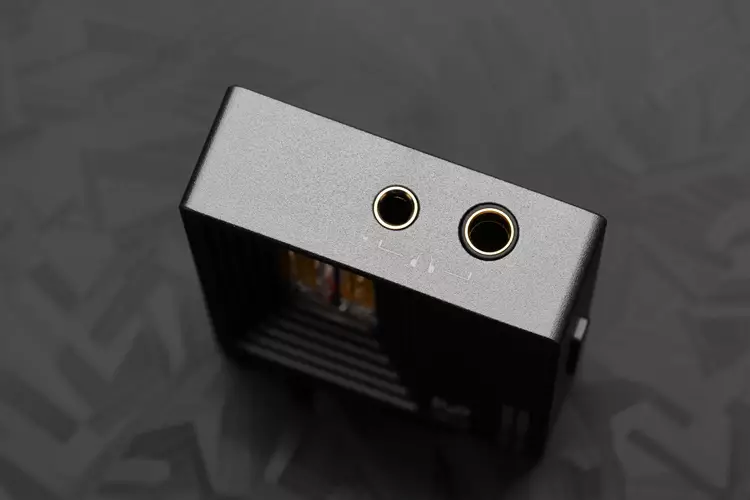
At the bottom are the 3.5 mm and 4.4 mm output jacks, which have maximum rated outputs of 460 and 480 mW, respectively.
USB-DAC
The SA9137L USB chipset does a good job of managing the USB input. I never experienced issues connecting to my devices, including a PC, laptop, DAPs, and phones.
Though I believe M3 Ultra is only compatible with UAC 2.0 input mode, as MUSE HiFi never mentions UAC 1.0.
There should be no problem with only UAC 2.0 as long as you don’t use the M3 Ultra on very old PCs or gaming consoles. UAC 1.0 is only used for very old PCs and gaming consoles.
I never experienced noise or radio-frequency interference, even when the M3 Ultra was placed behind my phone with data and WiFi enabled.
When plugged in, M3 Ultra connects quickly, and the sound is automatically routed to it from all my digital audio players (DAPs), including the OnePlus 13 Android phone, as well as my PC and laptop.
The sound automatically reverts to the PC, laptop, or phone when the M3 Ultra is unplugged.
Packaging & Accessories
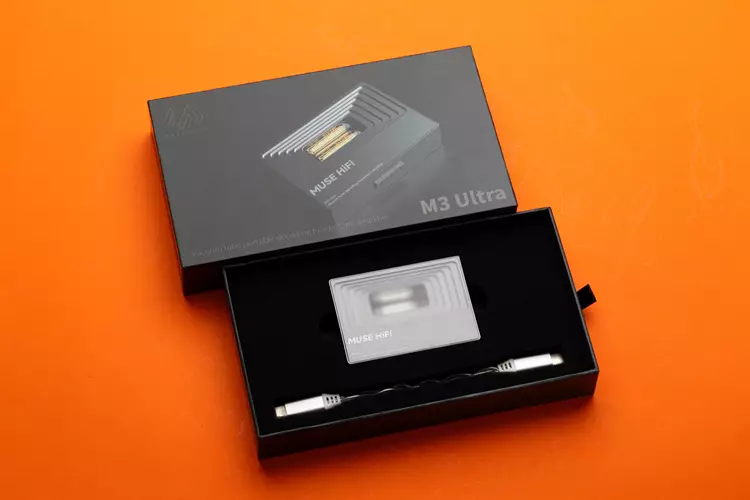
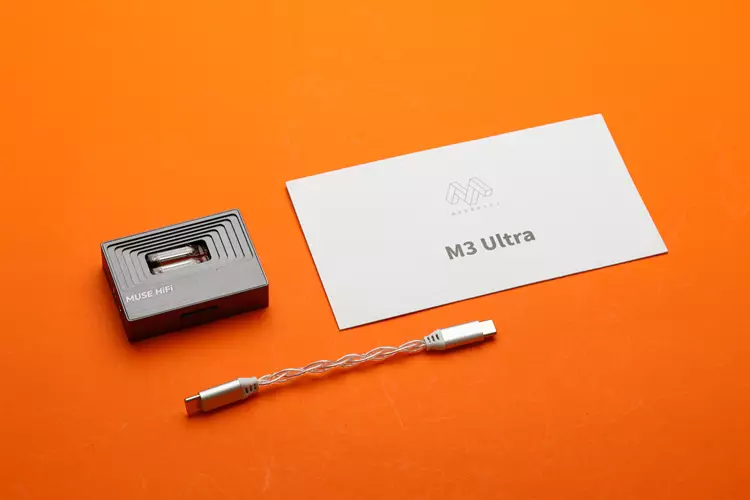
The M3 Ultra came in a flat, rectangular black box measuring 165 x 96 x 30 mm, with a photo of the M3 Ultra on the front and text on the back. It includes the device, a short Type-C cable, and the manual protected by foam.
Sound Impressions
I performed a standard 24-hour burn-in to let the tubes settle. For critical listening, I let the M3 Ultra run for at least 5 minutes to warm up the tubes fully. I listen at moderate to high volume levels.
No EQ was used, nor were any other sound enhancements applied. I used UAPP and PowerAmp music player on my smartphone.
I mainly use my OnePlus 13 phone and FiiO M33 R2R DAP as sources with my IEMs and headphones, including the DUNU Falcon Ultra Ti, Kiwi Ears Astral, and QoA Martini IEMs, as well as the TANGZU Ox Demon King, FiiO JT3, and Sennheiser HD 6XX headphones.
Although headphones are included in this review, the sound evaluation below is based solely on the IEMs, as the M3 Ultra has difficulty driving headphones at loud volumes, which I will discuss in the pairing section below.

Summary
Contrary to popular belief that tubes have a warm sound with laid-back treble, the M3 Ultra isn’t that kind of warm at all. It has a clear, transparent, and airy sound with excellent perceived upper treble extension.
The M3 Ultra is unlike other warm-sounding DAC amplifiers with an analog sound-tuning style, whether tube or solid-state, which suffer from low perceived resolution despite their warmth. The M3 Ultra is highly resolving.
The bass is not as tight or as hard-hitting as with the tightest solid-state DAC amplifiers I’ve heard, but it adds thickness to the sound, making the music feel larger-than-life and more engaging.
I hear a very good neutrality and transparency throughout the whole midrange, and the note weight is accurate, neither too heavy nor too thin.
I also like that there is no obvious coloration, such as forwardness in the upper midrange or bloominess in the lower midrange.
As noted earlier, the treble is very extended, resulting in a very airy sound. I also like the transparency, which presents the micro details of the background instruments with clarity and accurate gentleness behind the main vocalist.
Coloration
The M3 Ultra is coloration-free. It is hard to know whether I’m listening to a tube DAC Amplifier when I’m blindfolded.
The only thing I noticed, which indicates I’m listening to a tube DAC amplifier, is that the bass isn’t as tight or hard-hitting as with a solid-state output stage. It remains well controlled and detailed throughout my review, though.
There is also a subtle sign of extra energy in the upper midrange and lower treble, known in the audio community as associated with the older generation of ESS Sabre chips, which includes the ES9028Q2M.
But it is very minimal and does not sound glarey at all. It only brings the details slightly forward in the soundstage.
The added bass thickness and subtle elevation in the lower treble make the M3 Ultra’s sound signature mildly V-shaped.
Staging
Thanks to M3 Ultra’s transparent sound with micro-detail-filled, airy, and extended treble, the soundstage is very spacious, wide, and open.
The expanse between the extreme left and the extreme right is vast, and there is also great depth and height in the soundstage, resulting in a very natural feeling soundscape.
The M3 Ultra’s staging is among the best I’ve heard on portable DAC amplifiers.
Instruments are distinctly separated, the central vocal sound is palpable, and the microdetails of the background instruments are well-defined, with a gentle, unforced, and natural timbral presentation.
Dynamics
Again, I must reiterate that this sound evaluation uses only the IEMs, not the headphones, which I will explain below.
The M3 Ultra has effortless dynamics and very clean, undistorted sound when paired with IEMs; there is a clear difference between its rendition of macro and micro dynamics.
I can hear the bass pounding and the contrasting instruments snapping, but at the same time, the gentle and subtle strokes of other instruments in the background are rendered excellently.
The added bass thickness and extended treble make the sound lively and very engaging.
Using my IEMs, whether with the 3.5 or the 4.4 mm connection, the sound is very loud, dynamic, and clean. There is also plenty of headroom, as I only need to set the volume to 75 percent to reach my maximum loudness.
Click on page 2 below for my recommended pairings and selected comparisons.
