

Sound Impressions
Summary
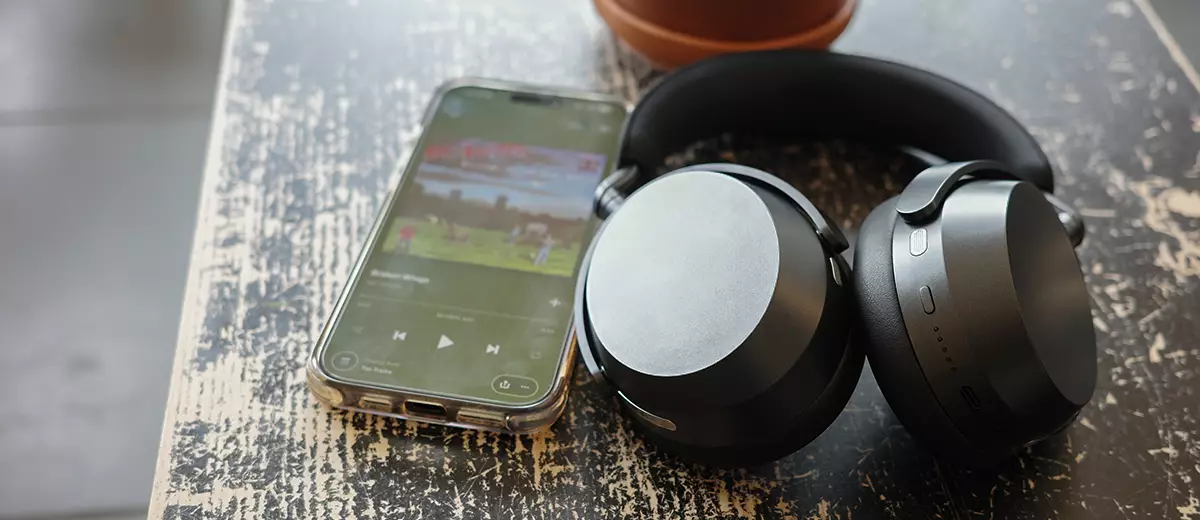
When in BT mode, the MOMENTUM 5 Wireless presents a fairly neutral signature, with a slight push in the mid bass, and a nicely rounded, smooth upper end.
The lack of true extension did not make the MOMENTUM 5 Wireless suffer from a stuffy upper region.
Instead, the top end came across with alacrity and a smooth texture to it that pervaded a rich signature, albeit not one that exudes an overall warmth countering the neutrality.
In USB-C mode and Tidal, there was a preponderance of low-end, especially since Tidal pushes that region. In those situations, the bass did become a bit bloated, but I blame Tidal for that, not the MOMENTUM 5 Wireless.
The midrange comes across as centered and central, with no push up or forward. To me, this was a refreshing take on the mids, since many headphones today push the mids to the front or up to help expand the soundstage.
Speaking of which, the soundstage was pleasantly 3D, but not expansive. You certainly know this is a closed-back wireless headphone, and I do think it falls a bit short of the competition.
Timbre
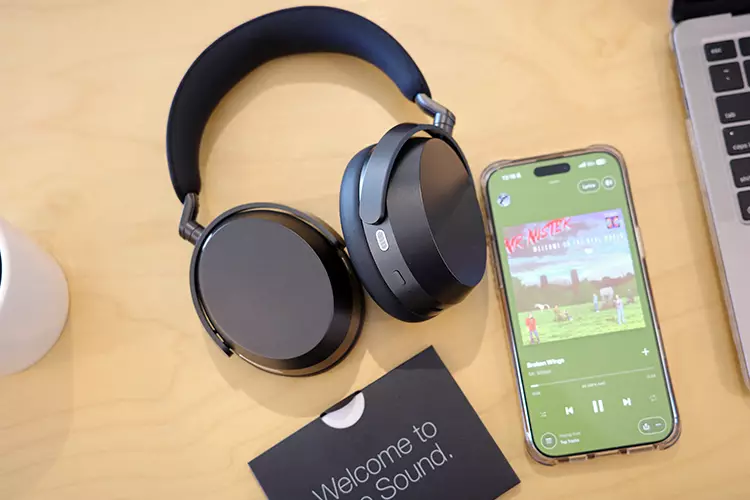
The MOMENTUM 5 Wireless comes across as neutral, except when using wired and streaming applications such as Tidal.
The added warmth Tidal presents in such situations can make you reach for the BT mode, and I did, unless I needed to charge the unit.
I found the highlight to be the central midrange, which is neither pushed forward nor up, like many of its competitors.
Instead, this is a true case where the middle ties the ends together. When running BT, the bass is limited only by the input source, as is the treble region.
I do wish for a bit more extension in the treble notes, but I found the resulting smooth character to be a strong suit of the MOMENTUM 5 Wireless for its ability to fill in the space with note quality and excellent note girth.
There was no thinning in either the top-end or low-end, and I attribute this to the midrange’s ability to play, but stay out of the way.
Of course, the downside would be an overall lack of character and energy promoted from the midrange. The energy does exude character from the upper and lower ends, but keeping in tune with the neutrality of the signature.
Staging & Dynamics
The soundstage is neither grand nor minimal. Rather, it extends equally in height and width, with depth falling slightly behind. I found that placing instruments in the left/right spectrum occurred without bother, but the fore/aft placement suffered due to the lack of overall depth.
The soundstage does allow for instruments to be placed accurately and with good note weight (think still neutral), but the slight flattening could be heard. Mind you, this did not diminish my listening experience too much.
Dynamically, the top-end and low-end took precedence as mentioned above, but that does not mean there was a lack.
On genres with excellent energetic signatures, the MOMENTUM 5 Wireless shows its mettle. The sound came across as succinct, but with the weight to back up the goods.
I found myself raising the volume level to the point that I would repeatedly get the “volume alert” message on my iPhone.
To be honest, I did not think it was that loud. This is where the touch controls and extensive tuning since implementation have paid dividends. If a song “required” more volume, a simple swipe took care of the business.
Wireless Connectivity
Bluetooth
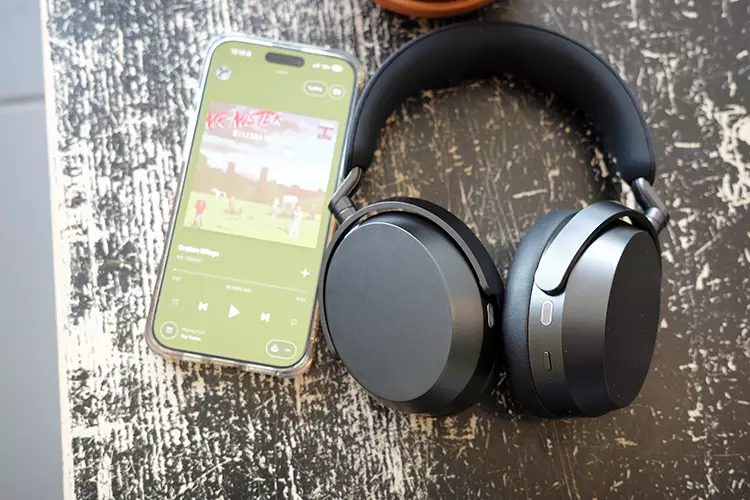
The MOMENTUM 5 Wireless comes with Qualcomm’s BT 5.4, which, while not the latest, is a decent setup.
The unit comes “BT6.0 ready” for a future firmware update. As part of the testing, I found out that the latest firmware (6.21.1) was available and downloaded it.
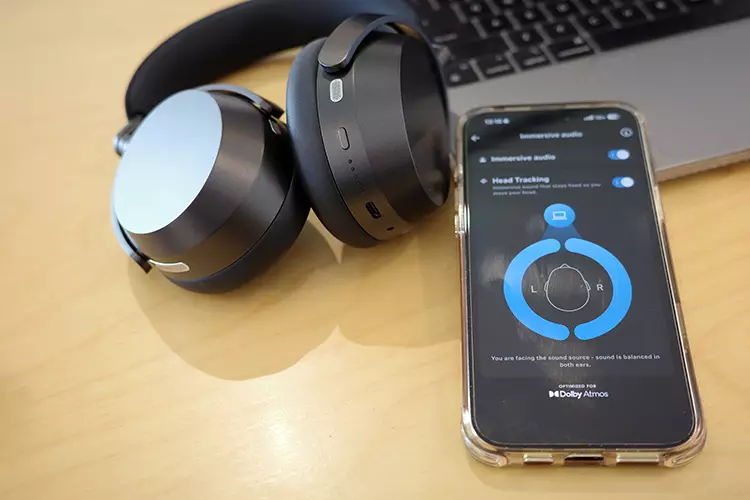
I only had a day with both the firmware update and app update, but was able to make rudimentary observations regarding Sennheiser’s head movement abilities from within the app.
While the technology worked, mimicking if you turned your head from side to side, I found the preponderance of having one channel then providing the majority of sound (like a speaker meetup would) “interesting.”
I understand the desire to mimic two-channel systems, but people use their headphones for a balanced listening experience. Mind you, this was with a very short time of use.
I kept the Head Tracking toggle turned off after trying it since I was unable to find adequate time for a proper test.
Wired Connectivity
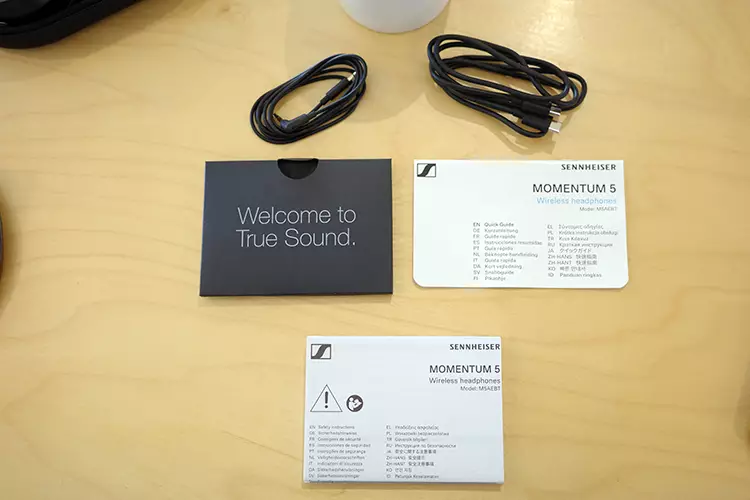
3.5mm to 3.5mm AUX
Using the typical connection you find on most headphones provides a slight upgrade to the sound signature. I can see using this when the amplifier you use does not have BT as an output, which can expand how the MOMENTUM 5 Wireless can be utilized.
USB-C to USB-C
To me, this is the real beneficial cable to use. Having the ability to charge the MOMENTUM 5 Wireless while listening is a very nice option to have. Some wireless headphones still do not show that connectivity, and I think those are missing a huge selling point.
Connecting to my MacBook Pro and Tidal, I was able to quickly connect and charge the MOMENTUM 5 Wireless while tethered via BT to my iPhone 16 Pro Max. As expected, the sound quality met the USB-C standard, which is to say, still above Bluetooth.
I did find that when tethered to USB-C and Tidal on my MacBook Pro, there was a preponderance of bass, but Tidal pushes the low region, which is to be expected. Plus, the touch options on the right ear cup still functioned.
The only limitation was the power provided by the source. Make sure you have a decent amount of juice running through the MOMENTUM 5 Wireless when USB-C tethered to take full benefit.
Having both readily available is a nice option to have, even if I lose the abilities within the app.
Synergy
Efficiency & Power
This can be summed up by the dynamic response listed above. The more energy the music carried, the more the MOMENTUM 5 Wireless appreciated it. Plus, driving them with a quality desktop (when wired) made a big difference.
The MOMENTUM 5 Wireless needs good power to raise the volume for those who commute. Thankfully, the ANC technology and Bass Boost can help accommodate for this. I found my iPhone 16 Pro Max varied in its ability to drive the Sennheiser between songs.
Those with Android phones will benefit more, to me, since most of those smartphones have more power with which to drive wireless headphones.
Pairings
The Sennheiser MOMENTUM 5 Wireless was paired exclusively with my MacBook Pro (MNP) via USB-C, and my iPhone 16 Pro Max via Bluetooth.
The MBP presented a quality pairing, especially since I could listen and charge simultaneously. The benefit of the iPhone was the use of the app. While the MBP provided an overall higher quality listening experience, the usability of BT on the iPhone makes it a natural companion.
The Smart Plus app is extremely beneficial when using your Smartphone, and I relied upon it extensively. I have to add that I used the app more for the MOMENTUM 5 Wireless than most, if not all, wireless headphones I have tested recently.
While I can see the benefit of Head Tracking, I found simply using Dolby® Atmos (or not) provided enough variation in sound signature for me.
