

Synergy
DAP & Dongle Pairings
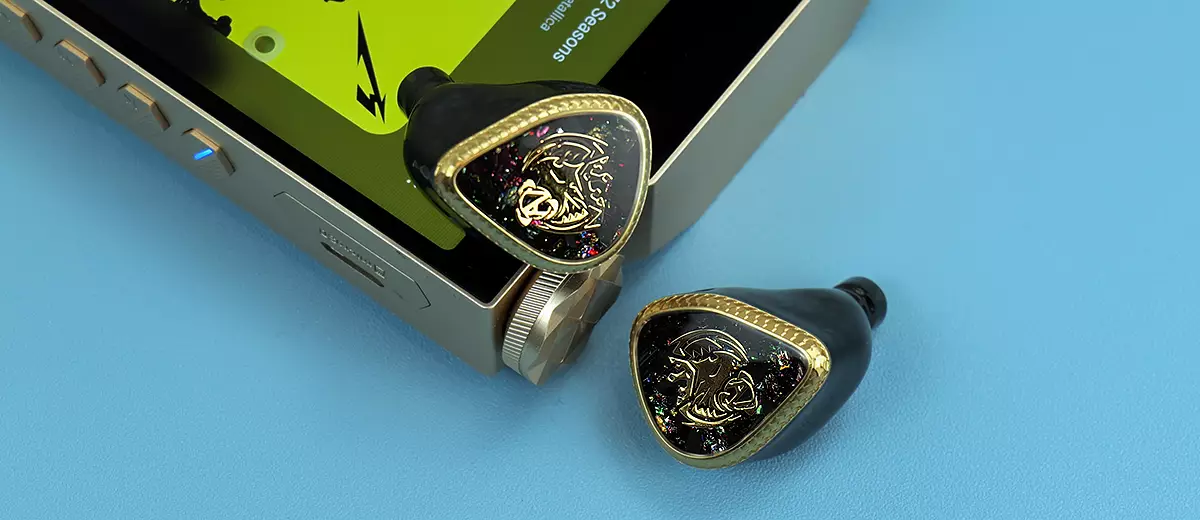
I tested the Nostalgia Audio Pendragon with the iBasso DX320 MAX Ti, their DX340/AMP17 and AMP18, HiBy’s RS8 II, FiiO’s M27, and the iBasso DC-Elite.
A lot of this is personal preference, but I did find the Pendragon to sound more satisfying with a neutral source or with a bit of PEQ applied in the 3-5k region with warmer devices.
For me, it comes alive with a bit of sparkle and presence in the mids and highs, but not too much that it thins out the vocal and percussion note weight.
For PEQ with the RS8 II and the iBasso DX340/AMP18, that’s about 2-4 dB using a peaking filter and, depending on your preference, with a Q factor of 0.2 or 0.3. It makes a big difference with the RS8 II unless you like its very rounded, laid-back, warm sound with the Pendragon pairing.
For the DX340, I would go with AMP17’s punchier, drier sound, which naturally teases out a more upfront sound signature over AMP18. I had fewer calls to dig into EQ to bring about an ideal sound.
The top pairing was the M27, just slightly ahead of the DX320 MAX Ti, which might surprise some. Granted, the DX320 MAX Ti is more resolving, but it didn’t quite produce as much space and vocal richness as the M27.
The M27 was not quite as extended in the highs with the Pendragon as the DX340, but I found it had enough to keep the sound quite balanced and involving.
The DC-Elite struggled a little for me, which I was not expecting either. Normally it’s quite a driven, intense vocal performer, but with the Pendragon, it felt really closed in despite the nice vocal performance.
Portable Amplifier Pairings
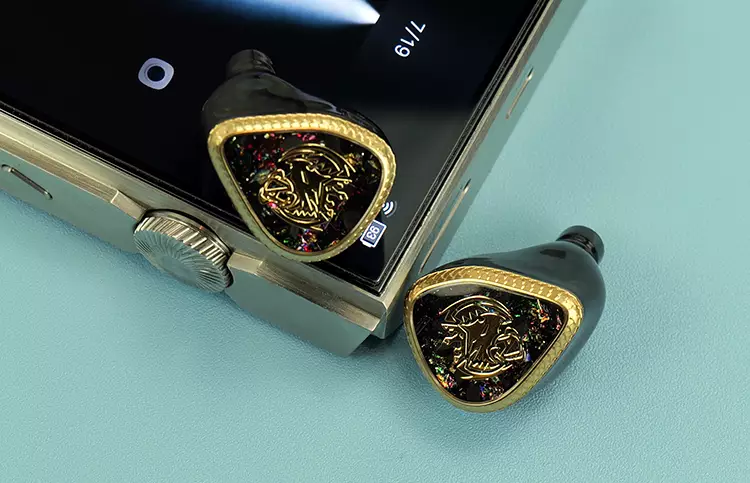
I tested the Nostalgia Audio Pendragon with the Cayin C9ii (N7 as DAC and PRE OUT), the iBasso D17 Atheris, and the Chord Electronics Mojo 2.
Given my experience with the DAPs and dongles, it was no surprise I gravitated towards the devices that offered the best presence and spaciousness from the Pendragon’s mids.
Both the C9ii and the D17 excel at creating space and air, but I gave the nod to the C9ii for its more planted-sounding low-end and richer vocal texture in Modern Tube mode using the PRE Out from the N7.
For the D17, I was somewhat agnostic over NOS or OS as the ideal setting. NOS can deliver more midrange impact, but I liked the slightly better treble sparkle from the Pendragon using OS mode.
The Mojo 2 is the driest-sounding, and truth be told, it is a little more limited in creating an expansive, complex soundstage.
However, its hardware PEQ feature works really well for creating some treble, and upper-mids lift in the Pendragon’s performance, so I would not discount it as an affordable pairing.
Selected Comparisons
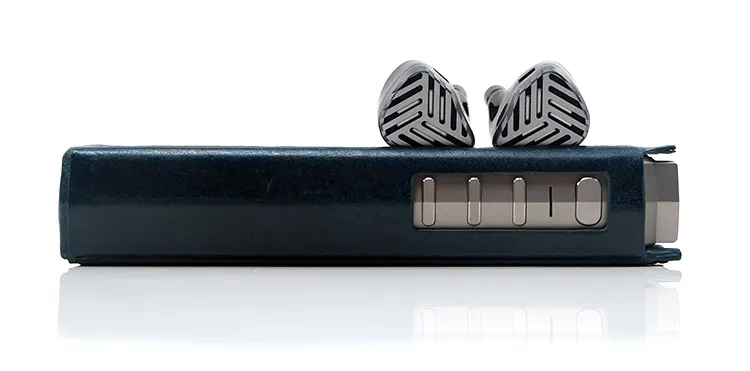
The following selected comparisons to the Nostalgia Audio Pendragon were completed using the DX340/AMP18, the iBasso DX320 MAX Ti, FiiO’s M27, and the HiBy RS8 II.
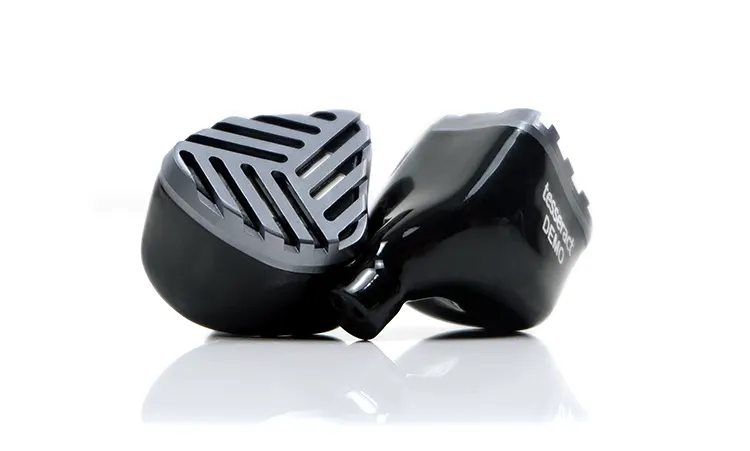
Nostalgia Audio Tesseract
The Nostalgia Audio Tesseract was a limited-edition high-end monitor launched in 2023. It has now been discontinued, but you should still be able to find some for sale on the used market.
Technical & Design
Both monitors are hybrid multi-driver designs, but the Tesseract configuration is significantly different from the Pendragon, with more BA and EST and no dynamic driver.
The precise grouping is 10 BA drivers per side, with 2 for the lows, 2 for the low-mids, 4 for the mids, and 2 for the highs using a 5-way crossover design.
It lacks bone conduction and any associated XMB technology due to the dynamic driver omission. However, there is some attempt to enhance the bass performance with ‘Low-Pass Technology’, which is a 3D-printed 72 mm ultra-long bass duct structure.
The Tesseract does share some technology with the Pendragon, including the previous generation of SFD (Spiral Flow Device ) technology and Electromagnetic Shielding Coating or E.S.C.
The Tesseract is rated at 18Ω and 118 dB/mW, so there isn’t a huge difference in sensitivity on paper between these two IEMs; both will run fine from quality DAPs and dongles.
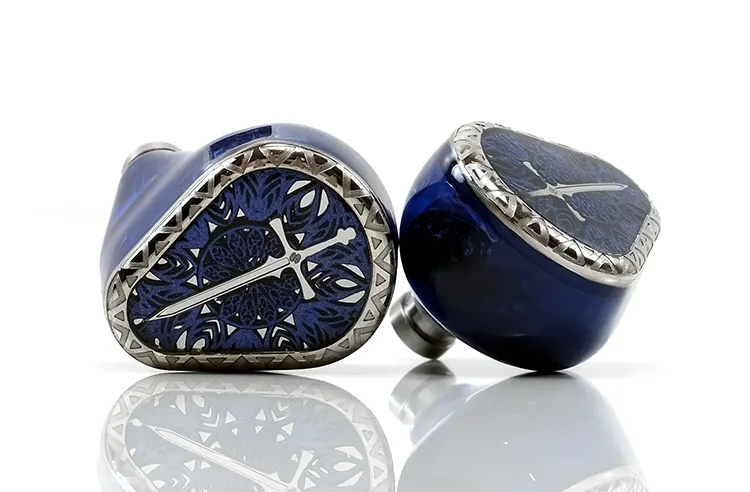
Aesthetically, these two have very different themes and stellar packaging, perhaps more so the Tesseract with its racy cyberpunk theming. The Pendragon’s intricate Arthurian take, however, feels more in line with the company’s current identity.
Despite being slightly larger, the Pendragon is just as comfortable and seals just as well in the ear as the Tesseract. However, the latter does not suffer from the former’s driver flex.
Both have good cables wrapped in SoftFlex PVC jackets. The Tesseract cable wiring is a 4-wire 22AWG high-purity silver design, which is slightly smaller and less complex than the 4-wire 21.5AWG 4N OFC copper core Litz Type 4S inside the Pendragon’s Caliburn.
The Pendragon’s Caliburn cable is also more stylish-looking with those detailed barrel finishes and darker PVC tone.
Performance
The Tesseract has a very different tuning from the Pendragon, and in a way, they complement each other rather than competing.
If the Pendragon plays the power card, the Tesseract is the fidelity choice, particularly in the mids. The BA/EST configuration is lighter, slightly drier, with less depth, more midrange presence, and casts a wider soundstage.
The Pendragon has a fuller and deeper sound with the low-end dual dynamic driver setup combined with bone conduction, delivering a stronger fundamental frequency in lower-register notes.
It sounds a shade slower in response, but creates a smoother, more natural-to-warm sound signature. If you want power, it dominates the flatter lows of the Tesseract.
If you are a mids-man and prefer a more upfront vocal listening experience, the stronger 1-4 kHz pinna gain on the Tesseract is more satisfying.
The Pendragon is flatter across the same region and slightly recessed around 3- 4 kHz, so despite the smoother tones and superior note texture, it can sound comparatively congested compared to the quick, open, and precise delivery of the Tesseract midrange imaging.
Staging is a thing of preference. If you need depth, pick the Pendragon. I much prefer it for EDM and modern pop. You get a solid 6-7 dB more gain from 150 Hz down to 20 Hz over the lighter BA performance from the Tesseract.
However, conversely, that light bass doesn’t overshadow the prominent mids of the Tesseract, which offer superior width and air. Even though I find its highs a little relaxed, similar to the Pendragon, the clarity and fill in the mids remains free of bass bleed.
Nostalgia Audio Durandal
The Nostalgia Audio Durandal was launched in late 2024, with our review coming out in mid-2025. It is the next offering down from the flagship Pendragon in the company’s current lineup.
Technical & Design
Both IEMs are hybrids with feature overlaps. The key differences are the Durandal’s lack of EST drivers and the Pendragon’s use of 2nd-generation core technologies.
The Durandal also has dual 9.2mm dynamic drivers, but it’s not the same setup as the Pendragon’s XBS II Extreme Bass System. Instead, it has a stainless-steel front chamber to optimize low-end performance.
We also have 4 BA drivers for the mids and highs inside the Durandal instead of the 6 inside the Pendragon, with no EST drivers for the ultra-highs, of which the Pendragon has 4.
Both monitors have a layer of 2 Sonion dual-diaphragm bone conduction drivers applied to the mids and low-end frequency response.
The Durandal is rated at 5Ω impedance with an SPL of 115 dB/mW, so a lower load than the Pendragon but similar sensitivity levels. Neither will vary wildly from the other for drivability from DAPs and dongles.
Aesthetically, these two IEMs are closer bedfellows than the Tesseract, with both diving deep into medieval folklore for design inspiration. In the case of the Durandal, it’s the legendary sword from the Carolingian epic “La Chanson de Roland” and a strong dash of blue throughout.
It’s not as complex as the Pendragon finishing, but it’s much smaller and more discreet in the ear. There isn’t a huge difference in passive isolation; both are quite good, but both also suffer from driver flex on insertion.
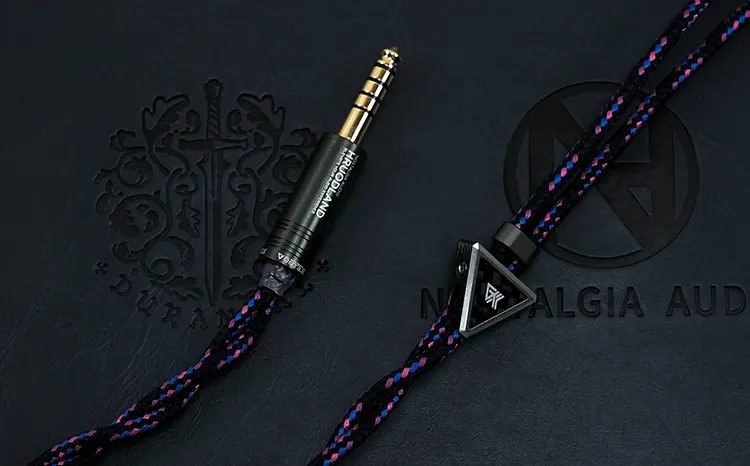
The Durandal cable is a Vortex-partnered creation called the “Hruodland”. It looks and handles quite differently with its bright purple, pink, and blue cloth jacketed finish and lighter feel in the hand.
The inside wire is fairly hefty, more so than the Pendragon, with a dual 21.3AWG 4N OCC silver and silver-plated 5N LC-OFC copper shielding in a Litz Type 9 geometry.
Performance
The Durandal is the feisty little brother of the Pendragon, courtesy of a more pronounced 6-10k region, which adds a fair bit of contrast to note timbre and general sparkle up top.
As such, it’s the brightest-sounding of the Nostalgia Audio IEMs I have tested to date, though the added presence of those dual dynamic driver lows provides a very nice balance between lively and powerful.
Vocals are perceived as being further forward and a little bit cooler in tone compared to the more relaxed nature of Pendragon’s presentation.
I suspect some of that is due to the narrower staging quality and slightly less nuanced imaging experience. It’s a slightly simpler but more energetic delivery than the flagship experience.
The Pendragon has more detail and a more natural sound. Whilst not the widest soundstage, it can present a more intricate imaging experience, with more micro-detail in its note texture.
Given its smoother sound, the Pendragon is a more agreeable and easier-to-pair IEM than the starker, more V-shaped sound of the Durandal.
Neither of them are huge for soundstage; the widest is the Tesseract if that is what you are after, with these two offering you some excellent depth and power.
The Pendragon’s relaxed midrange creates a stronger perception of space, allowing more spatial detail to creep into the performance. The Durandal is a bit more closed in and intimate-sounding.

PLUSSOUND Allegro II
The PLUSSOUND Allegro II was launched in 2025, with my review coming out shortly after. It is considered the company’s flagship in-ear monitor in their current lineup.
Technical & Design
The Allegro II is another high-end ‘quad-brid’ multi-driver IEM with 13 drivers per side as opposed to the Pendragon’s 14. This includes 2 dynamic, BA, and bone conduction; however, instead of EST for the highs, it uses a micro-planar driver.
The precise grouping is a 10mm dual dynamic isobaric driver for the lows, dual bone conductors for sub-bass presence and spatial enhancement, 8 BA drivers for the mid-lows, mids, and highs, and a 6mm planar driver for the ultra-highs.
The Allegro II has a very similar 15Ω and 116 dB/mW @1kHz, so there should be no issues driving it from moderate source power from DAPs or dongles.
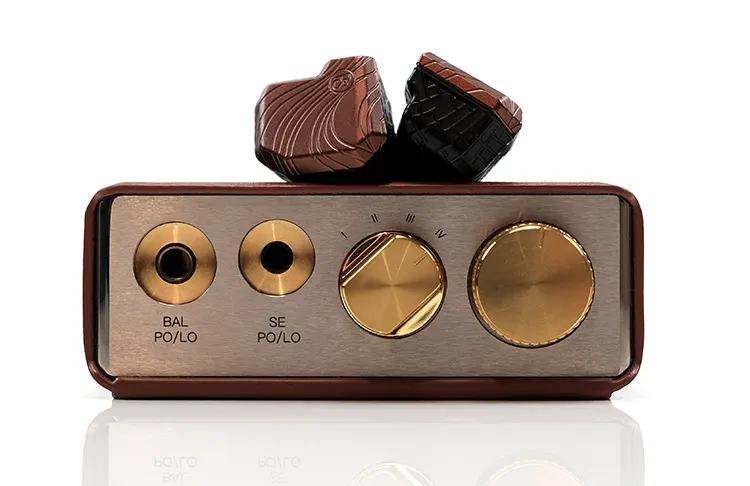
Design is where some challenges can be expected with the Allegro II. Its 7-axis CNC’ed two-piece angular dark, copper-toned faceplates and solid matte-black shell with curved etching is a looker and more durable than the Pendragon’s resin-type materials.
However, its comfort is more personalized; it’s heavier than the Pendragon and can pinch the edge of my ears now and then, but nowhere near as bad as the first Allegro.
Its passive isolation performance is superior, which surprised me. The Allegro II has a longer nozzle with LSR-type hybrid tips that seal very nicely and with no driver flex.
Cables are PLUSSOUND forte, so the accompanying Copper+, with its 4-wire 24AWG UP-OCC copper cable, is smaller and lighter than the Caliburn, with excellent build quality.
It delivers fantastic clarity and dynamics; however, the only issue is that it’s a coaxial wire design and has stiffer handling than the Caliburn.
Performance
The Allegro II is a cooler-toned monitor with similar sub-bass depth but a shorter mid-bass shelf and a much more pronounced 500Hz-1k scoop.
Its fundamental frequency for lower-register notes is as strong as the Pendragon. However, the mid-bass up to the lower-mids offer less warmth and fullness, creating a perception of a tighter but less voluminous bass response.
The Pendragon lower-mids have more presence from 500Hz to 1k and slightly less beyond to 5k. You get a meatier, richer sound from backing instruments but less vocal forwardness and more of an even-harmonic tonal balance.
Percussion strikes can sound more abbreviated and blend more into the background, creating a more forgiving, even-harmonic sound signature.
The Allegro II’s note body is leaner, with a slightly shorter decay, less bass bleed, and more treble fill with elevated 2-4k and 7-10k regions.
Note harmonics show a stronger upper-order presence in the upper-mids, creating more contrast and perceived impact from percussion strikes than the more restrained Pendragon.
If the music is slow-paced and deliberate, the Pendragon creates a much nicer textured response. It’s a great pick for soul and R’n’B, where deep, heavy sub-bass notes resonate strongly with powerful soulful vocals on top.
I would go with the Allegro II if I want a bit more height and speed for my listening. It is a more suitable pick for speed metal, chamber music, or clean, delicate vocals.
My Verdict
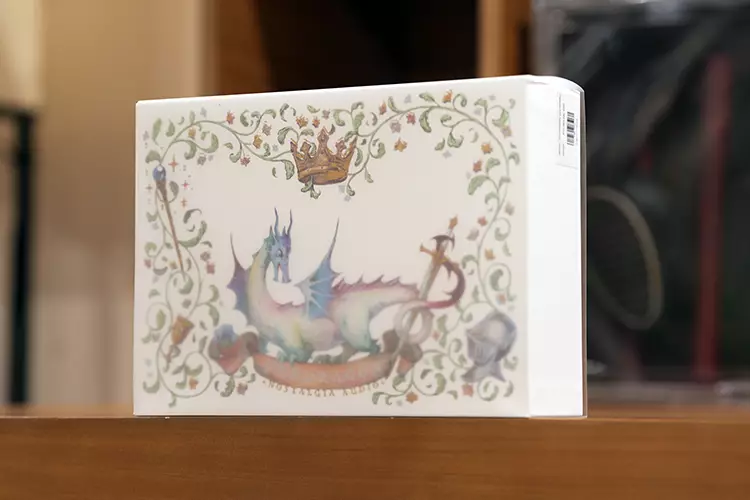
The flagship hybrid Nostalgia Audio Pendragon delivers beautifully on the company’s passion for tightly integrated themes in its high-end monitors. From the packaging to the cable to the intricate finishing on the monitor shells, it’s clearly a work of art.
Combined with a beautifully smooth yet powerful sound signature, the Pendragon will appeal greatly to those who like a fatigue-free listening experience. It’s not short on detail, with excellent note texture being a particularly noteworthy asset.
The Pendragon is not for those who like a bit more energy, dynamism, and vocal impact in their daily listening. It’s not hugely forward in the mids, so careful with source-pairing choices and, at times, PEQ may be needed to get the balance just right.
Otherwise, I would consider this the pick of Nostalgia Audio’s lineup for bass lovers. Nothing else in their range comes close to the dense and deep sound of the Pendragon.
Nostalgia Audio Pendragon Technical Specifications
- 14 Drivers, Quad Hybrid Configuration Design
- Dynamic Drivers: 2 Sub-Low
- Dual Diaphragm Bone Conduction Drivers: 2 Mid-Low
- Balanced Armature Drivers: 6 (2 Mid-High, 2 High, 2 Ultra High)
- Electrostatic Drivers: 4 Super High
- 6-Way Crossover Design
- Impedance: 19Ω @ 1kHz
- Frequency Response: 15 Hz – 70 kHz
- Sensitivity: 115 dB @ 1kHz, 1mW
