

Synergy
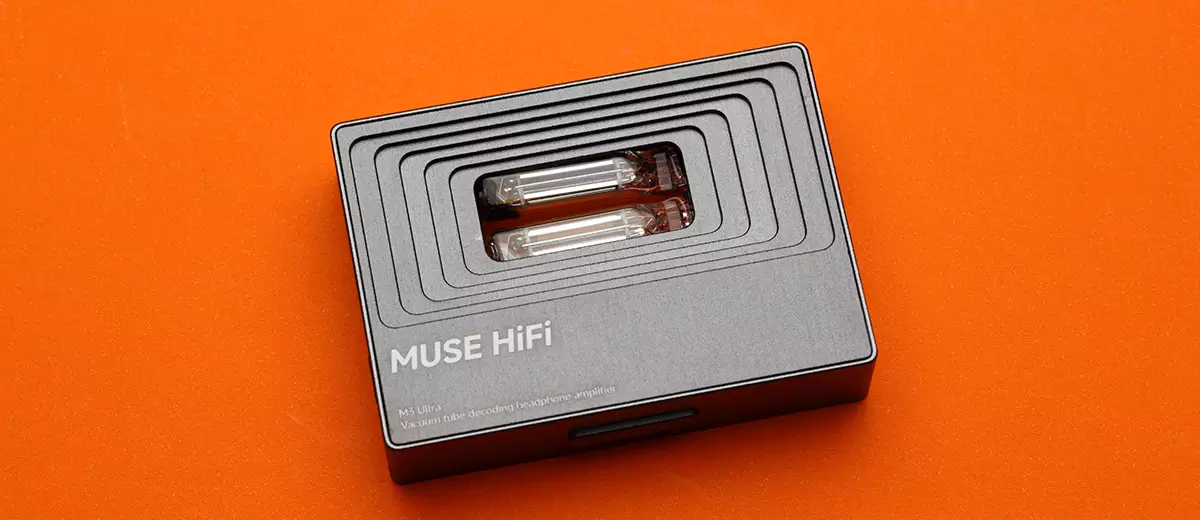
On the days I have enjoyed the M3 Ultra, I have never heard any noise from radio-frequency interference or the noise floor of its electronics, even when it is placed at the back of my phone with WiFi, Bluetooth, and data enabled.
The M3 Ultra can effortlessly drive my IEMs, but unfortunately, not as well with headphones.
IEM Pairings
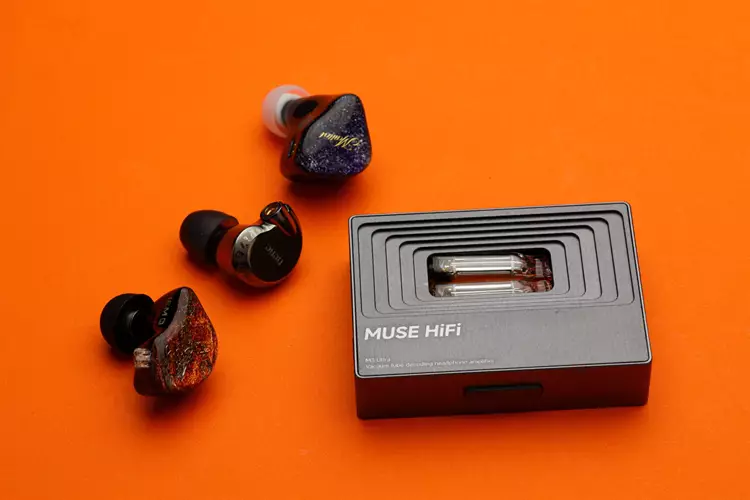
When paired with the DUNU Falcon Ultra, I noticed the sound is subtly enhanced by the tubes. The bass sounds larger, with thicker decay, and the treble is very extended and has good energy.
The overall sound becomes somewhat more moderate V-shaped, while leaving the midrange very clear-sounding. Thanks to the extended, airy treble of the M3 Ultra, the sound never darkened or warmed.
When paired with the Tipsy M5, a very neutral and revealing set with a mild bone-conduction driver for slight bass enhancement, my initial impression of a moderate V-shaped sound with the Falcon Ultra is confirmed.
I hear a slight relaxation in the midrange while the bass is thicker and larger than usual, and the treble is mildly elevated with excellent transparency, extension, and air.
Finally, the QoA Martini is a moderately V-shaped-sounding set that includes powerful bone conduction drivers for bass enhancement. The bass is thick and larger-than-life yet remains well controlled and never boomy.
In addition, the treble is very clean and airy, with plenty of micro-detail, making the soundstage more lifelike, very expansive, and the overall sound presentation grand.

Headphone Pairings
Three headphones with varying levels of difficulty to drive are included in this review to assess how well the M3 Ultra performs under such conditions.
First, the FiiO JT3 is the easiest to drive of the three, using either the stock 3.5 mm cable or a third-party 4.4 mm balanced cable.
The sound is very acceptable, in fact, very suitable for casual listening. Still, for critical listening, especially at louder volumes, the dynamics seem limited, and I also hear a slight distortion.
With TANGZU Ox Demon King, which is moderately difficult to drive, planar headphones with either the stock 3.5 mm or a third-party 4.4 mm balanced cable.
The sound is acceptable at low to moderate volume, but as soon as I turn it up, I hear compression and distortion, especially with heavy bass.
Lastly, the difficult-to-drive Sennheiser HD 6XX, with its 300Ω impedance using a balanced cable, has sound that is okay for casual listening at low to medium volume. The treble is extended, but the bass is not well controlled as before.
The volume is set at around 95 percent for my maximum listening loudness, and the sound isn’t as clean due to distortion and compression.
Selected Comparisons
HiBy W4
Technical & Design
The HiBy W4 is a battery-powered, portable Bluetooth DAC amplifier featuring dual CS43198 DAC chips with a headphone amplifier and can decode up to DSD512 and PCM 768kHz.
It also has a Qualcomm QCC5181 Bluetooth 5.4 chip supporting codecs including aptX Adaptive/aptX Lossless, aptX HD/LDAC/AAC/SBC.
The W4 has both 3.5 mm and 4.4 mm output jacks with maximum output power ratings of 125 mW and 475 mW into 32Ω, respectively.
A clear, high-contrast 2-inch color touch display is used to show the operating condition and change the W4’s settings.
The W4 also features a removable belt clip, a MagSafe magnetic backplate case, a car audio-optimized mode, an NFC one-touch connection, and mic support.
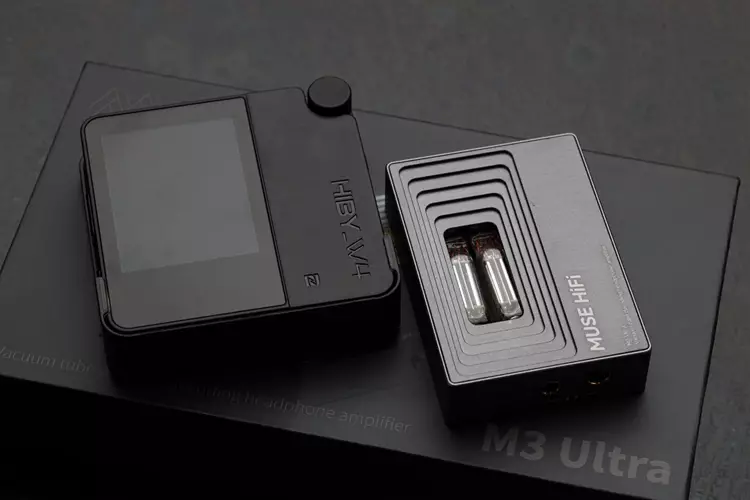
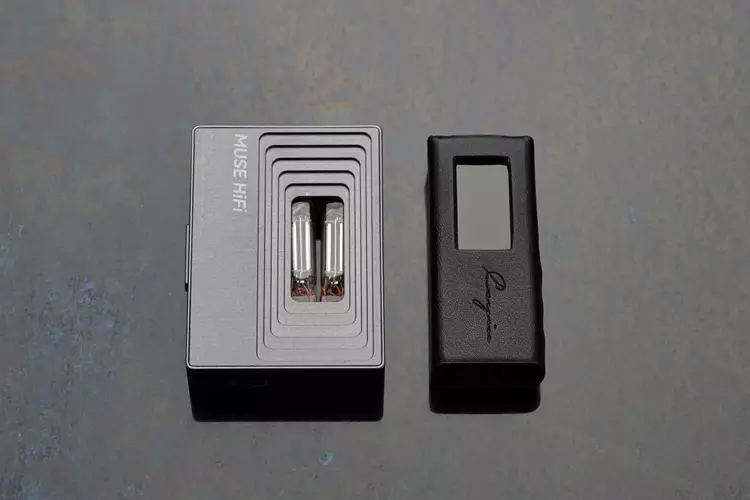
The front is divided into two unequal parts, with the 2-inch screen placed on the larger part, covered by a tempered glass panel. At the back is a removable belt clip that can be replaced with a MagSafe-compatible case. The bottom is blank.
There is a round, knob-like thing at the top front corner that looks like a volume knob, but it turns out to be a thumb screw that secures the belt clip or the MagSafe magnetic backplate case.
Performance
Both the W4 and the M3 Ultra have a neutral sound with a very extended treble and high perceived resolution.
However, the W4 sounds brighter overall and has a thinner note weight due to its leaner bass characteristics.
I find both to have a big soundstage, but the W4 has a shallower stage with a more forward instrument presentation, while the M3 Ultra is more spherical with a more accurate and neutral instrument placement.
In terms of dynamics, both the W4 and the M3 Ultra have effortless performance with IEMs, but when driving headphones, I find the W4 slightly more capable.
Cayin RU3
Technical & Design
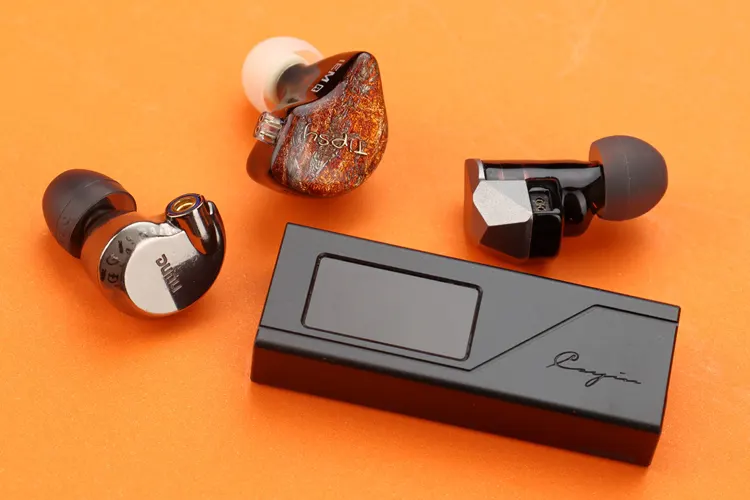
Reading through the specs and features of the Cayin RU3, the most glaring feature is its 560 mW power output, the highest I have reviewed in this form factor. I’m also impressed with the inclusion of the 0.96″ IPS color display.
The USB input is handled by the SPV5068, a high-performance dual-core processor that serves as a USB bridge for data and digital audio signals.
The digital signal is then passed to the ES9069Q high-resolution dual-channel digital-to-analog converter chip, which uses two OPA1602 dual op-amp ICs from Texas Instruments for current-to-voltage conversion.
Two SGM8262 stereo headphone amplifier chips then amplify the signal, producing a true balanced output.
The RU3’s 60 x 25.4 x 11mm size is median in its form factor, and it is lightweight at only 24 grams, despite its chassis being CNC-machined from solid aerospace-grade aluminum.
Thanks to the 0.91-inch IPS screen, which supports two themes, the RU3 can be controlled without the app.
Performance
Both the RU3 and the M3 Ultra have thick, textured bass; the main difference lies in the treble.
The M3 Ultra has a more extended treble and better transparency and separation of microdetails, while the RU3 sounds warmer with lower perceived resolution and transparency; the difference is slight, though.
The RU3 sounds more closed in and has a more intimate stage, while the M3 Ultra gives me this very open feeling of a soundscape. The M3 Ultra also offers greater instrument separation and layering.
Regarding dynamics, both sound very dynamic, especially in the bass region. However, I find the M3 Ultra sound livelier overall, due to its very extended treble presentation.
MUSE HiFi M6 Double
Technical & Design
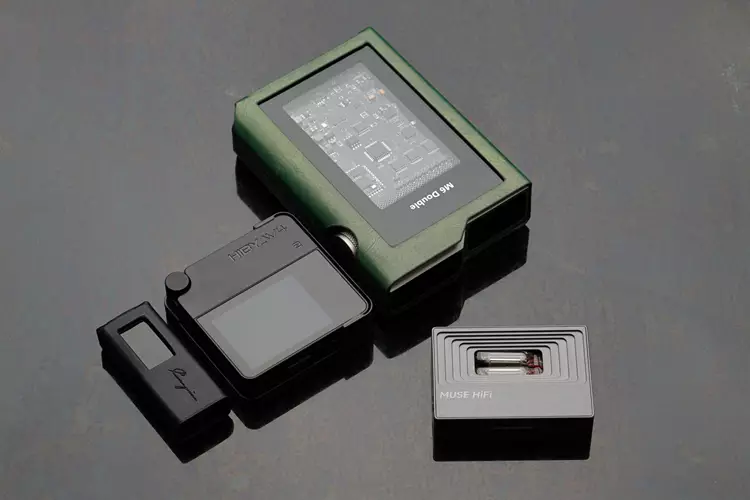
The M6 Double features the latest ESS SABRE ES9039Q2M DAC chip, customized to complement the tube amplifier section during tube-mode operation. They also use two JAN 6418 mini audio vacuum tubes in the tube-output mode.
Aside from the DAC chip, battery capacity, and tubes, MUSE HiFi has never published any other specifications, including power output, at least not as of this writing. I would estimate the M6 Double’s 4.4mm output at around 400 mW or more.
The M6 Double supports wireless Bluetooth connection up to aptX and LDAC codecs, and audio decoding for PCM, DSD, and MQA.
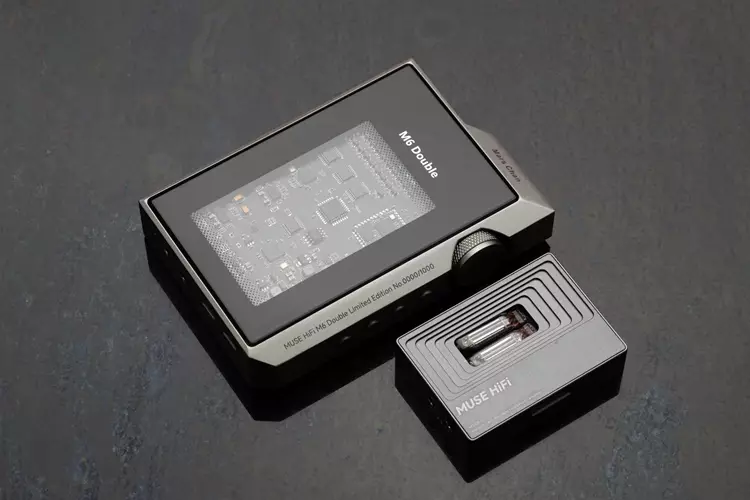
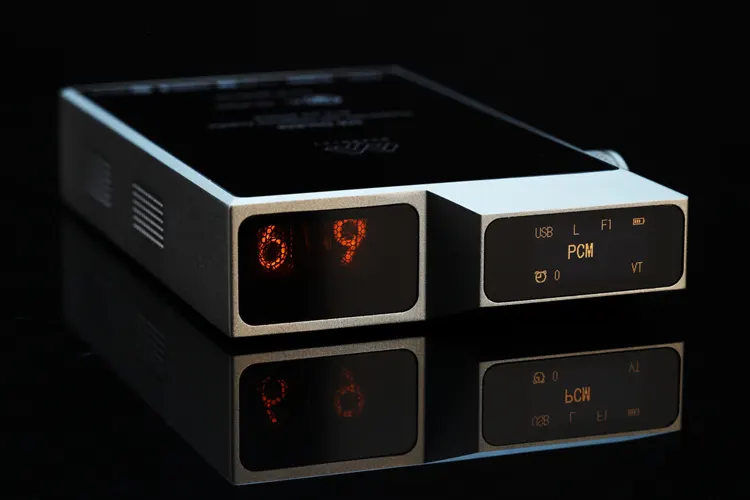
I like the futuristic mecha design, characterized by its angular, faceted look. I also appreciate the inclusion of a large metal knob volume control and the perforation on the left side, which serves as a vent for the tubes and for display.
The chassis is made entirely of CNC-machined aluminum alloy, with tempered glass sandwiched between the front and back panels. All the controls are on the right side, comprising a knob and four buttons.
At the top, you can see the 1-inch screen indicating the operating condition of the M6 Double, with the IN-17 Pixie tube nicely placed behind a glass in another window beside the screen. The M6 Double measures 121.2 x 81.3 x 24.5mm and weighs 285 grams.
Performance
Before comparing the M6 Double in tube mode to the M3 Ultra, I did at least 5 minutes of warm-up for both, since they have a tube output stage and need to warm up.
I expected them to sound very similar, but I was wrong. While both have a neutral or near-neutral sound and extended, transparent, and airy treble, the M6 Double has a tighter bass and a slightly more forward midrange, making it sound somewhat mid-centric compared to the bassier M3 Ultra, which has a slightly relaxed midrange.
The tonal difference between the two is very minor, though. But enough for a critical listener to prefer one over the other.
Both have a spacious, wide stage, but surprisingly, the M3 Ultra has a deeper soundstage with a darker background and cleaner instrument decay; the difference is small, though.
They have similar dynamic performance when paired with IEMs; however, when driving headphones, especially the difficult-to-drive Sennheiser HD 6XX, I like the sound of the M6 Double better, as it sounds cleaner and more dynamic.
But when I turn up the volume, I can hear the upper limit with both of them due to the distortion they produce.
My Verdict
In terms of sheer sound quality when paired with IEMs, the MUSE HiFi M3 Ultra is quite impressive.
Thanks to the simplicity of its pure DAC amplifier design, free of unnecessary features that could compromise audio quality, such as an LCD screen, Bluetooth connection, and an accompanying app that adds signal processing.
I must also commend MUSE HiFi for pricing the M3 Ultra affordably, bringing tube amplification and this level of sound quality at an unprecedented price point.
What I like about the M3 Ultra is the very transparent sound. It has an extended, airy treble and a thicker, larger-than-life bass presentation, giving music a more engaging, lifelike quality. Not to mention that the staging is really good as well.
For pairing with IEMs, the MUSE HiFi M3 Ultra is almost perfect. However, nothing in life is perfect.
When driving typical and difficult-to-drive headphones at loud volumes with a lot of bass, I can hear the M3 Ultra struggle a bit. That said, I wouldn’t recommend using the M3 Ultra with headphones for critical listening at high volumes.
Nonetheless, if you mostly listen to IEMs, I highly recommend the MUSE HiFi M3 Ultra for its really good sound quality.
MUSE HiFi M3 Ultra Technical Specifications
- Model Name: M3 Ultra
- DAC Chipset: ES9028Q2M
- Operational Amplifier: ES9603Q
- USB Chipset: SA9137L
- Input: USB
- Output Options: 3.5mm / 4.4mm
- Decoding Specifications: 32bit 384kHz / DSD256
- Signal-to-Noise Ratio 3.5mm: 120dB;4mm: 121dB (1kHz, A-Weighted, 32Ω)
- Output Thrust: 3.5mm: 460mW;4mm: 480mW (A-Weighted, 32Ω)
- THD+N 3.5mm: 0.0004%;4mm: 0.0003% (A-Weighted, 32Ω)
- Special Features: triple shock absorption and a fully balanced circuit.
- Weight Approx: 55g
- Dimensions: 65mm (L) × 16mm (W) × 46.5mm (H)
