

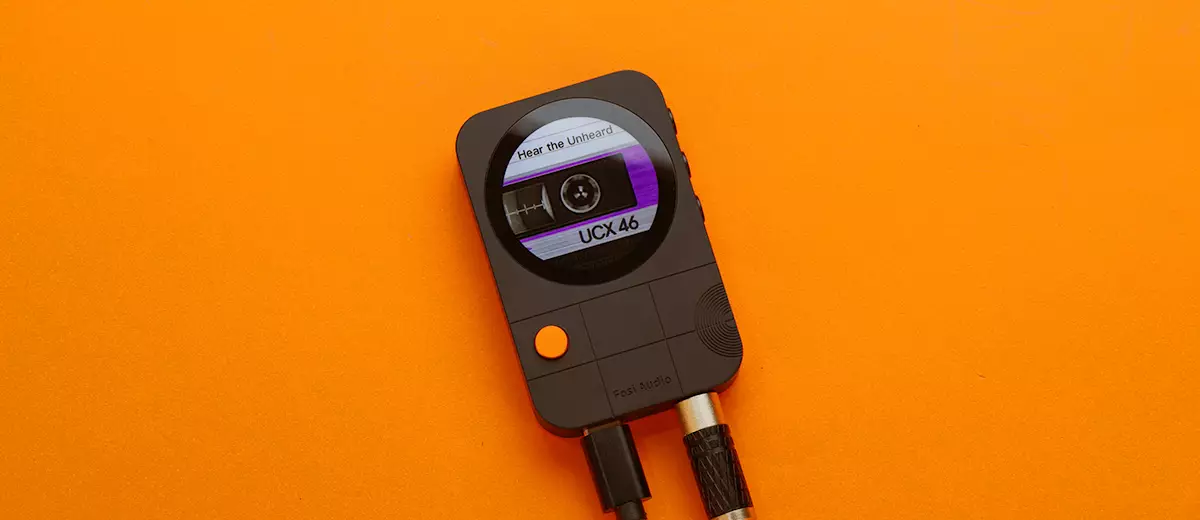
Synergy
On several occasions when I listened to the MD3, I never heard any noise from radio-frequency interference or the noise floor of its electronics, even though it is magnetically stacked at the back of my phone with WiFi, Bluetooth, and data enabled.
The MD3 can comfortably drive all the IEMs in this review, as well as other IEMs not in this review, effortlessly to deafening volume levels, and my difficult-to-drive 300Ω Sennheiser HD 6XX to a satisfyingly loud volume.
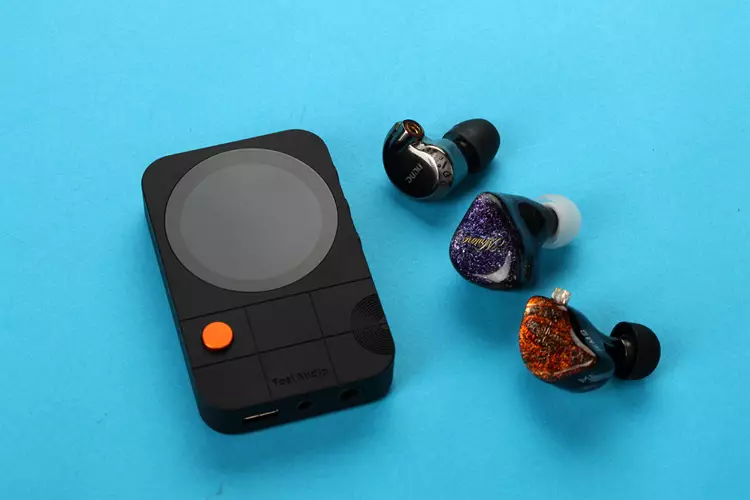
IEM Pairings
The MD3 pairs nicely with my IEMs, including those not mentioned in this review. I’m usually at around 50 percent volume, and I get a very loud sound; there is a lot of headroom.
When paired with the DUNU Falcon Ultra, I get a very dynamic, transparent, and very well-extended response, especially in the treble. There is a sense of effortlessness in the dynamics that I forget about its modest power-output rating.
The same thing happened when I paired it with the Tipsy M5 and the QoA Martini; I get effortless dynamics with plenty of headroom and loudness at 70 percent volume. The sound is very transparent and distortion-free, with a spacious soundscape.
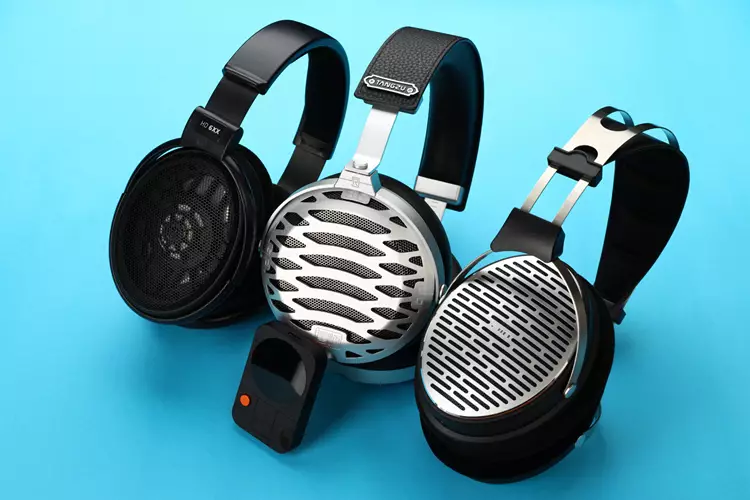
Headphone Pairings
Things are not the same, though. When I pair the MD3 with headphones, I guess this is where the modest output’s limitations kick in.
I need to be at 95 to 100 percent volume to reach a satisfyingly loud level for me; there is not much dynamic headroom, and no way to make the softly recorded music louder.
The MD3’s tonality is serviceable, as it remains neutral and distortion-free when driving my headphones; however, the dynamics sound compressed and limited.
Thus, I can’t recommend pairing the MD3 with headphones if you want to get the best from your headphones.
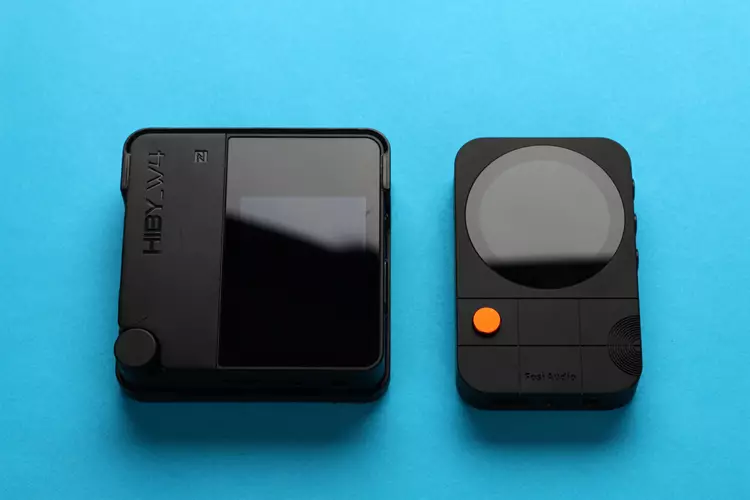
Selected Comparisons
HiBy W4
Technical & Design
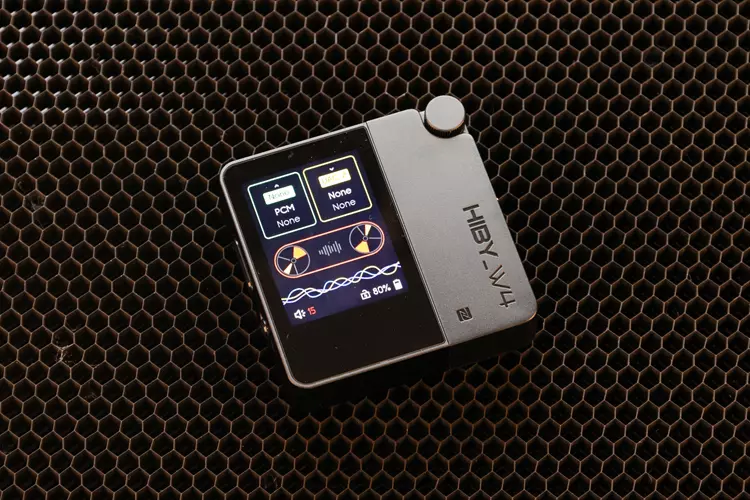
The HiBy W4 is a battery-powered, portable Bluetooth DAC amplifier featuring dual CS43198 DAC chips with a headphone amplifier and can decode up to DSD512 and PCM 768kHz.
It also has a Qualcomm QCC5181 Bluetooth 5.4 chip supporting codecs including aptX Adaptive/aptX Lossless, aptX HD/LDAC/AAC/SBC.
The W4 has both 3.5 mm and 4.4 mm output jacks with maximum power of 125 mW and 475 mW, respectively.
A clear, high-contrast 2-inch color touch display is used to show the operating condition and change the W4’s settings.
The W4 also features a removable belt clip, a MagSafe magnetic backplate case, a car audio-optimized mode, an NFC one-touch connection, and mic support.
The front is divided into two unequal parts, with the 2-inch screen placed on the larger part, covered by a tempered glass panel. At the back is a removable belt clip that can be replaced with a MagSafe-compatible case. The bottom is blank.
There is a round, knob-like thing at the top front corner that looks like a volume knob, but it turns out to be a thumb screw that secures the belt clip or the MagSafe magnetic backplate case.
Performance
The W4 and the MD3 have a very similar neutral sound signature. However, I find the W4 has more bass, albeit with less bass control, as the sound is slightly ‘boomy’.
When it comes to the treble, I find the MD3 is slightly more extended and forward. There is more perceived resolution with the MD3, though only subtly.
Both have a reasonably spacious soundstage, but I find the MD3 to have a slightly deeper soundstage with a cleaner background. The difference is small, though, and almost negligible.
In terms of dynamics, the W4 has an apparent advantage, especially when driving headphones. I find the W4 to have more headroom, a livelier, more energetic sound, and greater capability for driving difficult-to-drive headphones.
xDuoo XP-2 Bal
Technical & Design
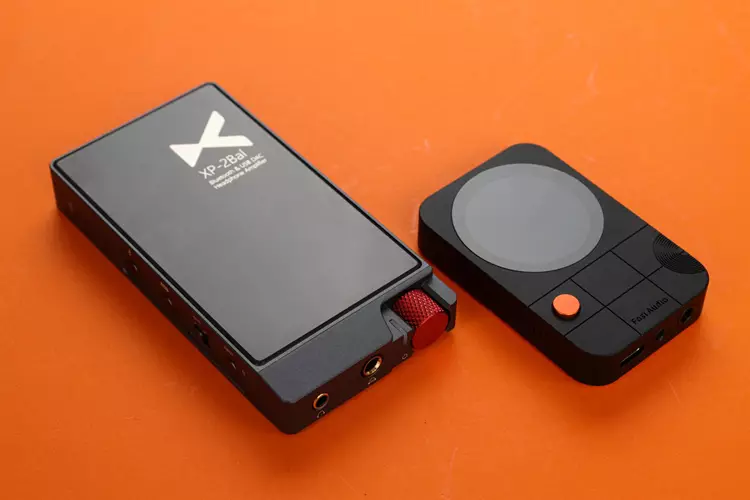
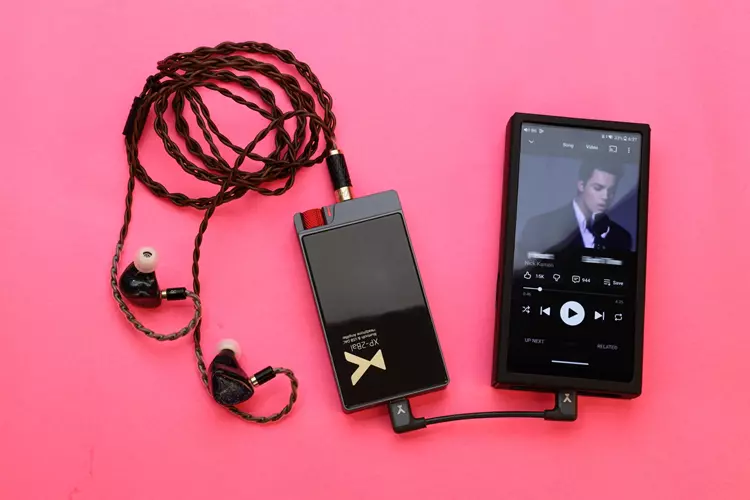
The xDuoo XP-2 Bal is a battery-powered, portable Bluetooth DAC amplifier featuring an ES9018K2M DAC chipset and an asynchronous USB XMOS XU208 receiver chip that natively supports up to 32-bit/384kHz and DSD256.
The Bluetooth chip is a Qualcomm CSR8675 Bluetooth 5.0 chip that supports all codecs, including SBC, AAC, AptX, AptX LL, AptX HD, and LDAC.
The XP-2 Bal is amplified by an OP+BUF-based amplification chipset. The xDuoo XP-2 Bal has both 3.5 mm and 4.4 mm output jacks with maximum power of 180 mW and 320 mW, respectively.
The xDuoo XP-2 Bal also features a built-in microphone with cVc 8.0 Noise-Reduction Technology to help with phone calls with an NFC one-touch connection. two USB ports, enabling it to be used while charging or as a desktop DAC.
The angular-looking chassis is made of a solid piece of CNC-machined aluminum alloy, measuring approximately 10.5 x 5.5 x 1.5 cm and weighing about 150 grams, and is sandwiched between two 2.5D glass panels at the front and back, with radiused edges for a more refined feel.
Performance
Both the MD3 and the XP-2 Bal have a neutral sound signature with a very flat perceived frequency response. The difference is that the XP-2 Bal has a more powerful and tighter bass presentation.
In the midrange and the treble, they are both neutral and extended. However, there is this so-called SSABRE ESS timbre, which is the subtle energy in the upper midrange and lower treble that the older generation of SABRE ESS DAC chips are known for, but it’s not too bad, really.
They both have similar sound stage size, with about equal width, height, and depth. The difference is in the presentation: the XP-2 Bal has a more forward setup, which pushes the main vocalist and the instruments toward the front of the stage.
In terms of dynamics, there is quite a difference between them; the XP-2 Bal is more dynamic subjectively, despite the spec sheet saying the difference in power isn’t that great.
The XP-2 Bal remains cleaner at higher volumes and sounds more energetic, with no signs of compression, even at 100 percent, when driving the headphones.
The MD3 sounds compressed by comparison when driving headphones. The XP-2 Bal has more current to drive more difficult loads.
Khadas Tea Pro
Technical & Design
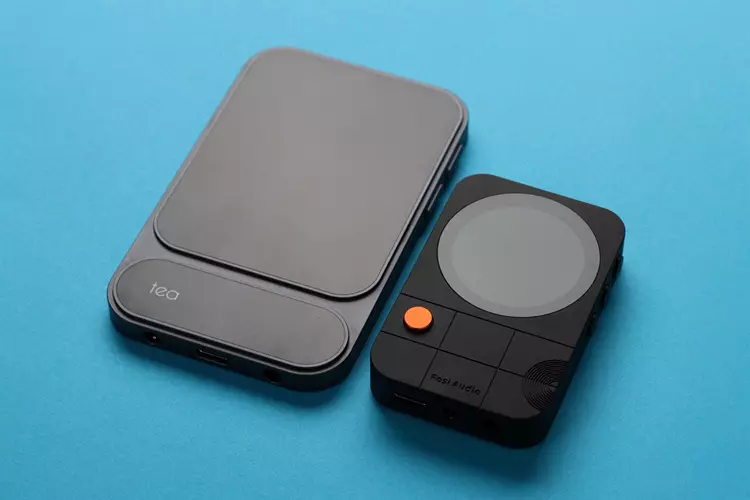
The Tea Pro has a small, thin, and light form factor with a MagSafe-compatible back that attaches to phones or phone casings with a magnetic back.
It uses an ESS ES9039Q2M DAC chip, 2 x TI OPA1612 op-amps for I/V conversion, and another 2 x TI OPA1612 for low-pass filtering, and is amplified by 2 x Ricore RT6863 amplifier chips.
Two NJU72315 volume control chips sit between the low-pass filtering and amplifier chips.
Featuring the latest Qualcomm QCC5181 Bluetooth 5.4 chip, a built-in microphone for answering calls, an adjustable preset equalizer via the Khadas App, a 0.95-inch AMOLED color display, balanced output, and many other features that would delight any audio enthusiast.
The Tea Pro’s power output is 165 mW into 33 Ω with the 4.4mm balanced output jack, and 120 mW into 33 Ω with the 3.5mm unbalanced output jack, which are modest compared to most competition.
The Tea Pro has a flat, space-age, and industrial design that combines a CNC-machined aluminum chassis, Corning Gorilla Glass 3, and a Premium wear-resistant leather back panel.
The Tea Pro weighs 96 grams and measures 102.7 × 64.0 × 7.85mm.

Performance
Both the MD3 and the Tea Pro use the same DAC chip, the ES9039Q2M, and, as expected, they have similar neutral sound signatures.
Despite that, there are still differences; the Tea Pro is brighter in the treble with a more forward midrange presence and a more powerful, tighter bass presentation.
In terms of sound staging, I find the MD3 to have a bigger stage. While the Tea Pro has a similar stage width and height, it has a shallower soundstage with a more forward sound presentation.
Though neither is ideal for pairing with headphones, Tea Pro’s higher power output and better bass control make it a better fit.
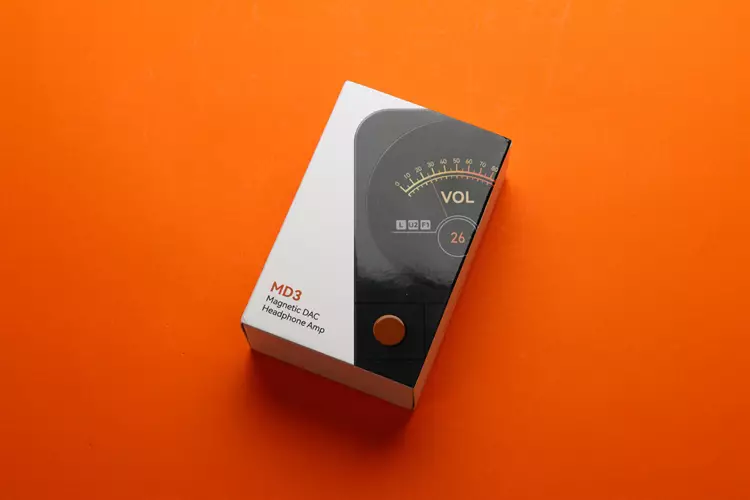
My Verdict
I like that the Fosi Audio MD3 uses the ES9039Q2M DAC chip, which has recently become my favorite for its detailed sound. It’s a major factor in the Fosi Audio MD3’s neutral sound, transparency, micro-detail presence, and spacious soundstage.
I also like the small size for its form factor and the lightweight, as well as the games and screensavers. I only wish it had higher output and tighter, more powerful bass characteristics.
With all that said, I would recommend the Fosi Audio MD3 if you can find it at a lower price, say, $115 or below, during a sale. At $149.99, it’s not bad, but there is a lot of competition in the market at that price point.
Fosi Audio MD3 Technical Specifications
- Chipset
- DAC: ESS Sabre ES9039Q2M
- Amplifier Chips: ESS ES9603Q ×4
- Input
- USB-C(Top): Audio Decoding/Image Transfer/Charging
- USB-C(Bottom): Audio Decoding/Image Transfer/Firmware Upgrade
- Output: 3.5mm Single-Ended, 4.4mm Balanced
- USB Audio Class: UAC 2.0, UAC 1.0
- Max Sampling Rate
- UAC 2.0: PCM 32bit/384kHz, DSD256(Native)
- UAC 1.0: PCM 16bit/48kHz
- Max Output Power (1kHz, THD+N<1%) 3.5mm: ≥80mWx2 @32Ω, 4.4mm: ≥180mWx2 @32Ω
- Frequency Response: 20Hz-48kHz(±0.2dB)
- SNR 3.5mm: ≥115dB, 4.4mm: ≥116dB
- Dynamic Range 3.5mm: ≥115dB, 4.4mm: ≥116dB
- THD+N 3.5mm: ≤0.00075%, 4.4mm: ≤0.00084%
- Noise Floor 3.5mm:<7μV, 4.4mm:<2.7μV
- Headphone Impedance:16-300Ω
- Weight (without cable): 50g(±2g)
- Dimensions: 70x45x12mm (2.76×1.77×0.47in)
