

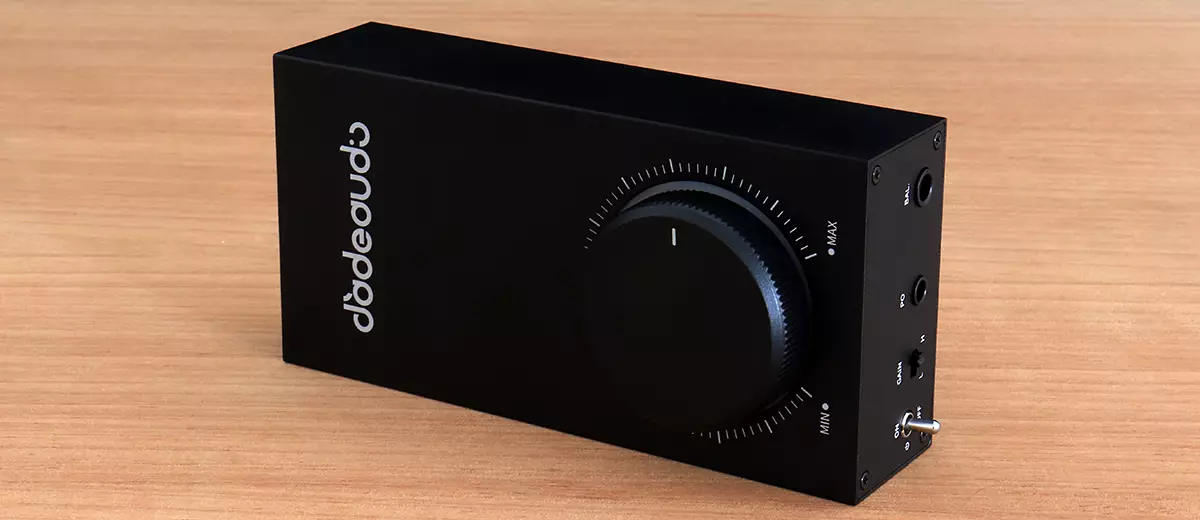
Synergy
Power
The JadeAudio GIGAS 1 is a sonically versatile amplifier with a fairly transparent sound quality. It demonstrates the DAC’s abilities and pushes headphones to their limit effortlessly.
I also noticed some sonic improvements using the 3.5mm output from my custom PC in that it was revealing details I could not hear by simply connecting a headphone to that port directly.
Of course, the extra power was, perhaps, the top determining factor in the quality of the audio. With onboard audio, you sense a lack of power and dynamics, but not with the GIGAS 1; you will have plenty of volume headroom, I promise.
I was able to push headphones like the HIFIMAN HE400se to ear-splitting volume levels with low noise, highly level dynamics, and speed to boot. The Sundara was driven to extremes even more so, since it is more efficient.
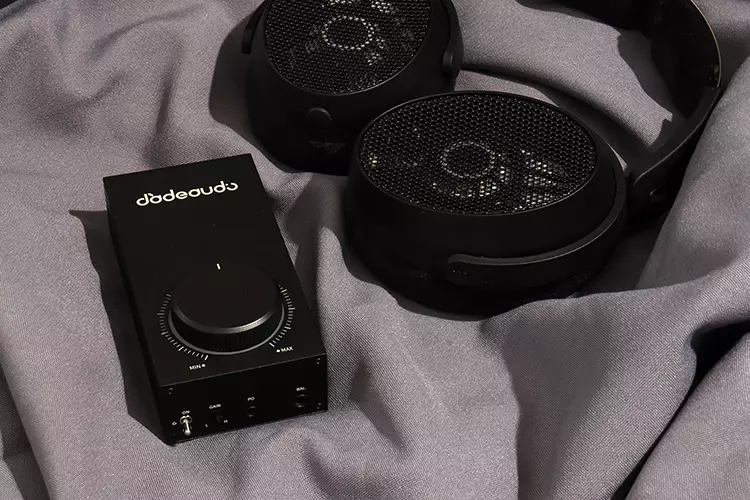
Pairings
I had a positive experience using various DACs and line drives with the JadeAudio GIGAS. I experimented with various cables and obtained some interesting results.
None of the cables I used conducted any noise from the DAC to the GIGAS 1, even if I tried to provoke it. I mostly used the SMSL SU-X DAC to feed the 3.5mm jacks. I also used the KA5 from the 3.5mm to the 3.5mm input of the GIGAS 1.
The interesting result was that I purposefully used a set of RCA cables from a known good company that is a known noisy cable, but while feeding the GIGAS 1 with that cable, I heard no noise. The same cable was slipped into the SMSL SH-X, and the noise was unbearable.
Is it possible that the GIGAS 1 has some sort of noise suppression at the inputs? It could be because I used the other cables to feed the same amplifier and heard no noise whatsoever. It was just that one cable that made noise on all the other gear, not on the GIGAS 1.
Selected Comparisons
Topping NX7
Technical
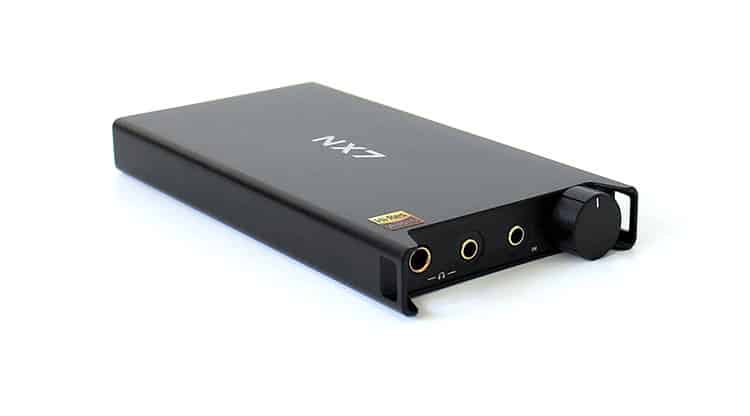
Technically, the Topping NX7 is not a desktop model. It was marketed as a portable amplifier, but it was very capable of driving most headphones out there, including planar magnetic headphones.
The NX7 is a bit more expensive, but it’s one of the handful of small-form raw amplifiers that are worthy of consideration.
The front panel is equipped with a 3.5mm TRS input, and a couple of headphone output jacks consisting of a 3.5mm, single-ended connection alongside a 4.4mm balanced Pentaconn connection.
It didn’t claim a power output as high as the GIGAS 1, but it supplies an ample 1400mW with 0.1Ω output impedance, and a very high 135 dB DNR rating on the go. The long-lasting battery didn’t hurt its desirability either.
Design
The NX7 has a front-mounted volume knob that also powers up the unit. Power comes via the 4000mAh internal battery with a charge port at the back of the unit.
For desktop use, I would have preferred the NX7’s input jack to be rear-mounted. That positioning is ideal on a portable rig.
As it stands, the NX7 has three connections upfront. Two are the headphone jacks, and one is an input. You have to get used to the input’s position because it is so similar to the 3.5mm out, and they can be easily mistaken. I’m just nitpicking here.
The NX7 has an all-aluminum chassis and is finished similarly to the GIGAS 1 black variant. It also comes in black and silver color schemes, similar to the GIGAS.
The GIGAS 1 also comes in green, making it the more versatile model if color is an important factor to you.
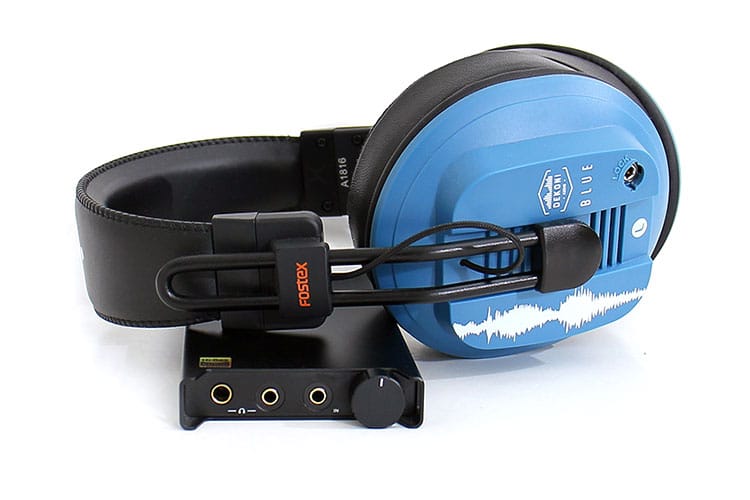
Performance
Amplifiers don’t really have a character of their own most times, and amplifiers of this size are hard to come by. So, we have to look at convenience, features, and power output.
Both these amplifiers are powerful enough to allow the use of almost any headphone around, and that’s what their job is.
But somehow, when using noisy gear, the GIGAS 1 is far superior at suppressing noise and just keeping any stray external interference or cable noise down.
If you just need a desktop rig, and if you connect the GIGAS 1 to a 12V power source, then the GIGAS 1 is the one to get.
Of course, you can’t take the GIGAS 1 out on the road unless you take an additional power bank, and most are 5V anyway, so it will limit you to 780mW, while the NX7 can produce 1400mW on the go on its own.
This is a battle of convenience versus bang-for-the-buck power output. If you need portable power, of course the NX7 would do a great job at amplifying your headphone output and powering most headphones.
However, in a desktop scenario, the GIGAS 1 wins hands down. It can amplify without adding any flavor of its own, just like the NX7.
It’s the better unit in that it will sound great with any source, even some noisy sources without degrading the experience, plus it’s potentially way more powerful.
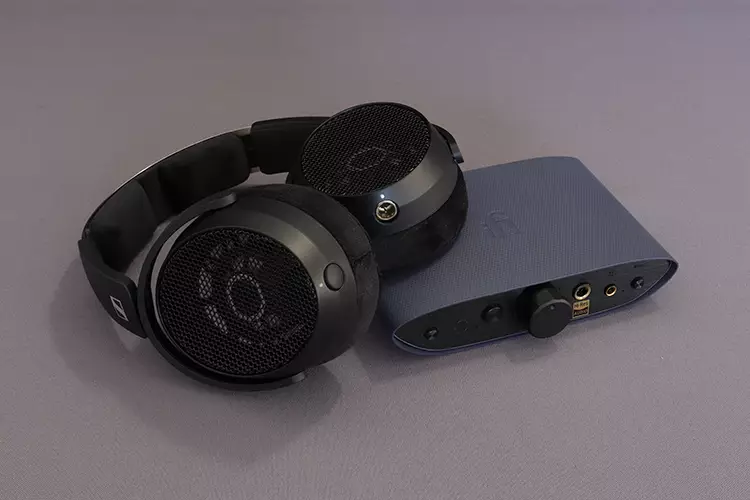
iFi audio ZEN Air DAC 2
Technical
If you’re looking for an inexpensive way of improving audio over onboard audio in a desktop scenario, the iFi audio ZEN Air DAC 2 is designed to do just that.
Recently reviewed, the ZEN Air DAC 2 is perhaps an antithesis component since it has a DAC integrated and is fed by a single USB-C port. In fact, that’s one of its limiting factors, in that with the GIGAS 1, you can up the ante with a voltage increase.
The ZEN Air DAC 2 has the convenience of being an AIO in that the DAC runs the internal amplifier and there’s no way of tapping into the amplifier section separately, but it does it all in one unit.
It’s a locked-in deal with the ZEN Air DAC 2, unless you buy a separate amplifier and tap into the RCA outputs. The funny thing is at that point, I would probably recommend the GIGAS 1 for that.
The problem with this combo will be aesthetics because these two do not look alike and will not make a visually pleasing combo. But they would make a good combo, sonically speaking.
Design
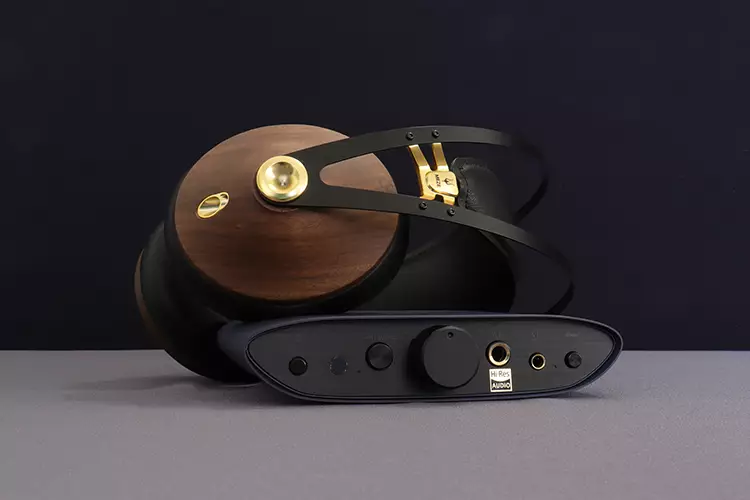
The trademark rounded trapezoid shape of the ZEN Air DAC 2 is in full effect here.
I like the shape of the iFi units, but it creates a problem in that they look best when matched with iFi components, and not so much with other components.
The construction uses a composite design in that part of the main chassis is plastic, but it throws in a metal front plate to dress it up.
It’s a good-looking unit that might appeal to more people who might find the plain black box design of the GIGAS 1 too retro, or too vanilla.
One thing you can do with the ZEN Air DAC 2 is, again, access the DAC section separately, but not the amplifier section.
That single feature is a good feature to have because the front-mounted volume control of the ZEN Air DAC 2 controls the output, and the XBass affects the output, adding color to the output. That qualifies for versatility points.
Performance
Even though the iFi audio ZEN Air DAC 2 has a bunch of features, it’s what I call a stepping stone component.
You can build up on it and use it until you get a serious power amplifier, because the 484mW will not cut the mustard in certain scenarios.
If you like features upfront, the ZEN Air DAC 2 will work well for many who use efficient headphones.
But if you have planar magnetic cans, for example, and some headphones whose efficiency level is on the low side, then you will scramble within a month’s time to upgrade due to the lack of power.
You can, at that point, add an amplifier, like the ZEN CAN, which will put your overall cost at a tier that is very competitive.
If you feed the GIGAS 1 well, you won’t need an upgrade for a very long time unless you’re looking to go exotic. It’s that good.
My Verdict
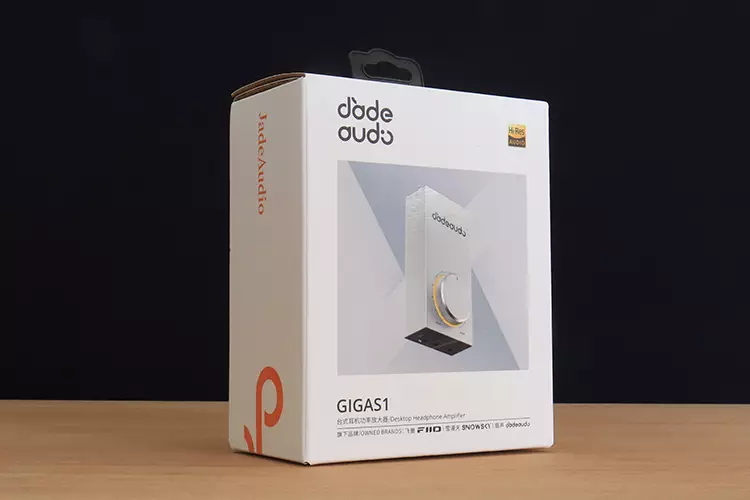
I am totally gob smacked at what FiiO and JadeAudio have produced here for pennies on the dollar. The FiiO JadeAudio GIGAS 1 amplifier exceeded my expectations in every sense, and I believe it can compete with some rather expensive amplifiers.
The FiiO JadeAudio GIGAS 1 is the little giant that could. It’s powerful and clean enough to satisfy most listeners except for those who believe that for an amp to sound good, it has to cost more than most modern-day vehicles.
Now all we need from JadeAudio is an accompanying DAC to sit under the GIGAS 1 to complete the setup. As a stand-alone amplifier, the GIGAS 1 excels in every department and is what most people will ever need.
But my spider senses are saying that someone at FiiO and JadeAudio is thinking about a GIGAS 1 Stack. This is getting interesting, isn’t it?
FiiO JadeAudio GIGAS 1 Technical Specifications
- Discrete class AB architecture with transistor current amplification
- 4600mW + 4600mW max output power (4.4mm connection)
- Two adjustable gain levels
- 5mm + 4.4mm headphone outputs
- Supports 5V / PD 12V high voltage power supply
