


Selected Comparisons
The following select comparisons to the FiiO DM15 R2R were completed using the Empire Ears ESR MKII, FIR Audio e12, and the Austrian Audio Composer headphones.
All PO connections were via a balanced output with no Magic BASS or EQ applied to the DM15 R2R.
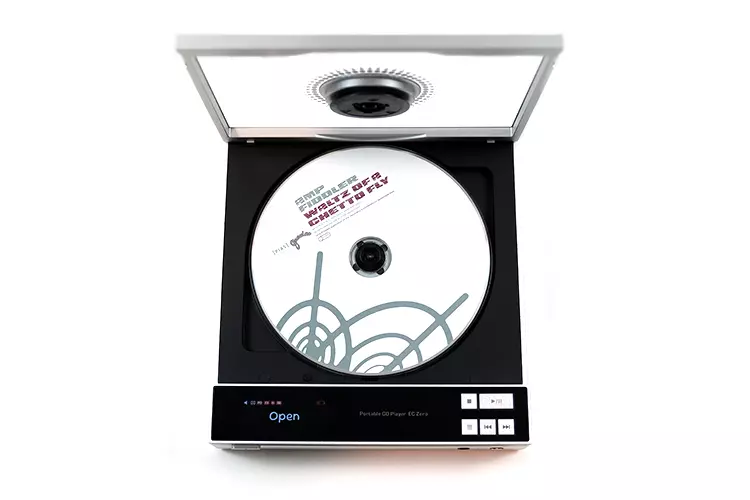
Shanling EC Zero AKM
The Shanling EC Zero AKM was released in late 2025 and is the more affordable sibling of the flagship EC Zero T portable CD player.
Technical
Like the DM15 R2R, the EC Zero AKM is sold primarily as a portable CD player, but has a plethora of features that allow it to do more.
In fact, the connectivity feature suite is quite similar to balanced and SE analog outs, a digital out, CD Ripping, USB DAC capability, wireless via BT, and balanced/SE PO connectivity.
Both players have separate power inputs, allowing the user to bypass the battery to prolong its shelf life and use it as part of a wider hi-fi system.
The key difference is the DAC. The EC Zero AKM uses an AK4493S DAC chipset rather than the DM15 R2R’s fully differential 24bit R2R array. There will be differences in how they sound.
That said, in USB DAC mode, the EC Zero AKM is the more capable decoder with PCM 32-bit/768kHz and DSD512 peaks compared to the lower DSD256 and PCM 32-bit/384kHz from the DM15 R2R.
I find their amplification capability not that far apart, with a maximum of 836 mW into a 32Ω load, balanced via external power, and 525 mW into the same load on battery power for the EC Zero AKM.
There are differences in the CD mechanism, such as the DM15 R2R’s custom-designed, self-rebounding steel-ball mechanism, which holds the CDs, and the EC Zero AKM’s tray-load with an active magnetic clamp.
Both are top loaders, but only the DM15 R2R’s lid can be opened during playback (albeit the CD will stop playing as a result). You can buy a magnetic clamp from Shanling, allowing you to play CDs with the EC Zero AKM tray open if that is what you are after.
Design
The EC Zero AKM is the bigger of the two CD players, and at 575g, it is the slightly heavier of the two by a little over 100g.
Both are boxy-looking players, but with less height and slightly smoother cornering, the DM15 R2R is a bit easier to manage in the hand.
These are two top-loaders, but the locking mechanisms are different. I find the EC Zero AKM lid locking to be weaker than the DM15 R2R.
It will rest easily enough, but you can pry it loose without too much effort, whereas the FiiO design embeds the lid into the chassis with stronger magnets and is far less likely to open during use.
I would recommend buying the optional leather cases for both, however. Just for maximum protection when they are being used as portable players.
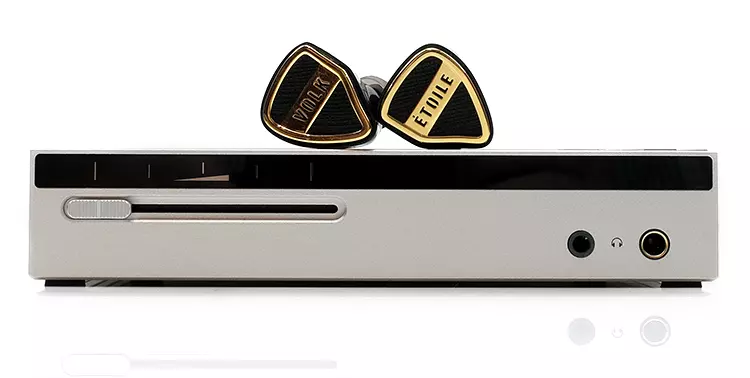
Aesthetically, the nod to retro design is alive and well in both players, but it’s more obvious on the EC Zero AKM with its front panel volume slider and chunky top panel buttons.
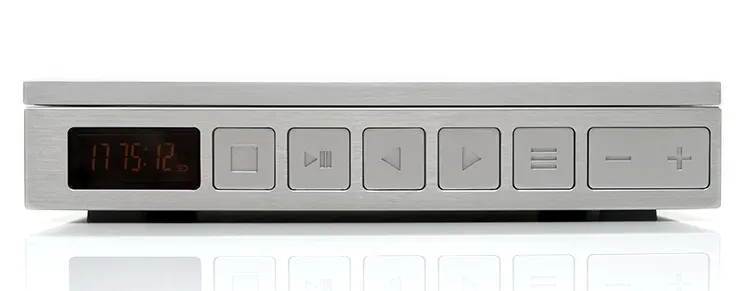
Both have diminutive displays, but the top panel positioning, along with the buttons, gives the EC Zero AKM a better viewing angle and easier operation.
The control ace for the DM15 R2R is the remote control. I wish the EC Zero AKM came with one also. It’s less of an issue if using either as portable players, but for HiFi work, the DM15 R2R is better suited for couch potatoes.
The DM15 R2R has a few more DSP features, such as the Magic BASS and EQ presets, and its output options are more accessible on the front panel. It does not have the EC Zero AKM gain control or channel balancing.
Performance
Both players have their strengths, and how much you prefer one over the other will likely come down to staging complexity and width, and coloration with specific IEMs or headphones.
The DM15 R2R has a thicker, warmer, and more even-harmonic tonal coloration compared to the neutral-to-natural sound of the EC Zero AKM.
It is better suited to leaner or brighter-sounding headgear that you want smoothed out a bit, whereas the EC Zero AKM aims for a bit more clarity with a drier presentation, suiting warmer-tuned gear.
In most instances, however, I found the DM15 R2R staging biased towards depth and central imaging solidity compared to the EC Zero’s superior height and staging width.
It places a stronger focus on textured detail in the lower-mids instruments and a wide range of vocal notes with a longish decay and enhanced body.
The Shanling tuning has a stronger upper-midrange tonal contrast with more treble presence. Upper-register spatial cues have more energy, directing the listener’s attention more to those nuanced notes on the far reaches of the stage.
The downside of the EC Zero AKM tuning is that with IEMs that have an uptick in upper-mids and treble energy, such as the e12, it can induce sharpness on sibilant overtones, creating a slight metallic effect.
No such problems with the lush-sounding DM15 R2R, which makes it ideal for the e12 if you find the 5-7k range a bit peaky for your tastes.
I also found the DM15 R2R more suited to fleshing out thinner BA driver performances from the Monkey King and the ESR MKII, though I preferred the tighter bass control from the EC Zero AKM when paired with bass-heavy IEMs such as the Monkey King.
MOONDROP DISCDREAM 2 Ultra
The MOONDROP DISCDREAM 2 Ultra is the higher-end model in the company’s portable CD player range and was launched in 2024. It has a similar price point to the DM15 R2R.
Technical
Both are top-loading portable CD players with USB DAC and analog/digital output capability.
The key missing features on the Ultra are no CD ripping capability, no wireless or BT functionality, and an inability to bypass the battery when connected to a power supply.
DACs are different. The DISCDREAM 2 Ultra uses a delta-sigma dual CS43131 DAC design that can decode up to 32-bit/384kHz PCM and DSD256 natively, which is the same as the DM15’s R2R decoding in USB DAC mode.
The DISCDREAM 2 Ultra has weaker amplification. With up to 222 mW on a 32 Ω load balanced 4.4mm or a SE 3.5mm connection on a lower 112 mW rating, it is significantly less capable than the DM15 R2R for driving more demanding headphones.
The DISCDREAM 2 Ultra’s 3.5mm lineout is weaker at 2 Vrms SE compared to the DM15 R2R’s 3.3 Vrms rating in battery mode. However, some might feel that this is a moot point given the usual standard is 2Vrms for most HiFi connections.
However, the higher Vrms from the FiiO unit, combined with a balanced lineout mode and even higher voltage supply for desktop mode, makes it more suitable for demanding power amplifiers than the MOONDROP unit, which has no balanced lineout capability.
Design
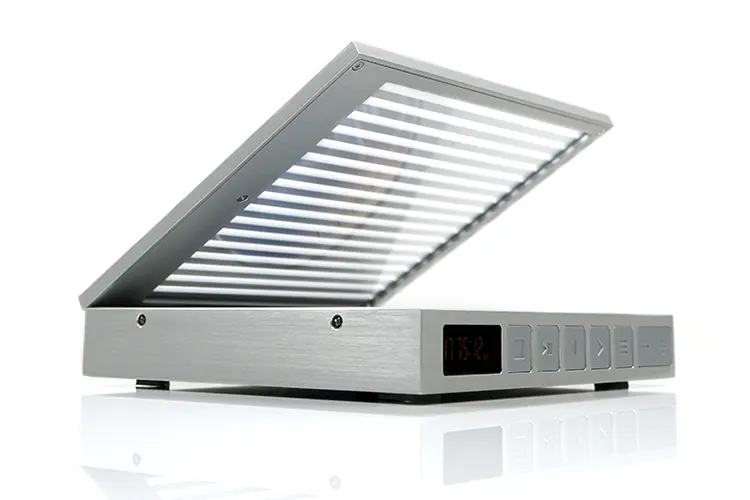
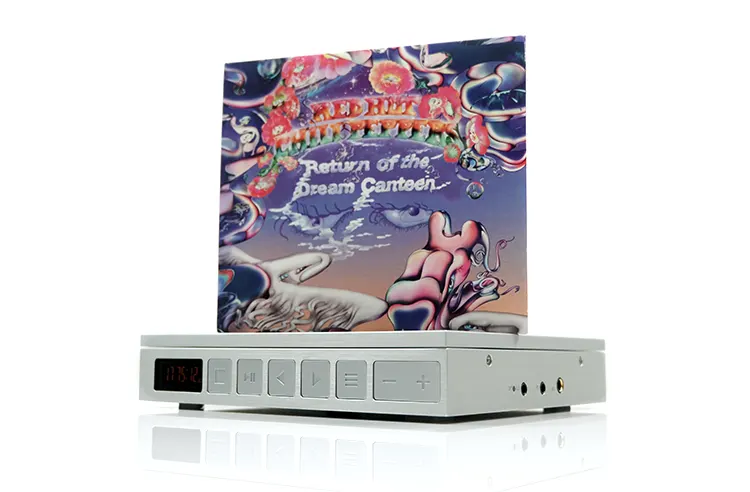
We have to start with the aesthetics because if you are after the retro vibe, the DISCDREAM 2 Ultra has no equal at this price point.
It’s a stunning design with a lovely mix of retro and minimalist from the brushed aluminum top grill plate and transparent glass underneath to the huge 80s’ style button controls and OLED display panel on the side.
The DM15 R2R has a nod to some 80s’ visuals, such as the orange glow from its TFT display and the mechanical buttons; it feels more like a late Sony DISCMAN rather than the earlier boxy Sony D-50 styling.
As such, the DM15 R2R is more modern-looking but slightly understated in its visual flair next to the MOONDROP player.
Size-wise, the DMR15 R2R is far more compact and ‘pocketable’ and is more suited to portable use than the bulky DISCDREAM Ultra 2, which feels more like a very compact desktop player.
The MOONDROP unit has no magnetic lid latch or locking mechanism, making the lid prone to flying open unless you buy the optional leather case. No such issues with the deep inset and magnet locks on the DM15 R2R.
The positioning of the PO and LO/SPDIF ports on the side of the DISCDREAM 2 Ultra only reinforces that mini-desktop feel. It can be a bit clunky to have a side connection for an IEM or headphone when on the go, as opposed to the DM15 R2R’s front panel connection.
The MOONDROP player is also lacking a remote control, but it has fewer features other than the USB-DAC capability, making it feel more like a desktop companion than something you would place in a HiFi system.
Performance
The DISCDREAM 2 Ultra is quite a bit more linear or flatter-sounding than the juicy, richer coloration of the DM15 R2R.
Although it seems to handle sibilant sharpness better than the EC Zero AKM, I would still consider it to be a drier, brighter tuning with my tested gear compared to the smooth, full-sounding DM15R2R.
Unlike the EC Zero AKM, it’s not as deep-sounding, certainly not as fulsome and heavy-hitting on the lows as the DM15 R2R.
I didn’t notice that gap as much with all-BA IEMs such as the ESR MKII, but it became more prevalent once I switched to heavier dynamic driver lows from the Monkey King and the FIR Audio e12.
The DISCDREAM 2 Ultra is punchy with excellent control throughout, so listeners might perceive the imaging and separation a notch higher than the more languid delivery of the DM15 R2R.
The FiiO tuning has a longer decay and more bloom in the lows and thicker mids. Combined with a relaxed set of highs, it’s not quite as sparkling as the DISCDREAM 2 Ultra upper register.
With less contrast, it has a smoother, more rounded tonal quality, especially for vocal notes, but on the technical side, I felt the DM15 R2R did better with note texture and detail.
The DISCDREAM 2 Ultra felt a bit too polished, lacking a little in dynamic range compared to the FiiO player, and not quite as holographic-sounding. It does sound wide, but perhaps more mid-centric in its overall presentation with the IEMs I tested it with.
The big weakness for the MOONDROP player is when you move to headphones, especially choices like DCA’s NOIRE XO. It struggles with the power requirements compared to the DM15 R2R, sounding flatter and lacking in dynamic range.
Shanling EC Zero T
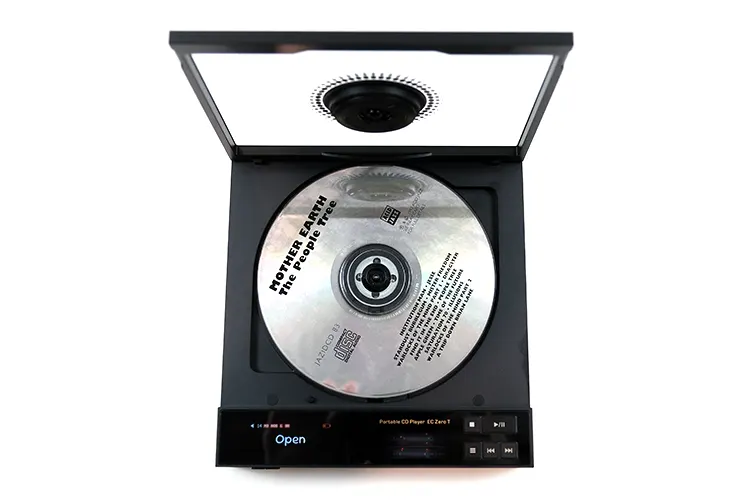
The Shanling EC Zero T is the company’s flagship portable CD player, launched in mid-2025. Although it is a much higher-priced unit with additional tube-mode options, our focus in this comparison is the performance of their respective R2R DACs.
Technical
Both are portable CD players with system-integration capability and use R2R DACs.
Shanling has chosen its in-house ‘Kunlun’ R2R implementation, first seen in the EH2 desktop DAC and expanded in its flagship models, such as the high-end SCD3.3 SACD player.
And whilst the DM15 R2R is not a clone of any kind, both it and the EC Zero T R2R DACs have similar foundations: a “192-resistor” array (48 resistors per channel in a fully differential setup) with 0.1% high-precision thin-film resistors.
The biggest difference is in the filter approach and decoding. The EC Zero T has the classic NOS/OS options, which, surprisingly, the DM15 R2R does not yet have (firmware update?).
The closest might be the ‘Retro’ preset on the DM15 R2R EQ presets, at least in terms of sound shaping, but it’s not based on the same engineering principle.
The second difference is in the USB chipsets for their respective USB-DAC capabilities. The DM15 R2R is capped at 32-bit/384kHz PCM and DSD256, whereas the EC Zero T is higher, up to PCM 32-bit/768kHz and DSD512.
Neither offers LDAC BT transmission capability. Both are capped at aptX adaptive, which seems a curious omission given the current standards in wireless headgear in 2026.
Amplification is very different, and this is where most of your money is going with the EC Zero T’s tube and solid-state modes.
I will put that to one side as it’s not my focus, but if you are judging purely on power, then they are reasonably close at 1.2W balanced into a 32 Ω load in Transistor Mode for the EC Zero T, dropping down slightly to 1087 mW in tube mode using the DC power high gain option.
Design
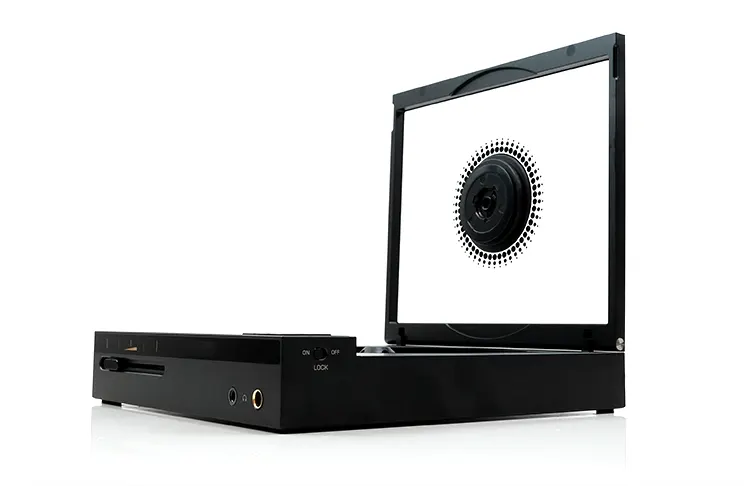
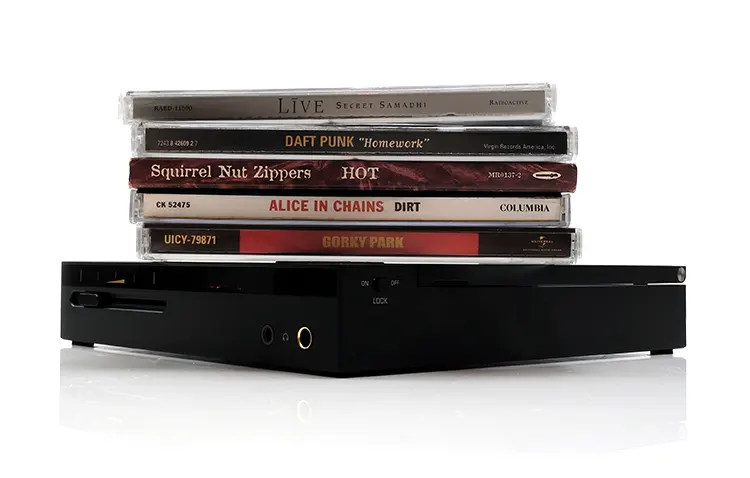
The aesthetics and form factor of the EC Zero T are identical to the EC Zero AKM. That means my comparative observations on how it matches up to the DM15 R2R are more or less the same.
The key difference revolves around the menu control system features, with the EC Zero T offering the transformer and tube timbre output modes.
Despite the tube options, the battery life of the EC Zero T is actually quite impressive at 10 hours for direct CD playback compared to around 7 hours from the DM15 R2R.
Both have balanced and single-ended outputs with a rear panel connectivity suite that is very similar. Both can bypass the battery with direct powered connections, with options for balanced/SE line out, and SPDIF.
The EC Zero T also has the retro-analog volume slider, which I quite like, but I wish it had a little bit more resistance to prevent accidental bumps from pushing the volume up quickly.
Unlike the DM15 R2R, the controls are on the top panel, and there are pros and cons to this.
I find the FiiO mechanical buttons cute and save time on digital menu navigation, but maybe too small for easy operation, especially from a top-down angle, where I cannot see any labels or the screen. It’s clearly meant to be in your hand or facing up when moving around for easy reading.
The EC Zero T top panel is much easier to see from most angles with larger buttons for tired eyes like mine. However, the additional space required to house them means the unit is bigger and bulkier than the DM15 R2R.
Performance
Though both are R2R-driven for decoding, you have to remember that amplification also colors the sound, so you have to take the output as a whole.
On that basis, and with the EC Zero T in solid-state mode, the DM15 R2R sounds quite competitive. It has more depth and solidity on the low end compared to the slightly ethereal, yet punchy sound of the EC Zero T in OS mode.
NOS mode adds a bit more heft to the EC Zero T lows and brings it closer, but I still give an edge to the DM15 R2R in terms of overall note weight and fullness.
Where the EC Zero T starts showing its price tag is the refinement in the mids and highs. It’s a more ‘gentile sound’, smoother in percussion strikes and not as raw-sounding in the higher-register vocal notes, particularly when switching to OS mode, where the treble sounds effortless.
I would describe the DM15 R2R sound signature as a little ‘earthier’, more grounded in the lows and mids, if that makes sense, with less vocal and treble bloom.
The one exception is the percussion presentation, which seems to jump out a bit more than the EC Zero T’s solid-modes sweeter, politer OS delivery.
Tube mode is a different ball game, and again, it’s one more reason why you pay more for the EC Zero T. It’s a smoother, more relaxed sound, but also has a more ambient soundstage with vocal imaging a little more neutral in its positioning.
My Verdict
The FiiO DM15 R2R is a relatively smooth, analog-sounding portable CD player with a powerful, dense low end and full-sounding vocal performances.
I would class it as a marked step up from the DM13 in several key areas, including better features, an improved DAC, enhanced output power, and a more pleasing CD tray and lid mechanism.
It now provides the prospective buyer with more choices in the market and brings it on par with the likes of the Shanling EC Zero AKM and, from a feature standpoint, ahead of the MOONDROP DISCDREAM 2 Ultra.
Nothing is ever perfect. The DM15 R2R does have some cons, such as a lack of NOS/OS filters, tiny buttons that make it hard to operate if not looking at the front panel head-on, and a lack of LDAC BT output.
Otherwise, it’s a solid little CD player at a competitive price point with plenty to offer, including a pleasing analog sound signature that can, at times, be food for the basshead soul.
FiiO DM15 R2R Technical Specifications
- Operating Modes: CD play / USB DAC / Bluetooth transmit / Optical out / Coaxial out
- Headphone Outputs: 3.5mm single-ended, 4.4mm balanced
- Line Outputs: 3.5mm LO/COAX/OPT (3-in-1), 4.4mm balanced LO
- Supported CD-R Formats: FLAC, WAV, WMA, AAC, MP3
- DAC: FiiO self-developed R2R DAC
- Amplifier: SGM8262 × 2
- Bluetooth Chip: QCC3095
- USB Chip: SPV5048
- Display: 0.96-inch LCD
- Battery Capacity: 4700mAh
- Battery Life: ≥7 hours
- Rated Input: 5V 2A (USB-C)
- Charging: Supports PD2.0 and PD3.0 fast charging
- Charging Time: ~2 hours (PD3.0)
- USB DAC: 384kHz/32bit, DSD256 (Native)
- Coaxial Output: 192kHz/24bit
- Optical Output: 96kHz/24bit
- Weight: 1.04lbs
- Dimensions: 5.67″ x 5.39″ x 1″
