

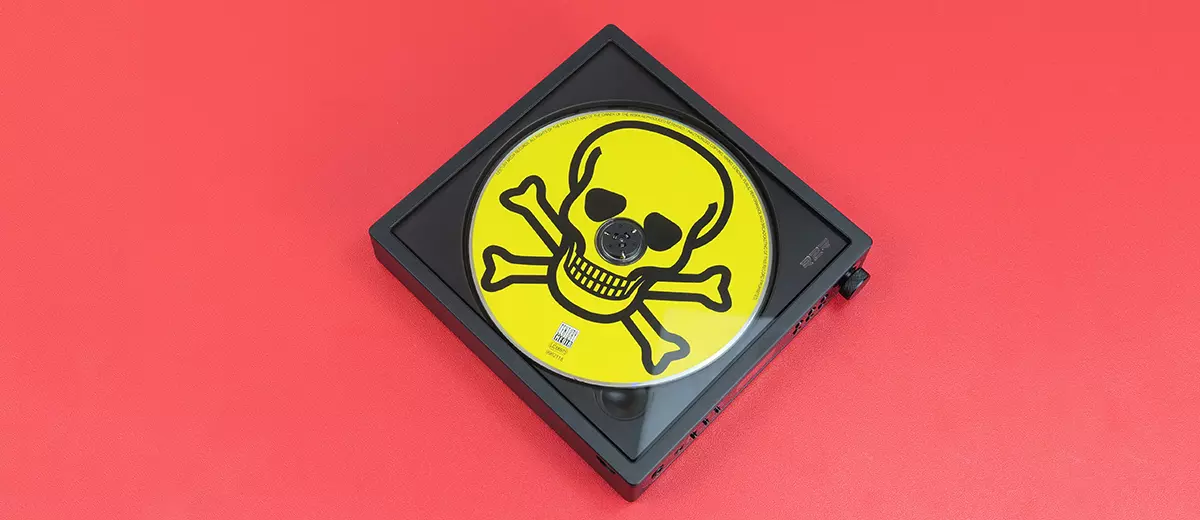
Marcus reviews the FiiO DM15 R2R, a new portable stereo CD player featuring a 24BIT R2R DAC and up to 1.15W of balanced output power. It is currently priced at $269.99.
Disclaimer: I received this sample in exchange for my honest opinion. Headfonics is an independent website with no affiliate links or services. I want to thank FiiO for their support.
You can click here to learn more about the FiiO audio products previously reviewed on Headfonics.
This post follows our current scoring guidelines, which you can read in more detail here.

The thirst for retro-inspired audio products continues with FiiO’s latest portable CD player release, the DM15 R2R.
At $269.99, it’s a step up from the entry-level DM13 player, but with the price increase comes an upgraded R2R DAC, significantly boosted amplification, and an expanded control suite.
I had an opportunity to test the DM15 R2R back in August 2025 at the SIAS show in Shenzhen, so I knew what was coming. Trade shows are never the easiest to assess, but it definitely sounded smoother and more mature than the DM13.
Sadly, my DM13 has some technical issues, so I will not be able to compare it to the DM15 R2R. However, I have Shanling’s very competitive EC Zero AKM and the R2R-equipped Zero T, as well as the beautifully designed MOONDROP DISCDREAM 2 Ultra, for comparison work.
How does the DM15 R2R perform and compete against those models? I found out in my full review below.

Features
The FiiO DM15 R2R is primarily used as a portable physical CD player similar to a classic DISCMAN from the 80s.
However, since it is 2026, FiiO has integrated several modern audio-centric features into the DM15 R2R, including line and digital output, Bluetooth wireless transmission, a desktop mode similar to FiiO’s latest DAPs, USB-DAC functionality, and enhanced EQ or DSP modes for tweaking the sound.
So, beyond being a portable CD player, you can place the DM15 R2R in the heart of a HiFi system with analog output to an amplifier, digital output to a 3rd-party DAC, or wireless transmission to a streaming receiver or a set of wireless headphones.
Battery life for headphone use will vary depending on whether you use USB-DAC decoding or play CDs directly. Its 4700mAh 3.85V battery ranges from 7 hours SE or balanced for CD decoding up to 11 hours for USB-DAC mode (po output on a 32Ω load).
Desktop mode is the key. This allows you to bypass the internal battery and set up the DM15 R2R as a powered desktop unit, which helps to prolong the battery health.
DAC
Even more retro in many ways is the custom fully differential 24-bit R2R DAC inside the DM15 R2R, a decoding technology that predates portable CD players.
The use of an R2R DAC is consistent with several of FiiO’s refreshed 2025 and 2026 audio products, such as the new M33 DAP and their desktop K13 R2R, so it is not that surprising to see it in their latest CD player release.
This particular version is a 192-resistor array, 48 per channel, which seems to be the de facto standard count per channel at this price point.
It’s an all-to-PCM digital signal management setup with digital-to-analog up to 32-bit 384kHz and DSD256 natively in USB-DAC mode, dropping to 24-bit/194kHz for coaxial, and 24-bit/96kHz for optical output.
For CDs, it’s standard Red Book plus HDCD, the CD layer of SACD discs, CD-R and RW audio and digital files, including FLAC.
Amplification
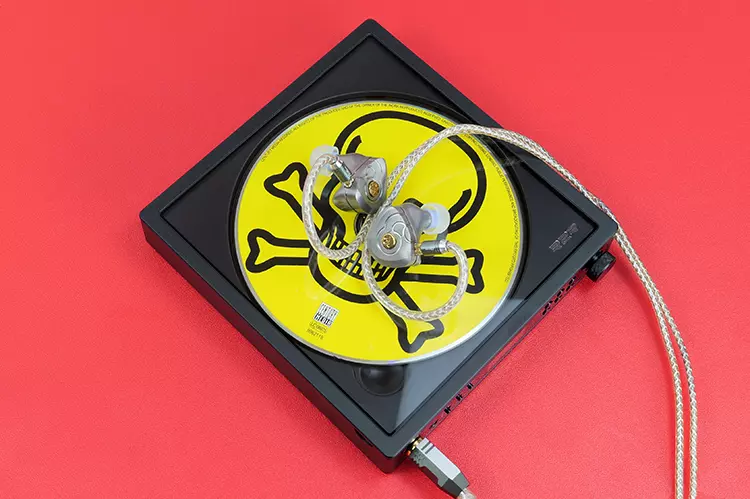
The DM15 R2R is equipped with single-ended, balanced, and fixed, line-level analog outputs, with its PO output capability getting a significant upgrade compared to the DM13.
You now have a single-ended headphone output rating of 315 mW into a 32 Ω single-ended up to 1150 mW balanced on the same load.
Note, however, these numbers are in desktop mode, and when you switch to battery mode, the PO output power drops to 220mW and 812mW into the same 32Ω load.
There are also voltage variations in the line-out Vrms, ranging from 3.3 Vrms single-ended in desktop mode to 2.8 Vrms in battery mode. For balanced, the DM15 R2R will deliver 6.5 Vrms in desktop mode, dropping to 5.4 Vrms in battery mode.
This is a marked increase over the DM13’s maximum 180 mW SE and 660 mW balanced output power rating and should provide enough juice for more demanding headphones.
Design
For some strange reason, I came away from the DM15 R2R testing at SIAS 2025 thinking the unit was larger than it actually is.
Size-wise, it’s only about 10-15% bigger than the diminutive DM13, and quite a bit more compact than competing units such as the EC Zero AKM and the DISCDREAM 2 Ultra.
Despite the additional capabilities, the aluminum-alloy DM15 R2R should be rated as one of the smaller baggable units out there, with an ESP protection feature to encourage you to do just that.
The sample I have here is in black, but you can grab it in silver or red as well. Personally, I like the look of the silver one, but everyone has their preferences.
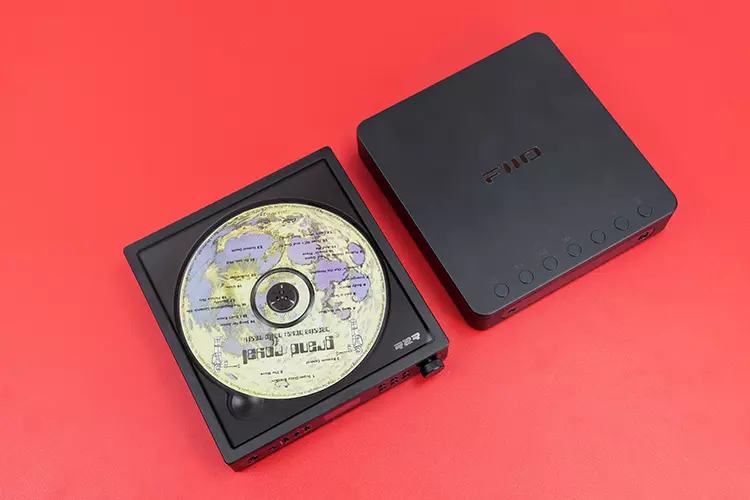
What they all have in common is a transparent perspex lid on top with quiet hinges and a slick magnetic latch mechanism that doesn’t require a lock.
The aesthetic is a quiet evolution from the simple DM13 styling, with a similar boxing look, though the DM15 R2R is perhaps a little more squared-off due to the integrated lid design.
The major difference is the tempered glass front panel. It now has a set of mechanical controls and an HD TFT with a soothing orange glow. It’s a more pleasing aesthetic than the colder black and white of the DM13 display.
And there are a lot more controls to the DM15 R2R compared to its cheaper sibling, and here I have one slight critique, and that is the sizing and labelling of the mechanical buttons. They are quite tiny, making it slightly challenging to read if the unit is below eye level.
So brownie points for going with mechanical, but aside from the multi-functional rotary dial to the far right, I need to put on my glasses to operate them.
I/O
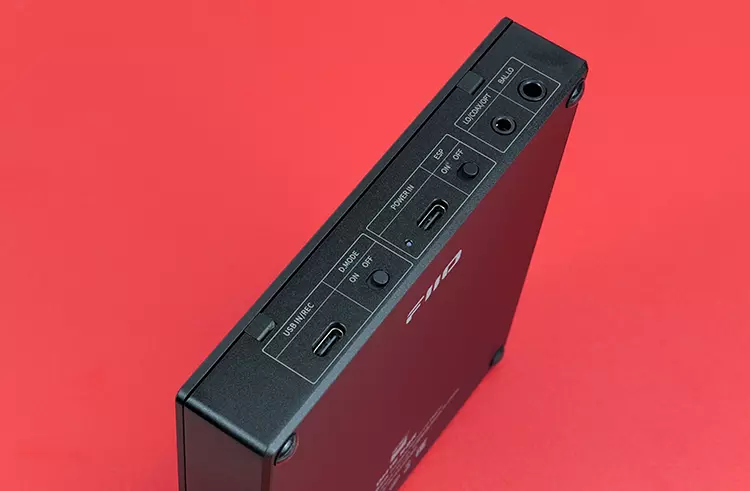
The DM15 R2R rear panel inputs and outputs are a little more spaced out than the DM13’s back panel, but otherwise they are quite similar, aside from a slight rearrangement in the left-to-right ordering.
That is good news to be honest, because I always rated the DM13 as one of the better-equipped portable CD players on the market for wired connectivity.
However, there is one new addition from the DM13 rear panel functionality that makes a huge difference, and that is the USB REC option doubling up to work as a USB DAC input USB-C port on the DM15 R2R.
From this port, you can rip CDs as before, but also switch the DM15 R2R into a USB-DAC mode for broader system-wide integration.
The balanced and single-ended pre-outs have moved to the right side of the DM15 R2R rear panel, with the 3.5mm output still serving as a SPDIF for coaxial and optical output. FiiO has included a 3.5mm-to-standard coaxial converter to make the connection easier for traditional HiFi setups.
ESP is there, should you want to move around without stuttering. This electronic buffer will give you a healthy 60-second pre-read on regular disks and 120 seconds on MP3 disks.
The power in and D.Mode on the far right should really be seen as a package deal. When turned on, it allows the DM15 R2R to bypass the battery for playback, preserving battery health and giving you unlimited playback time. This is especially useful if you are using the DM13 as a transport in a HiFi system.
Controls
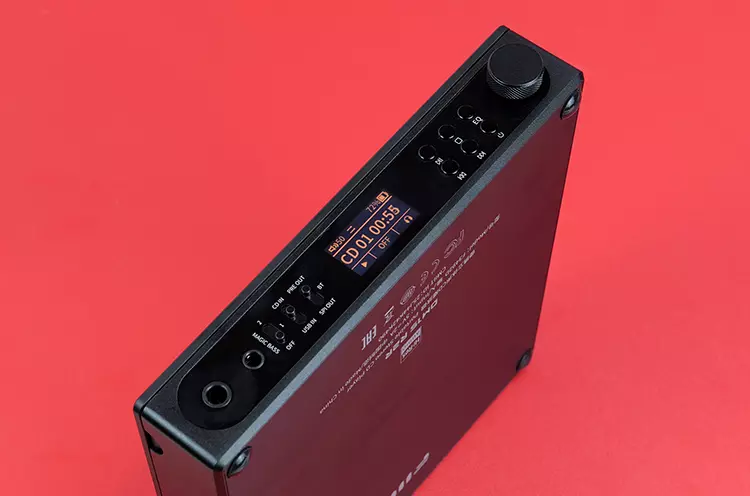
The DM15 R2R control suite is far more immersive than the simpler top lid button array on the DM13.
FiiO has gone for a mechanical button-and-switch combo surrounding a retro-inspired TFT screen that, despite its relatively compact size, can stuff in quite a lot of information and remain quite legible.
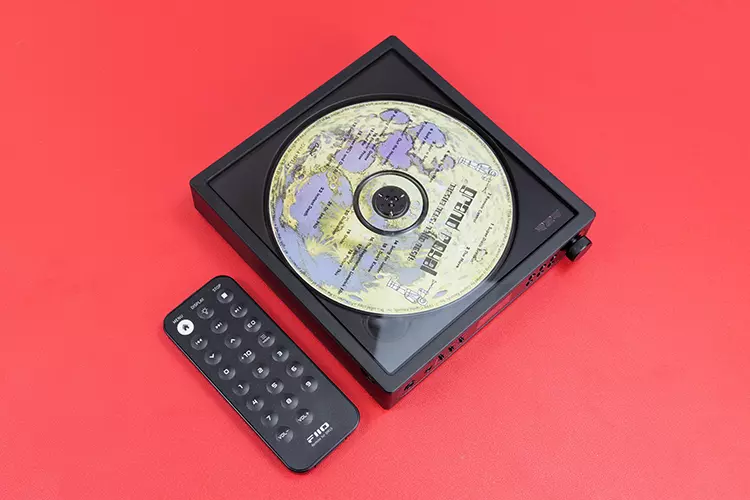
To make things considerably easier and perhaps as a forward-thinking response to those who might grumble regarding the button size and labelling, FiiO has also thrown in a small remote control.
It pretty much covers everything the mechanical buttons provide except for the slider switches on the left-hand side of the front panel, which control the analog and digital output modes.
Many of these new buttons reflect the enhanced features on the DM15 R2R; for instance, the new Magic BASS option has a slide switch for high, low, and off.
This will introduce a lot of thickness and warmth into the low-end and feels more like a niche tuning tweak for my tastes.
The 6 buttons to the far right control playback, EQ options, and power during CD playback, with a degree of control during USB DAC mode if your source interface allows it.
EQ mode has several presets, including rock, pop, and jazz, but the most interesting one is Retro, which introduces a customized “analog’ sound in keeping with the product profile.
The volume dial doubles as a multifunction dial (consistent with a lot of FiiO audio products). A long press will get you into a deeper submenu that includes environmental controls for display brightness, USB 1.0 or 2.0 options, entering REC, and update mode.
Packaging & Accessories
The DM15 R2R comes in a compact retail box and includes a decent number of accessories for a modern portable CD player at this price point.
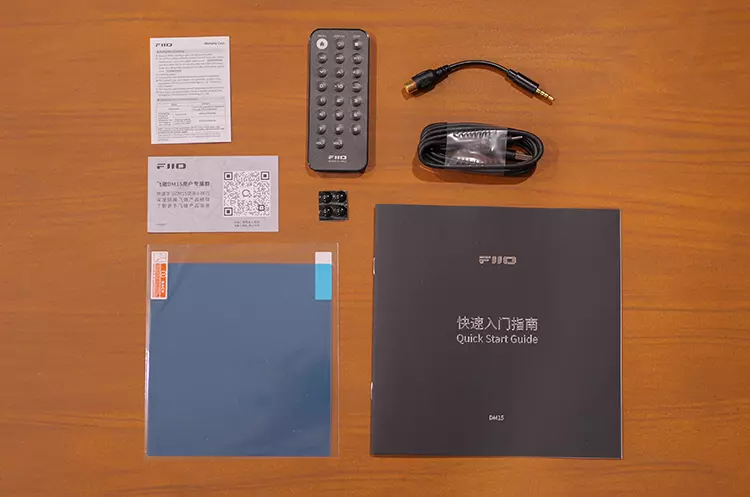
Inside, you get the remote control, a USB-A to USB-C charging cable, 4 x 3M blisters to stick on the base of the player for grip on desktops, a short 3.5mm to standard coaxial conversion cable, and a screen protector for the top lid.
I would advise putting on that screen protector. It seems to be quite prone to smudging from fingerprints. Also, if you buy the optional leather case (and you should), dirt can accumulate in the middle cut-out portion.
Keeping the lid clean is important to keep the dust and dirt out when opening and closing the lid, which you will do a lot.
Aside from that, you get your usual product quick start guide and warranty pamphlets all neatly tucked away into a well-padded internal tray.
Click on page 2 below for my sound impressions and recommended pairings.
