

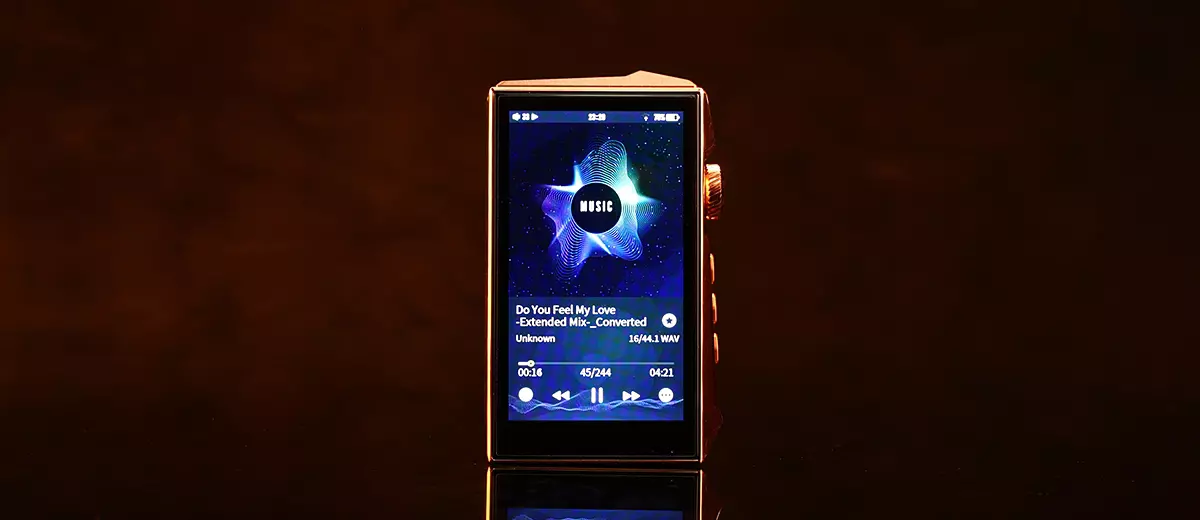
Marcelo reviews the Hidizs AP80 PRO MAX Copper Edition, an affordable dual ES9219C non-Android DAP with up to 190 mW of balanced output power.
Disclaimer: This sample was sent to me in exchange for my honest opinion. Headfonics is an independent website with no affiliate links or status. I thank Hidizs for their support.
Click here to read more about Hidizs products we have previously reviewed on Headfonics
Please note that this article follows our current scoring guidelines, which you can read in more detail here.
Today, we have another variant of the Hidizs AP80 PRO MAX, which I reviewed as a collaboration version with Linsoul Audio and published here on Headfonics.
I have known that Hidizs has released different variants of the AP80 line of DAPs since I started this hobby years ago; however, the AP80 x Linsoul PRO MAX is the first DAP I’ve heard from Hidizs.
I have always been curious about the limited-edition copper variants of their DAPS. I’m wondering what difference the copper chassis makes to the sound, even though Hidizs never claimed to have changed anything other than the chassis.
Fast forward to today, I’m so glad that I can finally hear for myself and answer that question. The Hidizs AP80 PRO MAX Copper Edition sells for $299 and is limited to 999 units.
Copper offers better electromagnetic interference (EMI) shielding over aluminum alloy. Will this translate to better sound if everything else remains the same?
And how does the AP80 PRO MAX Copper compare to other DAPs, including the HiBy R3Pro II and the ONIX Tocata XM2? Let’s find out.
Features
The AP80 PRO MAX Copper is a well-featured DAP for its small size. What’s special about the AP80 PRO MAX Copper is the pure CNC-Machined copper chassis, as opposed to the aluminum chassis of the original AP80 PRO MAX.
The supposed advantage of the copper chassis is its higher density, which provides better shielding against electromagnetic interference (EMI), leading to a cleaner, darker background.
The AP80 PRO MAX Copper uses a Linux-based HiBy operating system, HiBy OS, which is one of the best operating systems that I have tried in non-Android-based DAPs. The Ingenic 1600E SOC processor, used as the main processor, is capable in non-Android DAPs.
Two ESS SABRE ES9219C are used as a digital-to-analog (DAC) converter and amplifier, which I heard about on other devices and liked the sound of.
ES9219C is a 32-bit low-power stereo DAC with an integrated headphone amplifier designed for mobile, audiophile-grade audio applications. Supporting up to 32-bit 384kHz PCM and DSD256. It offers up to +130dB SNR and -114dB THD+N.
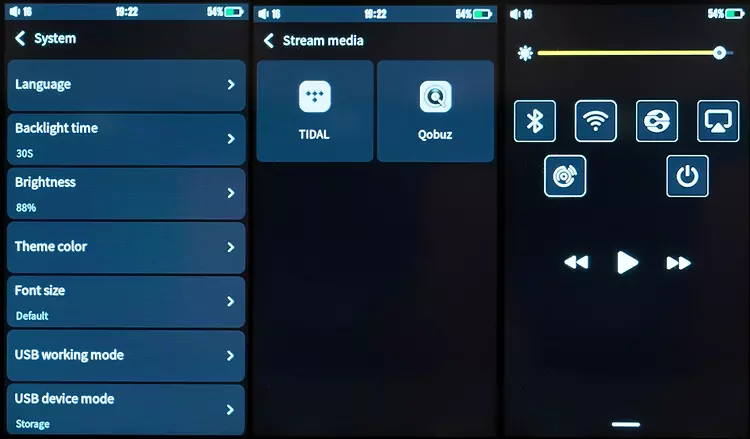
The AP80 PRO MAX Copper supports up to 2TB of MicroSD card storage, enabling direct music playback from local files. Additionally, it can stream music over a 2.4 GHz Wi-Fi connection via Tidal and Qobuz.
The player can function as a digital source for an external DAC amplifier and as a DAC amplifier for digital sources, such as phones, laptops, and PCs, via USB-C.
It also functions as a Bluetooth 5.1 audio transmitter or receiver. It can be connected to a DLNA and AirPlay Wi-Fi network and supports wireless music transfers.
The AP80 PRO MAX Copper output power rating is 3.5mm SE (70mW + 70mW @ 32Ω) & 4.4mm BAL (190mW + 190mW @ 32Ω). The Dimensions are 82.8*51*15.5mm, and it weighs 133 g with a 2.95″ (360×640) HD Touchscreen.
Designs
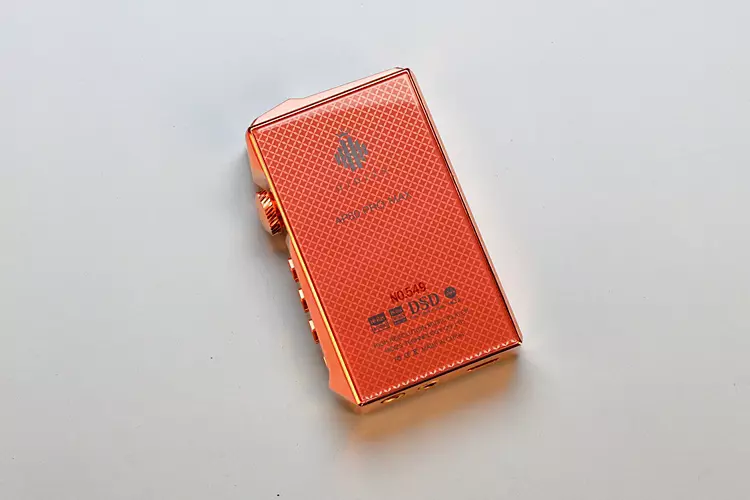
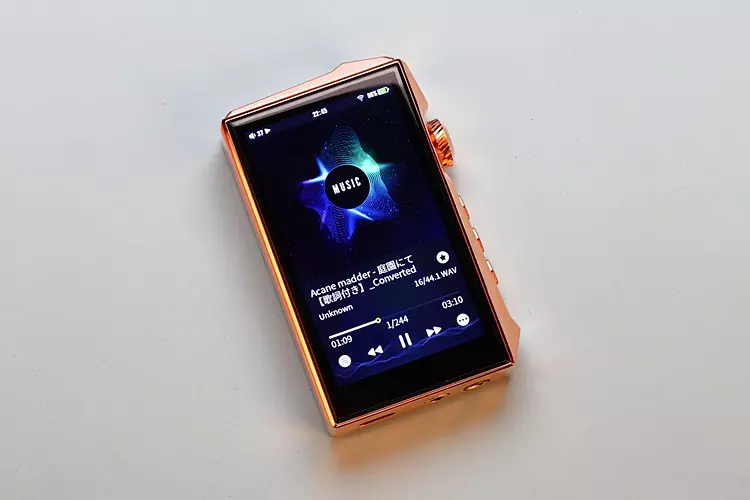
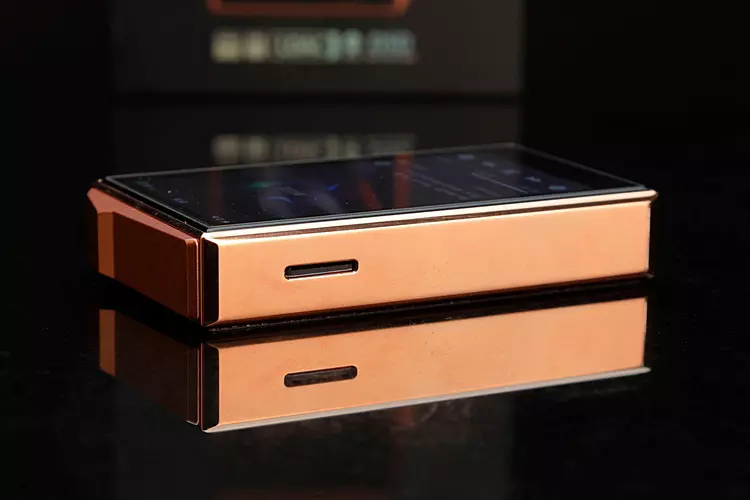
The shiny, highly glossy copper chassis looks even more stunning in person than in the photos. It looks truly special and luxurious.
The asymmetrical-shaped copper chassis is sandwiched between the front touchscreen and a color-matched tempered glass panel at the back. The overall design looks clean, albeit a fingerprint magnet, so I always keep a microfiber cleaning cloth handy.
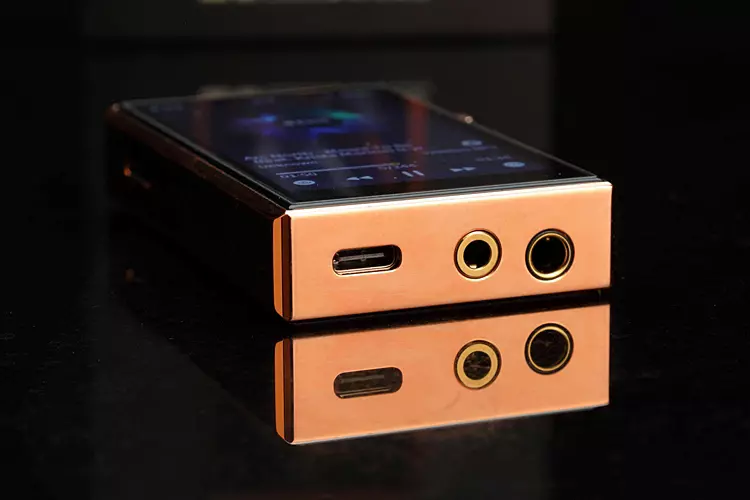
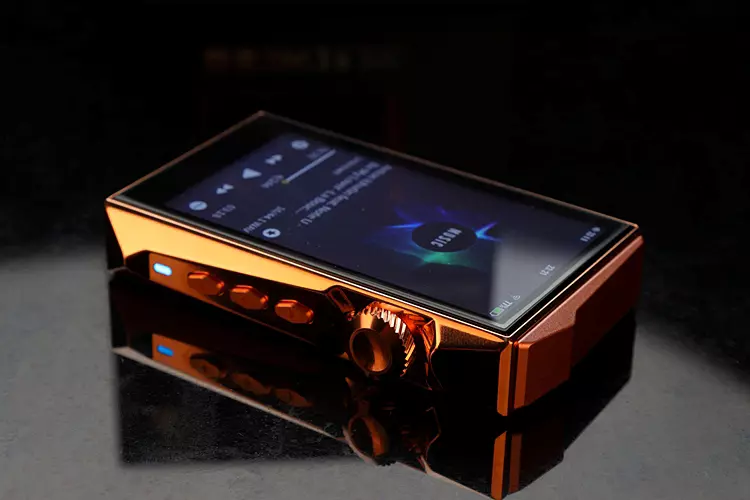
The left side and back are plane, but the top and right side feature a faceted design, the knob, and three control buttons on the right side. The bottom is where the USB-C, 3.5mm, and 4.4mm output jacks are located.
The AP80 PRO MAX Copper is a mini-sized DAP with dimensions of 82.8*51*15.5mm and a Weight of 133g. It is very pocketable and nice for daily use; it feels very nice in the hands.
The 2.95-inch (360×640) IPS HD Touchscreen is one of the best-looking screens I’ve used on a small DAP, with above-average contrast, viewing angles, color, and brightness. The screen looks crisp, and the touch control is smooth and responsive.
I/O
All the I/O are located at the bottom, consisting of a USB-C port, a 3.5mm output jack, and a 4.4mm output jack.
The USB-C port serves as both an input/output data port and a charging port. There is no support for UAC 1.0 USB mode; therefore, the AP80 PRO MAX is not compatible with gaming consoles, older PCs, or older devices.
The 3.5mm output jack can switch between headphone output and line-level output for use with other headphone amplifiers, while the 4.4mm output serves as the balanced output.
Controls
The AP80 PRO MAX Copper’s controls are located on the right side. I especially like the inclusion of the knob, which serves as the volume control, screen on/off, and the power switch.
There are three buttons below the know: skip/fast-forward, play/pause, and skip/fast-backward.
All buttons work as they should in the local music player and the HiByMusic player app, as well as the PowerAmp music player app, when connected via Bluetooth.
Battery Life
Since the innards are supposedly the same as the original AP80 PRO MAX, I can vouch for Hidizs’ claim of 8 to 10 hours and 10 -12 hours of battery life on the AP80 PRO MAX.
I have observed similar times during the burn-in period; however, the actual charging time from zero to 100 percent battery is about 1.5 hours, rather than the 1-hour claim by Hidizs.
I’m using a 60W Supre Vooc and PD charger as well as a 20W PD phone charger. The temperature while charging is only mildly warm. However, I noticed the copper version runs and charges noticeably warmer than the aluminum version.
Packaging & Accessories
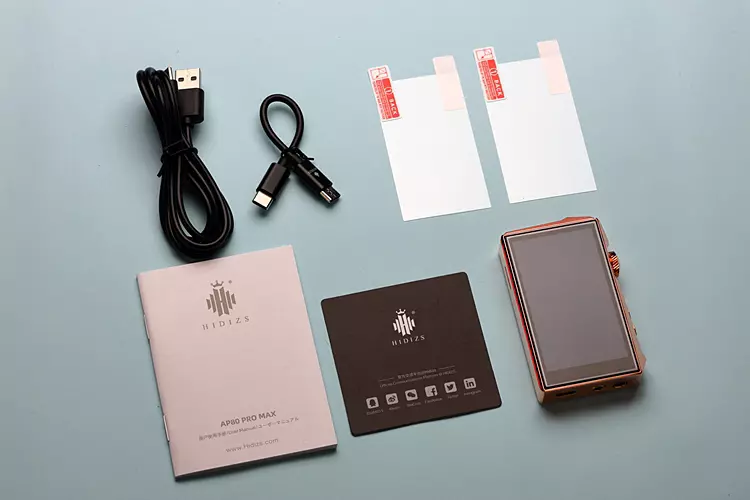
The AP80 PRO MAX Copper came in a small 129 x 97 x 47 mm black hard box with a photo of the DAP on top and text all around.
It includes the AP80 PRO MAX Copper DAP with screen protectors already installed on the front and back, user manuals, a greeting card, two screen protectors, a 10cm USB-C to USB-C cable, and a 1-meter-long USB-A to USB-C cable.
I must have received an early review sample of the AP80 PRO MAX Copper, as it didn’t include a leather case in the box. However, Hidizs said that every unit will include a black leather case for free, valued at $29.99.
Software Impressions
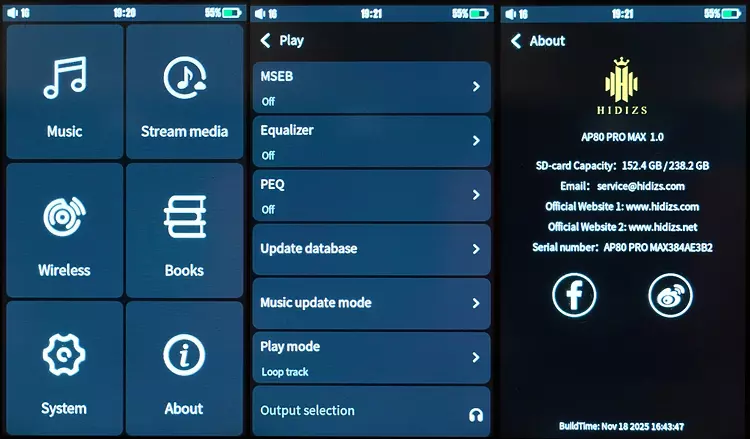
Just like the aluminum version, the AP80 PRO MAX Copper does not run Android, so we are limited to the default music players and streaming services.
However, the HiBy OS with the new UI works well with the X1600E processor, resulting in boot-up times of less than 9 seconds, which is significantly faster than those of an Android-based system, which usually takes about 30 seconds to boot up.
My review sample arrived with a firmware version 1.0. It includes the HiBy proprietary sound adjustment feature called MSEB, a graphic equalizer, gain control, filter selection, and sound field control feature, among others.
However, only two filters are available: the fast and apodizing fast roll-off filters, with no inclusion of a non-oversampling filter.
Overall, it is a well-designed and featured operating system, and I never experienced any unusual lag or freezing.
Navigating through the HiBy OS is intuitive and easy. There are not many pages to go around.
The AP80 PRO MAX Copper is responsive to operate; it lags slightly when scanning hour-long music mixes, but for normal-length music, it is fast. I also find the customizable drop-down shortcut menu very useful.
Playback & Streaming
The AP80 PRO MAX Copper uses a proprietary operating system, so installing a third-party music player app is unfortunately not possible. This is the main downside of non-Android DAPs.
However, since the AP80 PRO MAX Copper is a mini-sized DAP, I don’t think it would be possible or practical to run Android on it. The screen is too small for Android.
Tidal and Qobuz streaming apps are built in. Unfortunately, neither is available in my country, the Philippines.
Due to its closed Android operating system, I am unable to add my favorite music streaming apps, such as YouTube Music and Spotify.
Sound Impressions
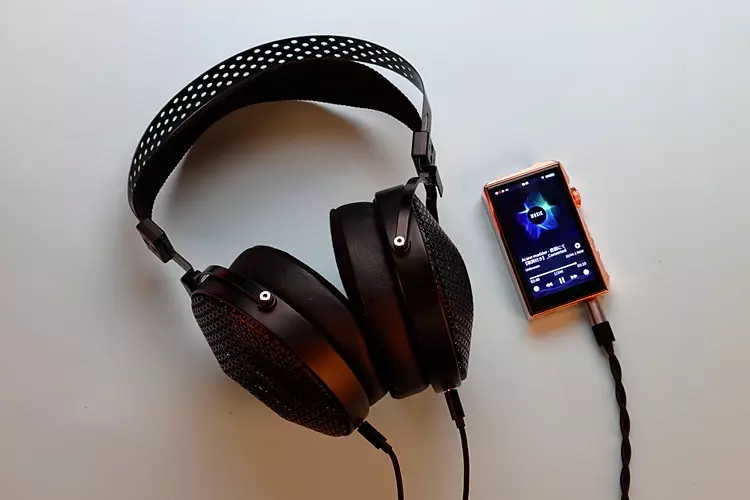
The following sound impressions of the AP80 PRO MAX Copper Edition I used the DUNU Falcon Ultra Ti, Tipsy M5, and the QoA Martini. For the Headphones, I use the FiiO JT3, the MOONDROP Horizon, and the Sennheiser HD 6XX.
I didn’t use EQ, MSEB, sound field, or any other features that enhance the sound; all settings are at default.
Summary
After the burn-in, a few days’ rest from reviewing audio products, I finally got to listen to the AP80 PRO MAX Copper seriously in a long listening session.
My first impression was that I thought the AP80 PRO MAX Copper has a bigger soundstage and cleaner background decay than the aluminum version, even though I haven’t compared them yet side by side, just based on my memory.
My curiosity couldn’t wait, so I woke the AP80 PRO MAX aluminum version to compare it to the copper version, and yes, there are differences in sound, albeit very subtly.
The Copper version is supposed to be internally the same as the aluminum version. Still, I noticed that the light indicator on the right side is much brighter in the copper version than in the aluminum version.
To make sure, I repeated the comparison on the following days to confirm repeatedly that there is a difference in sound quality, which I will discuss in the comparison section later in this review.
The AP80 PRO MAX Copper has a very neutral tonality, with excellent treble extension and neutral bass, just a subtle amount of warmth. There is no exaggeration in any frequency range to color the sound.
The bass is weighty-sounding yet neutral and fast, with good grip, control, and tightness even with difficult-to-drive IEMs and headphones. There is no muddiness, even with complex music; the bass remains detailed and articulate.
I find the midrange very neutral, coloration-free, and clean. It is lush, has accurate note weight, and never sounds thin, as more expensive DAPs often do, yet it is clean and detailed.
The treble is neutrally presented, extended, and airy, with very fine, clean microdetails. The background is very clean and dark without shortening the decay, and the instrument decay sounds lush.
Timbre
The AP80 PRO MAX Copper uses an ESS SABRE DAC chip, the ES9219C in particular.
However, Hidizs engineered it in such a way that I don’t hear the treble accentuation or excess in treble energy with the AP80 PRO MAX Copper, unlike other DAPs that use ESS SABRE DAC chips, especially in the entry-level and mid-range price categories.
Like the AP80 PRO MAX Aluminum, the Copper version is one of the least colored-sounding digital sources I’ve heard, yet it doesn’t sound flat or lifeless; it has a natural, neutral tonality and timbre, with fast transients and clean decay.
There is no hardness or sharpness in the sound; the AP80 PRO MAX Copper sounds transparent.
Staging & Dynamics
The AP80 PRO MAX Copper’s soundstage is big, with a natural, spacious feel; there is a good sense of surround sound, and the shape is spherical, with proportional height, depth, and width.
Although it may not be the biggest stage I’ve heard, it is big enough for me not to want more, and certainly bigger than its peers in the price range, including the aluminum version, albeit only subtly so.
There is a sense of spaciousness and air in the stage, which makes it sound wide open with a broad spread of instrument placement from the extreme left to the extreme right. There is a good side to side separation and edge definition in the instruments and vocals.
The front-to-back layering is good as well. There is a good sense of space between instruments, including those obscured background, and they are well separated from the main music. It is easy to pick out any instrument or vocals, yet the AP80 PRO MAX Copper never sounded too analytical.
The AP80 PRO MAX copper offers a reasonably energetic sound presentation, from the lowest bass to the highest treble; there is punch and snap, despite its moderate power output rating.
The AP80 PRO MAX Copper sounds lively and musically engaging, with no dullness.
Click on page 2 below for my recommended pairings and selected comparisons.
