


Sound Impressions
The following sound impressions were completed using the FIR Audio e12, TANGZU’s Monkey King, the Empire Ears ESR MKII, and the ZMF Headphones Atrium Closed (Olivewood Edition).
All connections were 4.4mm balanced, with the sound summary based on the unit’s performance without EQ and ‘Magic BASS’ mode.
Summary
The DM15 R2R delivers a dense, full-bodied sound with a distinct analog overtone throughout. It is warm, but it’s not the same ‘type’ of warmth delivered by units such as the EC Zero T.
This warmth is mainly generated from the bloom and fulsome low-end; it’s a cracking bass tuning for any IEM or headphone with a solid dynamic driver.
The power and meatiness from the e12 and ZMF Atrium Closed are excellent, providing a solid foundation and fundamental frequency presence.
Beyond the lows, the DM15 R2R shows a little rawness in percussion and breathy vocals compared to the EC Zero T. It has a much smoother sound compared to the neutral-sounding EC Zero AKM, but not as sweet and airy as the flagship Shanling player.
To go back to that warmth, it’s more like a solid-state mix of heavy lows and a weighty, fulsome set of mids with a slight uptick of upper-order harmonics.
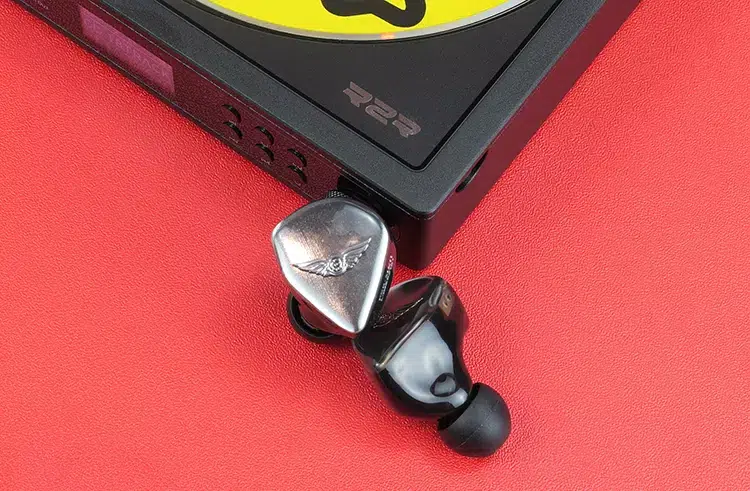
The staging feels centered and bottom weighted. If you have headgear with strong pinna gain, such as the Volk Audio ÉTOILE, those vocals are going to sound “huge,” especially in D.Mode.
I actually prefer battery mode with vocal-forward monitors to keep things a little bit calmer through the mids. However, the additional power and voltage from D.Mode are almost essential for most headphones.
It’s not just about improved dynamic range and clarity, but without D.Mode, the DM15 R2R sounds comparatively polite with more demanding headphones such as the DCA NOIRE XO.
A flick of the switch substantially stiffens bass impact and enhances soundstage depth, creating a more 3-dimensional listening experience.
And gapless playback on Redbook standard CDs? That’s a yes when testing my Metallica “S&M” CD1 and Queensryche’s “Operation Mindcrime”: no detectable pauses or drops in audio when switching tracks.
Magic BASS & EQ Presets
The DMR15 R2R has two ‘Magic BASS’ presets, high and low. To my ears, they seem to target the mid-bass and pinna gain region by accentuating the bloom, creating a fuller bass sound, but at the same time dropping back the midrange (vocal) and treble presence.
As such, it becomes a little more L-shaped and slightly softer in its delivery compared to the stock sound signature.
Bass Low works fairly well for reference-type monitors such as the ESR MKII. I find the lift noticeable, as well as the more relaxed vocal imaging experience. For slower-paced, sparse mixes, the additional weight works ok.
However, that would be as far as I would go, as Bass High is much too colored and bloated for my tastes.
I’m not a huge fan of EQ presets, but they do bring some interesting twists to the stock sound signature. I would recommend Rock and especially Retro.
Rock creates a more V-shaped sound signature, producing a stronger sub-bass response and more sparkle in the highs. Whereas Retro pushes back the vocal imaging a little and reduces some of the lower-mids warmth, which enhances the impact of lower-register notes such as bass slaps and plucks.
Bluetooth Audio Performance
The good news is that the DM15 R2R has excellent stability and range. I paired it with two TWS, the Noble FoKus Rex5 and the Huawei Freebuds Pro 4, and both held a solid signal with no stutter about 20 meters away and behind one wall.
The problem is the lack of LDAC. Not that aptX Adaptive sounds poor, but several modern TWS offer SBC, AAC, and LDAC but skip aptX due to licensing costs and other reasons.
That is the case with the Huawei Freebuds Pro 4, which drops to SBC sans LDAC, resulting in a lack of dynamic range and upper-register extension.
The Rex5 is aptX Adaptive compatible and produces a more resolving, airy sound, though compared to wired, it doesn’t offer the same textured detail and instrumental separation. It’s a fairly smooth but slightly blunted sound signature.

Synergy
Digital Output Performance
For this comparison, I connected the DM15 R2R to the Topping DX9 Discrete DAC/Amp and paired it with ZMF Headphones Atrium Closed (Olivewood Edition). Connections included optical and coaxial using the supplied FiiO adaptor.
Which output you prefer depends on whether you prefer a more accurate, tightly controlled presentation or a smoother, more romantic alternative.
The coaxial version is slightly more neutral in its delivery. Bass notes hit deep, but decay is shorter than the optical performance with the Atrium Closed. The impact is more noticeable, with more aggression and improved definition.
Vocal timbre is neutral-to-natural with decent levels of contrast and good weight. Treble extension is noticeable, at least compared to the optical output, which, in turn, contributes to a cleaner set of mids, albeit a more neutral midrange imaging experience.
Optical is more colorful. With the Atrium Closed, the vocal presentation is lusher and more intoxicating to listen to. I would say vocals are a little further forward in the mix, and bass has more bloom and a slightly softer, less defined feel about it.
It’s still a full-sounding low-end, but gentler in its impact with slightly longer note decay. Treble is more relaxed, with a light sheen on the mids, which aids in the vocals’ generally sweet tonal quality.
Neither will present a bass quite as thick and dense as the stock PO of the DM15 R2R. The DX9 Discrete is a little more tasteful in its low-end delivery, focusing instead on clarity and space.
Needless to say, other amplifiers and 3rd-party DACs will color the sound differently, but the basic digital output differences remain intact.
Pre Out Performance
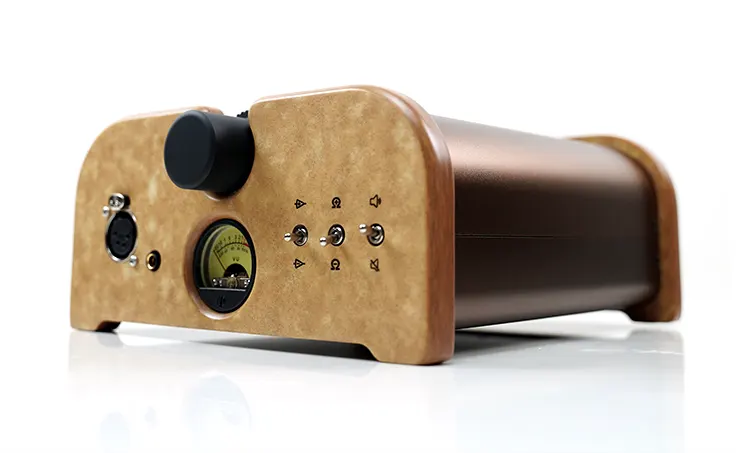
I tested the DM15 R2R Pre Out performance using the ZMF Headphones HOMAGE with the Atrium Closed headphones and the FIR Audio e12 IEMs.
Both the battery and D.Mode Pre Out sound from the DM15 R2R are excellent for headphone users planning on hooking up the player to a quality analog amplifier.
I will describe the various headphone matches and why D.Mode is a ‘difference maker’ in more detail further down in my pairings review, but the TLDR is heightened impact, vocals cutting through the mix better, and an expanded, deeper-sounding soundstage.
Essentially, you have two voltage settings for Pre Out: 3.3Vrms single-ended in desktop mode, down to 2.8Vrms in battery mode. For balanced, the DM15 R2R will deliver 6.5 Vrms in desktop mode, dropping to 5.4 Vrms in battery mode.
Now, for headphones or IEMs with strong ear gain regions 1-4k, I would recommend not going with D.Mode unless you need that additional Vrms to bring the gear ‘alive’.
Battery mode is more relaxed and smoother-sounding, not as forceful in the mids and lows. It has a calmer effect.
Whereas D.Mode is more energetic and dynamic-sounding, which suits those who like their bass heavy and hard with powerful IEMs such as the e12 and the Atrium Closed Olivewood Edition.
I must once again emphasize that, whilst the core attributes are unchanged, the connect amplifiers’ own sound signature will be influential. The HOMAGE is known to be robust in the lows.
IEM Pairings
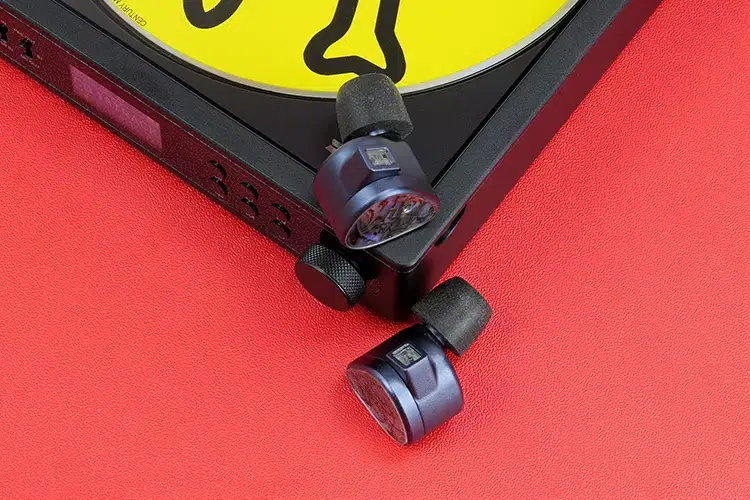
I tested the DM15 R2R with the FIR Audio e12, Empire Ears ESR MKII, TANGZU’s Monkey King, and the Campfire Audio Fathom. This is an eclectic mixture of bass-heavy tuning, reference-sounding BA, and warmer tuning.
No question the DM15 R2R loves a good bassy heavy IEM, but surprisingly, that warm presentation didn’t seem to diminish the mids’ clarity of space in IEMs I had expected to do less well.
For example, the e12 and the Monkey King are monster bass IEMs and sounded deep and heavy hitting on the DM15 R2R in stock mode. There is absolutely no need to revert to the Magic BASS settings on this player to maximize the bass response on these two monitors.
To make sure I was not hearing things, I threw in two more monitors with quality bass, the Noble Audio Onyx and the VE PRO, and it was the same response, though more so the Onyx than the VE PRO. Both monitors exhibited strong depth, sub-bass density and presence, and a generally fulsome sound up to the mids.
Beyond, and where dynamic transitions to BA for these hybrids, the BA timbre was smoother and a degree richer, though the upper-register percussion interplay had a little hardness to it.
The DM15 R2R is generally very analog-sounding, but not quite as refined for upper-mids instruments and vocal sibilance as higher-tier players such as the EC Zero T.
The surprising aspect was the Fathom’s performance with the DM15 R2R. It has a bit of bloom and a generally warmer sound signature, so I was expecting this to sound quite soft and perhaps too rounded with a lack of air.
However, there was space in the mids and just enough contrast in the upper-mids to prevent the sound signature from sounding veiled or too dark.

Headphone Pairings
For the headphone pairings analysis, I focused on the DM15 R2R’s D.Mode and the differences it made to the performance of 3 headphones with varying loads, including the DCA NOIRE XO, the Austrian Audio Composer, and ZMF Headphones’ Atrium Closed (Olivewood Ltd. Edition).
All three headphones sounded better to my ear with D.Mode turned on. Not that you cannot reach a satisfactory level of volume, or in the case of the Composer, the dynamic range, but rather the additional power fleshes out the low-end significantly, creating a much deeper and more powerful performance.
For example, the Atrium Closed sounded shallow and flat without the D.Mode. The vocals had good presence, but the staging was not at the level I know it can produce.
With D.Mode, the lows sounded fuller and more impactful with improved vocal bloom, stretching the staging height significantly and giving the Atrium Closed that joyful sound I know it can produce.
Is it a high-end OTL sound? No, but this version of the Atrium Closed needs depth to come close to its capabilities, and the DM15 R2R delivered that.
The NOIRE XO’s timbre sounded smoother with D.Mode. There was less of a dramatic uptick in bass solidity compared to the Atrium, but enough to add a bit more even-harmonic strength to the mids and smooth out vocal performances. Without D. Mode, I found the vocal timbre a bit raw and edgier sounding.
The Composer’s bass sounded more impactful and powerful with D.Mode; however, I didn’t quite gel with the upper-mids and lower highs synergy.
It sounded a little rough for my tastes, with slightly edgier percussion and upper-register vocal timbre. Still, I much preferred it to the shallower non-D.Mode sound.
