

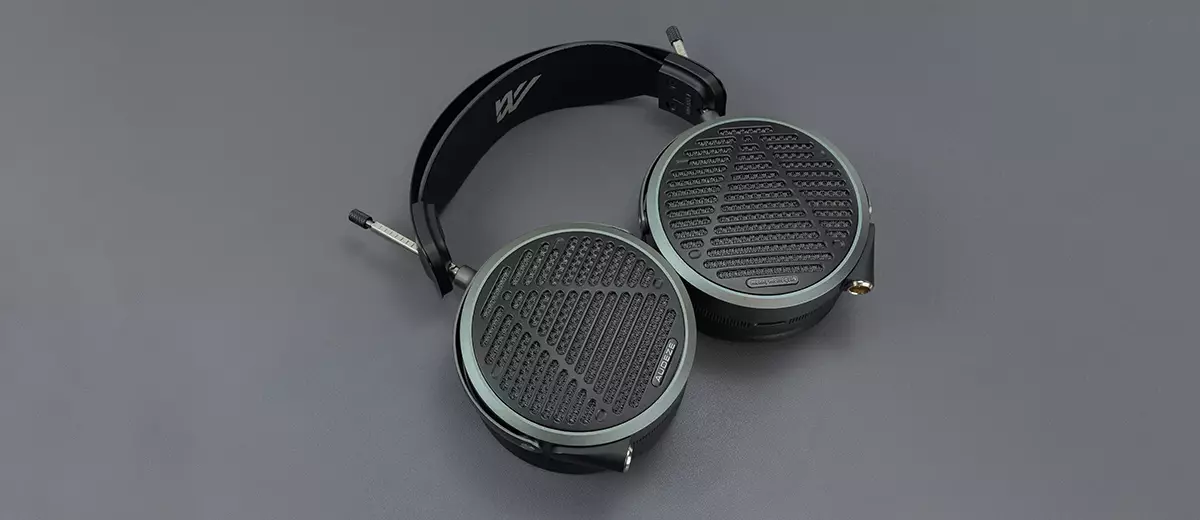
Synergy
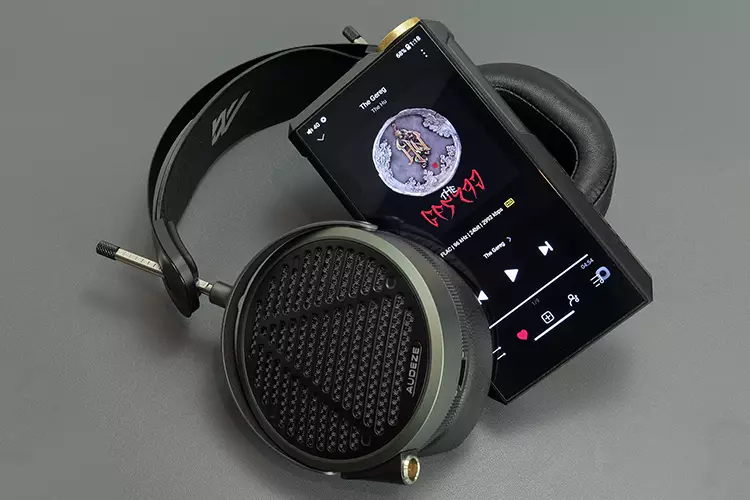
Portable Pairings
I paired the MM-520 with the FiiO M27, iBasso’s DX340/AMP18 combo, the ONIX Mystic XP1, and the iBasso D17 Atheris.
If there is one general theme that came out of the portable pairings testing, it’s this: power makes a difference, be it gain levels or dedicated DC inputs opening up higher voltage levels.
Not that you cannot get a decent sound without doubling down; rather, the dynamic range, staging depth, and low-impact sounds a lot more convincing the more headroom you add to the amplification.
For example, the ONIX Mystic XP1 delivers the best MM-520 bass weight and power of the four, but only in high gain in battery mode. Once I dropped down to medium gain, the bass sounded flatter, giving the presentation a midrange-bias.
Switch it to a DC input via its M-Power connection, and it’s by far the most driven sound of the 4 units. If you want bass, this combo will give it to you, but at the slight cost of treble refinement with a harsher percussion sound than the other units.
With DC input, both the M27 and the DX340 sounded far more convincing than on battery mode alone.
The M27’s dynamic range, staging width, and vocal impact are excellent, though I find its fidelity and staging spatial delicacy not quite as convincing as the DX340/AMP18. It sounds neutral, but more like a blunt instrument than the precision of the DX340/AMP18.
The D17 really does not need additional power to drive the MM-520. It has plenty of headroom with a smooth, airy, analog sound with good vocal presence in NOS mode.
It’s not quite as refined as the DX340/AMP18, but the vocal weight and bloom will suit those who want more midrange verve in the MM-520’s performance.
Desktop Pairings
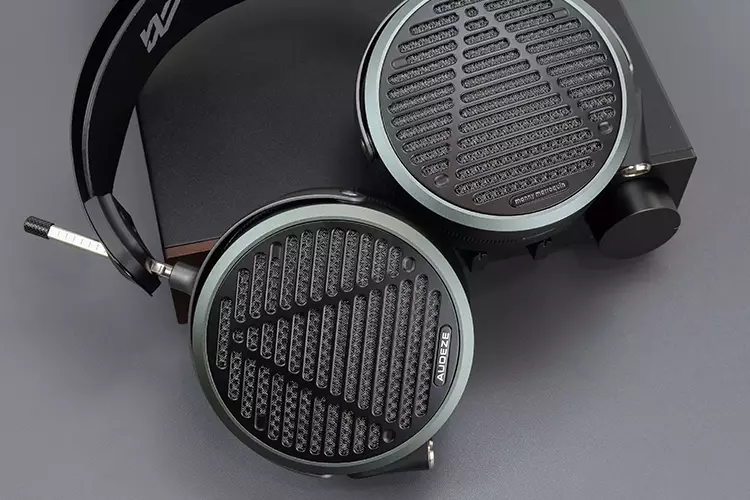
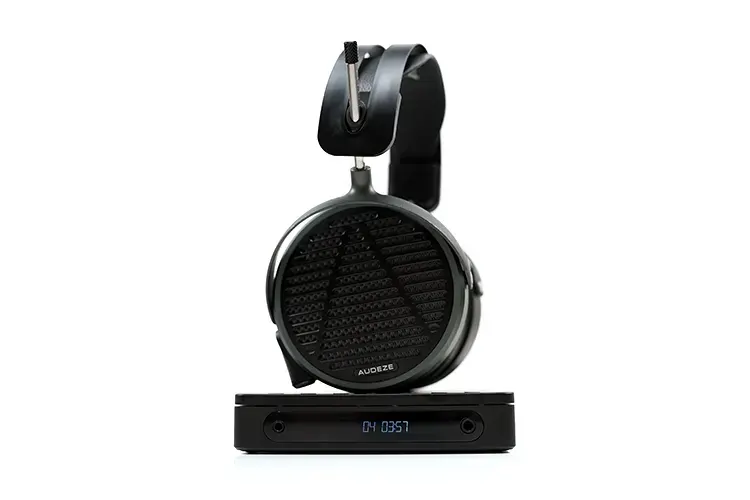
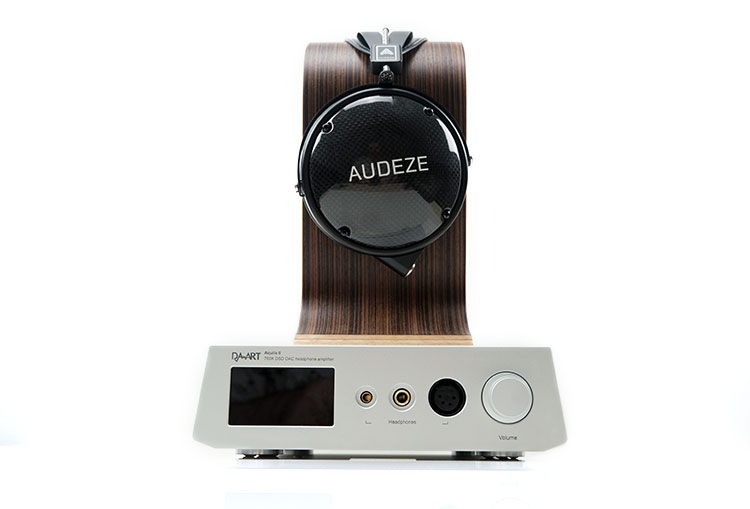
For desktop work, I paired the MM-520 with the Chord Electronics Alto and the Ferrum OOR with the WANDLA GSE feeding them both. I also tested it with the standalone options, including the Topping DX9 Discrete and the Chord Electronics Hugo TT2.
With excellent output from all four amps, the question comes down to coloration and resolution.
Of the four, the Hugo TT2 produced the fastest transient response and the best level of micro-detail from the MM-520. With the M Scaler attached, the harmonic balance was very clean and controlled, especially with taming sibilance, an area that the OOR/WANDLA GSE combo fell down a bit on without adding DSP.
The Alto/WANDLA GSE would have been my pick for its more flamboyant low-end response and super smooth mids and highs from the MM-520. It’s the basshead pick but with two caveats.
The first is gain levels; the Alto almost has too much, leaving very little useable volume headroom before the MM-520 sounds too loud. The second is the pointed vocal imaging, which for some, might be too in your face combined with more limited staging width from the MM-520.
The DX9 Discrete was the polar opposite, with neutral vocal imaging, a flatter bass response from the MM-520, and a very wide soundstage. It lacks a bit of the Alto dynamics and is not as refined as the Hugo TT2, but it does present a very airy, open sound which I liked.
The OOR was slightly disappointing. Not because it sounded bad, but rather it didn’t bring anything noticeable over the other three. It’s clean, punchy, with more neutral imaging.
However, without adding spatial enhancement and tube mode, it can sound sharper on the MM-520 mids with a relatively compact flat soundstage.
Selected Comparisons
The following comparisons to the Audeze MM-520 were completed using a mix of the Ferrum OOR/WANDLA GSE, the Topping DX9 Discrete, and the Chord Electronics Alto.
Audeze MM-500
The Audeze MM-500 debuted in mid-2021 and was positioned as part of Audeze’s then-fledgling Professional Series lineup with a matching $1699 price tag.
Technical & Design
I have gone through plenty of this comparison breakdown already in this review, so I will keep this section tight.
Both are what I would call Audeze’s modern minimalist-designed LCD series open-back planar headphones with a gunmetal exterior and the latest rod/headband adjustment system pulled from the LCD-5, with aluminum frame and cups.
The key external differences are the MM-520’s knurled ring for the new SLAM technology, 180° articulating capability, detachable magnetic pads, and a more streamlined chamfered finish on the cups.
Weight is perhaps significant for some at an additional 55g; however, the improved memory foam pads on the MM-520 create a softer contact point, making it more comfortable on the side of the head.
Inside, both use the same 90mm driver, a lower-impedance single-sided Fluxor™ magnet array (14 magnets in total), and the Ultra-Thin Uniforce™ diaphragm.
However, the MM-520 driver has been refined with a focus on midrange performance and incorporates SLAM technology, thereby enhancing sub-bass presence more than the MM-500.
The load is unchanged at 18Ω; however, the MM-520 is slightly more sensitive by 2 dB at 102 dB/mW, which you can pick up on during extended listening with quality amps.
Performance
There are some obvious differences, or what I call the unsurprising ones. The sub-bass is more elevated on the MM-520 to around 80-100Hz; the 500Hz to 1K region has significantly more gain, whereas the 2-5k region has significantly less.
The resulting emphasis and coloration is thus weightier, with enhanced depth and more power from the MM-520, especially with amplifiers such as the Alto, known for teasing out excellent lows in headphone pairings.
Vocals can sound more prominent with a stronger fundamental frequency on the MM-520 if they register in the 1k region or slightly lower. Percussion
Both have relatively mild treble intrusions, but given the MM-500’s stronger upper-mids elevation, it picks up more treble influence in percussion timbre, providing more tonal contrast and a drier sound.
The MM-520 has a more rounded, smoother tonal quality, with a gentler attack and slightly longer perceived decay in the upper-mids.
The one difference I was not expecting was the imaging performance from the MM-520. It’s vastly superior to the MM-500. I was expecting the superior depth, but I thought it might be a little darker given the measurements posted on the company website.
That wasn’t the case. The stage had true 3-dimensional depth, superior width, and more complex layering with a blacker background than the MM-500 from the paired amps. The MM-500 sounded quite flat, withdrawn in some ways.
That is not to say the MM-520 is suddenly a cavernous performer. Rather, it’s handling the compact soundstage with more confidence, delivering more detail to the listener in a more engaging manner.
Audeze LCD-X (V1)
Unfortunately, I do not have the LCD-X 2021 to compare with, but I do have the original LCD-X launched in 2013/14, which might present a very nice summary of Audeze’s tuning goals from the early years to now.
Technical & Design
The open-back planar LCD-X and, to some extent, the 2021 version, have that classic LCD design vibe.
It’s a heavier headphone than the MM-520, with a larger form factor, complete with plated mini-XLR extensions on the original and more streamlined but still comparatively wedgy alternatives on the 2021.
Since it houses a larger 106mm planar driver, the cup sizes are suitably sized, reinforcing the perception of girth compared to the MM-520’s sleeker cup, which accommodates the new smaller 90mm variant.
The older but larger 105mm planar transducer had a thinner diaphragm than the pre-Fazor LCD-2. Still, since then it has undergone significant tweaks to diaphragm thickness and size, with the MM-520 using an Ultra-Thin Uniforce diaphragm.
The original is also dual-sided for its N50 magnet array as opposed to the MM-520’s single-sided design, which contributed to its heavier 611g weight compared to the MM-520’s lighter 555g.
On the head, the older LCD-X has a looser clamp, a roomier inner pad cavity for the ears, and a stronger vertical pressure bias. It’s not as secure on my head as the smaller, lateral-heavy MM-520 fit, which feels slightly comfier due to the new pads.
And yes, the LCD-X does not have detachable pads. It uses the older, albeit very comfortable, stick-on wedged leather pads, making them less easy to change.

Performance
The LCD-X has one major advantage, and that is soundstage size courtesy of that larger driver.
However, size isn’t everything (right?), and that’s where that old-school pre-Fazor sound gets more of a mixed reception, with some decided wonkiness in the mids and highs that sound a lot smoother and more coherent in the MM-520’s more compact, yet surprisingly well-adjusted staging presentation.
As a result, the LCD-X is physically wider, but the MM-520 provides far better contrast on spatial cues, making instrument placement incredibly easy to pick up.
If you are a fan of the old-school Audeze sound, the legacy LCD-X delivers a stronger mid-to-upper bass tone from 100Hz to 500Hz.
However, it’s not as elevated as the MM-520 from 50Hz down to 20Hz. Instead, it has a gentle nudge from 20-30Hz that can add some satisfying physicality to its punchier mid-bass performance.
The LCD-X’s 1-3k region is more pushed for me, pulling you closer to the singer. The MM-520 leans back a little, creating a slightly softer, denser sound.
The midrange push from the LCD-X can sound quite engaging, save for the fact that there is quite a bit of suck-out from 3-5k combined with a lifted lower treble tuning that creates a bit of harmonic dissonance.
You get that classic zingy tonal quality with a slightly drier sound that can fatigue more than the smoother MM-520’s mids.
From 2k onwards, you can sense that lack of control from the LCD-X’s performance, leaning dark but marred by isolated metallic spikes. The MM-520 is smoother throughout with fewer bumps and valleys, so ringing is not an issue here.
Audeze LCD-XC
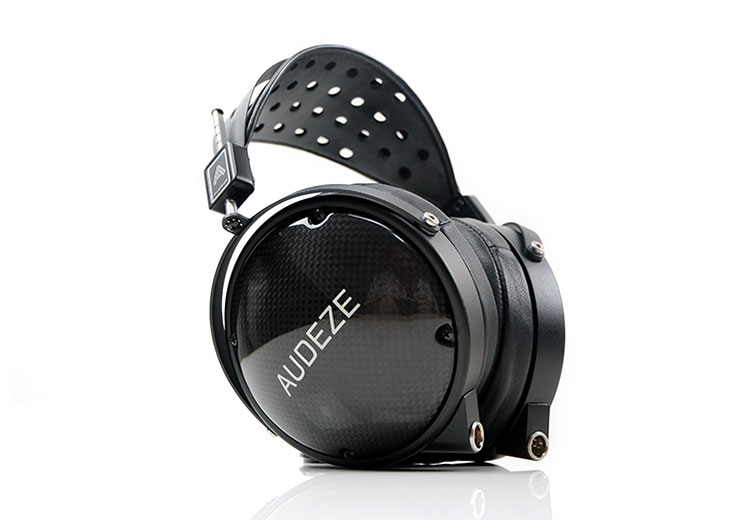
The Audeze LCD-XC 2021 was released in the same year as its title and represents the latest iteration of the company’s stalwart closed-back headphone, and is currently positioned in their Professional Series lineup.
Technical & Design
The 677g closed-back planar LCD-XC is a very different proposition to the 555g open-back MM-520.
Closed-backs tend to be a bit heavier, and given the LCD-XC 2021 follows the classic LCD frame and cup size, it will feel a much bigger proposition on the head and in the hand.
Still, it’s a striking design with the carbon fiber plates sitting astride the larger 106mm driver-sized cups, complete with an arch dual headband and thick leather pressure strap.
The old rod-and-block system is clunky compared to the smoother action of the new pivotless system on the MM-520, but it’s usually a set-and-forget sizing for me, so the initial awkwardness is fleeting.
The LCD-XC 2021 fit is surprisingly comfortable for a heavy headphone due to the wide cavity wedge leather pads. It does have a greater downward vertical bias in its fit and can be a little wobbly during rapid movement, not to mention that the pads are not detachable.
The MM-520 is more secure on the head with heavier lateral clamping. It can feel a little more claustrophobic on the head compared to the LCD-XC 2021, but again, good pad choices make it a comfortable fit with good pressure balance.
Inside, the LCD-XC 2021 uses the older 106mm 106mm diameter planar but with the MM-520’s Ultra-Thin Uniforce™ diaphragm, Fazor, and a dual-sided N50 array.
Load and sensitivity are comparable at 20Ω and 100 dB/mW for the LCD-XC 2021, just slightly less efficient but should work equally as well as the MM-520 on a good quality amplifier.
Performance
The LCD-XC 2021 represents the previous iteration of the Audeze house sound associated with the MM-500 and the LCD-5, though with closed-cup acoustics.
That being said, it’s a big driver with a big soundstage, impressively so for a closed-back planar headphone.
The MM-520 does not have an advantage here despite being an open-back. You could argue that an ‘acoustic wall’ is there for the LCD-XC 2021, but it’s so far back before any notes hit that it’s not really an issue for me.
What the MM-520 does better is depth, noticeably so. In fact, the LCD-XC 2021 bass line is so neutral and flat it really does not add much in the way of weight or power to the sound signature, creating a somewhat light and lean tonal profile in the mids.
The MM-520 is beefier and fuller-sounding throughout, so whilst perhaps not as clean and airy in its delivery, it’s definitely more pleasing in terms of appropriate note weight and harmonic balance.
The leaner nature and higher tonal contrast of the LCD-XC 2021, combined with a stronger lift from 1-3k sound, creates a higher level of presence in the mids. Perhaps some will find this too forward for their tastes; others might appreciate the clarity.
The MM-520 is pushed from around 600Hz-1k, but it’s not as pointed as the LCD-XC 2021’s performance and has better low-end support. It’s going to sound relatively forward in this region but still quite smooth and even in its delivery.
You would need a bit of EQ on the mid-bass and lows of the LCD-XC 2021 to create the necessary power required for lower-mids instruments to compete.
My Verdict
The open-back planar Audeze MM-520 headphones officially join the ‘SLAM’ club with its additional low-end power, staging depth and smoother, more agreeable tuning over its predecessor, the MM-500.
Those who felt the MM-500’s leaner, cooler, and more aggressive midrange sound signature was on the fatiguing side will find a happy home with the MM-520’s fulsome, more forgiving performance.
And my goodness, how good is the imaging for a compact headphone soundstage? Impressive stuff.
On the flip side, the MM-520 is less suited to those who prefer bite, fizz, and a very filled-in upper-mids and treble response. It lacks the heightened contrast of old-timers such as the LCD-X or the more refined MM-500 from 2021.
Given that the MM-500 was a major player in Audeze’s previous tuning iteration, I suspect we are less likely to hear that tuning in their future headphones.
SLAM and a more natural ‘heavier’ presentation seem to be the future, with the MM-520 a welcome representative at this price point.
Audeze MM-520 Technical Specifications
- Over-ear (circumaural), open-back
- Transducer type: Planar Magnetic
- Magnetic structure: Fluxor™ magnet array
- Phase management Fazor™
- Acoustic management SLAM™
- Magnet type: Neodymium N50
- Diaphragm type: Ultra-Thin Uniforce™
- Transducer size: 90 mm
- Maximum SPL >130dB
- Frequency response 5Hz – 50kHz
- Impedance 18 ohms
- THD <0.1% @ 102 dB SPL, 1 kHz
- Sensitivity 102dB/1mW (@Drum Reference Point)
- Minimum power requirement:> 100 mW
- Maximum power handling: 5 W RMS
- Weight 555g
- Shipping Weight: 6 lbs
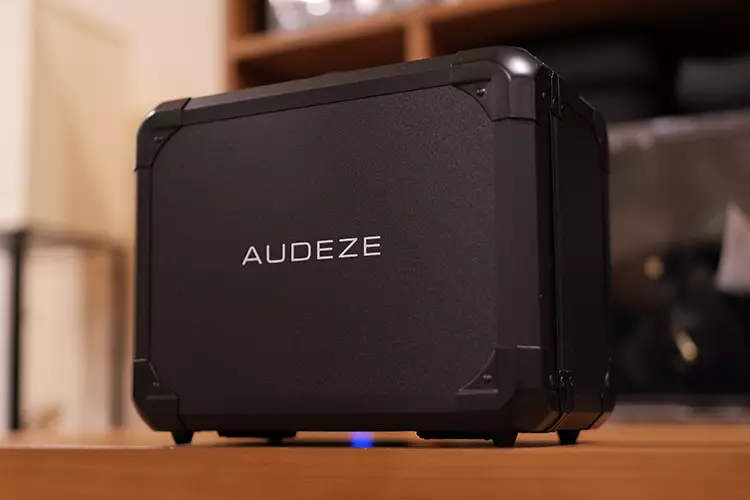
- Package dimensions: 16 L x 14 H x 8 W in
