

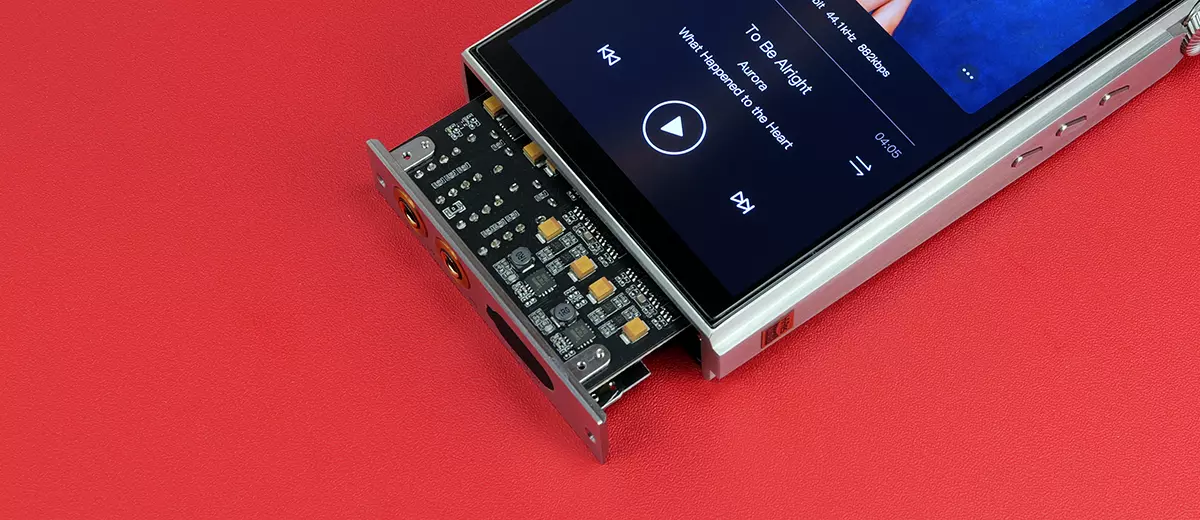
Marcus reviews the iBasso AMP18, the latest DX series modular 1.7W-capable amplification card featuring two-stage amplification architecture. It is currently priced at $329.
Disclaimer: I received this sample in exchange for my honest opinion. Headfonics is an independent website with no affiliate links or status. I thank iBasso for this opportunity.
Click here to read more about the iBasso products previously reviewed on Headfonics.
This article follows our current scoring guidelines, which you can read in more detail here.
The iBasso AMP18 is the newest release and part of the latest generation of amplification motherboards, exclusively designed for their DX3XX series of DAPs.
It usually comes ready-to-fit on the DX340, but with an additional $29 faceplate adaptor, it will work just fine with the DX300 and DX320.
Priced at $329, the AMP18 is the 4th card in this series, with AMP15 packaged as the DX340’s stock card, the AMP16 NuTube card released shortly after at $269, and the penultimate card, the AMP17, priced at $299.
For those in a hurry, the balanced-only AMP18 delivers a similar level of power and technical capability to AMP17, but swaps out AMP17’s energetic neutral sound signature for a smoother, more analog tone. Arguably, this is the ‘relaxed cousin’ of AMP17.
How does AMP17 perform and compare with the other AMP cards, and which is the most suitable for your tastes and gear? I found out in my full review below.
Features
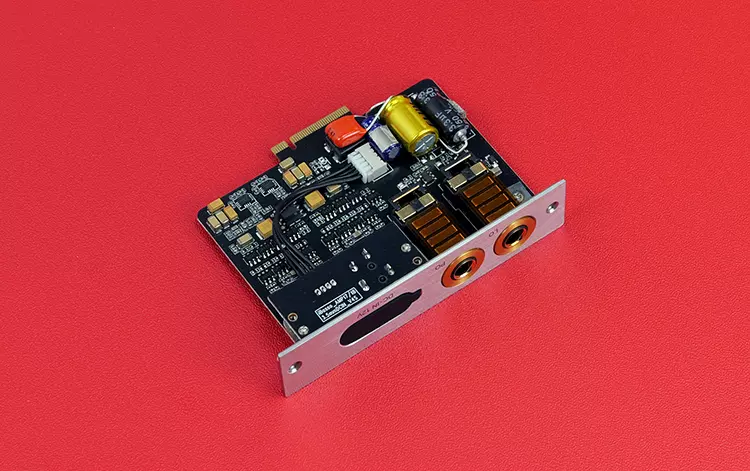
Like AMP15 and AMP17, AMP18 is a solid-state-based amplifier card, with AMP16 the only outlier with its tube implementation.
Though both cards have discrete-engineered topologies, AMP18 switched from AMP17’s specialized GaN semiconductor and is now designed with a dense 80-transistor matrix comprised of 40 dual transistors.
It also uses a cascaded current-feedback circuit to enhance its transient response and dynamic-range performance.
AMP18 deploys a two-stage amplification structure: a low-noise op-amp input stage combined with transistors to restore source detail, followed by a current-mirror amplification stage with complementary outputs for current-output to enhance signal purity and clarity.
There does seem to be a similar level of headroom from AMP18 compared to AMP17, with up to 1740mW available on a 32Ω load using its 12V DC power supply input, a power feature on all of these next-gen cards.
It’s not quite the 1.9W from the AMP17 on the same power setup and load, but without DC power, the battery performance of AMP18 is slightly stronger at 1170mW on 32Ω than the 1030mW from the AMP17 on the same load.
Output impedance is listed at 1.2Ω, which is a nudge higher than AMP17’s official 1.1Ω. Not enough to be concerned about impedance skew, but it might help suppress any perceived noise in the process.
Design
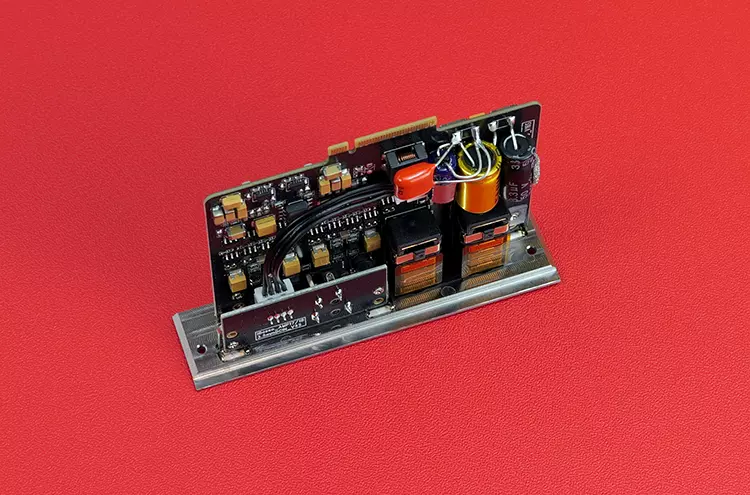
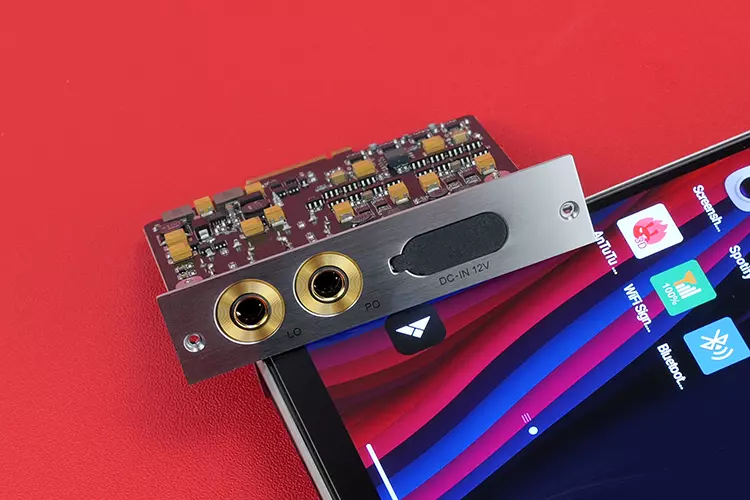
Because AMP18 slots into the DX340 and essentially disappears with only its front 316 Stainless steel panel visible, there is not a huge amount to say regarding aesthetics, other than the PCB Board feels fairly weighted in the hand compared to the older cards.
The PCB component size is more or less the same as the AMP17 version, so it is a little bit narrower than the AMP16 and AMP15 PCB builds
The AMP18 is a balanced-only PO/LO design with no 3.5mm options, so the front panel only has two 4.4mm connections on the left side of its 12V DC Input, which is protected by a rubber flap.
Battery life is slightly down on AMP17 from my anecdotal observations, particularly if you push its current delivery.
AMP18 is designed to provide greater current output on battery power than AMP17. If you are using headphones that require extra current, you should expect to lose roughly 1–1.5 hours of battery life compared to the AMP17.
Installation
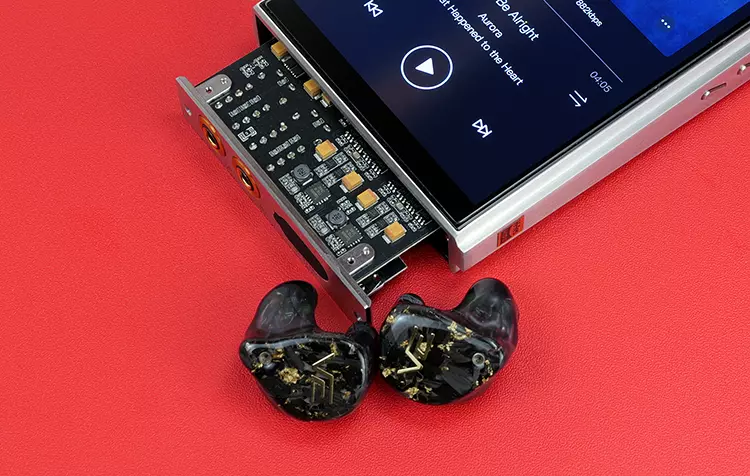
For those installing AMP18 for the first time, the cards slide in and out of the DX340 base panel. At the deepest point in the slot, there is an edge connector slot that lines up with the equivalent connector on the card to ensure it is recognized by the DAP.
The cards are held in place with two tiny T4 Torx or HEX screws on the front panel, with a matching screwdriver included in the accessory packaging.
For DX300 and DX320 users, AMP18 comes with an additional faceplate to ensure the card is 100% compatible. Be mindful to disconnect the DC input during the panel swapping process, as the older DAPs do not use that feature.
Still not a huge fan of the tiny screw locking system, as these HEX screws are easy to lose. Hopefully, iBasso can figure out a locking system that is more integral to the main chassis in future editions.
Packaging & Accessories
The AMP18’s packaging is tried and tested, and nothing fancy. You get what you need to have it shipped safely to you and to be able to install it in the DX340.
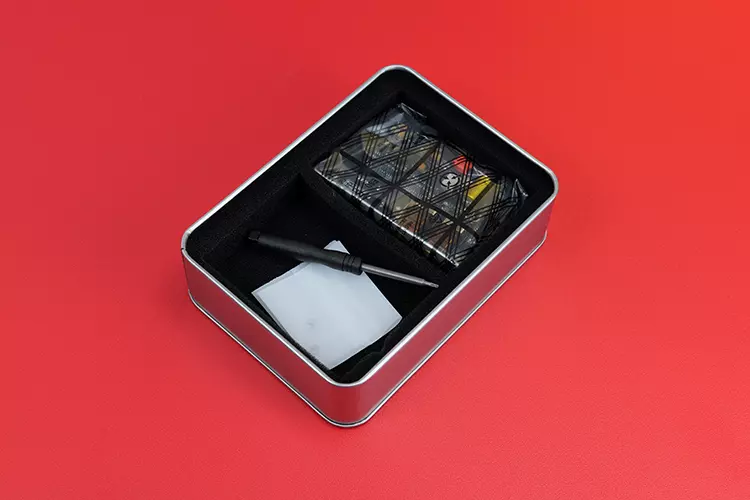
It comes in a fairly compact, silver steel rectangular tin inside a white box and houses plenty of protective foam and static bagging for the card and accessories.
The foam forms two distinct trays. One holds the card sealed inside an anti-static bag, and the other has two bags of spare screws and a screwdriver. You also get a warranty card with your serial number.
Sound Impressions
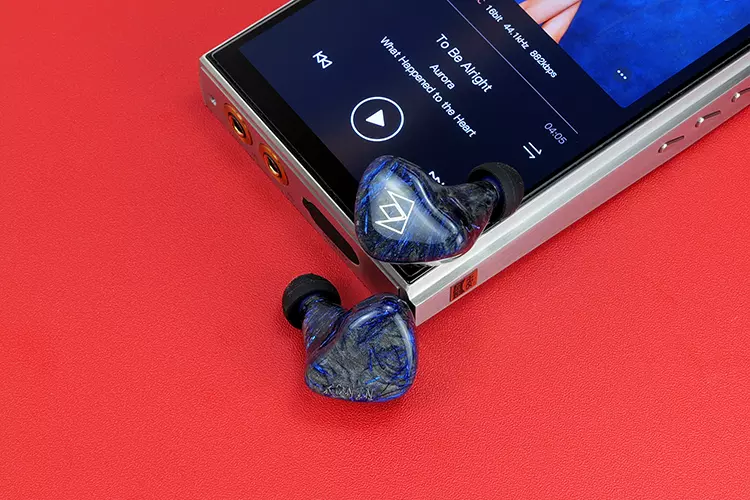
The following sound impressions of the iBasso AMP18 were completed using the DX340 as the main DAP, along with the PMG Audio Apx (V1), Vision Ears’ VE ZEN, the Noble Audio Ronin, and the Volk Audio ÉTOILE IEMs.
Summary
AMP18 is the smoothest, most analog-sounding card in iBasso’s latest series that I have heard to date.
It’s a beautiful contrast to the punchy, higher-contrast sound of AMP17, but still retains the technical capability of its sibling, sounding deeper and more involving than AMP16 and AMP15.
In some ways, it reminds me of a well-engineered, typical Class A desktop amplifier sound, rather than the more energetic Class AB delivery from the other solid-state cards.
It has robustness in the lows, a fuller-sounding instrumental and vocal note weight, lengthier note decay, and a slightly attenuated set of highs.
I find the presentation relaxed but spacious and detailed, ideal for those who enjoy longer listening sessions but want to avoid fatigue from some of their paired IEMs and headphones.
It’s a fantastic card for balancing out IEMs that have a bit of an edge to their upper-mids, such as the PMG Audio Apx, an IEM that can sound brash and hot with the more upbeat, cooler tone of AMP17. With DC input, hotter headphones such as DCA’s NOIRE XO sound more natural and easier to my ears.
I would not describe the overall coloration as overly lush, per se. Rather, it’s not as in-your-face as AMP17’s bombastic delivery. The detail is there, just not as chiseled or sparkling as the more neutral cards.
IEMs such as the VE ZEN will sound quite relaxed for some. Given its already dense sound signature, the space and air are very good, avoiding that cloying sensation with overly dark matchups.
The only outlier is AMP16’s tube mode, which also delivers a smooth, analog tone. However, its dual Raytheon JAN6418 tube implementation still has a slightly brighter, rawer sound that does not sound quite as refined or as spacious in its delivery compared to AMP18.
Synergy
IEM Pairings
I tested AMP18 with the PMG Audio Apx (v1), Volk Audio’s ÉTOILE, the Noble Audio Ronin, and the custom Vision Ears VE ZEN.
With all of these pairings, it really felt like it was all about the mids in terms of vocal imaging and how clear and airy they came across. In short, a neutral card for warm IEMs and AMP18 for neutral-to-bright IEMs felt about right.
I say this in context to other cards, such as AMP17 and AMP15, which tended to emphasize a slightly brighter tone, particularly with the Apx upper-mids, which can be unforgiving with sharper treble overtones in vocal timbre, aka sibilance.
With AMP18, the Apx sounded almost perfect to my ears with next to no sibilance, and a lovely, even-harmonic smooth delivery of vocals that AMP17 would often struggle to present without a little sharpness creeping in.
Conversely, I felt AMP18 was a little too soft and relaxing-sounding with the already warm and smooth VE ZEN. This is where more neutral and dynamic cards, such as AMP17, come to the fore with their drier, higher-contrast tone.
AMP18 sounded clear with good staging depth, similar to AMP17, but the rounded tonal quality and relaxed vocal delivery sounded a shade too dark for my tastes.
Ronin and ÉTOILE hit the middle ground with AMP18. Zero issues in coloration, and the relaxed mids suited the mid-forward sound of the ÉTOILE quite well. Not once did I find the Volk Audio tuning fatiguing or too mid-dominant.
The Ronin won’t magically show a ‘phat bass’ with AMP18, but the perception of body in general improved over AMP15, with excellent height and midrange presence combined with a smoother vocal timbre.
Headphone Pairings
The AMP18 headphone pairings followed a similar pattern but with the additional variable of using the DC input, which changed things significantly.
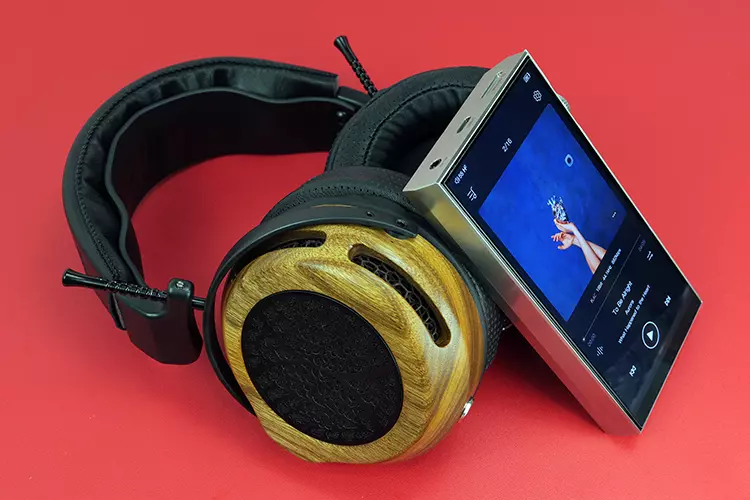
My pairings included the easy-to-drive Austrian Audio Composer, and two more demanding open-back planars, the ZMF Headphones Tessidera and DCA’s NOIRE XO.
Both the planar headphones really needed high gain at the outset to sound adequately driven by AMP18. Mid or low gain just used up far too much volume, and even at high gain, there was a certain politeness to both the Tessidera and NOIRE XO’s performance.
Once the DX340/AMP18 combo was hooked up to a high-gain DC input, the bloom in the mids and snap in the bass performance were very obvious. Everything sounded fuller and more dynamic in its delivery, particularly vocal impact and staging depth.
The Composer will give you a more dynamic presentation, but I felt it was less needed with the AMP18/D340 pairing.
This is a headphone that can happily run off a low-gain, high-volume setting, and in fact, it sounded a little more soothing to my ears in the upper mids without DC Input.
Tonally, the NOIRE XO sounded ‘neutral-to-natural’ with AMP18. It’s a headphone that leans bright and less forgiving with AMP17, but with AMP18, it sounded more natural and less fatiguing.
The Tessidera has a fairly relaxed, warm tuning to begin with, so it will not magically turn into a reference headphone with AMP18.
If you want to keep that relaxed, smooth ZMF sound, then AMP18 is a good pick. However, if you want more energy in its performance, I would probably pick AMP17.
Click on page 2 below for my recommended pairings and selected comparisons.
