

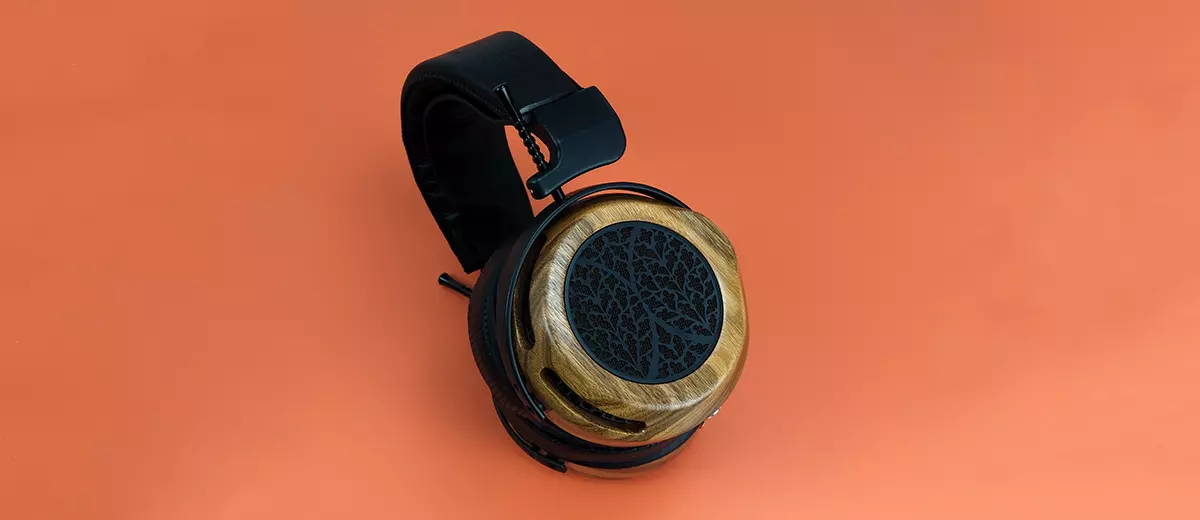
Marcus reviews the ZMF Headphones Tessidera, a new set of high-end open-back headphones featuring a 1-micron-diaphragm planar-magnetic driver. It is currently priced at $2499.99.
Disclaimer: This sample was sent to me in exchange for my honest opinion. Headfonics is an independent website with no affiliate links or status. I thank ZMF Headphones for this opportunity.
You can click here to learn more about the ZMF Headphones products I have previously reviewed on Headfonics.
This article follows our latest scoring guidelines, which you can read in more detail here.
The Tessidera is the 3rd high-end planar magnetic driver headphone in the current ZMF Headphones lineup. Priced at $2499.99, it is a step below the flagship Caldera (and with it the Caldera Closed).
However, the Tessidera benefits from a trickle-down effect of several Caldera engineering principles. It also introduces some novel features of its own that could provide a stable platform for subsequent releases thereafter.
On a high level, the sound signature is closer to the smoother Atrium tuning than the punchier, more driven sound of the Caldera. One could argue that it is closer to the house sound of ZMF, albeit with a planar driver design.
From a buying perspective, the Tessidera is a grand cheaper than the Caldera, and matches the Atrium price point with the Ori 3.0 just slightly lower in price. It is reassuring that ZMF has decided not to aim for the ‘summit-fi’ pricing territory just yet.
How does it perform in its own right and compare to the aforementioned ZMF Headphones? I found out in my full review below.
Features
The ZMF Headphones Tessidera is a set of circumaural open-back 80mm planar magnetic driver headphones. However, this is not the same driver as the one inside the Caldera, but rather a newly developed version with a 1-micron diaphragm thickness, half the thickness of the flagship version.
With thicker traces and silver plating, the Tessidera’s 35Ω has a significant efficiency increase compared to the Caldera’s 60Ω rating. However, at 92 dB/mW, the Tessidera is slightly less sensitive than the flagship by 3 dB.
The lower impedance rating provides the Tessidera with a more modern planar headphone current bias, meaning higher voltage amplifiers are not as influential. Quality-powered portable devices should be an option, as well as desktop standards for planar headphones.
Beyond the new driver, ZMF has retained its patented CAMS and ADS (Atrium Damping System) technologies, both of which are used inside the Caldera (albeit modified for the Tessidera). You can also switch pads to modify the response of the Tessidera, a long-standing feature of most ZMF Headphones.
What is new is ZAM (ZMF Acoustic Matrix) and SRS (Soundboard Resonator System), patent-pending features primarily for resonance and soundwave diffusion control.
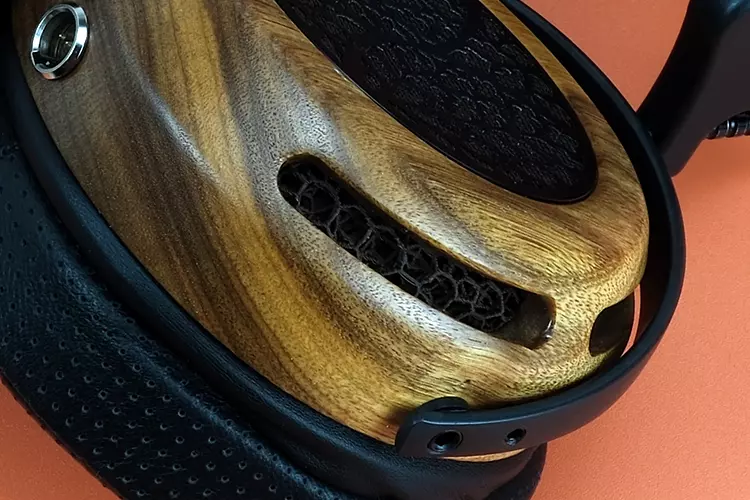
ZAM is the most physically obvious addition, with those elongated slits on the side of the cup revealing a lattice-type acoustic material construction that eliminates standing waves and smoothens out the treble, a key trait in the Tessidera’s sound signature.
SRS is a built-in wood resonator that helps to control the dynamics and realism of the Tessidera’s instrumental note resonance while keeping the mids under tight control.
Design
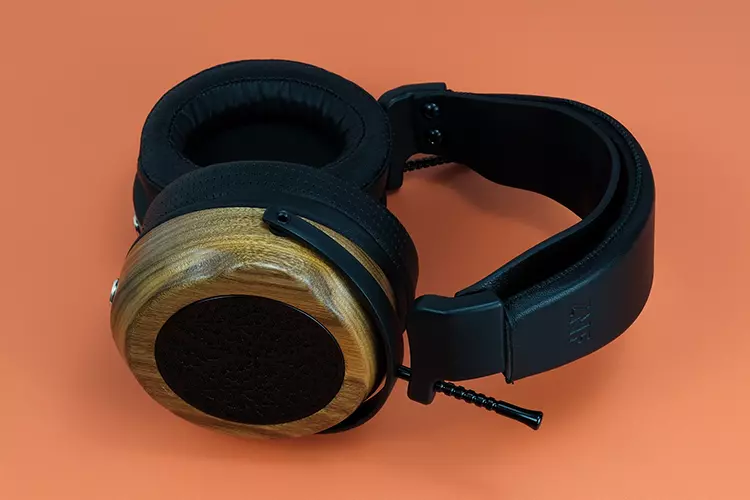
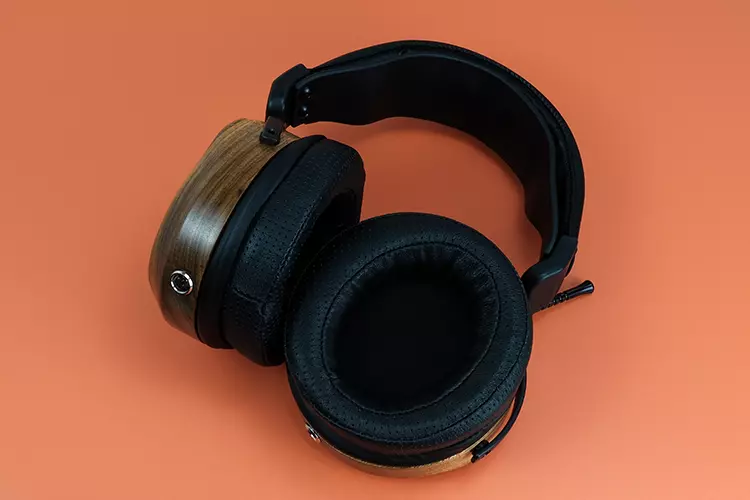
The Tessidera does not deviate one iota from ZMF Headphones’ sumptuous woody design language and full-sized form factor.
Of course, the wood changes from headphone to headphone, but the net effect is always a stunning visual aesthetic, locked in place by a mix of anodized black aluminum for the pivot blocks, gimbals, adjusting rods, and spring steel for the headband, as well as leather for the pressure strap and headband outers.
The matte grill resembles a patterned dual-leaf design and is visually more commanding than the more uniform Caldera grill. I
t is, however, a little rougher around the edges compared to the Caldera and Atrium grills. ZMF has stated there will be an alternate grille design, different for custom shop and rarity releases.
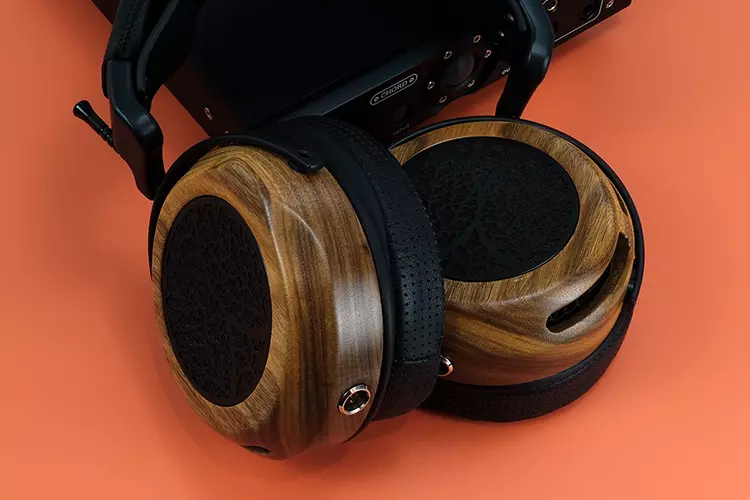
The Tessidera wood choice is polished Canarywood, a vibrant South American hardwood known for its striking “rainbow” appearance, in this case a yellow-orange hue, with dark, streaky markings.
It is closer in tone to the Caldera White Oak finish, with a slight brown tinge courtesy of the mesh covers and ZAM lattice material.
The cup shape is not a uniform circular design. There is a slight physical excursion to the rear of each cup, giving it a unique appearance.
I remember ZMF did something similar with the ‘Caldera Delta’ geometric curve on the top of the Caldera Closed cups for visual enhancements, so I wonder if this is a similar approach.
Comfort
The Tessidera is a heavy headphone, like the Caldera, with its dual-sided N52 Magnet array. It weighs around 550g in its default configuration, but you can reduce that weight a little by opting to upgrade to the lighter Mg12 magnesium-aluminum alloy frame.
The headphone frame is unchanged from previous ZMF models, with the heavily perforated wedged Caldera Lamb TSP pads stuck on by default.
That means current ZMF headphone owners will be very familiar with the resting and pressure properties of the Tessidera’s headband and pressure strap.
Despite the weight, the pressure dissipation and overall comfort levels are very good. There is no vertical or lateral bias with a moderate clamping force, mitigated by the lush memory foam properties inside the ear pads.
The adjustable crescent pressure strap, combined with the notchy rod adjuster system and the 360-degree articulation in the cups, will also give you plenty of room to adjust your head height and shape.
Pad Options
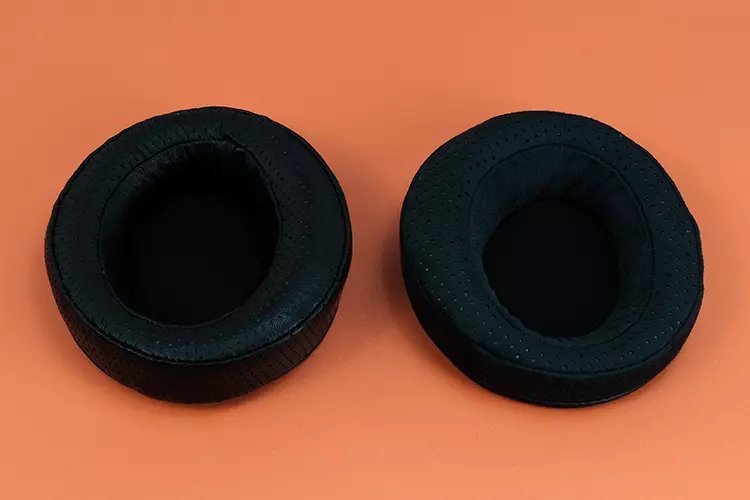
You have two default pad options when buying the Tessidera: the Caldera Lambskin and the Caldera Vegan Suede.
Both pads are slightly leaner in dimensions compared to the Caldera Lamb Thick TSP pads that I have installed on my Caldera unit, and a good deal thinner and more porous than the Caldera Lambskin Thick Top‑Perf pads installed on my Ori 3.0.
As with most of the recent pads, both default pad choices are finished with a fluted interior wall for optimal airflow control and a comfortable, wide surface contact design.
The interior opening is generous, so, unless you plan on using the leather pads in a humid climate for hours, neither should feel uncomfortable and sweaty for general use.
Fitting them is dead easy as they follow a tried-and-true slip-on at the base of the pad. You slide a bit of the pad base leather flap into a small, recessed channel at the base of the Tessidera’s exposed baffle and work your way around the cup until the entire slip is in the groove.
The only precaution you need to take is to ensure that when fitting the wedged pads, the taller side is aligned to fit behind your ear and not in front.
ZMF has sent me Vegan Suede and Caldera Thick Pads to compare to the default Caldera Lambskin options. Each will have an influence on the sound signature, which I will go into more detail on in the sound impression of this review.
Stock Cable(s)
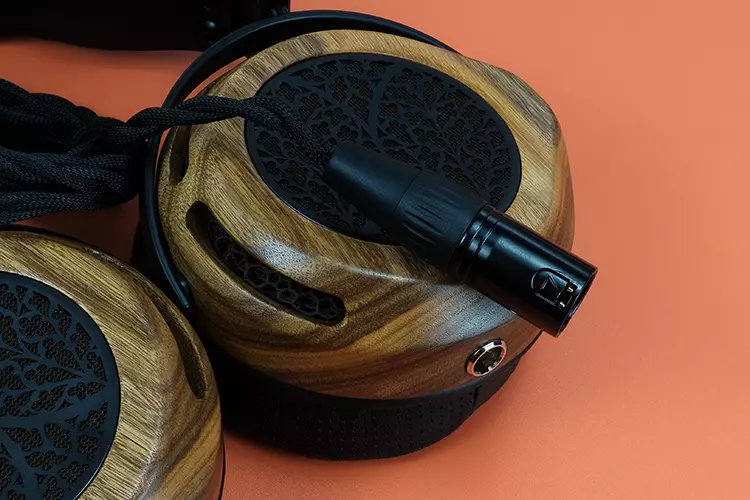
The Tessidera comes with a 5.5ft stock cable in either balanced 3-pin XLR or 4.4mm, and single-ended 6.35mm jack or 3.5mm. There is a 2.5mm balanced option, but that is an increasingly rare connection choice.
The cable uses an insulated copper wire with a twisted nylon jacket outer and is finished with a black aluminum funnel-type splitter.
These are terminated with mini-XLR pins and are terminated using the ‘ 1+ and 3- pins’. If you opt for a 6.35mm barrel, it is wrapped in heat shrink with internalized strain relief.
You can get a slightly different cable style as an upgrade called the Pro Cable, which starts at $119.99 on its own. It uses a 3N Litz coated wire OFC copper, or SPC wire in a transparent braided external jacket with some attractive black, branded splitter and barrels.
My personal preference has always been the Grand Palladium flagship cable for performance and looks. Whilst you can get that as an upgrade cable with the Tessidera, I appreciate that it is a sizeable upgrade cost starting at $499.
Packaging & Accessories
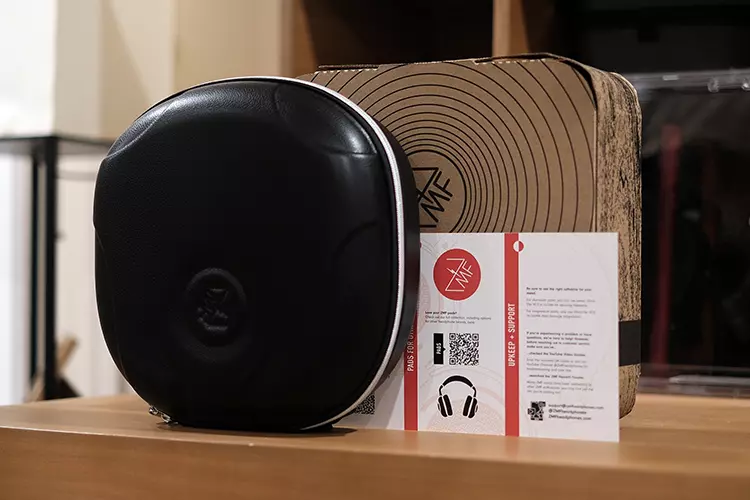
I guess it could be seen as a bit of a surprise move by ZMF to follow the BOKEH packaging and accessory line-up as opposed to the more traditional weather-sealed carry case experience they favored for the Caldera, Atrium, and Ori 3.0.
I get logistics, and weight might be a factor in keeping costs down, though, to be honest, I do like the BOKEH carry case, albeit this one comes in black rather than brown.
The headphones are packed into the carry case by default, and both come in a fairly form-fitting brown box with the usual ZMF Headphones branding on the outside.
The black leatherette case is stylish, low-profile, and specifically designed to fit the Tessidera. The insides of the case are faux fur-lined with enough space in a mesh upper to carry your cables or additional pads without any space issues.
The outer is a hardshell zipper finish with a small handle at the top, so I would be confident carrying them around without any concerns about accidental damage.
Aside from that, you also get your cable choice in a velvet black branded pouch, a black cleaning cloth, your owner’s card, and the driver’s warranty card.
Sound Impressions
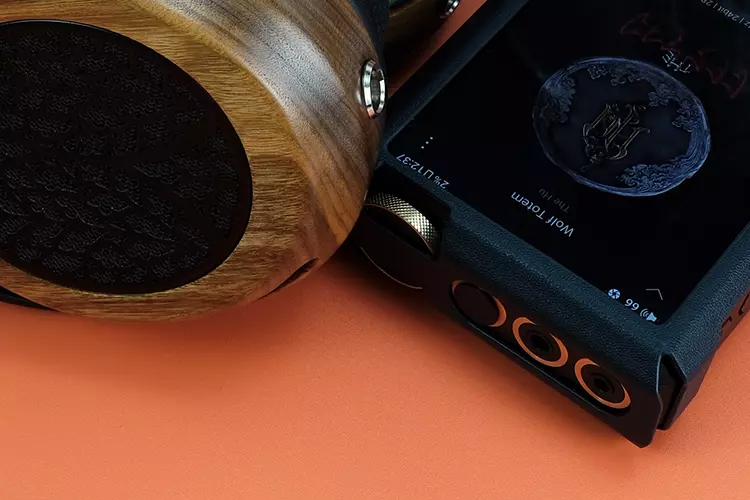
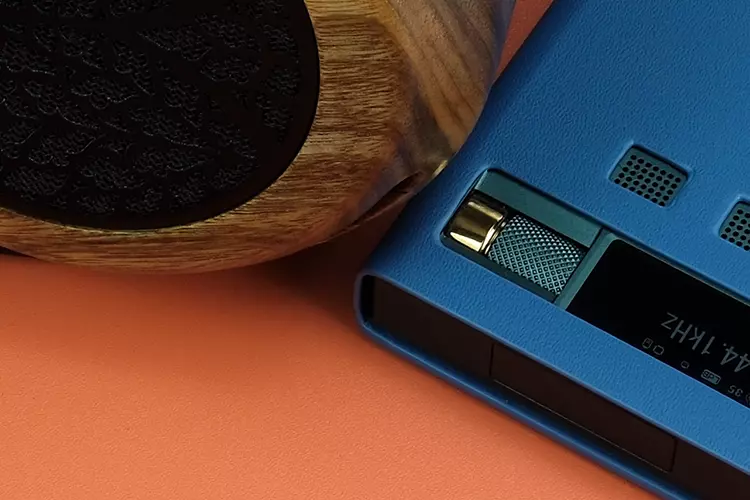
The following sound impressions of the ZMF Headphones Tessidera were completed using a mix of the Chord Electronics Alto/WANDLA GSE combo and the FiiO M27.
The default Caldera Lambskin pads, along with the stock 4-pin XLR cable with a 4.4mm extension for the Alto, were also used during testing.
Summary
The Tessidera is probably the closest ZMF has come to date in terms of their classic smooth and spacious house sound from a high-end planar-driver headphone.
If the Caldera Open is their most technically resolving planar, the Tessidera is their most emotionally engaging.
You do not need an OTL high-voltage bias tube amplifier to experience this tuning. You can run the Tessidera off a quality desktop, solid-state, tube, or portable amp. So long as the output power is decent, you will hear that presentation fairly consistently.
This is not a ‘better’ Ori 3.0; the Tessidera is less bombastic and less V-shaped. It is more coherent and smoother-sounding, offering a consistently weighted and euphonic tonal quality throughout.
If you are looking for a kindred soul, then the Atrium’s tone is a safer bet, but with additional planar traits, including speed, linear bass, and superior low-end weight.
That weight permeates the Tessidera character throughout. Notes, whilst not as sweet and airy-sounding, hit with superior clarity, and a stronger fundamental frequency, making the Tessidera an ideal switch-hitter for modern pop and EDM as well as ‘earthier’ rock and metal genres.
A gentle attenuation in the highs gives it a more agreeable treble presentation than the Caldera Open. Granted, the sparkle and height of the Caldera adds to a more dynamic and resolving sound signature, but paired with bad recordings or poor amp matches, it can sound too aggressive.
Not the Tessidera. Its smoother highs, combined with a relatively neutral vocal placement, create a clear and rich tapestry of percussion and vocal notes that rarely sound harsh.
And if you need more air and treble presence, pick the TSP Perf Suede pads. If you want more authority, switch to the TSP Perf Thick Lambskin pads, the weightiest option for the Tessidera.
Frequency Response
With the stock Caldera Lambskin TSP pads, the Tessidera has a very similar linear bass response to the Caldera Open.
It is perhaps 1-2 dB lower in amplitude across the board and up to the lower-mids, but otherwise it has the same deep extension and controlled delivery as the flagship headphones.
Where it differs is in the harmonic balance, chiefly due to the more attenuated highs, which give it that smoother, more liquid delivery compared to the Caldera’s snappier, high-contrast sound.
From 500Hz up to 1k, the Tessidera has a gradual 1-2 dB bump, so instrumental and lower-register vocals have enhanced presence, which is a key difference from something like the Ori 3.0 south-of-neutral lower-mids tuning.
The effect is a smoother bass-to-mids transition and better midrange note weight compared to the slightly leaner, less connected equivalent from the Ori 3.0.
As with most ZMF high-end headphones, the 1-3k range is tuned with some gain, with vocal imaging pushed forward for presence and impact. The Tessidera version is not as pushed as the Caldera imaging in the same region, nor does it capture quite the same level of treble coloration.
It’s a richer, more rounded midrange tone than the Caldera Open, but it’s a sound I found more engaging than the more neutral and leaner Ori 3.0 delivery.
Beyond that, the 4-8k is not as aggressive as either the Ori 3.0 or the Caldera, but offers a more consistent ‘ treble fill’ than the Atrium, providing a gentle profile, and preventing treble bleed into the mids and lower-register upper-harmonics.
Resolution is very good, but given the softer treble tuning, it lacks that final word in perceived clarity and contrast compared to the airier Caldera Open.
Pads Changes
As with all ZMF Headphones, the choice of ear pads will be a factor in the Tessidera’s presentation.
Whilst I prefer the stock Lambskin pads overall for their balanced output, you can make a case for TSP Perf Suede pads and the TSP Perf Thick Lambskin pads if you find the stock pads not to your liking.
The TSP Perf Suede pads will create a generally ‘lighter’ tone from the Tessidera. It enhances the 4-8k presence, reducing the perceived midrange and bass note weight to create an airier sound signature.
There is still some warmth there, but it’s a softer delivery and not as direct or impactful as the stock pads. If you want a bit more sparkle to the Tessidera’s tuning, then this is the right choice.
The TSP Perf Thick Lambskin pads shift the presentation to a heavier, more weighted sound, adding additional power and warmth to the lows, particularly around the 30-50Hz range. It also pushes a little harder on the 5-8k range, but only by around 1 dB or so over the stock pads.
The midrange staging quality is perhaps not as immediate as the stock Lambskin pads; there is a bit of additional distance from the perceived listener’s position, so vocal immediacy is not as striking. This is an ear pad that maximizes the Tessidera’s low-end impact and physicality.
Click on page 2 below for my recommended pairings and selected comparisons.
