

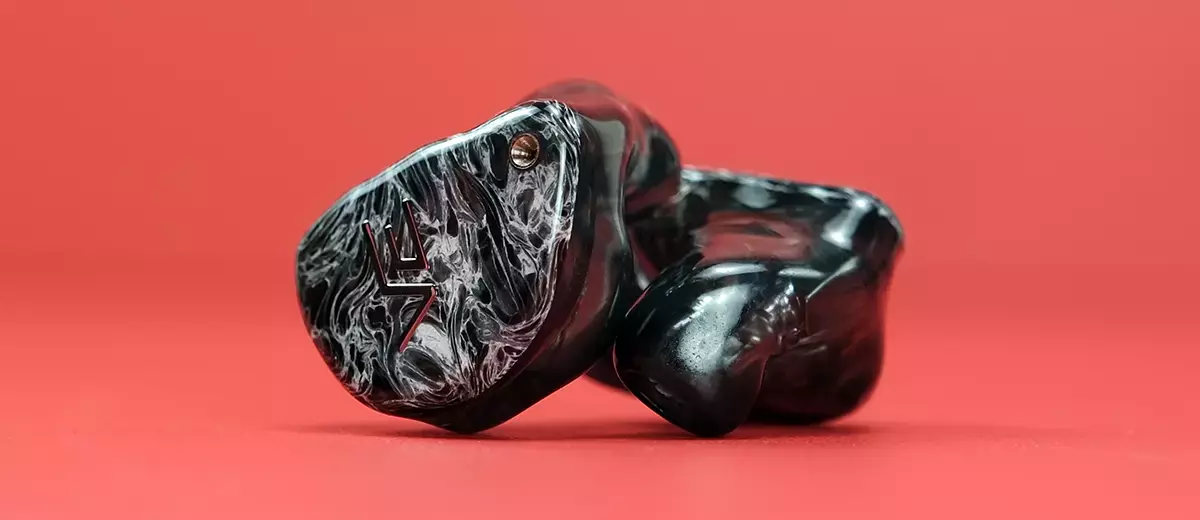
Synergy
DAP & Portable Amplifier Pairings
I tested the VE ONE with the iBasso DX340/AMP17, the HiBy RS8 II, Cayin’s N6iii/R202 combo, the new FiiO M27, and the D17 Atheris portable DAC and amplifier.
I found myself gravitating towards the more neutral or reference source/amps rather than the warmer or more organic alternatives.
I found the R2R options, such as the RS8 II’s stock tuning and the N6iii/R202 R2R mode, to create too much midrange emphasis and attenuate the VE ONE’s sub-bass.
Sure, the vocals sound beautiful, especially with the beautiful levels of detail from the RS8 II, and you will not hear a single bum note in the highs. Along with the NOS mode on the D17 Atheris, these are the picks if you want a relaxed, smooth delivery with stronger vocal emphasis.
However, my preference for neutral was all about the bass control. I want to hear the power of the VE ONE’s dynamic driver, the sub-bass presence and dynamic impact, but without the bloom and still retain a clean, contrasting tone through the mids and highs.
Both the M27 and the DX340/AMP17 gave me that, with the DX340 perhaps edging it for bass slam, and the M27 creating a more atmospheric presentation.
Out of these two, the M27 is the most linear pairing with the VE ONE, perhaps too linear, and thus what I would describe as having an ‘observational’ quality to the listening experience.
The DX340/AMP17 sounded more driven in the lows with more intimate, cleaner vocal imaging, two qualities that are more suited to my tastes with the VE ONE’s smooth tuning.
Dongle Pairings
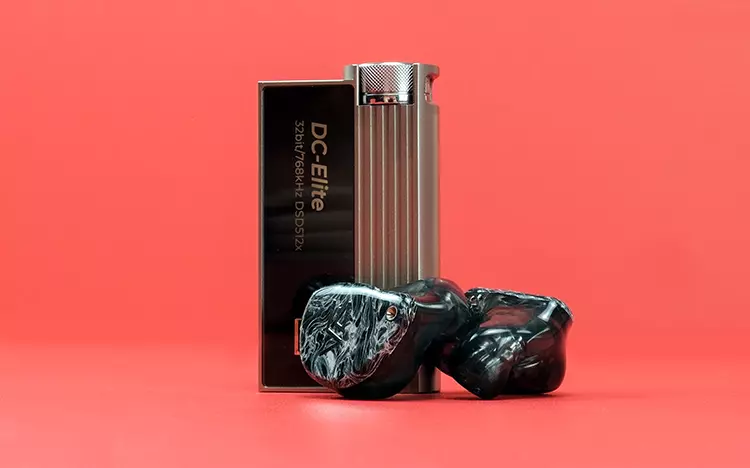
I tested the VE ONE with the Cayin RU9 and RU7, as well as the iBasso DC-Elite and Nunchaku, for a mix of tube, analog, and transistor-based sources.
Like the DAP pairings, the VE ONE sounded better with cleaner, more dynamic dongle pairings than the softer, more analog or warmer alternatives.
It’s not that the latter dongles don’t bring anything to ‘the game’; they appeal to those who like soft, relaxing performances. I just find the delivery too laid-back and soft-sounding, and for me, the VE ONE needs energy and impact, with more contrast, to sound optimal.
So out goes the Nunchaku tube mode, the RU7, and the RU9’s Classic Tube mode. The Nunchaku sounds deep but languid, with a soft bass. The RU7 mids are too laid back, allowing the stronger sub-bass to dominate, and the RU9 Tube mode is a mix of deep and soft.
This is one of those rare occasions where the Nunchaku Class AB mode felt right with the VE ONE. It’s not an inspiring mode choice, and there are better dongles out there for clarity, but it did keep the bass clearly defined with good vocal contrast.
It was the DC-Elite that stood head and shoulders above the other dongles, with the RU9’s solid-state mode just behind. The DC-Elite allowed the VE ONE to sound very impactful, with excellent imaging and clear, forward vocals.
Nothing sounded flabby or soft in these two modes, and the DC-Elites’ excellent bass layering was just that bit more convincing than the VE ONE’s.
Selected Comparisons
The following selected comparisons with the Vision VE ONE were conducted using the DX340/AMP17 combo, the FiiO M27, and the HiBy RS8 II DAPs, each with its respective balanced output in low-gain mode.
Vision Ears VE PRO
The VE PRO was launched at the same time last year as the VE ONE and is technically the custom monitor up in the company’s custom line.
Technical
Like the VE ONE, the VE PRO is a hybrid multi-driver custom monitor. However, since it’s a higher-tier unit, it’s a bit more complex than the dynamic and BA driver combo inside the VE ONE.
The Vision Ears VE PRO is a hybrid 4-driver 4-way crossover custom in-ear monitor. Its precise grouping is a single 8mm for the lows, the same as the VE ONE dynamic driver, but with an additional BA for the lows and mids rather than the VE ONE’s dynamic driver covering both the lows and mids.
Beyond, the VE PRO has a single BA driver for the mids and one for the highs compared to just one BA for the highs inside the VE ONE. You get slightly more frequency coverage with the triple BA setup inside the VE PRO.
Both monitors use the PRV venting system with visible rings on the front plates for pressure relief.
The VE PRO is rated at 6.8Ω for impedance, so slightly less load than the VE ONE’s 10.5Ω rating, with an SPL of 111.3 dB/mW @1Khz, which is not far off the VE ONE’s 110 dB/mW measurement.
Design
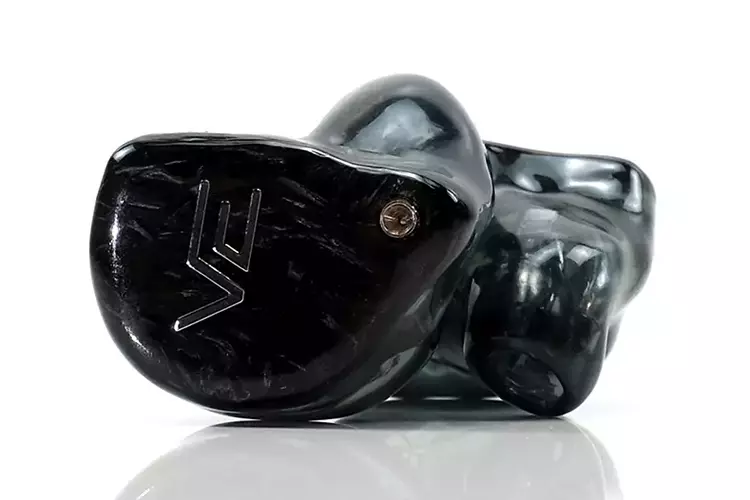
Coming from the same ‘house’, the form factor and fit are virtually identical. Vision Ears makes some of the nicest-fitting custom monitors, with above-average isolation.
The fitting is a precise balance between pressure and seal, and very accurate on both units. Since both are hybrid models with PRV systems, the isolation is only slightly behind that of their all-BA non-vented CIEMs, such as the VE PURE and VE XCON.
It’s all about the design differences with these two models, and to be honest, you can pick either for your VE ONE or VE PRO, so I will not say which sample is superior, but rather which design choice will appeal to whom.
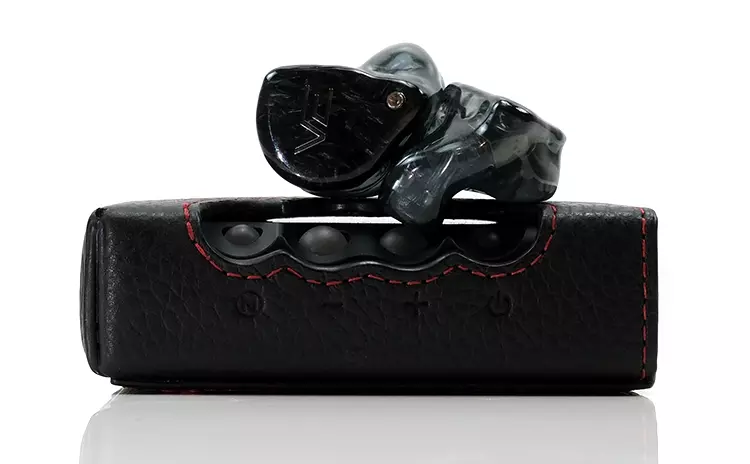
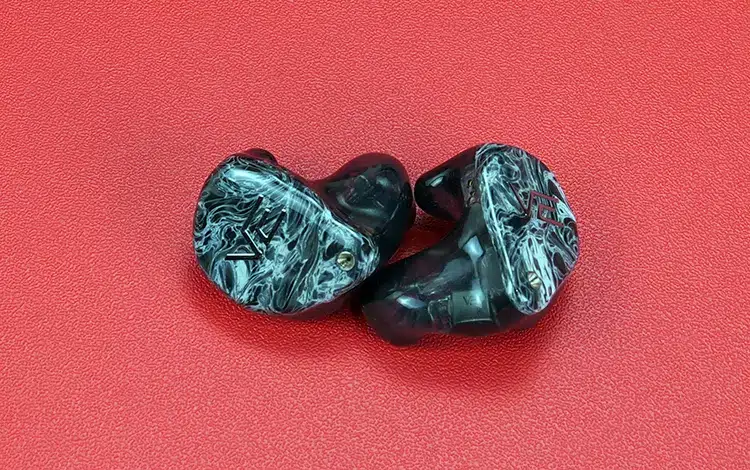
In my opinion, I would go with the Astral Storm. It stands out much more, has a bolder, punchier visual vibe, and is more memorable. The VE PRO sample I have here is finished with the Carbon Glow faceplate, a palette of carbon weaves on a dark background.
It’s a subtle yet more intricate design, likely preferred by those who want a bit more maturity in their CIEMs, or a more discreet visual for open environments where you might not want to draw too much attention.
Both monitors come with the same packaging, accessories, and cable line-up, so there is no real competitive edge here for the VE PRO.
Performance
The key differences between these two lie in the bass-shelf amplitude and extension, where the pinna gain rise starts, and the amount of treble presence and extension.
The VE PRO is not as amplified in its bass shelf. If you are after a heavier-hitting bass response with more warmth and elevation from 20Hz to 200Hz, the VE ONE is stronger.
The VE PRO reaches deep but keeps the bloom more under control. Some will prefer it, as it creates more bass-to-mid separation and allows more space for instruments to be heard.
A byproduct of a higher bass shelf is a stronger lower-mids dip from the VE ONE to prevent bleed, resulting in a more recessed region up to 2k.
The VE PRO drops slightly in the upper bass, but not by much, and rises throughout the lower mids from 500Hz to 2K, where the presence is roughly the same.
I hear more control from lower-register instrument notes, perfect for rock and drier rhythmic thrash at high BPMs. Here, the VE ONE can get a little smeared by the bass warmth and the lack of presence in the lower mids.
Your attention is really on the bass and the mids to upper mids with the VE ONE. Upper-register vocals will sound thicker, richer, and further forward than the VE PRO equivalent up to 5k.
The VE PRO dips slightly lower within the same range; it’s not as forward-sounding, but it has more clarity and perceived space, and it handles complex passages in recordings better.
That clarity from the VE PRO comes from an improved 5-10k response, no doubt due to the enhanced BA driver count, which offers more range. The VE ONE is softer through this region, more forgiving also, but lacks the staging height and air of the VE PRO.
Bellos Audio X4
The Bellos Audio X4 was launched in mid-2023 and is currently the flagship of the company’s X-Series line of custom in-ear monitors.
Technical
Like the VE ONE, the X4 is a hybrid custom monitor, but it’s on the same level as the VE PRO on paper, with a 4-driver mix of dynamic and balanced armature rather than 2 drivers.
It is worth noting at this stage that the X4 is very pro-audio in its design, so the drivers are modular, meaning they are preassembled to allow quick insertion or removal should a repair be requested.
The X4 configuration is a 4-way setup with a 6mm dynamic driver for the sub-lows, 2 BA drivers for the low/mids and highs, and a single BA tweeter for the ultra-highs.
The X4 has a slightly higher 16 Ω impedance than the VE ONE, and on paper, it is slightly more sensitive at 116 dB/mW @ 1kHz.
Both models have a pressure relief system. The VE ONE uses PRV, and the X4 uses the company’s ATOM venting system, a carryover from its parent company, FIR Audio.
You also get 17dB (internal ATOM) of passive isolation from the ATOM system, but as I will discuss in more detail below, this is not typical for a custom monitor when it comes to creating an external ear seal.
Design
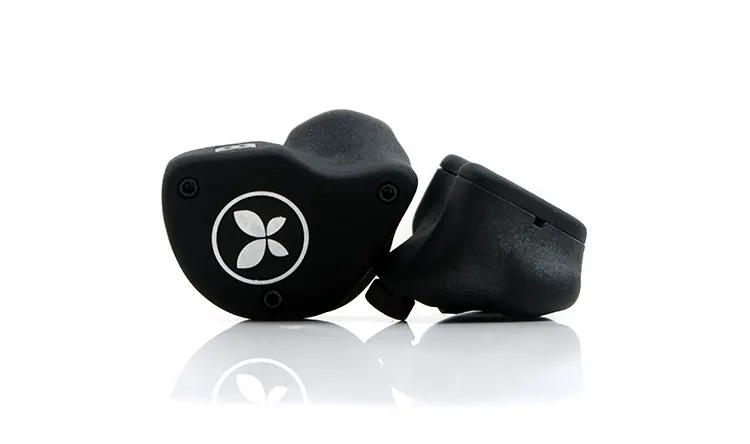
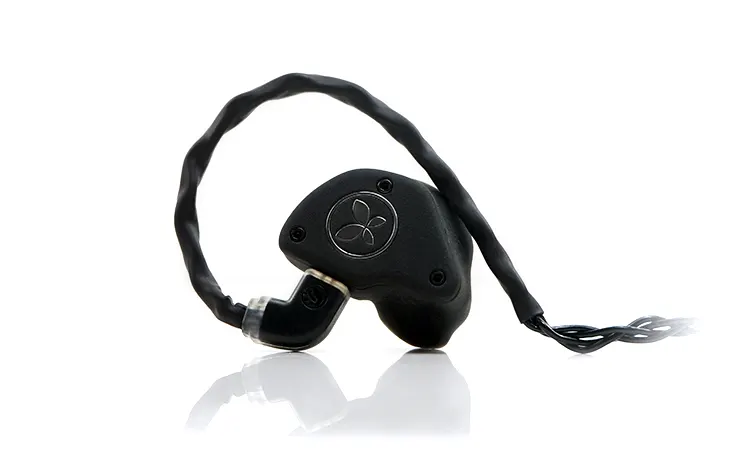
The X4 design approach is massively different from the VE ONE. The Vision Ears build is a classic approach, executed really well, with a shell nozzle that extends into the ear canal, as you would expect, and a mold shape that fits perfectly.
The X4 does not do that. Instead, you get an accurately designed main shell taken from your ear mold that partially extends the nozzle. The rest of the nozzle is finished with a lip, a feature commonly found on universal IEMs.
On this lip, you fit some silicone ear tips that help create the seal in your ear. One might argue that it is a hybrid of Universal and Custom, but Bellow calls it ‘In-Air Canals’.
The objective here is to use a more supple tip to maintain comfort across various jaw positions and to maintain a seal, in combination with accurate ear molding.
Does it work? Yes, but given the porous nature of these silicone tips, the seal is not as good as that of the VE ONE’s acrylic resin.
I also tried opening and closing my mouth repeatedly with the VE PRO, and there was no break in the seal, so it is possible to create a classic well-isolated shell without worrying about gaps forming when you change jaw position.
Mind you, the same can be said about the X4. It does just as well in multiple jaw positions. One could argue that the Bellos approach is more about minimizing fitting mistakes that might disrupt a pro musician’s business, since they need to be redone.
Design-wise, there’s no question that the VE PRO is more attractive-looking, but the X4’s thicker shell feels very robust. Again, horses for courses, the durable X4 shell is what you want on stage.
Performance
Both customs are smooth-sounding with weighty bass responses and good vocal presence.
Where I find the differences is in the amount of bass warmth and impact, and in a more uneven mids-to-treble tuning on the X4, which reduces treble contrast and also the staging height.
On a high level, the VE ONE has a more ‘pointed’ delivery, which I mean by that: a degree less bass bloom and a shorter bass shelf, with more sub-bass emphasis and presence below 30Hz.
I hear a slightly softer impact from the X4 dynamic driver, which, while punchy, has a duller, less dynamic low-end response than the VE ONE. It’s subtle, not overt. I would not describe the X4 bass response as lacking, rather it just sounds a little more languid.
The enhanced 100-200Hz bloom in the X4 adds a bit more warmth than the VE ONE’s curve through the mids. That is reinforced by a slightly uneven mid-to-treble transition, which dips south of neutral from 2-4k, then has two noticeable peaks at 4k and 7-8k.
The VE ONE’s 2-5k region is more elevated and linear, with a stronger 5-10k region that provides more fill and ‘excitement’ to its midrange and treble. The X4 is smoother and more relaxed in the mids but can sound comparatively brittle in the highs, though by no means peaky or sharp-sounding.
Overall, the VE ONE sounds a bit more dynamic, with better depth and height, whereas the X4 offers a warmer, more relaxed sound with good low-end weight and body.
Ultimate Ears UE 5 PRO
The Ultimate Ears UE 5 PRO was launched years ago, but this Switch version I have here is the latest iteration, released in mid-2022.
Technical
Both custom monitors are dual-driver designs; however, the UE5 Pro uses 2 BA drivers, whereas the VE PRO uses a hybrid dynamic/BA implementation.
The UE 5 PRO driver split is fairly simple: a single larger BA driver for the lows and mids, and a smaller BA driver for the highs, with an integrated 2-way crossover.
Since the UE 5 PRO is an all-BA driver design, it does not include any advanced venting or pressure-relief technology in its acoustical makeup.
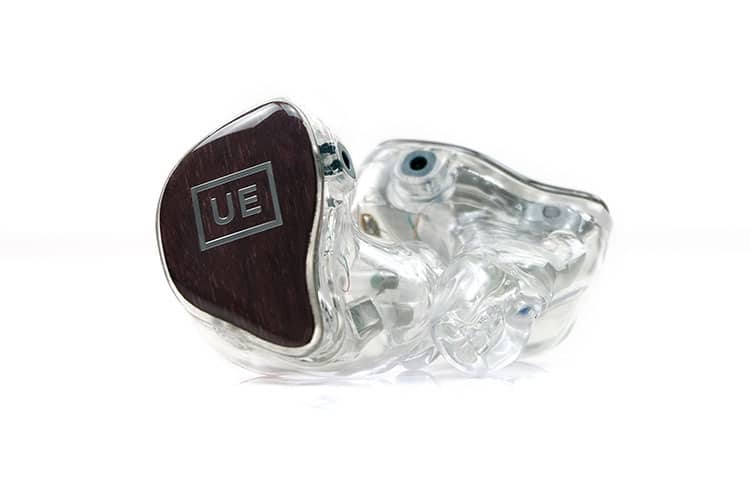
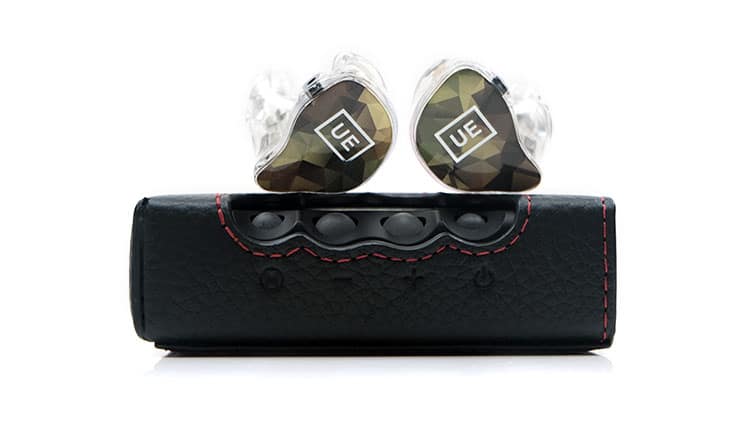
What the Switch version of the UE 5 PRO has instead is a large gap at the top of the shell to allow you to lock or unlock the swappable faceplates. How much it affects the monitor’s acoustical response, I am not exactly sure.
Sensitivity-wise, the UE5 Pro has a higher load at 21Ω, but it’s more sensitive than the VE ONE on paper, at 119 dB/mW SPL @ 1 kHz.
Design
I have some pros and cons with the UE5 PRo design, at least when compared to the VE PRO. The first is the choice of designs.
The swappable faceplate Switch system is a nice touch, allowing you to pick two additional faceplates for an extra fee. However, the main shell is transparent, with no other options available, making it feel somewhat limited in terms of creativity.
Now I do not mind a transparent shell, as it allows me to peer into the driver setup’s mechanics. Others might want something more harmonious with the plates or less transparent. Sadly, there is no option to go in that direction.
The second concern is indeed the hold in the middle of the plate and just how well it seals when locking the plate into position.
If the plates lift slightly over time, could it affect the monitor’s performance? I am not entirely sure, but at least the material used to lock it is the same as that used for the main shell.
Otherwise, the UE5 Pro sample I have here isolates quite well and is nearly on par with the VE ONE. Which, perhaps, is not a ringing endorsement of the nozzle accuracy and seal because it’s a non-vented custom monitor and should be higher.
This may be anecdotal for my 3D-printed sample and ear structure rather than a general rule of thumb for the UE5 Pro’s manufacturing process.
Also, very importantly, the UE5 Pro uses IPX/T2 cable connectors and a super-tough rebranded Linum G2 SuperBaX cable, which I personally love for its easy attach-and-detach mechanism. They are far more durable than the VE ONE’s 2-pin socket.
Performance
These two customs are like chalk and cheese in both timbre and technical presentation.
On the one side, you have the UE5 PRO: detailed, sharp transients, high articulation, and an intimate vocal first soundstage. On the other hand, the VE ONE: warmer and fuller-sounding with more natural levels of decay and a much stronger fundamental frequency throughout.
It is pretty hard to miss the qualitative differences between a BA driver and a dynamic alternative. The UE5 PRO is punchy and fast on the lows, very nicely controlled, but lacks depth and power, and doesn’t carry much warmth up into the mids despite a bit of 100-200Hz bloom.
The VE ONE sounds the far deeper of the two. The tuning is ‘bottom up’ as I like to describe it, with the lead being the lower-order harmonic and fundamental frequency, giving it plenty of authority.
It’s not as fast, nor is it as controlled-sounding as the UE5 Pro lows, but it’s where its smoother midrange timbre draws its cue.
Vocal imaging is technically not that far ahead of the VE ONE; it just seems that way because its staging capability is generally smaller. The VE ONE sounds like you are about 2 steps behind the UE5 PRO, courtesy of its more dominant bass response.
One area that can grate a bit with the UE5 PRO is an obvious peak at 7-10k. It’s not enough to call it sharp, but it’s enough to add a fair bit more contrast through the mid timbre, which can enhance sibilance on occasions. It is more noticeable than the more liquid-like response of the VE ONE’s mids and highs.
My Verdict
The Vision Ears VE ONE is an admirable introduction to the custom monitor house sound of Vision Ears.
It also serves as an impressive demonstration of their new hybrid direction, with a weighty, smooth, and impressively coherent sound signature from its dual-driver implementation.
All the remaining ingredients, including a superlative fitting and isolation experience, and a quality design approach, are consistent with the rest of the line-up, be it flagship or entry-level, so it’s very hard to fault the physical offering.
If you are considering dabbling in the Vision Ears custom IEM experience and listen to modern pop, synth wave, or R’n’B, the hybrid dual-driver VE ONE’s coherent, powerful tuning is a very good pick without breaking the bank.
Vision Ears VE ONE Technical Specifications
- 2-way system with 2 drivers (Hybrid: BA + DD)
- 1 x 8mm dynamic driver with LSR (liquid silicon rubber) suspension and Al-Mg diaphragm for the lows and mids.
- 1x balanced armature for the Highs
- Sensitivity: 110 dB/mW @ 1KHz
- Impedance: 10.5Ω @ 1KHz
