

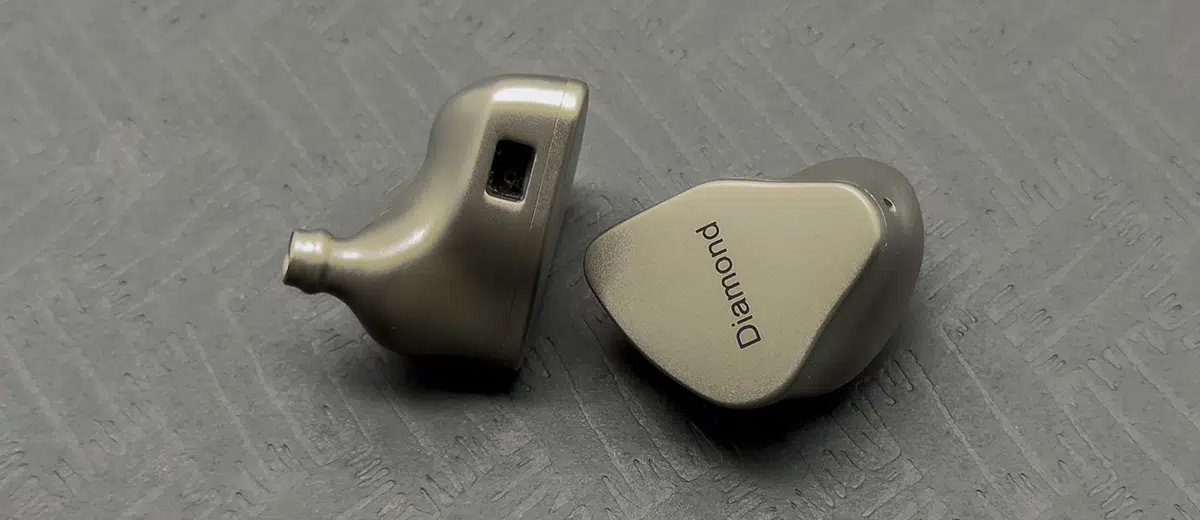
Selected Comparisons
Faith Audio Labs E1000
Technical
Like the Diamond, the E1000 is a single 10.2 mm full-range dynamic driver. This driver is driven by a dual-neodymium magnetic circuit, which, on paper, is a very strong magnet system.
The E1000 driver’s diaphragm is coated with titanium using a sputtering process. The coating has more than 80 ultra-thin layers. Both IEMs aim to achieve a diaphragm that is light but, at the same time, stiff and stable.
Alongside the main driver, there is an auxiliary helper passive radiator. So, it is a two-dynamic-driver setup, but with different engineering.
The E1000 is rated at 115 dB sensitivity @ 1 kHz with an impedance of 45 Ω. Though it is an easy-to-drive IEM, it is more stable on powerful sources and can take a few extra volume clicks on all the sources I used to compare these two IEMs.
Diamond is relatively easier to drive. On my Lotoo PAW Gold Touch, I am around volume 35 before I hit my upper listening limits on E1000.
Design
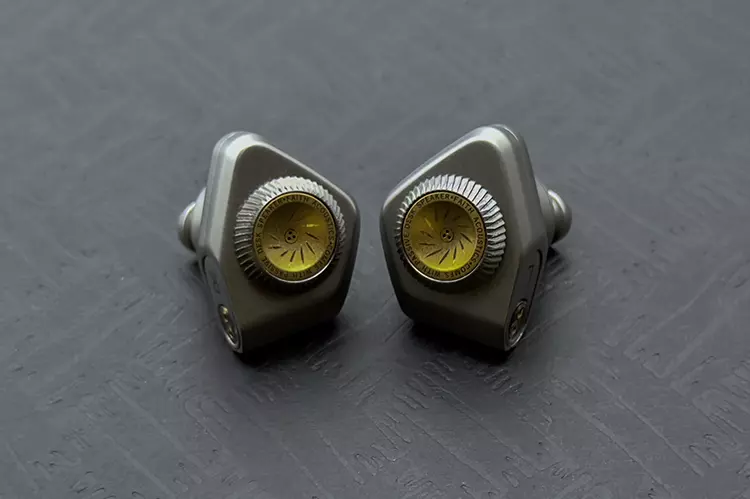
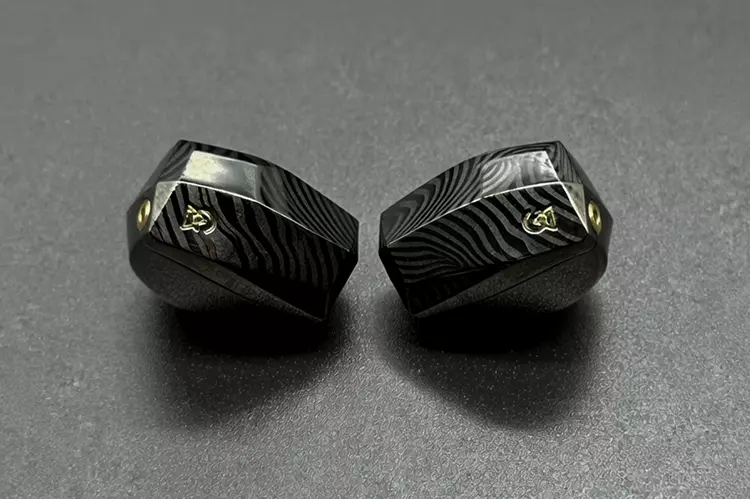
The E1000 shells are way smaller than Diamond’s. The shell has the shape of an irregular pentagon, with angular curves and clean edges. It feels very “machined.” It is small, but it gives off a rugged, almost industrial feel.
E1000 is CNC-milled from solid titanium alloy. Both IEMs carry a matte finish, giving off a similar vibe when you look closely.
If you ask me, Diamond carries a cleaner and more premium design.
If you have smaller ears, E1000 should be an easier fit. That said, I do not think people would struggle with Diamond either. Its shells are not large and have a flat design, which should fit most people just fine. For my large ears, I prefer Diamond’s fit.
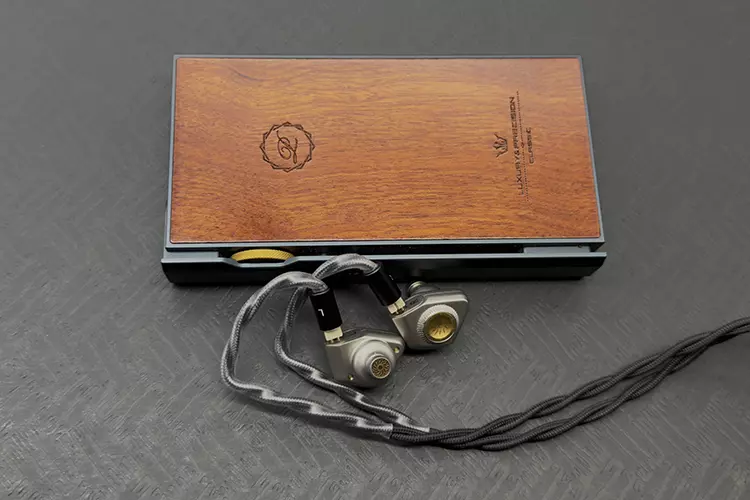
Being offered in a more premium price range, the packaging of E1000 stands out. It has a more boutique approach, but the inclusions are just basic. TXN Sound keeps the packaging very generic, though it adds all the extras one would ask for.
Performance
In the low end, the E1000 is slightly more mature. It does not aim for a very punchy or deep low end and opts for a rather relaxed impact.
Yet the impact is slightly richer and more tactile. The details and textures it delivers feel like an upgrade over those of the Diamond.
In the midrange, the E1000 feels more lit up. The lower midrange behavior is similar on both IEMs. You get moderate support from this region, so neither has a very lush or rich-sounding midrange.
It is rather clean and transparent. You would find more warmth on Diamond, whereas the E1000 is slightly drier and a touch more energetic.
The upper mids have some extra lift on the E1000, which can feel sharp in comparison to the smoother and more relaxed upper midrange of Diamond. The E1000 pushes details more prominently. There is extra bite and definition in the notes on the E1000.
In the treble region, the E1000 is slightly more energetic, more spacious, and offers extra air and sparkle. The E1000 brings along a stronger sense of openness up top, but can feel slightly on the edge. The treble notes feel better separated and carry more detail.
Diamond is no slouch, and as a matter of fact, it serves up the same level of detail, just in a smoother way.
It’s a hard contest between the soundstages on both, but the E1000 has a touch more holographic feel to it. The height and depth feel better on the E1000, while the width remains comparable.
The E1000 brings about better instrument separation and layering, too. The images are more vivid and immersive. Resolution is stronger on E1000.
THIEAUDIO Valhalla
Technical
The THIEAUDIO Valhalla is an all-BA flagship from THIEAUDIO, featuring a total of 19 balanced armature drivers on each side. The drivers use a combination of units from Knowles and Sonion.
Specifically, there are four Sonion subwoofers for bass, ten Sonion drivers for low-midrange and midrange frequencies, four Knowles drivers for the mid-treble, and one Knowles ultra-treble tweeter for the highest frequencies.
The Valhalla also uses a 4-way passive crossover network with a 4-bore acoustic tubing system to accurately split and deliver different frequencies.
The THIEAUDIO Valhalla has an impedance of 9Ω @ 1 kHz and a sensitivity rating of 103 dB/Vrms. It is an easy-to-drive IEM like the Diamond and has nearly the same drivability.
On my LPGT, both Valhalla and Diamond take a volume level of 30 comfortably. Neither of the two asks for extra power, but to me, Valhalla feels a bit more stable on more powerful sources.

Design
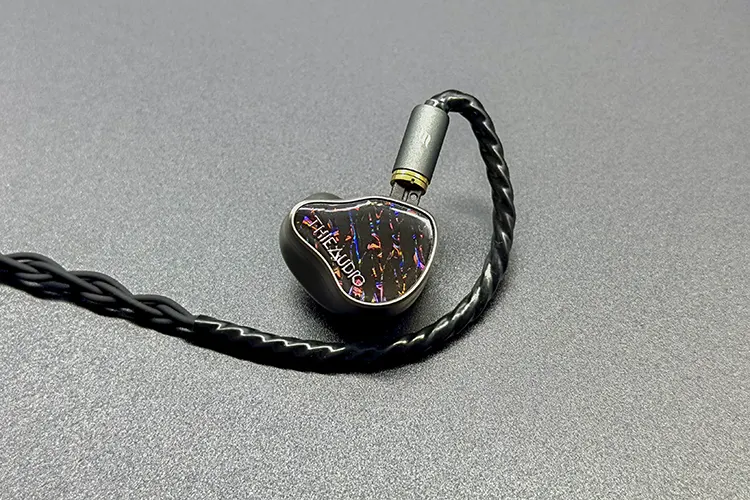
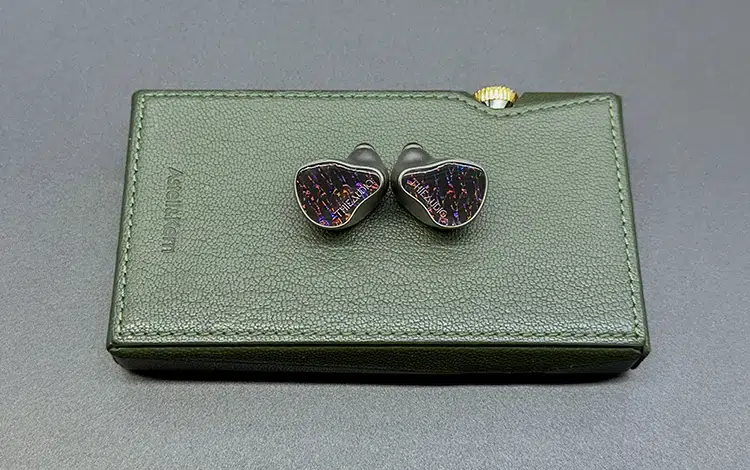
Valhalla features Grade 5 titanium shells, which give it a strong and durable build. The shells are larger than typical IEMs, but thankfully, the weight is on the lighter side.
The faceplate showcases a holographic design with a multi-colored, prismatic pattern. THIEAUDIO also gives the option to choose from a set of pre-customized faceplates for an extra charge.
For people with small ears, Valhalla’s fit can be a struggle. It has larger and slightly heavier shells. Diamond’s shells are average-sized, and the design feels more ergonomic and easier to wear.
Both IEMs use a 2-pin connection. Valhalla’s cable is a modular one, allowing users to swap the cable plug between 3.5mm unbalanced and 4.4mm balanced. However, I prefer the build and look of the stock cable on Diamond.
Both Valhalla and Diamond arrive in very modest packaging. TXN Sound throws in some useful extras, such as a mesh pouch and a better carry case, whereas THIEAUDIO keeps the inclusions just basic.
Performance
Valhalla has a U-shaped sound with a slight boost in the low end and some emphasis in the treble region. Both IEMs do well in delivering that flagship-level sound.
The low end of Valhalla has a more noticeable body. It carries a better impact, and honestly, that is what makes this all-BA IEM different from the crowd.
The sub-bass has more depth and rumble here. The mid-bass is slightly warmer but very well controlled. Diamond is more neutral in this region and lacks those hard hits. Valhalla has a slightly fuller and lusher sound because of how the bass behaves.
Though the midrange on Valhalla goes slightly neutral like Diamond, the lower midrange support is better, which adds more fullness and depth to the notes in the midrange. Diamond is slightly leaner here. It lacks that body and depth.
The upper midrange on Valhalla has slightly more energy, though I would put both IEMs on the smoother side. You will not find anything jumping out. Valhalla’s vocals feel more correct, and in the midrange, the timbre is richer on Valhalla.
Valhalla is known to be a bit brighter, but I do not find it harsh or peaky. It is more energetic, and the notes come across a bit more pronounced. The upper treble has a slight focus on Valhalla.
Diamond feels smoother, more balanced, but equally detailed. The shimmer feels more natural and better separated on Diamond. Valhalla can sometimes feel a bit congested in this region if the track has a lot of treble presence.
Valhalla can feel a bit closed-in compared to Diamond’s open and more expansive soundstage.
This further improves the instrument separation on Diamond. The stage feels better arranged and more spaced out. Valhalla offers stronger dynamics, an area where Diamond feels toned down.
Campfire Audio Andromeda 10
Technical
The Andromeda 10, the latest iteration of the Andromeda lineup, consists of 10 balanced armature drivers on each side. The driver layout includes four BA drivers for the midrange and vocals, four large BA drivers for the lows, and two drivers handling the high end.
Campfire Audio has done some careful acoustic spatial work using TAEC, Tuned Acoustic Expansion Chamber, to create a greater sense of space, which does show on the Andromeda 10.
The Andromeda 10 LE has an impedance of 8.5Ω at 1 kHz and a sensitivity rating of 94 dB @ 1 kHz @ 12.10 mVrms. And that is sensitive for an IEM, like most Campfire Audio IEMs are.
Diamond is a bit more stable on more powerful sources, whereas Andromeda 10 can potentially have background static noise.
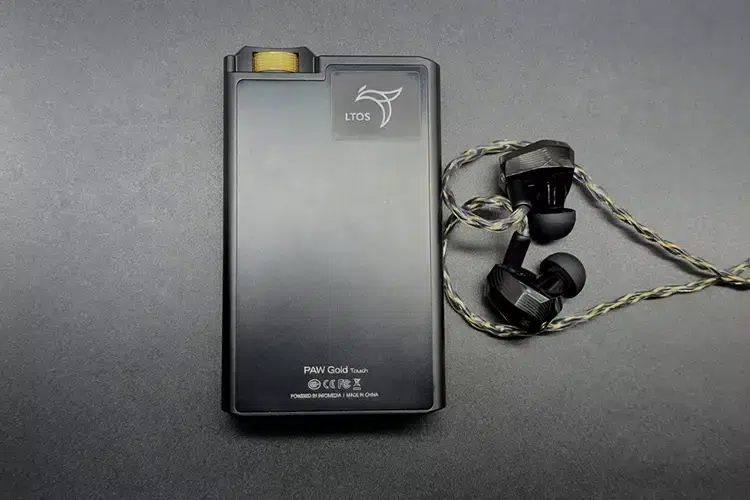
However, I would place Diamond in the easy-to-drive IEM category, like Andromeda 10. Compared to a volume level of 30 for Diamond, Andromeda 10 takes around 25 on my LPGT.
Design
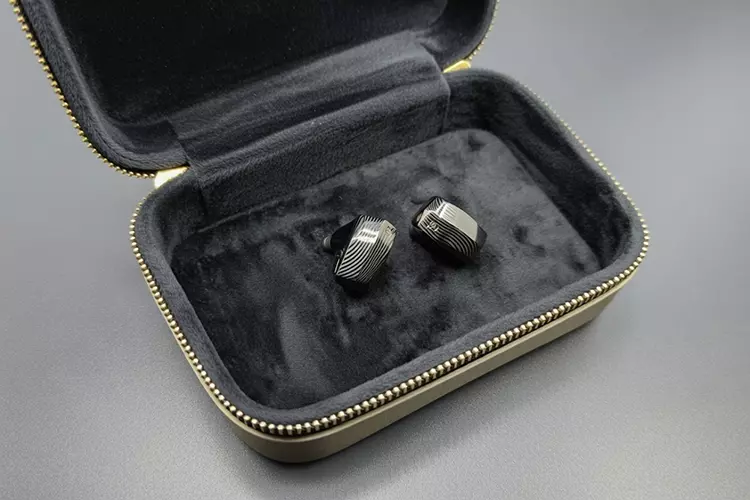
The Andromeda 10 I have here is the Launch Edition Damascus steel version. It has a special feel to it, and the moment you put it in your hand, it feels quite premium. The shells have flowing stripe patterns across the body, almost like layered waves.
The CA inlay is gold and pops nicely against the black shell. The standard edition of Andromeda 10 carries the same design in green.
Diamond, in its titanium build, has a minimal approach to its design, but it is no less premium. Also, the shape is more ergonomic on Diamond and fits slightly better, as the inner side of the shells is more in line with the ear contours.
The Andromeda 10 has elongated shells and a more stretched-out design, a bit different from most IEMs, I would say.
With Andromeda 10, Campfire Audio moved to a 2-pin system. The sockets are recessed here, as they are on Diamond too. As for the packaging, both brands pack in all the necessary accessories.
Campfire Audio’s packaging is a bit more colorful and stylish, and offers a larger carry case, which is quite a relief for those who do not want to see their IEMs suffocating when packed in less space.
Performance
Andromeda 10 takes a mid-bass approach in the low end. The mid-bass is more prominent than on Diamond, and the bass takes up more space on the stage. That said, you do not get a deep sub-bass foundation on either of these IEMs.
Diamond plays it more restrained in the lows, but it comes through cleaner and more textured. Andromeda 10 goes for a warmer and richer bass.
The midrange on Andromeda 10 does not carry the same openness and transparency as Diamond. Vocals are slightly thin. They extend well, but they feel a bit recessed and do not carry that much depth.
The Diamond feels more coherent and easier flowing. The cleaner low end also gives the midrange more space to breathe.
Treble is also more sorted on Diamond. The notes sound cleaner, and the separation feels a bit better. Andromeda 10 has a tiny bit of boost in the top end, but the shimmer and sparkle are better presented on Diamond.
The Diamond sounds airier and more open up top. Both IEMs have smooth treble overall. Andromeda 10 can get a little more excited on some tracks, but nothing that would really irk you.
Andromeda 10’s stage is massive; Diamond goes even wider, more open. There is a stronger sense of air around instruments on Diamond.
With this open and larger soundstage, Diamond gives instruments more space and handles complex tracks better. When a lot is going on, Diamond sounds more sorted and better separated.
Where Andromeda 10 wins is its punch. The big dynamic swings hit harder and feel more dramatic. Diamond, though, works better with micro-details and pulls them out effortlessly.
In terms of overall technicalities, I prefer Diamond, but purely in terms of musical richness, Andromeda 10 is tough competition.
My Verdict
I have had the opportunity to try some great single dynamic driver IEMs this year, and the way brands are extracting the best out of a single driver is truly remarkable. That is exactly what I was expecting from the TXN Sound Diamond, and thankfully, it delivers.
Diamond is a well-accomplished IEM. The engineering and efforts that must have gone into developing that driver and shell design are clearly reflected in its sound.
It has a grand presentation. The moment you plug it in, its soundstage and open-sounding profile immediately grab your attention.
That is Diamond’s trump card, and that is what makes it a real gem among IEMs. It sounds spacious, effortless, clean, and highly immersive.
Diamond is no less impressive than some other flagship single-dynamic-driver IEMs I have heard, such as Faith Audio’s E1000 and DITA Audio’s Ventura. I wish the low end had a bit more slam. The rest of the things are quite sorted.
TXN Sound is not exactly a new name, but it has not made much noise outside local circles. Diamond is surely going to change the brand’s outlook.
For people hunting for IEMs in the flagship territory and for those who love single dynamic driver IEMs, Diamond is not something you should miss.
Diamond has great looks, excellent build, and that immersive sound that’s straight up impressive. It gets my recommendation, and I will be closely watching what TXN Sound does next.
TXN Diamond Technical Specifications
- Driver Configuration: Single Dynamic Driver (True Diamond)
- Impedance: 15 Ω
- Sensitivity: 106 dB/mW
- Weight: 25gm (shells only)
- Cable: 4-wire (7N OCC copper)
