

Sound Impressions
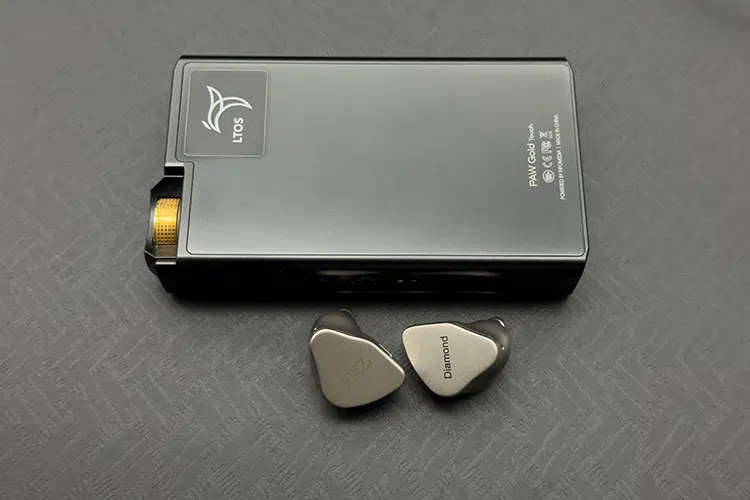
The following sound impressions of the TXN Sound Diamond were completed using a mixture of my main source, the Lotoo Paw Gold Touch, Luxury & Precision P6 Pro, and the Questyle CMA18 Master.
For the review, I paired the IEMs with the stock cable and the stock ear tips (blue stem).
Summary
TXN Sound Diamond has a very open-sounding profile. They really mean it when they claim that Diamond is tuned to be a very spacious and effortless-sounding IEM. That is the first thing you notice.
Diamond carries a balanced sound signature. None of the frequencies feels boosted. The bass is relatively lean but has enough impact and punch to offer. The midrange gets a wide-open stage and shines because of its clean and transparent nature.
The treble offers plenty of air and sparkle without ever turning harsh or sibilant, not even on tracks you remember for their screeching harshness. Diamond is a very easy-to-listen-to IEM, and that is one of the things you pick up instantly.
Diamond’s technical aspects are the real deal, and it really makes you wonder how effortless these new single dynamic drivers have become. The soundstage feels infinitely stretched.
The images feel grand. Details are present in plenty without them poking deep inside your ears. It is the sum total of many things done right on Diamond that makes it quite a solid IEM.
A note about the filters TXN Sound has included in the package. There are two sets of filters, one being a denser foam and the other a bit lighter. You can relax the treble response using these foams. Other than that, the rest of the sound remains mostly the same.
For a richer bass response, I would suggest pairing Diamond with wide-bore ear tips that have smaller stems. I would anyway suggest trying multiple ear tips to see how the tuning changes.
Bass
TXN Sound went for a slightly balanced approach here, giving more space to the higher frequencies. Bass on the Diamond is not about hard hits and brute force. It is slightly on the neutral side. But the bass feels special in the way it delivers details and textures.
Diamond has a mid-bass-tilted low end. The sub-bass is mild, so you will not get that deep, rumbly sub-bass reaching down your throat. It just scratches that itch lightly. Mid-bass is what feels executed quite well here.
Diamond has a nice, tight, and controlled mid-bass. Not the type that feels boomy or very warm, and at the same time, not loose or blurry either. It has enough control to stay clean, but there are no big punches or dramatic dynamic shifts.
A lot of the single dynamic driver IEMs I have come across are tuned this way. They go for a clean, detailed bass rather than a bombastic low end.
Bass arrives with a sense of calmness, but you can easily appreciate the depth and tactility in the notes.
The bass has a rounded, pulsing presence. It lingers just enough and then moves away naturally. No sluggishness or overstay makes Diamond’s bass so clean. It has a fast pace and a quick decay.
This bass also has plenty of texture. You can easily appreciate the layers and distinct notes when bass notes come from different sources. String instruments sound full-bodied, resonant, and satisfyingly textured.
From a basshead perspective, Diamond may be lacking a bit, but for those who appreciate a very accurate bass, this one will surely satiate them. An extra dose of punch would have made it quite special.
Nevertheless, it feels organic, true-to-life, and not like something boosted just for the sake of fun and excitement.
Midrange
The midrange on Diamond aims for transparency. It is not a very rich and organic timbre that we typically associate with single dynamic drivers. What you get here is a slightly neutralish, crisp-sounding midrange.
The midrange is slightly forward and takes full presence, thanks to the tidy bass. Diamond is tuned to be a bit revealing, and that’s rightly achieved.
It is not dry or analytical in any way, though. There is a slight warmth underneath the notes, which adds to the musical atmosphere. But I would not label it very organic and rich, as I miss those last bits of lushness.
The midrange gets moderate support from the lower midrange region, which itself feels a bit lean. While this helps in maintaining a clean midrange, it does not add a lot of weight and density to vocals and string instruments. There is less flesh on the bones.
You do get all the nuances and textures, but that last bit of richness is missing here. In fact, the string instruments do not feel hollowed out or lacking body, but they could definitely carry more weight.
If you are someone who goes for a more dissected and vivid midrange, Diamond certainly offers that.
The upper midrange keeps itself in control. It is not very lit up or overly enhanced, but the energy is there, so the extension feels proper without any sharpness or peaks.
That gives the midrange a very detailed presence with a smooth outline. Personally, I find that the Diamond articulates female vocals better than male vocals.
Since there is no sibilance or harshness in the upper midrange region, you can try some poorly recorded tracks too, and Diamond won’t break a sweat. The hand-off to the treble is seamless, and that is where the coherency is done quite well.
Treble
Treble’s quite a highlight here, and for those who do not want to sacrifice air and sparkle, the Diamond will be quite pleasing.
That is also the most intriguing part for me, for a single dynamic driver to achieve this level of detail and openness in the top end. It almost feels like
I am listening to an IEM with a few ESTs inside. This is not aggressive, sharp, or bright treble. It gives enough clarity and openness without making instruments sound thin or splashy. You get a lot of details without them poking at you.
The lower treble region has a slight crunchiness to it. There is a bit of energy here, which adds definition to the notes. Vocals and instruments have clean articulation.
Female vocals and instruments like the piano especially sound detailed and expressive. There is a clean attack and natural decay to the notes.
Guitars and strings are full of that enjoyable top-end bite and nuance. Cymbals have clean, crisp edges, with plenty of natural shimmer to offer. You get a natural metallic tone that feels well separated. Gentle sparkle and clean, refined shimmer. No thinning of notes, no hot regions, no sharpness or piercing edges.
Towards the extreme top end, Diamond feels quite spacious and extended, giving instruments the breathing room they ask for.
Thankfully, the upper treble region is smooth here. That is the region I am usually extremely worried about. Even a slight extra focus there can feel off to me. But not here.
Overall, that balance of detail, air, and sparkle is achieved very well on the Diamond, without sacrificing any energy or extension. This is one of the best treble presentations a single dynamic driver can truly achieve.
Staging & Dynamics
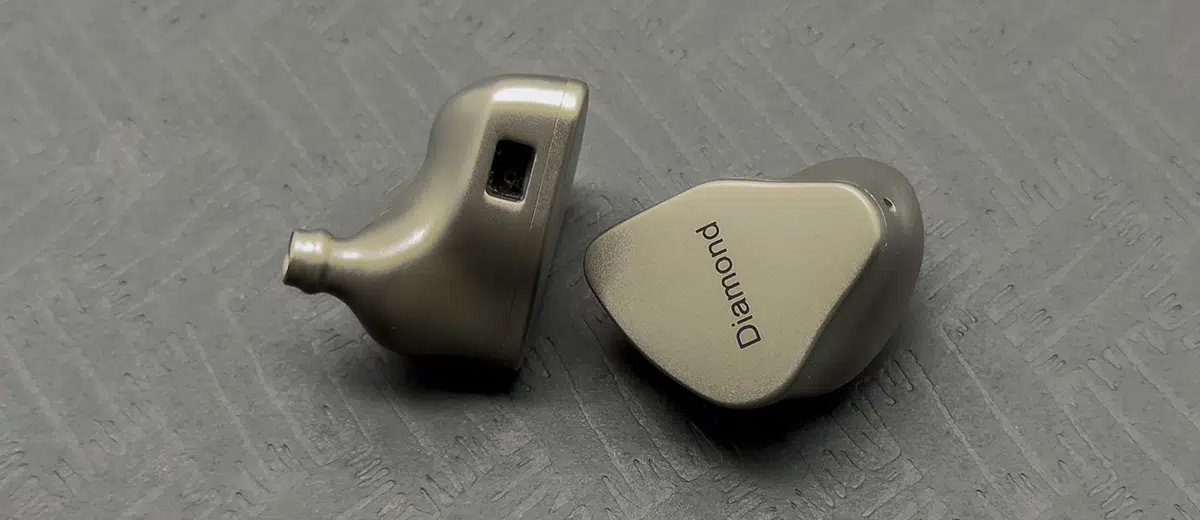
One of the most highlighted aspects of TXN Diamond’s design is the front chamber venting, which they mention helps in achieving a very open and spacious sound. And yeah, the soundstage delivers on that.
It feels like I am planted in the middle of a big auditorium, with the band circling me. Music wraps around your head nicely. The height and depth are well stretched, and the width is nothing less than what you get on multi-driver hybrid counterparts.
Diamond pulls off real holography; it feels kind of dramatic. Sound spreads out evenly in every direction. Instruments are positioned very accurately.
Layering is quite good on Diamond. It easily tells you what is closer to the stage and what is further behind. Instruments do not fight for space, and that is quite evident in how they handle complex tracks and genres.
The best part of the overall presentation on Diamond is how effortless and fluid the musical flow is. It feels like Diamond does not try too hard, but still has that level of immersion that we usually associate with the best of the best.
This is where it strikingly reminds me of the E1000. That openness, ultra-stretched soundstage, and easy-flowing tuning. Have the tuners been talking to each other secretly?
Not all sunshine, though. Macro dynamics aren’t Diamond’s strongest point. With a slight bit more grunt in the low end, things would have been different. Nevertheless, it does not disappoint either.
Micro-dynamics make up for the macros. You get plenty of details and nuances, served with great precision. Diamond pulls out details effortlessly. You do not have to peek into it.
Overall, the technical performance places Diamond right in the league of some of the best single dynamic drivers I have put in my ears.
Synergy
Efficiency
The Diamond is rated at 106 dB sensitivity @ 1 kHz with an impedance of 15 Ω. It is an easy-to-drive IEM and does not ask for a lot of driving power. In fact, it can be paired with low-spec devices and works well even with smartphones and laptops.
I do not find it scaling much with additional power, but it does feel stable when paired with some heavy-duty sources. Even with the Campfire Audio Relay dongle, it just sounds full, and the power requirements feel enough.
Being a transparent-sounding IEM, Diamond adapts well to the type of source you feed it. Since the tuning aims for a balanced sound and none of the frequencies are boosted, I do not mind pairing Diamond with any source.
It has good synergy with almost all types of devices. Be it a neutral, slightly bright, or warm-leaning source, Diamond sounds equally impressive on all. However, I find myself enjoying it more with a source that gives it a good low-end foundation, which is where it feels a bit lacking.
On my LPGT, Diamond takes about 30 volume levels, which does not feel high. A few more volume clicks, and it can get quite loud.
Just for some extra kick, I sometimes pair Diamond with Questyle’s mighty CMA18 Master, and it does not shudder. It stays stable and delivers a very expansive sound. Surprisingly, there’s no hiss in the background on this pairing.
However, during my time with Diamond, I felt it was better paired with a good source, while the heavy-duty ones felt a bit too much for it.
Source Pairings
With my usual go-to source, the LPGT, Diamond shines right away. LPGT sets a decent low-end foundation while keeping the rest of the frequency range very even.
This reflects the true tuning of Diamond. The midrange feels wide and open, while the treble maintains a decent level of energy.
The sound overall is very smooth, something I can keep enjoying for very long sessions. LPGT does not add a lot of wings to the soundstage, but it feels very spaced out in all directions. You get decent vertical height and width here.
With LPGT’s built-in “Headphone” PMEQ, the sound becomes more holographic and slightly more dynamic. That is one of LPGT’s hidden aces.
LPGT feels like it is already squeezing the best out of Diamond, as the IEM itself does not feel very demanding. However, switching to the L&P P6 Pro changes the outlook about Diamond a bit. It can sound even more open and engaging.
P6 Pro feels very immersive right from the start. The stage swells up even further, and the layering and instrument separation feel better.
It is LPGT’s reference sound versus P6 Pro’s richer and more engaging sound. The notes gain some weight and feel more detailed. The timbre feels more natural, and that slight neutral character is gone here.
On the CMA18 Master, Diamond shines in full glory. The bass tightens up. Still not deep guttural rumbles, but the dynamics improve noticeably. The stage grows bigger in width and depth. It has a straight-up wow factor and surpasses what P6 Pro has to offer.
The other good thing is that there is decent warmth, and Diamond feels very smooth and musical. Instruments gain more space around them. Treble feels airier than what you get on the P6 Pro.
