

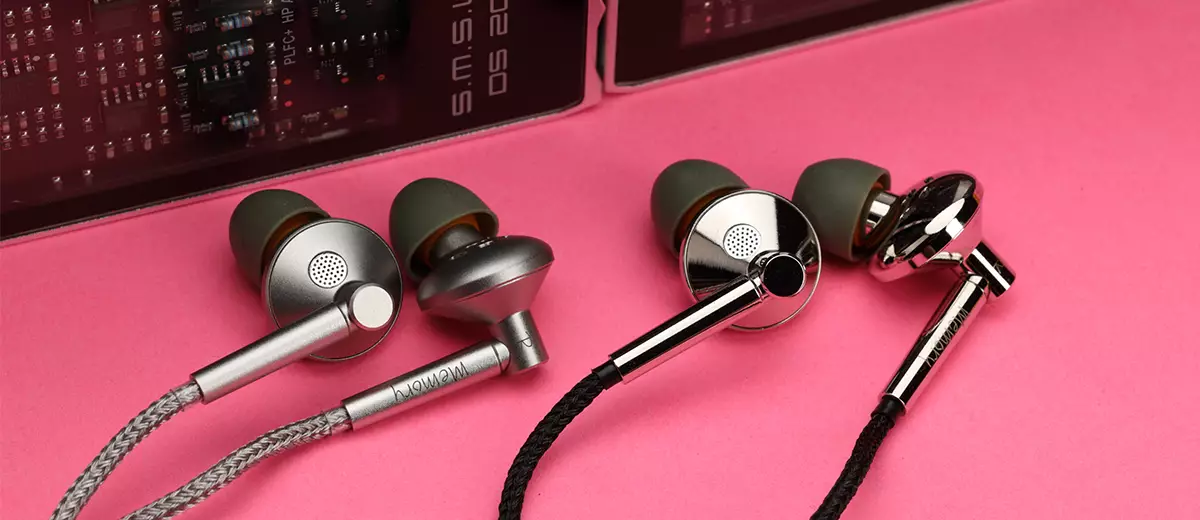
Marcelo reviews the ddHiFi Memory AL4.4 and Pd4.4, aluminum and copper housing variations of the original 13mm planar in-ear monitor. They are currently priced at $159.99 for AL4.4 and $189.99 for Pd4.4.
Disclaimer: This sample was sent to me in exchange for my honest opinion. Headfonics is an independent website with no affiliate links. I thank ddHiFi for their support.
You can read about ddHiFi products previously reviewed on Headfonics here.
This article follows our latest scoring guidelines, which you can read here.

I have always known ddHiFi as an affordable high-end brand for portable audio accessories. I like their design so much that I bought some of their USB-C cables years ago, and I still use them to this day.
Occasionally, ddHiFi releases IEMs, including the ddHiFi Janus and the Memory E13P, which I previously reviewed.
What’s special about the ddHiFi Memory AL4.4 and Pd4.4 Retro, priced at $159.99 and $189.99, respectively, is their use of a custom 13mm ultra-linear planar magnetic driver co-developed with MOONDROP using different shell and cable materials to differentiate the sound.
Will the AL4.4 and the Pd4.4 have enough difference in sound quality to distinguish them from each other? And how will they perform compared to other planar IEMs, such as the HIDIZS MP145 PRO and the original ddHiFi Memory E13P? Let’s find out.
Features
Both the Memory AL4.4 and Pd4.4 feature a newly designed 13mm full-range annular planar unit co-developed with MOONDROP.
This driver uses a double-suspension structure and a four-magnet array, which is supposed to achieve greater efficiency and lower distortion than similarly sized dynamic drivers and conventional 14.5 mm planar units.
The small shell is designed as a hybrid between flathead earphones: it sits comfortably in the pocket just outside the ear canal, while the nozzle with ear tips inserts into the ear canal, providing a very secure fit.
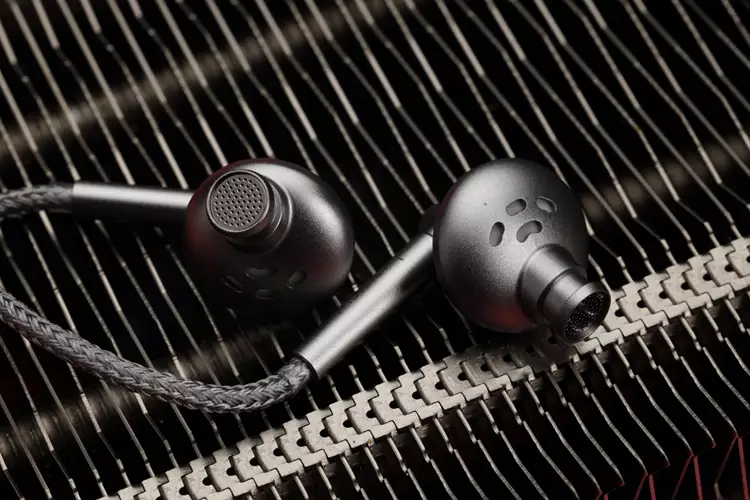
Additionally, AL4.4 and Pd4.4 feature an effective pressure-release system that prevents pressure buildup in the ear canal, which can cause headache, nausea, and ear pain during walking and running.
The AL4.4 and Pd4.4 both have an impedance of 16Ω and a sensitivity of 121 dB/Vrms.
Design
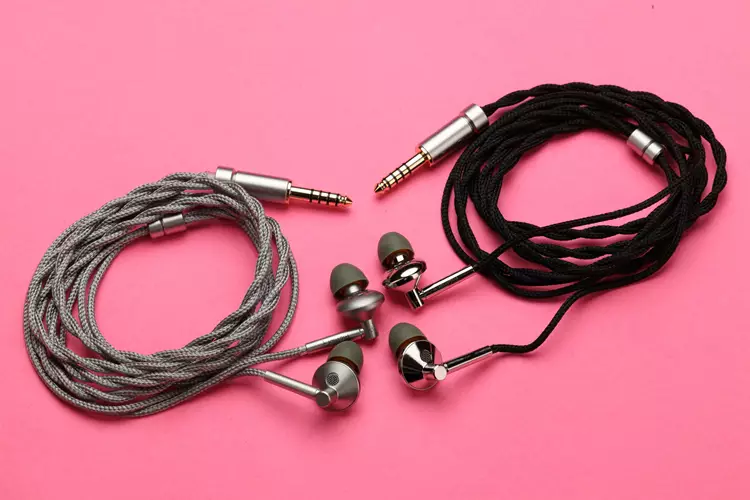
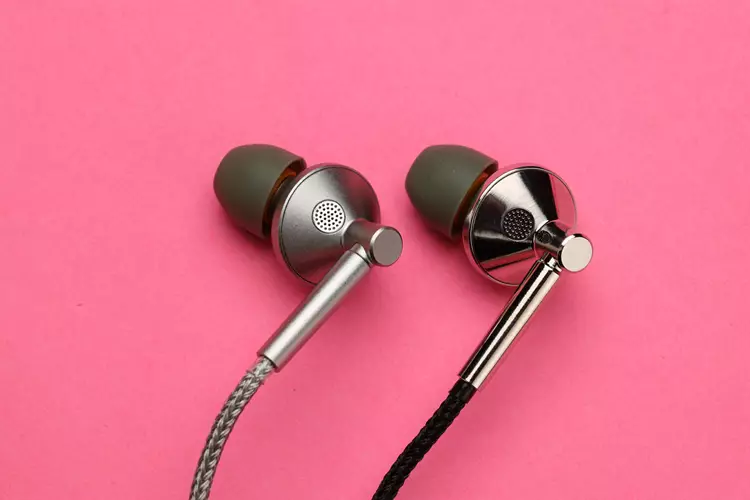
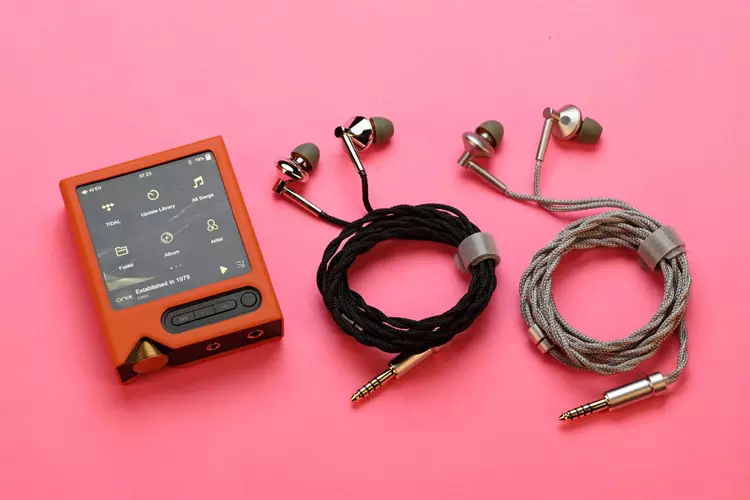
The main difference between the AL4.4 and Pd4.4 is the shell material and the cable. The AL4.4 uses AL6063 Aviation Aluminum Alloy while the Pd4.4 uses Palladium-Plated Pure Copper.
The AL4.4 cable is a gray braided 5N OCC Cable while the Pd4.4 is a black braided 6N OCC Cable. Due to the material difference, AL4.4 weighs 25 grams while the Pd4.4 weighs 31 grams.
While both have identical size and shape, the AL4.4 has a matte silver anodized finish, while the Pd4.4 has a mirror-like silver finish, giving it a more elegant look than the AL4.4.
The saucer-like shell is connected to the cable port at the back and a protruding 6 mm nozzle at the front. I see a big grill-covered vent at the back and four kidney-shaped vents near the nozzle.
The braided cable is soft, compliant, and high-quality, with a metal cinch, splitter, and plug.
Comfort & Isolation
Weight and size are very important for comfort, and AL4.4 and Pd4.4’s flathead IEM hybrid design not only offers secure mounting but also excellent comfort, to the point that I easily forget I’m wearing them.
This makes them very suitable for long listening sessions while walking, in a coffee shop, or at home while relaxing.
Due to the abundance of vents, the sound isolation is merely average, which, to me, is a good thing, as I still want to hear the ambient sounds when not playing music during walking exercises.
When the music is playing, even at moderate volume, all the usual ambient noise becomes inaudible.
Packaging & Accessories
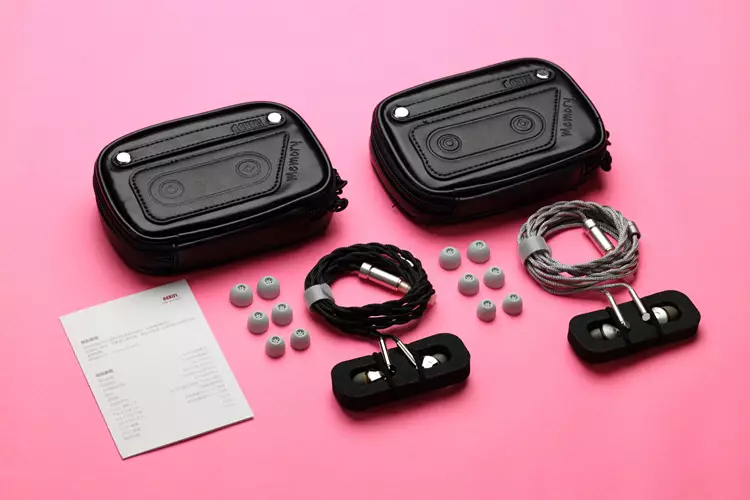
Both the AL4.4 and Pd4.4 come in a simple, black, sleeved box with text printed all around, measuring 178 x 110 x 50 mm.
It includes the Memory Earphones Set, S-size ST35 Ear tips (Pre-installed), CZ120B black storage case, 3 Pairs (1 Pair each of S/M/L sizes) ear tips, manual, warranty card, and a Certificate of Compliance.
Carrying Case
The AL4.4 and Pd4.4 include a nice carrying case that deserves a mention.
The included Retro carrying case is inspired by the form factor of classic portable cassette players, and blends vintage design language with modern trends.
Crafted from premium microfiber leather and equipped with YKK zippers, the interior features dedicated compartments to keep the left and right metal earpieces separated, preventing scratches and wear from contact.
Sound Impressions
I believe typical planar IEMs don’t need burn-in, but since the AL4.4 and Pd4.4 aren’t typical and ddHiFi mentioned a dedicated suspension in the driver, I must burn them in for 24 hours.
I didn’t hear any meaningful or definitive difference in sound after the burn-in, though.
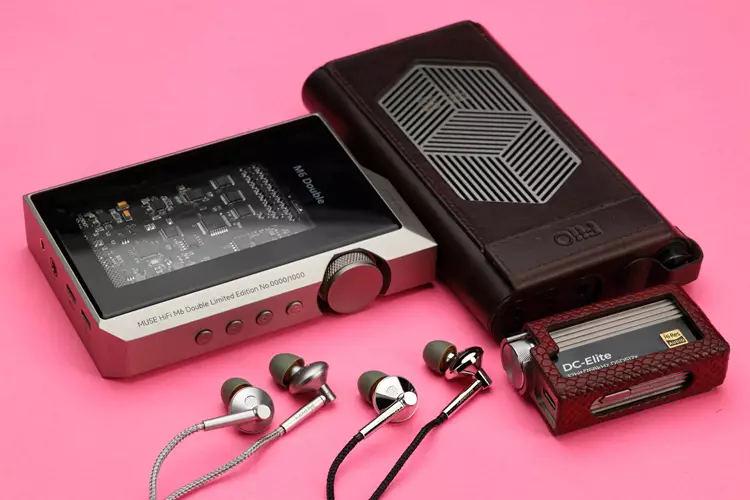
For the sources, I used my iBasso DC-Elite and MUSE HiFi M6 Double DAC amplifiers, with my Android phone and the FiiO M15S DAP, using either YouTube Music, UAPP, or Poweramp music player Apps. No EQ or any sound enhancement programs were used.
Using the pre-installed ear tips, I listen at medium-to-loud volume levels.
Measurements
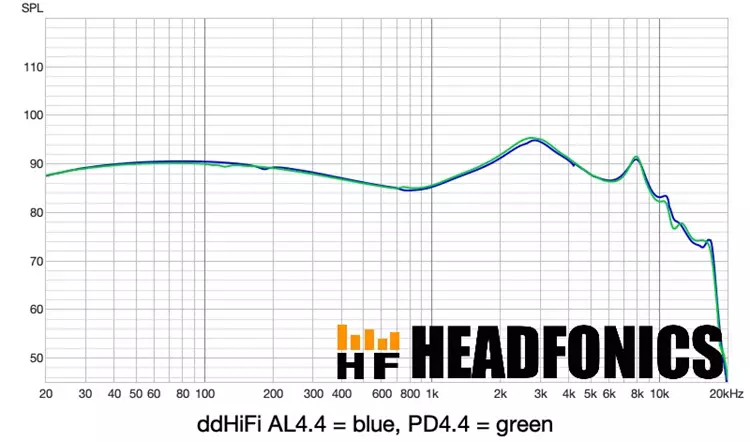
My measurements reveal a balanced channel, indicating good manufacturing quality. I also measure the difference between the AL4.4 and Pd4.4, and they look almost the same, with only minor differences of no more than half a dB.
The graphs indicate a neutral-sounding IEM with a small, barely perceptible peak at 8 kHz. The 8 kHz peak in the graph is exaggerated by the measurement tool’s cavity resonance.
Summary
I didn’t hear any difference between the AL4.4 and Pd4.4 during my initial listening impression before the burn-in. However, after prolonged comparison post-burn-in, I noticed a very subtle difference.
Both have a very neutral sound with a monitoring-style sound signature where every frequency range is presented equally.
The Pd4.4 sounds ever so subtly airier with crisper transients, while the AL4.4 has a somewhat more analog-style sound that favors the fundamentals, with more energy in the lower treble.
But let me be the one to tell you that the difference is very small, and I would admit it is negligible. If I hadn’t done an AB comparison in a long time, I wouldn’t be able to tell there was a difference.
The bass, midrange, and treble are very neutral on both, to the point of sounding boring or relaxed. However, they are not anemic or lethargic-sounding; they could sound very engaging at high listening volumes.
The perceived frequency response is very flat, which is perfect for monitoring. Aside from no boost in the bass or treble, the midrange is very flat and smooth, with no boost or cut, making them sound very accurate.
In terms of sound signature, they are very similar to the Sennheiser HD 6XX, a known near-neutral headphone.
However, the AL4.4 and Pd4.4 are even more neutral and monitoring-like in sound with a flatter frequency response.
Coloration
It’s hard to pinpoint any coloration in the AL4.4 and Pd4.4 due to their neutrality and flat frequency response. And I don’t hear any unnatural sounds like honking, nasality, shoutiness, and sharpness.
Even with the aforementioned minor 8 kHz peak, the treble sounds very smooth and flat overall.
My only complaint is that they both sound dull at low to medium volumes due to their flat frequency response. This is a normal response, not AL4.4’s or Pd4.4’s fault; the Fletcher-Munson Curve has something to do with it. They come alive at medium-to-high volumes.
Soundstage
I noticed that the soundstage size varies widely depending on the song; some recordings can sound big, while others sound small. But overall, the soundstaging on both the AL4.4 and Pd4.4 is above average.
They seem to accurately convey the spaciousness or intimacy of the recording environment and the intended sound-field effects, making them suitable for monitoring.
I did notice that the Pd4.4 has a subtly larger, more spacious stage with longer instrument decay, while the AL4.4 does not prolong the decay but does not shorten it either.
But please remember that the difference is really small and negligible.
Dynamics
Both the AL4.4 and Pd4.4 can take a lot of power and go loud without sounding distorted and dynamically compressed. And in terms of energy, they are both neutral, neither too lively nor too dull.
However, I noticed that they have below-average sensitivity, as I need to increase the volume slightly to match with other IEMs.
Synergy
Despite having noticeably lower-than-average sensitivity, the AL4.4 and Pd4.4 are sufficiently sensitive to be comfortably driven by any of my sources, including those with modest power outputs not mentioned in this review.
Additionally, the AL4.4 and Pd4.4 never produced any noise with any of the sources I paired them with; the cable never picked up any radio-frequency interference and was not sensitive enough to hear the sources’ noise floor.
Pairings
The AL4.4 and Pd4.4 are not the most revealing nor the most resolute IEMs I’ve heard; add to that ease of driving. This usually means both of them pair well with just about any source.
There is no difficulty being heard when paired with the iBasso DC-Elite. I only hear a detailed sound with excellent frequency response linearity.
At medium to high volume, the music is very engaging. The pairing seems ideal.
When paired with the MUSE HiFi M6 Double, I hear a noticeable increase in dynamics. There is also a hint of the M6 Double’s slightly lower treble energy being revealed by the AL4.4 and Pd4.4.
Finally, with the FiiO M15S. The upgrade in the bass impact, presence, and tightness is apparent. I also hear cleaner background decay, which makes the soundstage seem deeper.
Not to mention that the dynamics and maximum clean loudness were also improved, thanks to the M15S’s excellent output power.
