

Synergy
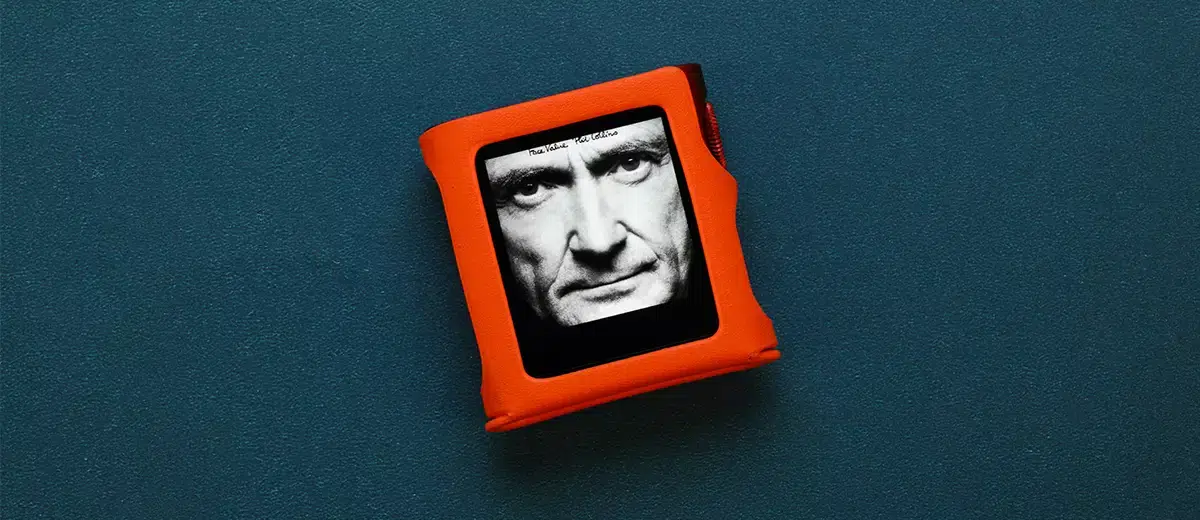
I couldn’t hear any noise with the headphones and IEMs I used. There is no hiss, clicking, or popping sound when the device is turned on without music playing. The output is clean and noise-free.
IEM Pairings
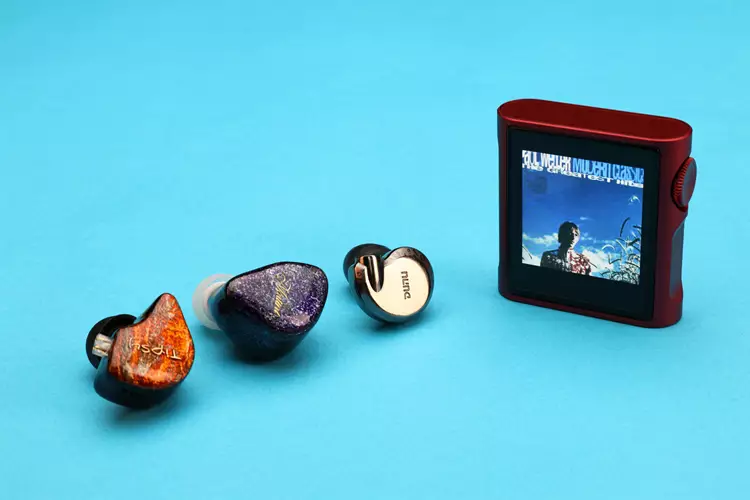
The power output rating of the M0 Pura seems to be perfectly aligned with today’s IEMs, as there seems to be excellent volume matching between it and my IEMs.
For example, when I paired it with the DUNU Falcon Ultra, a typical single-DD set, I heard explosive dynamics with no signs of distortion or compression at my maximum listening volume, with plenty of headroom to spare.
The resulting sound is very detailed with good staging. The pairing seems perfect.
When using the Tipsy M5, a tribrid with a mild bone conduction bass-enhancing driver. I hear a similar dynamic performance, and the sound is even more detailed with no added warmth or muddiness from the M0 Pura.
Finally, the QoA Martini is a tribrid with a stronger bone-conduction bass-enhancing driver. I hear a similar sense of effortlessness in the dynamics, as if I were using a larger DAP, and the sound is very resolving and spacious.
Headphones Pairings
When I read the spec sheet and saw the M0 Pura’s output impedance. I predicted that it would have no difficulty driving headphones with reasonable bass control and drive.
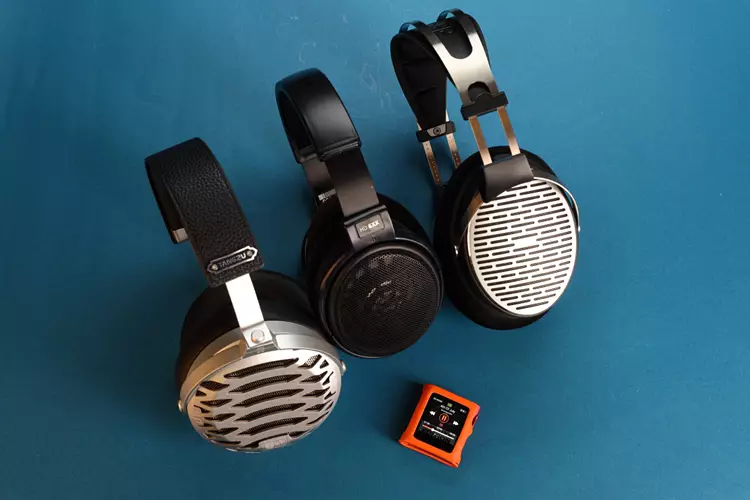
I was right; the M0 Pura drives the FiiO JT3 very well, which is even more impressive once you see how small it is next to the JT3. Using its 3.5 mm stock cable, I reached my usual listening level at 85 percent volume with no signs of compression or distortion.
When I switched to TANGZU Ox Demon King, a more difficult-to-drive planar set, using its 3.5 mm stock cable. I also heard an effortless sound at a reasonably loud level with the volume set at 85 percent, and I also heard no sign of distortion or compression.
What really surprised me was that when I paired it with the Sennheiser HD 6XX, I expected the M0 Pura to struggle. But I was wrong.
The M0 Pura drives the HD 6XX fairly well with good loudness and dynamics at 80 percent volume using a third-party balanced 4.4 mm cable.
Not only does this pairing sound dynamic, but it also sounds good overall. The bass is well controlled, with no muddiness or lethargy; I hear good energy.
The midrange is very neutral, and the treble is extended with good detail retrieval. I must say that even though it is not the perfect source for the HD 6XX, I am satisfied with it driving the HD 6XX.
Selected Comparisons
I may have used all the IEMs and headphones mentioned in this review.
Still, for this comparison, I mostly used the Tipsy M5 due to its near-neutral, near-monitoring, highly revealing sound, and the Sennheiser HD 6XX headphones to test the DAP’s handling of a difficult load.
TempoTec V1
Technical & Design
The TempoTec V1 natively decodes and outputs bit-perfect audio, including DSD 256 and PCM up to 384 kHz/32-bit, from lossless FLAC, ALAC, and WAV file formats, as well as lossy MP3 and AAC file formats.
The V1 utilizes the ubiquitous Cirrus Logic CS43131 x2, one per channel. V1 uses the internal amplifier of the CS43131 chip to drive both the 3.5mm and 4.4mm outputs directly, delivering up to 215 mW balanced into a 32-ohm load.
The front is fully covered with a tempered glass panel, but the actual touch screen is only a small portion near the top, measuring 2″ diagonally and 240×320 resolution. There is a slightly annoying multi-colored LED indicator near the bottom.
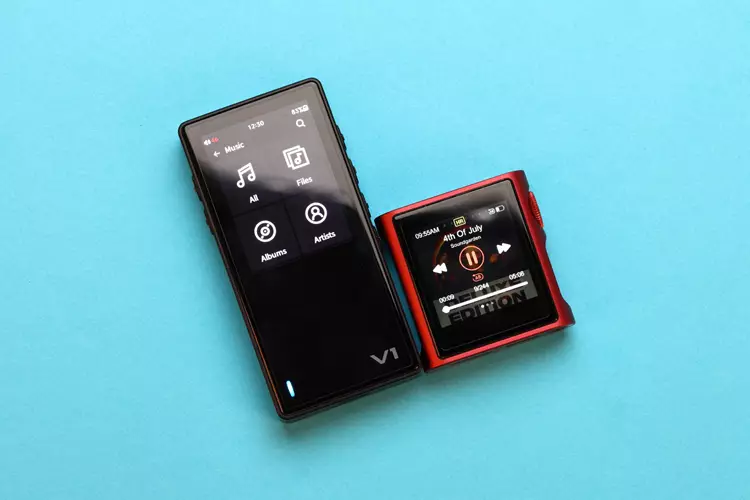
I find the TempoTec V1 aesthetically utilitarian, with a mix of industrial and modern styles. When viewed from the front, it is tiny for a DAP with a touch-screen UI, measuring 87.2 mm x 41.8 mm x 13.75 mm (HxWxD).
Performance
There is a very minor difference in their tonality, as they are both neutral-sounding with flat perceived frequency response. The main thing I noticed is in the way they present the music.
The V1 has a slightly relaxed, laid-back presentation with an airier sound, while the M0 Pura has a more aggressive, forward presentation with a more energetic output. This is caused by the M0 Pura’s aforementioned slight energy increase in the treble.
And when it comes to staging, the result is the same: the V1 has a more laid-back, spacious soundscape with slightly more laid-back, more accurate imaging, while the M0 Pura has a more forward sound with closer, more immediate imaging.
When it comes to driving the HD 6XX, the M0 Pura comes out on top, with punchier bass and more energy. The V1 sounds lethargic, with looser bass, less detail, and lower overall impact, especially on fast, bassy songs.
FiiO SNOWSKY DISC
Technical & Design
For its main processor, the FiiO SNOWSKY DISC uses a dual-core Ingenic X2000 chip running Linux for pure audio operation.
Released around 2020, it features Dual XBurst 2 (Main Cores): 32-bit MIPS32 ISA R5 cores running at up to 1.5 GHz.
For audio conversion, DISC employs dual Cirrus Logic CS43131 DAC chips, delivering 125 mW into 32 Ω at its 3.5mm output jack and 280 mW into 32 Ω at its 4.4mm jacks.
The DISC supports up to 2 TB of MicroSD card capacity, allowing direct music playback from local files.
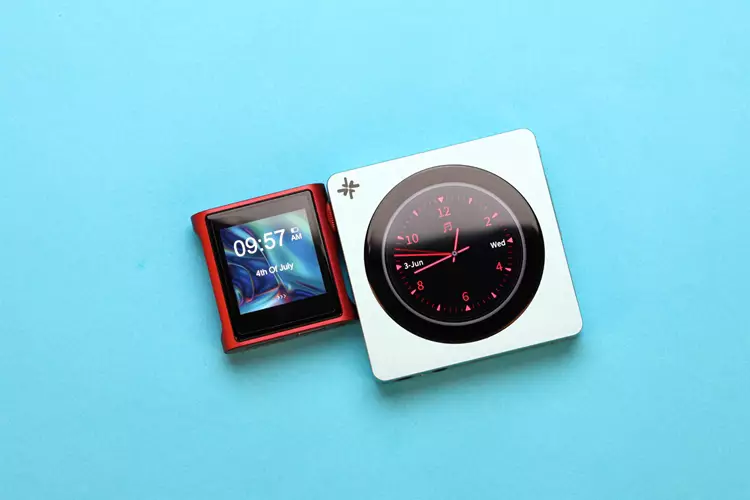
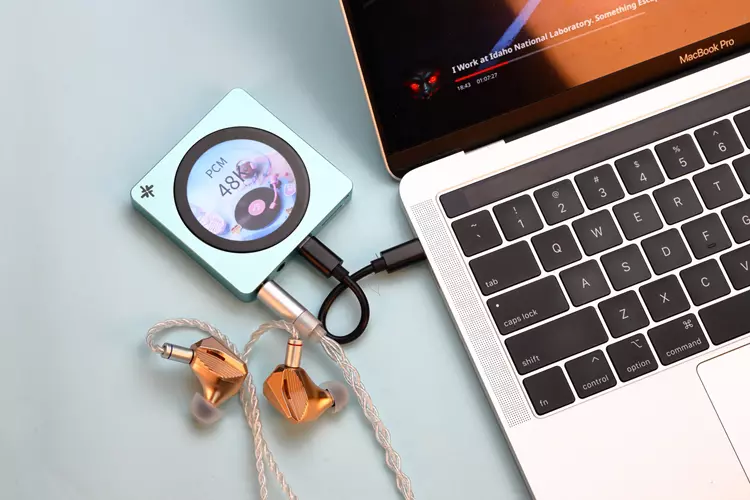
I find it somewhat unusual for a DAP to resemble a retro portable CD player, albeit in a much smaller form factor.
The DISC weighs 77.2 grams and measures 68 x 68 x 12.9 mm. It is very easy to carry and fits in a pocket for outdoor or everyday use.
Performance
The DISC and the M0 Pura are very close in sound as they both have a neutral sound signature; I also find them to have about equal treble energy. However, prolonged comparison proves that the M0 Pura has a more forward treble energy.
I find them both punchy in the bass and can go very loud with IEMs; however, due to the slightly more energetic highs on the M0 Pura, I find the DISC to have a marginally cleaner sound overall, with cleaner attack and especially decay. M0 Pura seems to have grain in the treble by comparison.
When it comes to soundstage, they both perform almost equally, with nearly identical size and shape; however, the DISC has a slightly more in-depth sound due to its cleaner instrument decay. The difference is very small, though.
As far as driving the HD 6XX, both perform equally well; there is a lot of energy and drive to be heard, and the tonality is very good with no warming or thinning of the sound.
Though neither is an ideal pairing for the HD 6XX, I find the resulting sound very passable.
HIDIZS x Linsoul AP80 Pro Max
Technical & Design
The AP80 Pro Max features a full-metal aluminum alloy chassis and uses Ingenic 1600E SOC processors, which are fast for use in a DAP. The DAC chip used is the ESS SABRE ES9219C x 2, which also has a built-in headphone amplifier.
The AP80 Pro Max has a power rating of 70 mW + 70 mW @ 32 Ω with a 3.5mm SE jack, and 190 mW + 190 mW @ 32 Ω with a 4.4mm BAL jack.
The AP80 Pro Max supports up to 2TB of MicroSD card storage, enabling direct music playback from local files. Additionally, it can stream music over a 2.4 GHz Wi-Fi connection via Tidal and Qobuz.
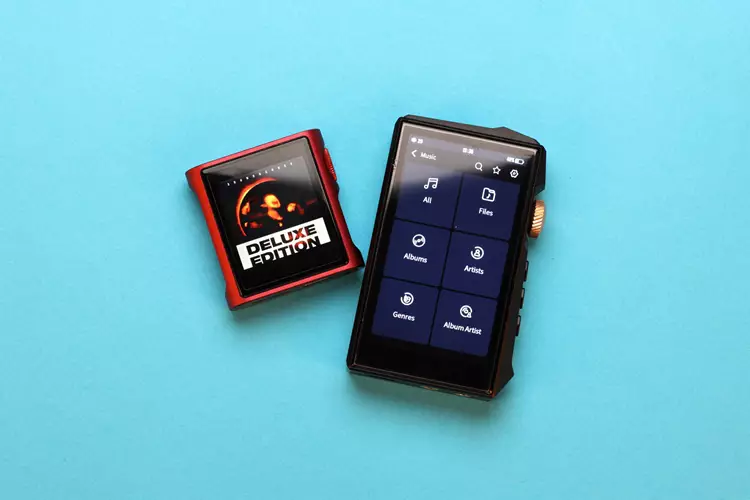
The AP80 Pro Max appears smaller in real life than it does in photos. I especially like its tempered glass and screen, sandwiched within a full-metal chassis with an asymmetrical, faceted, industrial, sci-fi-looking design, as well as the gold knob on the right side.
Performance
It turned out that every DAP in this review has a neutral sound, as the AP80 Pro Max has a very similar tonality to the M0 Pura, which is neutral.
However, it didn’t take long for me to notice that the AP80 Pro Max has fuller bass while remaining neutral in the midrange and treble.
Compared to the AP80 Pro Max, the M0 Pura sounds leaner, with more forward treble energy.
In terms of staging, I find the AP80 Pro Max to have a slightly larger stage and greater depth due to the cleaner background. The M0 Pura has more forward-facing images, while the AP80 Pro Max is slightly laid-back and more accurate in imaging.
When it comes to driving the HD 6XX, I find the extra treble energy and tight bass of the M0 Pura to be a better pairing than the less tight bass and neutral treble of the AP80 Pro Max.
Neither is an ideal match for the HD 6XX, but if I had to choose, I would go with the M0 Pura.
My Verdict
My initial worry about compromised sound and battery life due to its small size is gone after several days with the Shanling M0 Pura. Not only that, but it also didn’t disappoint; in fact, it impressed.
The sound coming from the tiny Shanling M0 Pura is surprisingly loud, powerful, and well-controlled. And the battery life isn’t compromised; it lasts longer than I expected.
I also like the practicality of its size and the ease of use via the Shanling Mtouch operating system, which is basic yet includes useful features like a customizable EQ.
My only nitpick is that it has only a 3.5 mm output jack and requires the proprietary Shanling 3.5 to 4.4 balanced adapter to enable 4.4 mm balanced output.
If there were a separate 4.4 mm balanced output jack, the Shanling M0 Pura would have been a near-perfect mini-DAP.
Shanling M0 Pura Technical Specifications
- Product Name: Shanling M0 Pura Portable Hi-Res Audio Player
- DAC Chipset: Dual Cirrus Logic CS43131
- Dimensions: 43.8 × 45 × 13.8 mm
- Weight: Approx. 35.8 g
- Display: 1.54-inch HD touchscreen (240 × 240)
- Battery Capacity: 650 mAh
- Playback Time: Up to 9.5 hours
- Storage Expansion: MicroSD card slot (up to 2 TB)
- Bluetooth Version: 5.0
- Codec Support: LDAC, aptX, AAC, SBC
- Hi-Res Support: PCM up to 32-bit/384 kHz, DSD up to DSD128
- Output: 3.5 mm (single-ended & balanced)
- Output Power: 100 mW @ 32 Ω (single-ended) / 250 mW @ 32 Ω (balanced)
- SNR: 121 dB (single-ended) / 128 dB (balanced)
- Output Impedance: <0.4 Ω (single-ended) / <0.8 Ω (balanced)
- Frequency Response: 20 Hz – 40 kHz (-0.5 dB)
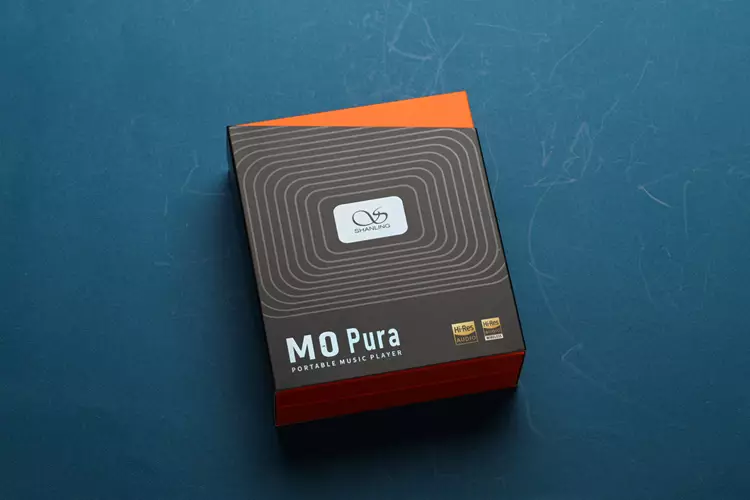
- Inside the Box: SHANLING M0 Pura Player ×1, USB Cable ×1, User Manual ×1
