

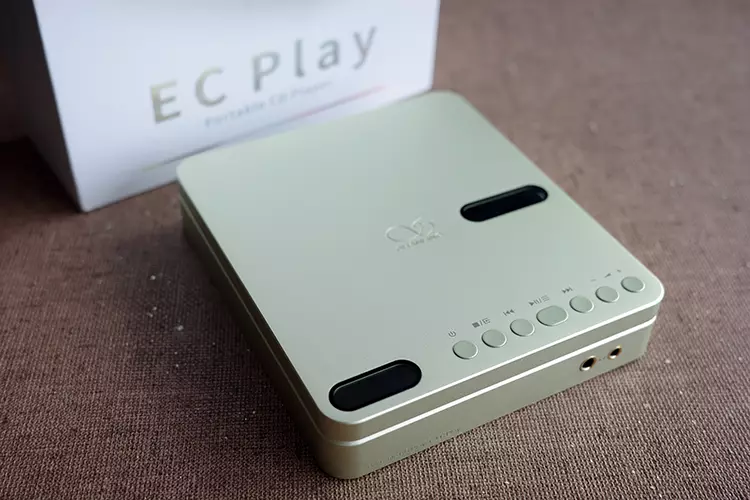
Connectivity
Bluetooth
This is almost a moot point anymore, with connections becoming very stable and quick to connect.
The Shanling EC Play is no different, through its BT6.0, once you figure out how to pair. I never had an issue connecting, and the BT connectivity ran out to about 10m+, depending upon my location.
The two-way BT connectivity comes in handy while using your smartphone or other streaming device and is a smart move on Shanling’s part.
USB-DAC
I hooked the Shanling EC Play to my MacBook Pro via the USB-DAC option without issue. Used for streaming purposes, I was able to utilize both Tidal and Qobuz from my laptop.
SPDIF
This connection came in handy while using the recently reviewed Edifier M90 and the AUX-in option. The pair functioned without issue, and I spent approximately 10-15 hours listening this way.
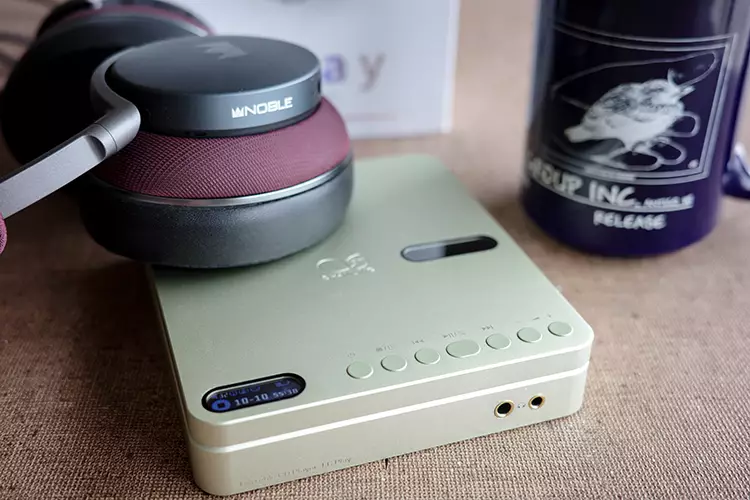
Synergy
Efficiency
The Shanling EC Play worked across many devices without issue. I did find that with harder-to-drive headphones, a bit more power would have been appreciated, but no matter the listening device, the sound followed what was mentioned above.
Power
With a high-gain maximum of 700mW on 4.4mm balanced, the EC Play does not have the most powerful amplifier. Move to 3.5mm single-ended, and it is even less. But I was never left wanting for more power, no matter what I used.
More would have been appreciated, but not completely necessary for the purposes I used.
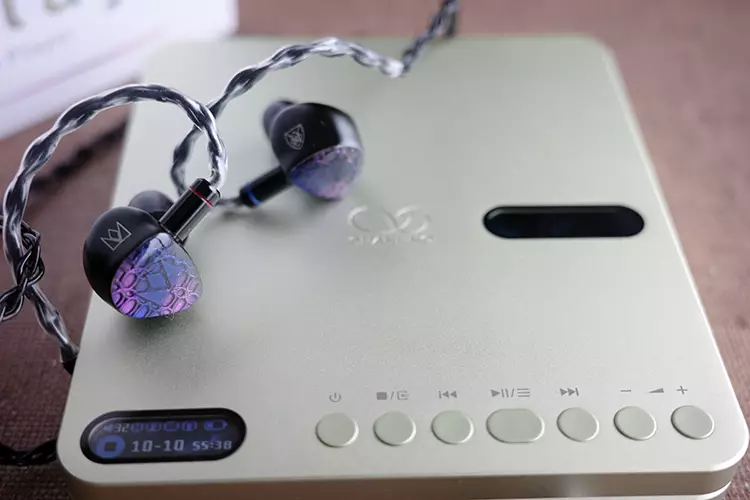
Pairings
The Noble FoKus Apollo Pro is a stellar recently reviewed wireless headphone that also incorporates wired technology for use. I tried both the 4.4mm balanced and wireless, with excellent sonic characteristics coming from both.
I did find that even running with the 4.4mm balanced, having the unit on gave me ANC capabilities and a deeper reach of bass.
With the Apollo Pro off, the sound was still quite good with excellent midrange and a push up top that was reaching, but without stridency.
The Noble FoKus Prestige Encore has become my go-to TWS set, and they, too, played nicely with the Shanling EC Play. A smooth character countered the fun, energetic, detailed sound of the EC Play.
There was a bit more punctuation in the lower treble region than the Apollo Pro, so I appreciated the resulting increased height in the soundstage.
I added the Noble Knight 4.4mm balanced for the trifecta of nobility, if you will, making for excellent wired IEM use. To me, the Knight still slides under the radar, and I still use them in all of my rotations, review or not.
The midrange does take a step back, but the frontal “attack” of the top end makes for a fun, punctuating sound that never grew tiresome.
Lastly, the Edifier M90 was connected with an SPDIF connection to the Shanling. I was able to shake the walls of my office with the duo, making for a very acceptable addition to my desktop setup. The bass reach was probably the best here, even with the diminutive size of the low-range driver.
The versatility of the Shanling EC Play proved itself across all choices above, and I could happily switch between any of them to satiate my listening needs.
Selected Comparisons
SMSL PL100PRO
Features
The SMSL PL100PRO used a single Cirrus Logic CS43131 DAC chip, as opposed to the Cirrus Logic CS43198 chip, and 2 x SGM8262-2 amplification modules of the EC Play.
The PL100PRO uses 32-bit dual Cirrus Logic CS43131 DAC chips, with 110dB SNR for better channel separation.
The PL100PRO also comes equipped with an automotive-grade suction-type motor mechanism featuring a slot-loading CD drive that purportedly offers stable, reliable, and consistent CD reading and playback. The Shanling EC Play uses a newer design with a magnetic clamp system for positioning the CD.
XLR ports highlight the connectivity of the SMSL, while the Shanling has USB-DAC and SPDIF options.
The balanced headphone output has a rated output power of up to 200mW per channel, for use with most IEMs and headphones that do not need much juice to run. The EC Play bests the meager SMSL at 700mW in 4.4mm balanced listening.
The XLR balanced line-out allows for easy pairing with high-end amplifiers, such as the SMSL PA-X Gallium Nitride I previously reviewed. The SPDIF digital out allows for versatile connection.
The SMSL PL100PRO also has RCA line-out and 3.5mm single-ended headphone output ports. Pre-amp functionality enables full compatibility with active speakers for added versatility.
Coaxial and optical output ports can act as a source for other high-end DACs you may add to the chain.
With a lower power requirement, the SMSL PL100PRO can be hooked directly into a system with a USB-C option for powering (not playback). USB-C charging is the same for the Shanling.
But some reports state that power requirements need to meet a minimum voltage for proper protection. I used an old Apple wall wart without issue. The Shanling EC Play has no such issue.
Design
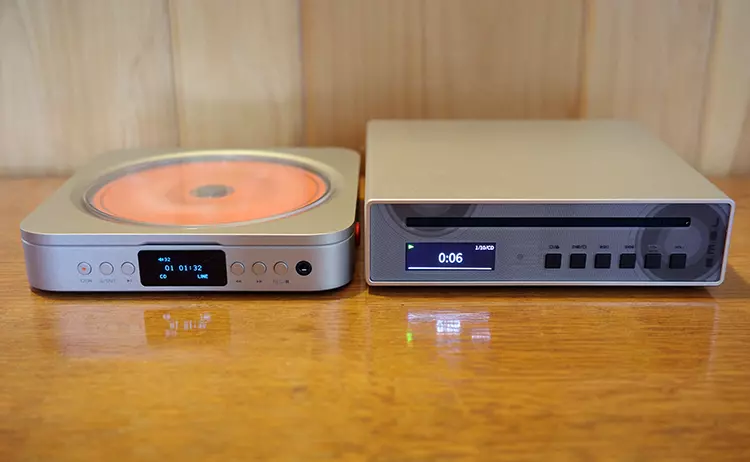
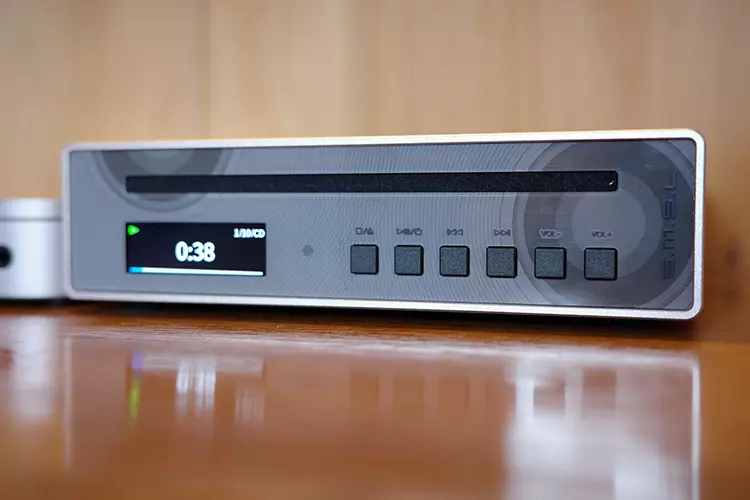
Similar in size to what you might have found in an early-90s car CD player or PC tower, the SMSL PL100PRO can be placed either in horizontal or vertical mode as space limitations require.
The SMSL PL100PRO comes in either a black or silver aluminum shell, with the same glass IPS LCD screen and accenting.
The fairly diminutive size (160 x 44.5 x 160mm (W x H x D)) adds to the versatility, as does the weight of just under 2.5lbs. The Shanling EC Play is more diminutive in size, adding to the portability aspect.
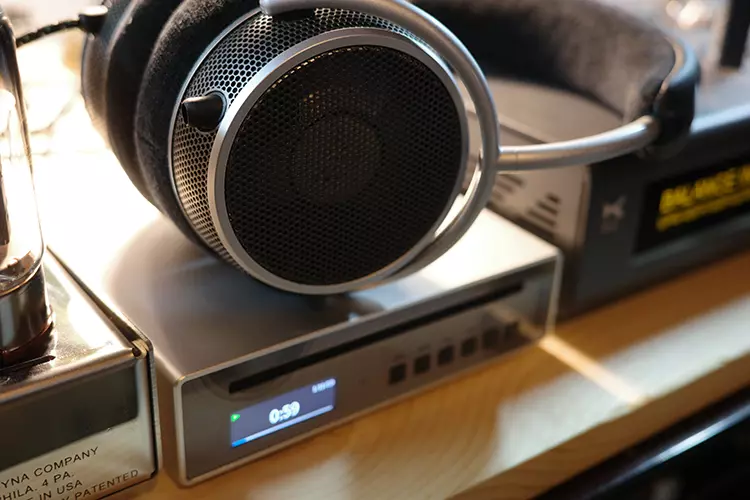
The front is dominated by the slot ingress/egress on the top of the screen, while the LCD screen and control switches cover the bottom.
Even in desktop mode, the black lettering of the controls is very hard to see. The remote is a must-use tool. The Shanling EC Play relies upon close visual inspection too, but uses raised tactile buttons for operation.
There is plenty of space on the backside of both, but the lettering is still hard to read. I do wish manufacturers would correct this.
The small LCD screen is well-lit, but the disc track is hard to read. In addition, the only viewing option is the track time counting up.
Once the initial screen of total time is displayed, the time changes to time played once the disc starts. The smaller “screen” of the EC Play shows much more useful information.
Performance
When I used the PL100PRO through its internal DAC with the Grell Audio OAE2, the PL100PRO delivered a fairly clean, neutral, and well-balanced sound signature.
The tonal presentation leaned toward accuracy rather than coloration, but there was no hiding the almost artificial neutrality to it. The fun factor clearly goes Shanling’s way, working well across listening devices.
The bass, when present, accommodated whatever the source music was. The “typical” CD sound of clean articulation certainly came through along with tight, controlled bass.
The energetic sound emanating from the Shanling EC Play enamored me more than the more sterile SMSL.
The attack is quick and sharp, while the slight delay of decay gives a solid amount of bass weight, if unspectacular.
Where the SMSL PL100PRO goes for accuracy and detail, the Shanling EC Play goes for energy, fun, and vibrancy, a marked departure from the former.
The midrange comes across as neutral, but with good energy, while the treble presents an extension that is competent without becoming strident or piercing. The EC Play pushes the midrange a bit forward, adding to the energetic signature.
Sometimes CDs can artificially add to the top end, becoming grating or harsh. The SMSL balances the line of expressing the extension without too much thinning of notes or becoming shrill. Neither became shrill or harsh in the treble region, thankfully.
The Shanling EC Play expanded the height of the soundstage more than the SMSL, and that presented a bit more open, airy sound, but one that filled in the spaces without losing note weight. It also supports gapless playback, whereas the SMSL does not.
Fosi Audio Merak
Features
Equipped with up to 210mW x2 through the 3.5mm headphone port, the Fosi Audio Merak supports gapless playback, which, to me, is a more important feature.
The Shanling EC Play also supports gapless playback while providing up to 177mW through the 3.5mm headphone port, and 700mW through the 4.4mm port.
The ESP anti-shock switch, providing 60 seconds of buffering, also comes into play should you choose to make the Merak “portable” in your vehicle.
The SC6137D + CS43131 + TPA6120 chipset and amplification module make perfect sense at this price point, providing more than competent playback abilities. The Shanling EC Play uses the Cirrus Logic CS43198 chip and 2 x SGM8262-2 amplification modules.
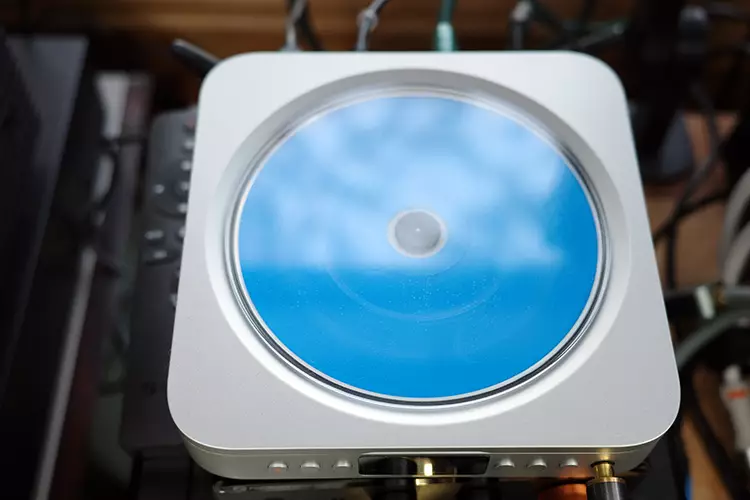
The top-loading player features auto-play and auto-stop when closed or opened. This is a very nice feature to have. One only needs to worry about the volume in such situations, especially when switching outputs.
In optical or Line Out mode, the Merak shoots the volume all the way up, relying upon the listening option for control. The Shanling EC Play does the same thing but does not have auto-play/stop when lifting the lid.
CD ripping is included, letting you archive discs directly to a USB flash drive in WAV format via one-touch ripping with the button right on the front. The Shanling EC Play does not support CD ripping.
With Bluetooth, Line Out (3.5mm), and optical, the Fosi Merak supports CD, CD-R, and CD-RW. CD-R playback supports FLAC, WA, WMA, AAC, and MP3.
USB playback is also supported through the USB-A port (up to 128GB), which also works for firmware updates. Very similar to the EC Play.
A 12V trigger output is included for use in two-channel systems that support such an option, making the Fosi Merak operational through the main system remote for powering on.
Design
The top-loading Fosi Merak puts out a slightly larger footprint than the BT20A MAX amplifier I tested, which hindered stacking a bit.
But if you have a dedicated shelving system (or side-by-side), that should be no bother. The two CD players are very similar in size.
The slim-line design of the Fosi Merak looks modern and mid-century at the same time. The OLED display is small and not really usable. The color of the Shanling looks modern and tasteful, but I wish for a bigger screen as well as a viewing portion of the actual CD.
The Fosi Merak uses equal round buttons on the front, whereas the Shanling EC Play uses raised round (and one oval) buttons on top.
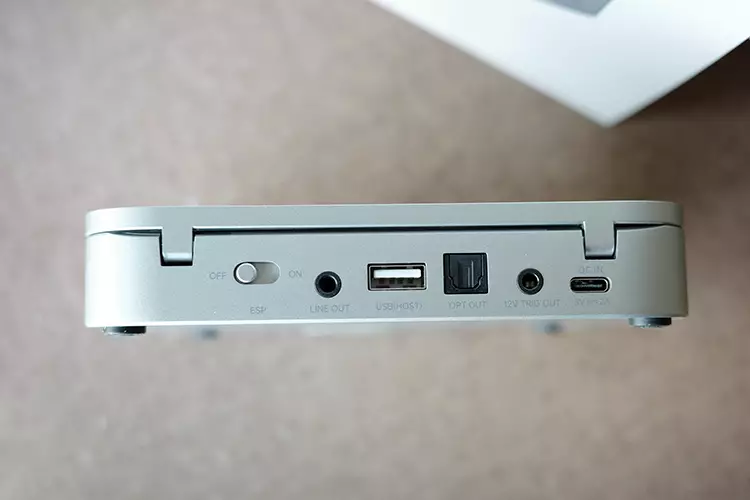
The rear is neatly laid out with the ESP switch, LO, USB-A (for ripping and firmware updates), optical, 12V Trigger Output, and the USB-C 5V (2A) power port.
Efficiency is the name for both front and back panels. The rear of the Shanling is much cleaner, having far fewer options for use.
To me, though, the two highlights are the auto-play/stop when the lid is lifted and gapless playback.
I will add that the CD tray has a divet for removing discs, but it is oriented towards right-handed people, with that divet where you would naturally put your right thumb when removing a disc. As a leftie, I adjusted. There are divots on both sides of the Shanling EC Play.
The slim design takes up little space, but know that with top loading, you do need adequate access to the drive for usage. But the Fosi Merak looks so good, you may want to highlight it within your system(s).
The same can be said of the Shanling. It looks good, deserving a highlighted spot within your system.
Performance
The Fosi Merak comes across as mature and natural without becoming boring or sterile.
The clean, clear, crisp sound signature emanating from the Fosi Merak makes for a pitch-black background listening experience without the sterility often associated with CD players.
Instead, the slight warming of sound adds to the richness that comes about naturally with a slight lean towards organic bloom.
The Shanling EC Play, on the other hand, presents a fun, energetic signature, which also belies the “typical” CD analytical sound.
The smooth character of the signature goes hand-in-hand with the detail retrieval CD players are known for.
The clarity of the song comes across as succinct, distinct, and rich without a hint of analytical quality. There is more energy from the Shanling, which carries similar levels of detail and clarity.
That said, there is less deep-reaching bass than I would prefer, and a bit more extension up top would be appreciated.
Mind you, the top is not rolled off but rather smooths out to prevent any potential peakiness.
The midrange sits a smidge forward, but without becoming shouty or dominant, making for a thoroughly musical tendency that lends a transitional quality to both ends.
The Shanling EC Play adds a bit more grunt down low, and a bit more punctuation to the top end, in that energetic manner that is neither piercing nor strident.
These two CD players are quite similar in approach but present a markedly different sound signature.
This would come down to the smooth character and better functionality of the Fosi Merak versus the fun, energetic sound signature, with less than stellar build quality.
My Verdict
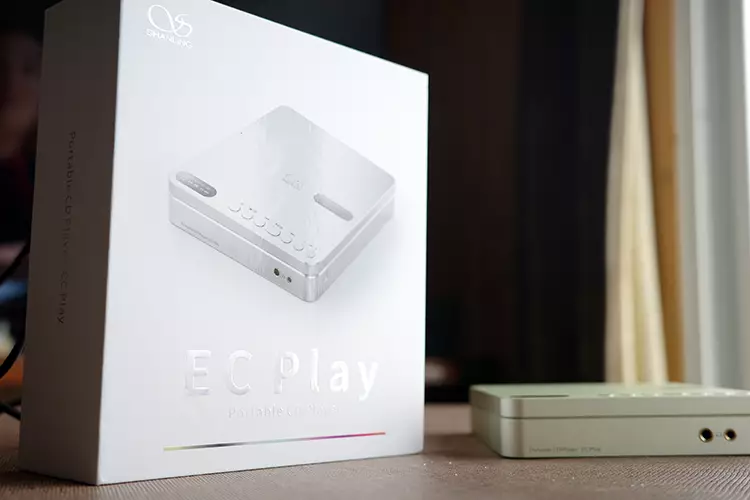
The Shanling EC Play is a CD player trying to rekindle the portability aspect of old 1990’s CD players. It mostly achieves this while using 2020’s technology.
Gone is the skipping of old players thanks to the buffering. Gone are the distortion characteristics often associated with loud playing volumes of old.
The Shanling EC Play brings a lot to the small, affordable CD market, from submenu choices galore to the option of 4.4mm balanced listening.
In a pinch, you can even use that for a balanced connection into a desktop device. Or use the SPDIF connection into a set of powered speakers for listening, which is indeed fun, energetic, and quite enjoyable.
But it is not without fault. Startup and play take a fair bit of time to get going, too. The controls are sometimes convoluted to decipher, but repeated use will help.
Add in that the viewing screen is quite small (as are many in today’s market), and this may give you pause.
But the sound signature is the star for me, with the energetic vibrancy that many CD players may lack, having a more analytical response instead.
I found myself raising the volume of some old David Grisman CDs, and it brought back wonderful memories. And after all, isn’t that the point?
Well, that and bringing in Gen Z to a possible first CD player, since it has been shown that they support the medium even without having a CD player.
The Shanling EC Play and some others I have reviewed might do that, and in that, I revel in the rekindling of a wonderful age in our musical heritage.
Shanling EC Play Technical Specifications
- Dimensions: 142 x 125.1 x 26 mm
- Weight: Approx. 418 g
- Display: 1.12-inch screen
- DAC: Cirrus Logic CS43198
- Amplifier: 2 x SGM8262-2
- Supported discs: CD/CD-RW/CD-R
- USB DAC Support: 384kHz/32-bit, DSD256
- Battery: 3450 mAh
- Battery life: Up to 12 hours
- Frequency Response:
- CD Playback: 20 Hz–20,000 Hz
- USB DAC: 20 Hz–40,000 Hz
- Bluetooth Version: 6.0
- Bluetooth Receiver: LDAC/AAC/SBC
- Bluetooth Transmitter: SBC
3.5mm Single-Ended Output Power:
- Low Gain: 44 mW @ 32Ω (1.19 Vrms)
- High Gain: 177 mW @ 32Ω (2.38 Vrms)
- THD+N: 0.0006% (A-weighted, 2V)
- Channel Separation: 73 dB @ 32Ω
- Dynamic Range: 120 dB
- Signal-to-Noise Ratio: 121 dB
- Noise Floor > 113 dB
- Output Impedance: 0.5Ω
4.4mm Balanced Output Power:
- Low Gain: 177 mW @ 32Ω (2.38 Vrms)
- High Gain: 700 mW @ 32Ω (4.75 Vrms)
- THD+N: 0.0005% (A-weighted, 2V)
- Dynamic Range: 106 dB @ 32Ω
- Dynamic Range: 125 dB
- Signal-to-Noise Ratio: 125 dB
- Noise Floor > 111 dB
- Output Impedance: 0.8Ω
