

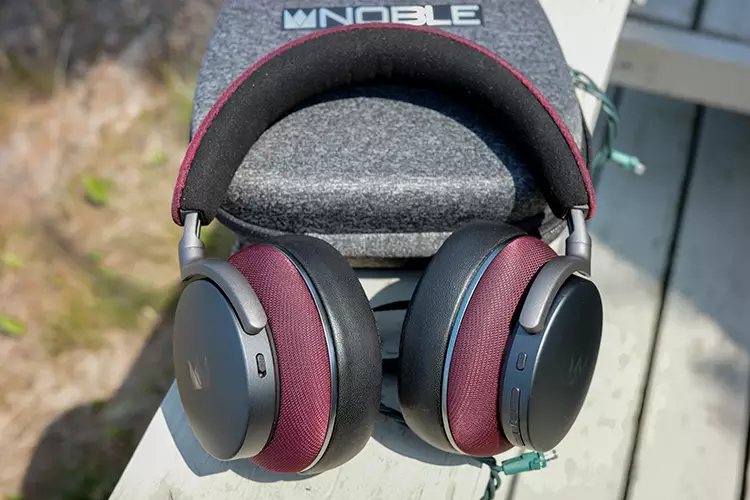
Lynn reviews the Noble Audio FoKus Apollo Pro, a revised edition of their popular closed-back hybrid dynamic and planar driver wireless headphones. It is priced at $699.00.
Disclaimer: This sample was sent to me in exchange for my honest opinion. Headfonics is an independent website with no affiliate links or status. I thank Noble Audio for their support.
Click here to read more about the Noble Audio products previously featured on Headfonics.
This article follows our latest scoring guidelines, which you can read in more detail here.
The history of Noble Audio needs no introduction. The Wizard is accountable for some of the most seminal IEMs of all time.
The tuning was impeccable, and the status among users and professionals warranted serious consideration when looking for top-tier IEMs.
With a focus on the portable, wireless market, Noble branched out like most other companies.
First into TWS IEMs with the likes of the Rex5, then the OG FoKus Apollo, which remains among my favorite wireless headphones of all time. The tuning of the original was one of bass dominance, with a mature sound to back it up.
Knowing not all would like the preponderance of low-end grunt, even with the ability to tone it down using the app, Noble dialed back the signature lows while tweaking the sound signature for a seemingly more even sound that would apply more liberally across users.
The company also worked on the size to make it more diminutive and portable, which is, of course, paramount to today’s market.
The material growth in “maturity” also presents a more upscale look and feel to it, rivaling others top tier wireless headphones in luxury feel and looks.
So, while not a new model, but rather an evolution from the original FoKus Apollo, is there enough difference to merit a look compared to the original and the likes of the Sennheiser MOMENTUM 5 Wireless and the HDB 630? We shall see.
Features
The Noble Audio FoKus Apollo Pro still features the same driver configuration of the OG, with a 40mm dynamic driver and a 14.5mm planar magnetic driver to handle the upper mids and treble.
I liked this setup in the original, and I am glad Noble did not redo the whole system. The lows are quite adequate for such a dim
Qualcomm’s QCC3084 chipset comes along for the ride to drive Bluetooth 5.3 connectivity. Providing support for LDAC, aptX, aptX HD, AAC, and SBC codecs, the Apollo Pro presents the user with the latest necessary offerings.
cVc 8.0 noise cancellation presents a mild upgrade as well. Noble has gone to great lengths to quell the “increase” in bass output of the typical noise cancellation firmware in their offerings.
The Noble FoKus Apollo Pro presents this latest addition without enhancing the low end so much that it overrides the rest of the signature.
An upgraded 3.5mm AUX cable presents an upgrade from the Apollo, too.
Noble again includes an attached boom microphone for enhanced voice response. Popular in the gaming community, the Apollo Pro deftly balances audio capabilities and enhanced gaming response with the inclusion.
Design
Materials
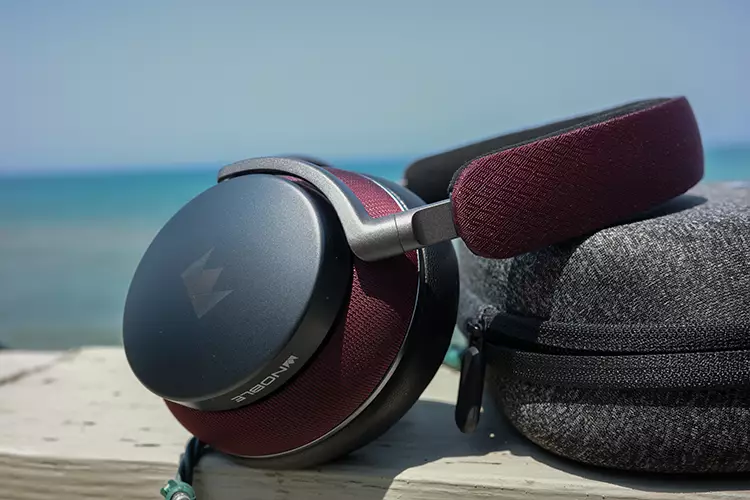
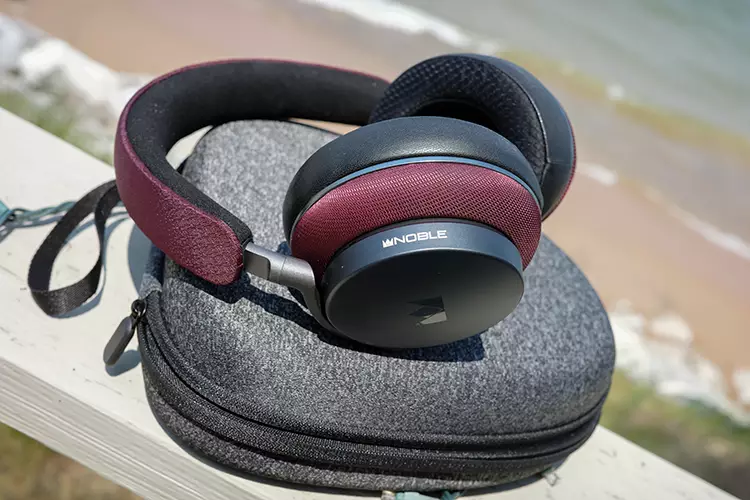
The Noble FoKus Apollo Pro still aims for top-tier, much like the B&W Px8 series, and successfully feels a bit more upscale in feel and looks from the original Apollo.
Where the original might have felt a bit more rugged, the Noble FoKus Apollo Pro feels a bit more luxurious across the board.
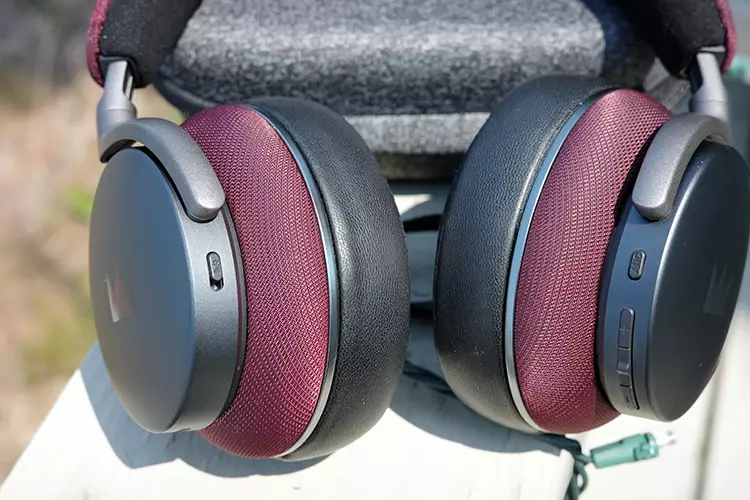
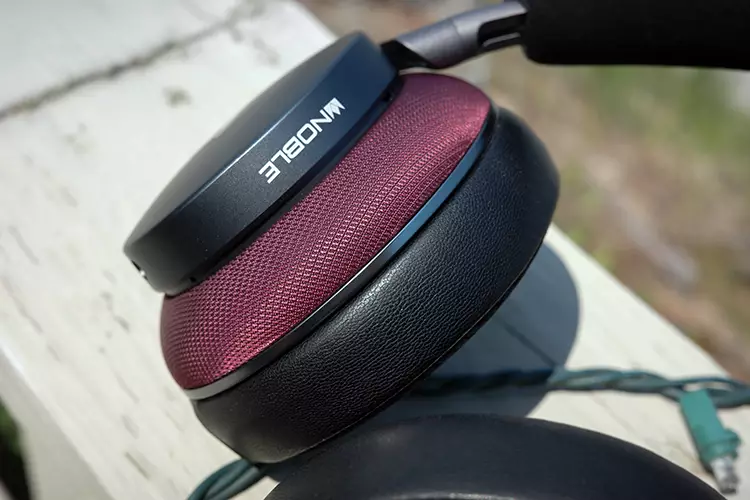
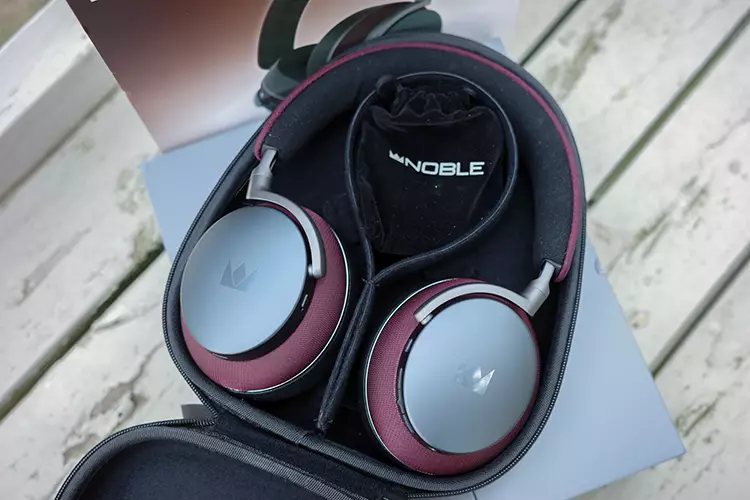
The dark gray stanchions continue thankfully, and when paired with the superb choice of dark burgundy, it makes for a stunning but subtle look of grace and presence.
I did have to pull the headband to almost the maximum again, as noted in my Apollo review. But the clamping pressure seems to have dropped a smidge, so it seems Noble may have taken users’ opinions on the pressure.
That slight slackening of pressure does not diminish the ability to stay in place, and I never felt the Noble would slide in an unwanted or unwarranted direction while moving liberally to some excellent Bluegrass.
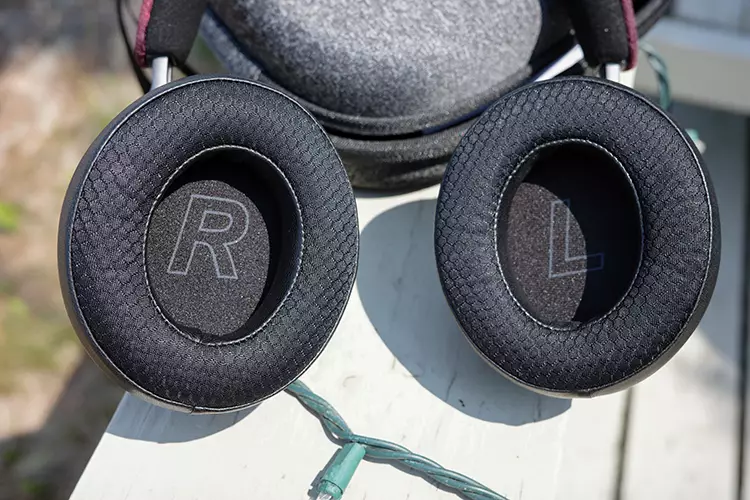
The soft, cushy ear pads have been replaced with a slightly firmer mix of materials, but maintain their breathability for long-listening comfort sessions.
The feel is a bit more upscale and plush while presenting the user with a firmness akin to what the fine leather seats of luxury sedans might.
Aesthetics
I love dark burgundy and purple colors, and they have been my favorite colors for decades.
So when Marcus asked me what color I desired, it was almost like the kid in the toy shop getting to choose the color model car of his choice. I did grin like a 7-year-old when I opened the package upon arrival.
The combination of dark gray and burgundy looks superb, as does the dark blue/gray in pictures. But as the saying goes, pictures do not do justice to the model.
Comfort & Isolation
On the OG, there was a preponderance of bass with ANC activated, but the Noble FoKus Apollo Pro tames this a bit, showing that Noble continues to fine-tune these attributes.
While wearing the Pro without the aid of ANC, I found the isolation to be superb, much like a fine closed-back headphone. The increase in comfort of the hybrid pads paid dividends in not only comfort, but sound signature isolation.
I considered the OG Apollo to have stellar construction, and appreciated the larger-sized case and feel to the headphone. Slimming down the folded size was indeed some wizardry, and those who pack light will surely appreciate this approach.
While I like the stow-and-go ability of the OG Apollo, I can certainly understand the need for space-limiting characteristics.
This does not dissuade me from the comfort of the model, and I appreciated the slightly lower clamping pressure of the current model. Long-term comfort is also superb, unlike the original.
While I could wear them for long sessions, I had to periodically adjust the headphones. Not so with the Apollo Pro, as long-term comfort does not suffer from either fit or clamping force.
Combine the quality materials, build, and technology of not only the build, but ANC, and the Noble FoKus Apollo Pro can indeed place itself in the top-tier class.
ANC
While I could find no numbers in comparison to the original Apollos’ -35 dB of isolation, I found in a seat-of-the-pants comparison with similar lake wind and waves coming off of Lake Superior to be quite similar.
The Noble FoKus Apollo Pro does seem to be a bit more refined, taming the low-end bump often found in ANC treatments, including the OG Apollo.
Whenever the music was playing, ANC almost completely covered any external noise, without encumbering the sound signature.
To me, this is what ANC should do: completely isolate the music from outside noise, without enhancing any set of frequencies, nor changing what we hear.
I find the improvement across the two models to be a positive result of tweaking the technology for the benefit of the sound first-and-foremost, and isolation second.
Controls
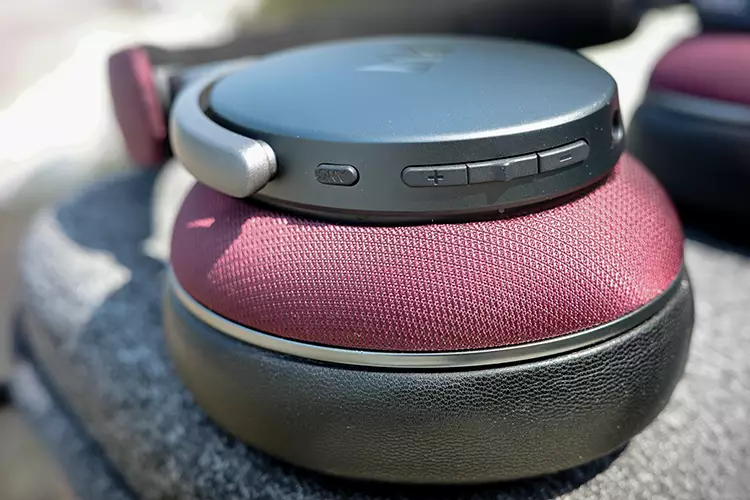
Much like the Apollo, the Noble FoKus Apollo Pro presents all controls except the microphone isolation button on the bottom of the right ear cup.
It did take me a small bit to reacclimate to the button layout (this coming off a Sennheiser swipe-based wireless headphone), but once done, I had no issues.
I appreciate the separation distance and differentiation of the physical attributes between the two areas. A small button for ANC activation/changing, and a three-way switch for volume up/down and play/pause/power.
I also appreciate how power on and especially off takes a concerted 2-second push of the center “hump” to activate.
This prevents accidental powering on or off on the Apollo Pro. Accuuation of all buttons was precise and added to the upscale nature of the headphone.
Noble App
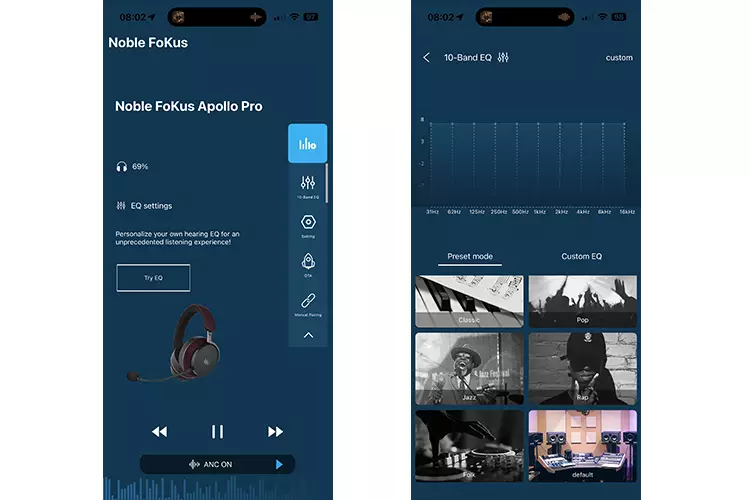
The Noble smartphone app works across all wireless options for the company and provides a rudimentary level of features for the user to fine-tune.
A 10-band EQ is customizable as well as six included modifications ranging from Classic to Pop, Jazz, Rap, Folk, and Default (roughly +8dB across the spectrum). I did make a custom option, which was completely flat across all frequencies for comparison.
While the lack of a parametric EQ is slightly disappointing, the ability to customize with the 10-bands is quite adequate to me.
Battery Life
Providing up to 80 hours of uninterrupted listening without ANC, and up to 60 hours with ANC on, the Apollo Pro sits near the top of wireless headphones, matching the Apollo’s time, as well.
You can also listen to the 3.5mm single-ended cable and charge using the USB-C cable simultaneously, just like the original.
I was able to do two successful drawdowns during the test, coming in at very close to each number.
I did prefer running the Noble Pro in ANC-on mode personally but was able to get close to the 80 hours of non-ANC time allotted.
Packaging & Accessories
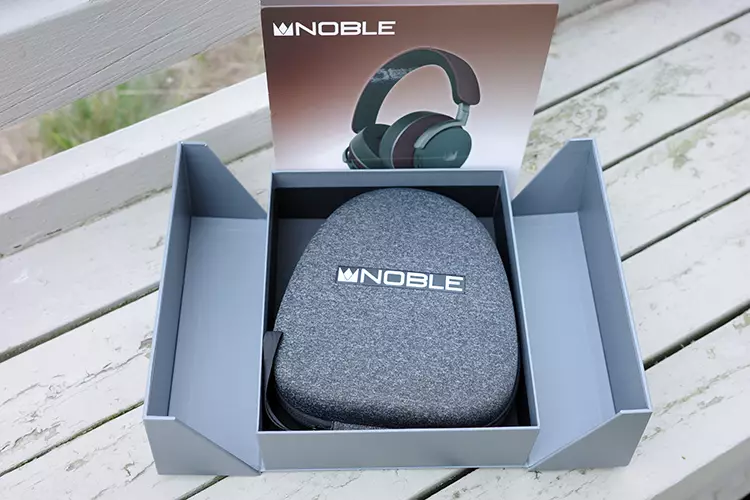
The Noble FoKus Apollo Pro again comes in a sleeved case, with the obligatory information, but continues to carry a higher-level feel to it in design.
Sliding off the outer sleeve, you are presented with a dual-sided opening box, much like the company’s IEMs, as I recall. The box has that higher-end feel, too. I like this type of presentation, and this also presents a level of protection due to the double seam across the middle.
Inside the box, you find the slimmer case (detailed below), the Apollo Pro, an included boom mic, a USB-C charging cable, and a 3.5mm single-ended audio cable. The obligatory user manual is included.
Carry Case
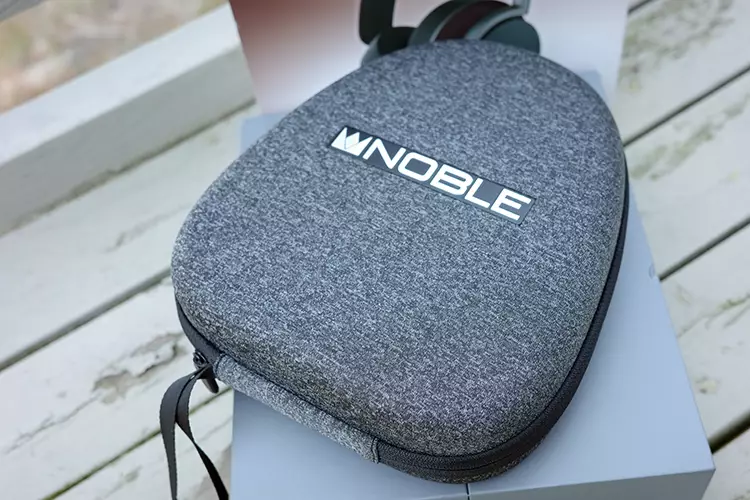
Noble has worked hard to not only slim down the Apollo to the current Pro iteration, but also the included case. I, for one, appreciated the larger-sized case and form-fitting insert while folding the ear cups flat.
But, like many who do commute, that increased size can become a hindering factor when packing for the day’s necessities.
So, in that regard, the redesign of the headphone while keeping the fold-flat nature, and the slimming of the case by about an inch, makes perfect sense for the intended audience. Instead of having a hard-formed insert, the use of a removable separator makes perfect sense.
The small compartment in the center of the removable section works for carrying the included accessories.
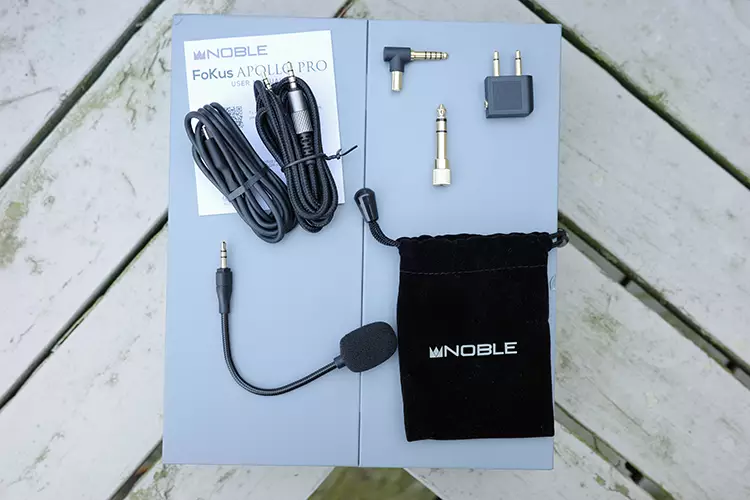
The Noble-branded velour drawstring pouch includes a 3.5mm to 6.35mm adapter, a right-angled 4.4mm attachment for the cable, a flight adapter, and a detachable boom microphone.
The USB-C-to-USB-C cable for charging and USB-C wired listening, and the upgraded braided 3.5mm cable sit below.
Add in that once you figure out how to use the Apollo Pro, the user manual will be left behind, and the decrease in size makes perfect sense.
Sound Impressions
I used the Noble FoKus Apollo Pro with my MacBook Pro, iPhone 16 Pro Max, and an upcoming portable CD player during the testing. Most of the time was spent almost equally between the iPhone and CD player, giving a good gauge of the Bluetooth sound qualities.
Summary
The first thing a listener will note is the taming of the lows in the Apollo Pro. While I appreciated the guttural rumble of the OG’s lows, it could be hindering many without EQ. Especially in ANC-on mode.
The fine-tuning of the sound signature removes that low-end grunt hump, smoothing the signature across the spectrum in a mature manner much like a luxury car might ride. There is still the OG’s vibrancy to the signature but tamed a bit to quell that overexuberance of bass.
Where the OG presented a fun-factor first and foremost, the Apollo Pro moves the midrange slightly forward and keeps the brilliance mostly. The smoothness between all can clearly be heard, but some may miss that bass hump.
The opposite of more presence from the mids comes across with a positivity, allowing those instruments and vocals within the range to become more prevalent in the sound signature, without becoming the center of attention.
The smoothness all the way to the top is appreciated and done in a manner where energy and vibrancy are slightly tamed, but certainly not lost. The energy and detail of the signature is still present in copious but not overly intrusive amounts.
Timbre
One might expect that with the taming of the low-end and smoothing qualities of the signature, the telltale proclivity of lows present in many Noble models would be lost.
Thankfully, that is not the case here, with the punchy lows still present, but in a more complementary fashion than showcasing.
While I, for one, appreciated the overly punchy lows of the OG, it did hinder the lower midrange response a bit. The Apollo Pro tames that overshadowing without losing the lows’ character.
A neat trick of engineering sound technical abilities that aid in the maturity of sound qualities.
The Apollo Pro will never be considered “sterile” or “dry” in response to the changes, though. The impact of lows gives the necessary presence across the spectrum as a fine foundation should.
The additional warmth provides a richness to the signature in a more even manner, without any one set or area dominating the signature.
This would indeed be considered a “sum of the parts is more beneficial than the individual parts” approach. The result is a signature that presents more coherently, without losing the signatory FoKus approach of the predecessors.
Staging & Dynamics
The taming of lows, while keeping the vibrant character, yields a signature that comes across as vibrant with excellent technical abilities to boot. Nowhere does the change result in a loss of clarity or detail retrieval.
Instead, that “taming” allows for the individual to show forth with more character. I found myself raising the volume more than on the OG as a result.
The bass is still impactful, but does not cover the lower mids as much, which allows for the spreading of instruments within this range.
This impact shows forth in a more coherent combination of individualism, adding to the overall effect instead of the slight hidden effect in this range before.
On complex tracks, the ability to “step out” pays dividends in vibrancy, without losing the maturity of overall character.
The natural tendency of three-dimensionality is still pervasive, but in a more even response than before. The height is still slightly dominant due to the expansion above, but not at the expense of width and depth, somewhat like before.
The melding together of all three presents a more even response, but without losing the character or quality of each delineation in direction.
The fine-tuning of the signature has helped present microdetails in a slightly more coherent manner, while macro details remain superb.
Click on page 2 below for my wireless performance impressions and selected comparisons.
