

Synergy
Power
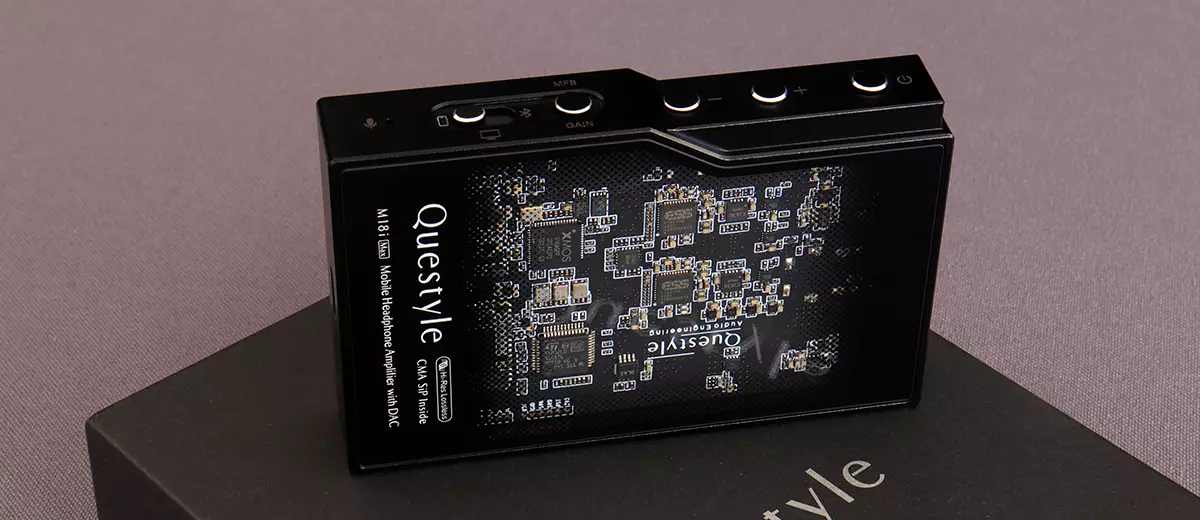
I don’t like to go against the grain and the industry here, but this comment has a story behind it. It started when I wrote Questyle asking what the power output numbers are on the M18i Max. I was surprised at the answers I received.
I was sent the following: 76mW at 32Ω, and 28mW at 300Ω on the balanced side. The single-ended connection was posted as producing 49mW at 32Ω and 7mW at 300Ω.
Either they’re being extremely modest with the specifications, or the specifications are missing a numerical digit.
How can those numbers be correct when I was pushing some demanding planar magnetic drivers off the 4.4mm Pentaconn tap? Even the voltages were low numbers compared to some modern-day cheaper dongle DACs.
The M18i Max seems to have a ton of headroom in power output, because it sounds closer to 300mW at 32Ω in output power with a minimum 4-volt output to my ears.
Pairings
I hate to sound repetitive, but the Sundara made a good pairing with the M18i Max due to the opening up of the soundstage effect and controlled bass response produced by the M18i Max with the Sundara on the 4.4mm port.
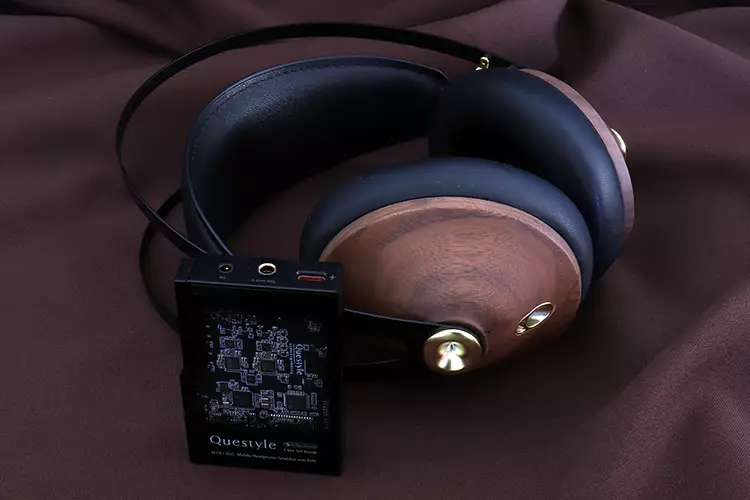
The Meze Audio 99 Classics Gen 2 also made a good companion, as the M18i Max promotes good control in the bass region and improves the resolution of this particular headphone. I’m not talking bass slam and impactfulness; I’m talking about control.
The M18i Max seems to do well with single dynamic driver headphones. Cans like the Sennheiser HD 490 PRO Plus, or even the HD 550, that in general produce neutral bass, benefit from the bass control of the M18i Max. On average, pairing the M18i Max with IEMs is way more forgiving.
All these headphones are similar in tier to the M18i Max, between $200 and $400 on average. I wouldn’t pair them with my Arya Organic, or something like a 300Ω beyerdynamic DT 1990 PRO on account of the high impedance and bright signature.
Selected Comparisons
Questyle M18i
Technical
The original M18i model had lots going for it at launch, particularly when you look at the internal component list, which reads almost identically to the M18i Max’s specified internal components.
The same ESS ES9219Q chips were used on both these models. Both models employ charging-while-listening methods, but the Max variant comes with dual-port power management connectivity. I sometimes find this implementation confusing, but you get used to it eventually.
Were there any improvements implemented on the new model? The answer is yes. The current mode amplification and the TTA decoding architecture were upgraded, although both models are rumored to produce the same 260mW on the balanced tap. Plus, the analog stage was improved.
Subtle sonic improvements were made, but the battery received the biggest improvement of all, scaling up from a 500mAh battery to an 1800mAh battery, which is a considerable upgrade.
Some argue that the poor battery life of the original model quickly gave birth to the new M18i Max variant.
Design
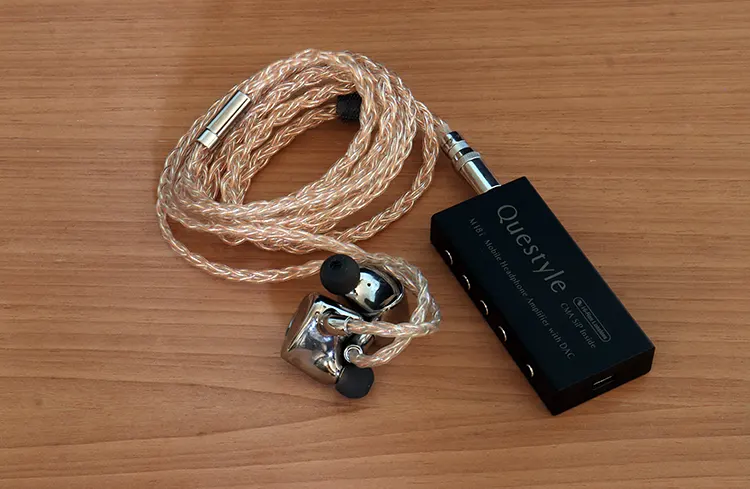
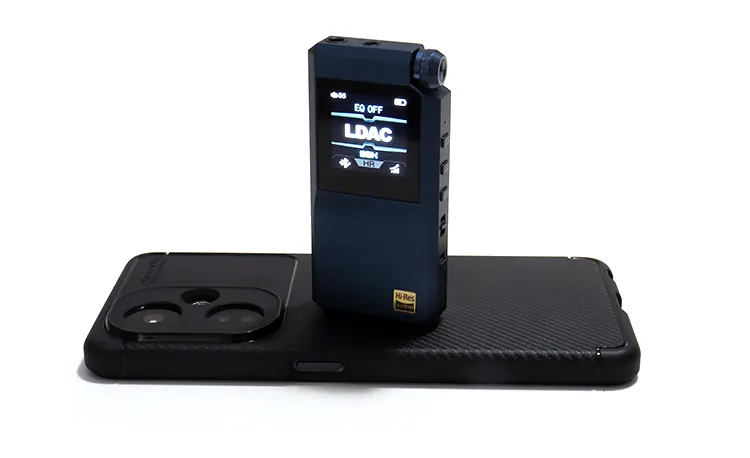
One drawback of installing a larger internal battery is that the size of the unit has to increase to accommodate it. The unit’s size did increase dramatically, but neither model is too large nor too heavy to use as a portable device.
Some might complain about some of the sharp corners on both these models, but I also would mention that they’re rather slick and have nothing to grab onto, except for a break in dimension on the side that houses the buttons.
That is the only aid in obtaining a good grip on the unit, but more importantly. That break was put there intentionally; prove me wrong.
That break actually helps you navigate the buttons and lets you know exactly where your fingers are, allowing easy, intuitive, one-finger operation.
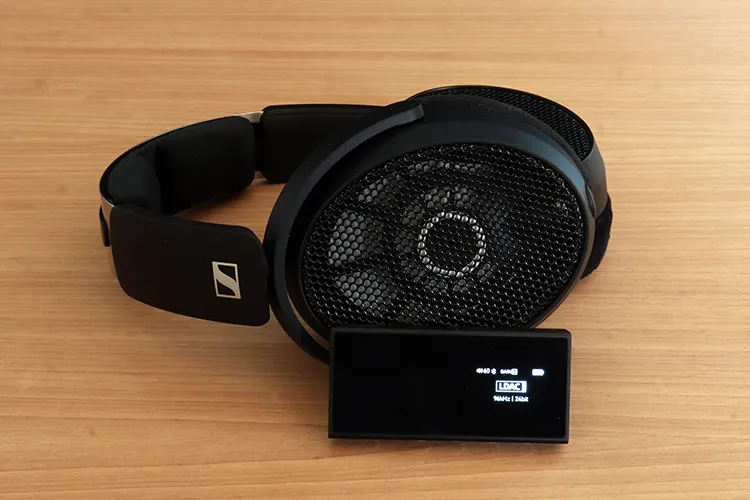
Performance
To be honest, no one who is not considered a golden ear will be able to tell the difference in timbre and sonic characteristics in general. Their overall tonality is similar since they use similar internal components and post similar specs.
But you soon notice a cleaner bass output with better control being produced by the Max variant when using demanding headphones.
There is an improvement in amplification design at work here. Or perhaps it’s the improved analog stage? Power output seems almost double on the Max variant to me.
So, even though the electronics seem improved in real-world testing, on paper they appear to be almost identical. But you can’t go by that here.
To me, the new M18i Max sounds better all around, especially if you use demanding headphones. Macro dynamics seem vastly improved on the new M18i Max, not just power delivery.
NiPO A100
Technical
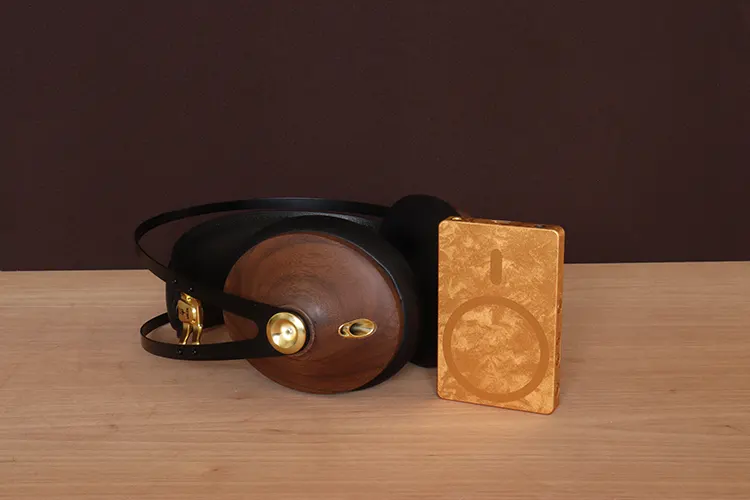
The NiPO A100 holds onto the artistic expression title in portable audio. The aluminum chassis sports a finish that has never been implemented by anyone else. It’s the choice component if you like bling, and it looks as if it came from a specialized boutique shop.
Aside from that, the components inside consist of a currently produced single ES9039Q2M with nine selectable digital filters via side-mounted buttons. If you’re into that, the M18i Max doesn’t satisfy that type of crowd.
On paper, the A100 is more powerful, posting higher power output numbers. The A10 is capable of 550mW max at 32Ω and a 4.1V max output capability, making it the more prevalent model when it comes to producing raw power.
Design
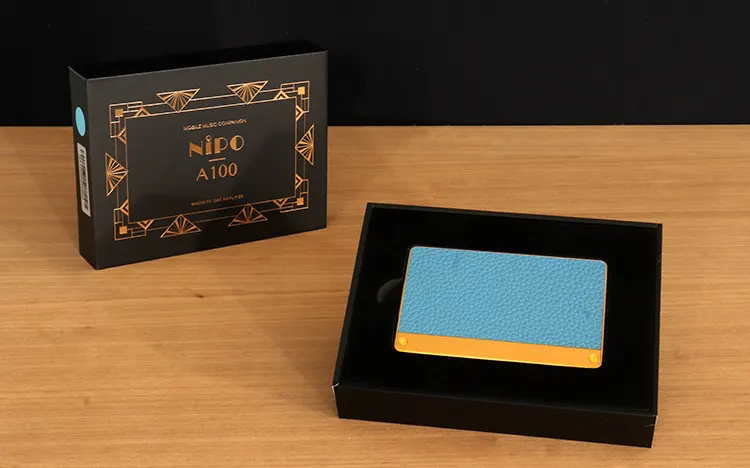
The finish on the A100 is called a Photolithography Nano texture finish. It gives the A100 a unique, unmistakable look, even from afar.
On top of that, NiPO managed to cover the front side with a gorgeous-looking piece of sky blue leather with a scale-like texture.
On top of that, they included a MagSafe system that allows you to magnetically safely stick the unit to a mobile device.
One aspect I dislike about the A100’s design is the charging method. You have to put it into charging mode, and the unit doesn’t allow the use of the unit while charging.
That makes the A10 a strictly portable device that’s at the battery’s mercy. It’s also a design that makes it desktop-unfriendly.
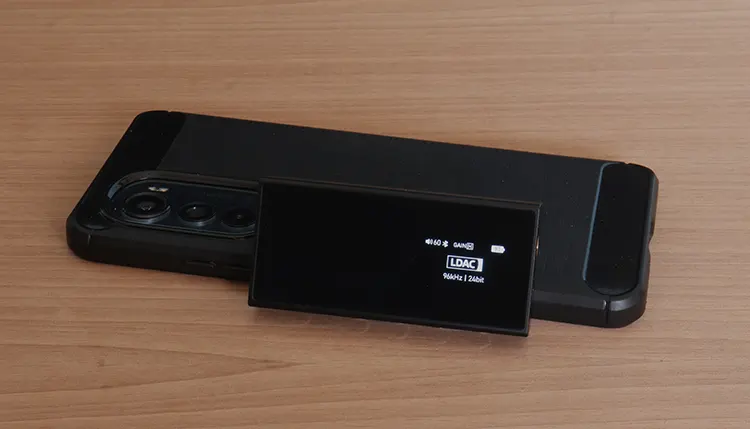
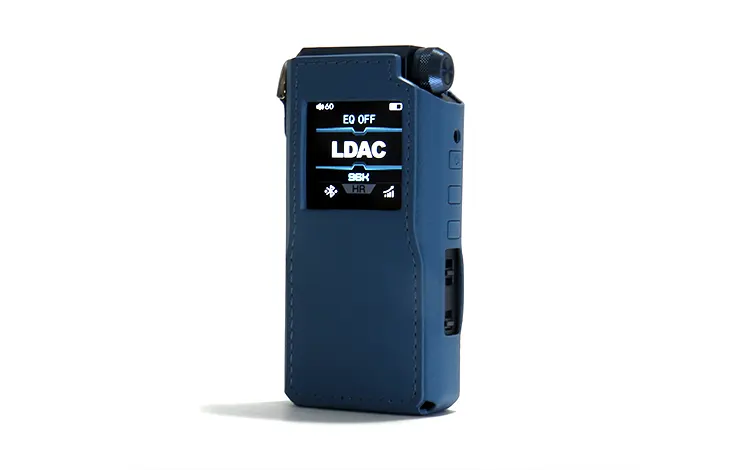
You will miss out on the see-through window that lets you peek inside to see all the components inside, like the M18i Max has, and the M18i Max also sports an LED screen that gives the user some information.
The A100 sort of leaves you in the dark on what the A10 is doing.
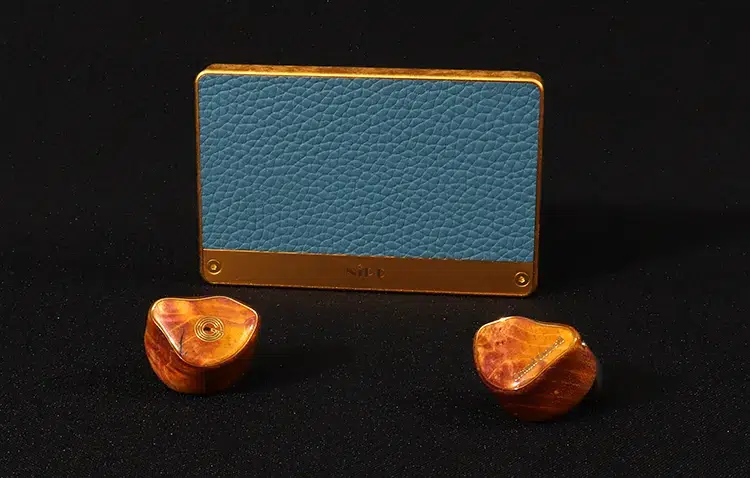
Performance
On power delivery, the A100 delivers, but that’s about it as far as sonic quality. Perhaps if you need a portable device and have decided on some semi-demanding headphones power-wise, then the A100 might outperform the M18i Max on occasion.
The A100 is a close-to-sterile-sounding DAC amplifier that caters to those looking for a neutral, smooth sonic character with a touch of warmth and a coherent presentation.
The M18i Max presents the listener with a speedier delivery, a quicker transient response with better micro detail, and a more focused soundstage.
The tradeoff is that the M18i Max sounds brighter, and that can push some headphones, and IEMs even more so, to sound excessively bright for some listeners who are looking for a more relaxed experience.
But the M18i Max can also produce more detail and better analytics.
FiiO BTR17
Technical
The budget model in this comparison is the FiiO BTR17, but if you know FiiO, they usually pack more beef in the patty compared to other component makers.
For example, the DAC section inside is a set of ES9069Q chips, which are formidable DACs. Add to the list of features that the FiiO has over the others, like MQA rendering.
Add to that some THX amplification and a QCC5181 Bluetooth implementation, and you start to see the value in this model.
Heck, the BTR17 is even compatible with FiiO’s control app. The BTR17 also comes with a custom faux leather cover, adding even more value.
You can obtain up to 650mW per side on the balanced headphone out tap. But you have to use the BTR17 in desktop mode and use a secondary power source.
That makes portability a bit harder since you’ll have to carry a power bank or something similar to power up the second USB-C port.
Design
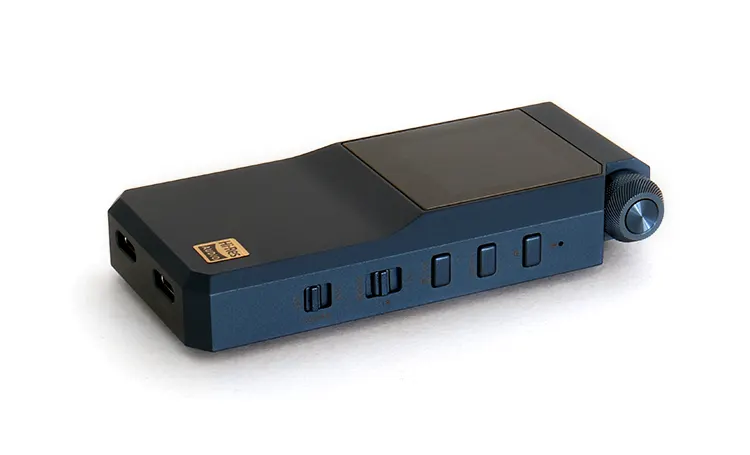
The overall design of the BTR17 is one of visual cues, starting with the side-mounted multifunction volume knob and a full-color display with access to many hidden features. The blue anodized finish finishes off the visual package.
My only design concern with the BTR17 is the rubber back. I’ve had bad luck with rubber coating and glued-on rubber pads since they tend to come off over time on me. But I’ve had my BTR17 for around two years now, and it’s still solid.
Performance
Both these units produce a neutral sonic signature, with the M18i Max introducing a touch of warmth into the mix.
The BTR17 caters to those who want technical performance, but the more musical of the two is the M18i Max.
The BTR17 has more forwardness and sounds highly dynamic, almost excited, which I find typical of THX amplification, in addition to a linear presentation.
The problem is that this sonic signature can venture into fatigue territory.
The M18i Max is smoother in general and can produce a more expansive soundstage. The BTR17, in general, is the more digital-sounding, while Questyle has improved their analog stage, allowing the M18i Max to produce a more natural timbre.
If we compare features, the FiiO BTR17 wins hands down, but sonically the M18i Max scores a little higher than the BTR17.
It’s close, but it’s noticeable. Features over sonic presentation is what we have here, but the sonic battle is faint at best.
My Verdict
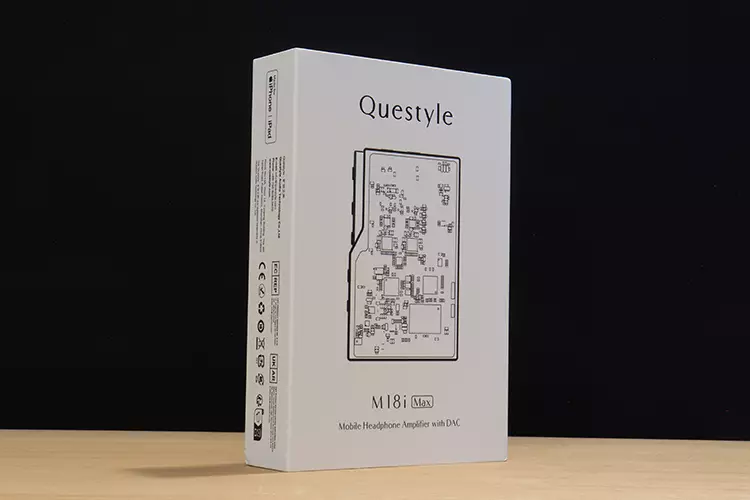
The Questyle M18i Max is what I call an ultra dongle that, performance-wise, can perform as well as a desktop unit, albeit with a limited amount of output power. It’s a dynamic, musical-sounding dongle that will not disappoint, sonically speaking.
I did feel that the Bluetooth implementation could use some attention since it lacks the latest aptX Lossless codec, and LDAC sound is not as refined as some other top Bluetooth implementations out there offer.
Plus, the Bluetooth only runs on a BT 5.4 radio, and not the new 6.0 variant. But it outshines the other models in sheer sound quality when used with a USB input feed.
The Questyle M18i Max excels where it has to, as a dongle DAC amplifier. Plus, battery life has gone from mediocre to excellent this time around. It’s a bit costly for a dongle DAC amplifier with Bluetooth, but sonically worth every penny.
Questyle M18i Max Technical Specifications
- DAC: Dual ESS ES9219Q
- Amplifier: Four proprietary current mode amplification modules
- Decoding architecture: Questyle TTA triple-stage decoding architecture
- Bluetooth: 5.4
- Wireless codecs: SBC, aptX, aptX HD, aptX adaptive, LDAC, LE audio, Snapdragon Sound
- Wired audio: USB DAC mode
- PCM support: up to 32 bit/384kHz
- DSD support: up to DSD256
- Outputs: 3.5mm single-ended, 4.4mm balanced
- Gain: standard, high
- Battery: 180mAh
- Battery life: up to 10 hours on Bluetooth, 8 hours on USB DAC
- Display: OLED status display
- Microphone: Built-in Infineon mic with CVC 8.0
- Apple support: Apple MFi certified
- Construction: CMC machined aluminum chassis
- Dimensions: 86 x 55 x 15mm
- Power output: 260mW @ 32Ω, 28mW @300Ω (4.4mm balanced)
