

Selected Comparisons
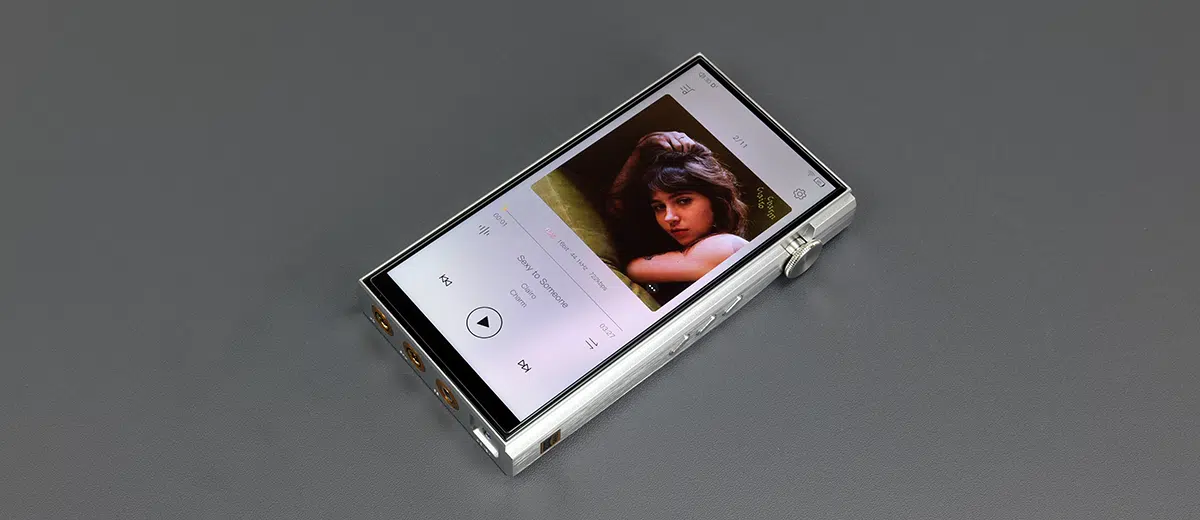
The following comparisons to the iBasso DX270 were conducted using PMG Audio’s Apx V1, Vision Ears VE10, and Elysian Labs Annihilator 2023.
All connections were in balanced 4.4mm output mode, with low amp gain and high DAC gain, except the Meze Audio POET, which was in high amp gain.
iBasso DX340 (AMP18)
The DX340 was debuted in early 2025, replacing the earlier DX320 model, and came with the new AMP15 as its stock card. Since then, AMP16, AMP17, and AMP18 have been released, with this comparison focusing on the DX340 paired with AMP18.
Technical
Both DAPs use discrete-designed DAC implementations rather than off-the-shelf chipsets, Snapdragon 665 SoCs with iBasso’s in-house FPGA Master 3.0 and Android 13.
The key differences on the digital side include the type of resistor-based DAC chosen, with a hybrid 20-bit R2R + 4-bit String DAC for the DX270, and PWM or Pulse Wave Modulation configuration in FIR Mode for the DX340.
Both are capable of decoding up to 32BIT/768kHz in PCM and native DSD512 via USB and local Android/Mango OS playback. For digital output via coaxial, this drops to PCM 32bit/384kHz and DSD256 on both players.
Both players offer system-level “Non-SRC,” you get bitperfect decoding with almost any audio-based app you install.
The analog side is quite different, courtesy of the DX340 swappable amp card system, though both DAPs benefit from iBasso’s 12C DC-input feature for power and battery health.
The DX270 solid-state amplification offers SE, balanced, and LO outputs with a fixed output of 1050mW into a 32Ω load in battery mode, rising up to just over 1.5W with DC-Input.
The DX340 output varies depending on the card you use. It can range from 660mW to 1.2W in balanced battery mode using AMP16’s tubes and AMP15, right up to 2.1W with DC-Input (AMP15). AMP15 and AMP16 have an SE output, but AMP18 and AMP17 do not.
With AMP18, that drops to 1740mW on a 32Ω load using DC-Input, which is a bit higher than the DX270 rating but much closer on battery power at 1170mW.
Both DAPs have a user-replaceable battery, but the numbers on the DX340 vary depending on the card you use.
The DX270 can range from 10 to 13 hours, whereas the DX340 ranges from 6 hours (AMP16 tube mode) to around 10-11 hours for the other cards, depending on usage.
Design
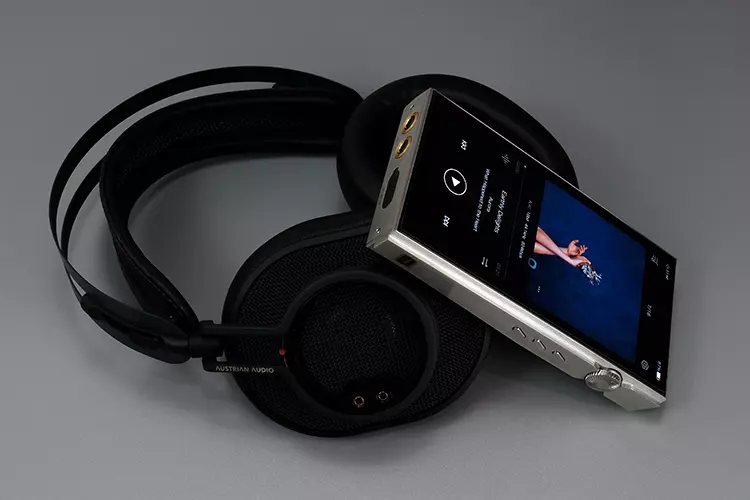
The DX340 is the bigger and heavier DAP when compared to the DX270, courtesy of its stainless steel build as opposed to aluminum and a larger 6″ 1080*2160 AMOLED screen over the DX270’s 5.5″ 1080 x 2160 px (Full HD+) display.
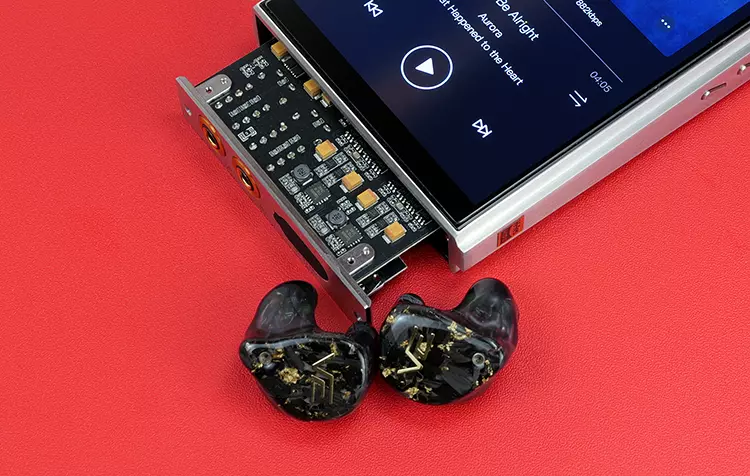
Also, the DX340’s swappable AMP cards will require more space than the DX270’s fixed amplification design.
Of course, a bigger size is not always a clear advantage. Some users might prefer a smaller, more pocketable size, so the DX270 will tick more boxes than the DX340.
With the additional 4GB of RAM and better quality panel, the DX340’s screen is not only more graphically ‘refined’ to the naked eye, but also moves a bit faster between screens and for background services than the DX270.
Smartphone users might find the DX270 screen adequate, but it is slightly petite in 2026, though easier to use than the 5″ version inside the DX260 for large library lists.
Controls are much the same with dual-function rotary dials for volume, power, and screen management. Since both have Android 13, the touchscreen navigation is identical. The most tangible difference is the DX340’s improved responsiveness, given its enhanced power.
The material design of the DX340’s rotary dial, combined with the additional stainless steel guard, enhances both the grip and security during daily use. The DX270 version is not quite as well protected and seems to be of the thinner type seen on the DX260.
Digital I/O on the top panel is matched; however, the DX340 analog options will vary by card. There is no SE I/O on AMP18, so LO/PO is balanced only. Whereas the DX270 gives you an SE output option, should you need it.
Performance
Both players play very much to the smoother side of the coin with a rich, analog-like sound signature, but with the DX340/AMP18, the devil is in the details.
Not just micro-detail, of which it edges ahead with a certain finesse, but the presentation of notes offers a more refined attack and longer decay, and a very sweet, almost perfect harmonic balance.
The DX270 is arguably beefier and more upfront, particularly through the mids. Vocals are closer and image ‘larger’ with a more distinct level of impact, with a comparative fade on spatial notes, an area that the DX340/AMP18 excels in.
Paired with the Apx in particular, the DX270 staging feels right beside your listening position, whereas the DX340/AMP18 pushes back a bit more, presenting a wider, more spacious sound.
Note from the DX270 mids have a bit more sustain focus, with a denser quality to them. However, those same notes have a slightly rougher edge, especially in NOS, though that never surprises me, having listened to a lot of NOS filters down through the years.
The DX340/AMP18 sounds more effortless in its presentation. Those same notes have a more polished sound; nothing sounds raw or overly aggressive. The interplay of spatial and main focus imaging elements sounds airier and more coherent with both the Apx and VE10.
Overall, the DX270 sounds more upfront, more forceful, more intimate. It’s an excellent choice in NOS mode if you want your vocals to take center stage. Go with AMP18 (DX340) if you want a lusher, elegant sound that delivers a more spacious and intricate performance.
iBasso DX260 MK1
The sample I have here is the MK1 version of the DX260, which was launched in early 2024. Last year, iBasso updated this model to MK2, bringing some technical enhancements such as an upgrade in the CPU, storage, and Android 13.
Technical
The DX260 MK1 lags behind the DX270 in almost every aspect of its ‘engine’ save for the allocated RAM, at 4GB each. That means a Snapdragon 660 rather than 665, 64GB of ROM rather than 128GB, and Android 11 rather than Android 13.
The DX260 MK2 rectifies a lot of those deficits, including moving to a 665 SoC, increasing the ROM to 128GB, and shifting to Android 13.
So, whilst not being able to personally verify it, I can say the DX270 is more responsive than the MK1, but possibly closer in real-world usage compared to the DX260 MK2.
What has not changed between the DX260 versions is their digital signal management and decoding implementation.
Both units use an 8 x CS43198 delta-sigma chipset with FPGA-Master 2.0 compared to the DX270’s discrete-designed hybrid 20-bit R2R + 4-bit String DAC and FPGA-Master 3.0.
The DX270 DAC is a more ’emotive’ choice, though others might argue that delta-sigma distortion control is superior. I suspect the lengths iBasso went to with their hardware resistor network and latest algorithm would go some way to mitigating that problem.
Decoding options are similar at 768kHz/32-bit for PCM and native DSD512 for local playback and their respective USB-DAC functionality. Coaxial output on both drops to 32-bit/384kHz.
The key difference lies in the filters. You get the off-the-shelf DAC options on the DX260, whereas the DX270 NOS and OS filters offer more tangible tweaks in the DAP’s performance.
Amplification also differs. The DX260 lacks DC-In and dedicated 4.4mm LO functionality, relying on battery power, with a maximum output of just over 1W (32Ω).
The DX270 battery output power is quite similar, but once you plug in the DC-Input, it gets a 50% boost, giving it an edge for optimal performance with more demanding headphones.
Design
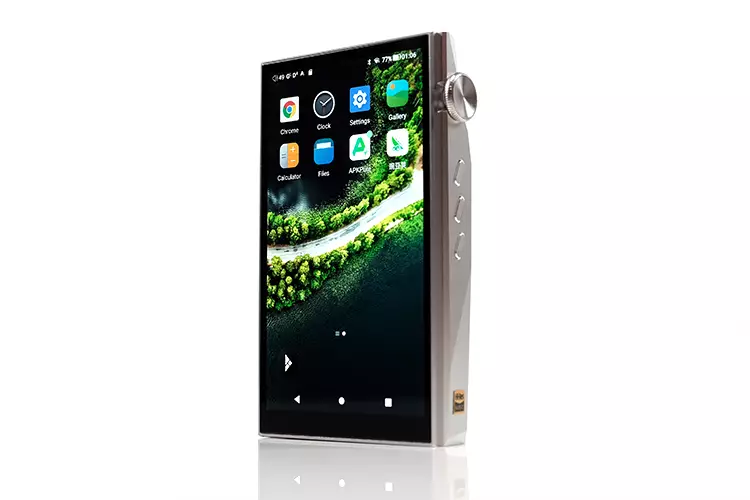
If you want pocketable, the DX260 (both versions) is the way to go. Both use aluminum housing with user-replaceable batteries, but the DX260 is smaller and thus lighter than the DX270.
The reduced size also means a smaller 5″ 1080 × 1920 IPS panel compared to the larger 5.5″ 1080 × 2160 version used by the DX270, so a little less manageable for large media libraries and typing.
I believe the DX260 MK2 also runs a little cooler physically, which is encouraging as the DX260 is noticeably warmer in idle compared to the DX270.
One factor might also be the DX260’s stock silicone case, which might not be as effective for venting compared to the DX270’s vented backplate synthetic leather case.
Both have a similar material and design approach for their controls, and both use comparatively thinner rotary dial builds (to the DX340) with a light guard and a long stalk.
The base panel is quite different for I/O. The DX260 lacks DC-In and a dedicated 4.4mm line out, with its 4.4mm and 3.5mm operating as dual-function LO/IO outputs controlled from the Android UI drop-down menu.
For day-to-day UI flow, the DX270 provided the faster, more legible screen experience. Android 11 is very much out of date on the DX260 MK1, with MK2 providing a better Android 13 experience that largely mirrors the DX270 save for the screen size.

Performance
The DX270 is the more natural, analog-sounding performer with a lot more meat on the note bones in terms of textured detail and a thicker, heavier low-end.
The DX260 stays very much in the neutral lane with a slight midrange and lower-treble emphasis. It has a quick, tightly controlled presentation in the lows with a drier, shorter level of note decay and a little less weight overall.
And yet, given those attributes, if you are thinking the DX270 denser sound will likely be mushier or veiled in its delivery, you would be dead wrong.
In fact, I found the DX270 staging qualities airier, with superior separation using the Apx and VE 10. Arguably, the perception of superior dynamic range and clarity felt stronger with the DX270 than the DX260 MK1.
Having never tested the MK2 version, I wouldn’t like to comment on whether it closes the gap or not, but with both IEMs, I felt the DX260 MK1 struggled to inject the same level of staging depth and air as the more grandiose DX270 performance.
The richer, more liquid timbre from the DX270 really suits the brighter mids and highs of the Apx to a tee. Harsher attacks break with ease, and though it won’t overly smooth over the Apx’s peppy highs, it does bring harmonic dissonance under more control than the sharper-sounding DX260 MK1.
NOS is where the Dx270 pulls ahead. The OS filters sound a bit flat and lacking in vocal bloom. The DX260 MK1 closes the gap a bit when compared to the duller OS filters, but once you switch back to NOS (D1), that added vibrancy in the DX270 mids is quite noticeable.
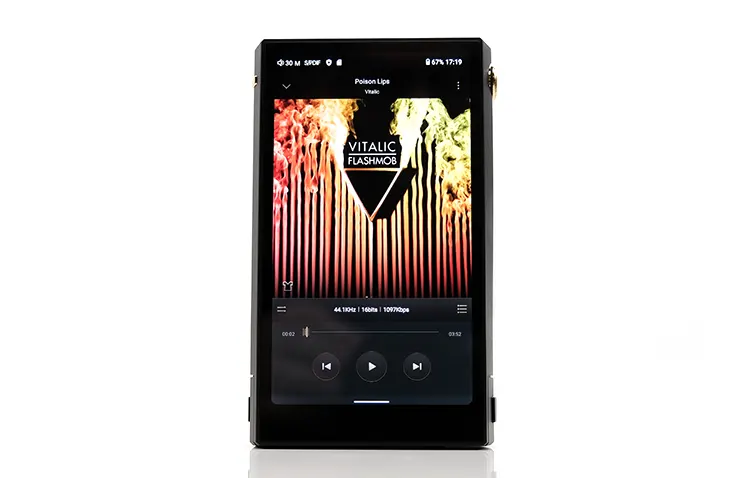
Cayin N6iii (R202)
The Cayin N6iii launched in late 2024 with a global rollout in Q1 2025. It came with the C201 as its stock motherboard, with the 2nd card E203, launching quickly after. Since then, we have had the T201 tube card and the R202, which is their R2R/1BIT combo motherboard.
Technical
In some ways, the N6iii sits between the DX270 and DX340, and in other ways, it’s a bit behind the DX270, depending on how you use it or what you value.
If it’s the engine, then the N6iii is on par with its matching Snapdragon 665 SoC and 128GB ROM. However, it’s slightly better for task management with 6GB of RAM compared to 4GB inside the DX270.
The odd choice was Android 12 for the N6iii, and it has yet to receive any Android 13 update. For an Android media player, the life-cycle is more limited than the DX270’s Android 13 ecosystem for bug fixes and security updates, though stylistically, the UI of both are not that far apart.
Inside the DX270, the hybrid 20-bit R2R/4-bit String DAC are fixed in nature rather than the N6iii’s swappable motherboard system.
You can have 1BIT, R2R, delta-sigma, solid-state, or tube with a wide variety of cards on offer. The R202 mix of R2R and 1BIT DACs has the closest alignment to the DX270.
Both DACs are discrete-engineered with 2 elements. However, the R202 elements are completely distinct, operating either as R2R for PCM or 1BIT for DSD.
The DX270 hybrid R2R/4-Bit String DAC is designed to tackle different elements of the signal in one go, but still operates primarily in R2R.
The N6iii/R202 decoding headroom is lower at 32-bit/384kHz for PCM and DSD256 compared to 32-bit/768kHz and DSD512.
Amplification output power is also weaker on the R202 for headphones at 550mW into a 32Ω load, balanced, compared to just over 1W from the DX270 (battery mode).
The N6iii/R202 is primarily a headphone card. with no line-out capability from its 4.4mm and 3.5mm SE outputs.
Design
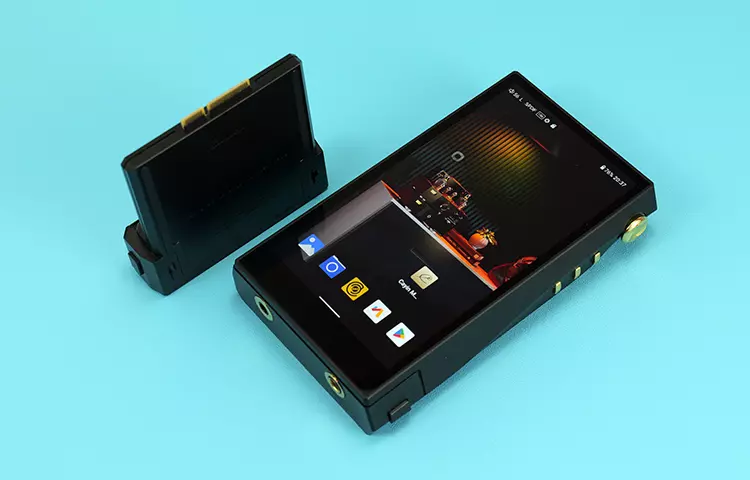
The N6iii is an evolution of the N6ii with its shorter but chunkier aesthetics, dark aluminum housing, and gold accents. The DX270 fits neatly into iBasso’s more streamlined aluminum ‘silvery’ models, such as the DX260 and DX180, albeit with slightly taller dimensions than the N6iii.
Handling advantages depend on, well, your hand size. The chunkier but squatter N6iii will suit smaller hands despite its additional 110g, but the lighter DX270 might offer superior handling in larger palms.
The slight problem I have with the N6iii is the split power/volume dial layout. I get that it prevents accidental bumps that turn off the screen or power, but it requires 2 hands to operate, whereas the single rotary dial of the DX270 feels more fluent for the same controls in one hand.
The larger 5.5″screen on the DX270 is also more useful for large media libraries, but I prefer the color gamut of the N6iii screen. Blacks are blacker, with better saturation compared to the slightly washed-out look of the DX270 screen.
One thing I have to note, even if not directly related to the DX270, is the ease of swapping the motherboards on the N6iii. You do not need a screwdriver or to turn it off; everything is handled with a dedicated chipset and physical latches, making the experience very user-friendly.
Finally, battery life. The N6iii/R202 combo’s moderate power rating provides a maximum of 15 hours in Auto mode, 16 hours in R-2R mode, and 14 hours using the 1-Bit mode on paper, which is higher than the DX270.
However, it lacks a DC-In equivalent. Though it basically kills portability, it bypasses the battery for endless sessions on the DX270 and prolongs its general battery life.

Performance
Since the R202’s 1BIT mode goes in a completely different direction to the R2R presentation, I will just focus more on the comparative R2R performance between these two DAPs.
Both are unmistakably analog in their delivery, with excellent texture and a firm vocal focus, particularly in NOS mode on the DX270.
However, one area stood out, and that is the treble overtones on the upper-mids of the Annihilator 2023 and the Apx. There is a little bit more upper-harmonic influence in the N6iii/R202 combo with these IEMs compared to the DX270, which seems to have smoothed out this coloration a little more.
That gives the R202 sound a bit of a sweeter but glassier sound quality that can pinch a little more on naturally occurring sibilance compared to the DX270.
The iBasso tuning is more robust, slightly meatier in NOS mode, but with a slight diminution of that treble influence, so sibilance seems more under control.
Arguably, the DX270 has a more rounded, firmer tone and a more weighted sound. It’s not quite as flamboyant as the R202 sound; there is a bit more neutrality in its imaging, slightly more control on the mid-bass bloom, and a vocal image that, surprisingly, is not quite as ‘out there’ as the R202 treatment.
I would still say that the DX270 vocal positioning is forward but more connected with backing instruments and spatial detail, whereas the R202 has a more ethereal quality to spatial placement.
If your IEM is decidedly V-shaped in the upper-mids or a little on the dark side, the R202/N6iii is a good pick, but if you have a monitor with stronger pinna gain and revealing highs, then the DX270 offers more balance and control.
My Verdict
The Android 13-equipped iBasso DX270 DAP is a continuation of the company’s evolving approach to what I would describe as a more natural, analog sound signature from their portable gear.
It is distinct from the sweeter, elegant sound of the DX340/Amp18 combo, with its more robust, full-bodied presentation, big vocals, and an excellent low-end response with bass-heavy gear.
It’s a joyful, easy-to-like performer, with plenty of power, especially with the more impactful NOS Filter and DC-In Super Gain option when switching to headphones.
Owners of fast smartphones or those used to flagship DAPs such as the DX340 might find the DX270’s 4GB of RAM more limiting, and if there is one weak spot, it’s the DX270’s sub-par wireless setup with 5G WiFi and short Bluetooth range.
Otherwise, the DX270 is a great all-around DAP with excellent portability, expandable power options, and an enjoyable sound with both IEM and headphones alike.
iBasso DX270 Technical Specifications
- CPU Qualcomm Snapdragon 665
- DAC 20bit R2R + 4bit String DAC
- Supported Formats: APE, FLAC, WAV, WMA, ACC, ALAC, AIFF, OGG, MP3, DFF, DSF, DXD, DST, including CUE, ISO, M3U, M3U8
- Internal Storage 4G RAM +128G ROM
- Additional Storage microSD card up to 2TB
- Battery Life Up to 13.5hrs
- Charge Time 2.5hrs
- Weight 265g
- Dimensions 136mm x 73.5mm x 19mm
- Digital Audio Inputs
- USB-C
- S/PDIF
- Analog Audio Outputs
- 4.4mm Balanced Phone Out
- 4.4mm Balanced Line Out, 3.5mm
- Single-ended Phone Out, 3.5mm
- Digital Audio Outputs
- USB-C
- Bluetooth
- Digital Coax
- Wireless Connectivity (WiFi/Bluetooth)
- WiFi 802.11a/b/g/n/ac(2.4Ghz/5Ghz)
- Bluetooth 5.0
- Output Power Balanced: 1575mW + 1575mW @32Ω
- SE: 416mW + 416mW @32Ω
