

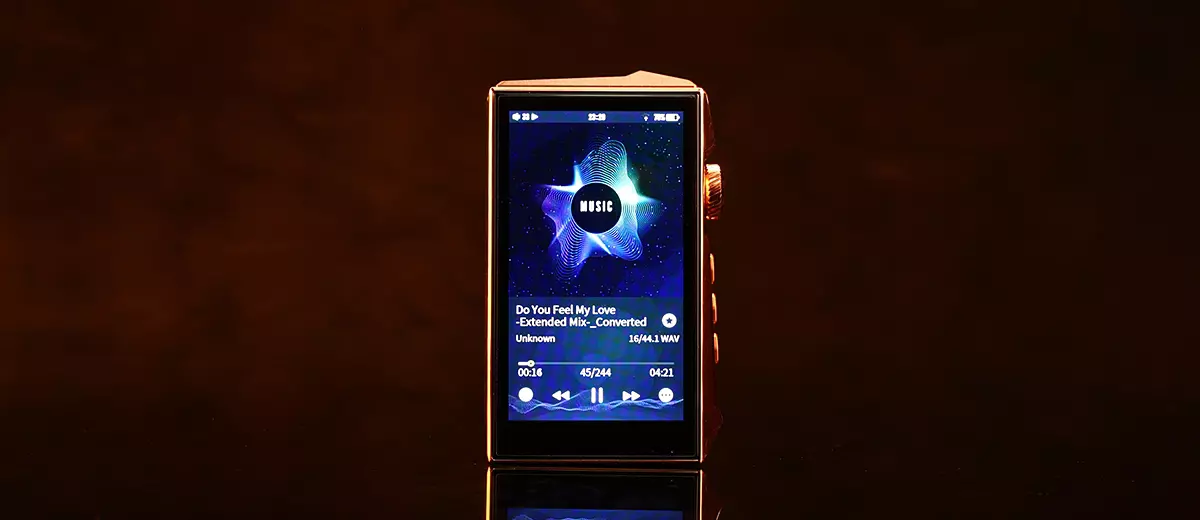
Wireless Connectivity
Bluetooth Transmission
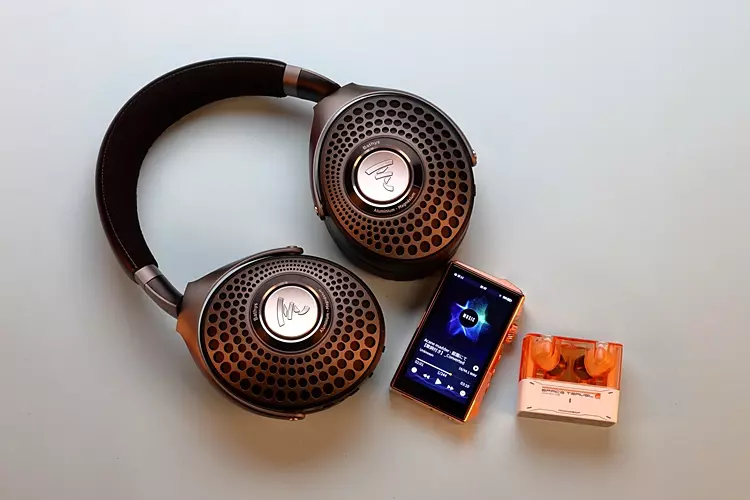
Once the initial pairing setup has been completed on the three Bluetooth receiving devices I included in this review, namely, the MOONDROP Space Travel 2, Sony WF-1000XM5 TWS, and Focal Bathys. The pairing speed is breakneck.
It only takes less than 5 seconds from the time I turn the Bluetooth on in the AP80 PRO MAX Copper and the mentioned Bluetooth receivers. So fast that even before I put them in my ears or on my head, they are already connected.
The AP80 PRO MAX Copper can connect to the MOONDROP Space Travel 2 via SBC and AAC, to the Sony WF-1000XM5 via LDAC, and to Focal Bathys via AptX HD.
AP80 PRO MAX Copper has a strong signal transmission, allowing me to receive the music without interruption or signal cutout, even when I move to the next room, separated by a toilet with 5-inch (125mm) thick concrete walls.
I have to go far away, more than 30 feet outside the house, when the signal finally cuts off.
Bluetooth Receiving
After all the initial pairing was done, it only took about 5 seconds from the time I turned on Bluetooth on both my Samsung S21 Ultra phone and the R3Pro II DAP to selecting the R3Pro II in the phone’s Bluetooth device list.
The signal strength is excellent. I can walk around the house with the phone inside my room without cutting off the signal. The sound quality is also fantastic thanks to the LDAC codec.
WiFi
Since we are limited to Qobuz and Tidal streaming apps on the AP80 PRO MAX, and neither is accessible in my country, as previously mentioned.
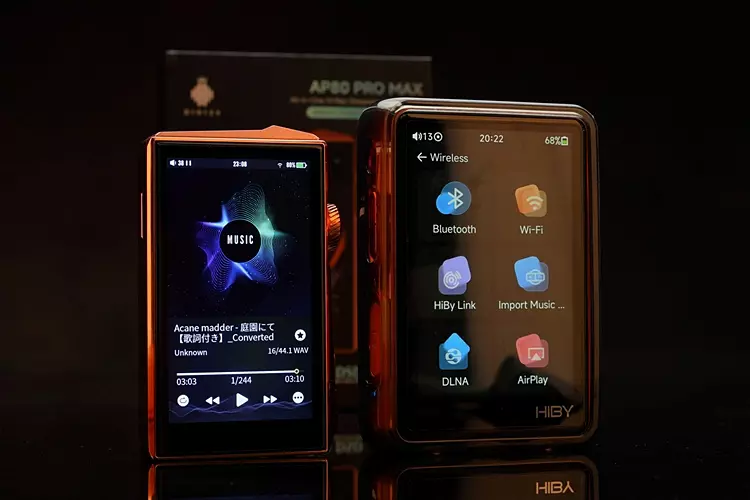
And since I don’t have any device that can transmit or receive AirPlay and DLNA, I can only test the WiFi speed using the WiFi music transfer feature, which allows transferring music files from a PC or laptop to the AP80 PRO MAX wirelessly.
To allow wireless music transfer from the PC, the AP80 PRO MAX needs to be connected to the same WiFi network as the PC I need to go to wireless and then to the import music page, where I’m shown an IP address that I need to type in my internet browser to go to the page where I can drop the music file.
It took about 36 seconds to transfer a 60.5 MB music album folder with 16 tracks, which isn’t bad in my opinion.
Wired Connectivity
As a digital source
The AP80 PRO MAX Copper works flawlessly as a digital source for all my DACs.
Units tested include small tail DACs, medium-sized DACs, battery-powered DACs, and DAPS, namely the iBasso DC-Elite, Hidizs S9 Pro Plus, FiiO SNOWSKY Melody, MUSE HiFi M5 Ultra, Khadas Tea Pro, HiBy R3Pro II, Shanling M3 Plus, and the TempoTec V1.
I didn’t experience any noise, popping, or signal dropouts. Again, it works flawlessly.
As a DAC Amplifier
The AP80 PRO MAX Copper operates similarly to most battery-powered DAC amplifiers, requiring me to turn it on and off each time I switch between digital sources.
This differs from a non-battery-powered dongle DAC, which allows for seamless switching between sources.
Except when connecting to my Windows 11 PC and Windows 10 laptop, where the AP80 PRO MAX connects automatically without being turned on and off.
I didn’t experience any noise or unusual behavior. The sound is clean, and the device operates without any issues.
The AP80 PRO MAX Copper functions as a DAC amplifier with all my digital sources, including my Samsung S21 Ultra and OnePlus 13 phones, as well as my Shanling M3 Plus, HiBy R3Pro II, and TempoTec V1 DAPs, and my PC and Laptop.
Synergy
I couldn’t hear any noise with the headphones and IEMs I used. There is no hiss, clicking, or popping sound when the device is turned on without music playing. The output is clean and noise-free.
The AP80 PRO MAX Copper is comfortable driving all my IEMs, even those with low impedance (not included in this review). The 190 mW power output rating is conservative and more than enough to drive all my IEMs to a deafening level.
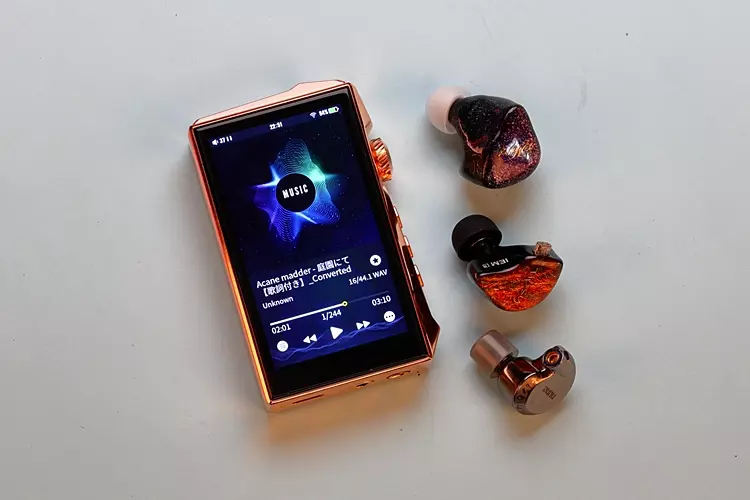
IEM Pairings
There is a sense of ease and effortlessness when paired with the single DD and the easy-to-drive DUNU Falcon Ultra Ti.
This is a delightful pairing; the dynamics are very good, and there is good bass and treble extension, as well as staging and imaging.
There is a slight warmth to the very neutral sound signature of the DUNU Falcon Ultra Ti; it sounds just as it should.
The AP80 PRO MAX Copper didn’t impose its own tonality or color on this pairing, as it is very neutral on its own.
When paired with the Tipsy M5, a very revealing, neutral-tuned, monitoring-type IEM. The sound is very transparent, and I don’t hear the ESS SABRE-sharpened treble that the Tipsy M5 usually reveals in other DAPs.
With the QoA Martini, the sound is effortless and very clean; the Martini’s moderate V-shape sound is highlighted in this pairing.
I hear good bass extension and density thanks to the bone conduction drivers, the midrange is slightly laid-back and clean, and the treble is laden with micro-details and sounds clean as well.
Headphones Pairings
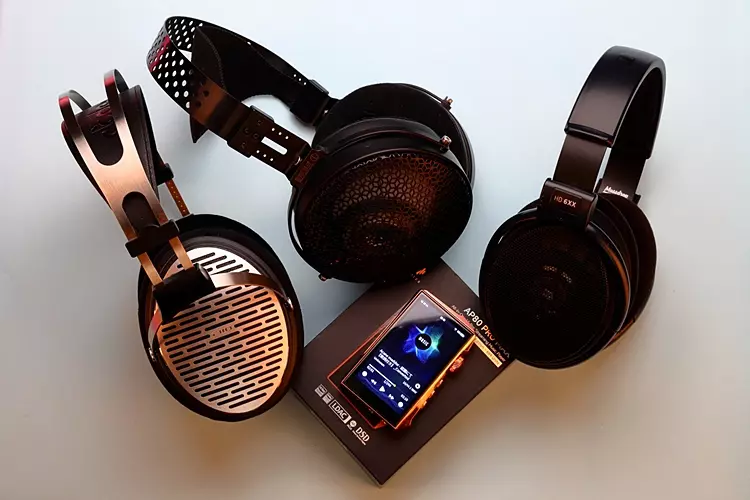
I use the stock 3.5 mm cable on the FiiO JT3 and set my listening volume to around 80 percent to achieve my normal listening level. There is very good dynamics, the bass is elevated yet tight, and the treble is extended and detailed.
On the MOONDROP Horizon, I use the 4.4 mm connection with the stock cable, and I set the volume to 50 percent to achieve my normal listening level. The sound is dynamic and warm with good treble extension; there is no hint of difficulty.
Finally, with the difficult-to-drive Sennheiser HD 6XX, I was pleasantly surprised that the AP80 PRO MAX Copper drives it with relative ease.
Though I have to set the volume to around 85 percent with a 4.4 mm balanced cable to achieve my normal listening volume, the sound still has ample dynamic headroom and can go loud with higher-volume settings.
The sound is good, the bass is well-controlled, punchy, and tight. The midrange and treble are neutral, with good energy, extension, and detail. I must say the AP80 PRO MAX Copper can drive the Sennheiser HD 6XX properly to sound good.
Selected Comparisons
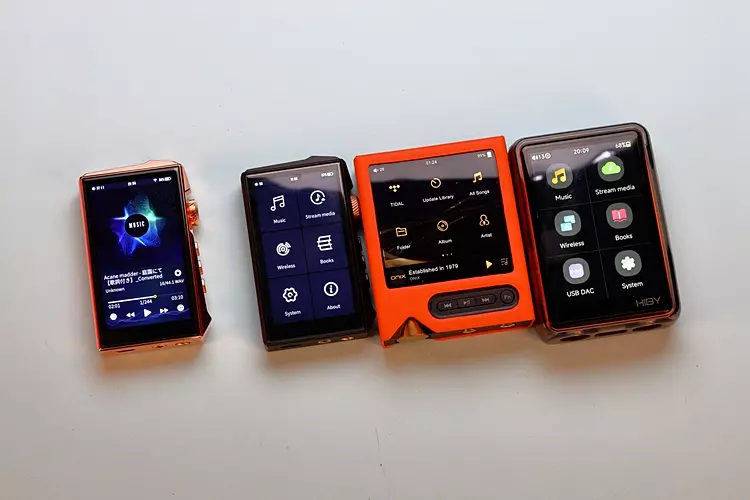
HiBy R3Pro II
Technical & Design
The R3Pro II utilizes the Ingenic X1600E SOC processor, dual CS43198 DAC chips, and 4x OPA1622 headphone amplifier chips, delivering up to 480 mW to its 4.4mm balanced output.
It features a 4000mAh battery capacity, Bluetooth 5.1, and a 3.3-inch touchscreen with a 720 x 480 resolution.
The R3Pro II features a fully aluminum alloy chassis, with the touchscreen positioned at the front and a suede cover on the back. It has an attractive, youthful design, especially in the orange color of my review sample.
The R3Pro II is a compact DAP, but it is still significantly larger and heavier than the AP80 PRO MAX.
Performance
The sound difference isn’t big, but the R3Pro II has a warmer sound, more mid-bass energy, and an analog-like signature with its slightly relaxed treble.
In comparison, AP80 PRO MAX Copper has a very neutral, coloration-free sound with a flat perceived frequency response.
I find the AP80 PRO MAX Copper has a larger, more spacious soundstage with a more spherical, natural feel, while the R3Pro II has a smaller, cozier, yet pleasant soundfield that feels like you are at a rock concert inside a club.
I find that they both have good dynamics and never get boring, but the R3Pro II is more dynamic thanks to its energetic, punchy bass. At the same time, the AP80 PRO MAX Copper has a neutral, more accurate overall presentation.
ONIX Tocata XM2
Technical & Design
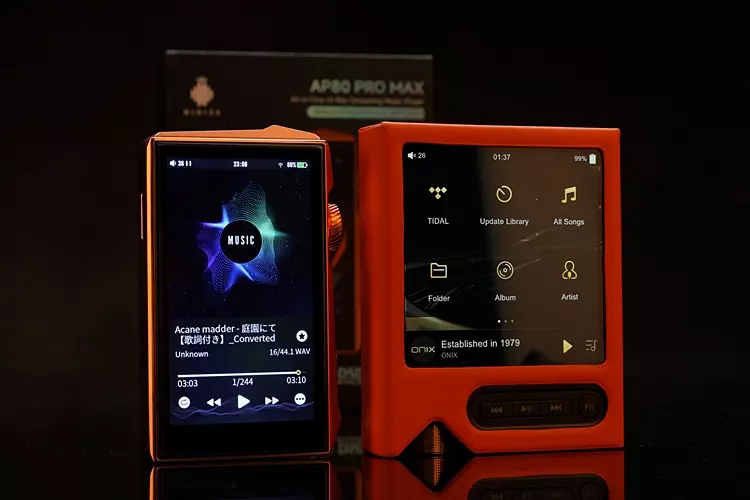
The ONIX Tocata XM2 is a compact, non-Android DAP that uses an Ingenic X2000, a clear OLED touchscreen, the latest DAC chip from CIRRUS LOGIC, the flagship CS4308P, two OPA2211 for current-to-voltage (I/V) conversion, and two SGM8262-2 op-amps for amplification.
The XM2 is capable of up to 204 mW in SE mode with a 32 Ω load and up to 800 mW balanced under the same load.
The XM2 is a delightfully compact DAP that fits comfortably in my hand. I like the black, squarish, rectangular, one-piece, full-CNC-machined aluminum alloy body with slightly radiused sides to prevent them from digging into my palm.
It has a glass-metal-glass sandwich design, with a glass back cover and a 3-inch OLED Touch Screen on the front.
Performance
The Tocata XM2 has a very similar sound signature to the AP80 PRO MAX Copper, which is or near neutral. However, I find the XM2 to be slightly bassier and warmer due to its slightly laid-back upper treble presentation.
The AP80 PRO MAX Copper is more neutral with a flatter perceived frequency response and does not impose its own sound on music. I also find the AP80 PRO MAX Copper to be more upfront in its presentation of details.
Because of the XM2’s darker overall presentation, I find its soundstage not as wide as the AP80 PRO MAX Copper’s.
And while both have clean instrument decay, I find decay in the XM2 shorter than the lusher decay in the AP80 PRO MAX Copper; the difference is very small and almost negligible, though.
Both have good dynamics and are musically engaging. I find the XM2 can go louder due to its higher power output rating than the AP80 PRO MAX Copper.
However, I find the AP80 PRO MAX Copper more energetic overall due to its flatter perceived frequency response compared to XM2’s slightly relaxed upper treble.
Hidizs x Linsoul AP80 PRO MAX (Aluminum version)
Technical & Design
The AP80 PRO MAX features a full-metal aluminum alloy chassis and utilizes Ingenic 1600E SOC processors, which are fast when used in a DAP.
The DAC chip used is the ESS SABRE ES9219C x 2, which also has a built-in headphone amplifier.
It has a power rating of 70 mW + 70 mW @ 32 Ω with a 3.5mm SE jack, and 190 mW + 190 mW @ 32 Ω with a 4.4mm BAL jack.
The AP80 PRO MAX supports up to 2TB of MicroSD card storage, enabling direct music playback from local files. Additionally, it can stream music over a 2.4 GHz Wi-Fi connection via Tidal and Qobuz.
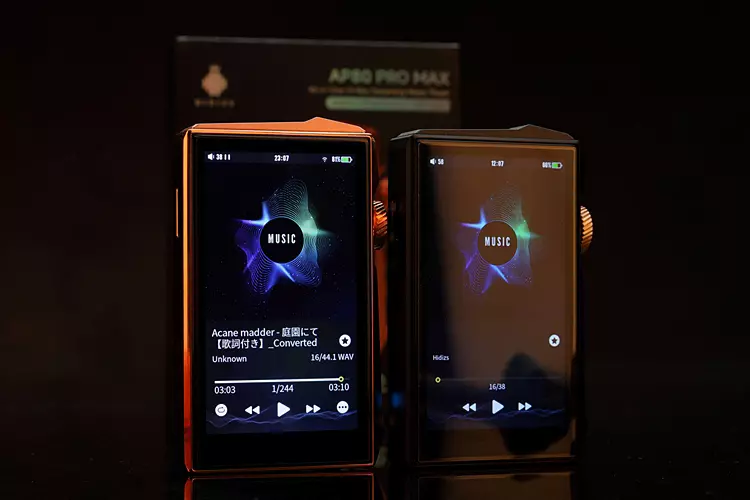
The AP80 PRO MAX appears smaller in real life than it does in photos. I especially like its tempered glass and screen, sandwiched within a full-metal chassis with an asymmetrical, faceted, industrial, sci-fi-looking design, as well as the gold knob on the right side.
Physical Differences
Aside from the appearance and weight difference, there are a few subtle and not-so-subtle differences between the aluminum and copper versions.
The first thing I noticed was that the copper version’s LED indicator light on the right side is much brighter, in my estimate, more than three times brighter.
Hidizs never said the AP80 PRO MAX Copper has a different board or parts from the aluminum version, nor did they say it is the same, with only the copper chassis making the difference in sound.
But based on the LED indicator light alone, I can tell they don’t use the same parts internally, and I can also speculate that the copper version has a tweaked sound tuning compared to the aluminum version.
The touchscreen on the AP80 PRO MAX Copper is slightly brighter with a neutral white color, while the touchscreen on the aluminum version is slightly dimmer with a subtle warm tint.
Another difference I observed is that the AP80 PRO MAX Copper runs noticeably warmer than the aluminum version. This could be because copper, while more heat conductive, has poorer heat dissipation than aluminum.
This could also be caused by feeding the DAC chip a higher voltage, which could generate more heat and affect the sound; though at this point, I’m just speculating, but both are possible.

Performance
The AP80 PRO MAX Copper has a very similar, almost identical sound to the aluminum version. The difference may be subtle and not discernible to most people.
Still, it is enough for me to notice a difference in sound from the first listening session with the AP80 PRO MAX Copper, even without comparing it to the aluminum version.
The differences are subtle and hard to pinpoint exactly where they differ in sound. Still, upon prolonged comparison, I discovered that they are distributed across different areas, making them hard to pinpoint.
Both the AP80 PRO MAX Copper and aluminum versions have a very neutral, coloration-free sound signature that never imposes its own tonality on the overall sound. However, I noticed that the copper version has a subtly warmer sound, with a denser yet tighter bass presentation.
It is hard to pick out any differences in the midrange, but I noticed that the AP80 PRO MAX Copper has a denser presentation and cleaner background decay. However, the difference is subtle, to the point of being negligible.
The biggest difference is in the treble; right from the get-go, I noticed that the high-pitched instruments like tambourines, bells, and such in the background are rendered cleaner, clearer, with greater resolution and separation on the AP80 PRO MAX Copper.
There are also more micro-details surrounding the instruments, more clearly rendered in the AP80 PRO MAX Copper than in the aluminum. And the instrument decay is cleaner, darker, and more detailed, with good sustain, and does not cut abruptly.
And because of that, the soundstage is bigger, with more front-to-back separation between instruments in the AP80 PRO MAX Copper. But again, the differences between the AP80 PRO MAX Copper and the aluminum version are very subtle.
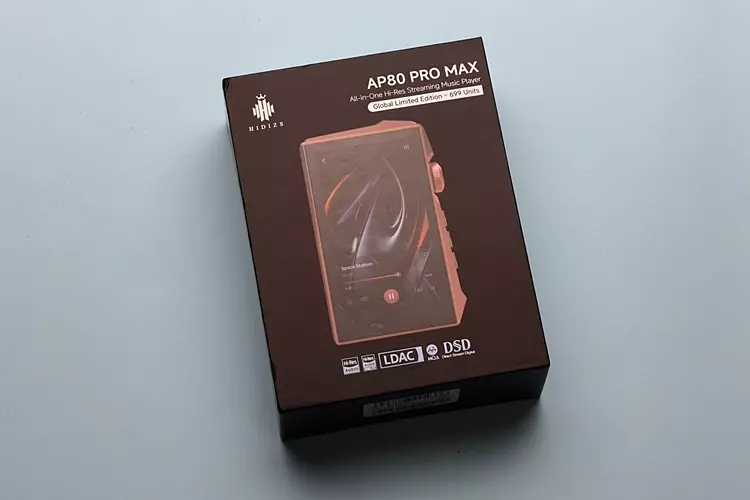
My Verdict
Like most people, I was skeptical that the AP80 PRO MAX, which is a good-sounding DAP to begin with, would be improved by replacing the aluminum chassis with pure copper. I was pleasantly surprised that the copper version really improved in sound quality.
Although the sound quality upgrade on the AP80 PRO MAX Copper Edition is subtle and not night-and-day, to me, once I heard the difference, I knew there was no going back to the aluminum version, which I liked the sound of previously.
Again, I must stress that the differences are subtle and may be negligible to most people.
I like the aesthetic and the extra weight added by the shiny copper chassis, which gives it a luxurious, high-quality feel. I also like the sound quality, which is an upgrade to the aluminum version and sounds better than most of its peers.
It is difficult to fault the AP80 PRO MAX Copper, as I cannot find anything wrong with it.
Though I could only wish that Hidizs made a larger version of the AP80 PRO MAX Copper with Android, a bigger screen, and a faster processor, so that I can install my favorite music players and streaming apps.
I think it’s time that Hidizs ventured into more serious, larger Android-based DAPs, as I find the AP80 PRO MAX Copper’s sound quality very competitive in the mid-range DAP category.
Based on what it is, what it offers, the price, and how it sounds, plus the fact that it is a limited production run of only 999 units, it is hard not to recommend the Hidizs AP80 PRO MAX Pure Copper Special Edition.
Hidizs AP80 PRO MAX Copper Edition Technical Specifications
- SOC: X1600E
- DAC: ES9219C*2
- Display: 2.95 (360×640) IPS HD Touchscreen
- Max Storage: 2TB
- WIFI: 2.4 GHz
- Outputs: 3.5mm PO/LO, 4.4mm balance
- 5mm output: 70mW + 70mW @ 32Ω
- 4mm output: 190mW + 190mW @ 32Ω
- Dimensions: 8*51*15.5mm
- Weight: 133 g
- Operating System: HiByOS (Linux-based)
- Battery: 1300 mAh
- Battery life: 8-10 hours balance, 10-12 hours 3.5mm output
- Standby times: 60 days
- Charging times: 1 hour
