

Performance Impressions
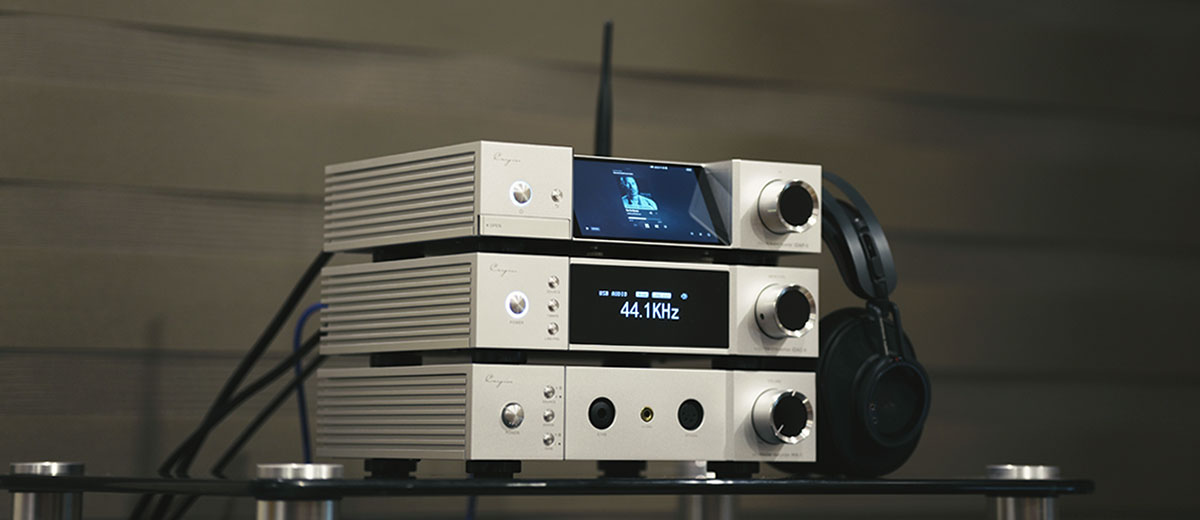
The following performance impressions of the Cayin iDAP-8 were completed using the iDAC-8 DAC and the iHA-8 headphone amplifier in combination with the Austrian Audio The Composer and the ZMF Headphones Atrium for headgear.
Summary
The iDAP-8 is a significant upgrade from the iDAP-6. It sounds bolder, with a blacker background, showing improved depth, and a more natural sound via the iDAC-8 and iHA-8.
However, there are some differences in the iDAP-8’s various output performances. Differences that translate to audible changes in the output from the iHA-8 using the Composer and Atrium for headphone pairings and the stock media player.
I²S/USB
For example, the iDAP-8 I²S connection is a more pleasing and complete presentation compared to USB. The USB output sounds more neutral in the lows, not as fulsome in the bass response, with a rougher upper-order harmonic overtone in the upper mids and vocal timbre.
It is not quite as natural-sounding as the I²S performance, particularly when using the Hyper Mode on the iHA-8 with neutral headphones like the Composer.
I can detect the difference with the Atrium pairing, but its natural warm tuning is more forgiving. My main loss with the Atrium pairing in USB mode is the better sub-bass presence from the I²S, with the mid-bass punch more substantial from the USB output.
S/PDIF
Coaxial is a slight drop from the dynamic ‘wow’ from the I²S connection, though tonally, it is more in line with the I²S performance than the harsher sound from the USB output.
This is entirely subjective, but I also felt the coaxial BNC had a more dynamic range and a deeper soundstage than the coaxial RCA version.
Certain aspects in recordings, such as vocal reverb, echoes, and placements, sounded slightly truncated in RCA mode compared to what seemed to be an airier, bigger soundstage from the BNC connection.
Optical has the right timbre, but compared to Coaxial BNC, it delivers a slightly softer set of dynamics with a nuanced drop in bass bloom and sub-bass presence.
Select Comparisons
Cayin iDAP-6
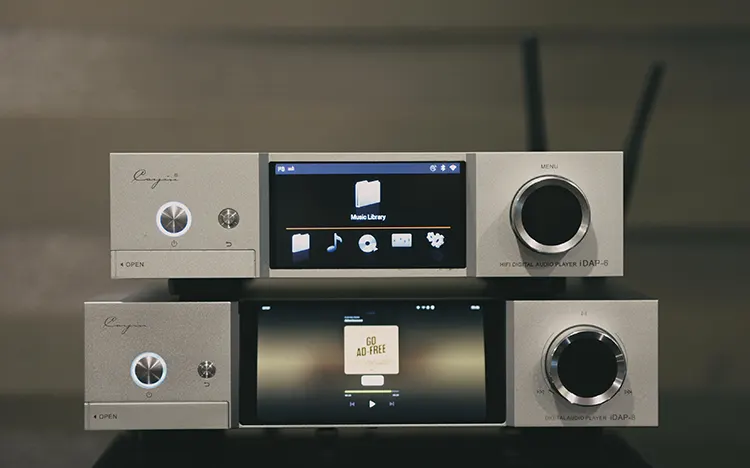
The iDAP-6 was launched in 2017 and is the predecessor of the iDAP-8. It was also part of a stackable desktop series, including the iDAC-6 MK2 and the iHA-6.
Technical
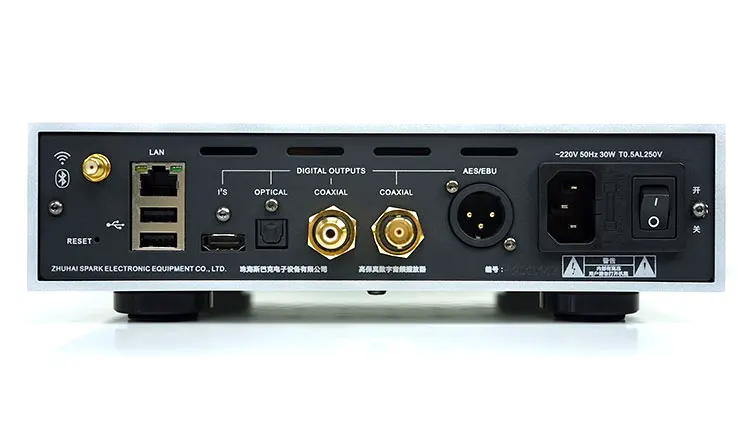
Physically, the iDAP-6 is still a very good digital bridge and almost all of its I/O is duplicated on the iDAP-8, including RJ45, AES/EBU, coaxial RCA/BNC, optical, USB, and I²S.
Even the front of the iDAP-8 has a similar physical control layout with the multifunction rotary dial to the right and USB-OTG, USB-A, and SD card slots to the left below the power and return button.
The nod to modernity on the iDAP-8 includes upgrading the rear panel USB to SS USB, switching the USB-A to a more common USB-B interface, and upgrading to a bigger, more powerful wireless antenna.
It is all about what happens in the middle with the larger touch-capable Android panel of the iDAP-8 versus the older non-touch HiBy OS iDAP-6 screen.
On that basis, time has not been kind to the iDAP-6 software interface, as almost everything in the 2025 streaming market is touch and app-capable.
The iDAP-8 might not be using the most up-to-date Android, but it’s far more accessible via Google Play and 3rd party apps as well as being much easier to use.
Despite the aging HiByOS, there isn’t a significant difference in each unit’s OS speed. HiByOS is still quite fast. It’s the speed of navigation via the constant wheel and button churn that slows it down compared to the quick touch of the iDAP-8.
Resolution matters between these two units. The iDAP-8’s faster processor and enhanced RAM mean it can easily handle higher-res PCM up to 768 kHz and DSD512 (USB, I²S), whereas the iDAP-6’s ceiling is DSD256/384 kHz.
Also, wireless and network capability with the iDAP-8 capable of BT5.0 (LDAC) and Gigabit Ethernet. That’s well ahead of the 10Base-TX/ 100Base-TX and BT4.1 (aptX) ceiling of the iDAP-6.
Design
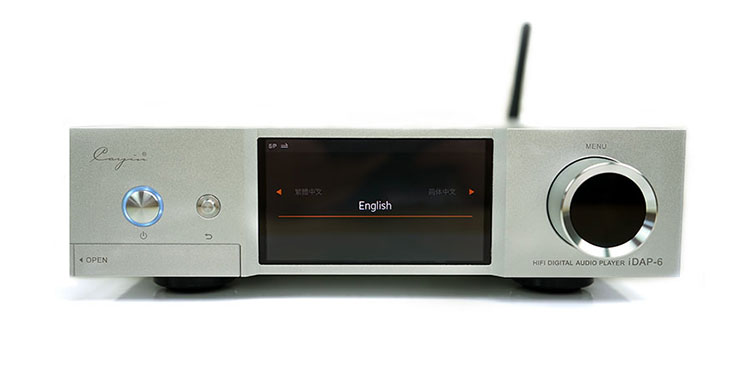
The iDAP-6 isn’t exactly a mini-me of the iDAP-8, but it is slightly smaller. Both have dimensions and similar materials, allowing them to neatly stack on top of their partnering 8 or 6-Series DAC and amplifier, so it’s no surprise they have different measurements.
One of the major benefits of going slightly bigger is the ability for Cayin to insert a much larger touch-capable screen into the iDAP-8. That makes a big difference.
Its angular position makes the screen more legible from a top-down scenario, plus the size and wide variety of screen animations via Android make the iDAP-8 more aesthetically pleasing.
Neither of these units comes with remote controls. The basis for controlling them is still via various HiBy protocols, such as HiByLink for the iDAP-6 and HiByCast for the iDAP-8.
There are more nuanced ways to control the iDAP-8, such as via Spotify and Tidal’s media device connections, but it’s still a system weakness compared to the competition.
While the physical controls are unchanged, I barely used them on the iDAP-8. The touchscreen is much faster and more intuitive. On the iDAP-6, that is the only direct way to control the devices, and it feels cumbersome after a day with the iDAP-8.
Not every app will deliver the ideal experience with the iDAP-8. Its landscape mode, partial theming, and antiquated Android navigation framework can create some navigational cul-de-sacs.
As mentioned, the rear panel I/O is virtually the same, except for the upgraded USB ports and the new hard drive bay on the underside of the iDAP-8 panel. Add 128GB of onboard storage space where the iDAP-6 has none, and you get a newer device with much more storage capability.
Performance
I tested both streamers using the same iDAC-8/iHA-8 DAC and amp setup, mixing the Austrian Audio Composer and the PMG Audio Apx for headgear, and the same local 44k FLAC local file recordings.
The iDAP-8 is a better performer than the iDAC-6, period. I heard superior dynamic range, a more resolving output, especially for holographic imaging depth, with improved lower and upper extension from the same recordings using the same DAC and Amp, just by switching between each unit’s I²S output.
The iDAC-6 sounded compressed and more mid-dominant and not as tall or deep-sounding. The tonal bias wasn’t overly different, but that lack of extension on the lows robbed the iDAP-6 performance of the same fundamental frequency presence I got from the iDAP-8.
Despite the iDAP-8’s USB output being my least favored for sound, it still had the better dynamics and clarity compared to the compressed USB equivalent of the iDAP-6.
Though largely similar in tonal bias, I detected a little less bass weight and more roughness in the treble response in some recordings compared to the iDAP-8 equivalent.
Both coaxial and optical outputs exhibit the same observations as the I²S comparison, with the iDAP-8 sounding smoother, more resolving, and more open-sounding. However, the iDAP-6’s bass response sounded slightly fuller with more bloom to my ear than its USB performance.
Cyrus One Cast
The Cyrus One Cast was launched in 2021, and whilst it has a broader appeal beyond streaming, its streaming aspect was its core sales pitch.
Technical
The One Cast is more of an all-in-one device with streaming, a built-in DAC and Class D amplifier for headphones, direct speaker connection, and even a phono stage. It also had an HDMI output for general home entertainment purposes.
Although the One Cast has an ESS ES9018K2M DAC, its digital signal processing and thus decoding is capped at 32BIT/192kHz and DSD128, which is much lower than the iDAP-8’s DSD512 and PCM 768kHz processing.
Yes, you will need an external DAC to decode the iDAP-8 signal, but it is far less likely to be downsampled, as is the case with the One Cast. I have a few albums at DSD256, which rules out the One Cast.
Both devices have BT and WiFi 2.4/5 GHz, though the BT version on the One Cast is 4.2, lower than the iDAP-8’s 5.0 standard. That means a lower aptX HD codec capability from the Cyrus unit, whereas the iDAP-8 receives and transmits up to LDAC.
The biggest difference is how each unit is controlled. The iDAP-8 is Android-based with a heavy emphasis on direct touch and physical control on the unit.
The One Cast has plenty of physical controls, but streaming is almost entirely remote via iOS or Android smartphone apps. This is done via AirPlay or Chromecast via Google Home and compatible apps with casting capability.
The two approaches are not mutually exclusive; some casting services, such as Spotify and Tida, can also cast from a phone to the iDAP-8.
The one drawback with Chromecast is its 24-bit/92 kHz limit, which means some high sample rate tracks from Qobuz and Tidal will be downsampled.
Design
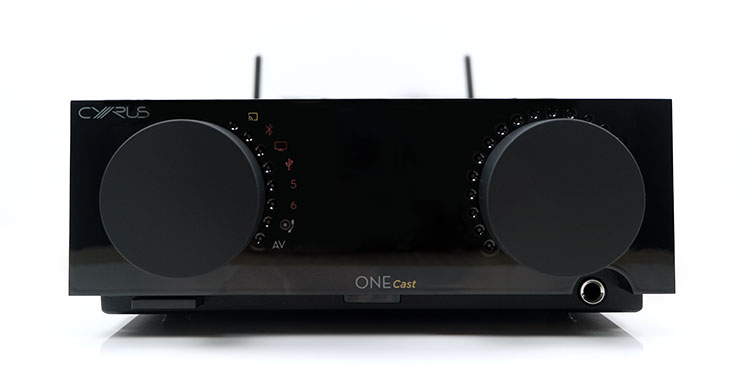
The One Cast is the bigger and deeper of the two units. I would class it as a rack device appropriate for a home entertainment or HiFi system, despite offering a headphone output.
The iDAP-8 is more compact, 1kg lighter, and looks more premium despite the One Cast’s immediately recognizable Cyrus design language.
The split chassis and front panel with the 2 huge dials feel a little cheaper to the touch than the solid sandblasted aluminum body of the iDAP-8.
The lack of a screen interface also mutes the visual impact of the One Cast, though for some, this might be a bonus if it’s placed just under their TV.
The One Cast control system can take some getting used to, given the myriad of options on its left mode dial. The iDAP-8’s Android interface is more intuitive for setting up the device than the One Cast two-stage BT and WiFi process.
Once set up, and if you understand AirPlay and Google Casting, then the One Cast is a very easy device to work with. It’s not as open for apps as the iDAP-8, but since everything is immediately workable via the smartphone, the ability to sit back and control the device from afar is a plus.
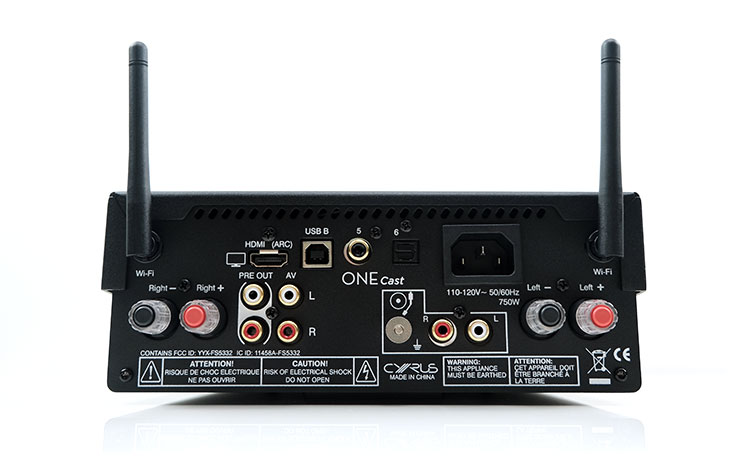
Because the One Cast offers more than streaming, the rear panel is busier. However, the fundamental focus of the Cyrus I/O is digital input to DAC decoding, whereas the iDAP-8 is digital input and digital output.
That means the One Cast outputs are primarily analog, save for the HDMI (ARC), a feature I wish the iDAP-8 offered.
The One Cast has no drive storage options, something the iDAP-8 is particularly good at. You will have to rely on Cloud or a USB PC/Mac connection for local file access with the One Cast.
Performance
Since the One Cast is an all-in-one, I used its headphone amplification and internal DAC streaming from Tidal to compare to the iDAP-8 connected to the iDAC-8 and iHA-8.
Granted, the Cayin stack is twice as expensive, so it is no surprise to hear a much clearer, more dynamic performance from the 888 Series compared to the Class D and Sabre DAC inside the One Cast.
The iHA-8 is a better amplifier, the IDAC-8 is a better DAC, so it’s no surprise that the output is superior. So, how much weight you can put on the iDAP-8 being the better streamer will depend on what you connect it to.
The One Cast amp/DAC combo is fairly beefy sounding, though I find it’s more mid-bass bloom than the iHA-8’s better sub-bass reach and definition. The clarity and openness of the Cayin mids are also better.
The One Cast sounds narrower, flatter, and more neutral in imaging, with less separation, producing a less distinct or holographic presentation.
Even with lower resolution apps such as Spotify, the One Cast struggled to sound as complex and articulate as the iDAP-8/iDAC-8/iHA-8 combination with headphones such as the Atrium open.
Some technical observations on their respective connectivity performance with TIDAL and Spotify. I found the iDAP-8 Connect experience very smooth, with almost immediate switching from phone to streamer.
The One Cast connection was much slower using the same process and apps, sometimes taking over 10 seconds more. It was quite frustrating waiting for it to recognize the device.
Chord Electronics 2go/2Yu
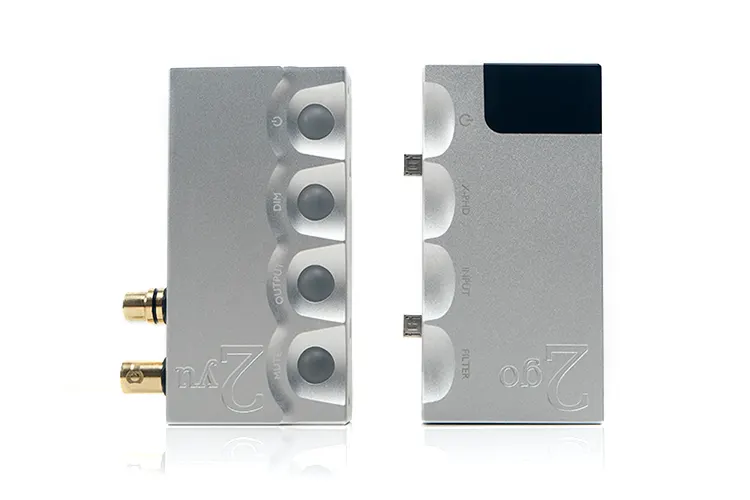
The Chord Electronics 2go and the 2yu were launched in 2020. The 2go was our 2021 Top Gear Award winner for Best Streamer.
You can buy them separately, but the 2yu is required for desktop integration. On its own, the 2Go is designed to integrate with the Hugo 2 portable amp/DAC.
Technical
The 2Go is the wireless interface for streaming, and the 2yu is the digital bridge that allows the 2go to be used for home-based HiFi systems. That is the shortest explanation I can give of how they work.
The 2go is a wireless and BT-capable battery-powered device allowing you to use DLNA or AirPlay to interface with a wide variety of streaming software platforms either via a network LAN connection or by using 2.4GHz wireless or Bluetooth 4.2 aptX connection.
It does not have an operating platform similar to Android. Instead, its control is almost entirely app-based with Chord’s Go Figure, a polarizing UI layer that some find challenging to set up.
Firmware support is good, Chord is still frequently updating the app, and it does provide a remote control layer in the process.
That said, even at this superficial discussion level, the iDAP-8 is a more modern and proper desktop device. Its Android interface is much easier to use than the Chord Orb system and more comprehensive in terms of apps and connectivity options.
Similar to the iDAP-8, the 2yu has no built-in DAC. It uses a 2000MIPS-capable CPU combined with an integrated sample rate converter or SRC for both PCM and DSD processing. It also possesses a low-jitter controller via a phase lock loop and an XMOS-based USB stage.
PCM digital signal processing is similar to the iDAP-8 from 44.1 kHz up to 768 kHz, but slightly lower for DSD at a maximum of DSD 256 rather than DSD 512. Both devices can operate in wired LAN Ethernet RJ45 or a 2.4GHz capable WiFi mode, but the 2go lacks the iDAP-8’s 5GHz WiFi option.
Design
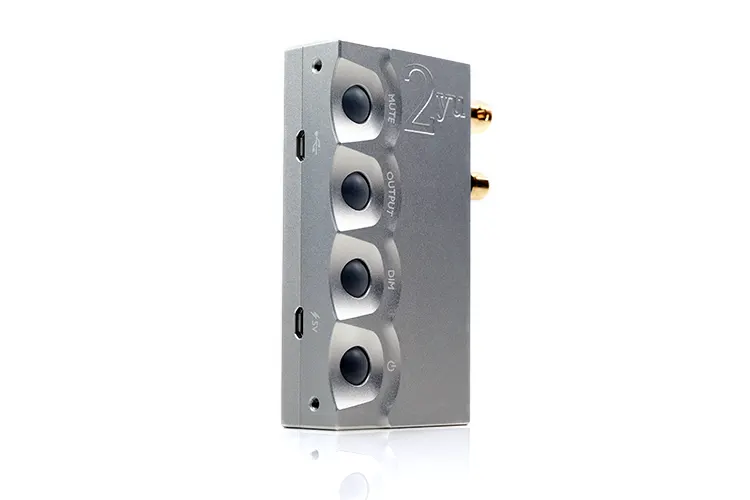
I have to give props to Chord for creating such a compact and lightweight modular form factor for the 2go and 2yu, they fit perfectly together. Not only that it a classic Chord solid build quality, easily on par with the sandblasted aluminum housing of the iDAP-8.
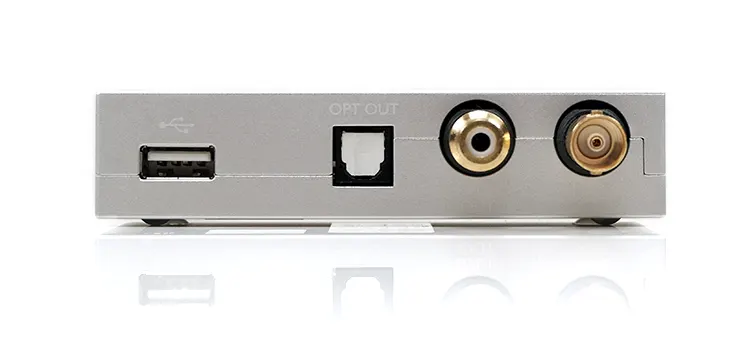
For such a small device, the 2go/2yu offers almost as many digital outputs as the iDAP-8, including RJ45, dual coaxial RCA/BNC, optical, and USB.
What it is missing, though, might be critical for a modern desktop audio streaming customer, including all that additional storage capacity, multiple high-speed and OTG-compliant USB ports, I²S, and AES/ABU.
The 2go does have storage capability, but only 2 microSD card slots with a maximum of up to 2TB per slot.
Interfacing with media on these slots via GoFigure is not advised, as it’s clunky and slow. It is better to use a 3rd party DLNA app such as BubbleUPnP (also available for the iDAP-8) to manage the media on these cards.
One thing to note is the design flow of the 2go/2yu. There is no natural front or back to the device. Given its tiny form factor, that’s probably not a huge issue, but wires will be exposed, and heavy ones can tip it, so I tend to push it to the back of any rack to keep the area tidy looking.
The iDAP-8’s size means it has no such issues and stacks neatly with the iDAC-8 and iHA-8 or on its own without worrying about how the wires at the back look or their weight.
Performance
I set up the iDAP-8 and 2go/2yu with a coaxial BNC connection to the iDAP-8 and iHA-8 and streamed identical tracks from their respective local storage options (using BubbleUPnP via a smartphone for the Chord controls).
I prefer coaxial BNC for both connections as they give the closest performance to I²S, an option that is sadly missing on the 2go/2yu setup.
On that basis, I felt the Chord setup matched the iDAP-8 in terms of resolution and shone a strong light on micro-detail, perhaps even more so than the iDAP-8.
However, the dynamic range fell a little short, sounding slightly quieter and not as vivid through the mids and lows, forcing me to push up the iHa-8 volume by 1 step.
Some of that is down to some identifiable tonal differences. With the PMG Audio Apx and Composer pairings, the Chord setup sounded more neutral, with a tighter decay, more accurate but also more analytical, with neutral imaging and slightly less bass warmth, and more of a strong punch.
The iDAP-8 setup is sweeter sounding, smoother, more grandiose, but slightly more relaxed in its delivery. The timbre is biased to euphonic with longer decay trails and more bass bloom.
Vocals tend to have a more emotive tonal quality to them, whereas the Chord setup with the same amp and DAC gave a more precise and to-the-point sound to instruments and vocals.
My Verdict
The Cayin iDAP-8 desktop streamer outperforms the iDAP-6 in almost every way. If that is the main goal, then mission accomplished.
It’s more intuitive to operate and offers loads more storage options. It is also more pleasing on the eye with that big touch screen in the middle and vastly more expansive for app integration. What is most important is that it delivers a more dynamic, spacious, and natural sound.
Of course, the value of this device depends entirely on how you stream, which is often a personal journey, considering everyone has their favorite audio or media app. For some, the lack of remote control is not ideal, and for others, Android 9 is not a modern and secure enough OS. There are always caveats.
The alternatives are also very price-competitive, with plenty of firmware updates. Cayin will need to keep an eye on this platform and make sure it also stays relevant, or else it could be a short product cycle.
For 888 Series owners, however, the iDAP-8 makes a lot of sense unless you already have a competent audio streamer.
Cayin iDAP-8 Technical Specifications
- MCU: Snapdragon 660 2.2GHz
- Memory: 6GB LPDDR4 RAM
- System: Customized Android 9
- Storage: 128GB Internal, 2.5″ SATA3.0, SD, External USB
- Oscillator: (2x) Accusilicon Ultra-Low 20ppm phase noise Femtosecond
- File Format: DSF, DFF, SACD-ISO, FLAC, AIFF, WAV, APE, ALAC, WMA, MP3, AAC, OGG, + Opus
- Lossless: DTA bypass Android SRC
- Digital Interface: I²S, USB, AES/EBU, Optical, COAX (RCA + BNC)
- LAN: IEEE 802.3/IEEE 802.3u, Support 1000M/100M/10M
- Bluetooth: BTv5.0 + BR/EDR + BLE
- Wi-Fi: 2.4GHz / 5GHz
- Display: 5″ FHD TFT multi-point touch screen
- Power Supply: 45W Toroidal Transformer
- Weight: 9.7 lbs
- Dimensions: 270mm x 215mm x 70mm
