

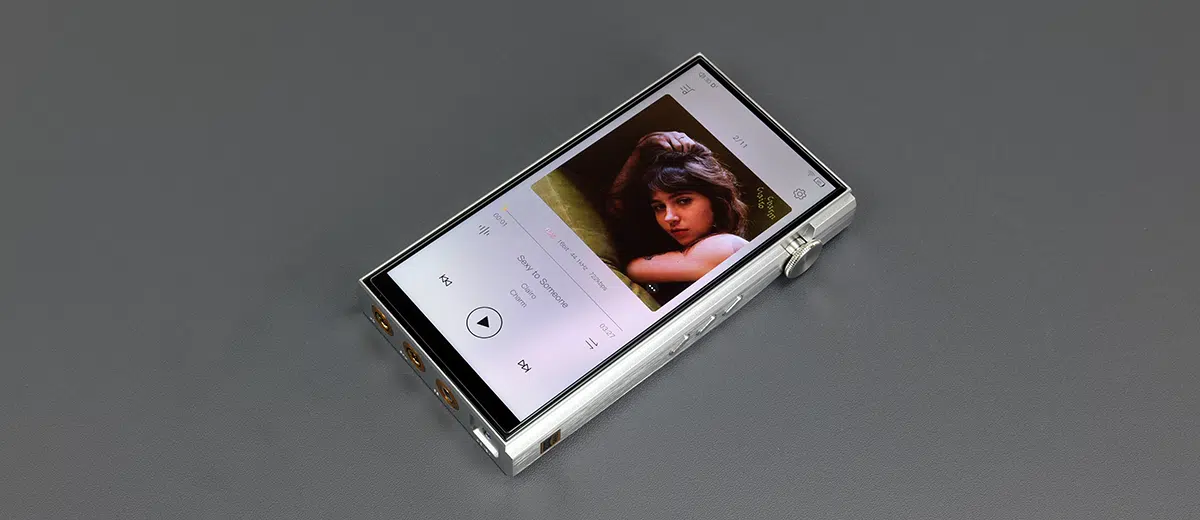
Marcus reviews the iBasso DX270, an Android 13 DAP featuring a hybrid 20-bit R2R and 4-bit String DAC with up to 1.5W of balanced output power. It is currently priced at $1149.00.
Disclaimer: I received this sample in exchange for my honest opinion. Headfonics is an independent website with no affiliate links or status. I thank iBasso for this opportunity.
Click here to read more about the iBasso products previously reviewed on Headfonics.
This article follows our current scoring guidelines, which you can read in more detail here.

Over the last few years, iBasso has quietly repositioned its DX2XX series away from the older amplification card ecosystem and towards highlighting the DAC implementation with a fixed amp output.
That has allowed the company to do several things, including a clearer separation from the DX3XX series, their flagship offering, which includes AMP cards such as the recently reviewed AMP18.
It also helps keep a significantly lower price tier for DAPs such as the $1149 R2R DX270 (and the DX240/DX260), further differentiating the product tiers between their entry-level smaller DX180 and the flagship DX340.
The net result is a reasonably affordable high-end digital audio player with a natural, analog-sounding presentation, delivering excellent end-to-end extension, and with enough power and fidelity to handle both sensitive IEMs and more demanding headphones alike.
The DX270 is not the fastest DAP around, at least compared to iBasso’s flagship offerings. However, its simpler setup, generally decent stability, and agreeable sound might make it one of the company’s most rounded mid-tier offerings thus far.
For those who are wondering how the DX270 compares to the latest DX340/AMP18 combo, which also aims for a more organic, smoother performance, the older, more neutral DX260 MK1, and competing R2R-capable players such as the N6iii/R202, you can read my full review below.
Features
Engine
The iBasso DX270 is an Android 13-equipped digital audio player with a fully differential-designed hybrid 8-channel R2R + 4BIT string DAC, improved FPGA Master 3.0 digital signal processing, and up to 1.5W of balanced-capable output power courtesy of a 12V DC Power input.
It also uses the same Snapdragon 665 processor as the DX340, but with 4GB of RAM and 128GB onboard memory rather than 8GB and 256GB, meaning it is not quite as powerful as the flagship for buffering and multitasking, but still smooth enough for general app music playback.
iBasso has equipped the DX270 with dual-boot capability, meaning users can choose to operate the device via Android or the Linux-based Mango OS.
Mango OS strips out non-essential background tasks and services such as WiFi and Bluetooth, providing a purer music playback experience.
As with previous iterations, the DX270 can operate as a standalone local-playback digital audio player, or connected to the wider world via WiFi and BT for streaming, and in wired mode as a USB-DAC.
It can also output a digital (coaxial) or analog (LO) signal, making it a handy portable DAC for a larger HiFi system.
Decoding
The DX270 uses a discrete-engineered hybrid 8-channel 20-bit R2R + 4-bit String DAC, which is typically referred to as a segmented DAC or, in this case, branded as R2R Ultra.
In this setup, the 4-bit string DAC handles the Most Significant Bits (MSBs), while the R2R DAC handles the Least Significant Bits (LSBs). This combats potential resistor mismatches from pure R2R implementations, reducing the potential for error and unexpected output voltage drops.
The 8-channel implementation consists of 344 resistors, 76 of which are used for the hardware resistor compensation networks, 64 are for the string DAC, and the remaining 204 are for the 20-bit R2R DAC.
The digital signal is further refined via a hardware resistor network combined with 2 Accusilion femtosecond oscillators and iBasso’s latest in-house FPGA-Master 3.0 to reduce typical R2R signal distortion and enhance the DX270’s potential dynamic range.
The DX270 is capable of decoding up to 32BIT/768kHz in PCM and native DSD512 via USB and local Android/Mango OS playback. For digital output via coaxial, this drops to PCM 32bit/384kHz and DSD256.
This is complemented by the DX270’s integrated 5G WiFi and Bluetooth 5.0 wireless capability, allowing for lossless decoding over WiFi and up to LDAC transmission, though as a receiver it drops down to SBC/ACC only.
Amplification
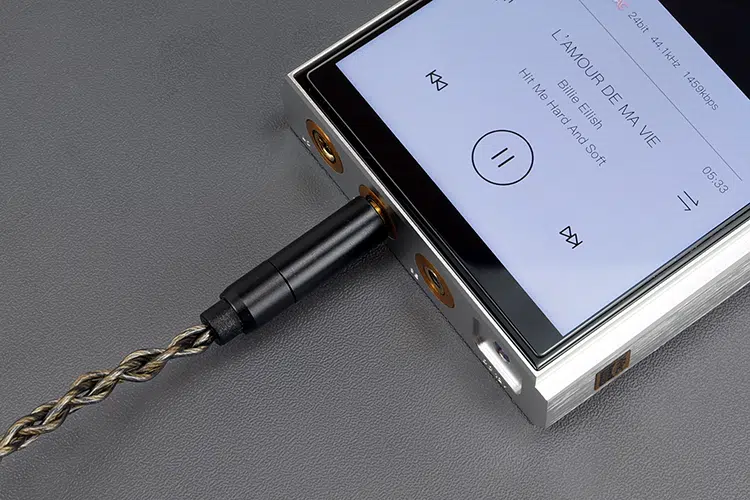
The DX270 has a fixed amplification setup with no swappable cards. It’s a fully balanced design, including dedicated 4.4mm LO and PO, and single-ended 3.5mm PO/LO output.
It has two output power levels: battery and via its 12V DC input, with the latter offering more headroom and enhanced battery health than the former, but at the cost of mobility.
Going balanced in battery mode has a headline figure of 1050mW into a 32Ω load, which is ample headroom for most modern headphones. With a sub-ohm output impedance level, sensitive IEMs will not be vulnerable to impedance skew either.
Switching to the DX270’s 12V DC input, the maximum balanced output power is raised to 1575mW on the same load with an additional 1.3Vrms voltage increase over the battery output. This is going to be the mode of choice for more demanding headphones that you are unlikely to need mobility for.
Gain levels control the balanced LO Vrms ratings, ranging from 4Vrms with DC power, dropping down to 3Vrms on battery power.
Design
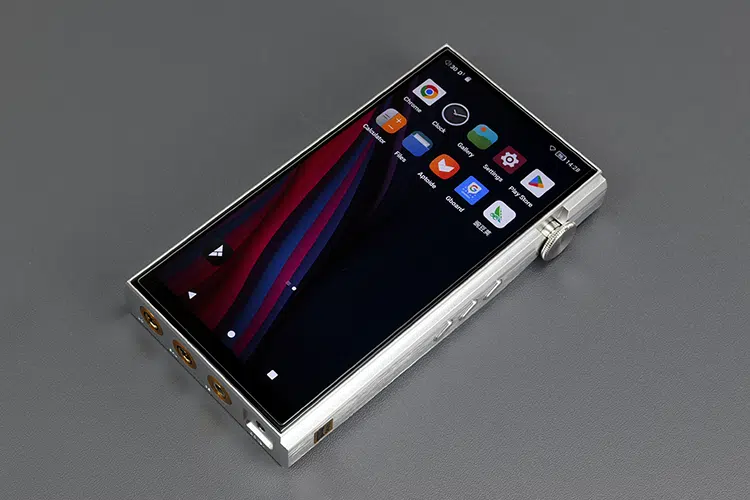
The DX270 follows the same elegant, minimalist design language as the DX340, though it is a little more compact and lighter in the hand.
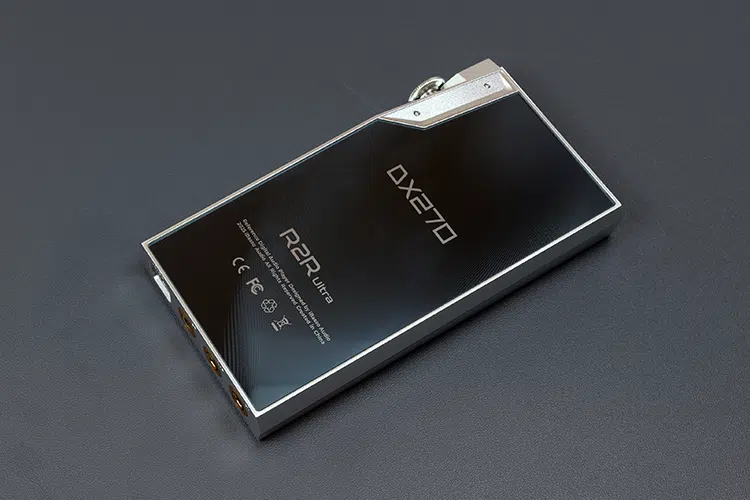
The main chassis is comprised of CNC-machined aluminum alloy in silver or grey, with an anodized finish rather than stainless steel, hence the lighter 265g rating.
The back panel is tempered glass, save for the far left accented corner, which has 2 screws to allow you to take off the panel for easy access to battery replacement, a key feature of iBasso’s newest DAP releases.
The screen is a flat panel rather than curved glass, which makes it a heck of a lot easier to apply tempered glass screen protectors, but I will caution you to be careful with the included leather case, as it’s a tight fit and can lift the pre-applied TPU protector.
The panel is a multitouch-sensitive 5.5″ 1080 x 2160 px (Full HD+) display, which is an upgrade on the 5″ Sharp IPS version used by the DX260. The upgrade is not just in size, but also in its snappier touch response and superior legibility.
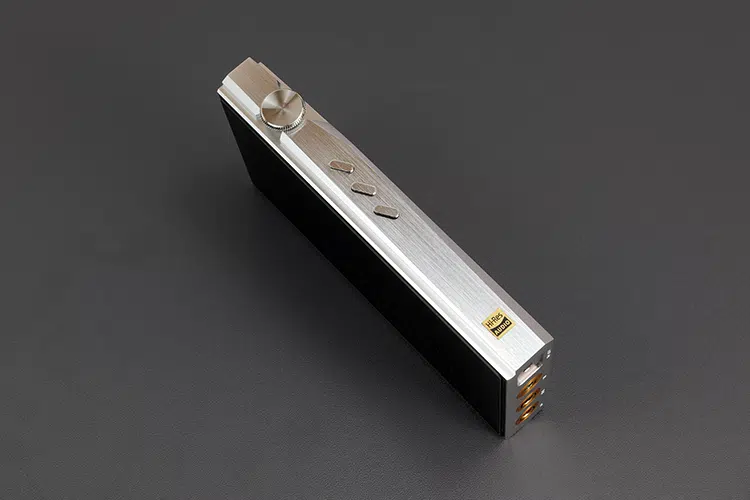
The DX270 right side houses all the controls, including playback and the dual-function volume and power/screen-on/off features.
Unlike the DX340, the DX270 chassis lacks the additional guardrail protecting the dual-function rotary dial. So, like the DX260 and DX180, it sticks out a little bit more than I would like.
Its dial also has a slightly thinner construction, similar to the aforementioned models and not quite as thick in its knurling or as grippy as the DX340 design.
I/O
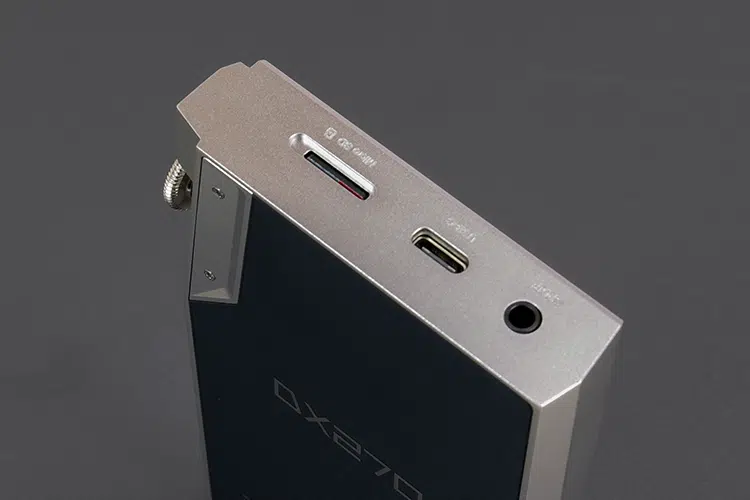
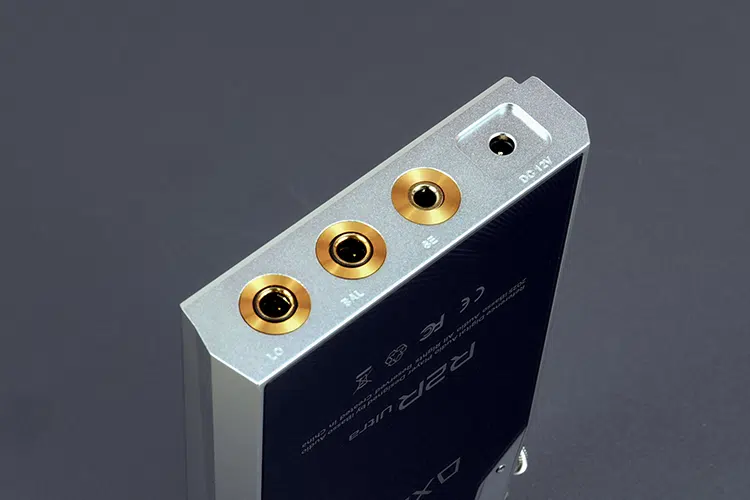
The DX270 inputs and outputs are neatly split between analog on the base panel and digital on the top panel.
The base included a dedicated 4.4mm line-out and headphone output, and a dual-function SE 3.5mm PO/LO port.
Beside these 3 ports is the DC 12V input, which lacks the DX340 rubber flap, an omission I am largely ambivalent about. The flaps provide dust and moisture protection, but can be a pain to pry open on the DX340 amp cards.
The coaxial, USB, and memory card slots are housed on the top panel. Officially, the DX270 microSD card slot can handle up to 2TB, though I am unable to test any further as I never buy higher than 64-128 GB-sized cards.
The coaxial port is output-only; iBasso has long ditched their optical port from the older models. Still, it’s a nice option for those who wish to avoid USB connections, as they can often sound a little sharper or more aggressive than coaxial.
The USB-C port will double for OTG and USB-DAC duties and provide a single charging point for the battery architecture.
Controls
The physical control system is identical to the DX340, with three slimline control buttons and a multifunction rotary dial on the right panel, and a multitouch-sensitive screen.
Keen observers will notice that iBasso has flipped the physical alignment of the DX270 playback button upwards rather than the DX340’s downward direction.
The rotary dial doubles for power and screen management, as well as offering a digitally controlled analog attenuator with up to 63 steps consistent with its use of JRC analog volume ICs (Integrated Circuits).
Power Management
Unlike the DX340, the DX270 does not have a split power supply system.
Instead, it has a single 4400mAh Li-Poly battery with a quoted benchmark rating of up to 13.5 hours of battery life and a 2.5-hour charge cycle from 0%, which is ok but nothing spectacular and will vary depending on how you use the player.
I would say 11 hours is the most you can expect from the DX270 using balanced outputs on a heavy load. My real-world numbers are around 10-11 hours of playback time on a low-gain, low-load local hi-res file playback setting.
If you choose the 80% battery saver option in the DX270 main settings, it could shorten the battery life a little more, but should improve the overall battery health.
The DC12V option is a game-changer for the DX270. Not only does it increase voltage headroom and output power, but it also bypasses the battery, meaning you can run it as long as you like without worrying about running out of battery life.
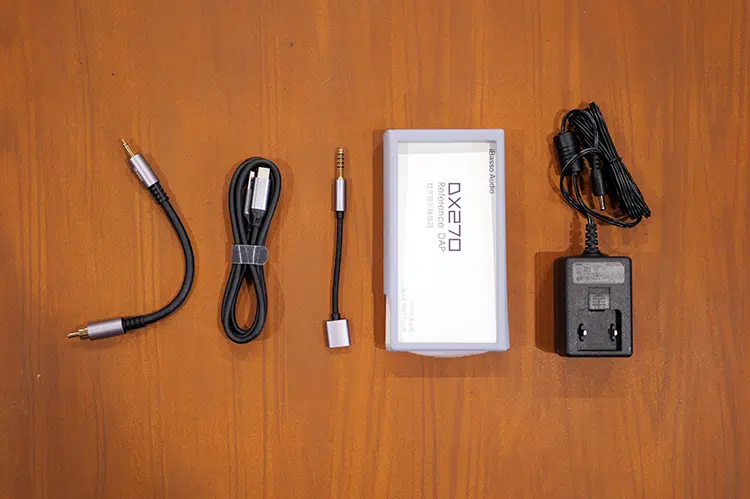
Packaging & Accessories
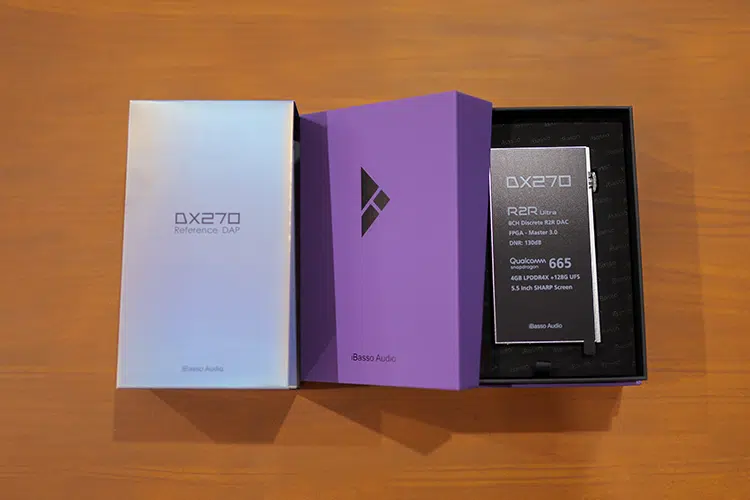
iBasso has used their classic split box package for the DX270 with a silver and blue design that is relatively similar to the DX340 kit. It is professional-looking, relatively simple to unpack, and offers decent protection for the contents.
Inside, you get plenty of screen protectors, although one is already pre-applied to the main screen, so you can pack those away as backups.
Connectivity accessories include a USB-C to USB-A charging cable, a dummy load burn-in cable, an SPDIF to coaxial conversion short IC, and the DC12V plug with a swappable pin configuration.
The leather case has the same desaturated, cyan-colored, and venting backplate as the DX340 version.
However, it’s synthetic leather with a velcro-strap rather than the form-fitting genuine leather of the flagship case, so it feels a little bit spongier to the touch and not quite as detailed in its finish.
There are plenty of openings for the ports and plenty of space to grip the extended multifunction dial without the case blocking your fingers.
The DX270 case sits neatly on the chassis side panels with minimal travel over the playback buttons, so any command responses are instant when the buttons are pressed.
Click on page 2 below for my software impressions.
Click on page 3 below for my sound impressions and recommended pairings.
