

Synergy
Efficiency
With an impedance of 24Ω and a high sensitivity rating of 124 dB/Vrms, the Beta is an easy IEM to drive at this price point.
It reaches comfortable listening levels from smartphones, basic dongles, and entry-level DAPs without difficulty. Most users will have no power-related concerns with the Beta in daily use.
That said, the Beta is noticeably source-transparent, and source quality has a clear impact on its performance.
While it is easy to drive and can reach more than sufficient listening volumes even on capable dongles like the ddHiFi TC44 Pro E3, it clearly scales with better amplification.
In my testing, the Beta benefited from more powerful and slightly warmer sources, where improvements in imaging precision, dynamic contrast, and overall note weight became more apparent.
Desktop setups such as the FiiO K13 R2R and the iFi audio ZEN DAC brought out a fuller, more dimensional presentation, helping the Beta sound less constrained compared to lower-powered portable options.
With clean, neutral, or mildly analytical sources, the Beta’s micro-detail retrieval, staging precision, and treble extension all improve measurably.
However, with softer or overly warm sources, the presentation can become overly rounded and slightly flat, losing some of the clarity and definition that defines the Beta’s character.
Pairings
Given the Beta’s analytical and slightly bright character, I found the best synergy with sources that strike a balance between neutrality and a hint of warmth, without over-coloring the sound.
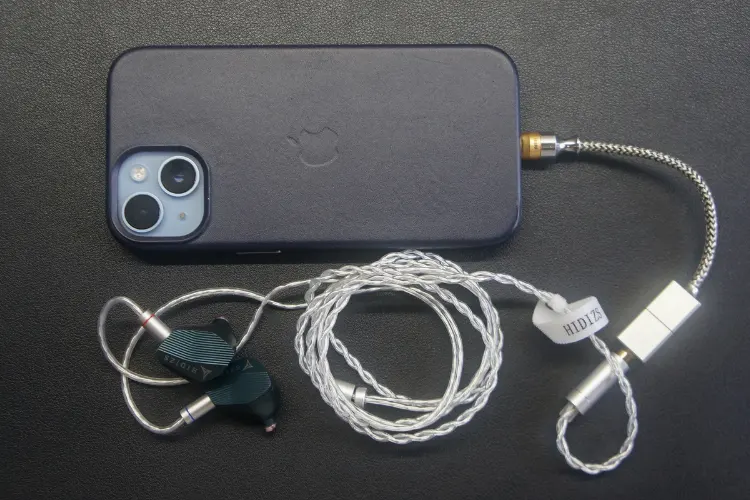
The TC44 Pro E3 is a capable pairing, offering more power on tap while maintaining a relatively clean presentation.
However, because of its overly cold and analytical signature, it falls slightly behind warmer desktop options in terms of imaging depth and dynamic expression.
For desktop listening, more powerful sources like the FiiO K13 R2R and the iFi ZEN DAC provided a noticeable step up in performance.
These sources added a touch of warmth and improved macrodynamic impact, allowing the Beta’s staging to open and sound more immersive, while also giving the low-end a bit more authority.
On the other hand, warmer-leaning portable sources like the 7Hz Artemis39 tended to over-soften the presentation, reducing clarity and making the Beta sound less defined overall.
As such, I would prioritize sources that are neutral with a slight warmth and sufficient power to fully bring out the Beta’s technical capabilities.
Selected Comparisons
LETSHUOER S08
Technical
The Beta employs an 11mm planar glass composite dynamic driver with a dual magnetic circuit and dual cavity design, rated at 24Ω impedance and 124 dB/Vrms sensitivity.
The S08 features a fourth-generation 13mm planar magnetic driver utilizing nanoscopic magnetron sputtering technology to apply a dual voice coil layer directly onto the diaphragm.
It is rated at 26Ω impedance and 105 dB sensitivity. In practice, the S08 requires meaningfully more power to achieve optimal performance than the Beta.
Design
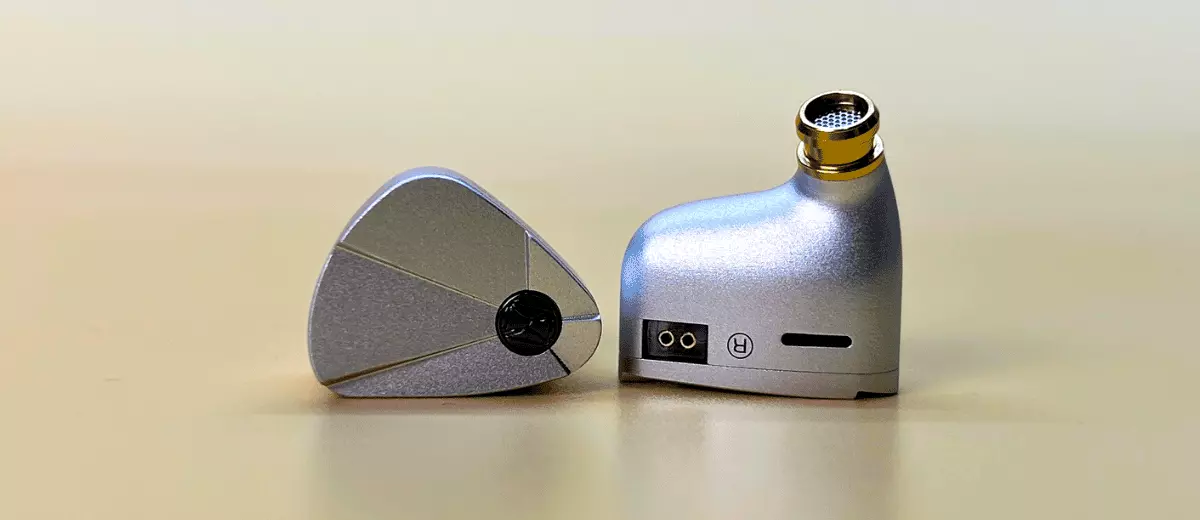
The Beta features a CNC-machined aluminum alloy shell with a brushed finish and faceted faceplate design. It weighs approximately 6 grams per shell and includes a three-nozzle modular system.
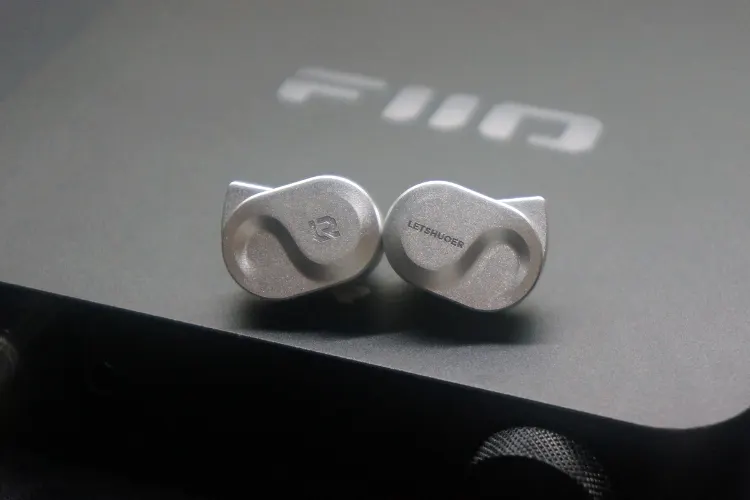
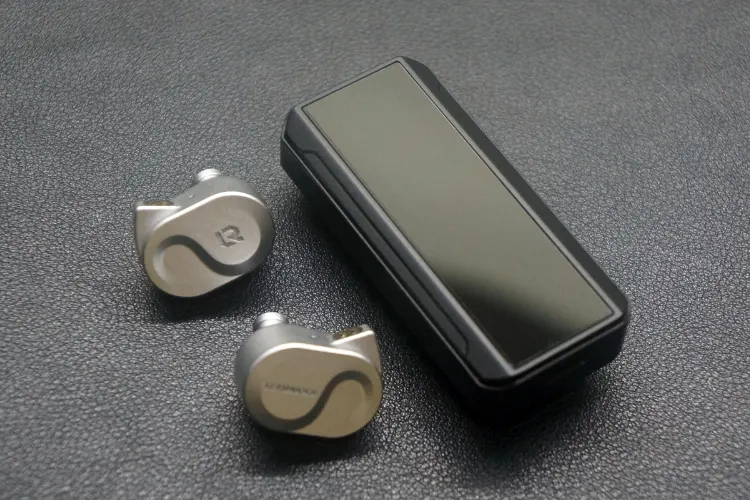
The S08 also uses a CNC-machined aluminum shell, incorporating the stylized “8” design on the faceplate to commemorate LETSHUOER’s anniversary. The S08’s shell is more compact and oval-shaped, though some users report its geometry is not ideal for all ear shapes.
Both IEMs include a modular cable with 3.5mm and 4.4mm terminations, and both offer meaningful accessory packages for their price brackets. The Beta’s purple hard case is a step above the S08’s carrying case in terms of build and capacity.
Performance
The Beta and S08 pursue fundamentally different tuning philosophies despite both being single-driver IEMs.
The Beta leans slightly analytical with a tight yet controlled low-end and forward mid-treble energy.
The S08 takes the opposite approach. It is warmer, darker, and more U-shaped, with a notably fuller mid-bass and a more relaxed treble presentation.
Bass comparison highlights this contrast clearly. The S08 delivers deeper, warmer, and more physical low-end impact with excellent planar speed and a chest-thumping sub-bass response that the Beta simply does not match in weight or warmth. Listeners who enjoy the physical sensation of bass will find the S08 more satisfying in this area.
The Beta counters with better bass definition and clarity, with cleaner note separation and no low-end bloom into the midrange.
In the midrange and treble, the Beta is the clearer and more analytically detailed performer.
Female vocals are more forward and better defined on the Beta, and micro-details in acoustic recordings are rendered with more precision.
The S08’s smoother, more relaxed treble presentation makes it more forgiving with poorer recordings and better suited for long listening sessions without fatigue, while the Beta rewards attentive listening on well-mastered material.
Topping Arpegear Hane
Technical
The Beta employs an 11mm planar glass composite dynamic driver, rated at 24Ω and 124dB/Vrms sensitivity.
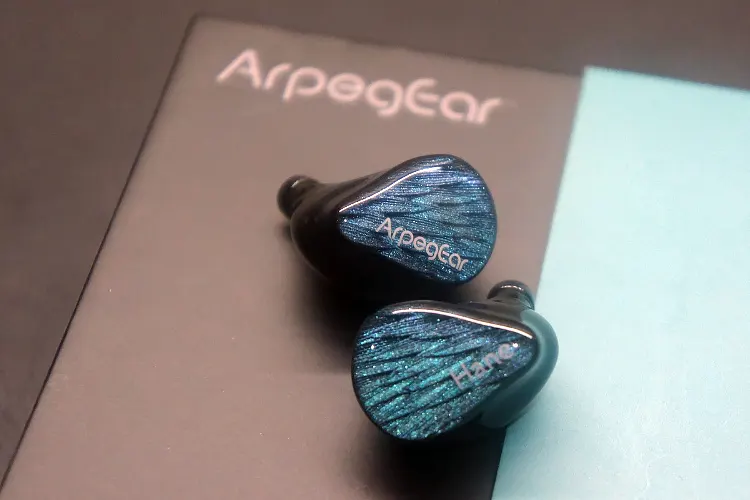
The Hane features a 10mm DLC (Diamond-Like Carbon) composite diaphragm dynamic driver, with a notably high impedance of 80Ω and a sensitivity of 115dB.
In practice, the Hane requires a meaningfully more powerful source to reach its potential; smartphones and basic dongle DACs may not be sufficient for optimal performance, while the Beta is comfortable with more modest sources.
Design
The Beta features a CNC-machined aluminum alloy shell with a brushed finish and a three-position tuning nozzle system.
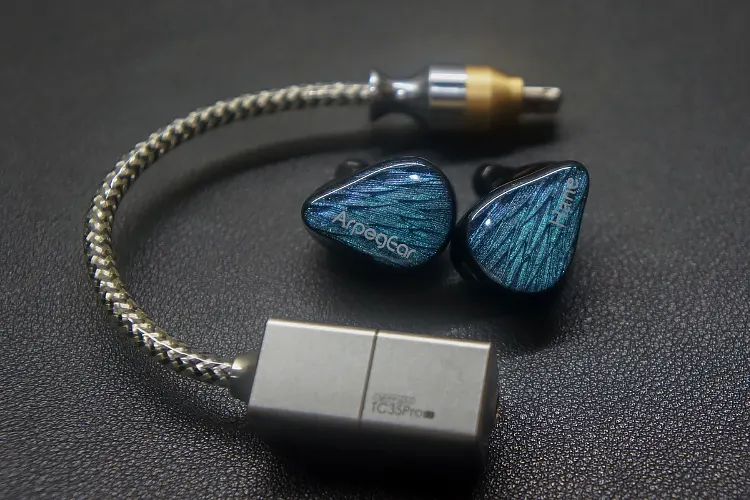
The Hane uses a 3D-printed resin shell in a high-gloss black finish with a distinctive feather-pattern faceplate inspired by traditional Chinese “dian cui” craftsmanship.
While the Hane’s faceplate is more visually elaborate, the Beta’s full-metal construction feels more durable and premium in the hand.
The Hane’s 16-combination dip switch tuning system is notably more expansive than the Beta’s three-nozzle setup, offering considerably more granular adjustability.
Performance
The Beta and Hane share a broadly analytical and clarity-focused character but approach it from different angles.
The Hane, in its default configuration, is near-neutral with a monitor-like quality, while the Beta’s standard nozzle offers a slightly warmer and more forward presentation.
Bass performance reveals the most meaningful differences. The Beta’s glass diaphragm driver offers faster transients and cleaner note separation in the low-end, while the Hane delivers better bass body and authority, particularly with its bass-enhancing dip switch engaged.
The Hane can approach near-basshead territory with both bass switches active, a range of adjustment that the Beta’s nozzles cannot match.
Midrange and treble characteristics favor the Beta for raw micro-detail and holographic imaging. The Beta’s soundstage feels wider and more three-dimensional, particularly on the standard nozzle, while the Hane offers a more controlled and precise image with tighter lateral positioning.
Both IEMs can exhibit upper-mid fatigue under certain conditions. The Hane’s tuning flexibility ultimately makes it more adaptable across different systems and preferences, while the Beta’s three-nozzle system is more focused and purpose-driven in its adjustments.
Hidizs MP143 Salt
Technical
The Beta employs an 11mm planar glass composite dynamic driver with a dual magnetic circuit design, rated at 24Ω and 124 dB/Vrms sensitivity.
The MP143 Salt features a 14.3mm planar magnetic driver with a nano-level diaphragm and a fully symmetrical magnetic circuit, rated at slightly lower impedance of 17Ω and lower sensitivity of 103 dB.
In practice, both IEMs are reasonably easy to drive from most portable sources, though the MP143’s larger planar driver benefits more from higher output current for optimal low-end control.
Design
The Beta features a compact CNC-machined aluminum alloy shell at approximately 6 grams per side, with three interchangeable tuning nozzles.
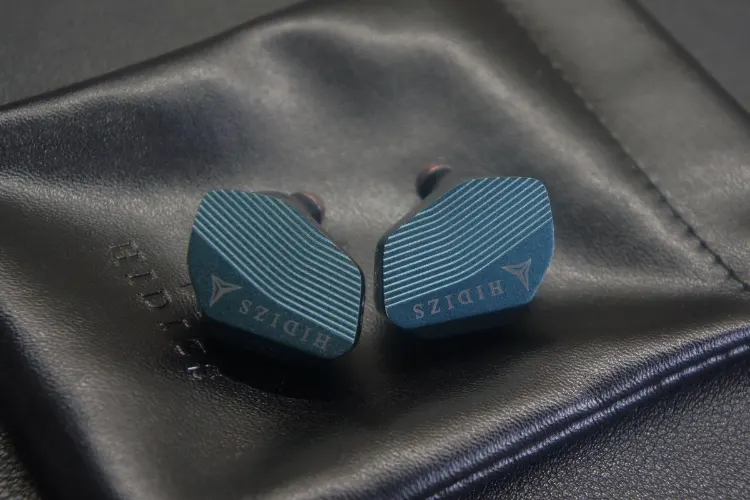
The MP143 uses CNC-machined aluminum shells with a larger, bulkier profile inspired by the curvature of whale skin, a design tied to Hidizs’s collaboration with the Whale and Dolphin Conservation organization.
The MP143 is noticeably larger and heavier than the Beta, which gives the Beta a clear advantage in long-term comfort and fit security for smaller ear anatomies.
Both IEMs include three interchangeable tuning nozzles, though the MP143’s nozzles offer a broader tonal shift between options, particularly in the bass and treble regions, while the Beta’s nozzle changes are more focused on upper midrange and treble voicing.
Performance
The Beta and MP143 are more closely matched sonically than their driver technology differences might suggest. Both lean analytical with good detail retrieval and above-average soundstage presentation for their price.
Bass performance favors the MP143. Its larger 14.3mm planar driver delivers more physical bass impact and a warmer, more rounded low-end presentation, particularly in the mid-bass region, which gives bass guitars and kick drums a more satisfying presence than the Beta’s leaner output. The Beta counters with faster, cleaner bass decay and better note separation.
Midrange comparison reveals the Beta’s advantage in clarity and micro-detail retrieval. Vocals are more forward and individually defined on the Beta, while the MP143 presents a smoother, more laidback midrange that is better suited for long listening sessions without fatigue.
The MP143’s soundstage is comparably wide, but the Beta edges ahead in imaging precision and instrument layering.
Both the MP143 and Beta exhibit an analytical treble presentation; however, the Beta exhibits more shoutiness in the mid-treble region, while the MP143 exhibits more sibilance in the upper treble region.
The MP143’s faster planar driver does give it an edge in top-end instrument separation, a notable flaw on the Beta.
My Verdict
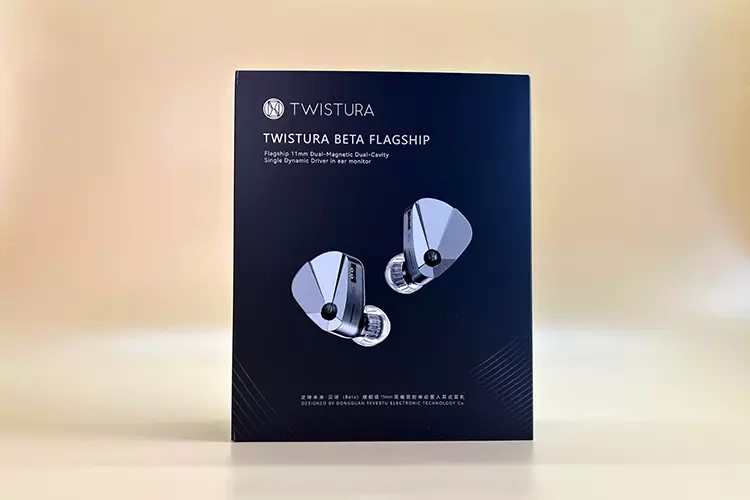
The TWISTURA Beta makes a decent impression as an affordable single dynamic driver IEM, thanks to its glass composite dynamic driver and three-nozzle tuning system.
It excels in clarity, imaging, and instrument separation, delivering a detailed, forward-sounding presentation that rewards attentive listening.
The Beta handles modern and acoustic genres well, with punchy sub-bass and crisp upper mids, though its treble can become fatiguing on busy or bright recordings. Source choice matters. Neutral-to-warm, well-powered sources bring out their best.
Listeners seeking a tunable, analytical, and versatile IEM with premium build quality and comfort will find the Beta compelling. At the same time, those preferring warmer, bass-forward signatures may want to explore alternatives.
TWISTURA Beta Technical Specifications
- Driver Type: 11mm Dual Magnetic Dual Cavity Dynamic Driver
- Diaphragm: Planar Glass Composite
- Impedance: 24Ω ± 15% (@1kHz)
- Sensitivity: 124dB/Vrms (@1kHz)
- Frequency Response: 8Hz – 21kHz
- Cable: 4-core OFC braided, 0.78mm 2-pin
- Plug: 3.5mm + 4.4mm (modular)
