

Synergy
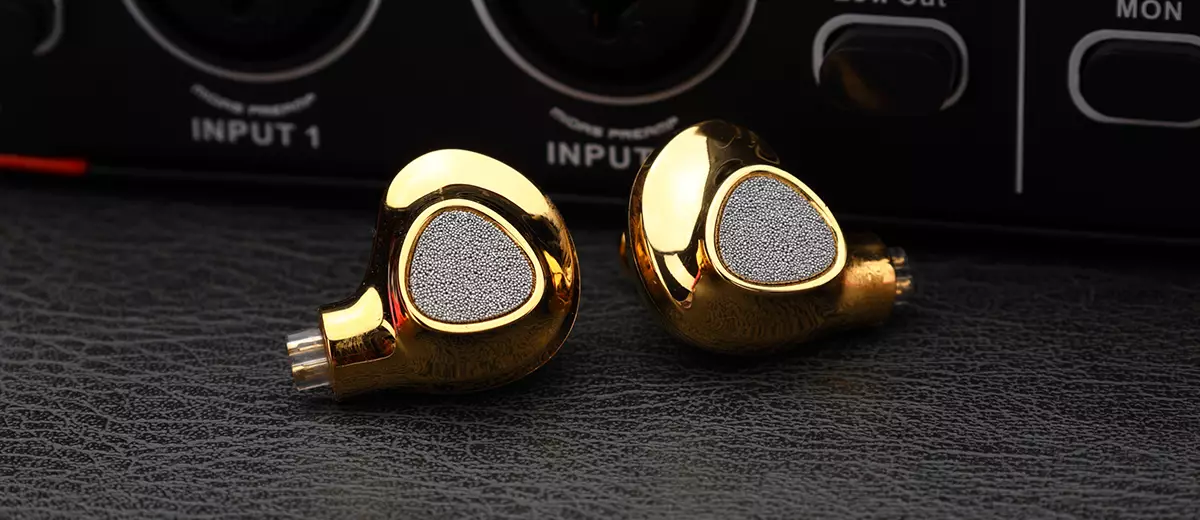
During walking exercises at home, listening in a coffee shop, etc., the P2 ULTRA had a fairly black background across all the sources I paired it with; the cable never picked up on radio-frequency interference.
However, as mentioned previously, the P2 ULTRA has lower-than-average sensitivity, which could become an issue with some sources.
Pairings
The good news is that the P2 ULTRA isn’t as difficult to drive as it seems; it is just less sensitive than average.
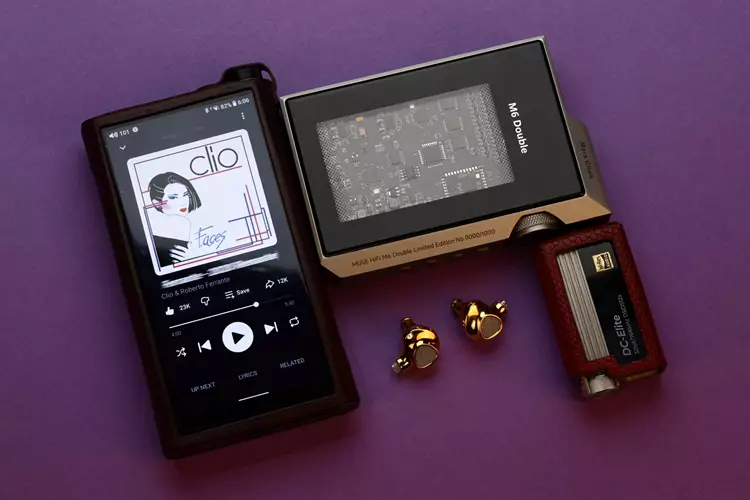
This is because the sound remains clean and non-struggling even at near or maximum volume with the iBasso DC-Elite, which is only rated at 280 mW at 32Ω, balanced.
With the DC-Elite, the sound is clean and very transparent, and quite dynamic. I must say that the P2 ULTRA pairs very well with the DC-Elite.
However, the MUSE HIFI M6 Double, in both tube and transistor modes, isn’t as happy as the DC-Elite when paired with the P2 ULTRA. I get distortion at high volumes, though at normal listening volume, the sound is clean and distortion-free.
Finally, with the FiiO M15S in super high-gain mode, I get a very clean, detailed, and expansive soundstage with effortless dynamics. The sound gets louder than I can handle without distorting.
Selected Comparisons
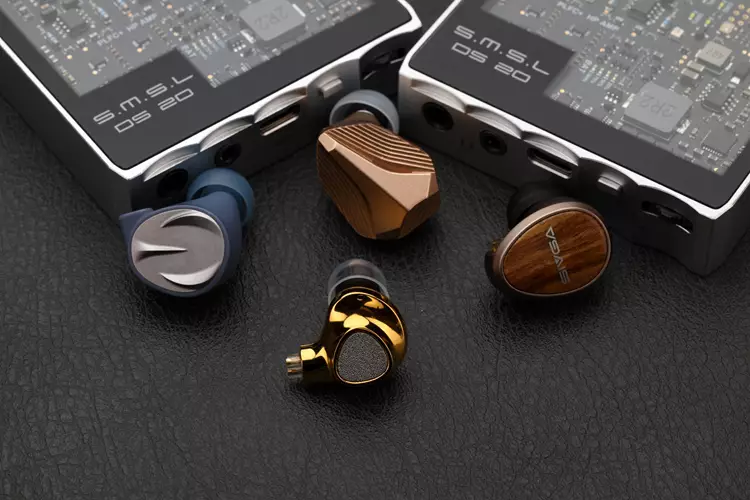
For my selected comparisons to the TinHiFi P2 Ultra, I used my usual sources, including the iBasso DC-Elite, MUSE HiFi M6 Double, and FiiO M15S, and I often switch between them.
Still, I use the iBasso DC-Elite mostly for this comparison because I can discern differences more easily with its detailed sound, and it can drive all the IEMs here to the volume and sound quality I need for evaluation.
Hidizs MP145 PRO
Technical & Design
The Hidizs MP145 PRO offers features similar to the original MP145, with improved performance.
The 7 + 7 magnet array is improved to a 1 Tesla Fully Symmetrical Magnetic Circuit, delivering 40% more magnetic flux for clearer sound, a more stable magnetic field, and greater efficiency. The MP145 PRO has an impedance of 30Ω and a sensitivity of 104 dB.
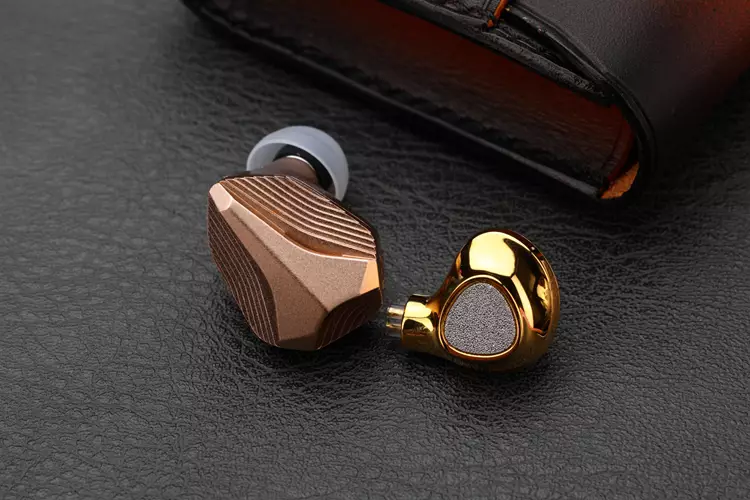
The MP145 PRO features a whale-inspired design; the faceplate resembles a whale’s tail fins. And the internal design features hidden ventilation ports on the whale-tail fin faceplate. When viewed from the side, two slot-type vents are on the opposing sides.
The aluminum alloy shell is on the big side; fortunately, it is not too heavy. At 10.2 grams each (measured), it falls within the norm for IEM weight.
Performance
When comparing the MP145 PRO and the P2 ULTRA, I had to adjust the volume from 45 percent to 80 percent to achieve parity in loudness, indicating a substantial difference in their sensitivity. MP145 PRO is much more sensitive than the P2 ULTRA.
The MP145 PRO has a near-neutral sound with lesser bass elevation, a neutral, more forward midrange, and a neutral, slightly elevated treble.
In comparison, the P2 ULTRA has a U-shaped sound with boosted subbass, a recessed midrange, and a much-boosted upper treble.
I couldn’t help but notice that the bass in the MP145 PRO sounds much weaker, with less note weight, than the bass on the P2 ULTRA.
The upper midrange, lower treble, and presence region are much more recessed in the P2 ULTRA, making the MP145 PRO sound clearer with vocals.
Both have spacious soundstage, but the P2 ULTRA has a noticeably bigger stage; however, when it comes to imaging, the MP145 PRO has a more defined, holographic, and palpable imaging performance.
Even though the P2 ULTRA requires much higher volume settings to achieve the same loudness, both sound energetic, lively, and dynamic.
LETSHUOER S15
Technical & Design
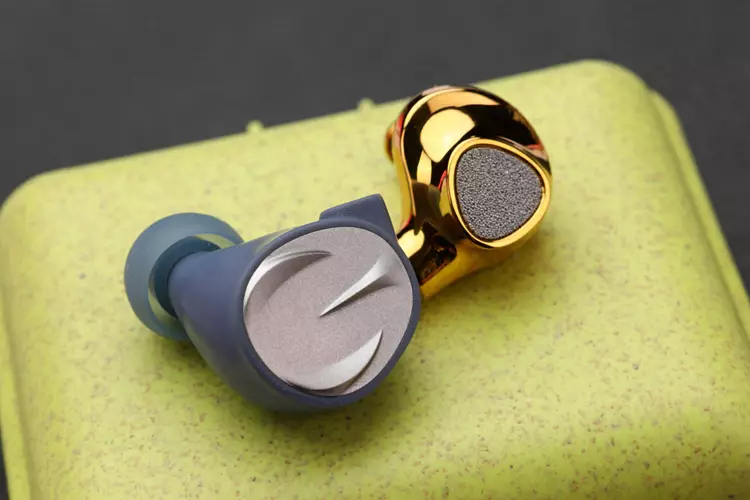
The LETSHUOER S15 features a Third-Generation 14.8mm Planar Driver + 6mm R-Sonic Passive Filtering Module, housed in an elaborate shell with Dual Acoustic Tubes and a Filter Crossover. The S15 has an impedance of 30Ω and a sensitivity of 106 dB/mW.
LETSHUOER made the smart choice to use a 3D-printed front cavity to support the elaborate acoustic design and reduce weight. The front panel is made out of CNC-machined anodized aluminum.
The S15 features a flush-mounted 2-pin connector and includes a very nice two-core, 216-strand, Silver-plated Monocrystalline Copper Cable, terminated with Detachable 2.5mm, 3.5mm, and 4.4mm 90-degree Angle Connectors.
Performance
While both the S15 and P2 ULTRA are highly resolving and technical, the S15 is tuned to sound more analog and organic, with neutral bass, a slightly elevated midrange with thicker note weight, and neutral treble.
The P2 ULTRA has an audiophile-style tuning characterized by a boosted subbass, a relaxed midrange, and boosted upper treble, delivering a very detailed and airy sound presentation.
The P2 ULTRA also has a more spacious soundstage with a blacker, cleaner background. The S15’s stage isn’t as big, but it’s not small either, and the background isn’t as dark or as clean, making the stage not as deep.
However, when it comes to imaging, I find the S15 slightly superior, as it places the instruments and vocals more forward and provides better front-to-back layering between them.
While neither is anemic or boring-sounding, I find the P2 ULTRA sounds livelier, more energetic, and more exciting due to its boosted subbass and upper treble.
At the same time, the S15 is much more neutral in dynamics. The S15 is more sensitive than the P2 ULTRA, though.

SIVGA Nightingale PRO
Technical & Design
The SIVGA Nightingale PRO features a newly designed planar driver with an ultra-thin composite diaphragm, paired with a newly developed 0.008 mm composite diaphragm and a 0.006 mm aluminum ribbon conductor. It is rated at 16 Ω impedance, with an SPL of 107 dB/mW @ 1kHz.
The Nightingale PRO combines perfectly machined metal parts with a wooden faceplate cover, mixing dark and silver tones with brown wood to suggest an advanced design with a natural feel.
The Nightingale PRO features a turbine-shaped metal nozzle cover with a small vent hole near it, which serves as the pressure relief. There is another vent hole near the faceplate and the QDC style 2-pin connector.
Performance
Both the P2 ULTRA and Nightingale PRO have a similarly detailed, airy, and elevated upper midrange. The Nightingale PRO has less bass, making it sound thinner and somewhat like a treble-head tuning.
The P2 ULTRA sounds more balanced tonally by comparison.
Both have a big and spacious soundstage with clean background decay. However, I find the Nightingale PRO better in imaging; the center vocals, as well as background instruments, are better separated and layered.
While both are similarly lively and dynamic-sounding at normal and loud volumes, the P2 ULTRA requires a higher volume setting to reach the same loudness as the Nightingale PRO.
My Verdict
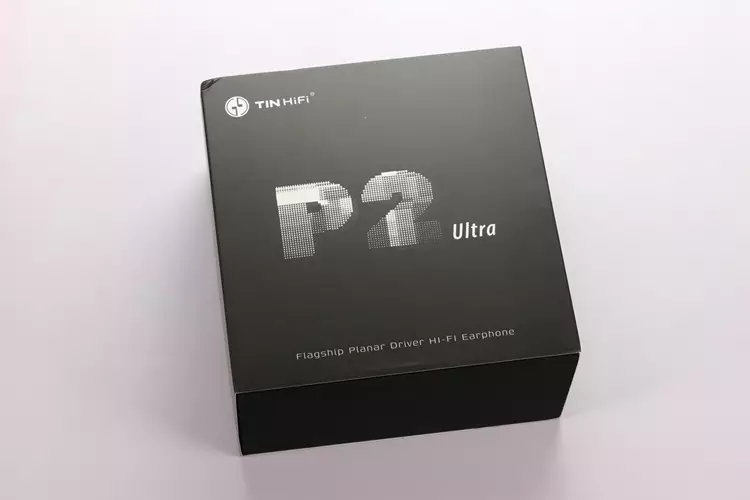
I must say that the P2 ULTRA is a worthy flagship planar IEM for TinHiFi. It uses a 3rd-generation 12 mm, 0.02 mm ultra-thin, nanoscale-coated diaphragm planar magnetic driver with dual-layer N52 neodymium magnet arrays, which makes the sound very clean and the transient response very fast.
I also like the deep bass, a big, spacious soundstage, a very clean background, and acceptable imaging performance.
What I wish were improved is the sensitivity. It is on the low side; I have to increase the volume substantially when switching from other planar IEMs with more typical sensitivity.
Nonetheless, TinHiFi P2 ULTRA’s cleaner sound, more spacious soundstage, faster transient response, and better bass response than the competition make it worth its price.
TinHiFi P2 ULTRA Technical Specifications
- Driver Unit: 12mm Third-Generation Planar Diaphragm Driver
- Frequency Response: 7Hz – 40kHz
- Impedance: 32Ω ± 15%
- Sensitivity: 98dB ± 3dB @ 1kHz
- Rated Power: 5mW
- Maximum Power: 10mW
- Connector: 0.78mm 2-Pin QDC
- Cable: Japanese Mogami Coaxial + 5N Silver-Plated Copper Hybrid Cable
- Plug: 3.5mm ingle-Ended 、4mm Balanced、Type-c
- Shell Material: Magnesium-Aluminum Alloy, 24K Gold Plated
- Weight: Approx. 5g per earbud (without cable) Case approx. 80g
- Nozzle Diameter: 5.8 mm
