

Synergy
Power
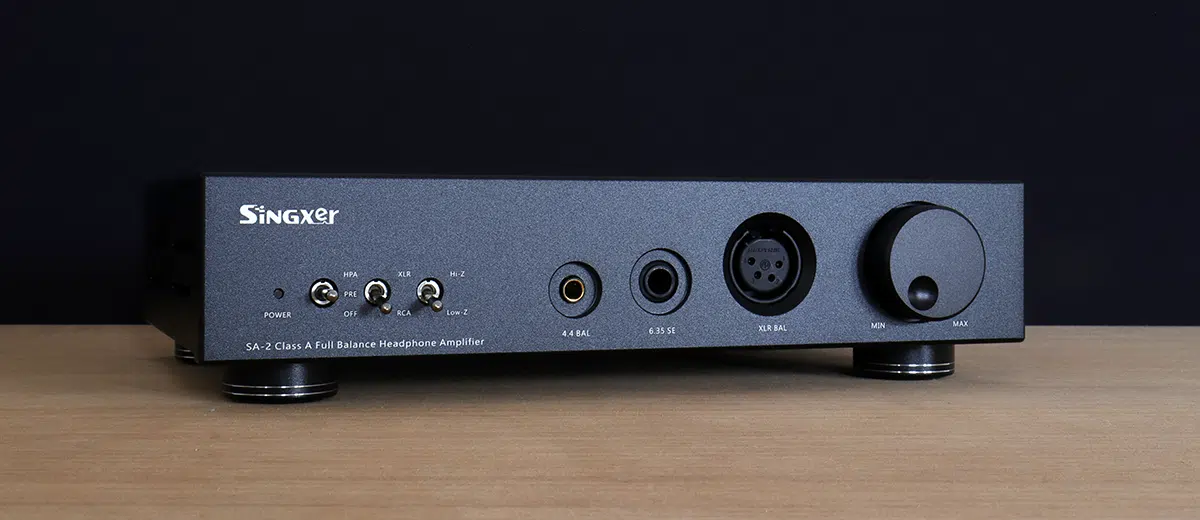
I don’t have many hard-to-drive headphones in my arsenal, but the Singxer SA-2 can more than likely power any one you might have in your arsenal.
I doubt you will find more than two headphones anywhere that might not find the SA-2’s output enough or adequate.
About the hardest-to-drive headphone I have here is a set of Dekoni Blue with Fostex drivers, and the SA-2 drove them off the single-ended tap to dangerously loud levels.
But the great thing is that on the lower gain setting, the SA-2 is delicate enough to drive IEMs without any hissy fits. Even on high gain, the output section presented no audible hissing. Perhaps my line conditioner is helping some, but it’s doubtful.
Pairings
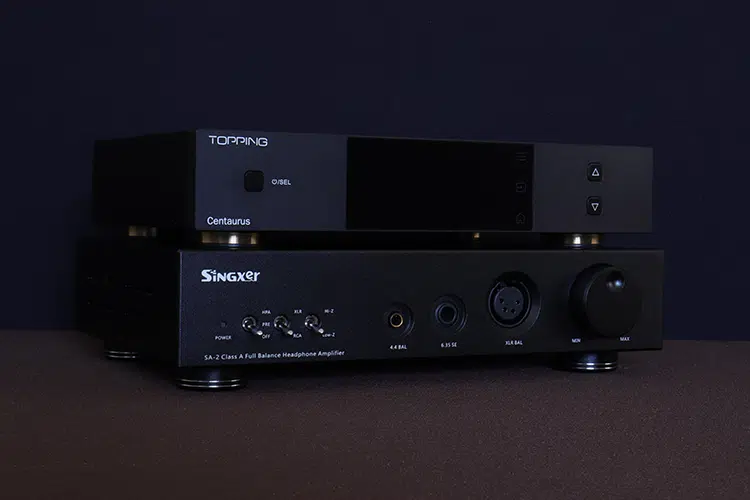
I would certainly pair the Singxer SA-2 with a DAC that is capable of adding color to the mix. But that’s just me and my personal preference since I like coloration and a heavy bass tone.
That’s why I used the Centaurus by Topping at first, because it comes with an app that features a 10-band parametric equalizer that can add correction or some coloration to the mix.
It also sounds great with DACs like the SMSL SU-X, which doesn’t come with as much audio tuning flexibility. The SA-2 shows off the SMSL SU-X’s large soundstage well and can keep up with the precise placement capability of the SU-X.
I also got to play around with the iFi audio NEO iDSD 2 and used the output to feed the SA-2, but I also loved the way it paired up to the Gryphon off the 4.4mm line out. The XBass and XSpace were active on the analog output, adding some desired bass presence and even more spaciousness.
Selected Comparisons
Topping A90
Technical
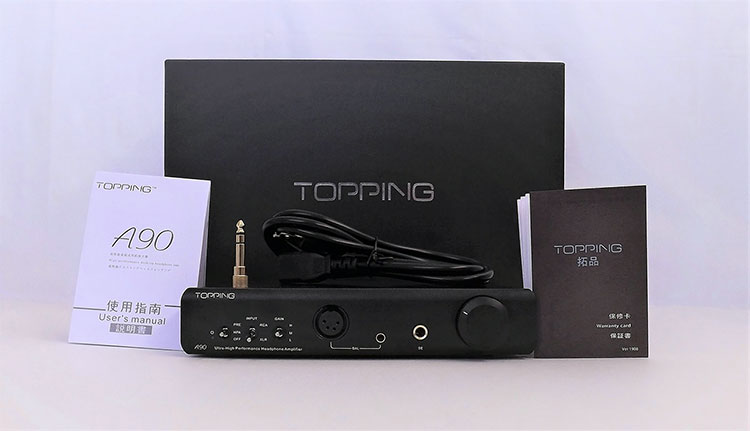
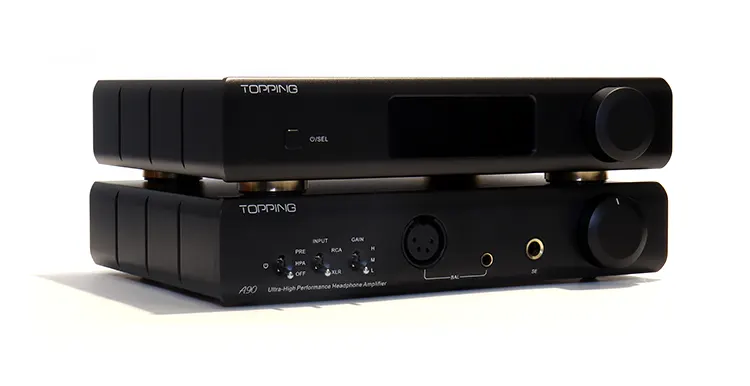
The Topping A90 and every variant of the Topping A line are unique in that they use NFCA module amplification, unlike the SA-2, which uses a proprietary hybrid class-A DC servo amplifier design. They’re both high-current models, nonetheless.
In this comparison, I use the first model because it’s the model I have on hand from the series. It’s an excellent choice if you want neutrality but a warmer top end compared to the SA-2, which is top forward.
Power output on the first A90 produced around 7600mW of power max, and the obvious observation here is that the more powerful unit is the SA-2, under certain circumstances. That 15W rating on the SA-2 rating is at 20Ω.
If you look closer at the specifications, the power output lowers considerably on the SA-2 when in Class A, while the A90 can manage similar power to the SA2 at high impedance loads.
In fact, if you look at the SA-2’s specifications closely, power output drops considerably when it kicks into Class A mode. We’re talking 800mW @ 32Ω.
At 300Ω, the A90 does 1600mW while the SA-2 can only cough up 1120mW. Here’s a perfect example in black and white that the larger number doesn’t automatically win.
Design
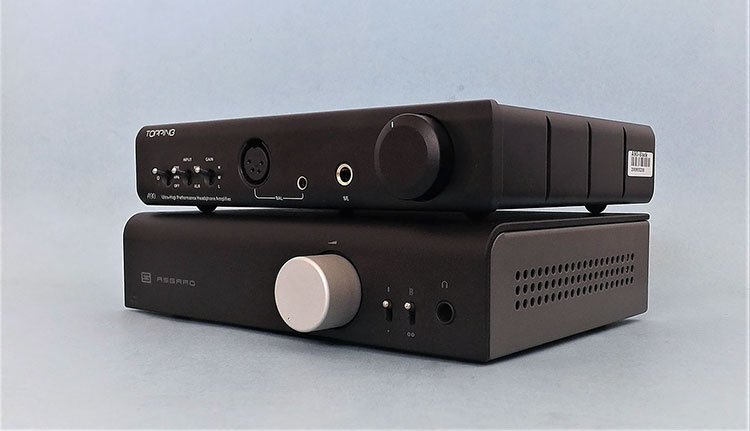
As far as appearance goes, if you directly compare these two models, they almost look the same in that they both use a similar array of three toggle switches placed at the same location on the front panel.
The big difference in design is that A90 has rounded corners and the design on the side panels. The A90 is the more attractive model, plus the A90 is smaller.
They also share the same connectivity upfront, but in an inverted placement position, with the volume knob occupying the same spot on both amplifiers.
Even the rear connectivity is the same, and the only thing missing back there is the ground switch.
Topping placed the power button on the outer side, which ergonomically works best, and it makes it easier to reach the rear-mounted power button. But that’s trivial, well, almost.
Performance
Both these amplifiers aim for neutrality, and both aim for faithful reproduction of the source, but the A90 seems warmer to me, particularly in the top end. It’s funny how the A90 sounds closer to a Class A to my ears than the Class A SA-2.
Harder-to-drive headphones with higher impedance ratings would more than likely be better off with the A90 since it can produce more power at, let’s say, 300Ω. Sennheiser HD 600, SIVGA SV023, and other similar high-impedance headphones would benefit the most.
They both are powerful enough for headphones, but delicate enough for IEMs. They both have totally silent backgrounds with no detectable hiss.
I’d have a hard time choosing between the two, but obviously, I would go with the trend and get the new model, wink, wink.
SMSL SH-X
Technical
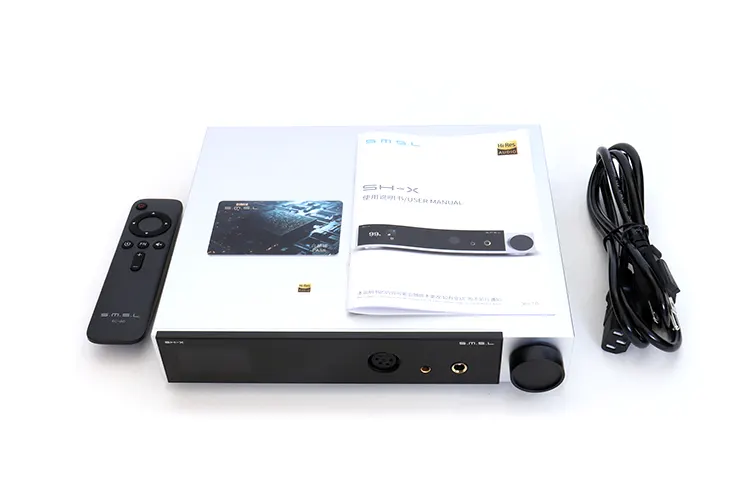
The SMSL SH-X is a heavy hitter that produces 11.5 watts of power on tap via the use of a large 80 OPAMP array. The SH-X produces a large, lifelike sound, and that’s why it has never left my desk once I got it.
It’s larger and heavier than the SA-2, but the build quality of the SA-2 is no slouch either, since it’s made with thick metal. The Singxer SA-2 also employs a thick copper plate on aluminum to keep the amplifier cool.
Design
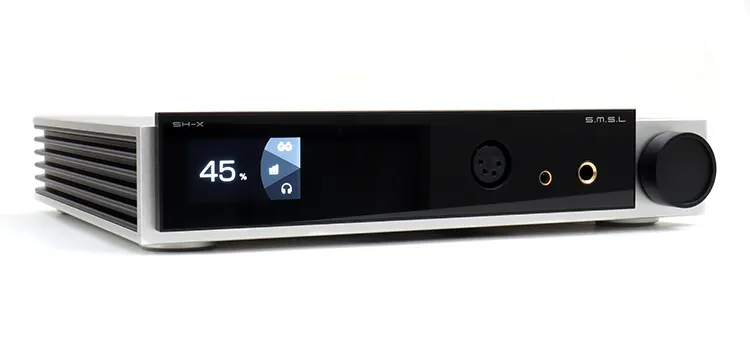
When it comes down to the SH-X design, some like it and some don’t. It does wear unique clothing.
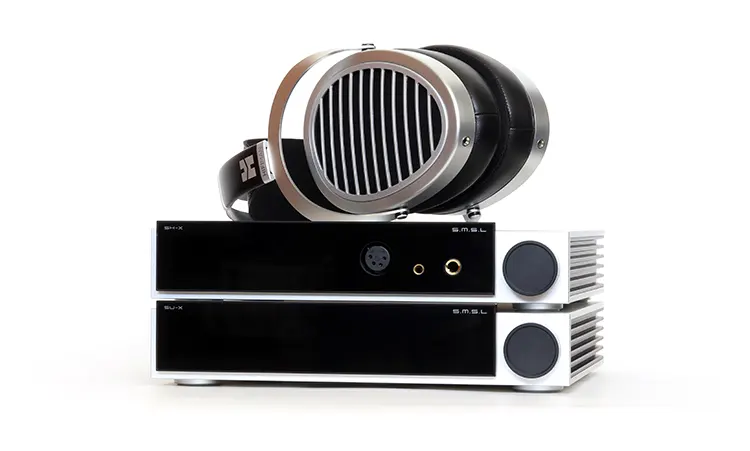
For example, that off-center glass does not match with other components well in the looks department. You would have to use their SU-X to obtain the same aesthetics.
The Singxer SA-2’s aesthetics are simple and utilitarian, but the style matches well with many other components out there.
SMSL actually installed a different screen on their matching DAC, making it obvious that SMSL wasn’t too concerned about aesthetics. Or were they?
Putting that aside, I do like the two-tone SMSL design because it just looks like more attention was given to the design.
The grey metal contrasts well with the side-mounted fins. Unfortunately, they needed to be vented, while the SA-2 has plenty of side ventilation and runs much cooler as a result.
I always promote simplicity over complication, and I did find a small quirk with the SU-X, and that is the protection it has, which will not let you turn on the amplifier back on after you accidentally shut it off, since it’s tied to the volume knob.
When that occurs, which often does due to the ergonomics, you have to wait a while until the unit cools off considerably, since it tends to run a bit hot.
The SA-2 is a cool cucumber; on the other hand, it never gets past lukewarm. That means it’s preferable for long-term use.
Performance
I have conflicting feelings here because I like the way both these amplifiers sound, and they both cover many selling points. However, the SMSL has the edge in features.
But as an all-day desktop user, the SA-2 would be the one that I would most likely choose since it runs almost cold to the touch compared to the SH-X, which runs a tad hot.
On sonics, these two amps would be considered by me as almost opposing signatures due to the SA-2 having a smoother and almost analog character. The SH-X is a touch drier, but it emphasizes clarity and separation over other aspects.
The SH-X can sound too hot at times, and is the more clinical of the two. It does have more features compared to the SA-2. But it will suit the analytical crowd best.
The SA-2 is the one to choose if you want a more relaxed presentation.
My Verdict
The Singxer SA-2 is an enjoyable amplifier that can satisfy the reference enthusiast as much as being enjoyable for someone who is looking for a clean, powerful amplifier with a touch of musicality, all while remaining neutral and not adding any character of its own.
It’s an all-around excellent performer, with an odd placement of the power and gain switches as the only ergonomic con. It also lacks some of the digital niceties of other models. Then again, simplicity is bulletproof to me.
The SA-2 serves up excellent sonic virtues in a package that runs cool and clean. It’s powerful enough for any headphone you might have, and yet delicate enough for IEMs. It’s not a glamorous model, but it certainly falls within the high-performance class.
Singxer SA-2 Technical Specifications
- Output power: 10W @ 32 Ω, 15W @20Ω, in Class A operation below 800mW @32Ω
- Output impedance: Low Z mode Bal 0.15Ω, SE 1.1Ω, high Z mode Bal 10Ω, SE 11Ω
- Rear IO: Supports balanced XLR and single-ended RCA inputs and outputs
- Front IO: Balanced 4.4mm, 4-pin XLR, 6.35mm
- Gain settings: Variable gain 0 to 18db
- Construction: Aluminum chassis, featuring a copper block to an aluminum alloy heatsink
- Design: Optimized PCB routing, Dcservo design, GND/LIFT switch
- Dimensions: 234 x 170 x 46mm
- Weight: approximately 1.8kg
