

Synergy
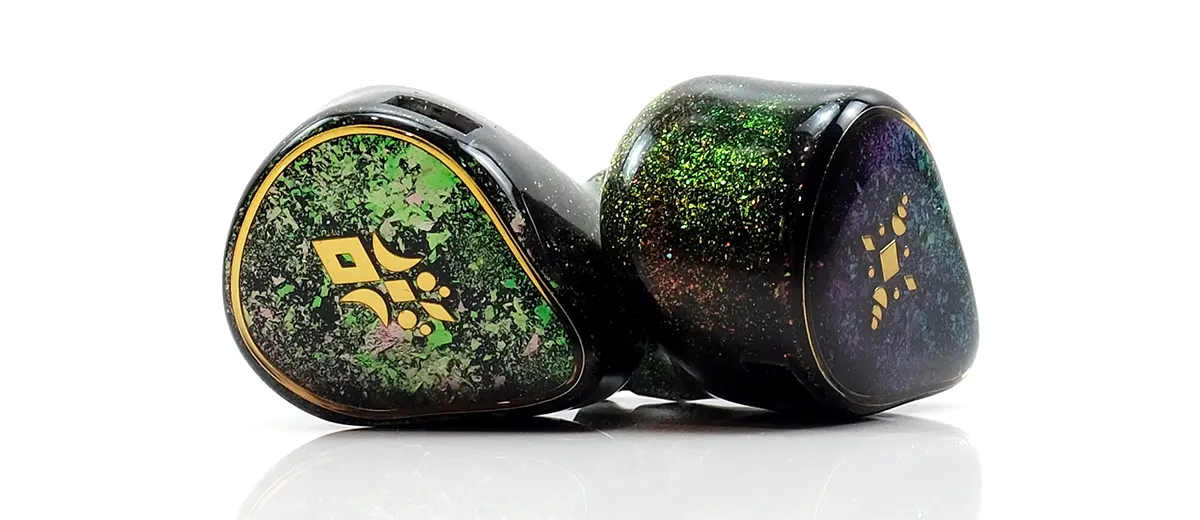
The Rossi&Wing Lua Synchronicity is rated at 14Ω impedance with an SPL of 112 dB/mw @ 1kHz, making it quite easy to drive and almost the same as the stock tuning of the Serendipity (without PEQ applied).
Compared against the competing IEMs listed below, the ESR MKII from Empire Ears is slightly more sensitive by 1-2 dB, with the 64 Audio U4s subjectively sounding similar at matching volume levels despite a lower dB SPL rating.
This is an IEM that works very nicely with DAPs and dongles; you will not need anything special to power them.
DAP & Portable Amplifier Pairings
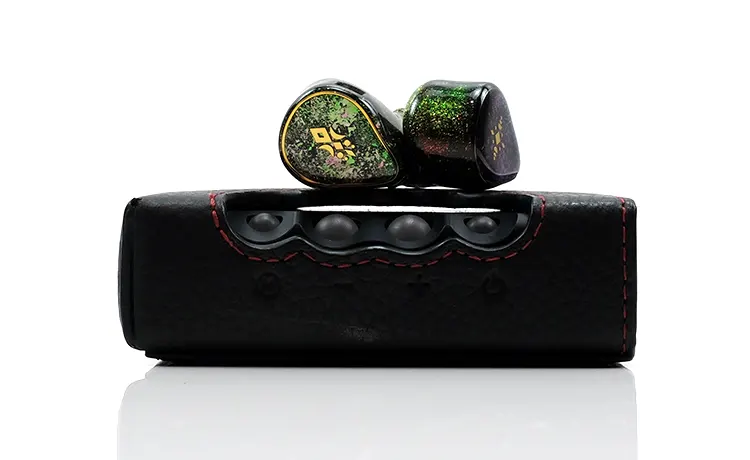
I tested 2 portable amplifiers and 3 DAPs, including the iBasso DX340/AMP15, the N6ii/R202, HiBy’s R8 II, the D17 Atheris, and the Mojo 2.
None of them had any issues with noise floors using the Synchronicity; all were very comfortable on a low-gain setting from their respective 4.4mm balanced outputs.
Tonally, I was more inclined toward a cleaner, expansive sound signature, though I did enjoy some of the additional bass weight from the R8 II and D17 Atheris in NOS mode.
The better pairings tended to accentuate height and width over depth. I can deal with a more controlled low-end, but I felt the slightly softer interpretation of the mids and highs from the D17 NOS and the R8 II were not as compelling as the higher contrast and treble sparkle of the DX340/AMP15 and the Mojo 2.
Even the N6iii/R202 in R2R has more of an edge to its upper-mids than the D17, despite the D17 sounding more dynamic in the lows. It was a similar impression with the R8 II, which had excellent lows in Turbo mode but a slightly flat interpretation of the Synchronicity mids and highs.
Having said that, the N6iii/R202 1-bit mode was better suited to the Lua Synchronicity’s treble tuning and provided more width in the mids. If you want a stronger, richer vocal presence, then the R2R mode is more suitable.
Dongle Pairings
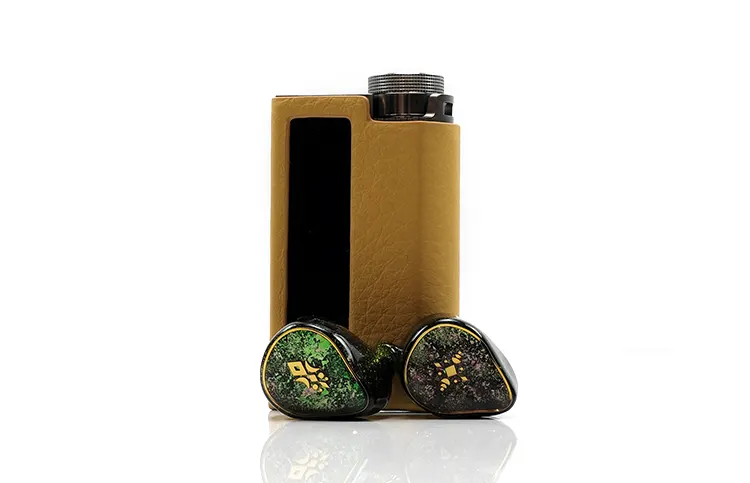
I tested 4 dongles with the Lua Synchronicity, including iBasso’s DC-Elite and Nunchaku, and Cayin’s RU6 and RU7.
From a personal preference point of view, the DC-Elite was the clear favorite. It delivered the right amount of timbral contrast, a nice focus on vocal and midrange imaging in general, with a balanced set of lows. Of the 4, it provided the most immersive listening experience.
The Nunchaku was a little too soft and diffuse in its tube mode imaging with the solid-state alternative sound quite flat. The tube mode does offer a nice bass bloom with the Lua Synchronicity, and vocals are smooth, but I honestly felt it was too laid-back sounding.
Out of the two Cayin dongles, I preferred the RU6 over the RU7, primarily due to a stronger and more forward-sounding vocal presence.
The RU7/Synchronicity pairing is more resolving and stretches the stage wider and deeper, but the vocals are too laid back for my tastes, and that is something the Synchronicity is tuned to deliver well.
Selected Comparisons
The following selected comparisons to the Rossi&Wing Lua Synchronicity were completed using a mix of the iBasso DX340/AMP 15 and the Cayin N6iii/R202 DAPs on a low-gain 4.4mm balanced output setting.
Rossi&Wing Lua Serendipity
The Lua Serendipity is the entry-level model in this IEM series from Rossi&Wing, with my review published earlier this year.
Technical
The Serendipity shares some tech with the Lua Synchronicity, with both using an R&W “Magna Resonus” MR10 dynamic driver. However, that driver covers the entire Serendipity frequency range, whereas the Synchronicity mixes it with a balanced armature driver setup in a hybrid configuration.
It is unlikely that Serendipity uses any crossover technology compared to what seems to be a 2 or 3-way crossover inside the Synchronicity.
The Lua Serendipity is rated at 23Ω for impedance with an SPL of 112 dB/mW @ 1kHz, which is only slightly more demanding than the 14Ω rating of the Synchronicity, with both IEMs equally as sensitive.
Neither IEM is hard to drive with volume levels relatively close, but given my preference for using PEQ with the Serendipity, you will find it slightly quieter, as most PEQ programs tend to drop the gain by 1-2 dB.
Design
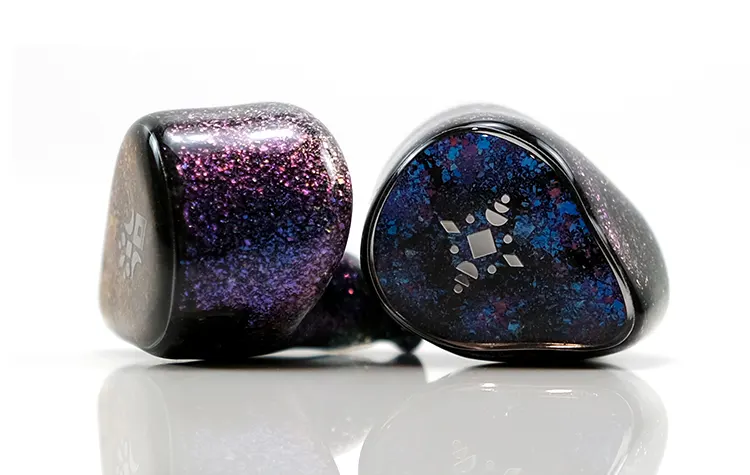
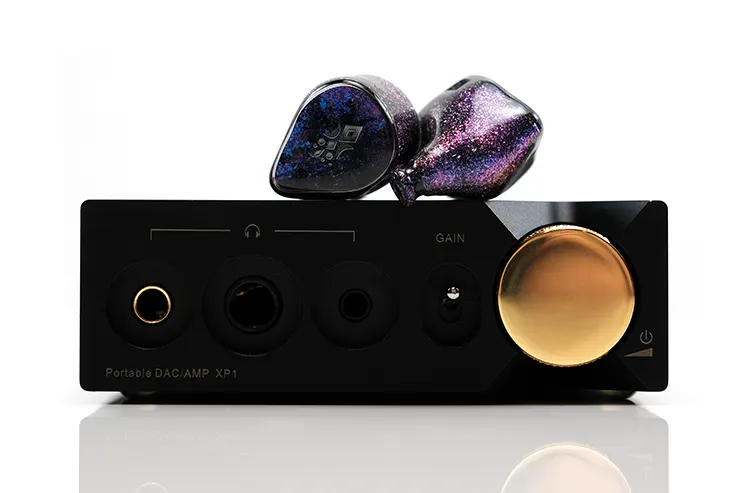
The design language and form factor of each IEM are the same; the only difference is the color mixes with the Serendipity opting for speckled, harmonious purple and blue hue theming, and the Lua Synchronicity diving into a more organic green and organic alternative with gold rims and badges as opposed to silver.
These are two fairly compact shell designs made of resin. For some reason, I find the Serendipity subjectively a little narrower on the faceplate, but I could be mistaken.
Otherwise, the form factors match with length nozzles and good ear canal penetration. Ear tips are a major factor in the enjoyment of these two IEMs, and though they both seem to have the same silicone tips, I found the tips ok with the Synchronicity and not so good with the Serendipity.
I ended up changing to Final E tips with the Serendipity primarily for grip and passive isolation, and to try and tweak the stock tuning, though the gains are marginal. The Synchronicity didn’t seem to have the same problem with the tuning or fit.
Both IEMs have the same 1.2m cloth jacketed, 4-wire 26AWG 4N Silver-Plated 6N OFC Copper cable, so there is no advantage in cable swapping between them.
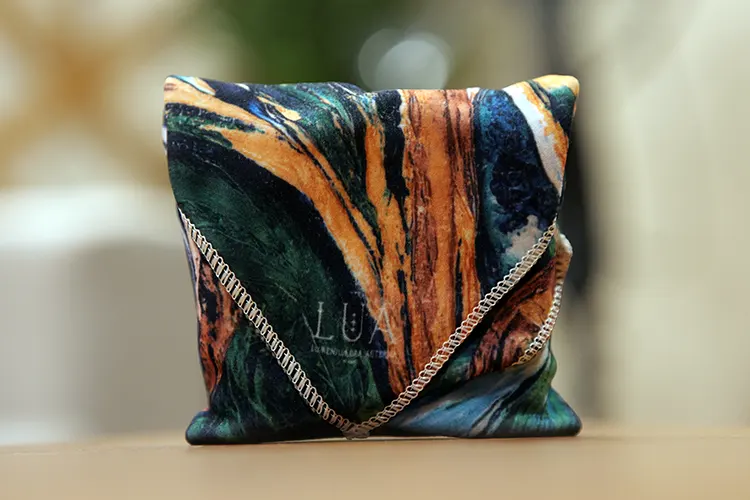
The final difference is the packaging, with the Serendipity coming with a HOKKI No. 3 perfume sample and the Lua Synchronicity packed with No.4. Entirely subjective, but I preferred the scent of No.3.
Performance
The Lua Synchronicity is everything I wish the Serendipity could have been, at least without PEQ being applied.
Their respective FR’s are so very different. They both use the same dynamic driver, but from 20Hz up to 500Hz, the Serendipity is way above neutral, creating excessive bass bloom.
Combined with a recessed 2-4k region, the vocals can sound masked, the detail is smeared, and there is way too much bass bloat and warmth overpowering the sound signature.
The Lua Synchronicity corrects almost everything you just read in the above description. The lows are Harman correct down to 250Hz, sounding far more controlled and with a much improved bass-to-mids separation courtesy of a stronger 500Hz to 1k dip.
The pinna gain region is noticeably lifted from 1k up to 5k, creating a much better vocal and percussion presence. The 8-10k region also has more amplitude, inviting enhanced contrast in the mids and a more ethereal quality to the highs.
The Serendipity is dark and warm, the Synchronicity is balanced and cleaner-sounding. However, you can get closer to the Synchronicity balance with PEQ applied to the Serendipity profile.
With a 7 dB 0.3Q lift at 6k, a -2 dB drop around 500Hz, and a 2 dB bump at 30Hz, you can get what I would call a smoother, richer sounding Synchronicity-type performance from the Serendipity.
It won’t capture the speed and nuanced articulation of the Synchronicity highs, but it will give you a very enticing set of vocals with good presence and less bass bloat.
64 Audio U4s
The 64 Audio U4s sits just above their entry-level Aspire model in the company’s universal lineup, with some considering it a refresh of their classic U4 SE.
Technical
Like the Lua Synchronicity, the 64 Audio U4s is a hybrid multi-driver IEM.
Inside the U4s are three different types of drivers, a single 9mm dynamic driver for the lows, a balanced armature driver for the low-mids, another again for the mid-highs, and 64 Audio’s patented tubeless tia driver for the highs with a 4-way passive crossover.
My best guess for the Synchronicity is a dual or triple driver setup with the “Magna Resonus” MR10 for the lows (and mids) and dual BA or single BA for mids and highs, or just the highs with a 2 or 3-way crossover.
Both IEMs are easy to drive. The U4s is rated at 11Ω for impedance with an SPL of 107 dB/mW @ 1kHz. It’s a lighter load but not quite as sensitive as the Lua Synchronicity on paper, though in real-life testing, I felt both were about the same.
Some of the additional cost of the U4s is wrapped up in some value-added features missing on the Synchronicity, such as using a tia tubeless driver implementation and 64 Audio’s apex (Air Pressure Exchange) module technology.
You get a standard set of 3 filters from the highest isolating, 20dB M20, down to the least, the -10dB MX. Each affects passive isolation levels and makes audible changes to the sound signature. For this comparison, I used the default M15 filter at -15 dB.
Design
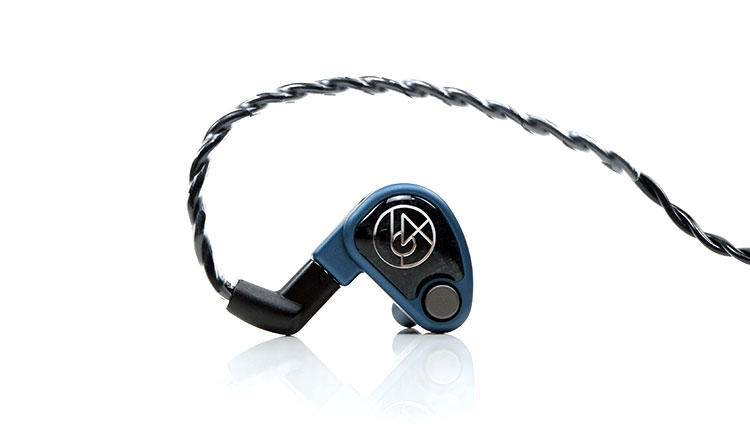
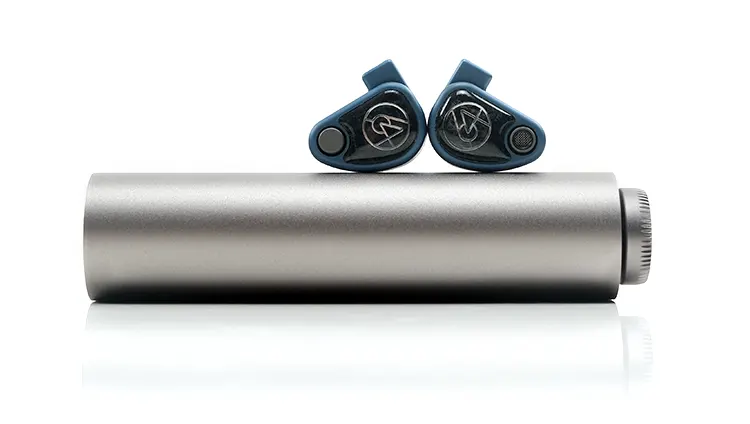
Very different design approaches for these IEMs. You could argue that the Lua Synchronicity is the classic contoured resin shell design, and the U4s is a more contemporary streamlined matte-finished aluminum shell.
The Lua Synchronicity speckled green and orange finishing certainly has more visual pop than the more muted blue slate and black tones of the U4s. However, the U4s aluminum shell is far more robust and slightly more compact, sitting flusher in the ear when fitted.
I got better passive isolation performance from the contoured resin shells of the Lua Synchronicity, even with the stock tips.
Metal shells rarely isolate as well as resin, so it’s no surprise that the U4s places more emphasis on the choice of tips for passive isolation levels.
Since both are vented, there is a degree of leakage, but with the silicone tips, the U4s is leakier using the M15 module. You can tighten that up with the m20 apex module, but it produces a bloated bass response.
Both 4-wire stock cables are good, but I prefer the finishing on the Lua Synchronicity version. It’s a little flashier in its design with superior barrels and connectors. The U4s version does have angled connectors that slope the cable around the ear in a comfortable fashion.
Performance
I think both IEMs are aiming for similar territory, at least with the U4s using the more balanced m15 module. Both are elevated on the lows, both have some natural pina gain around 1-2k, and neither are too sharp in the highs.
The key differences for me are the amount of mid-bass amplitude, the level of pinna-gain post 1k, and how much treble comes into the upper-mids as a result.
As such, the U4s is a little more controlled in the sub-bass, not quite as deep-sounding as the Lua Synchronicity, but offers more mid-to-upper bass warmth and is not quite as dipped in the lower-mids.
It delivers a slightly warmer timbre and a bit more lower-mids solidity as a result, but not as much vocal and upper-mids presence as the Lua Synchronicity.
Vocals on the U4s have a bit more warmth and weight but sit further back in the mix, creating a stronger awareness of peripheral spatial cues. The Synchronicity has a stronger pinna gain from 1-4k, pushing vocals further forward with more perceived height but less staging width.
Treble is a little more pushed on the Synchronicity, but more so with the upper-mids elevation picking up a bit more contrast, adding to a stronger percussion influence in most recordings. The U4s highs can be a little edgy at times, but with the 2-8k range running south of neutral is not much of a factor.
You can enhance the U4s lows considerably with the m20 apex module, but it can get a little bloated for my liking with too much weight and warmth, and a slightly restricted staging quality compared to the m15 module.
Empire Ears ESR MKII
The Empire Ears ESR MKII was launched back in 2021 and is one of the few older models to survive EE’s lineup cull and is still available to buy today. It also happens to be one of my favorite mid-tier reference IEMs, and I use it a lot for testing purposes.
Technical & Design
Both IEMs are hybrids, but they go in different directions. The Lua Synchronicity is a mix of dynamic and BA, whereas the ESR MKII uses BA and EST drivers.
The ESR MKII uses three proprietary balanced armatures and 2 Sonion electrostatic drivers. The three BA are split between the lows, mids, and highs, and the electrostatic drivers are split between the highs and ultra-highs. The drivers are threaded together with a re-engineered 4-Way synX Crossover Network.
There are also a few additional value-added features to the ESR MKII, including A.R.C., or Anti-Resonance Compound, which is a special type of damping coating used on the inside of the ESR MKII’s shell for additional physical mass to enhance the bass response and overall clarity.
The ESR MKII is rated at a very low 3.9Ω impedance value with an SPL of 111 dB @ 1kHz, 1mW, and in my testing, it is slightly more sensitive to drive than the Lua Synchronicity.
Usually, with EST drivers, the volume levels drop a little as those energizers need a bit of power to sound optimal, but the ESR MKII does not suffer from that.
Design
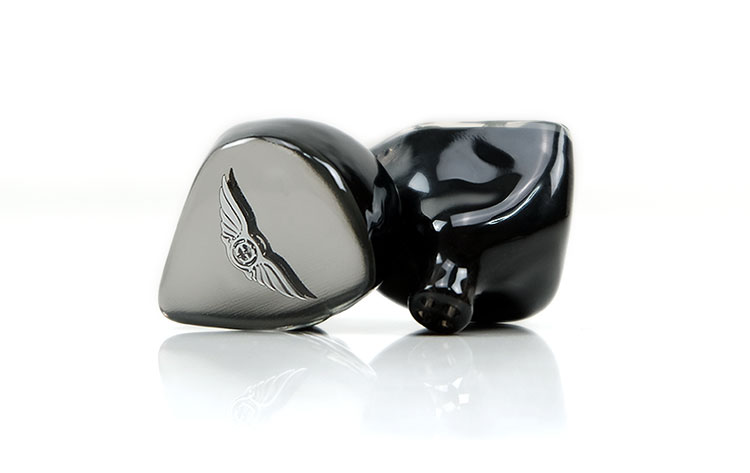
Both designs use resin-based shells, though the ESR MKII form factor is a little bit wider than the Lua Synchronicity. I would also say the ESR MKII resin shells feel a little bit thinner and not as dense to the touch as the Rossi&Wing build.
The Lua Synchronicity speckled green and orange aesthetics are more elaborate than the ESR MKII equivalent, with a deeper theme integration throughout the packaging.
The black and silver mirror-like finish of the ESR MKII is classy but more muted. It will have some fans, though, not everyone likes loud and proud. The vibe is more exquisite than artisanal.
Because the ESR MKII is BA/EST-based, it does not need shell venting. So, whilst with the right adjustment I can get good passive isolation from the Lua Synchronicity, it’s not on the same level as the ESR MKII shells.
Both are comfortable in the ear, though neither are completely flush in the concha basin. I will say the ESR MKII Final E ear tip selection is a superior option to the Lua Synchronicity stock silicone tips. They have a firmer material and create a more dynamic sound signature.
The cable I got with the ESR MKII is the Alpha IV, which is a variation on the old EA Ares II 4-wire copper cable and might seem dated by 2025 standards.
I am not sure if EE has updated it, but compared to the 4.4mm terminated stock cable that comes with the Lua Synchronicity, it looks old-school with a heavy right-angled jack (can get straight if you prefer) and a translucent PVC jacket.
Performance
There is the obvious difference, the bass response, but then there is the surprising difference, and that is the staging depth, and in particular, midrange immersion.
For the lows, no question that the Synchronicity hits deeper and harder with its dynamic driver tuning. The ESR MKII is more of a ‘pitter-patter’ sub-bass presence, more typical of a BA driver design from a few years ago, with a stronger mid-bass punchy emphasis.
Yes, the memes apply here. The Synchronicity lows are slower, deeper, with a more natural level of decay, and the ESR MKII is tighter, faster, with a shorter decay but shallower sounding.
The surprise was the staging complexity and height, with the ESR MKII sounding more immersive and engaging through the mids and highs.
I suspect the BA/EST combination is creating a more resolving and open presentation, and making the Synchronicity seem comparatively flat in dynamic range and articulation.
Both have good pinna extension from 1-2k. The Synchronicity keeps it elevated further up to 5k, whereas the ESR MKII drops a little south of neutral up to 6k.
It’s really the 7-10k range that shines for the ESR MKII, and in doing so creates additional height and sparkle. This is a pure treble tone, with excellent EST implementation for air that the Synchronicity’s BA driver(s) cannot quite match.
So, whilst the Synchronicity vocal imaging is further forward, its separation and height are not quite as developed as the ESR MKII, and hence that subjective impression of a flatter, less involving set of mids and highs.
I would still pick the Synchronicity for basshead music with vocal tracks; the balance is just right. For nuance vocal and instrumentals, perhaps acoustical works, the ESR MKII is more refined-sounding.
My Verdict
The Rossi&Wing Lua Synchronicity is a proper vocal-lovers hybrid multi-driver IEM with a nice kick in the lows for modern pop and R’n’B lovers. It’s my pick from the Lua range thus far for genre flexibility, with its jump in resolution and clarity over the darker entry-level Serendipity.
As with all Rossi&Wing IEMs, it comes heavily themed so it looks great, fits quite well, and is stuffed with some interesting goodies courtesy of their continued collaboration with scent-makers HOKKI.
If you want the ideal introduction to the Rossi&Wing IEM line-up, the Lua Synchronicity is probably the best place to start.
Rossi&Wing Lua Synchronicity Technical Specifications
- Powered by R&W “Magna Resonus” MR10 Dynamic Driver Tech
- Sensitivity: 112 dB/mw @ 1kHz
- Resistance: 14Ω @ 1kHz
