

Wireless Performance
Stability & Distance
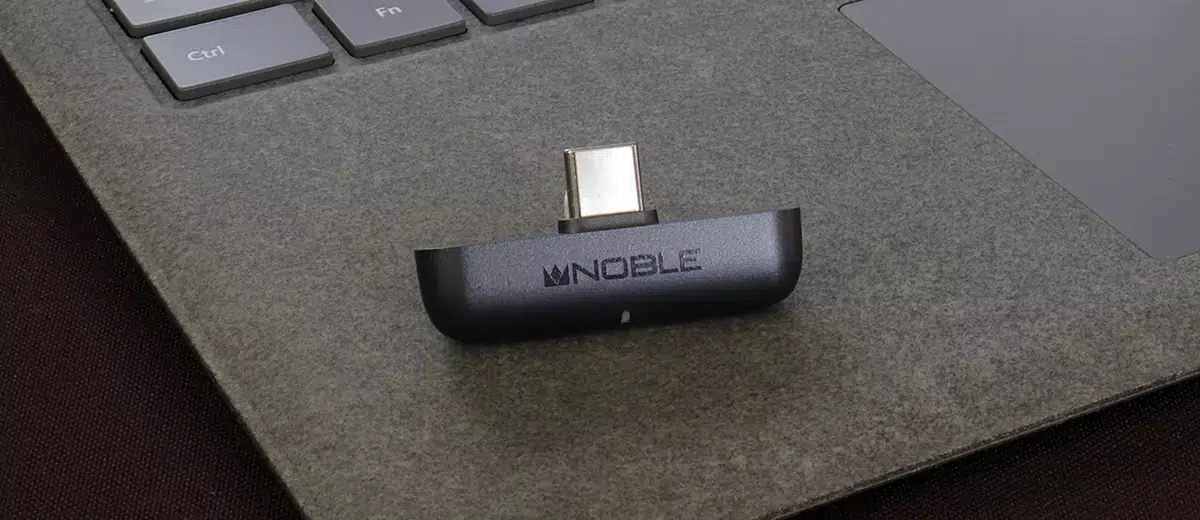
One of the other benefits that is apparent when using the Noble Audio Scepter dongle is that it increases Bluetooth transmission stability and range over built-in solutions, almost twofold.
The transmission distance was able to work itself out with no dropouts from one side of my house to the other in the one section that is a straight visible line, which is around 48 feet long.
Another sign that the Noble Audio Sceptre produces a strong, stable signal is that it can transmit on occasion beyond certain walls within my house.
The only devices capable of that are these new dongles, and the Sceptre is also capable of such a feat. Bluetooth transmitters dislike walls in general.
The Noble Audio Sceptre can certainly outperform the built-in solutions included within most mobile devices, with a few exceptions, and will certainly beat any PC Bluetooth solution I’ve run into when it comes to stability and range.
Latency
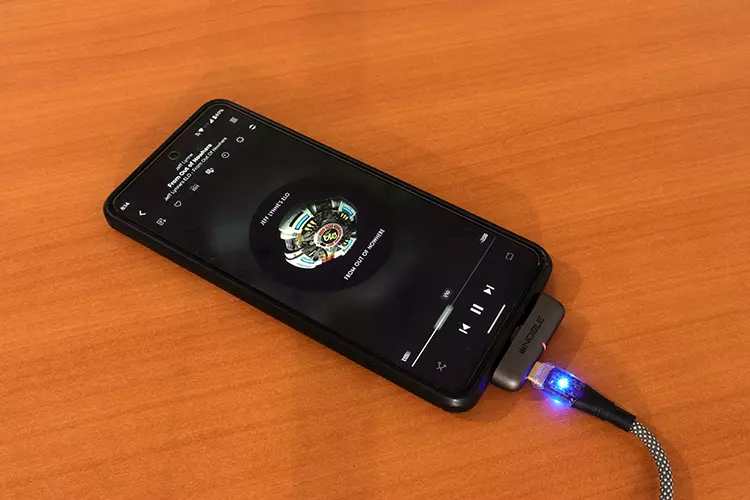
To be honest, when operating under some of the aptX codecs, I didn’t feel like it was necessary to drop the Sceptre into a low-latency mode since it’s apparent that Noble Audio tuned the transmission to be as well synchronized as possible.
I could probably detect a second delay at most on some HQ codecs. Previous Bluetooth generations were at around two seconds, so this is an improvement over that. Just don’t ever expect low latency on LDAC.
To generalize, most codecs were around the nowadays common 0.4-second range, which is almost undetectable, unless you’re crazily focused on the timing.
Pairing
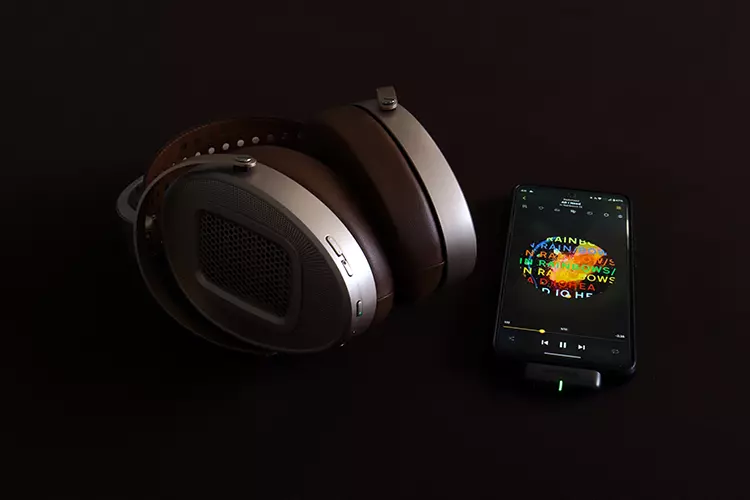
Once again, and like all the other Bluetooth dongles similar to the Noble Audio Sceptre, you have to pair devices within the FoKus app. But again, once paired within the app, you can move the dongle over to a PC or a tablet, and the pairing will stick immediately.
The headphones you pair with the Sceptre are stored within the Sceptre for future use. I don’t know how it does it since it doesn’t have an internal battery, but it does. A tiny flash ROM perhaps?
I was able to store 3 pairings with no issues. The HIFIMAN HE1000 WiFi, the Svanar Wireless, and the Creative Aurvana Ace 2 simultaneously, and could probably store 10 devices on it.
To elaborate further on the ability to retain previous headphone pairings, the Sceptre even remembers what codec you selected on each pairing.
What I don’t understand is why you have to turn on Bluetooth on the Mobile device for the app to detect the dongle. Just remember to do so when you open up the FoKus app for the first time.
Selected Comparisons
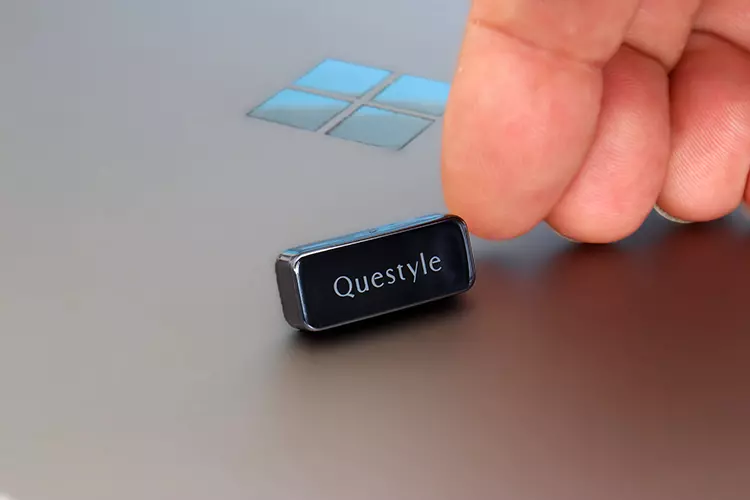
Questyle QCC Dongle Pro
Technical
One of the first Bluetooth dongles that was geared for audio and released to the public was the Questyle QCC. But it had a major drawback in that it didn’t include the LDAC codec.
Questyle answered back with the QCC Dongle Pro, which included the LDAC codec along with a method to use the QCC Dongle Pro on LDAC to select the 990kbps transmission rate, just the same as you can with the Sceptre.
The QCC Dongle Pro takes a different approach to reach the same goal, however. Under its skin, it uses a Qualcomm QCC3086 single-chip solution over a 5.4 GHz Bluetooth radio.
I do have one controversial thought on the QCC Dongle Pro, and it’s that the company mentions aptX Lossless capability, but I was not able to verify that, plus the QCC3086 is listed as not being able to run the codec.
Even the app is a small giveaway on this matter because the highest codec it lists as compatible is aptX Adaptive, which is not Lossless by any means. But the Sceptre is incapable of the codec as well.
Design
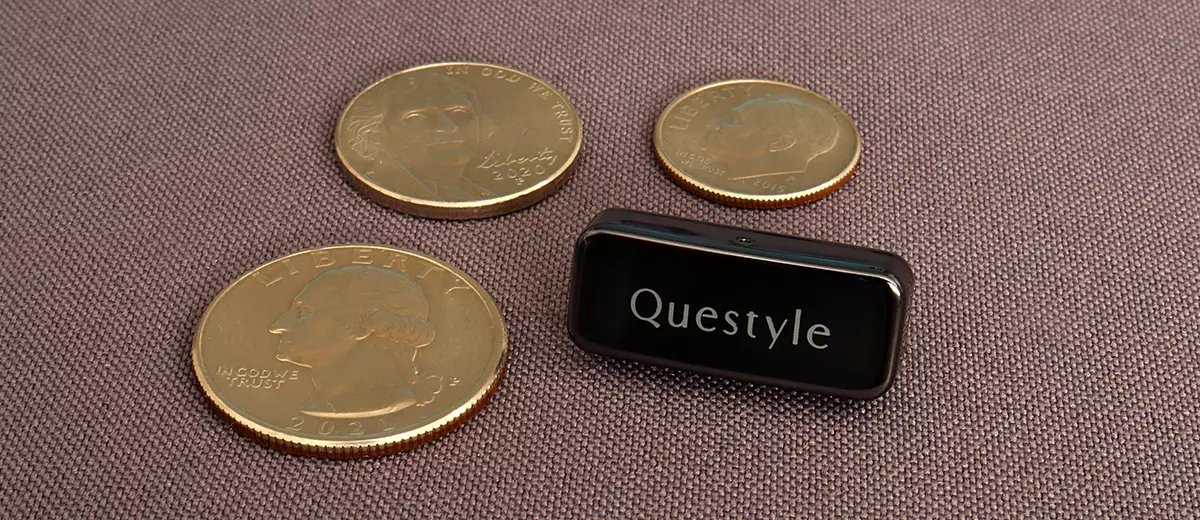
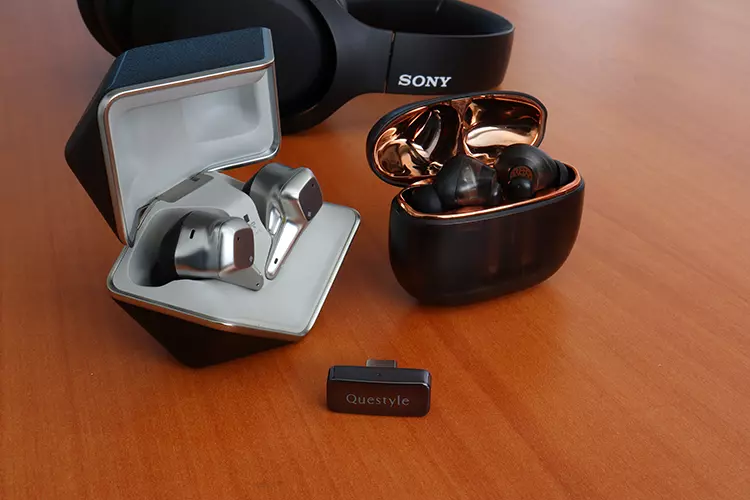
One of the implementations that the QCC Dongle Pro doesn’t have is a built-in USB port to facilitate charging the phone without the need to remove the dongle. But I have to say that it has the nicest build of the models in this comparison.
They all have LEDs to indicate BT codec running mode, and all the models in this comparison are also made from plastic. But the QCC Dongle Pro has the nicer finish, which resembles a dark chrome finish.
The QCC Dongle Pro is also the smallest dongle of the bunch. You could say that it caters to those who feel that a boutique appearance and build quality are of utmost importance.
Performance
That last statement is one of the reasons that you would choose the QCC Dongle Pro over the Sceptre because sonically, they both sound the same.
However, I do detect cleaner highs coming from the Sceptre, but everything else seems similar in tonality. Perhaps dynamics can go to the QCC Dongle Pro.
Perhaps you like the idea of being able to charge your phone while the dongle is on the phone. It really comes to trivial things like these because sonically, running on the same codec and bitrate, you will not be able to tell the difference between these two.
The sonic quality will ultimately be determined by the headphone itself. Therefore, the winner will be whichever one you feel is appealing to you. Perhaps brand loyalty can play a factor here. It’s that trivial and close to compare these two.
FiiO AIR LINK
Technical
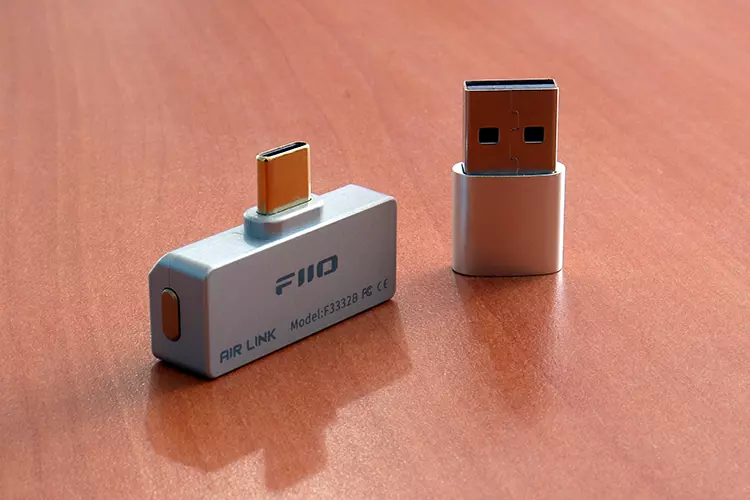
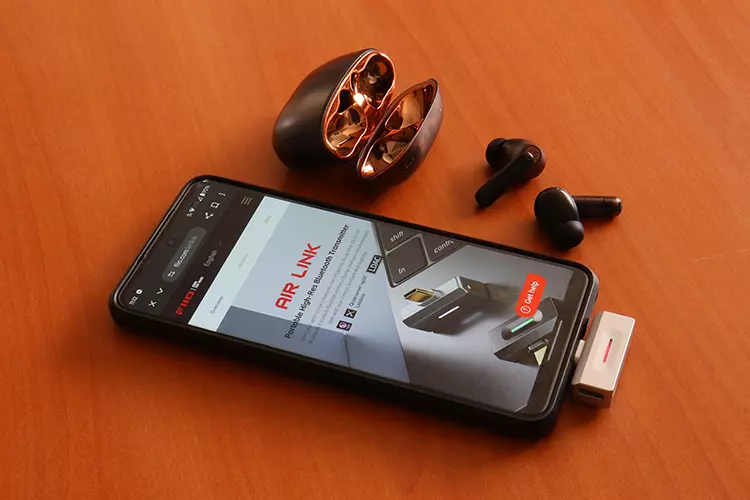
Bluetooth dongles have existed for some time now, but my first experience with a quality dongle that was geared for audio was when I received the FiiO AIR LINK. In my opinion, it remains the most advanced model to date.
Not only does it use a modern-day chip, the same QCC5181, but it also manages to run on a Bluetooth 6.0 radio, which produces a transmission that has a higher level of stability and longer range compared to the others that run on a 5.4 radio.
Another aspect I like about the AIR LINK is the FiiO app, which, to me, has more features and is the best of the bunch. On top of that, FiiO has a webpage up that acts as an app and lets you manage the AIR LINK directly from any PC via the use of any web browser.
That is something unique within the bunch of available Bluetooth dongles and the ones within this comparison. No other dongle has this feature that I know of.
Design
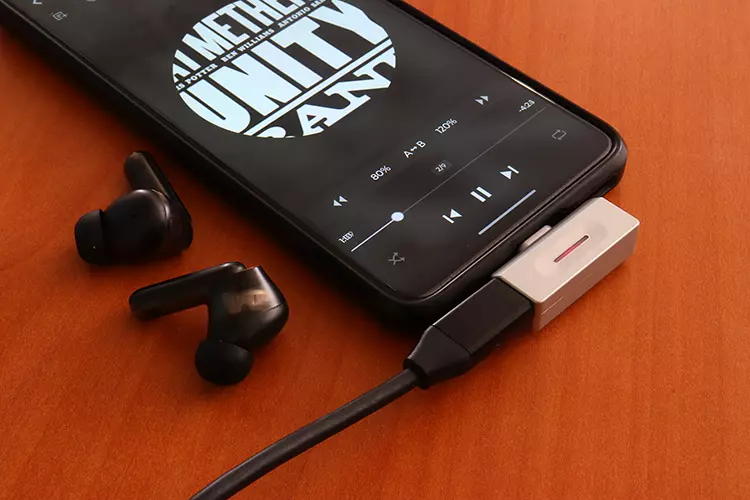
The FiiO AIR LINK is the chunkiest model, but it has all the features, like a large LED and a built-in USB-C port to give you the ability to charge your mobile device while the dongle is on the phone.
It also has a multi-use button onboard, which gives the end user an easier pairing method.
The dongle itself is plastic, and a light grey or black finish is available. The other two dongles come in only one color scheme.
I do dislike that the FiiO AIR LINK is one-sided, while the other models can be mounted ambidextrously.
Meaning the dongle has a visible LED on both sides, while the AIR LINK has to be mounted upright for the LED to be visible. To be honest, it’s the ugly duckling of the bunch.
Performance
The only dongle that I was able to verify as being capable of transmitting aptX Lossless is the FiO AIR LINK. Therefore, I was able to transmit a Lossless signal to my set of Aurvana Ace 2, and they never sounded better.
I have to be honest here, and I’m going to keep it short and to the point.
The FiiO transmits over a 6.0 radio, is verifiably capable of transmitting an aptX Lossless signal, and has the best app plus a web interface. On top of that, it’s easier on the pocket. Do you see where I’m going here?
My Verdict
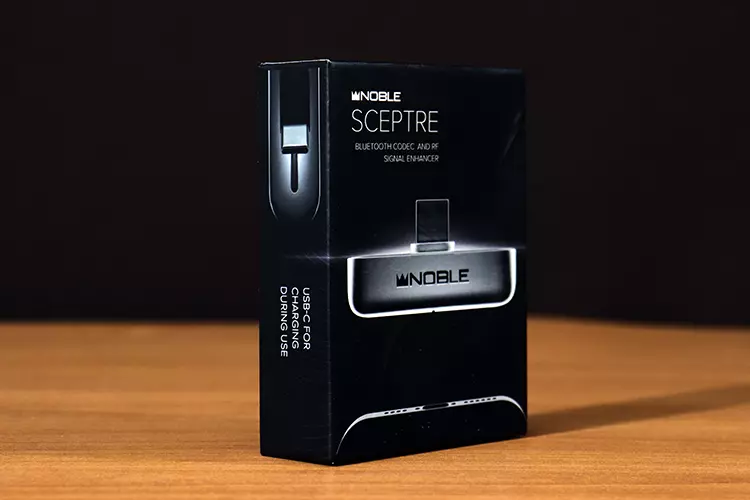
The Noble Audio Sceptre Bluetooth dongle is a model that sits in between the rest, and it does one thing particularly well. That’s the upfront ability to be able to choose the LDAC codec on the highest 990kbps bit rate.
It’s not as refined-looking as the Questyle ACC, but it has a nicer appearance in contrast to the FiiO AIR LINK. It sits in the middle of this pack and is only held back by not being aptX Lossless capable. But on LDAC, it’s a step above the rest.
Noble Audio Sceptre Technical Specifications
- Hardware: Qualcomm QCC5181
- Bluetooth version: 5.4
- Supported devices: iPhone 15, 16, (USB-C) = any USB-C equipped device
- Supported Platforms: iOS, Android, Windows
- Bluetooth codec: LDAC, aptX Adaptive, aptX HD, aptX, SBC, AAC + a gaming mode
- Compatible profiles: HFP, A2DP, AVRCP
- Transmission range: up to 20 meters
