

Synergy
Battery drain
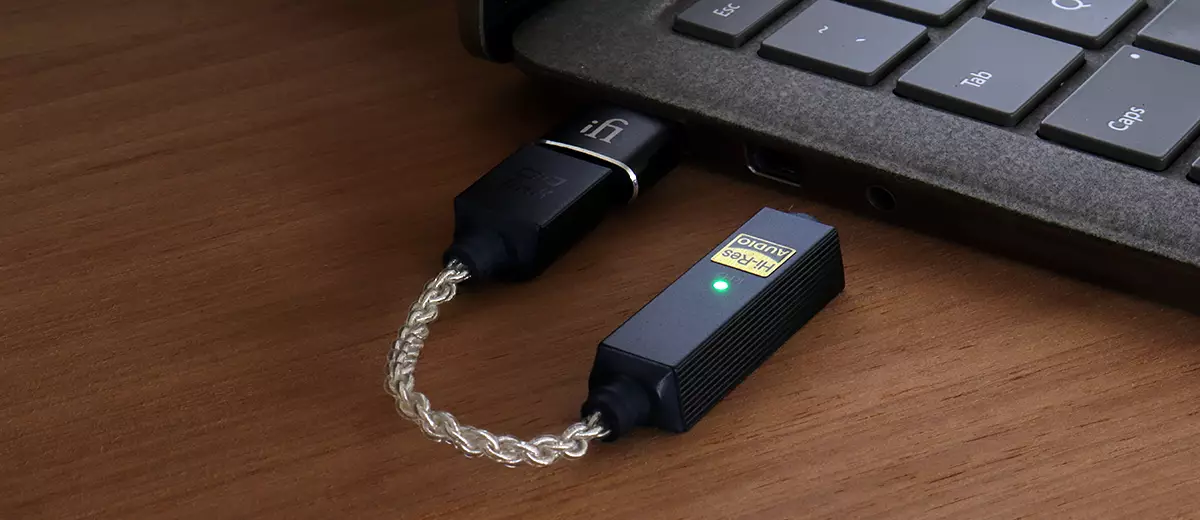
The iFi audio GO link 2 doesn’t produce gobs of power, but it doesn’t use much power from the source either, which is of importance to daily commuters.
I was able to squeeze out at least 15 minutes of music for a 1% drop with a Motorola Edge and a 5000mAh battery. It is considered a 2-day battery, and you’ll certainly get a day’s worth using the GO link 2.
Another observation I made is that the GO link 2 runs cool all the time. Most times, that indicates efficient power consumption, with some exceptions. The GO link 2 will not warm your pocket on a cold day. Depending on where you live, this could be a trivial pro or a con.
Power
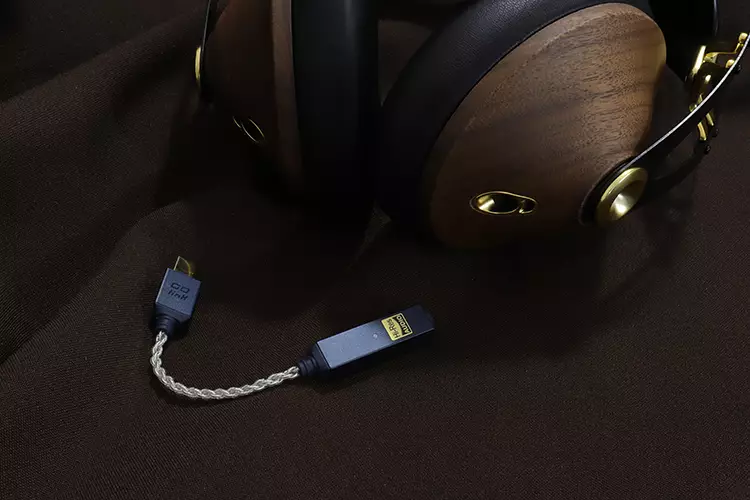
My first hurdle with the iFi audio GO link 2 was to find an efficient enough headphone or IEM because of the unit’s limited power, and one that can show off its capabilities.
Do not expect to drive high-impedance or planar headphones with the GO link 2 because the level of volume you will obtain will disappoint you. The GO link 2 does not like planar magnetic cans.
I don’t think you have to worry about pairing the GO link 2 to IEMs so much, but you have to be cautious in pairing it with full-sized headphones due to the limited available output power.
Pairing
With planar magnetic headphones, it doesn’t matter if they’re low impedance. I tested several here, including the Ananda Unveiled, the Verum 2, and some in between, like the Sundara open back. None worked well and did not reach an acceptable volume level.
I would strictly stick to low impedance headphones. Anything from a Phillips SHP9500/9600, to a THIEAUDIO Cypher, or a similarly low impedance dynamic driver headphone.
IEMs are all game. I must have tried at least half a dozen IEMs, and they all produce ample amounts of volume. Every IEM I tested, from the 60Ω HIFIMAN Svanar, to the Elysian APOSTLE, to the multi-driver IEM like the FiiO FX17, each set reached a loud volume level with no distortion.
Budget models also work well. Some of the budget models that I tested and produced ample volume with headroom were the ORIVETI OD100, FiiO’s FD15, and the Flare Audio Studio Master.
Select Comparisons
FiiO KA2
Technical
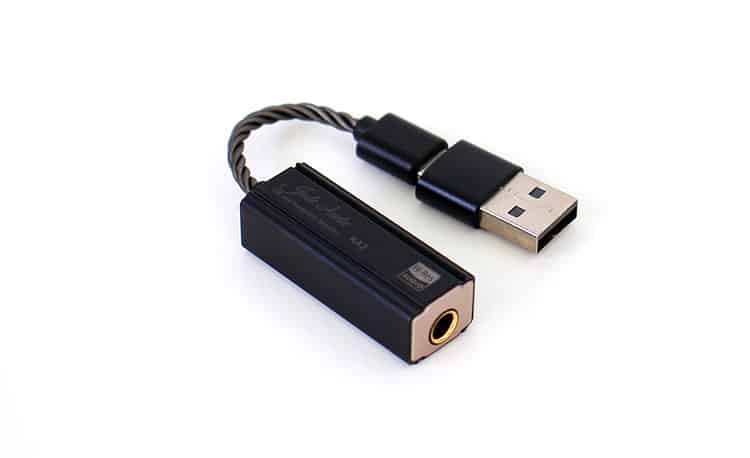
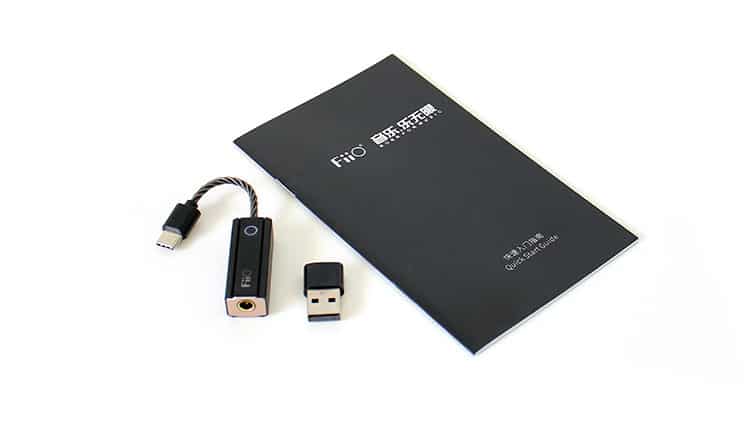
The first thing you’ll notice about the FiiO KA2 is the large, single headphone output tap, which is a 4.4mm balanced connector, instead of the somewhat rare balanced 3.5mm variant. The 4.4mm balanced connector could be considered standard fare nowadays.
I attempted a 4.4mm to a 3.5mm adapter on the KA2, and it worked with no apparent degradation of the output.
With the popularity of the Pentaconn, it’s a worthy upgrade. The KA2 is able to produce 153mW at 32Ω versus the GO link 2’s 79mW at the same impedance load of 32Ω.
The KA2 uses a pair of CS43131, and besides the power output, all the specs are similar, including digital format capability, and both models are capable of PCM 32 bit/384kHz, and DSD256.
The FiiO KA2 has another positive point in that the FiiO Control app has more features compared to the Nexis app, which opens up in a bare-bones fashion.
With the FiiO app, you get to play with five filters and a two-stage gain, on top of a volume control. The GO link 2 has no gain function and two filters.
Design
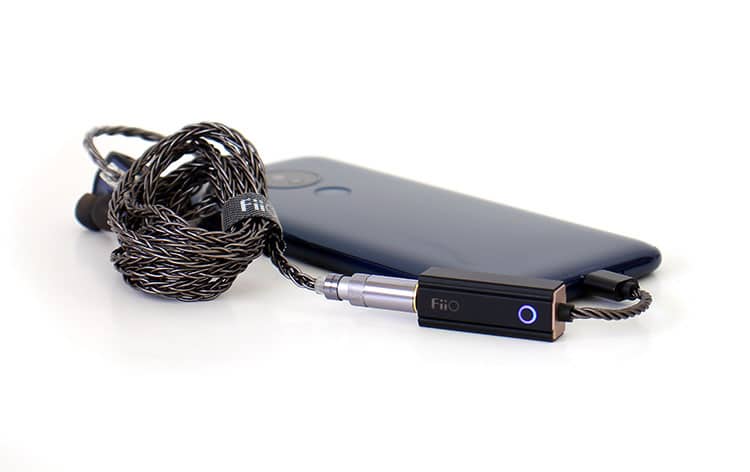
Both these dongles have attached cables, and that’s their biggest drawback. The FiiO KA2 is made of aluminum, and it feels heftier than the GO link 2. At least the shell does, not the cable.
The KA2 has a chassis with fins that assimilate the old car audio amplifier style design. But it does have a multi-color ring LED that gives you some information, while the GO link 2 makes the user depend on the source as far as any info on what digital format rate you’re using it on.
However, the GO link 2 is smaller and lighter. Perhaps that will entice buyers who want less stress placed on the USB-C port of your mobile device. Who cares about pretty lights?
Performance
What’s apparent to me is that the GO link 2 has an improved soundstage that is soundly more focused. The KA2 has its virtues and strong points, like a smoother presentation, but it does have a slight amount of smear around certain facets of audio.
The FiiO KA2 is a higher wattage output model and is best if you need the extra power. I would still say to stick with IEMs if you decide to pick up one of these dongles. Plus, the 4.4mm plug is more popular, and perhaps that’s what your preferred connectivity is.
When it comes to frequency response, both models are neutral, but in certain situations, the FiiO KA2 can play louder with less distortion. The GO link 2 is loud enough in most scenarios.
These dongle apps are pretty bare-bones, and these two are not the exception. There’s no way you can add coloration. Expect overall neutrality with both these dongles.
The improved soundstage of the GO link 2 is the exception here, but at higher volume levels, the sonic character becomes more ardent, while the KA2 remains composed and smoother at the higher volume levels.
Shanling UA1 Plus
Technical
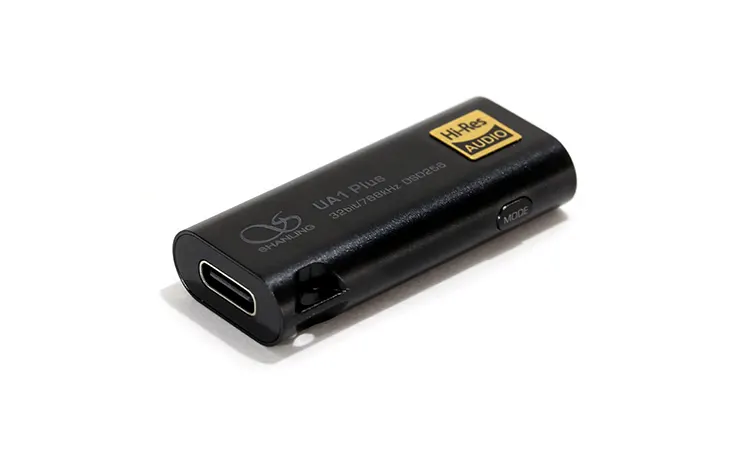
The Shanling UA1 Plus is another single-output dongle DAC amplifier with a dual CS43131 chip and an 80mW power output at 32Ω, which is a similar output to the 79mW spec of the GO link 2.
The UA1 Plus similarly doesn’t run the MQA format either, just the same. The built-in CT7601 feeds the DAC, which is capable of 32-bit/768kHz PCM capability and additionally, DSD256.
The UA1 Plus also has an advantage in that it has an onboard multifunction button that not only controls the volume, but is also capable of pause and play functions.
The operation method of the button has a learning curve, but you’ll manage to intuitively operate it when needed.
Design
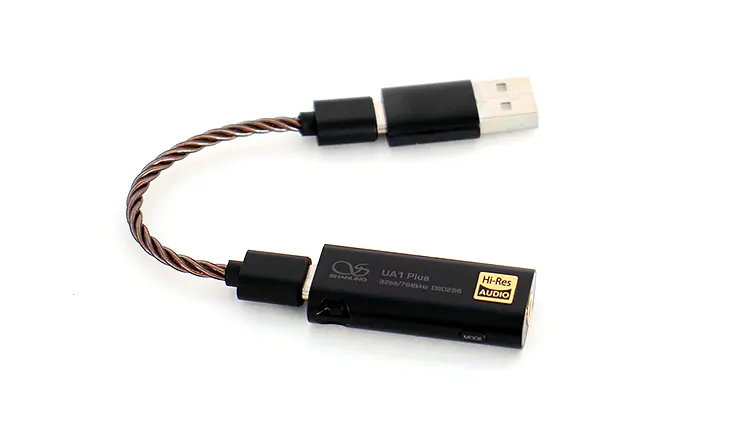
One of the other benefits of the UA1 Plus is that it has a removable cable. That alone makes me consider the UA1 Plus over the GO link 2.
But you can also run into a USB-C port failure just the same. I base that on the fact that the weak spot is usually the non-removable cable at the strain relief point.
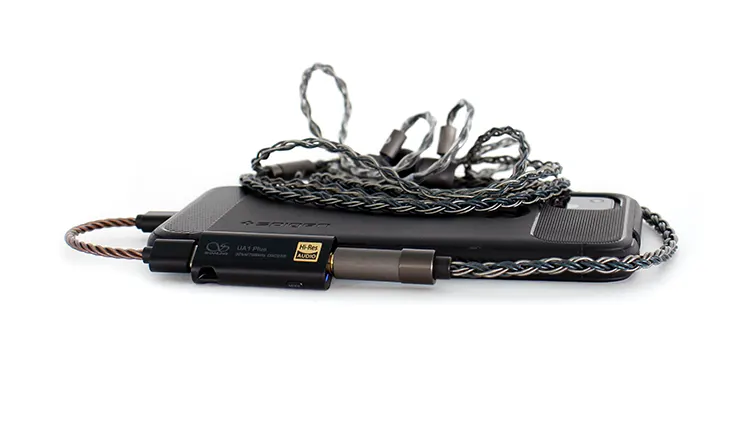
Another positive aspect of the UA1’s Plus construction is that it uses an all-metal construction with a lanyard slot, which is unique within this comparison. That way, you can use a lanyard strap and take some weight off the USB-C port of your mobile device.
The Shanling has an accompanying app, but it’s also bare-bones. This seems to be the industry standard. To cap off the app and disable many of its features when it detects a budget model.
Performance
Again, the Edict Player doesn’t include any sound-shaping features, so you’ll have to settle for a neutral tonal balance. These dongles aim for that.
The two are equally powerful, which is an oxymoron statement in this case because neither is a powerful model. Where the GO link 2 excels, again, is in the soundstage, which is more focused.
Both models are dead silent, but the UA1 Plus does have a mute feature, which I find annoying at times due to it missing the first half a second of each introductory song.
There are similar sonic signatures here. Perhaps the UA1 Plus has a slight smoothness advantage, while the GO link 2 has the soundstage advantage. Those are your choices here.
SMSL D10
Technical
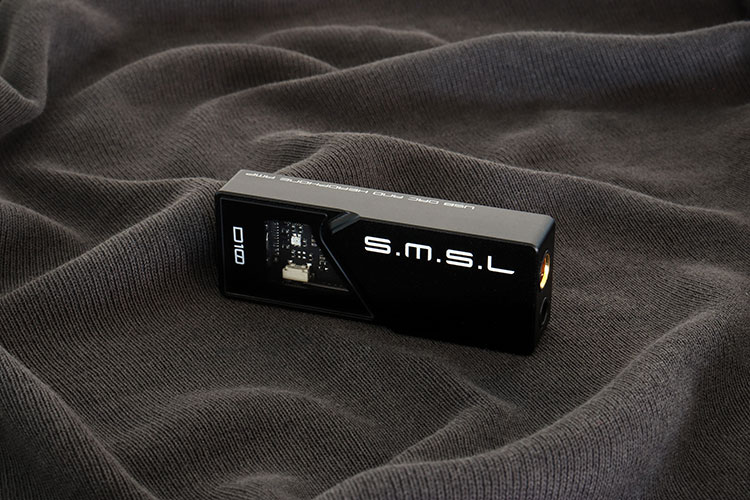
The SMSL D10 is overlooked because when people think of SMSL, they usually go to them for desktop gear more than anything else. I am still fiddling around with the SU-X and the SH-X, since the combo has never left my desk since I got them.
The D10 is on the opposite side of the coin from their large components. It falls into the budget category. At a low cost, it managed to include a pair of CS43131 with the same digital format capability of DSD and PCM 32bit /384k with a side of DSD256.
What shines over the rest of the bunch on the D10 is that it’s capable of 500mW at 16Ω, and 40mW at 600Ω.
The SMSL D10 is obviously the most powerful dongle in this competition because it uses two SGM 82622 amplifiers. It’s the only model in this comparison that uses separate amplifier chips.
It also has the IO advantage since the D10 has a 3.5mm and a 4.4m balanced output jack. The others in this comparison only have one headphone out, including the GO link 2.
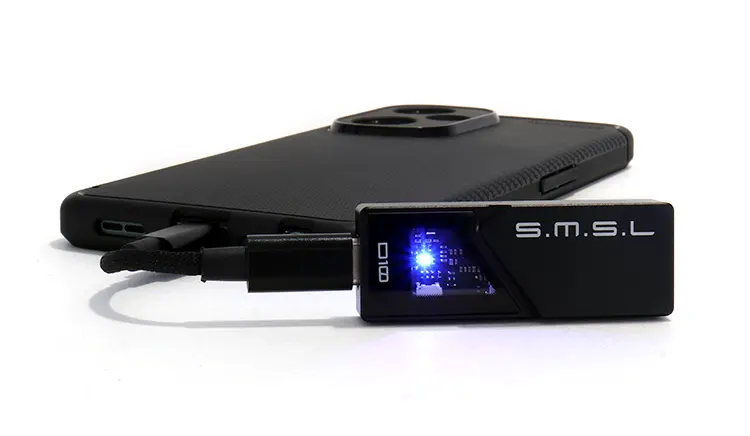
The D10 is also the only dongle with onboard volume control. Add to that a removable cable, and it becomes hard to beat.
Design
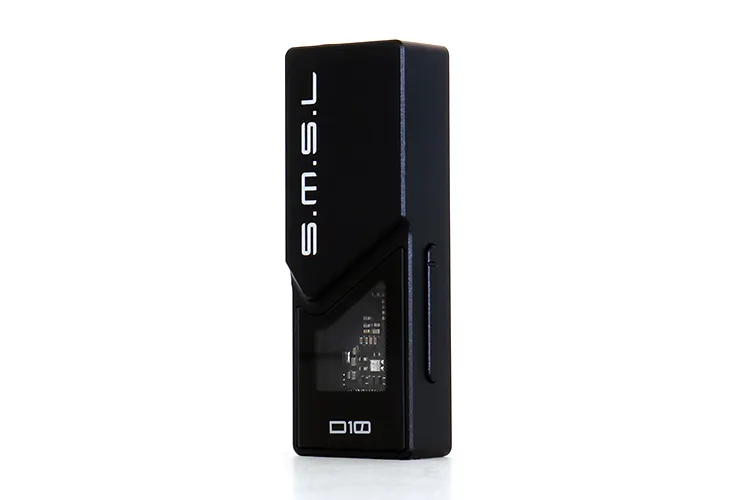
SMSL used a blend of old school with new design, and installs all the components in a black aluminum chassis, with white contrasting logos.
It also sports a see-through window that lets you geek out and peek inside the unit, which is a new trendy design seen from companies like FiiO and Questyle.
The D10 is the largest dongle in this comparison, and it’s the second to have a removable cable. Plus, it’s the only dongle with dual outputs. The GO link 2 is way more compact, but skimps on features.
The D10 does have a set of volume control buttons, as mentioned, but that’s all they do, and I much prefer a multifunction button, like the one incorporated on the Shanling UA1 Plus.
Performance
The SMSL is the most uncolored-sounding in this group. I had said previously that it sounded almost sterile with a slight bright tilt. It’s leaner in the bass, mid-forward, and bright on top.
As far as the noise floor, I couldn’t verify it on the D10 due to it having a mute feature, which I didn’t notice on the GO link. I would give the clean background of the GO link a win in this case.
Another aspect that is of interest here is that the D10 uses up twice the battery power from the source, especially if you use harder-to-drive headphones. The GO link 2 is certainly easier on battery life.
Where the D10 excels is in drivability. You can run some planar magnetic headphones off the D10, especially on the balanced port, and you can expect ample volume levels.
The D10 has a good soundstage capability for a dongle, but the GO link 2, again, excels in this category. It sounds taller, with a more precise placement capability. But I would only use it with IEMs. That’s the line you have to remain behind.
My Verdict
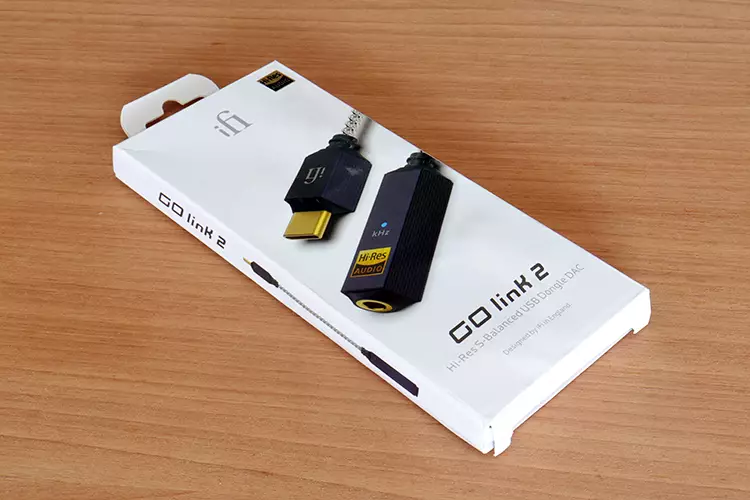
If you look at the iFi audio GO link 2 from the outside, it’s apparent that cost-efficient measures were used.
However, if you look at the inside of the GO link 2 from a sonic aspect and small stature, it becomes a competitive dongle that will appeal to those who want a dongle with a small, light footprint.
If you’re looking for a dongle that’s inexpensive, versatile, and easy on battery life, then the GO link 2 might appeal to you.
With the right headgear, the iFi audio GO link 2 dongle DAC delivers a clean, dynamic sonic signature that does even better when it comes to soundstage and technical abilities. Its price is also quite easy on the pocket.
iFi audio GO link 2 Technical Specifications
- Dimensions: 137 x 12 x7.6mm or 5.4 x 0.47 x 0.31 inches
- DNR: ≥ 125db @0DBFS
- Frequency response: 10Hz to 80kHz -0.5db
- Headphone output: 3.5mm with S Balanced
- Hi-Res support: PCM 384 kHz. DSD256
- Limited warranty: 12 months globally, with 24 months in the EU
- Net weight: 7.8g or 0.30 ounces
- Output impedance: <0.4Ω
- Power consumption: no signal = 0.2W, max signal = 1W
- RMS output: ≥59V / 79mW @32Ω, ≥2.0V / 14mW @300Ω
- SNR: ≥125db @ 2.05V
- THD+N: ≤0015% @ 1.27V @ 32Ω
