

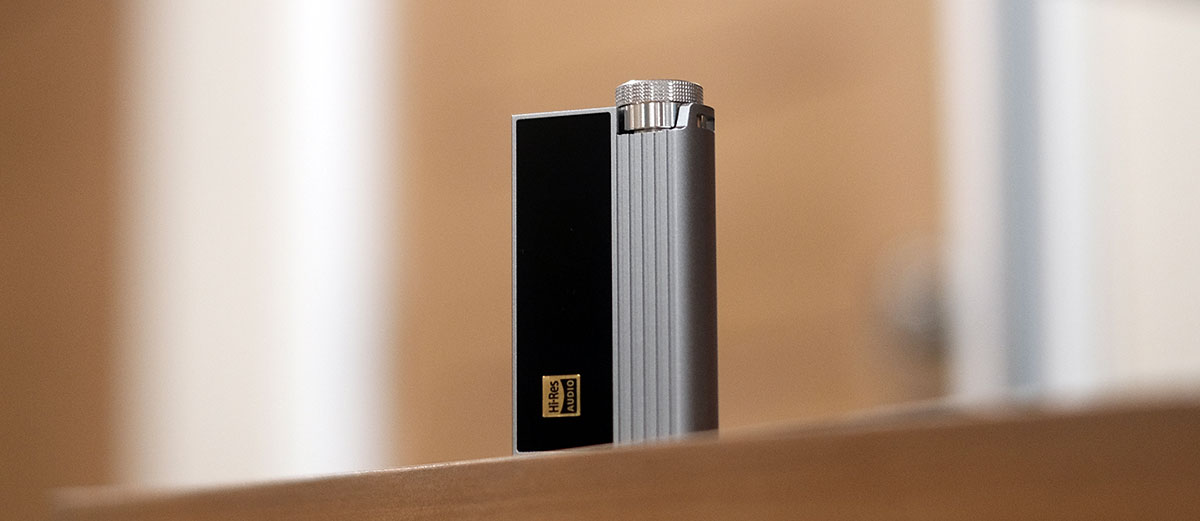
Marcus reviews the iBasso Nunchaku, a dual CS43198 dongle DAC with a solid-state and tube amplifier capable of up to 525mW of output power. It is currently priced at $299.
Disclaimer: I received this sample in exchange for my honest opinion. Headfonics is an independent website with no affiliate links or status. I thank iBasso for this opportunity.
Click here to read more about the iBasso products we have previously reviewed on Headfonics.
This article follows our current scoring guidelines, which you can read in more detail here.
The iBasso Nunchaku is the latest in iBasso’s series of high-end dongles, which more or less started with the similarly styled DC-Elite.
It packs a lot of features that differentiate the Nunchaku from the DC-Elite, including a dual tube/solid state timbre mode and a very welcome LCD screen with operational menu controls.
It also boasts a smoother, less reference-focused sound signature as one might expect from a dongle DAC boasting tube amplification.
Priced at $299, it is cheaper than the DC-Elite but still very much classified as a premium dongle. As such, it’s mixing company with the likes of the Cayin RU7 and some of my older favorites, such as the single-ended R2R HiBy FC6.
How does the Nunchaku stand out from these dongle competitors, and is there enough of a difference from the DC-Elite to maybe slip both in the bag for travels? I found out how it performs and compares in my full review below.
Features
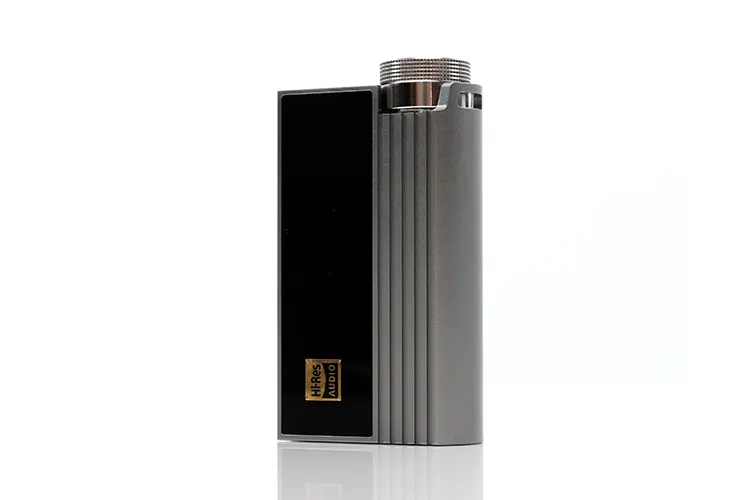
The Nunchaku is both a dual CS43198 DAC and a dual solid-state and tube timbre mode dongle DAC.
Like the DC-Elite, the Nunchaku is designed to connect via OTG to your iPhone (Lightning or USB-C) or Android smartphone (USB-C) for on-the-go digital audio or sit neatly on your desk as a USB-DAC connected to a PC or MAC.
Both of the dongle’s amplification modes are balanced by design, with a Class AB design for the solid-state output and dual Raytheon Jan6418 sub-miniature pentode tubes in a PORON suspension (for stability).
The power yield from this circuit is eye-catching at up to 525mW in balanced tube output mode on a 32Ω load, dropping slightly to 450mW in Class AB mode on the same load. That is plenty for any IEM and several headphones.
The dual DAC implementation is competitive at up to 32BIT/768kHz PCM and DSD512 natively via USB. It can also output in S/PDIF output mode with a mini digital coax connection with a maximum decoding rate of PCM 32BIT/768kHz.
Design
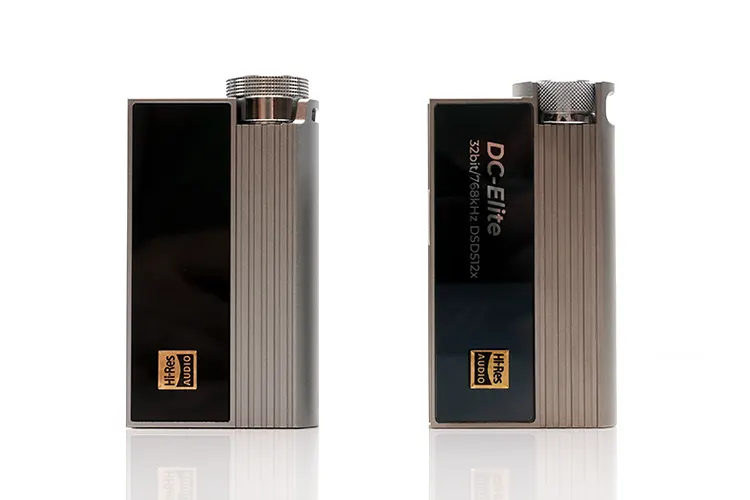
If you have handled the DC-Elite, the Nunchaku is a very familiar design and handling experience. Only the labeling and the attenuator guard on the DC-Elite differentiate one from the other stylistically.
I would rate the Nunchaku as being on the larger side of a typical dongle, bigger than the RU7 or LP W2, but it’s an almost exact match for the DC-Elite in dimensions. The official weight is 10g lighter, but I honestly don’t feel the difference.
The Nunchaku is built like a brick, with a quasi-fluted mix of rounded titanium alloy and tempered glass on the back panel, with a new discreet LCD screen on the front.
It still has some sharp corners, but like the DC-Elite, iBasso has supplied a nicely formed leather case to smooth that issue out; this time in yellow with a gap for the new screen at the front and one at the back to allow you to see a nice warm glow from the tubes when activated.
The potentiometer has some restyling, which I am in favor of, as one of my quibbles with the DC-Elite version was that the surrounding guard was a bit too high, making it tricky to easily rotate when on the go.
I suspect the peeling back of the guard is not just for easier volume adjustments. The Nunchaku dial is also a multi-function button that brings up the new LCD-based menu settings, a feature I think the DC-Elite should also have had at the outset.
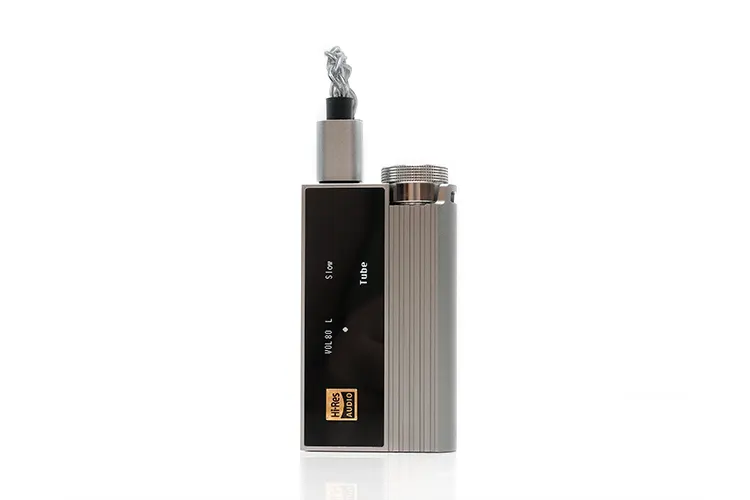
With the new LCD screen, the Nunchaku can now display the volume level indicator on the dial, which addresses my other DC-Elite quibble about the lack of volume awareness when switching between sensitive and demanding gear.
I/O
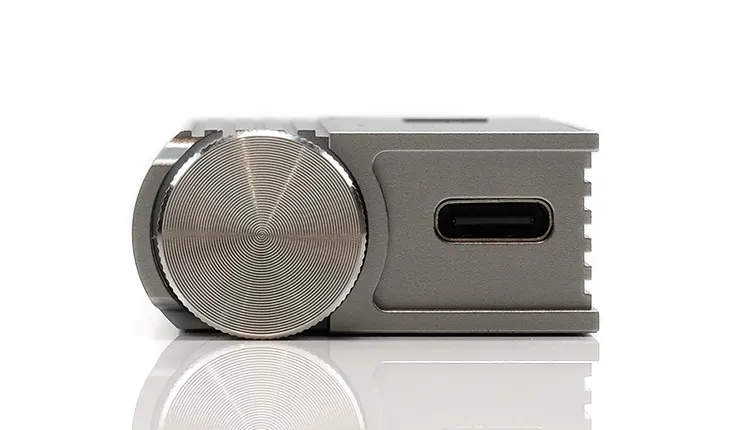
The Nunchaku’s input/output array is also unchanged from the DC-Elite. That includes dual 4.4mm balanced and 3.5mm single-ended connections, as well as a USB-C port beside the multifunction dial on the top panel for volume control, OTG, and USB-DAC duties.
The 3.5mm output also doubles up as an S/PDIF coaxial output, allowing you to bypass the Nunchaku’s amplification and use the dongle as a pure DAC. The S/PDIF mode can be directly activated by the dongle’s menu settings or via the iBasso UAC app on your phone.
Controls
The UAC app can be directly downloaded from the iBasso website, as it is not available via Google Play.
Whilst you can operate the Nunchaku without it via its multifunction dial and menu system, the enhanced screen real estate from a smartphone and a more attractive UI make the UAC app a must-have if you are using the dongle via OTG.
And because the Nunchaku has a more in-depth control system compared to the DC-Elite, the UAC app will provide you with a longer suite of controls and options.
This includes options to switch between tube and solid-state mode and environment controls for the screen, such as rotation and sleep timers to reduce phone battery drain.
Packaging & Accessories
The iBasso Nunchaku comes in a standard compact, lightly grey-themed retail box with a nicely presented double-shelf layer arrangement inside for the unit and accessories.
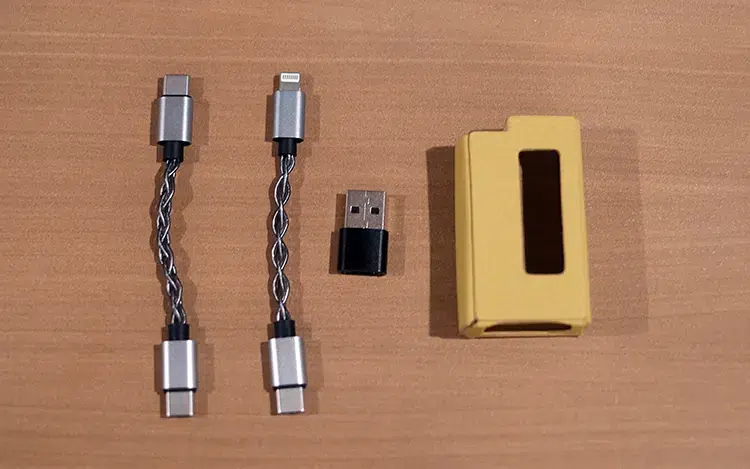
Accessories include two short, braided 4-core USB-C to USB-C and Lightning cables built to a high quality. They are also just the right length for hooking up to moderately sized smartphones and iPhones.
You also get the leather case in yellow rather than the DC-Elite green, and it fits relatively tightly, so it is unlikely to slide off during use. Gaps are included for the screen at the front and to allow for a visible tube glow on the rear panel when the tubes are activated.
Aside from that, you get a small USB-C to USB-A converter for connecting to your PC or Mac, along with some warranty and authenticity paperwork.
Click on page 2 below for my sound impressions and recommended pairings.
