

Sound Impressions
The following sound impressions of the iBasso D17 Atheris were completed using a mix of the iBasso DX340/AMP15 combo as the main portable source in coaxial and USB-OTG mode.
Paired IEMs included the PMG Audio Apx, the PLUSSOUND Allegro II, and the Volk Audio ÉTOILE. For headphones, testing was completed with the Meze Audio POET, DCA NOIRE XO, and the Austrian Audio The Composer.
Summary
The D17 Atheris is iBasso’s most natural-sounding portable device to date. I would rate the dynamic range and spatial qualities superior to the DX340/AMP17.
It has plenty of flexibility for fine-tuning via its 3 DAC modes. In many ways, the R2R NOS and OS modes follow a familiar pattern to the performance of the same modes on an R2R desktop DAC such as the Musician Audio Aquarius.
NOS mode delivers a deep-sounding analog presentation with some gorgeous vocal bloom. I have always found NOS modes in R2R DACs to excel with vocal texture and presence, so the D17 Atheris is no different in that regard.
You can enhance the low-end body with a bit more polish in the mids via OS, a typical trait of upsampling the signal and refining the edges, something which iBasso’s FPGA 3.0 has achieved without creating a dull sound.
Finally, a relatively linear and neutral quality to the performance that excels in nuanced spatial detail via SD mode. And I mean relatively, as it’s still quite analog, just not as colored as NOS or OS, more restrained across the board in emphasis, and quite appealing to those with gear with strong pinna gain.
All three modes’ PO output via the D17 Atheris headphone output, so they will never sound dry or sterile. All three will still flavor the line-out mode despite it bypassing the tube amplifier.
One thing to note is the power difference between SD and the other 2 modes. You will notice a drop in volume with IEMs, which can be easily remedied with a quick push of the stepped attenuator.
For headphones, unless super easy to drive, I would recommend staying on NOS or OS mode to retain the superior dynamics from the additional power.
Input Differences
I think for many, their experience of the D17 Atheris performance will vary depending on which input they use. There are some considerable differences between the two primary connections, the USB-C and the Coaxial inputs.
The D17 Atheris USB-C connection is somewhat akin to transitioning from a 2Vrms line input connection to a 3.5Vrms alternative on an analog amplifier, if that makes sense.
Everything sounds way more dynamic and lively, with a bit more contrast and neutrality in the mids and highs. It’s a vibrant, busy sound with a lot of energy and very holographic with the right IEM or headphones.
It’s an excellent format if you want to inject maximum mid-punch and impact into your gear. I would say it’s nicely suited to the likes of the ZMF Headphones Atrium and spacious IEMs such as the PMG Audio Apx.
On the flipside is the coaxial connection. This is a smoother, more balanced sound. Not as bombastic as the USB-C connection but more soulful in its delivery.
I find the coaxial note timbre via the DX340/AMP15 a little fuller and warmer in coloration and more consistent with how I would want an R2R or 1-Bit DAC to sound.
This connection is more fitting with natural-sounding IEMs such as the ÉTOILE, and gels very nicely with neutral headphones that have an enhanced lower treble presence, such as the Composer.
Synergy
A Case For R2R (Headphones)
The iBasso D17 Atheris’ power output varies a lot depending on the DAC mode you are using. I suspect most people will be pumping purely PCM files through the FPGA/DAC implementation, so it is unlikely they will notice any changes when in OS mode.
When switching to DSD recordings or going to SD mode, you notice the drop in power, requiring you to push up the volume and gain levels (or pairing it with the PB6 Macaw).
For IEM and low impedance dynamic driver headphone users, it’s not much of an issue; moving the dial up a touch is fine. There is no need to change gain levels unless you are looking for some additional dynamism in the performance.
It’s more of a concern for users who need that 1.2W of power to drive demanding headphones to optimal levels.
For example, the Dan Clark Audio NOIRE XO, rated at 94 dB/mW, is not too bad with NOS mode, though I prefer the slightly smoother OS sound. Dynamics are good, as is the staging depth for both.
However, once you go into 1-bit SD mode, the soundstage flattens, and it starts sounding shrill and shouty once you push up the volume to compensate.
The easier-to-drive 101 dB/mW-rated Meze Audio POET doesn’t quite sound as unsatisfactory in SD mode as the NOIRE XO, but it still lacks staging depth and smoothness relative to the OS and NOS modes.
A Case For 1-Bit (IEMs)
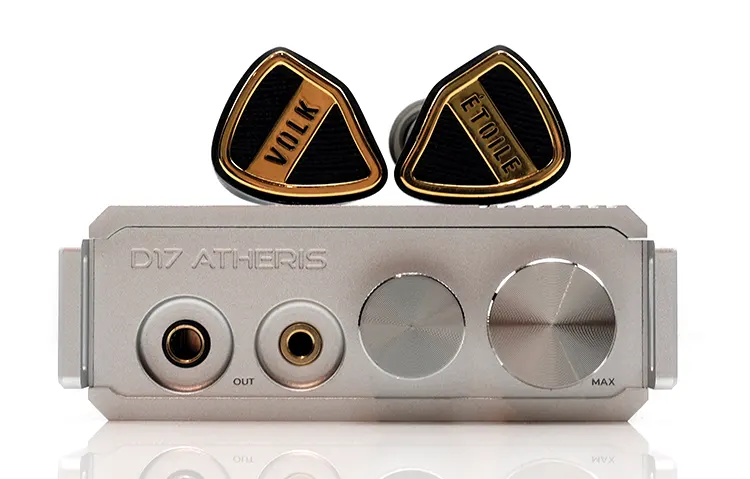
If you are pairing the D17 Atheris with IEMs, then the 1-bit SD mode becomes a genuinely useful alternative presentation that I found to better match some IEMs over the R2R modes.
Yes, you will have to adjust volume a little, but in low gain mode, I found at best, 1, possibly two steps upwards on the attenuator got a comfortable volume match between SD, NOS, and OS mode using several IEMs such as the Noble Audio Shogun, the Volk Audio ÉTOILE, PMG Audio’s Apx, and the PLUSSOUND Allegro II.
Where SD Mode excels with IEMs is balance. The NOS and OS modes are more driven sounding, more dynamic on the lows, with enhanced vocal bloom.
For some IEMs that are already fairly strong in their pinna gain elevation or have bass bloom, then this might come across as overkill, hence SD mode.
For example, the ÉTOILE can sound mid-forward in its stock tuning with some tastefully elevated sub-bass for additional depth and balance.
In NOS and to a lesser extent in OS, I found the vocals too dominant for my tastes, though I appreciated the additional depth from the dynamic drivers.
With SD mode, the vocals felt calmer, more neutral in positioning, with less bass bloom, yet the bass response never felt shelved down to the point where I would say it sounds flat.
Another good example was the Noble Audio Shogun, which has some bass bloom in its sound signature.
Again, NOS and OS just pushed it a bit too much, slightly unbalancing the sound towards the lows. SD mode cut down on the bloom and created more space for the Shogun’s excellent staging qualities to take over.
Tubes On Line-Out?
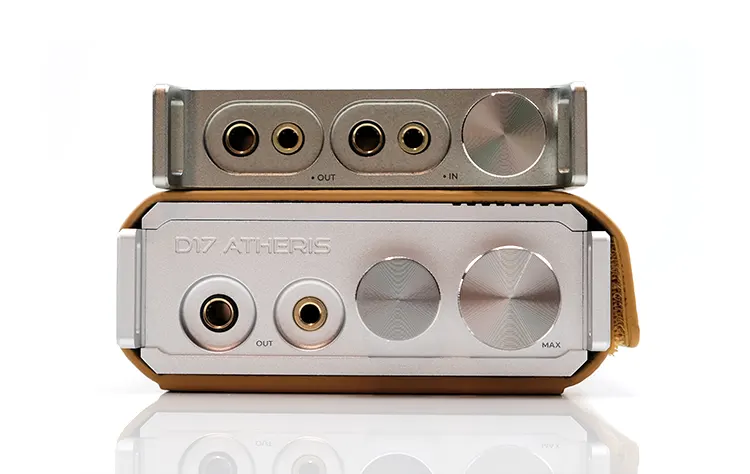
Or more specifically, the line-out with the new PB6 Macaw portable dual Jan tube amplifier. The PB6 has some excellent benefits in this chain, but I am not wholly convinced that the PB6 sound is the final answer to the D17 Atheris owners’ desire for a vintage tube sound at the end of the line out.
Granted, you lose the Nutube amplifier flavor when using the line-out, and if you want power while in the SD mode or just more power in general, its 2.5W output capability is a fairly affordable solution.
It will still allow you to mix and match the DAC modes with the dual Jan tube setup on the PB6. But it does sound quite different from the D17 Atheris tube output. It’s rather brighter in the highs, with a lot more sparkle and midrange brilliance.
Having said that, I enjoy the coloration of the tube mode option on the PB6 with demanding headphones; it has a bit more bloom and ‘joviality’ than the denser and deeper D17 alternative, particularly so with more demanding headphones. Its alternative solid-state mode is more tranquil and linear in its delivery.
I will go into this in more detail in my PB6 Macaw review when it is published shortly, but after my testing impressions, I recommend avoiding pairing the PB6/D17 Atheris stack with brighter headphones such as the DCA NOIRE X or NOIRE XO.
Keeping it with smoother alternatives, such as the Focal Utopia 2022 or the Meze Empyrean MK1, offers excellent tonal balance and a nice contrast to the denser lows and more relaxed treble of the D17 Atheris tube output.
