

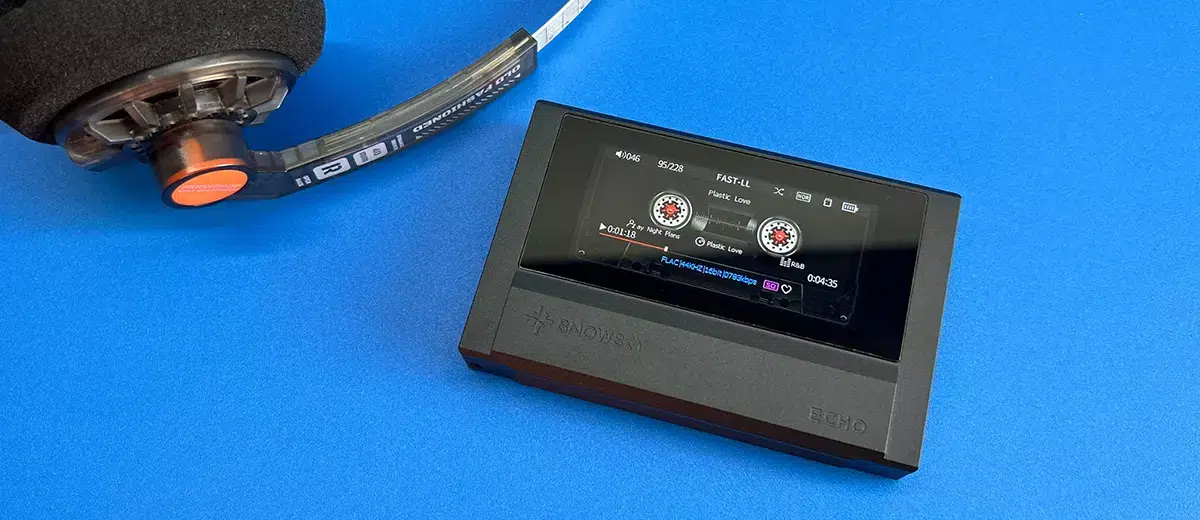
Wireless Performance
For Bluetooth testing, I paired the unit with the FiiO EH11 wireless headphones. Unfortunately, the ECHO retains the same SBC-only codec limitation as its predecessor, which continues to be a disappointment at this price tier.
Pairing was quick and stable; the ECHO detected and connected to the EH11 without hesitation.
However, the audio quality via Bluetooth told a familiar story. The resolution was noticeably compressed compared to the wired output, the dynamics felt constrained, and the treble took on a slightly metallic sheen that was absent through the 4.4mm balanced output.
Compared to pairing the EH11 directly with my iPhone 14, the ECHO’s Bluetooth output again felt like a step down in overall refinement. I would not recommend the ECHO for listeners primarily interested in wireless playback.
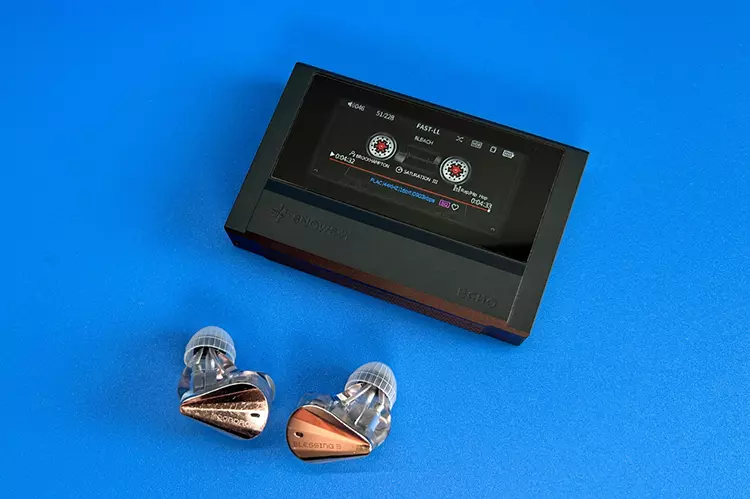
Synergy
Power
The following tests were done with the MOONDROP Blessing 3, Kiwi Ears Orchestra II, and Hidizs MP145 IEMs, with headphone testing conducted on the Sennheiser HD 600, MOONDROP Old Fashioned, and the Koss KPH30i.
The ECHO’s 3.5mm single-ended output at 120mW and 4.4mm balanced at 260mW represent a modest but real improvement over the MINI.
With the Moondrop Blessing 3 via the balanced output, I rarely needed to push past volume level 35 on low gain, and the ECHO drove it effortlessly with improved detail retrieval compared to the MINI.
The Orchestra III fared similarly, requiring no more than 40 on low gain via the single-ended output with no distortion or dynamic compression.
With full-sized headphones, the ECHO fared slightly better than the MINI, though it is still not a powerhouse for high-impedance loads.
The MOONDROP Old Fashioned and Koss KPH30i were handled comfortably on low gain, maintaining good dynamics and tonal balance.
The Sennheiser HD 600 remained a challenge; the ECHO could bring it to adequate listening volumes on high gain via the balanced output, but authority in the low end was still somewhat lacking.
It is a meaningful step up from the MINI in this regard, but listeners with demanding full-sized headphones will still want a dedicated desktop amplifier.
This suggests that while the ECHO is a solid performer for IEMs and efficient headphones, it may not be the best choice for full-sized high-impedance headphones.
Pairings
The FiiO SNOWSKY ECHO’s more neutral tuning makes it a versatile pairing partner across a wider range of IEM signatures than the warmer MINI.
Among my tested IEMs, the MOONDROP Blessing 3 again proved to be a strong pairing.
The ECHO’s cleaner, more neutral signature served the Blessing 3’s already excellent balance well, delivering a more transparent and resolving listen than the MINI managed with the same pairing.
I also enjoyed pairing the ECHO with the MOONDROP Old Fashioned. The Old Fashioned’s bass light and somewhat bright-leaning sound signature benefited greatly from the warmth added by the ECHO.
Select Comparisons
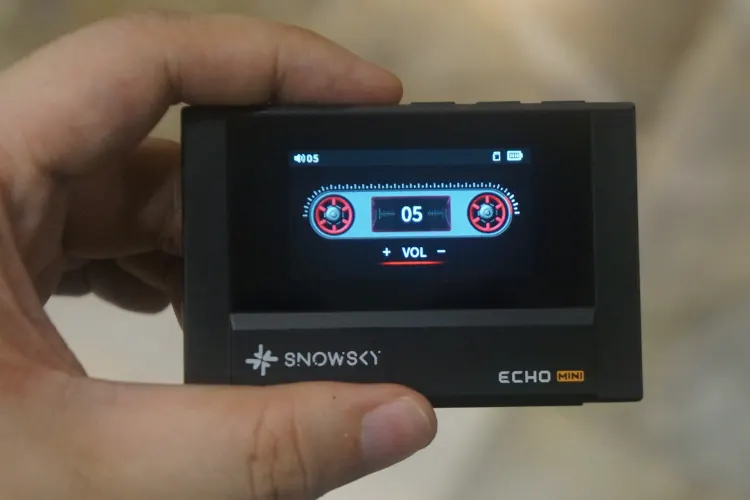
FiiO SNOWSKY ECHO MINI
Technical
The ECHO MINI is powered by dual CS43131 DAC chips, while the ECHO upgrades to dual CS43198 chips, a notable step up in DAC quality.
Both support native DSD256 and 24-bit/192kHz audio. Output power has also been bumped: the ECHO’s single-ended output delivers 120mW at 32Ω versus the MINI’s 100mW, and the balanced output moves from 250mW to 260mW at 32Ω.
The ECHO also ships with USB-DAC mode enabled from launch, whereas the MINI required a firmware update to access this functionality.
Design
The most significant difference between the two is chassis material.
The MINI uses a PC and ABS plastic composite body available in Black, Cyan, and Pink, while the ECHO uses a CNC-machined 6000-series aluminum-magnesium alloy frame available in Black, Sky Blue, Orange, and Green.
The ECHO is also physically larger and heavier (85g versus 55g), with a 2.39-inch display compared to the MINI’s 1.99-inch panel. Both retain the retro cassette aesthetic and top-mounted button layout. The ECHO feels substantially more premium in hand.

Performance
The ECHO is a tangible, audible upgrade over the MINI. The CS43198 implementation brings improved bass extension, better-controlled mid-bass, more natural and detailed mids, and a treble that retains more air and extension without sacrificing smoothness.
Soundstage layering and imaging precision are both improved, and complex tracks that could sound slightly congested on the MINI are handled with more composure on the ECHO.
The MINI is still an excellent value at $50, but those who can stretch the additional $20–$30 will hear a meaningful difference.
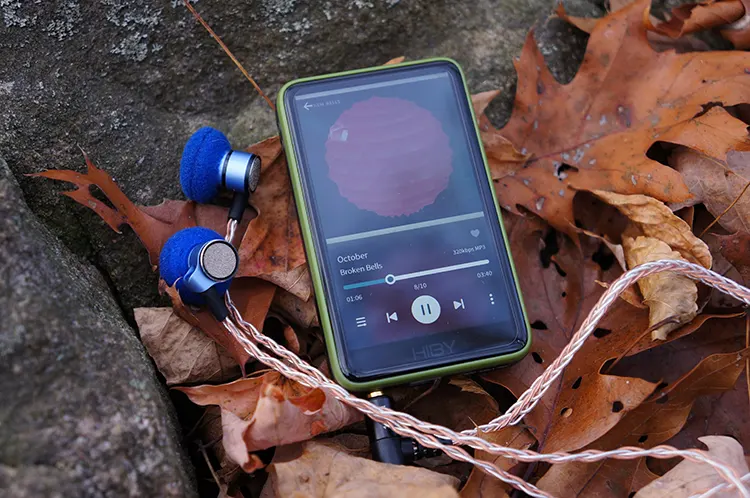
HiBy R1
Technical
The ECHO is powered by dual CS43198 DAC chips supporting DSD256 and 24-bit/192kHz, with a 3.5mm single-ended output at 120mW and a 4.4mm balanced output at 260mW.
The HiBy R1 uses a single Cirrus Logic CS43131 DAC capable of decoding PCM up to 32-bit/384kHz and DSD256, but features only a 3.5mm single-ended output rated at approximately 101mW at 32Ω.
The ECHO’s balanced output and higher power delivery give it a notable advantage for IEM users who prefer the 4.4mm connection.
Design
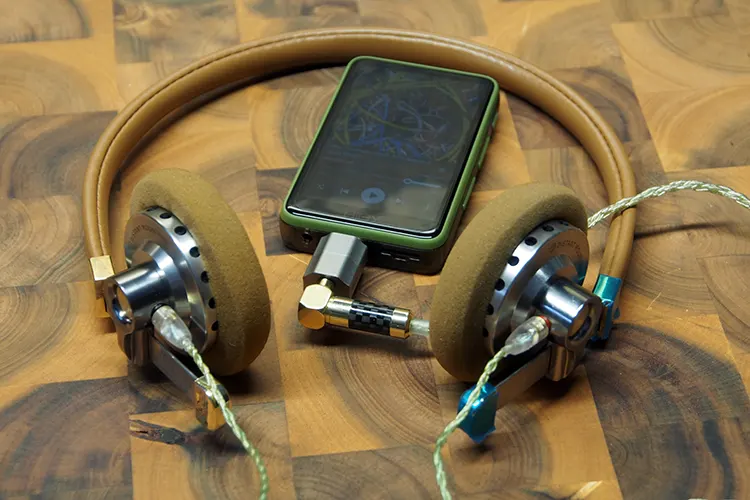
The ECHO’s CNC aluminum chassis and 2.39-inch IPS display represent a clear step up in build quality and visual real estate over its own MINI sibling, but the comparison with the HiBy R1 is more nuanced.
The R1 features a modern aesthetic with a 3-inch IPS touchscreen display, offering a more conventional and arguably more intuitive navigation experience.
The ECHO is slightly larger and heavier than the R1, but both are pocketable daily drivers. The ECHO’s retro cassette aesthetic is more distinctive and divisive, while the R1 blends into the broader DAP landscape more easily.
Those drawn to the SNOWSKY’s design ethos will find the ECHO’s aluminum construction a compelling differentiator.
Performance
The ECHO leans neutral-to-slightly-warm with strong control in the bass and natural and detailed mids, while the HiBy R1, by contrast, is more vocal-forward and energetic, with greater upper-frequency presence and sparkle that some listeners may find more immediately engaging.
The R1 also has sharper instrument separation and layering in complex tracks, which its touchscreen UI and more polished software ecosystem complement well.
The ECHO counters with superior output power via its balanced output, a more premium physical build, and a more composed low end.
My Verdict
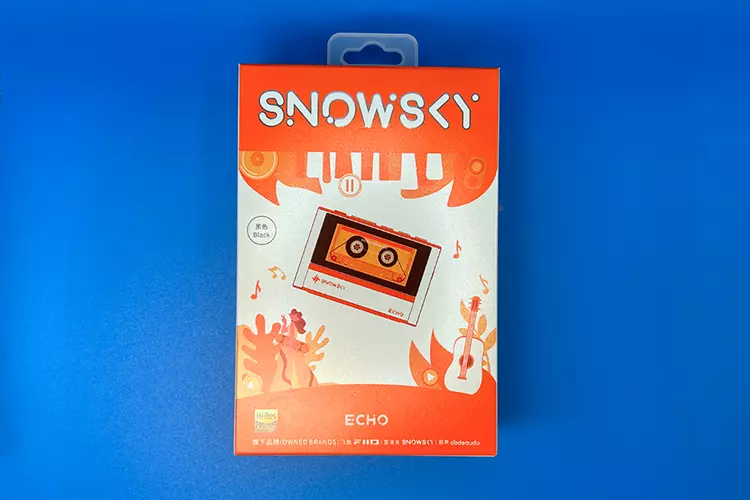
FiiO has taken what worked about the original MINI and refined it in ways that really matter in this new, higher-end ECHO model.
The move to an aluminum-magnesium alloy chassis, the upgrade to dual CS43198 DAC chips, and the inclusion of USB-DAC mode out of the box collectively make the ECHO a more compelling and versatile device than its predecessor.
The retro charm remains intact, and the price increase is modest enough to feel justified.
It is not without its limitations: the continued reliance on SBC-only Bluetooth remains a sore point, and the 256GB microSD ceiling will frustrate listeners with large lossless collections.
But for a dedicated offline music player that punches above its weight in both build quality and sound performance, the SNOWSKY ECHO is easy to recommend.
FiiO SNOWSKY ECHO Technical Specifications
- Dimensions: 85 × 55 × 14 mm
- Display: 2.39-inch IPS color LCD (222 × 480)
- Chassis: CNC-machined 6000-series aluminum-magnesium alloy
- Internal Memory: 8 GB
- External Memory: Expandable via microSD up to 256 GB
- DAC: Dual Cirrus Logic CS43198
- Formats: DSD64/128/256, WAV, FLAC, APE, MP3, M4A, OGG
- Power: 120 mW (3.5mm SE), 260 mW (4.4mm balanced)
- Battery Capacity: 1,100 mAh
- Battery Life: Up to 14 hours
- Bluetooth: 5.3, SBC codec
- Weight: 85 g
