

Synergy
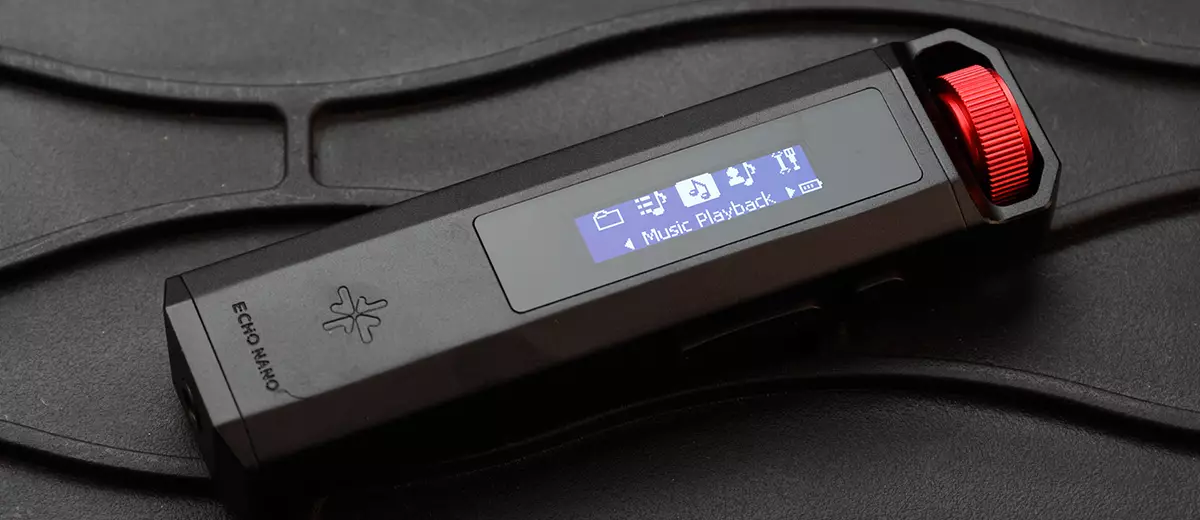
There is no audible noise with the IEMs and headphones I used; the ECHO NANO is clean and noise-free when no music is playing.
I hear no hissing, clicking, or popping sounds, and it does not pick up radio-frequency interference when placed near my phone.
IEM Pairings
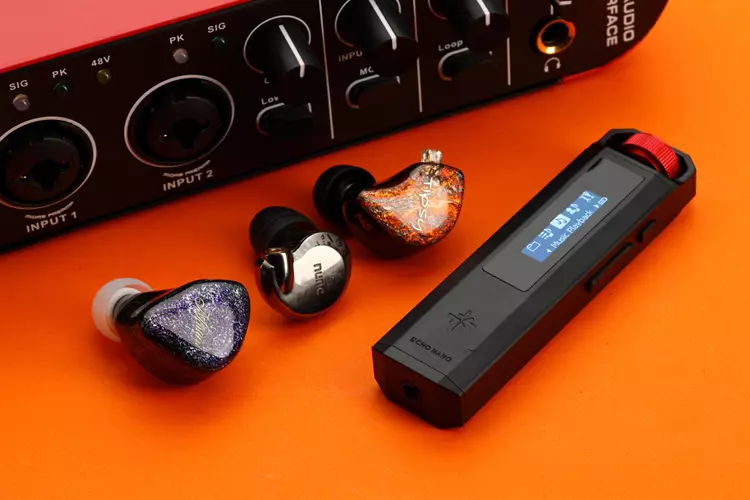
The ECHO NANO’s power output seems well-suited to IEMs, as I get a very satisfyingly loud and effortless sound at 75/120 volume with my Tipsy M5, DUNU Falcon Ultra, and QoA Martini IEMs.
I hear dynamic sound with any of these IEMs, along with a spacious soundstage.
Listening to the M5 and Falcon Ultra, the tonality remains very neutral, as it should be. The ECHO NANO doesn’t change the natural sound signature of these IEMs.
When listening to the Martini, I hear a moderately V-shaped sound signature, a rumbling bass, and clean and airy highs.
Headphones Pairings
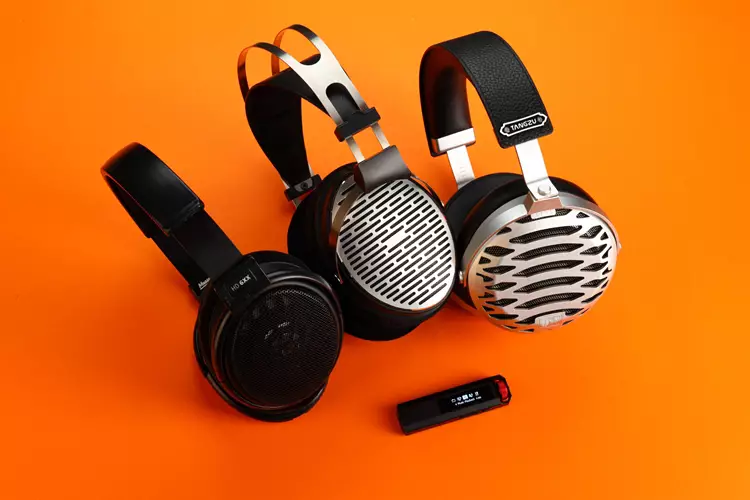
At first, I thought the ECHO NANO wouldn’t have enough power to drive any headphones, but fortunately it does. However, I have to be near maximum volume to achieve a satisfying loudness.
When paired with the easily driven dynamic driver FiiO JT3, I get a very loud and satisfying volume at the 110/120 setting. I hear a clean, highly extended, airy sound with good energy and dynamics.
When I switch to the more difficult-to-drive planar TANGZU Ox Demon King, I also get a very satisfyingly loud volume at the 110/120 setting. I hear good detail, clarity, air, and dynamics; the pairing has good energy and never sounds boring.
Finally, with the difficult-to-drive, high-impedance Sennheiser HD 6XX, I was very surprised that the ECHO NANO could drive it at all.
Though I have to be at full 120/120 volume to get a satisfyingly loud volume, there are still dynamics to be heard, and the sound has good energy and life.
One thing I noticed in common when driving these headphones is a slight reduction in bass impact. The bass presence is still there, as usual, but it’s not as impactful as I’ve come to expect.
Selected Comparisons
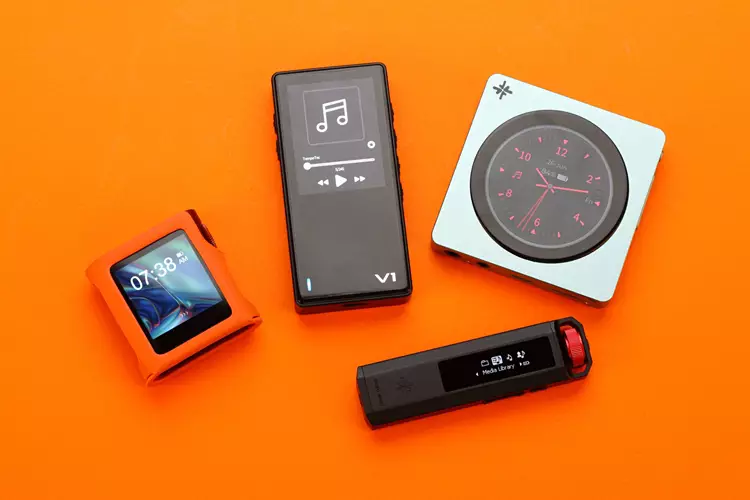
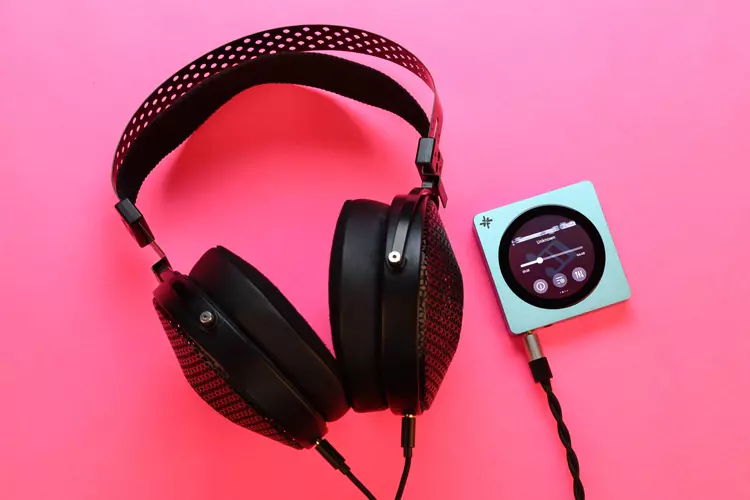
I enjoyed all these DAPs with my usual reference IEMs and headphones, including the Tipsy M5, QoA Martini, DUNU Falcon Ultra IEMs, FiiO JT3, TANGZU Ox Demon King, and Sennheiser HD 6XX.
However, I mostly used the Tipsy M5 for its neutral, near-monitoring-style sound and revealing character, and the Sennheiser HD 6XX to test how the DAPs sound with a difficult-to-drive, high-impedance headphone.
FiiO SNOWSKY DISC
Technical & Design
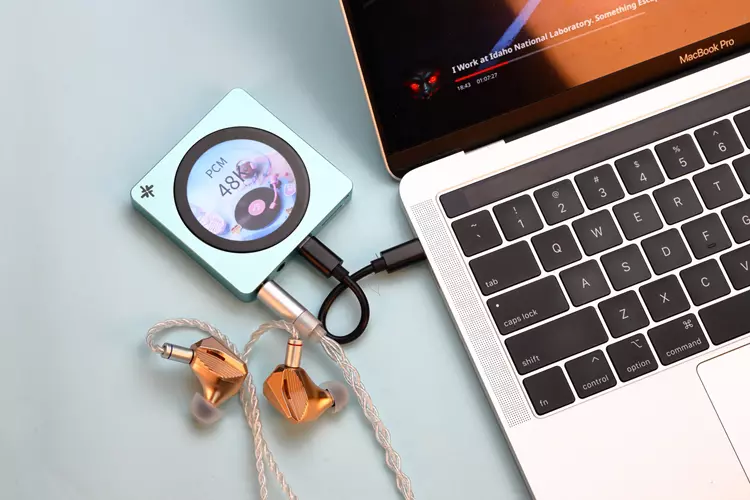
For its main processor, the DISC uses a dual-core Ingenic X2000 chip running Linux for pure audio operation.
Released around 2020, it features Dual XBurst 2 (Main Cores): 32-bit MIPS32 ISA R5 cores running at up to 1.5 GHz.
For audio conversion, the DISC employs dual Cirrus Logic CS43131 DAC chips, delivering 125 mW into 32 Ω at its 3.5mm output jack and 280 mW into 32 Ω at its 4.4mm jacks.
The DISC supports up to 2 TB of MicroSD card capacity, allowing direct music playback from local files.
I find it somewhat unusual for a DAP to resemble a retro portable CD player, albeit in a much smaller form factor. The DISC weighs 77.2 grams and measures 68 x 68 x 12.9 mm. It is very easy to carry and fits in a pocket for outdoor or everyday use.
Performance
The DISC clearly belongs to the Mini DAP size category, as it has about 3 times the volume of the ECHO NANO. However, I find it unsurprising that they have a very similar tonality and sound, as they come from the same company.
At lower volume, they sound very identical and very hard to tell apart. However, at my moderately loud listening volume onward, I noticed the DISC sound was ever so slightly cleaner, with a more spacious soundstage due to cleaner background and instrument decay.
When it comes to driving the HD 6XX, though honestly both are not ideal for serious listening, only for casual listening, I must say that the DISC sounds slightly more effortless. This must be due to its bigger battery and better power supply.
Shanling M0 Pura
Technical & Design
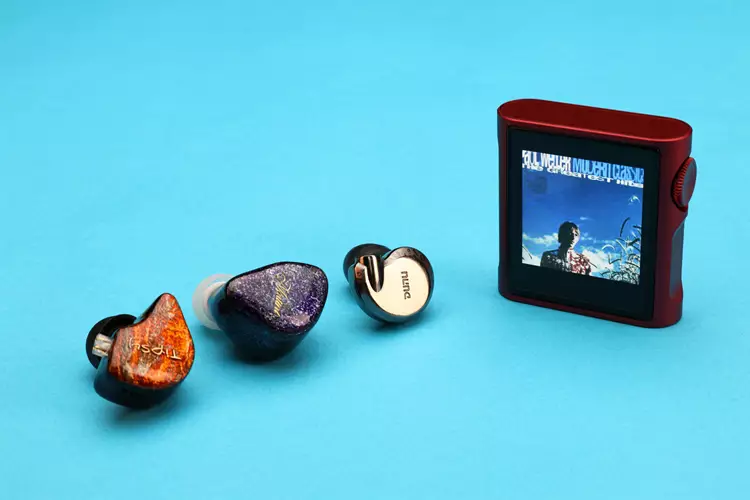
The Shanling M0 Pura is a touchscreen-capable mini-DAP equipped with a dual Cirrus Logic CS43131 DAC chipset from the USA to achieve high-resolution decoding, with a low SNR of 121dB and 0.0004% THD+N, and support for PCM up to 384kHz/32-bit and DSD128.
While the tiny chassis only offers a 3.5 mm output audio jack, Shanling provides a balanced connection via their special 3.5 mm-to-4.4 mm balanced adapter, which can be bought separately for about $17 to utilize the full output of the dual CS43131 DAC chipset.
This increases the power of the 3.5 mm single-ended output jack from 100 mW @ 32 Ω to 250 mW @ 32 Ω, with 0.4 Ω output impedance in single-ended and 0.8 Ω in balanced connection. These output impedance figures are sufficient for tight, well-controlled bass.
Other features include a 1.54-inch HD touchscreen for controlling the M0 Pura, Bidirectional Bluetooth with LDAC, aptX, AAC, and SBC codecs, and DAC functionality.
The M0 Pura is tiny, measuring only 43.8 × 45× 13.8 mm, and weighs 35.8 grams.
Performance
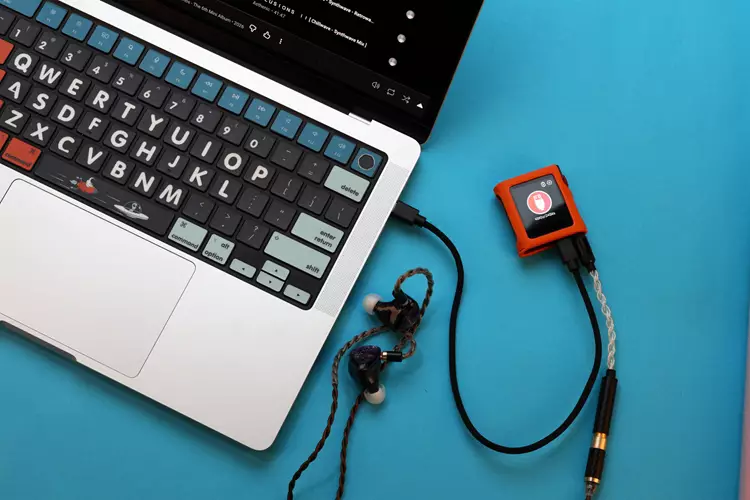
Both belong to the nano-sized DAP category, but PURA is about 50 percent larger in volume, in my estimate.
I find them both sound very neutral, making them difficult to tell apart; however, in prolonged comparisons, PURA has more energetic bass and treble.
I also find the PURA sounds cleaner, especially at higher volumes, making its soundstage slightly bigger.
When driving the HD 6XX, though honestly not ideal for serious listening, but only for casual listening. I find the PURA sounds cleaner and struggles less at higher volume.
TempoTec V1
Technical & Design
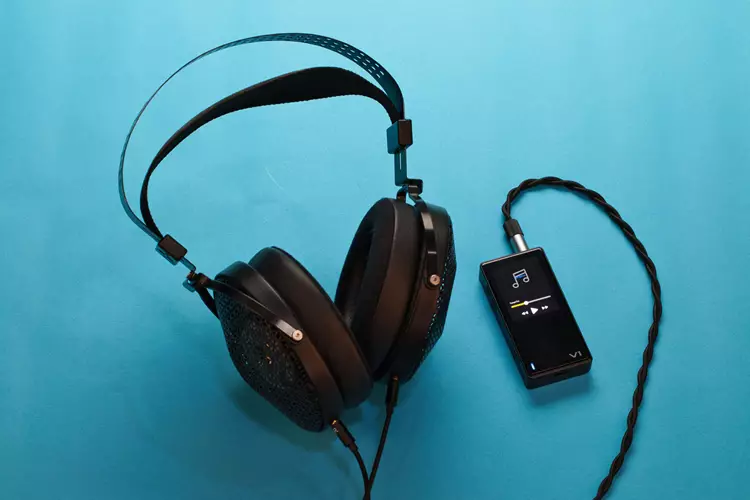
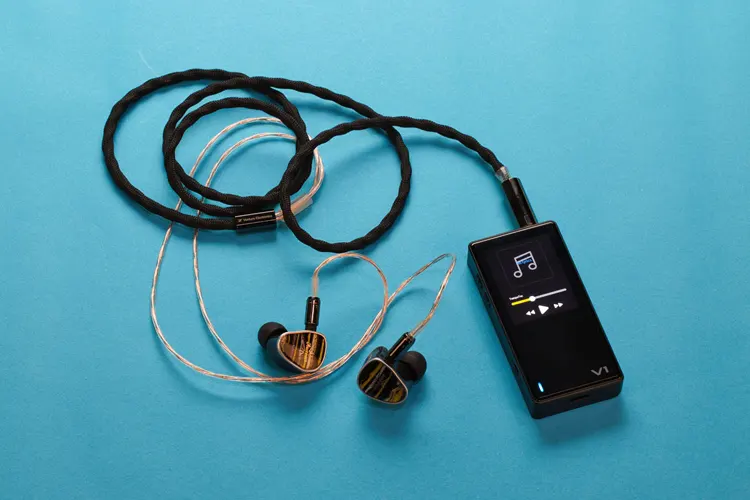
The TempoTec V1 natively decodes and outputs bit-perfect audio, including DSD 256 and PCM up to 384 kHz/32-bit, from lossless FLAC, ALAC, and WAV file formats, as well as lossy MP3 and AAC file formats.
The V1 utilizes the ubiquitous Cirrus Logic CS43131 x2, one per channel. V1 uses the internal amplifier from the CS43131 chip to drive both the 3.5mm and 4.4mm outputs directly, delivering up to 215 mW balanced into a 32ω load.
The front is fully covered with a tempered glass panel, but the actual touch screen is only a small portion near the top, measuring 2″ diagonally and 240×320 resolution. There is a slightly annoying multi-colored LED indicator near the bottom.
I find the TempoTec V1 aesthetically utilitarian, with a mix of industrial and modern styles. When viewed from the front, it is tiny for a DAP with a touch-screen UI, measuring 87.2 mm x 41.8 mm x 13.75 mm (HxWxD).
Performance
Though the V1 is a very small DAP, it is much larger, with more than twice the volume. I would put the V1 in the mini-DAP category and the ECHO NANO in the nano DAP category.
Right from the get-go and using my reviewer ears, the difference in sound was obvious to me. Though for casual listening, where these DAPs were made for, the difference might not matter because they both sound good.
The V1 has a flatter, more extended response with greater bass impact, vocal presence, and treble extension. In contrast, the ECHO NANO has somewhat weaker bass, a slight upper-treble roll-off, and a smoother, gentler sound delivery.
Both have a spacious, wide, and airy soundstage, but I find the V1 to have a more forward presentation, making the vocals sound more defined and resulting in better imaging.
Both the V1 and the ECHO NANO sound perfectly well for casual listening with the Ox Demon King and the JT3, as they are easier-to-drive headphones.
However, with the HD 6XX, while both aren’t bad at all, I find the V1 has better drive capability, a more dynamic sound, and better bass and treble extension.
My Verdict
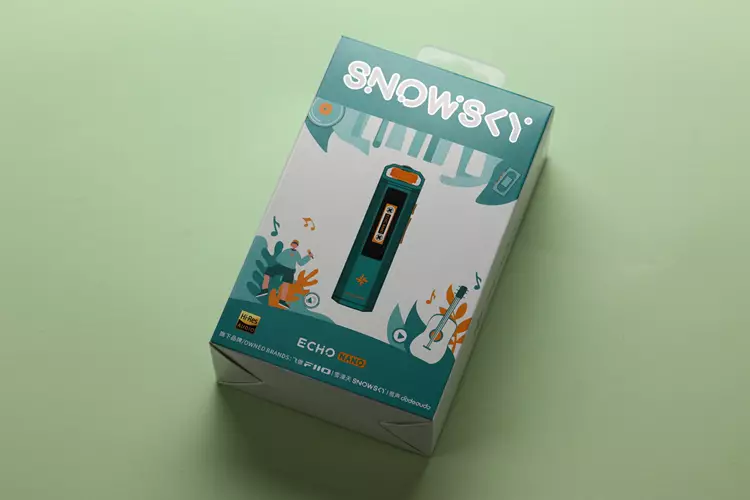
I love the delightfully tiny size, solid build, and ease of use, which makes the lack of a larger touch-sensitive screen on the FiiO ECHO NANO DAP easy to accept.
I also like the sound quality, which may not be the best for serious listening, but I have no issues with it for casual listening and have enjoyed it for many hours.
Looking at its tiny size and affordable price, I find it very difficult to fault it; honestly, I have no complaints. However, I’d be more impressed if FiiO had managed to include a 4.4 mm output jack, besides the 3.5 mm jack, not necessarily a balanced one.
The FiiO SNOWSKY ECHO NANO is a delightful nano-sized dongle DAC with enough features, is easy to use, sounds good for casual listening, and is well priced.
I find it easy to recommend to anyone, especially non-audiophile casual listeners, who want a good-sounding, tiny DAP at an easy-to-swallow price.
FiiO SNOWSKY ECHO NANO Technical Specifications
- Color: Black/Titanium/Green/White/Pink/Sky blue/Purple
- Weight: about 33.5g
- Dimensions: 83.5*23*14mm
- Display: 0.91-inch OLED display
- DAC: CS43131
- Storage: supports micro-SD card up to 256GB; supports exFAT/FAT32; NTFS is not supported
- Format support: DSD, WAV, FLAC, APE, MP3, M4A, WMA, OGG
- Sampling rate support: DSD: 64/128/256; WAV: 24B/192K; FLAC: 24B/192K; APE: 24B/192K
- USB DAC sampling rate support: PCM 16bit/48kHz
- Output: 3.5mm single-ended
- Output power: L+R≥120mW+120mW (32Ω, THD+N<1%, 2.0Vrms)
- SNR: ≥129dB (32Ω A-weighted)
- THD+N: <0003% (1kHz/119 volume @32Ω)
- Noise floor: 0.7uV (A-weighted)
- Battery capacity: 360mAh
- Battery life: about 7h
